[:es]Nuestro viaje fue como una odisea[:en]Our journey there felt like an odyssey[:]
[:es]
Por Isabel Cortés
Isabel Cortés vive en Londres y es parte de los colectivos Chile Solidarity Network y Bordando por la Memoria. También colabora con el sindicato United Voices of the World (Voces del Mundo Unidas).
Nuestro viaje fue como una odisea.
El trayecto duró una hora y tomamos tres trenes para llegar a nuestro destino.
No dormí mucho la noche anterior. Tenía esa sensación familiar de cuando estoy a punto de llegar a un entorno repleto de amor en el cual uno se siente acogido. Me parece que tuve ‘the channels’, que según el camarada Mcintosh, es una sensación que los marineros tienen antes de comenzar una travesía.
Pelusa y yo llegamos temprano, primera y segunda generación juntas, sentadas lado a lado, caminando codo con codo, riendo y hablando; y aunque haya 30 años de diferencia entre nosotras, estamos unidas porque las mismas circunstancias revolcaron nuestras vidas, como revolcaron y siguen revolcando la de tantos otros.
Estábamos camino a un evento que sabíamos que iba a ser una experiencia de aprendizaje y al que, definitivamente, era un gran privilegio asistir. Precisamente íbamos comentando esto en nuestro trayecto.
Íbamos a conocer a la delegación de Zapatistas en su gira por Europa. Era una reunión cerrada, sin redes sociales, sin fotos y sin grabaciones; un espacio en el cual dejamos nuestros egos (y teléfonos) en la puerta para poder compartir experiencias, comer juntos y reflexionar.
Los activistas hablan de asegurar un espacio, un concepto que tiene menos que ver con el uso del espacio físico y más con un espacio metafórico, pues en este caso era el espacio físico en el que nos encontramos el que nos aseguraba a nosotros. Un centro comunitario Kurdo escondido entre una estación de tren y una discreta zona residencial.
Mientras entrábamos por el portón de hierro decorado con un sol naciente -el amanecer socialista pensaba yo- vimos una mesa afuera del centro, donde caras sonrientes de jóvenes que nos daban la bienvenida y nos registraban. Había un grupo de hombres, jóvenes y viejos, con el pelo negro o sin pelo, fumando y hablando en kurdo. Para mí, esto pareció muy familiar.
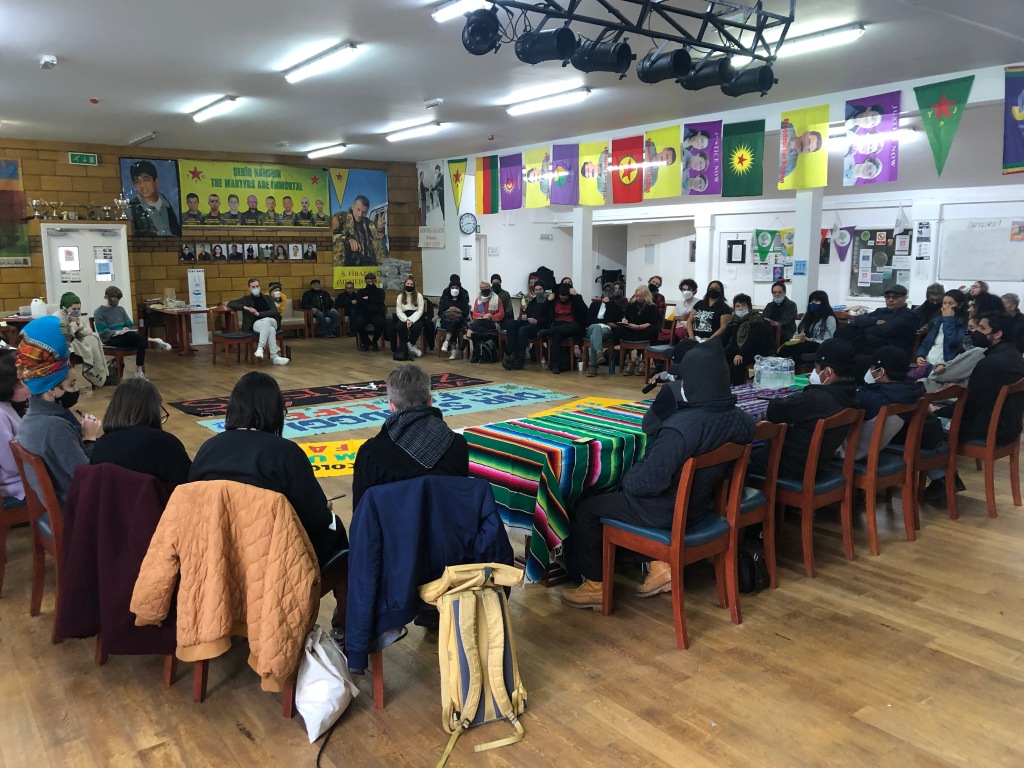
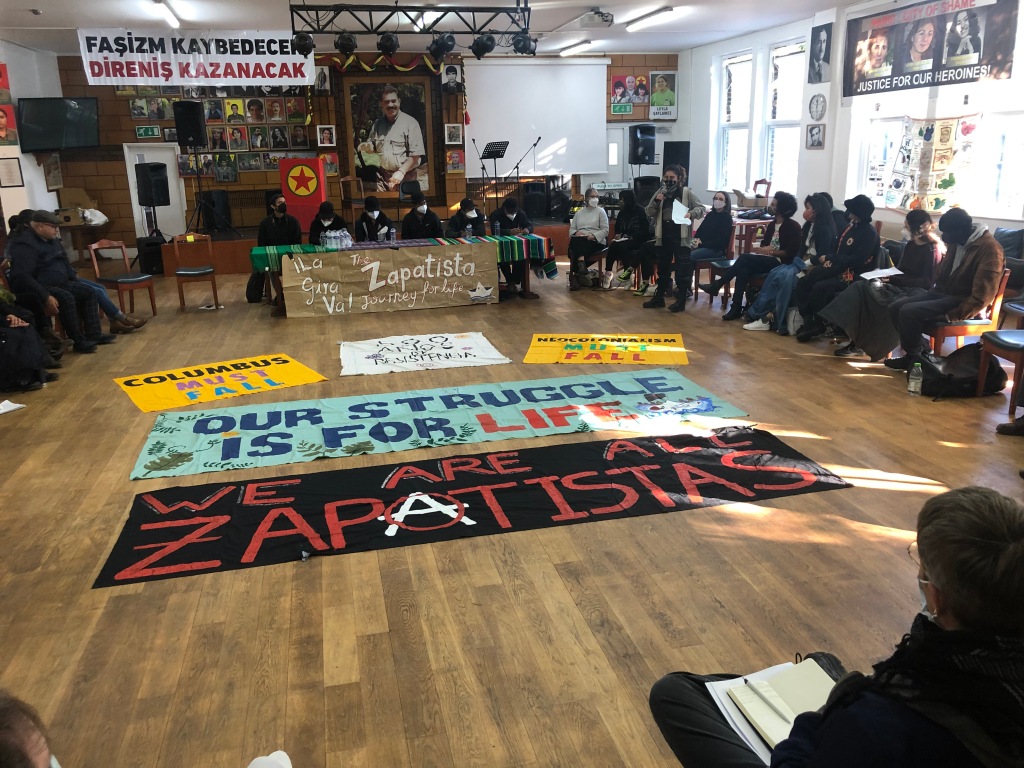
Al completar la inscripción avanzamos a la sala y nos encontramos abrazadas por las pancartas que nos saludaron al entrar. Estaban por todos lados: en el piso y delante de mí; vinilos hechos a mano con lemas en inglés, español y kurdo. Caras de mártires, pancartas y banderas nos cuidaban con su mirada.
Había una mesa en la parte delantera de la sala, pero no como las mesas superiores de las conferencias en las que te dicen cómo son las cosas, sino un espacio para compartir y mirarse las caras (u ojos en nuestro caso ya que íbamos todos con cubre bocas). Las sillas fueron colocadas en forma de herradura, lo que hizo que sintiera que el momento me abrazaba cada vez más fuerte.
El olor de té, café, guisos y arroz salía de la cocina. Sí, eran las 9 de la mañana y se podía oler el arroz. Este era un espacio comunitario. Sentí ganas de mudarme allí de inmediato con toda mi familia.
Los jóvenes estaban dándole los últimos toques a la sala, probando los altavoces y moviéndose de un lado al otro llenos de emoción.
Pelusa y yo entramos tan disimuladamente que rápidamente pasamos a formar parte de los muebles, incluso desde que pasamos por el portón de hierro con el amanecer. Así, acomodarnos en primera fila no significaba nada.
El evento comenzó media hora tarde, y justo antes del comienzo, estaba yo hablando con Pelusa cuando le escuché decir – buenos días compañeros – . Miré hacía arriba y vi un grupo de hombres con cubre bocas y de piel morena que pasaron por delante de nosotras. Les saludé tal y como lo hacemos, como compañeros.
Después de esto, el evento dio inicio.
¿Qué puedo decir sobre la sesión de la mañana?… Nosotras fuimos las primeras en tener la palabra. Hablamos sobre la solidaridad internacional y el trabajo de toda la vida, de estar orgullosas de ser exiliadas, de que éramos como semillas dispersadas por los vientos en cada rincón de la tierra; de que nuestra lucha es intergeneracional e internacional, de que no se trata solo de mirar hacia atrás y preservar la memoria histórica y de denunciar incansablemente y reclamar justicia por nuestros mártires y para nuestros desaparecidos; sino que también se trata de hoy, de la solidaridad práctica que ofrecemos a los que toman las calles, porque sabemos lo que es la solidaridad, porque no es un término de moda que usamos de manera frívola, sino que es una experiencia real que nos permitió vivir, que nos enseñó a hacer lo que hacemos. Hablamos sobre el papel de los trabajadores organizados y de las mujeres que fundaron y llevaron adelante los espacios en los que estamos. Les conté cómo me lo enseñaron: no fue con un libro, sino a través de la acción.
Pasamos la palabra y otros hablaron sobre la justicia climática, sobre la solidaridad con el pueblo Kurdo y el anticolonialismo, sobre descolonizar la mente, sobre cómo tratarnos los unos a los otros, sobre cómo ser activistas juntos, sobre cómo no agotarnos en el intento, sobre cómo practicar el amor y la revolución, sobre cómo aprender juntos y cómo ser autocríticos. Los ponentes eran buenos y su análisis me conmovió; su juventud y su optimismo, su autocuidado y el cuidado para los demás.
Me di cuenta de que Pelusa nunca perdió aquella alegría y juventud rebelde, y yo tampoco la voy a perder.
Comimos juntos, hablamos, conectamos los unos con los otros, vimos caras familiares y compartimos historias.
La tarde era de los Zapatistas, todos Mayas y miembros del EZLN. Caras cubiertas, ninguna foto, pura clandestinidad. Esto era real, ellos eran reales. Narradores de verdad.
Contaron su historia en 5 partes, cada uno relatando una sección: comenzando con sus tártara-tártara abuelos y abuelas, y cómo trabajaban bajo el mando de terratenientes en un sistema feudal cruel que usaba la violencia contra las mujeres como forma de control sobre hombres y mujeres. Hablaban en primera persona desde sus corazones, con frases cortas, lenguaje directo y simple, usando “pues” en lugar de puntos finales, comas y pausas.
Nos llevaron por los años treintas como si fuera ayer y era claro que su historia era una historia vivida y pasada por generaciones y no una historia que se lee en los libros. A los intérpretes les costaba traducir esto al inglés, y me sentí mal al poder resplandecer en el poder de sus palabras. Directos y sin ningún intento de intelectualizar, con relatos prácticos y honestos – “y después esto pasó”– . Mi tipo de historia.
Nos tomaron de la mano y nos llevaron por su declaración de guerra, por los nombres de sus mártires sin usar apellidos, por los años en la selva, por cómo montaron su región autónoma hasta llegar hasta el día de hoy, en que continúan resistiendo y rebelándose.
Intenté tomar notas pero me di por vencida. Necesitaba estar presente, escuchar y permitir que mi corazón lo absorbiera todo.
Cuando llegaron a los 7 principios sí tomé nota. Pensé en la similitud con el plan de 10 puntos de Allende y con el plan de los Black Panthers. No tienen cárceles, el trabajo comunitario es la manera en que hacen justicia, tienen un 50% de mujeres en sus consejos, cada consejo es autónomo y tiene una autoridad que rota. Trabajan la tierra juntos, tienen sus propias escuelas y centros sanitarios. Son verdaderamente autónomos.
Tomaron preguntas sobre la violencia de género y los derechos trans y no usaron ninguna retórica – “aceptamos y respetamos”, es lo que dijeron.
A lo largo de las 3 horas que contaron su historia, transmitieron palabras de sabiduría simples pero potentes.
– Venimos aquí para aprender de ustedes, para contarles qué hacemos nosotros y cómo. No hagan las cosas como las hacemos nosotros, hagan lo que necesiten hacer. El pueblo manda. –
El trayecto a casa fue como estar en una nube, sentí que estaba flotando en el aire con el corazón lleno. Es la sensación que tengo cuando sé que mi alma ha sido nutrida por vitaminas que van a tardar tiempo en gastarse. Me desperté a las 6 am para escribir esto, necesitaba escribirlo, saliera como saliera. ¡Ahora, a ducharse!
[:en]By Isabel Cortès
Isabel Cortes is a member of Chile Solidarity Network & Bordando por la Memoria. Isabel is also an organiser at United Voices Of the World.
Our journey there felt like an odyssey.
We spent one hour travelling and took 3 trains to arrive at our destination.
I didn’t sleep very much the night before, I had that feeling I get just before am going into a space where I will be surrounded with love, power and acceptance.
I think I had “the channels” which is the feeling seafarers get before the embarking on a voyage according to Comrade Mcintosh.
We arrived early, Pelusa and I, first and second generation together, sitting together, walking side by side, laughing, talking, bound together although there is over 30 years between us, by the same life changing events.
We were on our way to an event that we knew would be a learning experience, and ultimately a privilege and we told each other this.
We were on our way to meet the Zapatista delegation on their European tour, a closed meeting, no social media, no pictures, no recordings, a space where we leave our egos (and phones) at the door so we can share experiences, eat together and reflect.
Activists talk about holding space, a concept that is less about physical space and more a metaphorical one.
The physical space where we met, held us.
A Kurdish community centre, tucked away between a railway bridge and an unassuming residential area.
As we walked through the iron gates, decorated with a rising sun (socialist dawn I thought) I saw a table outside the community centre, smiling young faces of people welcomed us at a registration table, a group of men, young and old, jet black hair, no hair, smoking and talking in Kurdish. This felt so familiar.
With registration out the way. We walked into the centre and were met with the warm embrace of banners. Everywhere, on the floor directly in front of me, vinyl, handmade, with slogans in English, Spanish and Kurdish. Face of martyrs, banners and flags watched over us.
A table at the top of the hall, not a top table like a conference where people sit and tell you how it is, instead a space to share and look at each other’s faces (or eyes in our case because we were all masked up), with chairs assembled in a horse shoe hugged me even tighter.
Smells of tea, coffee, stew and rice emanated from the kitchen! Yes at 9am, and I could smell rice. This was a community space. I immediately wanted to move in with ALL my family.
Young people were adding the final touches to the hall, testing the PA system and moving around excitedly.
Pelusa and I slipped in, no fuss, we were already part of the furniture when at the rising sun iron gates, so making ourselves at home on the front row was nada.
The event started half an hour late, just before it did as I was busy talking to Pelu, I heard her say “Buenos dias companeros” . I look up to see a group of small, brown masked men wearing masks and caps walk passed us smiling. I greeted them as we do, como compañeros.
And then lift off, the event began.
What can I say about the morning session… we had the mic first.
We spoke in the international solidarity section about the work of a lifetime, about being proud to be exiled, that we were like seeds scattered by the wind to all corners of the globe, that our fight is intergenerational, it’s international, that it was not only about looking back and preserving historical memory and about tirelessly denouncing and demanding justice for our martyrs, for our disappeared but also about Chile today, about the practical solidarity we offer to those that held the streets, because we know what solidarity looks like, because it’s not a trendy term that we use off the cuff, but a real lived experience, that helped us to live, that taught us what and how to do. We talk about the role of organised labour and about women, the women that founded and drove all the spaces we were in. I told them they taught me, not a book, but they taught me through doing.
The mic was passed on and others spoke about climate justice, about Kurdish solidarity and anti-imperialism, de-colonising the mind, about how to treat each other, how to be activists together, how to not burn out, how to practice love and revolution, how to learn together and be self-critical. They were good, I was moved by their analysis, by their youth and optimism, their self care, and care for each other.
I realised that Pelusa never lost that joy and youthful rebelliousness, and that I never will either.
We had lunch together, we talked, we connected, we saw familiar faces and we shared stories.
The afternoon belonged to the Zapatistas, all Mayan, all members of EZLN. Faces covered, no pictures, pura clandestinidad. This was real. they were real. Real storytellers.
The told their story in 5 parts, each taking a section, starting with their great grandfathers and grandmothers and how they used to live at the hands of the landowners, in a cruel feudal system that used violence against women to control men and women. Talking in the first person, from the heart, short sentences, direct and plain language, that used “pues” to replace full stops, commas, and to help them catch a breath.
They took us through the 1930s as if it was yesterday, it was clear this was oral history handed down, a lived history, not read in history books. The interpreters struggled to translate this into English, I felt bad as I basked in the power of their words, no messing, no attempts at intellectualising, practical, honest and “then this happened” kind of story. My kind of storytelling ?
They took our hands and led us through their declaration of war, they named their martyrs using first names only, then onto their years in the jungle, how they set up their autonomous region and to today, how they continue to resist and rebel.
I tried to take notes but gave up I needed to be there, to listen and let my heart soak it all in.
The 7 principles is when I did take notes. I thought about the similarities with Allende’s 10 point plan, the panthers plan. They have no jails, community work is how they do their justice, 50% women on their councils, each council has a rotating chair, and is autonomous. They work the land together, have their own schools, medical centres, they are truly autonomous.
They took questions on gender violence and trans rights – no rhetoric. “We respect and accept” is was what they said.
They delivered very simple but powerful words of wisdom during the 3 hours they told their story
“We came here to learn from you, we came here to tell you what and how we do. Do not do as we do, do what you need to do. El pueblo manda”
The journey back was like travelling on a cloud, I felt like I was floating on air, heart full. It was the feeling I get when I know I my soul has been nourished and the vitamins will take a while to wear off. I woke up at 6am to write this, I had to get this down however rough and ready. Now to shower!
[:]

