
[:es]La “Travesía por la Vida” de los zapatistas y sus implicaciones para una solidaridad global[:en]The Zapatistas’ “Journey for Life” and its Implications for a Global Solidarity[:]
[:es]por Franca Marquardt
Encuentro con los zapatistas
“Os hemos dado las semillas de la rebelión contra el colonialismo y el capitalismo” – esto es lo que anunció el grupo de zapatistas que nos visitó aquí en Leipzig en nuestra última noche juntos. Todavía estoy procesando este importante momento, que ahora parece un sueño. Pero fue todo lo contrario, algo muy real: un encuentro de mundos para la perspectiva de una solidaridad global. Los zapatistas y su resistencia contra el capitalismo colonial han sido una inspiración para mí y para muchos compañeros estudiantes y activistas. Nunca he estado en Chiapas ni he estudiado a fondo su organización política. Pero cuando me enteré de este “viaje por la vida” y del plan de los zapatistas de viajar a Europa y conocer los movimientos locales, me intrigó. Como estudiante de antropología y activista social, me enfrento constantemente al estancamiento de nuestras acciones y reflexiones, que todavía están contenidas en un marco limitado y eurocéntrico. En última instancia, no se puede avanzar en una transición justa a menos que tengamos en cuenta todas las voces y perspectivas y formemos alianzas entre actores de todo el mundo. El viaje de los zapatistas, pensé, podría ser una oportunidad para poner en práctica estas ideas al tiempo que se abordan las cuestiones socioecológicas de una manera que considera las luchas locales en un contexto global y proporciona al movimiento global la herramienta más importante: la esperanza.
En octubre del año pasado, los zapatistas anunciaron que iban a “colonizar” Europa para encontrarse con los movimientos de aquí y escuchar y compartir ideas sobre una vida mejor más allá del capitalismo. La gente de toda Europa se ha unido ante la perspectiva de este importante momento, invitando a los compas a sus ciudades y pueblos, planificando y organizando ansiosamente su estancia. Como parte de la red de Leipzig, nos hemos reunido semanalmente, discutiendo ideas y planes. Ha sido un proceso enriquecedor pero difícil, ya que no estaba claro si los zapatistas llegarían o cuándo lo harían y qué debíamos tener en cuenta. En algún momento de este verano, ni siquiera estábamos seguros de que el viaje seguiría adelante, pero reconocimos que ya habían logrado uno de sus principales objetivos: motivar a la gente y a los grupos a organizarse en sus propios “hogares” y formar alianzas para el cambio. Fue aún más sorprendente cuando nos enteramos de que la primera delegación, el Escuadrón 421, había zarpado y llegado finalmente a España este mes de junio.
El primer grupo estaba formado por compas que se adelantaron para coordinar la llegada de la delegación principal, junto con las estructuras locales. Este sería un proceso difícil, que conllevó luchas para obtener pasaportes y visas, así como restricciones causadas por la actual crisis covídica. Esto fue representativo de las restricciones de movilidad a las que se enfrentan muchas personas marginadas y racializadas cuando intentan entrar en los países europeos. En agosto protestamos frente al consulado honorario de México en Leipzig, para presionar a las autoridades y concientizar a la gente de estos hechos. Fue aún más irónico cuando nos enteramos de que el cónsul es el director general de Porsche Leipzig; no es de extrañar que ignorara nuestras demandas. Este verano participé en los campamentos climáticos de Leipzig y Munich, donde impartí talleres sobre los temas del zapatismo, el decrecimiento y la pluriversalidad. Participé en debates sobre cómo nos posicionamos como activistas climáticos en Alemania, y cómo podemos relacionar nuestras historias y luchas con las de los zapatistas, los kurdos de Rojava o con muchos movimientos de resistencia más pequeños que están en marcha.
Tras el campamento de Munich, finalmente, la delegación principal de 170 compas llegó a Viena (de entre todos los lugares) a mediados de septiembre. Todo esto sucedió muy rápido y requirió que la gente trabajara en conjunto para apoyar a la red austriaca, tratando de organizar el alojamiento y facilitar la llegada a última hora. El ambiente en el aeropuerto fue muy fuerte, ya que celebramos y cantamos canciones para dar la bienvenida a los compas. Conocerlos después de todos estos meses de anticipación y lucha fue increíble, y una importante fuente de esperanza. A partir de ese momento, la gente trabajó día y noche para planificar los siguientes pasos del viaje. Se decidió entonces que las compas viajarían en grupos de cinco a diferentes regiones en tres etapas. Así, el 22 de septiembre recibimos en Leipzig a dos grupos que permanecieron con nosotros durante una semana, participando en numerosos actos y encuentros con los movimientos locales. De alguna manera, nos las arreglamos para elaborar un programa, encontramos proyectos de vivienda local para que se quedaran y cocinamos la comida. Para nuestra sorpresa, prefirieron las salchichas, la pizza y la coca cola a la calabaza y el arroz: otra prueba de que no podemos trasladar nuestras normas morales a los contextos de otras personas. Como la compa dejó claro, el objetivo principal del viaje era reunirse con los movimientos locales en un entorno íntimo, más que hablar en actos públicos o conferencias. Por ello, organizamos reuniones con organizaciones feministas, grupos postcoloniales y la comunidad latinoamericana de Leipzig, además de visitas a lugares significativos de resistencia en la ciudad y sus alrededores.
El programa era muy estricto, ya que la compa nos dijo que querían reunirse con el mayor número de grupos posible y centrarse en el “trabajo” (al fin y al cabo, estaban en una misión). Antes de venir a Europa, todos los delegados habían recibido formación durante meses, por lo que sabían exactamente qué querían compartir y qué preguntas querían hacer. Contaron a cada grupo una versión detallada de su historia, comenzando mucho antes del levantamiento de 1994, haciendo hincapié en la opresión de siglos que constituye la base de su resistencia actual. También describieron sus cosmovisiones, arraigadas en la identidad indígena, y cómo esto se traduce en su organización política y social actual. A la compa le interesó conocer la historia de Alemania, especialmente la de los nazis y la importancia del muro y de la Alemania del Este. Subrayaron que la historia de cada persona es importante, ya que su indigenismo está arraigado en sus interacciones con sus familias, comunidades y el medio ambiente. Los zapatistas también hicieron muchas preguntas sobre el funcionamiento de cada grupo, cómo se organizan y cómo se mantienen. La comunicación no siempre fue fácil, ya que había que traducir todo entre el español y el alemán, y dos delegados sólo hablaban la lengua indígena tzotzil.
Mi momento favorito fue la visita a Pödelwitz, un pueblo que corría el riesgo de ser desalojado por la explotación del carbón. La compa se tomó el tiempo de contar a la gente su historia, su organización política y sus luchas actuales. También escucharon los relatos de los residentes sobre su resistencia y las consecuencias opresivas de las industrias mineras del carbón en Alemania, que son un centro de activismo medioambiental desde hace varios años. Al mismo tiempo, otro grupo de compas visitaba Lützerath, un pueblo del oeste de Alemania que aún corre el riesgo de ser desalojado. De este modo, pude sentir el impacto que el viaje estaba teniendo en muchos niveles, al apoyar estas luchas y proporcionar esperanza e inspiración a las personas que resisten y luchan por sus derechos en estos lugares. Como parte de la red de organización, tuve la suerte de presenciar algunos momentos fuera de estos encuentros que fueron aún más perspicaces y a veces sorprendentes. Fue hermoso ver cómo la compa interactuaba con la gente y el entorno, ya que era la primera vez que salían de México y se exponían a un mundo diferente. Tomaban muchas fotos con sus teléfonos, como del bosque, las castañas, o los cerdos salvajes en el bosque. Estar presente en esos momentos me hizo redescubrir cierta curiosidad por el lugar en el que vivo y me recordó que debo fijarme en las pequeñas cosas que tan a menudo se pasan por alto al ir deprisa por la vida.
Entonces, ¿qué podemos aprender del “viaje por la vida” y de la iniciativa de los zapatistas? ¿Es el comienzo de algo más poderoso, una toma de conciencia de la interconexión de nuestras vidas y nuestras luchas? ¿Cómo podemos llevar esta semilla más allá y combinar los esfuerzos locales y las alianzas globales contra la injusticia social y medioambiental?
Historias de resistencia
El compromiso con el movimiento zapatista en sus múltiples formas, nos ayuda a entender el significado del capitalismo colonial y cómo éste se relaciona con los sujetos poscoloniales y los movimientos sociales. Vincula las cuestiones históricas del despojo colonial y el racismo con el capitalismo global contemporáneo, a la vez que pone en primer plano la importancia de la solidaridad transnacional entre actores de todo el mundo. Desde la década de 1980, los zapatistas han trabajado para recuperar la tierra en resistencia al crecimiento hegemónico del capitalismo, para contrarrestar su opresión y para avanzar en el proyecto de autonomía y autodeterminación de las comunidades indígenas. La revolución geopolítica de 1994 hizo posible la democracia radical y el igualitarismo mediante la secesión temporal del Estado mexicano. Por lo tanto, representa en cierto modo una lucha exitosa contra el capitalismo neoliberal y la creación de un paisaje poscolonial. Desde 2012, los zapatistas y el CNI han iniciado un proceso para compartir los problemas y las percepciones de las comunidades indígenas de todo México en la esfera política nacional y los medios de comunicación populares. Este proceso de apertura y participación en contextos más amplios, también está representado por las elecciones presidenciales de 2017/18, donde por primera vez una mujer indígena, Marichuy, participó como candidata. La candidatura no pretendía ganar las elecciones, sino señalar la triple imposibilidad de un presidente pobre, indígena y mujer en el imaginario de la sociedad mexicana y exponer el racismo y el sexismo subyacentes. Los zapatistas han inspirado y enriquecido la lucha global por la justicia climática y la paz, a la vez que han reactivado y unido las luchas de la “izquierda y los de abajo”. Ahora, el viaje en 2021 tiene sentido como el proceso de “salir de su caparazón”, donde los miembros de los zapatistas están luchando activamente contra la opresión neocolonial y capitalista mundial mostrando su apoyo a los grupos locales de todo el mundo que comparten luchas similares.
¿Hacia una praxis descolonial?
Los zapatistas subrayan cómo 500 años de despojo indígena condujeron a este sistema de control y explotación neoliberal. Su resistencia y autonomía como praxis decolonial, por lo tanto, es una lente productiva para entender la contribución que hacen al desafiar el mantra de que no hay alternativa al neoliberalismo. Según los zapatistas, su viaje representa una antítesis del “encuentro” entre los colonizadores europeos y las poblaciones indígenas en América, ya que esta vez los indígenas están “colonizando” Europa. Esta yuxtaposición de la historia asumida abre un espacio para las diferentes agencias que están en juego en la redacción de una transición justa, y pone de relieve el imperativo de reconocer las perspectivas de los sujetos poscoloniales y los oprimidos en muchos lugares.
También aporta una importante reflexión sobre los marcos normativos que se despliegan en el mundo académico occidental cuando se discuten los movimientos indígenas o las ideas de transición anticapitalista. Por ejemplo, ¿cómo puede el “decrecimiento” incorporar los impulsos y las críticas del sur global en su proyecto de transición justa? ¿Cómo podemos relacionar diferentes visiones del mundo y enfoques respetando su arraigo epistemológico y cultural?
Lo que los zapatistas nos recuerdan es que la descolonización debe comenzar, ante todo, en “casa”, dentro de nuestras propias tradiciones epistemológicas e instituciones. El encuentro entre los zapatistas y los actores europeos es, en cierto modo, ejemplar para el imperativo de conectar diferentes líneas de pensamiento que se originan en diferentes tradiciones y contextos epistémicos. De esta manera, es un punto de partida importante para esbozar ideas sobre los caminos para el cambio social y económico, para saber qué agencias y herramientas son necesarias. Discutir las perspectivas de decrecimiento decolonial en relación con las luchas de los zapatistas y otros movimientos indígenas y del Sur es importante para poder captar la profundidad de una transición justa. También proporciona una perspectiva sobre las dimensiones éticas y basadas en valores del discurso y las expresiones de resistencia al capitalismo colonial. Inspirado en el esfuerzo de los zapatistas por “un mundo donde quepan muchos mundos”, los mundos y prácticas múltiples deben inspirar la búsqueda colectiva de un mundo socialmente justo y ecológicamente estable. Si los conceptos sólo incluyen a una parte de la población y esencializan a otras, continúan un ciclo de violencia sistémica. Así, en un mundo con limitaciones de carbono, debemos trabajar todos juntos por los mismos fines, pero de formas pluriversales que eviten esta violencia.
¿Hacia una solidaridad global?
El compromiso de los zapatistas con valores como la dignidad, la confianza y la autonomía, y su experiencia en la organización política de la democracia de base, puede ser un punto de partida para construir la solidaridad global como una agenda viable para una transición socioeconómica justa. Al escuchar las historias y los relatos de los demás, los actores se reafirman en sus luchas, ya que se dan cuenta de cómo las personas de todo el mundo se preocupan por cuestiones similares, de diferentes maneras.
Esta interacción horizontal entre los actores conlleva un proceso emancipador de indigenismo y autodeterminación restaurados. En sus comunicados y discursos, los zapatistas destacan la importancia de relacionar sus reivindicaciones con los oprimidos y marginados de todo el mundo (los pobres, las mujeres, los racializados). De este modo, construyen una conciencia global que reconoce que los agravios y las esperanzas de los pueblos de todo el mundo están profundamente entrelazados. “Relacionarse” como valor es antirracista y antiesencialista, ya que define las identidades en función de una relación, en lugar de una “identidad de raíz”, que es una herramienta de reclusión. Inspirándonos en la “poética de la relación” de Glissant, podríamos pensar en una concepción relacional de la existencia humana como herramienta para contrarrestar la imposición de valores universalistas por parte de Occidente. Como siempre subrayan los zapatistas, “somos iguales porque somos diferentes”. Por ello, hay que pasar de la concepción de la diferencia como fuente de conflicto, a la diferencia como herramienta implícita para rehacer la palabra, haciendo espacio para “un mundo donde quepan muchos mundos”. La diferencia y la diversidad deben ser un principio básico de nuestro discurso y nuestras acciones, y no un “añadido” o una categoría aparte.
Nuestros contactos con personas, grupos, colectivos, movimientos y organizaciones de diferentes partes del planeta nos han mostrado un mundo diverso, múltiple y complejo. Esto ha reforzado nuestra convicción de que cualquier propuesta de hegemonía y homogeneidad no sólo es imposible, sino sobre todo criminal. (comunicado de junio de 2021[1])
Es esencial que los movimientos ecologistas del norte creen alianzas con las luchas antiimperialistas del sur global, que se han centrado en estas cuestiones durante décadas. Dado que los únicos movimientos sociales que han tenido éxito para lograr un cambio económico y social serio han sido los movimientos anticolonialistas, esa debería ser la fuerza en torno a la cual debemos movilizarnos. En lugar de ello, durante la COP26 en Glasgow ahora mismo, los “líderes” siguen haciendo promesas vacías mientras marginan las voces de muchos del sur global y de los oprimidos dentro de la sociedad, que son los que mejor saben lo que hay que hacer en sus comunidades para luchar contra el cambio climático y la desigualdad. Aunque muchos activistas acudieron a Glasgow para desafiar el “business as usual”, las voces de las mujeres, de los pobres y de las personas racializadas siguen siendo marginadas, mientras que los poderosos líderes del orden mundial neoliberal (políticos y multimillonarios) ocupan el centro del escenario. Está claro que esto difícilmente puede conducir a un cambio duradero en la lucha por proteger nuestra tierra, nuestras comunidades y garantizar el bienestar para todos. La esperanza sólo se puede encontrar fuera de estos “espacios oficiales”, en encuentros alternativos, protestas y reuniones que surgen de la frustración común de los excluidos de estos eventos. Los zapatistas (en realidad el mismo grupo que estuvo en Leipzig) visitaron Escocia justo antes de la conferencia. Al reunirse con muchos grupos y comunidades locales, afirmaron a los actores en sus luchas. En cierto modo, estos encuentros y acciones son mucho más duraderos que los compromisos adquiridos en la cumbre.
La cosmovisión zapatista está en constante conflicto con los intereses del mundo industrializado, que busca el “progreso” y el “crecimiento”. Dado que el capitalismo colonial opera globalmente, también tenemos que resistir colectiva y globalmente. Este enredo del capitalismo global puede verse en el plan del actual megaproyecto “Tren Maya”. En Yucatán, México, se va a construir una línea ferroviaria de 1.500 km de longitud para impulsar el turismo en esta región maya. El proyecto provocaría la destrucción de una de las últimas selvas tropicales del sur de México, sin tener en cuenta los derechos de la población indígena. Conlleva el acaparamiento de tierras y el desplazamiento, así como una militarización adicional en una de las regiones más conflictivas del país. En la planificación, construcción y puesta en marcha participan también capitales y empresas alemanas, como DB Consulting & Engineering, SIEMENS y TÜV Rheinland, así como la industria armamentística alemana. La Deutsche Bahn se comercializa a sí misma como una empresa y medio de transporte ecológico, sin embargo, la empresa participa repetidamente en proyectos neocoloniales que destruyen los ecosistemas y los medios de vida de las personas. El 30 de octubre protestamos por #NoAlTrenMaya frente a la estación central de Leipzig y en muchos otros lugares del mundo. Esto no habría sido posible sin la solidaridad y la movilización de los zapatistas y los intercambios durante todo el recorrido.
¿Y tú?
A través del “viaje por la vida” y del encuentro con los zapatistas, nos movemos más allá del espacio de la resistencia, iluminando espacios de posibilidad. Al mismo tiempo, necesitamos construir nuestras propias narrativas e imaginarios de una vida mejor, que se enraícen en nuestra propia indigeneidad y se enriquezcan a través de la relacionalidad entre experiencias y actores plurales. Aunque las prácticas de convivencia y cuidado son antiguas, también están resurgiendo y evolucionando como parte de un mosaico de movimientos que luchan contra la opresión neoliberal. En Europa, la gente lucha por identificarse con su indigeneidad, ya que el neoliberalismo presiona por una concepción individualista del ser y del entorno. Sin embargo, el indigenismo significa simplemente vivir en armonía con los ecosistemas en los que estamos inmersos y reconocer nuestro mundo más allá de lo simplemente humano para romper con la división naturaleza/cultura. Tenemos que reconocer que las ideas indígenas siguen presentes y no pueden borrarse fácilmente, ya que han existido durante diez mil años en comparación con el concepto relativamente nuevo de “Occidente”. Esto incluye también una concepción diferente del tiempo, ya que la vida se desarrolla en un ritmo circular de resurgimiento de la indigeneidad, y no en un proceso lineal desde el nacimiento hasta la muerte. Aunque es imposible reproducir las ideas de los zapatistas y aplicarlas a los contextos locales de Europa, la confrontación con sus visiones del mundo puede inspirarnos para buscar los bienes comunes y los restos de las prácticas indígenas en nuestro entorno. Por ejemplo, hay un resurgimiento de las agriculturas solidarias (Solawis) en Alemania que pueden ser identificadas como fuentes fuera de la lógica capitalista y por lo tanto como algunas formas de bienes comunes indígenas. Esto puede ser una fuente de esperanza y fuerza para tratar lo familiar y lo “cotidiano” como base para la resistencia y para la movilización social.
Pronto habrá otro megaproyecto o evento que exigirá una protesta y resistencia colectiva de la izquierda y los de abajo en todo el mundo. Aunque el primer capítulo del “viaje por la vida” está llegando pronto a su fin, los zapatistas nos han animado a seguir cuestionando, a seguir luchando y a seguir esperando un mundo mejor. A nosotros nos corresponde sembrar la semilla de la resistencia y mantener vivas estas visiones.
¿Es el zapatismo una gran respuesta más a los problemas del mundo?
No. El zapatismo es un montón de preguntas. Y las más pequeñas pueden ser las más inquietantes:
¿Y tú?
Frente a la catástrofe capitalista, ¿el zapatismo propone un nuevo sistema social idílico que repita la imposición de hegemonías y homogeneidades ahora consideradas “buenas”?
No. Nuestro pensamiento es pequeño como nosotros: es el esfuerzo de cada persona, en su propia geografía y según su propio calendario y costumbres, lo que tal vez permita liquidar lo criminal y, simultáneamente, rehacerlo todo. Y todo es todo”. (comunicado de junio de 2021)
Franca Marquardt forma parte del Departamento de Antropología de la Universidad de Leipzig, Alemania. Tuitea como @FrancaMarquardt
Referencias
Escobar, A. (2018). Diseños para el pluriverso: Interdependencia radical, autonomía y fabricación de mundos. Duke University Press.
Glissant, É. (1997). Poetics of relation. University of Michigan Press.
Khasnabish, D. A. (2013). Zapatistas: Rebellion from the Grassroots to the Global. Zed Books Ltd.
Nirmal, P. y Rocheleau, D. (2019). “Descolonizar el decrecimiento en la convergencia postdesarrollo: Preguntas, experiencias y propuestas desde dos territorios indígenas”. Medio ambiente y planificación E: Naturaleza y espacio 2(3) 465-492.
Olesen, T. (2004). Globalizando a los zapatistas: ¿de la solidaridad del Tercer Mundo a la solidaridad global? Third World Quarterly, 25(1), pp.255-267.
Para una lista de todos los comunicados: https://radiozapatista.org/?page_id=3365&lang=en
http://enlacezapatista.ezln.org.mx/
[1] Los miembros de los zapatistas han compartido “comunicados” al público desde el anuncio del viaje en el verano de 2020. De esta manera, dan regularmente actualizaciones sobre sus visiones y el significado del viaje. Las versiones en inglés pueden encontrarse aquí: https://radiozapatista.org/?page_id=3365&lang=en[:en]
by Franca Marquardt
Meeting the Zapatistas
“We have given you the seeds of rebellion against colonialism and capitalism” – this is what the group of Zapatistas that visited us here in Leipzig announced on our last night together. I am still processing this important moment, one that now seems like a dream. But it was quite the opposite, something very real: a coming-together of worlds for the prospect of a global solidarity. The Zapatistas and their resistance against colonial capitalism have been an inspiration to me and to many fellow students and activists. I have never been to Chiapas or studied their political organisation in depth. But when I heard about this “journey for life” and the Zapatistas’ plan to travel to Europe and meet local movements, I was intrigued. As an anthropology student and social activist, I am constantly confronted with the impasse we face in our actions and reflections that are still contained within a limited, Eurocentric framework. Ultimately, a just transition cannot be advanced unless we take into account all voices and perspectives and form alliances between actors across the world. The journey of the Zapatistas, I thought, could be a chance to put these ideas into practice while dealing with socio-ecological issues in a way that considers local fights in a global context and provides the global movement with the most important tool: hope.
In October last year, the Zapatistas announced that they will “colonise” Europe to meet movements here and to listen and share ideas on a better life beyond capitalism. People across Europe have united under the prospect of this important moment, inviting the compass to their cities and towns, eagerly planning and organising their stay. As part of the Leipzig network, we have been meeting weekly, discussing ideas and plans. This was an empowering but difficult process, as it was never clear if or when the Zapatistas would actually arrive and what we needed to consider. At some point this summer, we weren’t even sure if the journey would still happen but we acknowledged that they had already archived one of their main objectives: motivating people and groups to get organised in their own “homes” and form alliances for change. It was even more amazing when we heard that the first delegation, the squadron 421, had set sail and finally arrived in Spain this June.
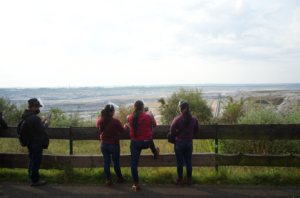
The first group was made up of seven compass who then went ahead to coordinate the arrival of the main delegation, together with local structures. This would turn out to be a difficult process, entailing struggles to obtain passports and visas, as well as restrictions caused by the ongoing covid crisis. This was representative for the mobility restraints that many marginalised and racialized people face when trying to enter European countries. Back in August we protested in front of the Mexican honorary consulate in Leipzig, to put pressure on authorities and make people aware of these facts. It was even more ironic when we found out that the consul is the CEO of Porsche Leipzig – not surprisingly he ignored our demands. Later this summer I participated in the climate camps in Leipzig and in Munich, where I held workshops on the topics of Zapatism, degrowth and pluriversality. I engaged in discussions about how we position ourselves as climate activists in Germany, and how we can relate our histories and struggles to those of the Zapatistas, the Rojava Kurds or to many smaller resistance movements that are ongoing.
Following the Munich camp, finally, the main delegation of 170 compass arrived in Vienna (out of all places) in mid-September. This all happened very fast and required people to work together to support the Austrian network, trying to organise accommodation and facilitate the arrival last minute. The atmosphere at the airport was very powerful, as we celebrated and sang songs to welcome the compass. Meeting them after all these months of anticipation and struggles was unbelievable, and an important source of hope. From this moment on, people were working day and night to plan the next steps of the journey. It was then decided that the compas will travel in groups of five to different regions across three stages. So, on the 22nd of September we welcomed two groups in Leipzig that stayed with us for a week, taking part in many events and encounters with local movements. Somehow, we managed to pull together a program, found local housing projects for them to stay in, and cook food. To our surprise, they preferred sausages, pizza and coca cola to pumpkin and rice – another proof that we cannot translate our moral standards onto different people’s contexts. As the compass made clear, the main objective of the journey was to meet with local movements in an intimate setting, rather than to speak at public events or lectures. Hence, we organised meetings with feminist organisations, postcolonial groups and the Latin American community in Leipzig alongside visits to significant places of resistance in and around the city.
The program was very strict, as the compass told us they wanted to meet as many groups as possible and focus on the “work” (after all, they were on a mission). Before coming to Europe, all delegates have been trained for months, thus knowing exactly what they wanted to share and what questions they wanted to ask. They told each group a detailed version of their history, starting way before the uprising in 1994, stressing the centuries long oppression that formed the basis of their resistance today. They also described their worldviews that are rooted in the indigenous identity and how this translates into their political and social organisation today. The compass was interested to hear about the history of Germany, especially Nazi Germany and the significance of the wall and eastern Germany. They stressed that each person’s history is important as their indigeneity is rooted in their interactions with their families, communities and the environment. The Zapatistas also asked many questions about how each group operates, how they are organised and how they sustain themselves. Communication wasn’t always easy, as everything had to be translated between Spanish and German, and two delegates only spoke the indigenous language Tzotzil.
My favourite moment was the visit to Pödelwitz, a town that used to run the risk of being evicted for coal mining. The compass took time to tell people about their history, their political organisation and their current struggles. They also listened to the residents’ accounts of their resistance and the oppressive consequences of coal mining industries in Germany, that have been a centre of environmental activism for several years. At the same time, another group of compass was visiting Lützerath, a town in the West of Germany that still runs the risk of being evicted. This way, I could feel the impact that the journey was making on many levels, by supporting these struggles and by providing hope and inspiration for people resisting and fighting for their rights in these places. As part of the organising network, I was lucky to witness some moments outside of these encounters that were even more insightful and sometimes surprising. It was beautiful to see how the compass interacted with people and the environment, as this was the first time that they left Mexico and were exposed to a different world. They were taking many pictures on their phones, of as the woods, the chestnuts, or the wild pigs in the forest. Being present in these moments made me rediscover some curiosity about the place I live in and reminded me to notice the small things that are so often overlooked while rushing through life.
So, what is it that we can learn from the “journey for life” and the initiative of the Zapatistas? Is this the start of something more powerful, a realisation of the interconnectedness of our lives and our struggles? How can we carry this seed further and combine local efforts and global alliances against social and environmental injustice?
Histories of resistance
Engaging with the Zapatista movement in its many forms, helps us understand the significance of colonial capitalism and how this relates to postcolonial subjects and social movements. It links historical issues of colonial dispossession and racism to contemporary global capitalism, while foregrounding the importance of transnational solidarity between actors worldwide. Since the 1980s, the Zapatistas have worked towards recovering land in resistance to the hegemonic growth of capitalism, to counter their oppression and to advance the project of autonomy and self- determination of Indigenous communities. The geo-political revolution in 1994 enabled radical democracy and egalitarianism through the temporary secession of the Mexican state. Thus, it represents in certain ways a successful fight against neoliberal capitalism and the creation of a postcolonial landscape. Since 2012, the Zapatistas and the CNI have initiated a process to share the issues and insights of Indigenous communities throughout Mexico into the national political sphere and popular media. This process of opening up and becoming more engaged within wider contexts, is also represented by the 2017/18 presidential elections, where for the first time an indigenous woman, Marichuy, took part as a candidate. The candidacy was not about winning elections, but about pointing out the triple impossibility of a poor, indigenous and woman president in the imagination of Mexican society and exposing the underlying racism and sexism. The Zapatistas have inspired and enriched the global struggle for climate justice and peace while reactivating and uniting struggles from the “left and the bottom”. Now, the journey in 2021 makes sense as the process of “coming out of their shells”, where members of the Zapatistas are actively fighting back against worldwide neo-colonial and capitalist oppression by showing their support for local groups across the world that share similar struggles.
Towards a decolonial praxis?
The Zapatistas stress how 500 years of indigenous dispossession led to this system of neoliberal control and exploitation. Their resistance and autonomy as a decolonial praxis, thus, is a productive lens to understand the contribution they make in challenging the mantra that there is no alternative to neoliberalism. According to the Zapatistas, their journey represents an antithesis to the “encounter” between European colonisers and indigenous populations in the Americas, as this time the indigenous people are “colonising” Europe. This juxtaposition of taken-for-granted history opens up a space for different agencies that are at play in drafting a just transition, and highlights the imperative of recognising perspectives by postcolonial subjects and oppressed people in many places.
It also provides an important reflection on the normative framings in Western academia that are deployed when discussing indigenous movements, or anti-capitalist transition ideas. For example, how can “degrowth” incorporate impulses and critiques from the global south into its blueprint for a just transition? How can we relate different worldviews and approaches while respecting their epistemological and cultural embeddedness?
What the Zapatistas remind us, is that decolonisation should, first and foremost, begin at “home”, within our own epistemological traditions and institutions. The meeting between the Zapatistas and European actors is, in a way, exemplary for the imperative of connecting different lines of thought that originate from different epistemic traditions and contexts. This way, it is an important starting point for sketching out ideas on pathways for social and economic change, to find out what agencies and tools are needed. Discussing decolonial degrowth perspectives in relation to the struggles of the Zapatistas and other indigenous and Southern-based movements is important to be able to grasp the depth of a just transition. It also provides a perspective on the value- based and ethical dimensions of the discourse and expressions of resistance to colonial capitalism. Inspired by the Zapatistas’ striving for “a world where many worlds fit”, multiple worldings and practices need to inspire the collective search for a socially just and ecologically stable world. If concepts only include one part of the population and essentialise others, they continue a cycle of systemic violence. Thus, in a carbon-constrained world, we must all work together for the same ends, but in pluriversally different ways that avoid this violence.
Towards a global solidarity?
Engaging with the Zapatistas’ embrace of values such as dignity, trust and autonomy, and their experience in the political organisation of grassroots democracy can be a starting point of building global solidarity as a viable agenda for a just, socio-economic transition. Through listening to each other’s histories and stories, actors are affirmed in their struggles, as they realise how people across the world are concerned with similar issues, in different ways.
This horizontal interaction between actors entails an emancipatory process of restored indigeneity and self-determination. In their communiques and speeches, the Zapatistas highlight the importance of relating their claims to oppressed and marginalised people everywhere (the poor, the women, the racialised). In this way, they construct a global consciousness that recognises the grievances and hopes of people worldwide as deeply intertwined. “Relating” as a value is antiracist and anti-essentialist as it defines identities according to a relation, rather than to a “root identity”, which is a tool for seclusion. Inspired by Glissant’s “poetics of relation” we might want to think about a relational conception of human existence as a tool to counter the West’s imposition of universalist values. As the Zapatistas always foreground, “we are equal because we are different”. Hence, we need to move from the conception of difference as a source of conflict, to difference as an implicit tool for the remaking of the word, making space for “a world where many worlds fit”. Difference and diversity should be a core principle of our discourse and actions rather than an “add on” or separate category.
Our contacts with people, groups, collectives, movements and organizations from different parts of the planet have shown us a diverse, multiple and complex world. This has reinforced our conviction that any proposal of hegemony and homogeneity is not only impossible, but above all criminal. (communiqué June 2021[1])
It is essential that environmental movements in the north create alliances with anti-imperialist struggles in the global south who have been focused on these issues for decades. As the only successful social movements for serious economic and social change have been the anti- colonial movements, that should be the force we need to mobilise around. Instead, during COP26 in Glasgow right now, “leaders” continue making empty promises while marginalising the voices of many from the global south and those oppressed within society, that know best what needs to be done in their communities to fight climate change and inequality. Although many activists made their way to Glasgow to challenge “business as usual”, the voices of women, of the poor, of racialised people continue to be side-lined, while the powerful leaders of the neoliberal world order (politicians and billionaires) take centre-stage. It is clear, that this can hardly lead to any lasting change in the struggle to protect our earth, our communities and ensure wellbeing for all. Hope can only be found outside these “official spaces”, at alternative gatherings, protests and meetings that emerge from the common frustration of those excluded from these events. The Zapatistas (actually the same group who was in Leipzig) visited Scotland right before the conference. By meeting with many local groups and communities, they affirmed actors in their struggles. In some ways, these encounters and actions are much more lasting than those commitments made at the summit.
The Zapatista worldview is in constant conflict with the interests of the industrialised world, which strives for “progress” and “growth”. Because colonial capitalism is operating globally, we also need to resist collectively and globally. This entanglement of global capitalism can be seen in the plan of the current megaproject “Tren Maya”. In Yucatan, Mexico, a 1500 km long railway line is to be built to boost tourism in this Mayan region. The project would cause the destruction of one of the last rainforests in southern Mexico, disregarding the rights of the indigenous population. It leads to land grabbing and displacement as well as additional militarisation in one of the most conflict-ridden regions of the country. German capital and German companies are also involved in the planning, construction and commissioning, with DB Consulting & Engineering, SIEMENS and TÜV Rheinland, as well as the German arms industry. The Deutsche Bahn markets itself as an ecological company and means of transport, yet the company repeatedly participates in neo-colonial projects that destroy ecosystems and livelihoods of people. On the 30th of October we protested for #NoAlTrenMaya in front of the Leipzig central station and many other locations across the world. This would not have been possible without the solidarity and mobilisation by the Zapatistas and exchanges throughout the journey.
What about you?
Through the “journey for life” and the encounter with the Zapatistas, we move beyond the space of resistance, illuminating spaces of possibility. At the same time, we need to build our own narratives and imaginaries of a better life, that are rooted in our own indigeneity and are enriched through relationality between plural experiences and actors. While practices of conviviality and care are ancient, they are also re-emerging and evolving as a part of a mosaic of movements that are struggling against neoliberal oppression. In Europe, people struggle to identify with their indigeneity, as neoliberalism pushes for an individualistic conception of the self and the environment. However, indigeneity simply means living in harmony with our ecosystems that we are embedded in and acknowledge our world beyond the simply human to break with the nature/culture divide. We need to acknowledge that indigenous ideas are still present and cannot be easily erased as they have existed for ten-thousands of years in comparison to the relatively new concept of the ‘West’. This also includes a different conception of time, as life plays out in a circular rhythm of a resurgence of indigeneity, rather than in a linear process from birth to death. While it is impossible to reproduce ideas from the Zapatistas and apply them to local contexts in Europe, a confrontation with their worldviews can inspire us to search for commons and leftover indigenous practices in our surroundings. For example, there is a resurgence of solidary agricultures (Solawis) in Germany that can be identified as sources outside of capitalist logic and thus as some forms of indigenous commons. This can be a source of hope and strength for dealing with the familiar and the “everyday” as a basis for resistance and for social mobilisation.
Soon there will be another megaproject or event that will demand a collective protest and resistance from the left and the bottom across the world. While the first chapter of the “journey for life” is soon coming to an end, the Zapatistas have encouraged us to keep questioning, to keep fighting and to keep hoping for a better world. It is down to us to plant the seed of resistance and keep these visions alive.
‘Is Zapatismo one more grand answer to the problems of the world?
No. Zapatismo is a bunch of questions. And the smallest can be the most disturbing:
And you?
In the face of the capitalist catastrophe, does Zapatismo propose an old-new idyllic social system which would repeat the imposition of hegemonies and homogeneities now deemed “good”?
No. Our thought is small like us: it is the efforts of each person, in their own geography and according to their own calendar and customs, which will perhaps allow the liquidation of the criminal and, simultaneously, the remaking of everything. And everything is everything.’ (communiqué June 2021)
Franca Marquardt is part of the Department of Anthropology at the University of Leipzig, Germany. She tweets as @FrancaMarquardt
References
Escobar, A. (2018). Designs for the pluriverse: Radical interdependence, autonomy, and the making of worlds. Duke University Press.
Glissant, É. (1997). Poetics of relation. University of Michigan Press.
Khasnabish, D. A. (2013). Zapatistas: Rebellion from the Grassroots to the Global. Zed Books Ltd.
Nirmal, P. and Rocheleau, D. (2019). “Decolonizing degrowth in the post-development convergence: Questions, experiences, and proposals from two Indigenous territories.” Environment and Planning E: Nature and Space 2(3) 465-492.
Olesen, T. (2004). Globalising the Zapatistas: from Third World solidarity to global solidarity?. Third World Quarterly, 25(1), pp.255-267.
For a list of all communicados: https://radiozapatista.org/?page_id=3365&lang=en
http://enlacezapatista.ezln.org.mx/
[1] Members of the Zapatistas have shared ‘communiques’ to the public since the announcement of the journey in the summer of 2020. This way, they regularly give updates on their visions and the meaning of the journey. English versions can be found here: https://radiozapatista.org/?page_id=3365&lang=en
[:]

