News:

image/svg+xml image/svg+xml
radio

Presentation of “Critical Thought vs. the Capitalist Hydra” book, volume I

Sorry, this entry is only available in Español. For the sake of viewer convenience, the content is shown below in the alternative language. You may click the link to switch the active language.

El Pensamiento Crítico Frente a la Hidra Capitalista I

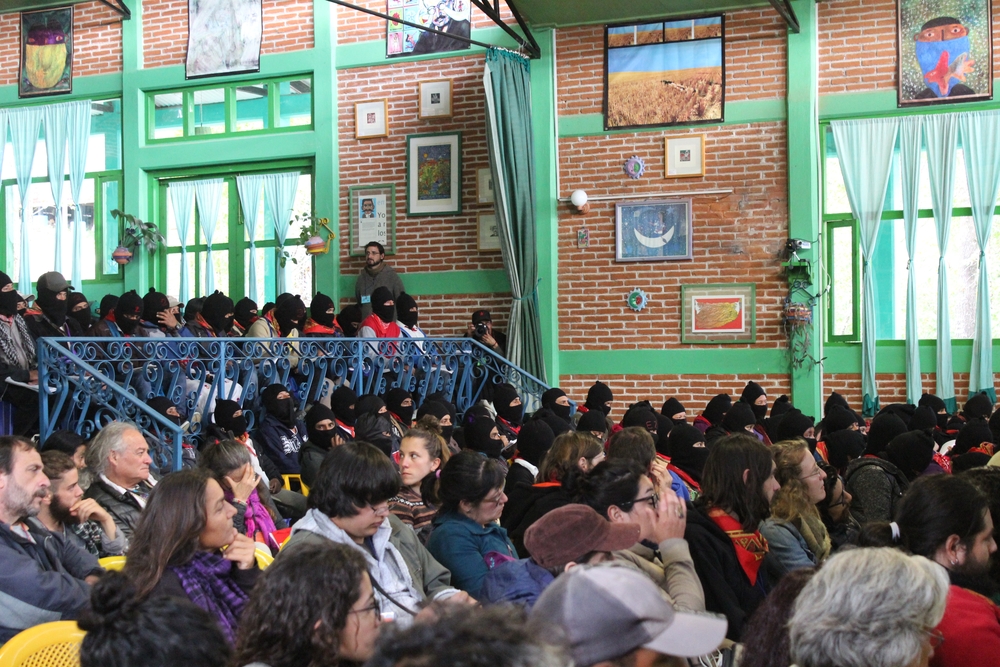
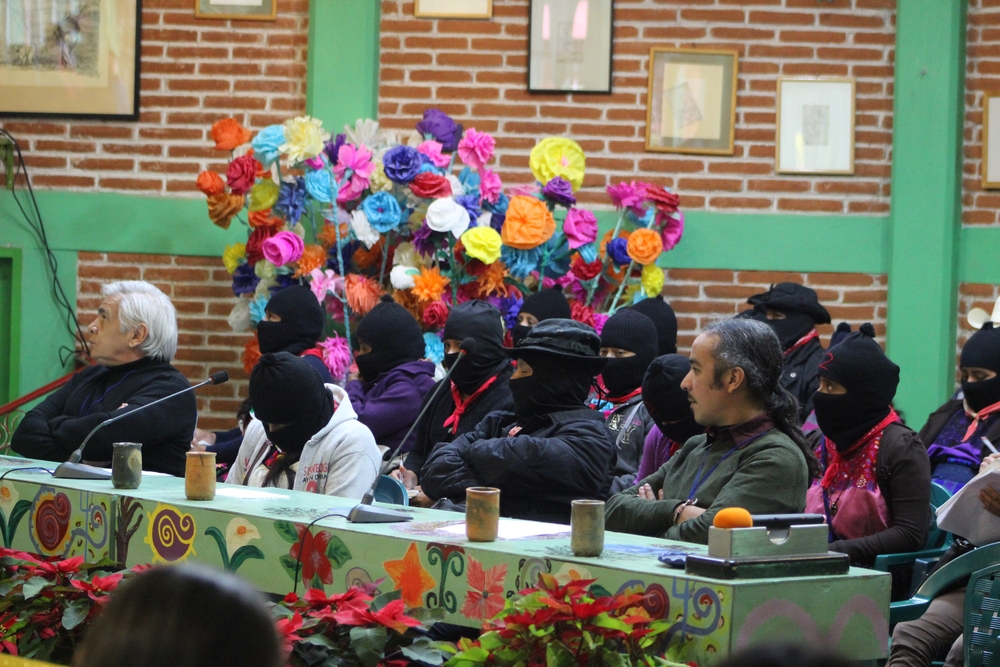
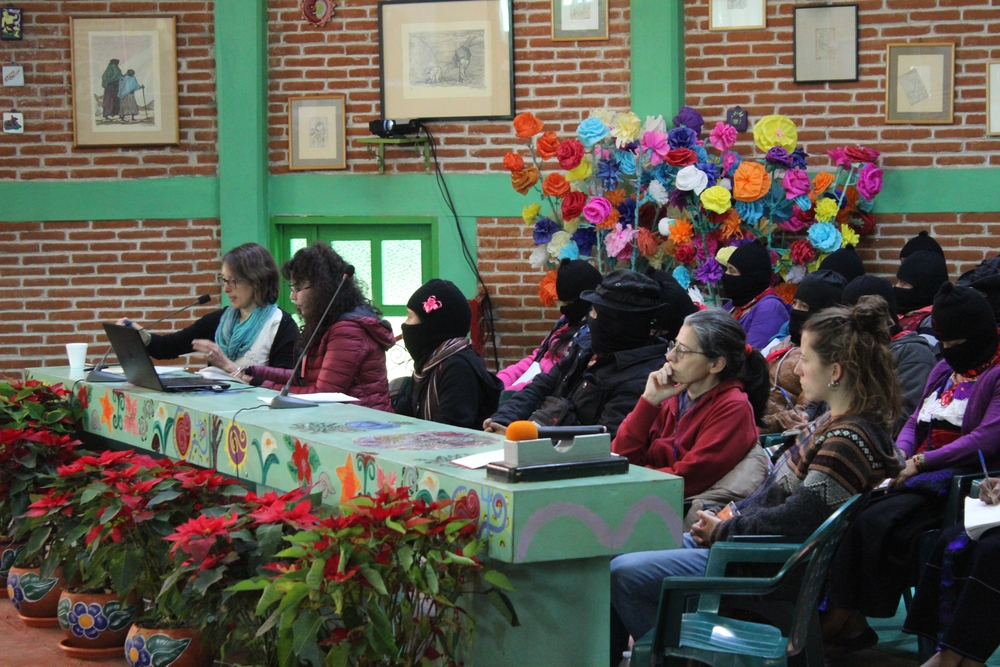
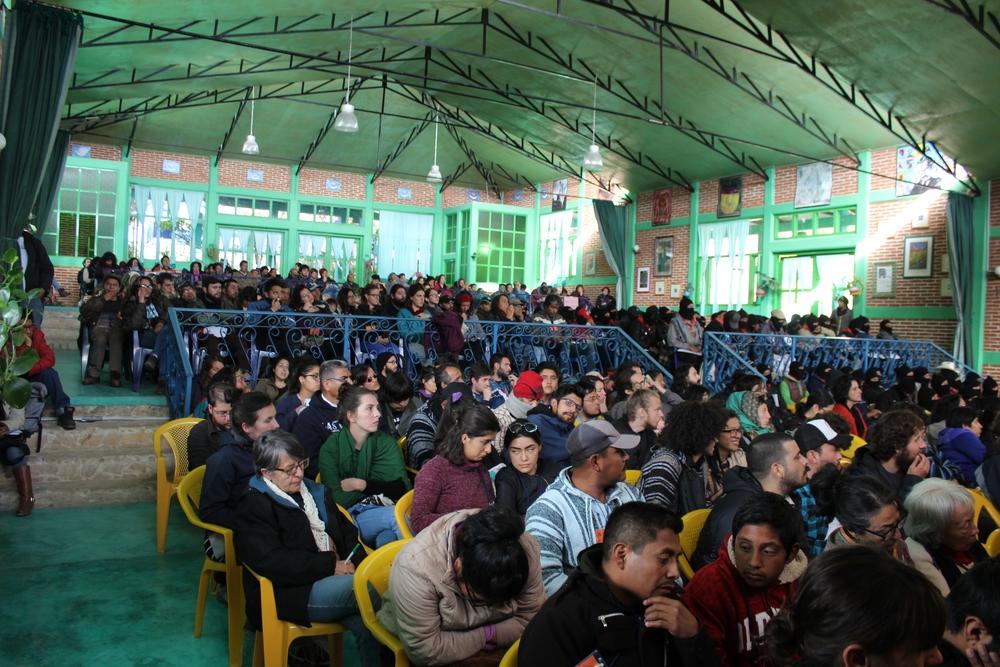
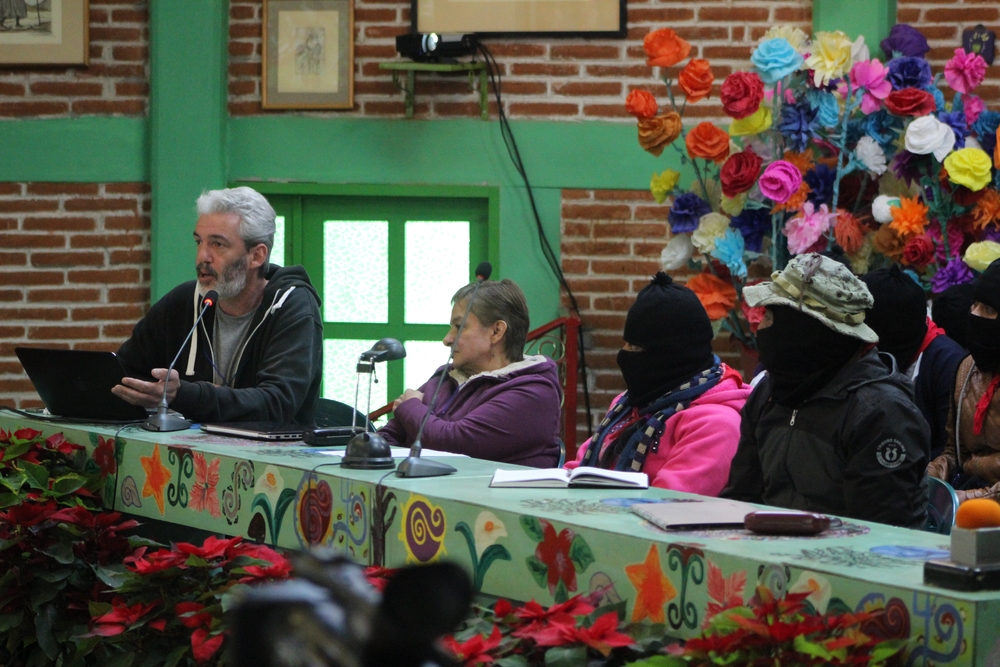
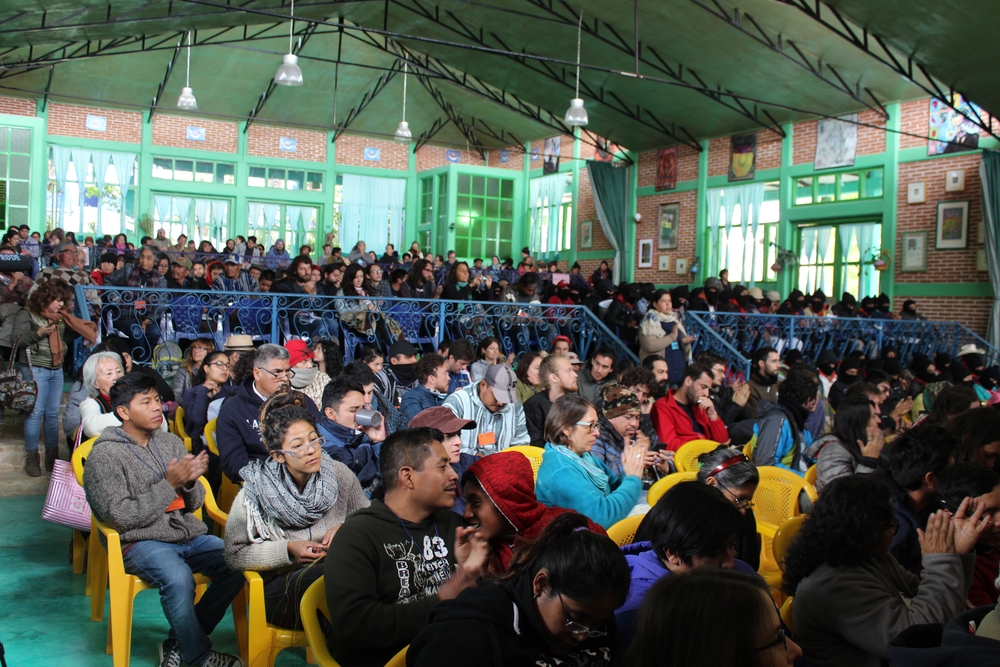
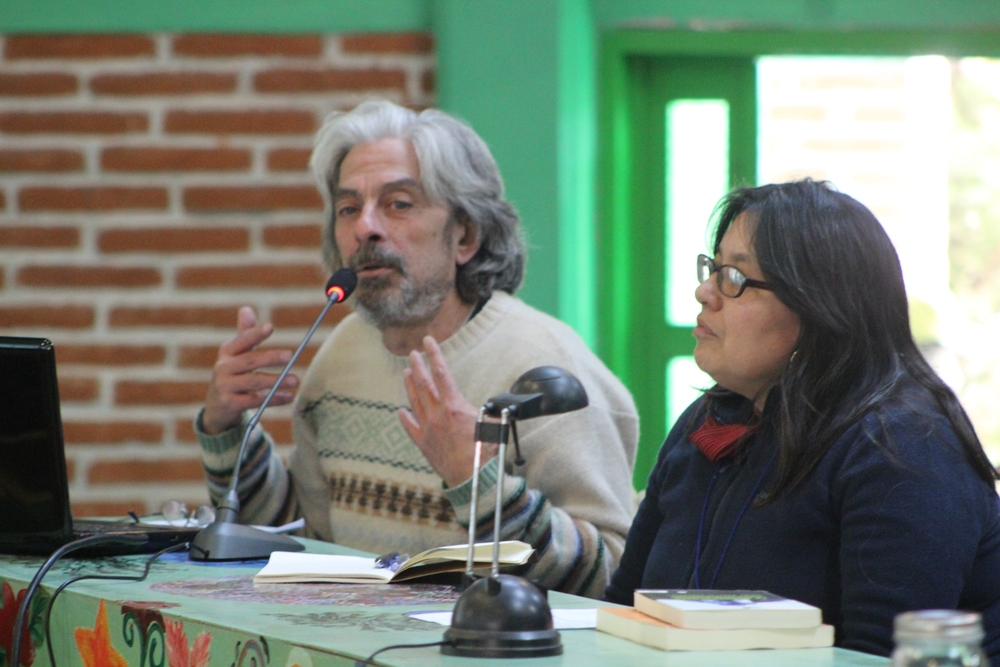
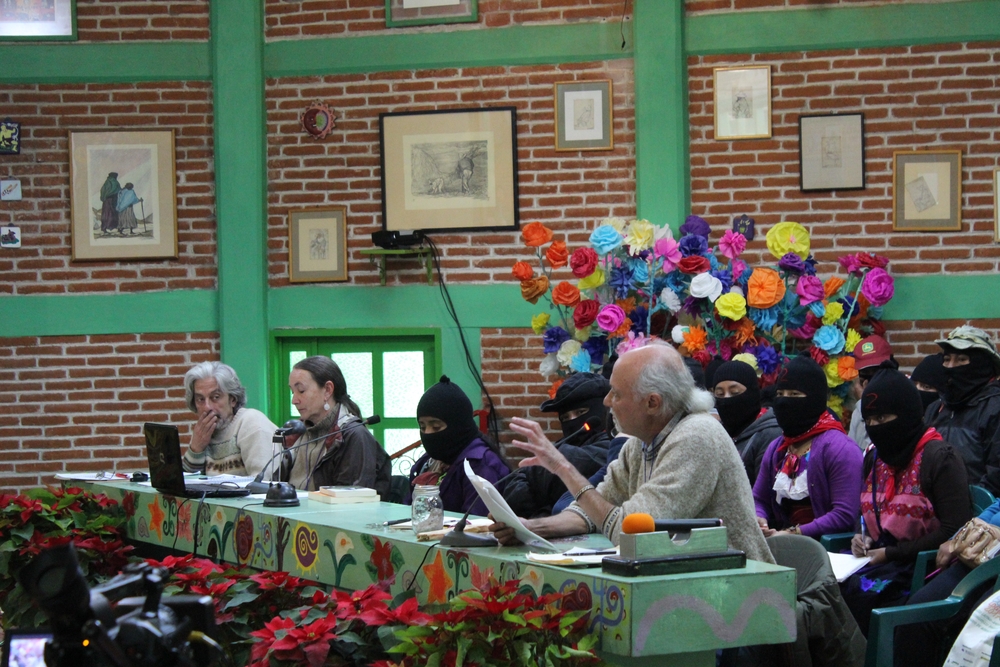
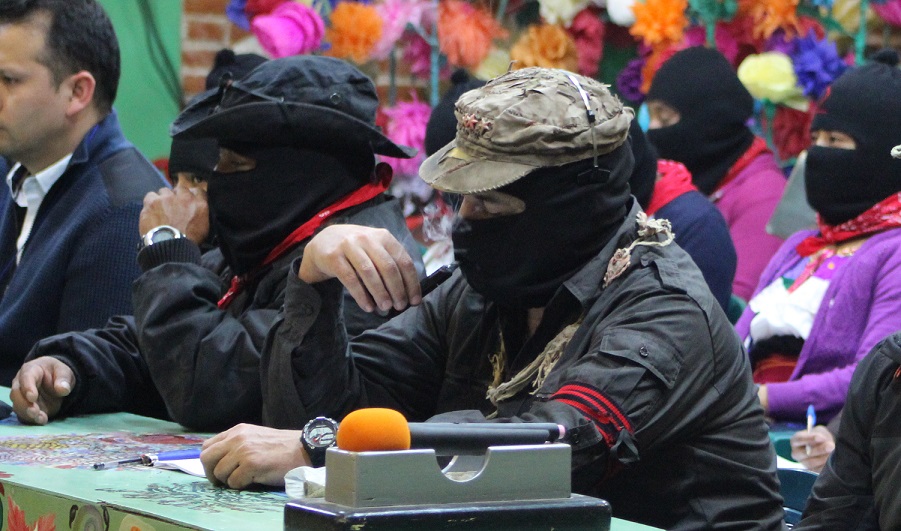
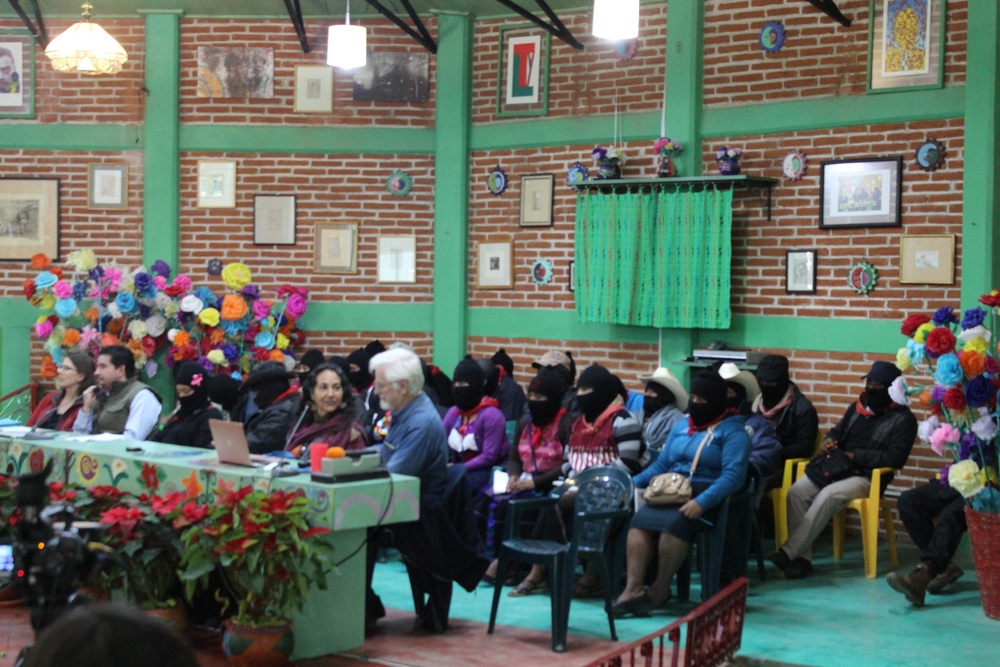
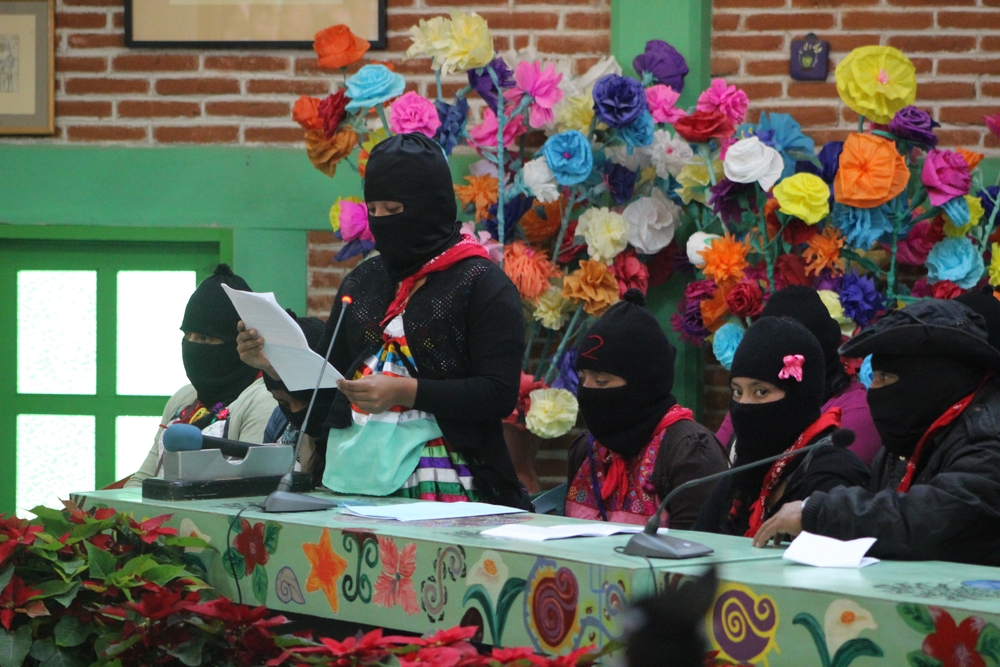
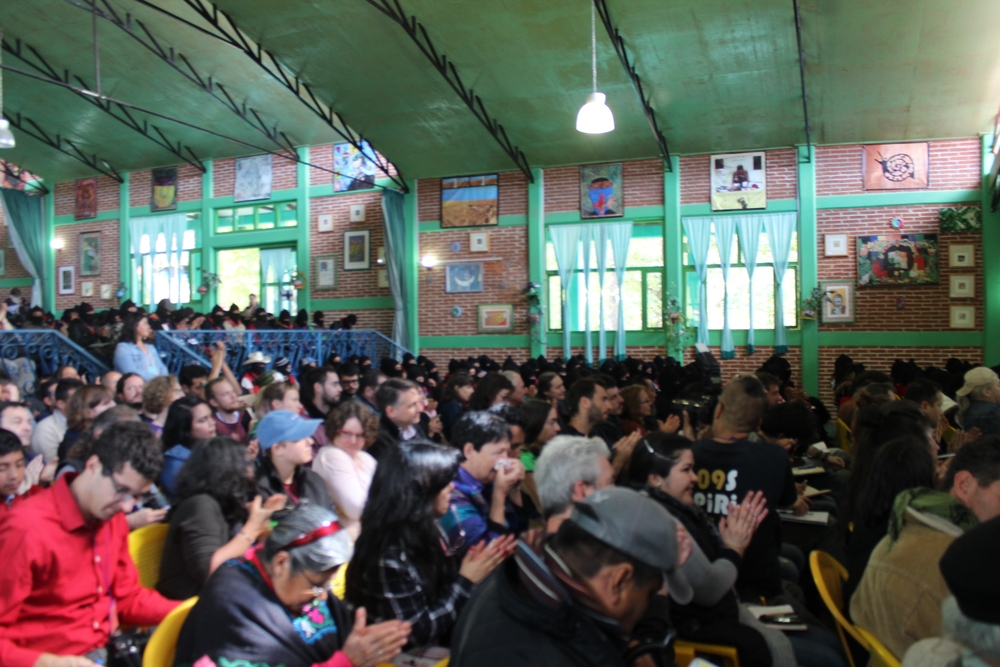
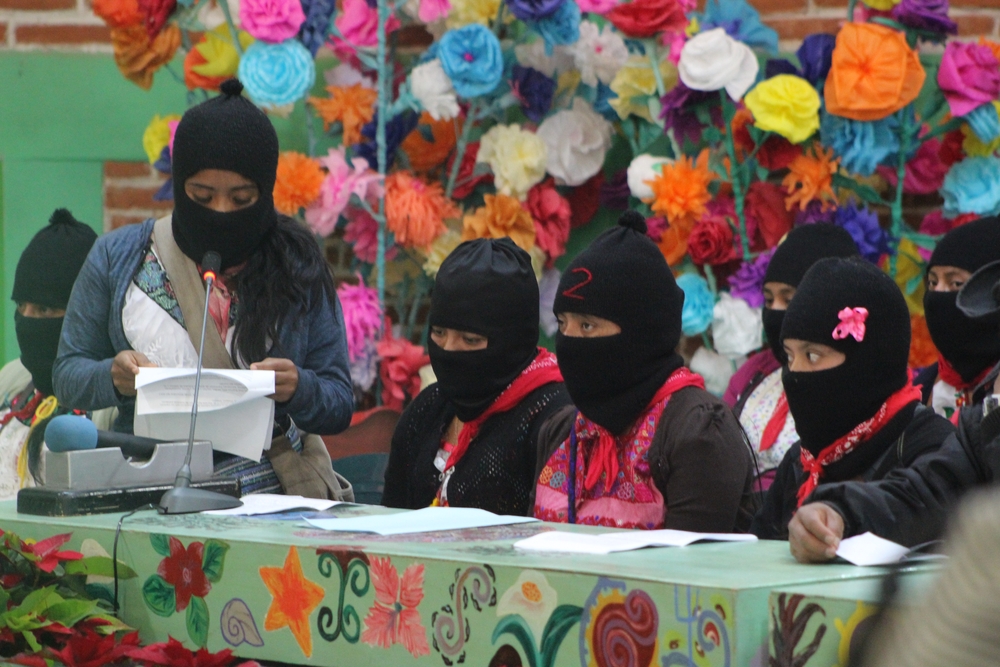
El sábado 18 de julio a las 17:00 horas se presentará en la Ciudad de México el primer volumen del libro que resume las participaciones en el seminario-semillero que tuvo lugar en el CIDECI-Unitierra en mayo de 2015. El primer volumen incluye las participaciones de la Comisión Sexta del EZLN. La presentación será en Zapotecos No. 7, Col. Obrera. Aquí el índice:

ÍNDICE volumen Uno (participaciones de la Comisión Sexta del EZLN en el Seminario “El Pensamiento Crítico frente a la Hidra Capitalista”.

.- Prólogo: De cómo llegamos a la Cofia del Vigía y lo que desde ahí miramos. SupGaleano.

I.- Nuestra mirada hacia dentro.

Algunas pistas:

.- La Tormenta, el Centinela y el Síndrome del Vigía. SupGaleano.

.- Ser Zapatista (palabras del Subcomandante Insurgente Moisés en el Homenaje a los compañeros Luis Villoro Toranzo y Maestro Zapatista Galeano. 2 de mayo del 2015).

.- Luis Villoro Toranzo, el zapatista (palabras del SupGaleano en el Homenaje a los compañeros Luis Villoro Toranzo y Maestro Zapatista Galeano. 2 de mayo del 2015).

.- Apuntes de una vida (palabras del SupGaleano en el Homenaje a los compañeros Luis Villoro Toranzo y Maestro Zapatista Galeano. 2 de mayo del 2015).

Algo de lo que ha cambiado:

.- Economía Política I. Una mirada desde las comunidades zapatistas. Subcomandante Insurgente Moisés.

.- Economía Política II. Una mirada desde las comunidades zapatistas. Subcomandante Insurgente Moisés.

Hacia una genealogía de la lucha de las zapatistas:

.- La lucha como mujeres zapatistas que somos I. Comandanta Miriam.

.- La lucha como mujeres zapatistas que somos II. Comandanta Rosalinda.

.- La lucha como mujeres zapatistas que somos III. Comandanta Dalia.

.- La lucha como mujeres zapatistas que somos IV. Base de Apoyo Lizbeth.

.- La lucha como mujeres zapatistas que somos V. Escucha Selena.

.- Visión de los Vencidos. SupGaleano.

Apuntes de resistencia y rebeldía:

.- Resistencia y Rebeldía Zapatistas I. Subcomandante Insurgente Moisés.

.- Resistencia y Rebeldía Zapatistas II. Subcomandante Insurgente Moisés.

.- Resistencia y Rebeldía Zapatistas III. Subcomandante Insurgente Moisés.

II.- Nuestra mirada a la Hidra.

.- El Muro y la Grieta. Apuntes sobre el método zapatista. SupGaleano.

.- El Método, la Bibliografía y un Drone en las profundidades de las montañas del Sureste Mexicano. SupGaleano.

.- Medios, Tercios, Cuartos. SupGaleano.

.- Etcétera. SupGaleano.

.- La Genealogía del Crímen. SupGaleano.

.- Una Guerra Mundial. SupGaleano.

III.- Qué hacer:

.- Organizarse. Subcomandante Insurgente Moisés.

.- Más Semilleros. Subcomandante Insurgente Moisés y SupGaleano.

IV.- Signos y Señales:

(participación de algun@s compas Artistas Musiqueros y Gráficos).

Fuente: Enlace Zapatista

radio

Los zapatistas no están solos.

Sorry, this entry is only available in Español. For the sake of viewer convenience, the content is shown below in the alternative language. You may click the link to switch the active language.

Tras las agresiones a las bases de apoyo Zapatistas, Adherentes a La Sexta , integrantes de la Red contra la Represión y alumnos de la escuelita zapatista, se manifestaron con pintas y quema de basura electoral frente a las oficinas del Partido Verde Ecologista ( PVEM) en el D.F. para responsabilizar a Manuel Velazco Coello (Gobernador del Estado de Chiapas y miembro del PVEM) por las agresiones sufridas, y para mostrar la solidaridad con las comunidades zapatistas ante posibles futuras agresiones, pues se teme que en el marco de las próximas elecciones en Chiapas , se desate la violencia contra aquellos que no contemplan la partidocracia como opción .

[showtime]
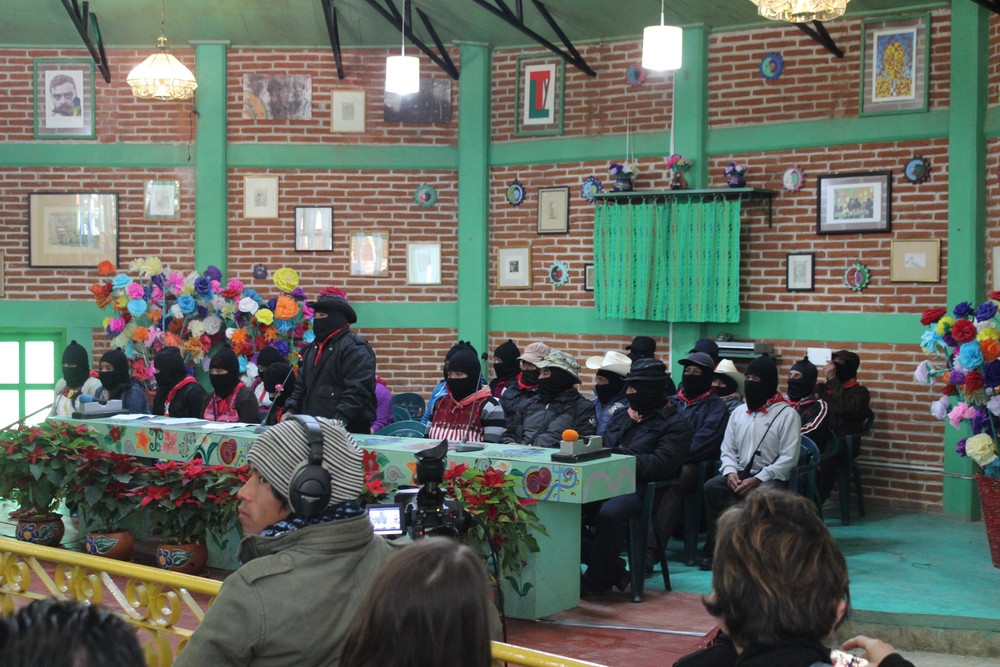
Por lo anterior, individuos y colectivos simpatizantes, hacen un llamado a estar pendientes y solidarios con las comunidades zapatistas y a realizar una jornada global del 11 al 19 de Julio denominada “Los pueblos zapatistas no están solos”.

México D.F 8 de Julio 2015.

radio
Radio Zapatista

Between death and life: a year without Marcos

Sorry, this entry is only available in Español. For the sake of viewer convenience, the content is shown below in the alternative language. You may click the link to switch the active language.

Por: Eugenia Gutiérrez. Colectivo Radio Zapatista.
25 de mayo, 2015.

Y se fue como llegó, despacio y de pronto a la vez. Caminó la noche y la lluvia hacia un amanecer distinto, pero cargando treinta años de trabajo colectivo y devolviendo honorablemente una estafeta-bastón que los pueblos indígenas zapatistas le habían entregado.

Ha pasado un año desde la muerte autoproclamada de un Subcomandante Insurgente Marcos que desenterró al maestro Galeano junto con miles de personas para darle y darse (¿darnos?) vida nueva. El desprecio vestido de sorpresa de quien no comprende lo profundo circuló un ratito en medios comerciales mientras miles de seguidores del difunto recorrían sinceramente varias de las etapas de duelo que planteara la psiquiatra Kübler-Ross, sin llegar muy claramente a la aceptación. De hecho, todavía no hemos visto pintas ni camisetas ni tuiters que acepten la decisión del Ejército Zapatista de Liberación Nacional con un contundente “tod@s fuimos Marcos”. Pero las comunidades zapatistas, tan relacionadas de otro modo con la muerte, han procesado ese fallecimiento necesario, vitalizador y voluntario con el mismo respeto con que enfrentan otras muertes, las innecesarias, las que no debieron ser, no así.

Justo en ese contexto de resignificación de la muerte como vida, del cuerpo inerte como semilla, de la ausencia forzada como presencia decidida, no en la teoría sino en la práctica, se nos vino encima una cascada de dolores que pudieron haberse evitado. Como habitantes de México y del mundo, a lo largo de este año turbulento hemos recorrido un verdadero campo minado de noticias que nos han provocado un insomnio interminable. El paquete de reformas estructurales que organismos y empresas supranacionales diseñaron para México había sido firmado en tiempo y forma. Casi de inmediato, los vítores que provocó entre las élites millonarias se mezclaron con los gritos de quienes padecieron desde la pobreza los resultados violentos de ese diseño que se tragó de un trago siglos de lucha independentista y décadas de movimientos obreros, campesinos, laborales, indígenas, feministas, ecologistas, magisteriales y estudiantiles. Entonces llegó la noche de Iguala para mostrarnos de qué está hecho el sistema político y económico que nos parasita aquí y en todos lados. Pero también llegó un anuncio que apenas vamos descifrando. El zapatismo hablando de “herencia”, de “legado”, de cosecha para repartir en cachitos pesadísimos que se ofrecen a quien los quiera recibir en un semillero.

(Continuar leyendo…)

radio
Subcomandante Insurgente Moisés

Resistance and Rebellion III. Subcomandante Insurgente Moisés. 8 May

Listen here: (Descarga aquí)  

The Word of Subcomandante Insurgente Moisés

May 8, 2015

Good afternoon compañeros, compañeras, brothers and sisters.

Perhaps by continuing our explanation of how resistance and rebellion are weapons for us you will better understand some of the things that our compañeros and compañeras here at the table have talked about.

Through our resistance and rebellion, we have come to understand that by putting resistance and rebellion into practice we confirm that we will not allow in our struggle what happened in 1910, when so many of our fellow Mexicans died. Who took advantage of that situation?

(Continuar leyendo…)

radio
JBG de Garrucha

Junta de Buen Gobierno from La Garrucha, Our Path to Future, reports paramilitary assault

(Continuar leyendo…)

radio
Comandanta Dalia

Comandanta Dalia – 6 May 2015

Listen here: (Descarga aquí)  

Good evening compañeros and compañeras, brothers and sisters.

I’m going to explain a little bit of what compañera Comandanta Rosalinda said.

Just as she explained, it is now my turn to talk about how we become authorities. From 1994 on, we knew that we had rights as women. That was when we woke up. This is how little by little we grew to understand the work of the compañeras.

In the communities, in the regions, we began the practice of organizing ourselves to fight for the good of the community, without having to have an education to do so.

In 1994, we realized that as women, as mothers and fathers, we had the courage to send our husbands, our sons, our daughters to fight, and we knew well that to confront the enemy is not easy and one can come back alive or dead. But we never dwelled on those things. We were clear that the women had the responsibility to raise whomever of our sons and daughters were left. This is when we understood that we thought the same way as the compañeros.

(Continuar leyendo…)

radio
Comandanta Rosalinda

Comandanta Rosalinda – 6 May 2015

Listen here: (Descarga aquí)  

Good evening compañeros and compañeras, brothers and sisters.

What compañera Comandanta Miriam just explained is all true. We were poorly treated, humiliated, and unappreciated because we never knew that yes, we did have the right to organize, to participate, to do all types of work; this is because no one had given us an explanation of how we could organize to get out of this exploitation.

At that time we were all in the dark, we didn’t know anything. But during the time of clandestinity, there came a day when some compañeras were recruited, and they went on to recruit other compañeras village by village.

Then came the time to name a compañera to be the local authority for each community. They named me as a local authority of my community. That is when I started going to meetings in order to bring more information back to the community. Later on we held meetings with the compañeras in the village to explain to them how the collective work could be organized, and to also to explain to them that its necessary to have compañeras who are insurgents and milicianas.[i]

(Continuar leyendo…)

radio
Radio Zapatista

A critic to etcetera or for an exact social science, by sup Galeano

(Continuar leyendo…)

radio
Subcomandante Insurgente Moisés

Resistance and Rebellion II. Words of Subcomandante Insurgente Moises. May 7, 2015

Words by Subcomandante Insurgente Moisés


(Descarga aquí)  

May 7, 2015 (evening session)

Good evening, compañeros, compañeras, brothers and sisters.

It seems like a splash of cold water on our faces was indeed what we needed, because now we are definitely getting some thought-provoking ideas.

So we will need to translate this from Spanish to Tzeltal, Tojolabal, Tzotzil, and Chol, and from there a joint response will arise, because there are some things proposed by the compañeros at this table that we are interested in discussing.

We continue with our words of explanation and discussion on what resistance and rebellion mean to us as Zapatistas.

For us, as an organization that resists and struggles in rebellion, we first need to be clear on why one would resist and rebel. If we are not clear on the “Why?” the “For what?” and the “From what?” we simply cannot go forward.

(Continuar leyendo…)

radio
Subcomandante Insurgente Moisés

Resistance and Rebellion I. Subcomandante Insurgente Moisés. May 6, 2015

Listen here: (Descarga aquí)  

Words of Subcomandante Insurgente Moisés
May 6, 2015

Good afternoon, compañeros, compañeras, brothers and sisters.

I am going to talk to you about how our resistance and rebellion are our weapons.

Before we begin talking about resistance and rebellion, I want to remind you that we are an armed group. We have our weapons, as one more tool in the struggle, that’s how we explain it now. Our weapons are a tool of struggle, just like the machete, axe, hammer, pick, shovel, hoe, and other such things. Each of these tools has its function, but the function of a weapon, well, if you use it, you kill.

So in the beginning, when we rose up at the dawn of the year 1994, a movement of thousands of Mexicans from all over the country emerged, grew to millions, and pressured the government, the baldy—that’s what we call him, Salinas the baldy—to sit down and dialogue with us, and at the same time urged us to sit down to dialogue and negotiate.

We understood the call of the people of Mexico. So we gave the order to retreat from violent struggle. It was then that we discovered, through the compañeras—because in combat our people died—but the compañeras were developing what we might call another way to struggle. Because the government, a month later, a year, two years later, wanted to buy us off, as we put it, they wanted us to accept aid and forget about struggle.

(Continuar leyendo…)