[:es]El Abordaje. Del cuaderno de apuntes del Gato-Perro[:en]The Boarding[:]
[:es]Del cuaderno de apuntes del Gato-Perro:
El Abordaje.
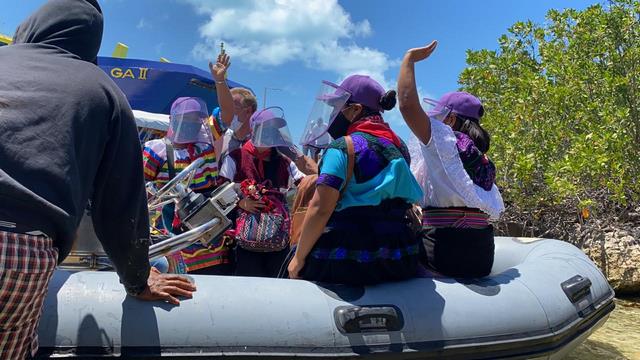
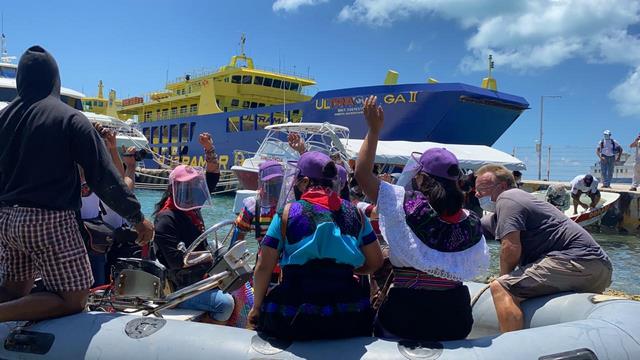
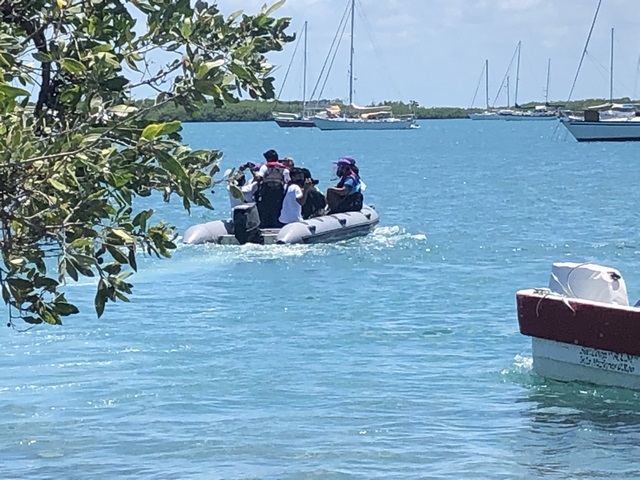
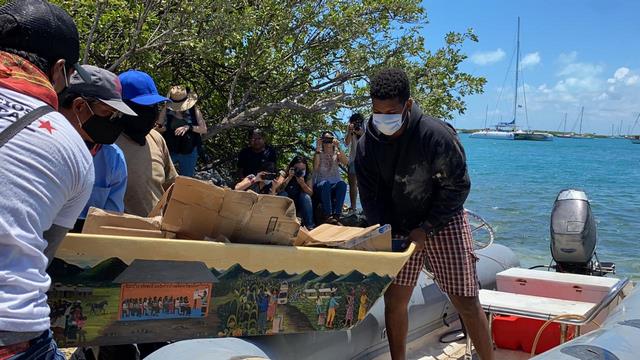
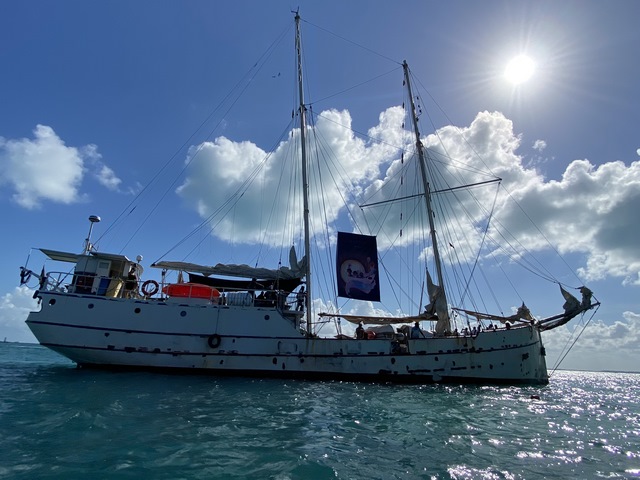
La Montaña fue abordada el día 30 de abril del 2021, siendo las tales horas. El navío se encontraba fondeado a unas 50 brazas del puerto, “alejado del bullicio/ y la falsa sociedad”. Revoloteaban a su alrededor gaviotas reidoras, cormoranes, fragatas tijeretas, corocoros, y hasta un colibrí cándido, extraviado, buscaba hacer nido en el púlpito de proa. En la carena, bajo la línea de flotación, delfines botella tamborileaban una cumbia, un tiburón ballena llevaba el ritmo con sus aletas y la manta raya extendía sus alas negras como caderas volando.
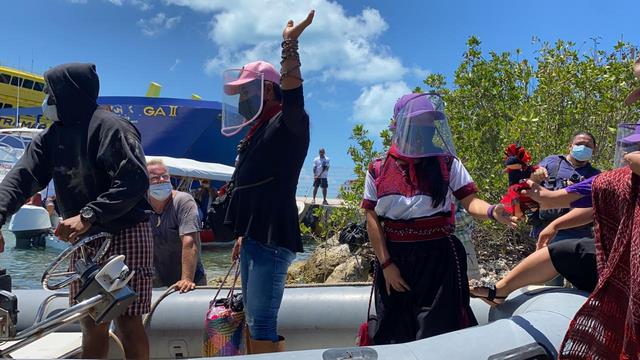
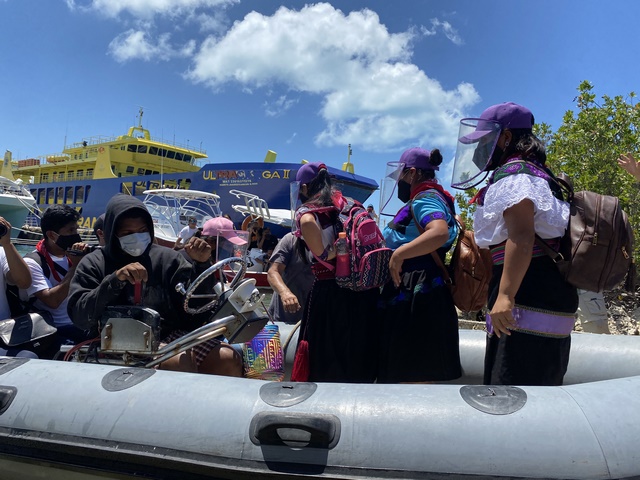
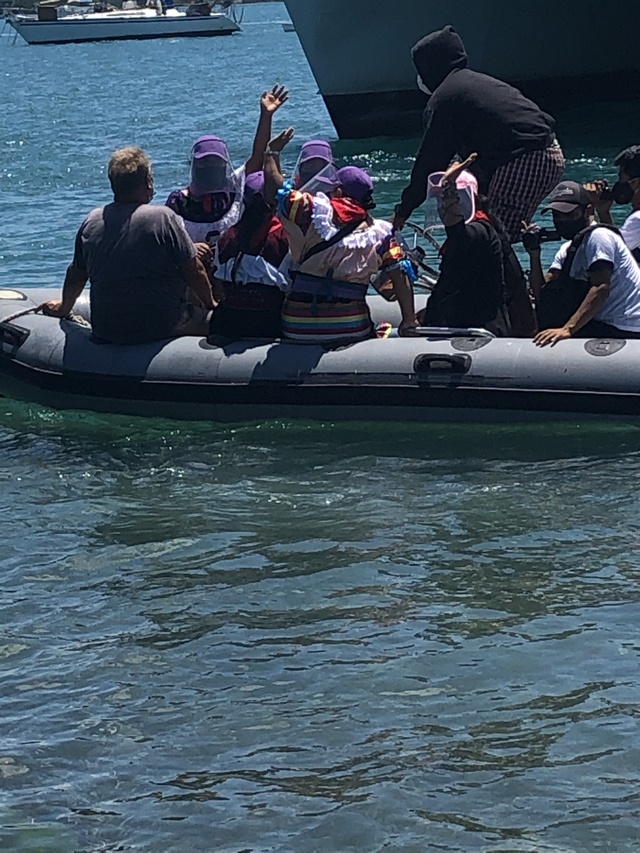
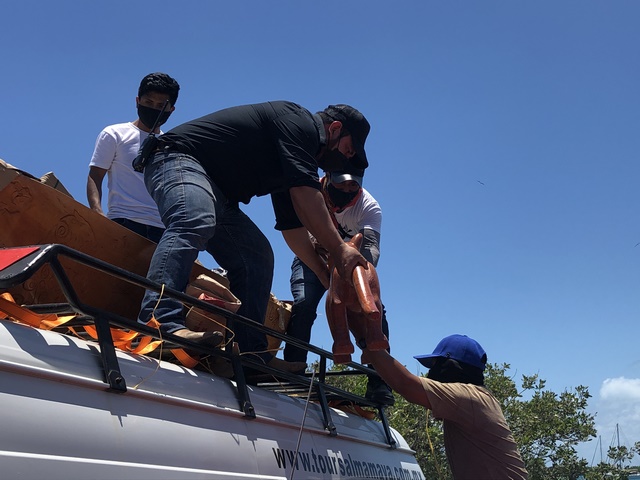
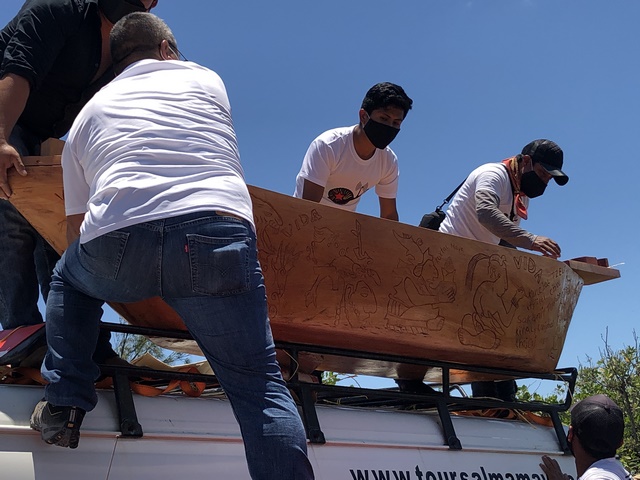
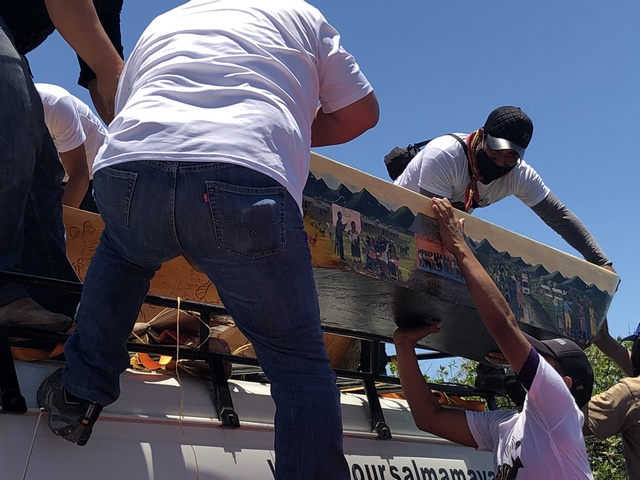
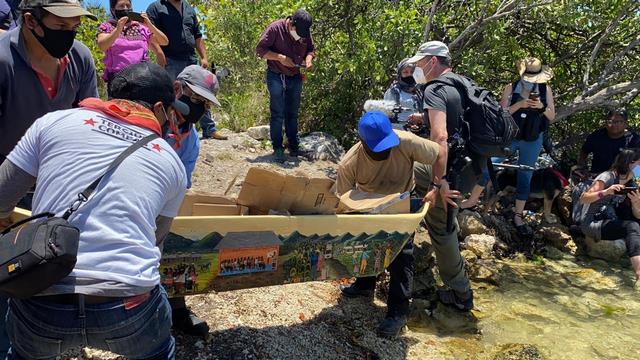
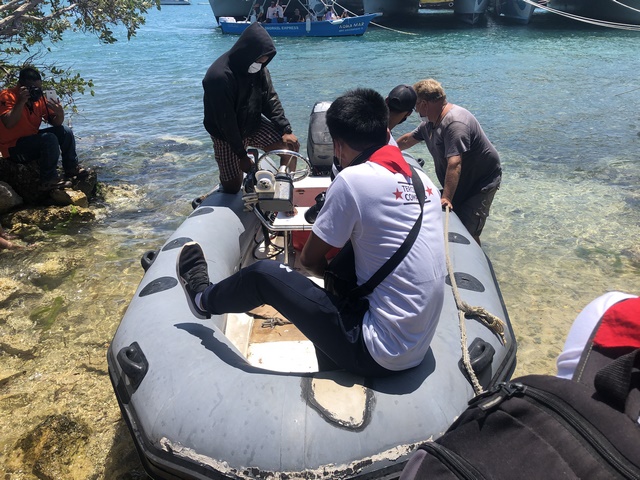
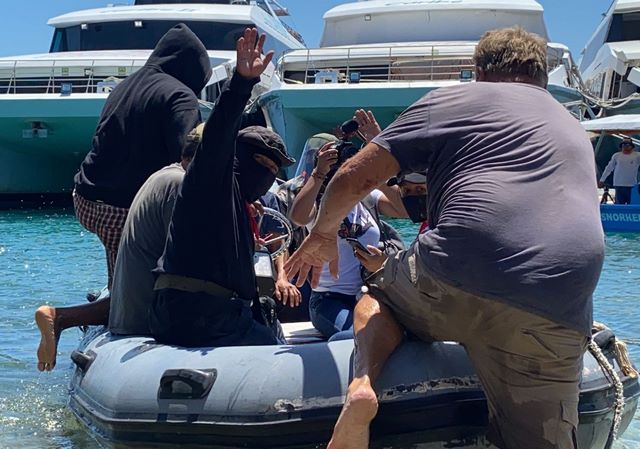
El grupo bucanero iba encabezado por el Subcomandante Insurgente Moisés quien, con una tropa formada por una insurgenta tercia, un insurgente choferólogo y mecánico, un base choferólogo, 5 terci@s, una comandanta y dos comandantes, asistía para despedir a la delegación marítima, el Escuadrón 421, y comprobar, in situ, que la embarcación reunía lo necesario para la epopeya náutica. Un equipo de apoyo de la Comisión Sexta asistía para redactar las esquelas de los caídos en la acción.
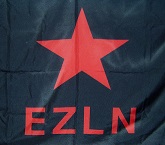
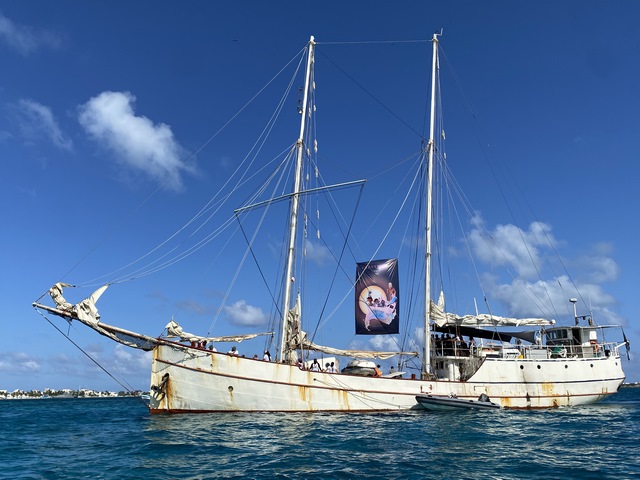
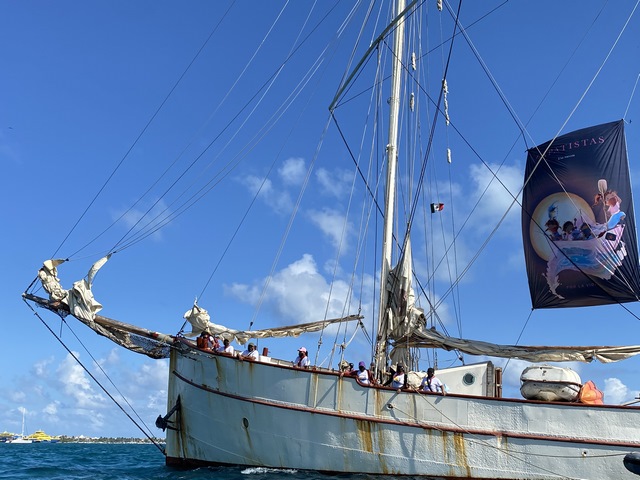
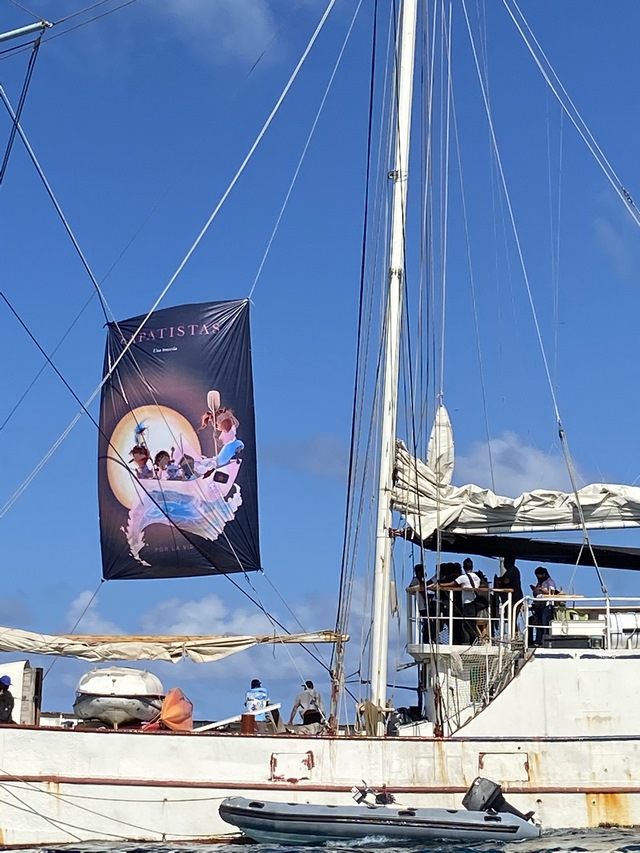
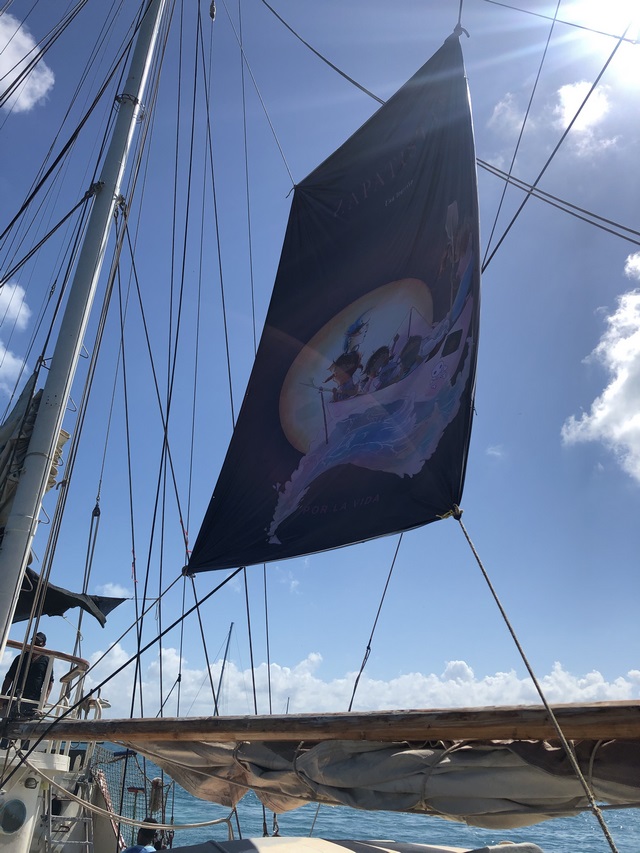
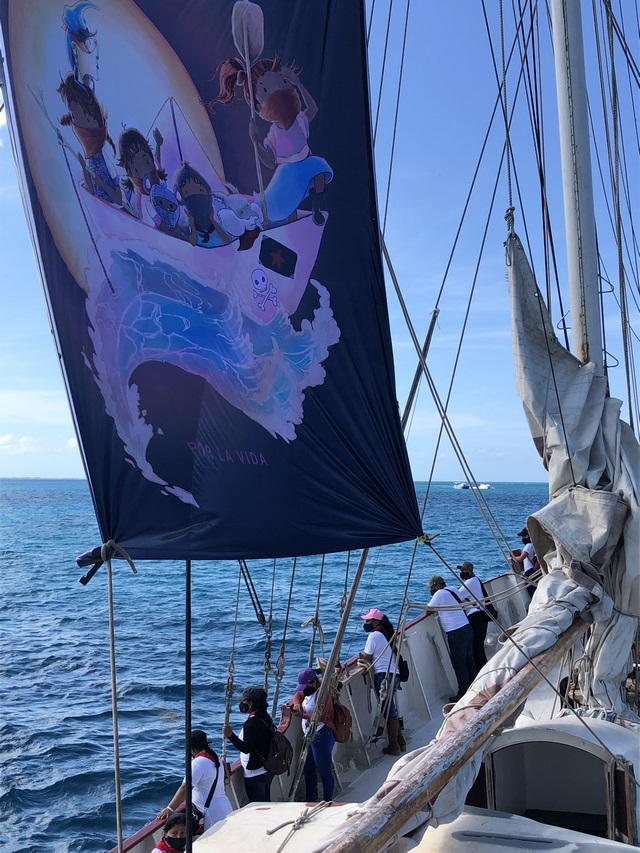
No hubo resistencia por parte de la tripulación. De hecho, desde antes el capitán había ordenado izar, a modo de trinquete, una gran manta con la imagen que identifica a la delegación marítima zapatista, sumando así a La Montaña, con toda la tripulación incluida, a la lucha por la vida. Con la arboladura desnuda, más lucía e impetuoso centelleaba el símbolo del delirio zapatista.
Así que, digamos, fue un abordaje consensuado. No hubo ningún intento agresivo por parte de la tropa zapatista, ni de la marinería anfitriona. Y se podría decir que entre nosotros y l@s mariner@s de La Montaña había una especie de complicidad. Aunque, en el primer encuentro, ell@s estaban tan sorprendidos como nosotros.
Y hubiéramos permanecido ahí, mirándonos unos a otros e inmóviles, si no es porque, avanzando desde popa, un insecto extraordinariamente parecido a un escarabajo, gritó: “¡Al Abordaje! ¡Si son muchos, corremos! ¡Si son pocos, nos escondemos! Y si no hay nadie, ¡adelante que para morir nacimos!”. Eso fue lo que decidió todo. La tripulación miraba estupefacta al bichito y nosotros… pues no sabíamos si pedir disculpas por la irrupción, o sumarnos al ataque pirata.
El Subcomandante Insurgente Moisés creyó que era el momento oportuno para las presentaciones, así que dijo: “Buenas Tardes. Yo me llamo Moisés, Subcomandante Insurgente Moisés, y ellas son…” Al girarse para presentar a la tropa, el SubMoy se dio cuenta de que no estaba nadie.
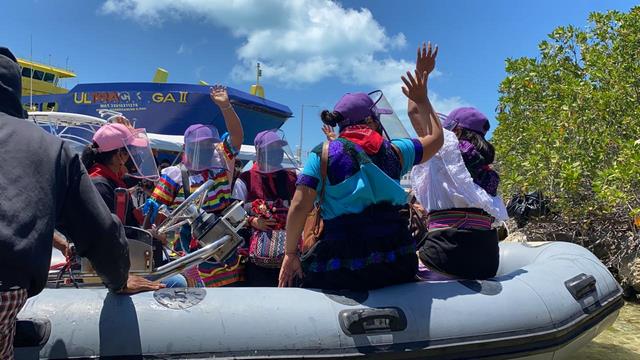
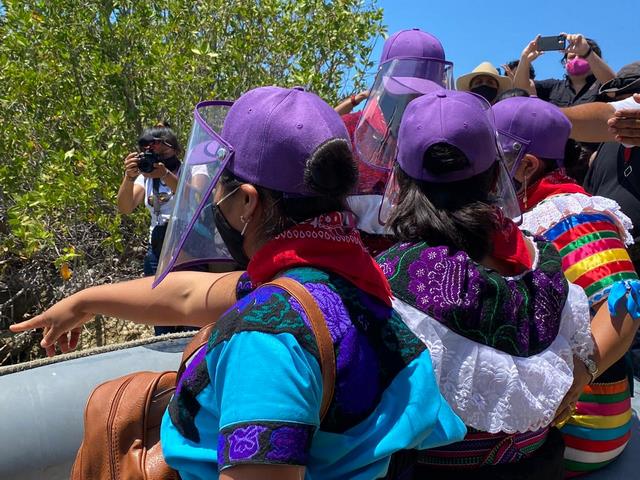
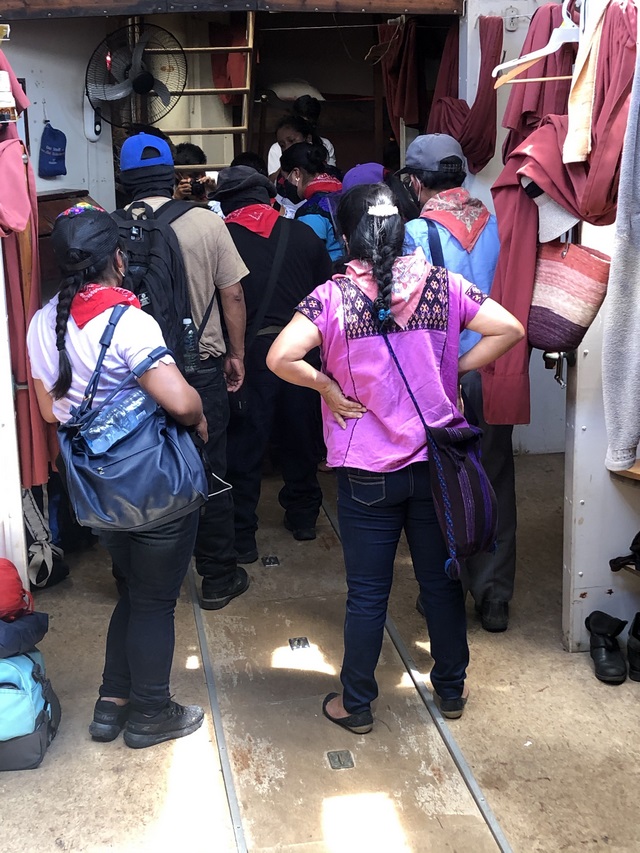
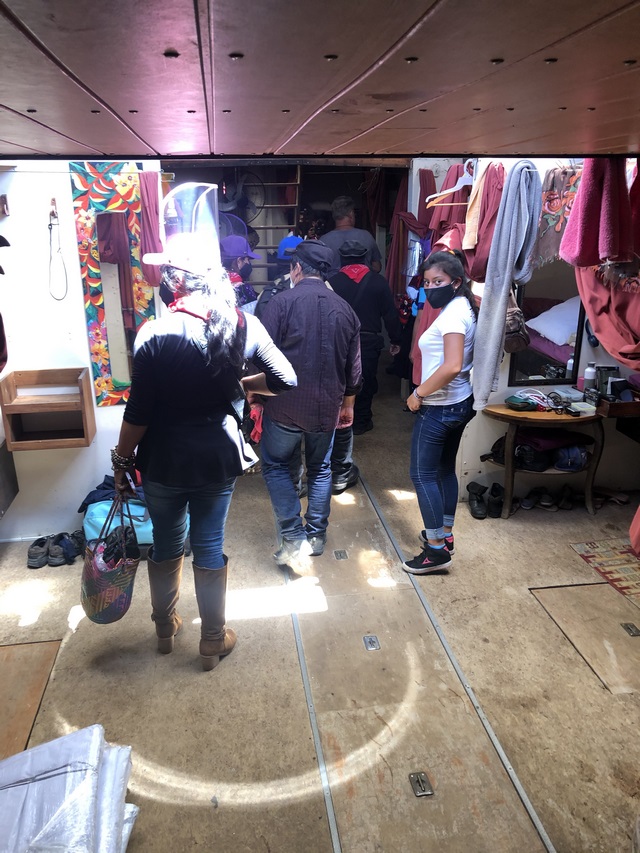
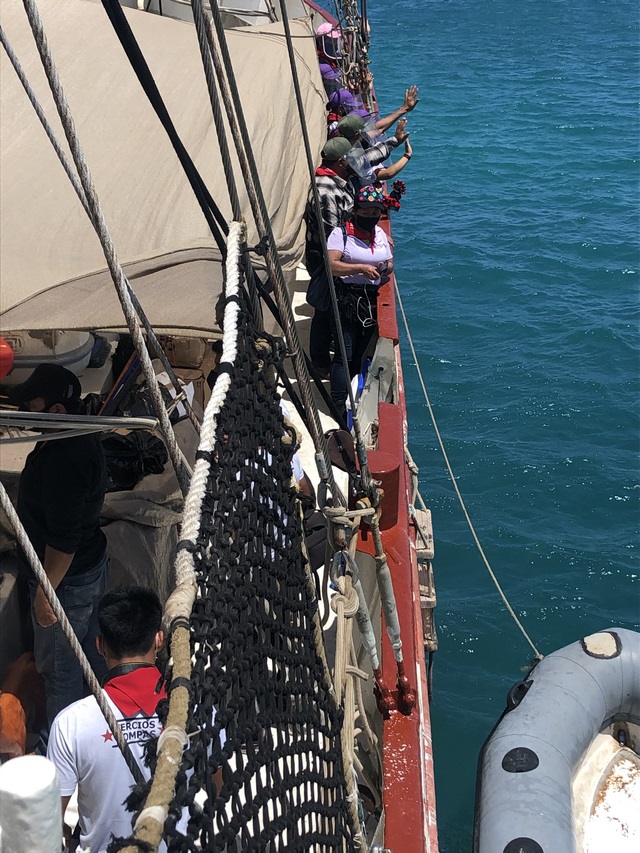
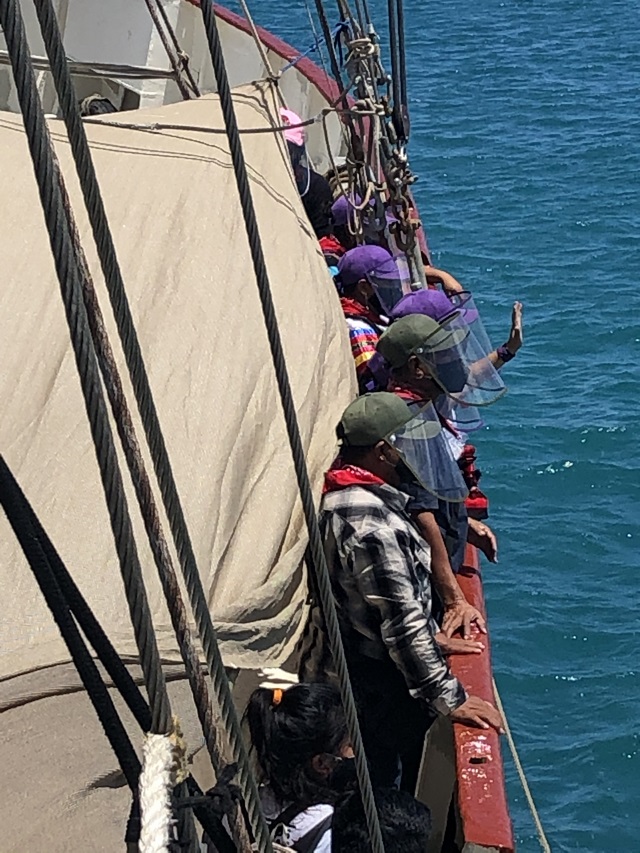
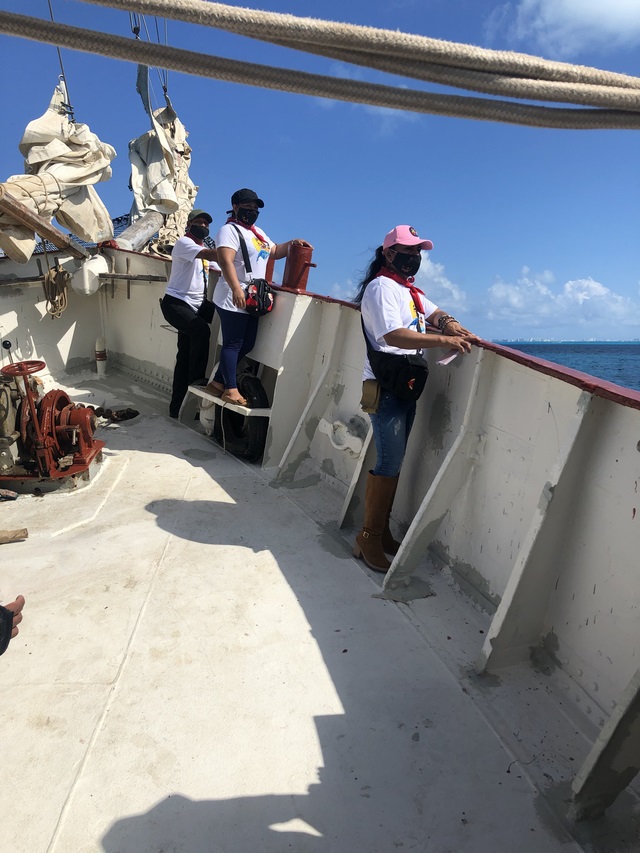
Cada quien estaba recorriendo el barco con mal disimuladas muestras de júbilo y entusiasmo: las compañeras delegadas, cual reinas del Caribe, saludaban desde babor a las embarcaciones llenas de turistas que las miraban con curiosidad y escándalo, tal vez extrañadas de que, con este calor, las compas llevaran naguas largas. Sobre todo porque las turistas llevaban unos bikinis que, de una vez, bien encueradas, no se puede creer. Marijose se fue a proa y desde ahí contemplaba la casa de Ixchel, y pensaba para sí que no se pondría sus híper ultra mini shorts, porque no era cosa de humillar a las ciudadanas en el rubro de la sensualité.
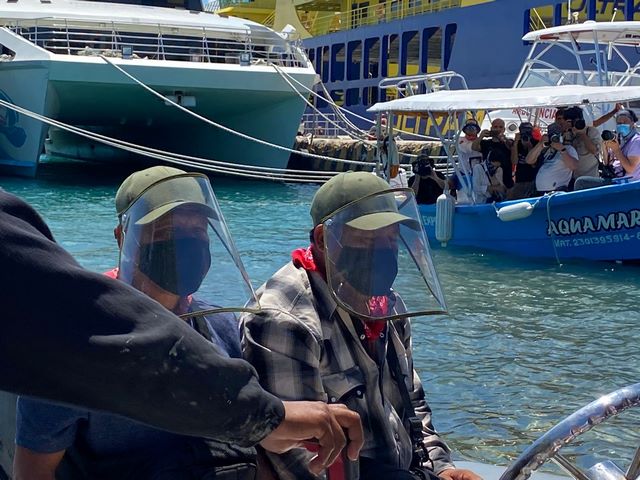
Los comandantes David y Hortensia daban las últimas recomendaciones a una Lupita con una sonrisa que le desbordaba el cubre bocas. El comandante Zebedeo se repetía a sí mismo: “no me voy a marear, no me voy a marear”, que es el antiemético que le recomendó el SupGaleano.
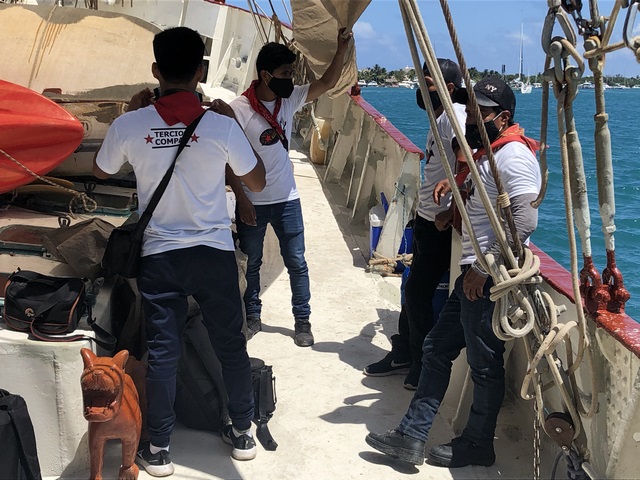
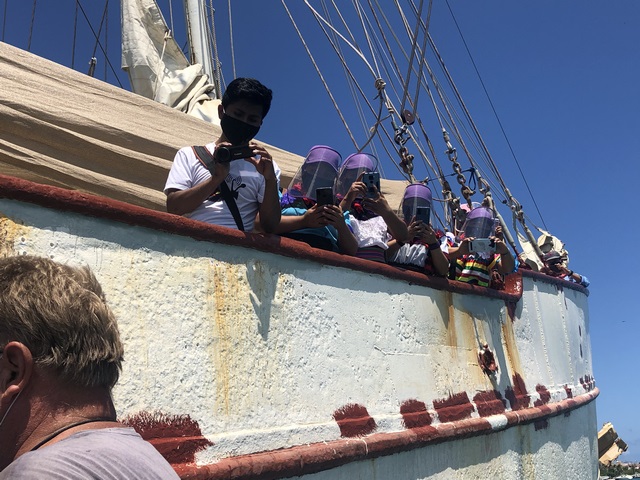
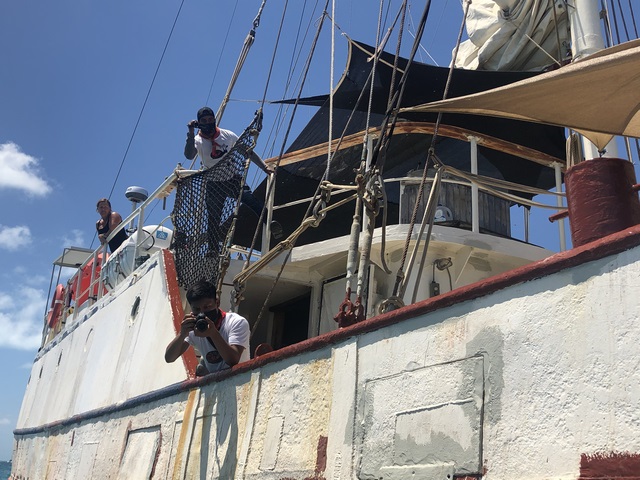
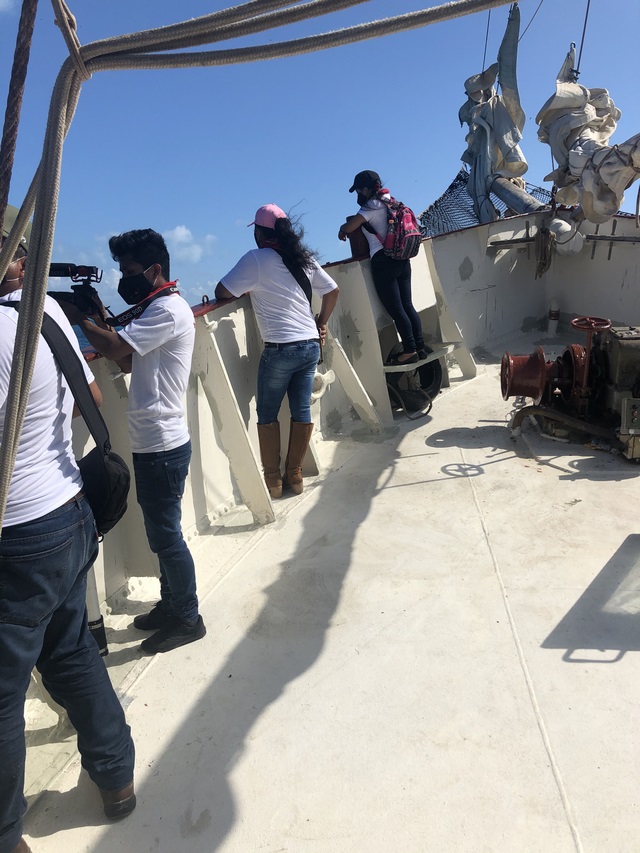
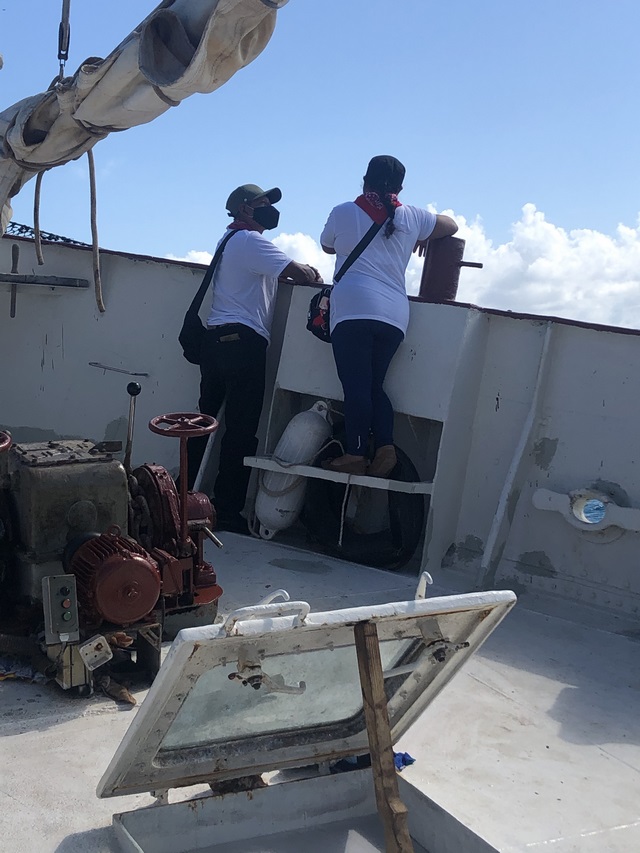
L@s tercios (4 varones, una compa y una insurgenta), por su parte, tomaban fotos y videos de todo, Y cuando digo “de todo”, es de todo. Así que no se extrañen si en las fotos aparecen sólo claraboyas, cabos, la cadena del ancla, molinete, orinque, lonas, cubetas para achicar el agua, y otras cosas propias de un buque que se dispone a cruzar el Atlántico en la muy noble misión de invadir, quiero decir, conquistar, quiero decir, visitar Europa.
El Marcelino y el Monarca preguntaron por el cuarto de máquinas y, no sé de dónde, sacaron una caja de herramientas y, con pinzas y desarmadores, se dirigieron a donde ellos consideraban que debería estar el motor porque, le explicaron a un capitán atónito, por el sonido se deducía que necesitaba afinación. Bernal y Felipe (relevo de Darío –que hubo de quedarse en tierra para el pasaporte de sus crías-, 49 años, originario Tzeltal; habla con fluidez el tzeltal y la castilla; padre de 4 –el mayor de 23 y el menor de 13 años-; ha sido miliciano, sargento, responsable local, concejo autónomo en MAREZ, junta de buen gobierno, maestro de la escuelita y chofer; música que le gusta: románticas, rancheras, banda, cumbias, revolucionarias; colores favoritos: negro, azul y gris; se preparó 6 meses como delegado; voluntario para viajar en barco si algún@ no podía; experiencia marítima: nula), se sumaron al equipo mecánico zapatista (no fuera a ser que, en altamar, se necesitaran reparaciones).
La tripulación de La Montaña, una vez que se recuperó del desconcierto de un abordaje tan otro, se distribuyó estratégicamente en cubierta, previendo que la exaltación zapatista diera con uno de nosotros en el mar.
Si así hubiera sucedido, íbamos preparados, no se crean. Debido a la composición de la delegación, la noche anterior se discutió cómo se debería gritar si es que eso sucediera: “hombre al agua” o “mujer al agua” u “otroa al agua” o “tercio al agua” o “choferólogo al agua” o “escarabajo al agua”, y así. El problema era que, para saber qué gritar, el SubMoy debía primero pasar lista y ver quién faltaba, y, entonces sí, dar la orden de “pánico a sotavento” (que la delegación había practicado hasta la perfección en el Centro de Adiestramiento, área de Naufragios y Hundimientos) para que tod@s gritaran. Como los segundos que se perderían (en realidad, en las prácticas eran largos minutos) podrían ser decisivos, se decidió que se gritara “¡Zapatista al agua!”. No paso tal, lo que libró al grupo corsario maya (permiso en regla en las Juntas de Buen Gobierno zapatistas), de burlas y escarnios a su costa, en el Bar de la Mota Negra, en Copenhague, Dinamarca.
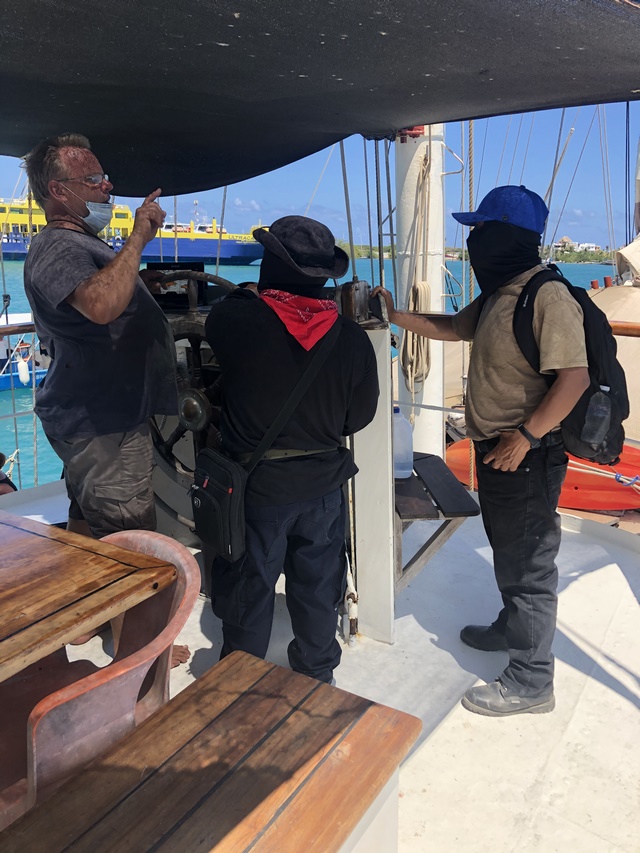
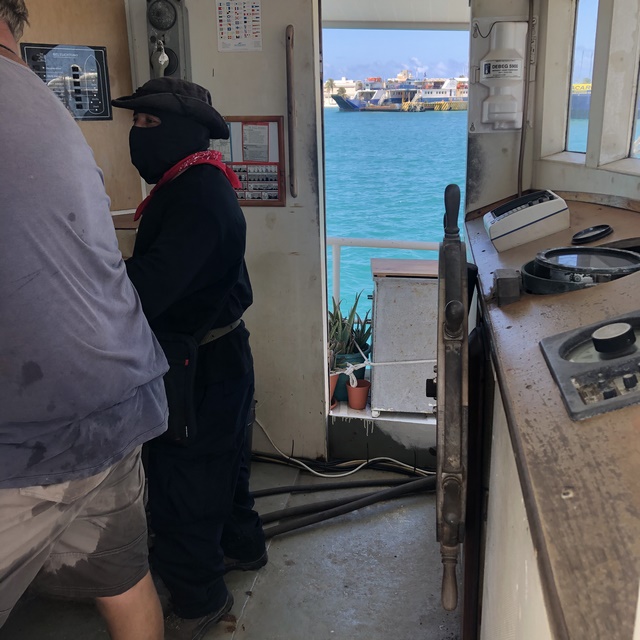
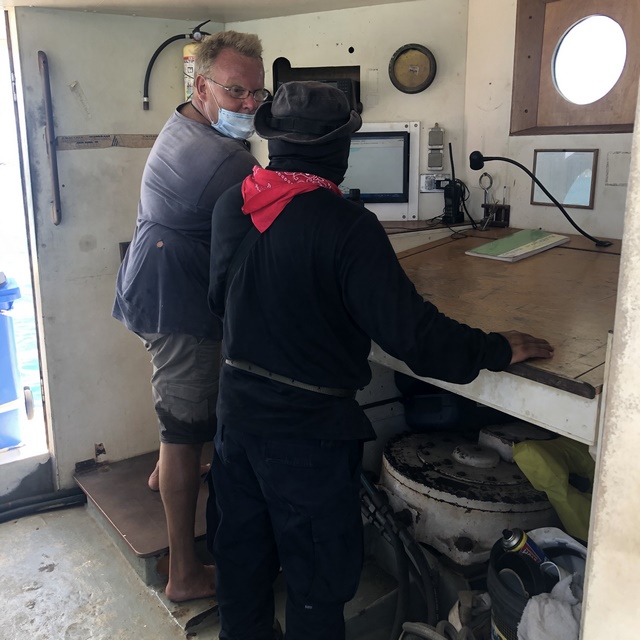
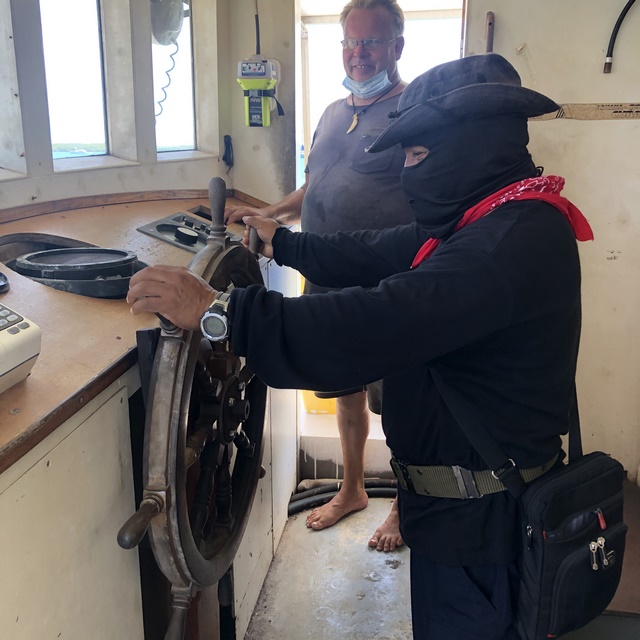
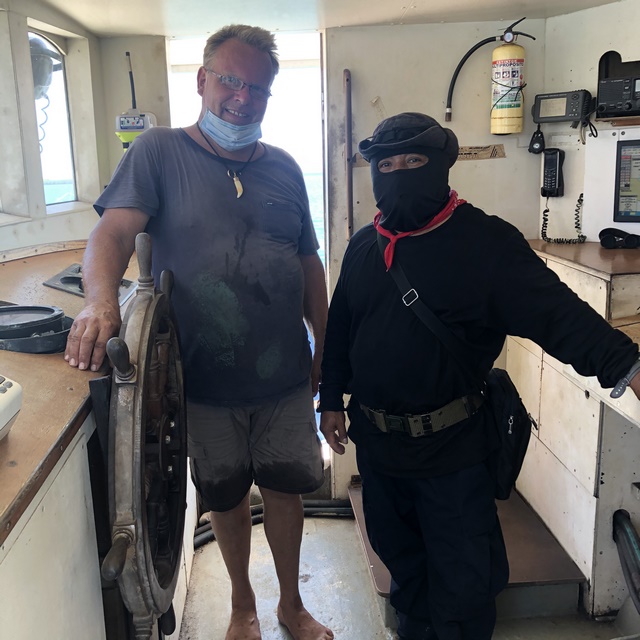
La tripulación no tardó en contagiarse del entusiasmo zapatista y, no obstante ser mariner@s ya con años en las aguas del océano, veían de nuevo, ahora a través de la mirada zapatista, un mar que, calmo, celebraba tan inesperada visita, resignado como estaba antes a la impertinencia de turistas de todo el mundo. El capitán de la embarcación llevó al SubMoy a la zona de gobierno y lo puso al timón, mientras l@s terci@s tomaban fotos… del agua (así que habrá muchas fotos de un mar vacío de interrupciones).
La delegación marítima zapatista, el escuadrón 421 propiamente dicho, por su parte, pasaba del entusiasmo a la precaución y atiborraba a la tripulación con preguntas sensatas: “Y si cae un rayo y se rompe el barco, ¿qué hacemos?” “Y si se abre un hoyo y se va toda el agua de una vez, ¿vamos a tener qué caminar?” “¿Y ustedes cómo le hacen para comer si no tienen dónde hacer milpa?” “¿Y cómo lo sabe el viento que vamos para allá?” “¿Y dónde duerme el mar si tiene sueño?” “Y si se pone triste su corazón del mar, ¿cómo hace para llorar?” “¿De qué tamaño es el corazón para quererlo y cariñarlo al mar que es muy grande?” “Y así como nosotros defendemos la tierra, ¿hay quien lo defiende al mar?”
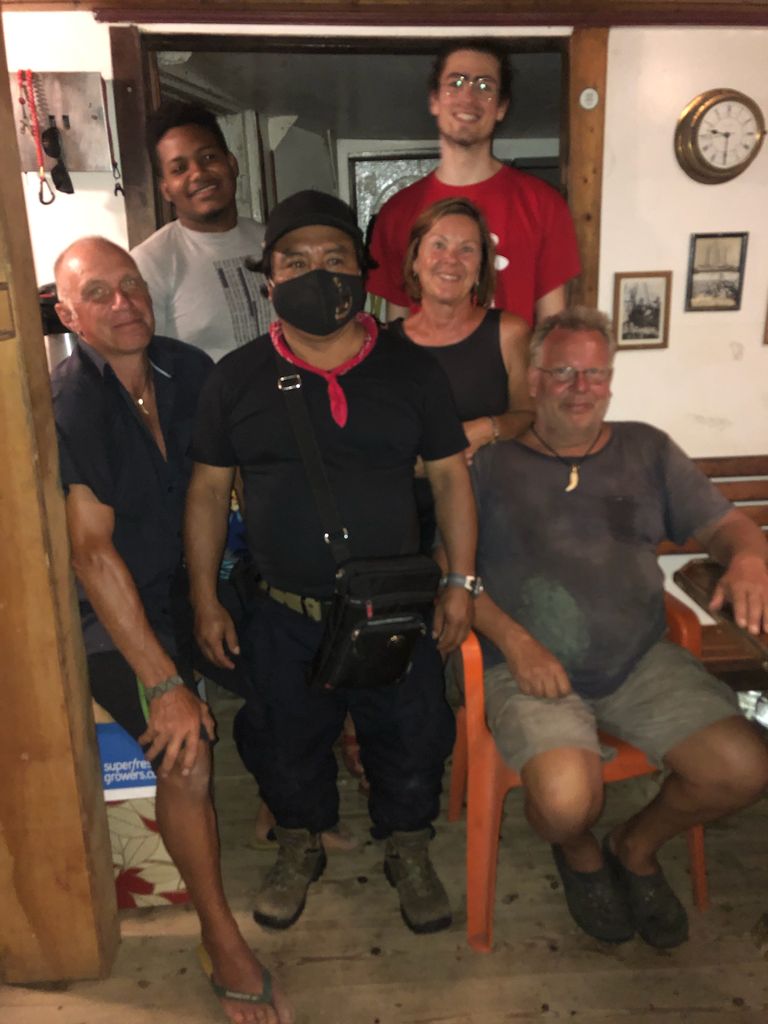
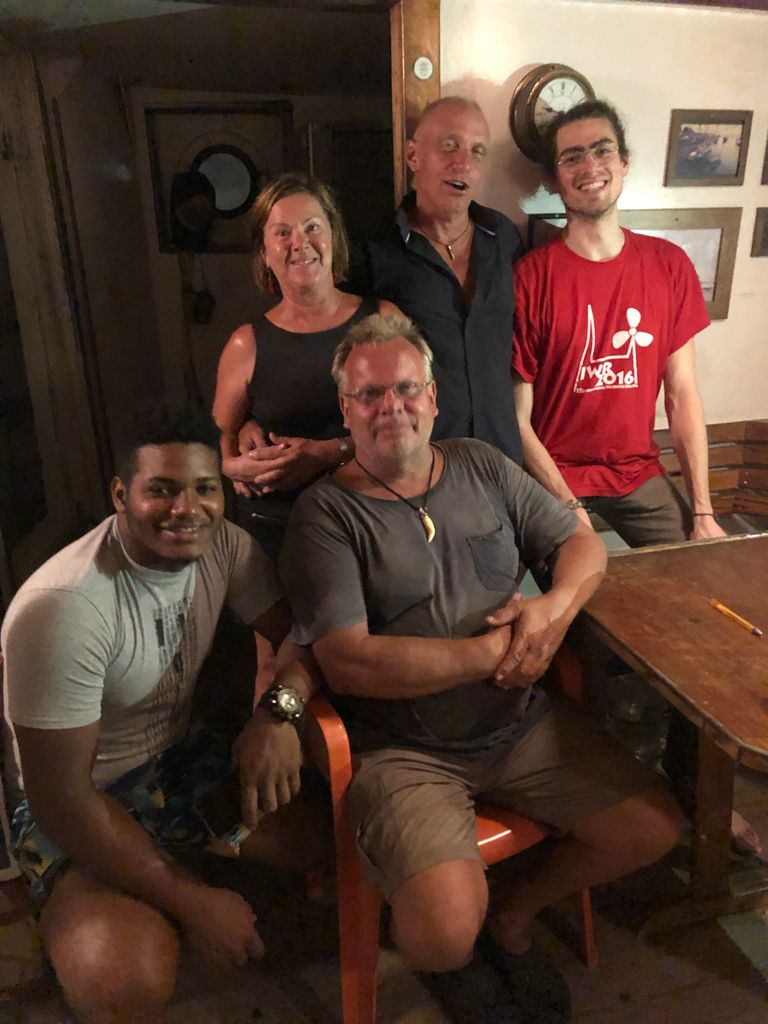
Quienes forman la tripulación de La Montaña: el capitán Ludwig (Alemania), Edwin (Colombia), Gabriela (Alemania), Ete (Alemania) y Carl (Alemania), se miraban desconcertad@s y se decían a sí mismos: “In welche Schwierigkeiten bin ich geraten?” (menos Edwin, que pensaba en español: “Caramba, en qué lío me he metido”).
-*-
¿Y el bichito? Bueno, previendo que intentaran arrojarlo por la borda (no obstante “haber encabezado el abordaje con valentía, donaire y guapura sin igual” –así dijo él-), trepó hasta la cofia y, desde ahí, declamaba, con un gallego impecable:
“Volverei, volverei á vida
cando rompa a luz nos cons
porque nós arrancamos todo o orgullo do mar,
non nos afundiremos nunca máis
que na túa memoria xa non hai volta atrás:
non nos humillaredes NUNCA MÁIS.”
Al oriente, muy lejos, las olas en las costas de Galicia repetían; “nunca máis”
Doy fe.
El Gato-Perro.
Aún México, Mayo del 2021.
Música: Fragmento de «Aires Bucaneros». Letra del poeta Luis Palés Matos. Música: Roy Brown.
Música: Memoria da Noite. Letra: Xabier Cordal. Música: Bieito Romero. Interpreta: Luar Na Lubre, con la voces de Rosa Cedrón y el maestro Pedro Guerra.
[:en]From the Notebook of the Cat-Dog
The Boarding
We boarded La Montaña [The Mountain] on April 30, 2021, at the scheduled time. The boat was docked about 50 breaststrokes away the harbor, “far from the hustle and bustle / of fake society.”[i] Fluttering around the boat were laughing gulls, cormorants, frigate birds, corococo birds, and even a little lost hummingbird making a nest in the pulpit. In the ship’s hull beneath the water, bottlenose dolphins drummed the beat of a cumbia, a whale shark kept the rhythm with its fins, and a manta ray moved its black wings like flying hips.
The buccaneer group, headed up by Subcomandante Insurgente Moisés who, along with a troop made up of an insurgenta[ii] who is part of the Tercios Compas [Zapatista media team], an insurgente who is a driver and a mechanic, a driver who is a Zapatista base of support, 5 more Terci@s Compas, a comandanta and two comandantes[iii] came to send off the maritime delegation—the 421st Squadron—and make sure that the group had everything that they needed for the nautical epic. A support team from the Sixth Commission also attended in order to write the obituaries of those who might die during the mission.
The ship’s crew didn’t put up any resistance. In fact, the captain had previously ordered that a large banner be raised on the mast of the boat with an image depicting the Zapatista maritime delegation, thereby including La Montaña and the whole crew in the struggle for life. With the masts and spars exposed, the symbol of Zapatista delirium rippled even more brightly in the wind.
We could say that it was a consensual boarding. There wasn’t any aggression on the part of the Zapatista troops nor by the vessel’s crew. You could say that there was a sort of mutual understanding between us and the crew of La Montaña even though in the initial meeting they were as surprised as we were.
We would have stood there looking at each other if it weren’t for an insect looking extraordinarily like a beetle who came out of the stern and screamed, “Boarding! If there’s a lot of them, we’ll run! If there’s only few, we’ll hide! And if there’s nobody, onward! We were born to die!” That was what settled everything. Bewildered, the crew looked first at the bug and then at us. We didn’t know if we should apologize for the interruption or join the pirate attack.
Subcomandante Insurgente Moisés thought it the right moment for introductions, so he said: “Good afternoon. My name is Moisés, Subcomandante Insurgente Moisés, and these are…” Turning around to present the troops, SubMoy realized that no one was there.
Everyone was exploring the boat with poorly hidden displays of joy and enthusiasm: the delegate compañeras waved like Caribbean queens from the port to the boats filled with tourists. The tourists looked at them with curiosity and astonishment, perhaps surprised that in this heat the compas were wearing long skirts, especially since the tourists were wearing bikinis that left them just about naked. Marijose went to the front of the ship and from there contemplated the House of Ixchel[iv], and decided not to put on her super mini short-shorts so as to not humiliate the city women in the name of la sensualité.
The comandantes David and Hortensia gave their last pieces of advice to Lupita whose smile was so big it was wider than her mask. Comandante Zebedeo kept repeating to himself: “I will not get seasick, I will not get seasick,” which was the antiemetic that SupGaleano had recommended to him.
The terci@s [Zapatista media team] (4 men, a compañera, and an insurgenta), for their part, took photos and videos of everything. And when I say everything, I mean everything. So, don’t be surprised if all the pictures are just of skylights, rope, the chain of the anchor, rotors, buoy lines, tarpaulins, buckets to bail out water, and other items you’d find in a ship that’s about to cross the Atlantic on the noble mission to invade… I mean, to conquer… I mean, to visit Europe.
Marcelino and Monarca asked where the machine room was, pulled a toolbox out from who knows where and with pliers and screwdrivers they headed towards where they thought the motor would be because, as they explained to the astounded captain, they could tell that the motor needed tuning from the sound that it was making. Bernal and Felipe (Felipe is the substitute for Dario: Dario had to stay back to get his children’s passports. Felipe is 49 years old, of Tzeltal origin and speaks Tzeltal and Spanish fluently. He is the father of 4 children, the oldest of whom is 23 and the youngest 13, and has been a miliciano, sergeant, local responsable, part of the Autonomous Council in MAREZ, member of the Good Government Council, a teacher in the Little School, and driver. He likes to listen to love songs, rancheras, banda, cumbia, and revolutionary music and his favorite colors are black, blue, and grey. He spent 6 months preparing to be a delegate and volunteered to travel by boat as a substitute. Previous sea experience: none) joined the Zapatista mechanic team (God forbid the need for repairs on the high seas).
Once they had recovered from the bewilderment of such a unique boarding, the crew of La Montaña spread out strategically over the deck, making sure that the Zapatista excitement didn’t end with one of us in the ocean.
If that had happened, we would have been prepared, don’t worry. Because of the make-up of the delegation, the previous night was spent discussing what to shout if that happens: “man overboard” or “woman overboard” or “otroa overboard” or “tercio overboard” or “driver overboard” or “beetle overboard” and on and on. The problem was that in order to know what to yell, SubMoy would first do roll call to see who was missing, and from there, give the order for “downwind panic” (that the delegation had practiced to perfection in the Shipwrecks and Sinking area of the Training Center, so that everyone would yell. Given that the seconds that they were losing (in reality, it was entire minutes in the practices) could be decisive, it was decided that they would yell “Zapatista overboard!”. It didn’t come to pass, though, which saved the Mayan pirates (permitted by the Zapatista Good Government Councils) from ridicule and mockery in the Mota Negra Bar in Copenhagen, Denmark[v].
It didn’t take long for the ship’s crew to be infected with Zapatista enthusiasm. Despite being sailors with many years’ experience on the ocean, they saw the sea anew, this time through the Zapatista gaze: the ocean was calm, celebrating the unexpected visit, having previously been resigned to the impertinence of the world’s tourists. The ship’s captain took SubMoy to the cockpit and put him in front of the wheel, while l@s terci@s took photos… of the water (there will be many photos of calm water free of interruptions).
The Zapatista maritime delegation, properly named the 421st Squadron, moved from enthusiasm to precaution as they hounded the ship’s crew with sensible questions: “If lightning strikes and breaks the boat, what do we do?”, “And if a hole opens up and all of the water goes out at once, will we have to walk?”, “How do you all eat if you don’t anywhere to plant a milpa?”, “How does the wind know which direction we’re going?”, “Where does the ocean sleep if it’s tired?”, “If the ocean’s heart gets sad, how does it cry?”, “How big is its heart, how do we love and embrace the enormous ocean?”, “Just as we defend the land, is there someone who defends the ocean?”
The members of the crew of La Montaña, the captain Ludwig (German), Edwin (Colombian), Gabriela (German), Ete (German), and Carl (German), exchanged bewildered glances and said to themselves: “In welche Schwierigkeiten bin ich geraten?” (except Edwin, who was thinking in Spanish: “Wow, what have I gotten myself into?”)
-*-
And the little bug? Well, anticipating that they would try to throw him overboard (despite “having led the boarding process with bravery, grace, and unrivaled good looks,” according to him), he climbed up to the top and from there recited with a flawless Galician accent:
“I will come back, I will come back to life,
When the light breaks on the rocks,
Because we have all of the pride of the ocean,
Never will we sink again,
In your memory there’s no turning back:
Never will we be humiliated again”[vi]
In the East, far away, the waves off the coast of Galicia repeated: “Never again.”
I bear witness.
The Cat-Dog
Mexico still, May 2021.
[i] Lyrics from José Alfredo Jiménez’ ranchero song “Hijo del barrio”, “Small town boy”.
[ii] Part of the Zapatista army
[iii] Comandantes and comandantas refer to the EZLN political-organizational leadership.
[iv] Ixchel is Mayan goddess of the moon, water, birth, medicine and weaving. For context see http://enlacezapatista.ezln.org.mx/2021/04/29/the-route-of-ixchel/#_edn1
[v] Don Durito, Zapatista beetle, visited the Mota Negra bar during his pirate adventures across Europe in 1999: https://enlacezapatista.ezln.org.mx/1999/10/13/la-hora-de-los-pequenos-durito-carta-4a/
[vi] Lyrics from the song “Memoria Da Noite” by Mägo de Oz
Música: Fragmento de «Aires Bucaneros». Letra del poeta Luis Palés Matos. Música: Roy Brown.
Música: Memoria da Noite. Letra: Xabier Cordal. Música: Bieito Romero. Interpreta: Luar Na Lubre, con la voces de Rosa Cedrón y el maestro Pedro Guerra.
[:]

