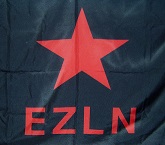
[:es]Convoca EZLN a dos eventos en el caracol de Morelia en agosto próximo[:en]Invitation to a meeting of Support Networks for the Indigenous Governing Council; to CompARTE 2018, “For Life and Freedom”; and the 5th Anniversary of the Caracoles[:]
[:es]

CONVOCATORIA A UN ENCUENTRO DE REDES DE APOYO AL CIG, AL COMPARTE 2018: “Por la vida y la libertad”; Y AL 15° ANIVERSARIO DE LOS CARACOLES ZAPATISTAS: “Píntale caracolitos a los malos gobiernos pasados, presentes y futuros”
Julio del 2018.
A l@s individu@s, grupos, colectivos y organizaciones de las Redes de Apoyo al CIG:
A la Sexta Nacional e Internacional:
Considerando que:
Primero y único:
La Gran Final.
Llega usted al gran estadio. “Monumental”, “coloso”, “maravilla arquitectónica”, “el gigante de concreto”, calificativos parecidos se repiten en las voces de los locutores que, a pesar de las distintas realidades que describen, coinciden en resaltar la soberbia construcción.
Para llegar a la grandiosa edificación, usted ha tenido que sortear escombros, cadáveres, suciedad. Cuentan quienes más años cuentan, que no siempre fue así; que antes, en torno a la gran sede deportiva, se levantaban casas, barrios, comercios, edificios, ríos y arroyos de gente que uno esquivaba hasta casi toparse de narices con el gigantesco portón, que sólo se abría cada tanto tiempo, y en cuyo dintel se leía: “Bienvenido al Juego Supremo”. Sí, “bienvenido”, en masculino, como si lo que ocurriera dentro fuera cosa sólo de varones; como antes los sanitarios, las cantinas, la sección de máquinas y herramientas de las tiendas especializadas… y, claro, el futbol.
Pero, a vuelo de pájaro, la imagen vista bien podría ser un símil de un universo contrayéndose, dejando en su periferia muerte y destrucción. Sí, como si el Gran Estadio fuera el hoyo negro que absorbe la vida a su alrededor y que, aún insaciable, eructa y defeca cuerpos sin vida, sangre, mierda.
Desde cierta distancia, se puede apreciar el inmueble en su totalidad. Aunque ahora sus erróneas disposiciones arquitectónicas, sus fallas estructurales en cimientos y edificaciones, sus cambiantes decoraciones al gusto del equipo ganador en turno, aparecen cubiertas por una tramoya que abunda en llamados a la unidad, la fe, la esperanza y, claro, la caridad. Como si se ratificara así esa semejanza entre cultos religiosos, políticos y deportivos.
Usted no sabe mucho de arquitectura, pero le molesta esa insistencia casi obscena en una escenografía que no coincide con la realidad. Colores y sonidos proclamando el fin de una era y el paso al mañana soñado, la tierra prometida, el reposo que ya ni la muerte promete (se dice usted mientras hace un recuento de sus cercanas, personas desaparecidas, asesinadas, “exportadas” a otros infiernos, y cuyos nombres se diluyen en estadísticas y promesas de justicia y verdad).
Como en la religión, la política y los deportes, hay especialistas. Y usted no sabe mucho de nada. Le marean los inciensos, salmos y alabanzas que pueblan esos mundos. Usted no se siente capaz de describir el edificio, porque usted anda otros mundos, sus largos y tediosos caminos transcurren en lo que, desde los soberbios palcos del gran estadio, se podría llamar “el subsuelo”. Sí, la calle, el metro, el colectivo, el vehículo en abonos o pagado con cargo a otros abonos (una deuda siempre pospuesta y siempre creciente), el camino de terracería, las rutas de extravío que conducen a la milpa, a la escuela, al mercado, al tianguis, al trabajo, al jale, a la chinga.
Usted se inquieta, sí, pero el optimismo de dentro del gran estadio es mayoritario, abrumador, a-v-a-s-a-l-l-a-n-t-e, y desborda hacia afuera.
Como en esa canción que usted recuerda vagamente, el espectáculo que ya terminó, unió “al noble y al villano, al prohombre y al gusano”. En esos momentos la igualdad fue reina y señora, no importa que el silbatazo final haya vuelto a cada quien a su lugar. Basta del olvido de que cada uno es cada cual, de nuevo, “y con la resaca a cuestas/ vuelve el pobre a su pobreza, /vuelve el rico a su riqueza /y el señor cura a sus misas /se despertó el bien y el mal/ la zorra pobre vuelve al portal, / la zorra rica vuelve al rosal, / y el avaro a las divisas”.
Y es que, ahora le informan a usted ruidos e imágenes, el partido ha finalizado. La gran final tan esperada y temida, concluyó y el equipo vencedor recibe, con falsa modestia, los clamores de los espectadores. “El respetable público”, dicen voceros y cronistas. Sí, así se refieren a quienes han participado activamente con gritos, porras, hurras, insultos y diatribas, desde las gradas, como espectadores a quienes sólo en la gran final se les permite simular que están frente al balón y que su grito es el puntapié que dirige el esférico “al fondo de las redes”.
¿Cuántas veces ha escuchado usted eso? Muchas, ¿vale la pena contarlas? Las derrotas reiteradas, la promesa que a la que sigue sí, que el árbitro, que el campo, que el clima, que la luz, que la alineación, que la estrategia y la táctica, que etcétera. Al menos la ilusión actual alivia esa historia de fracasos… a la que luego se sumará la desilusión prevista.
En las afueras del recinto, una mano maliciosa ha rayado, en el soberbio muro que rodea el estadio una sentencia: “FALTA LA REALIDAD”. Y no conforme con su herejía, la mano le ha agregado trazos y colores a las letras, tan variados y creativos que ya no parecen pintados. Ya no es un grafiti, sino una inscripción como grabada con cincel, manchando el concreto. Una huella indeleble en la apática superficie del muro. Y, para colmo, el último trazo de la “D” final ha abierto una grieta que se alarga hasta el basamento. Un cartel, roto y descolorido, con la imagen de una feliz pareja heterosexual, con un par de hijos, niño y niña, y con el encabezado de “La Familia Feliz”, trata en vano de ocultar la hendidura que, tal vez por un efecto óptico, parece rasgar también la feliz imagen de la familia feliz.
Pero ni el ruido interno que hace vibrar las paredes del estadio logra disimular la grieta.
Dentro, aunque el partido ha terminado, la muchedumbre no abandona el estadio. Aunque no tardará mucho en que sea de nuevo expulsada de vuelta al valle de ruinas, la multitud embelesada se hace eco de sus propios gritos e intercambia anécdotas: quién gritó más fuerte, quién hizo la mejor burla (se dice “meme”), quién divulgó la mentira más exitosa (el número de “likes” determina el grado de verdad), quién lo supo desde un principio, quién nunca dudó. En las tribunas, algunos, algunas, algunoas, intercambian análisis: que “¿sí viste que los contrarios cambiaron de camiseta en el medio tiempo y que ahora festejan la victoria quienes iniciaron el encuentro con el uniforme del equipo rival?”; que “el árbitro (el siempre “árbitro vendido”) ahora sí cumplió porque la victoria del equipo todo lo limpia y enaltece”.
Algunos, algunas, algunoas, más escépticos, ven con desconcierto que, entre quienes celebran el triunfo, están los que jugaron y juegan en equipos rivales. Tratan, pero no entienden. O sí entienden, pero no es hora de entender, sino de festejar. Para dejárselos claro, una pantalla gigante parpadea con la tonada visual de moda: “Prohibido Pensar”.
La noche ha pospuesto su llegada, piensa usted. Pero se da cuenta de que son los reflectores y los fuegos de artificio los que simulan claridad. Claro, una claridad selectiva. Porque allá, en aquel rincón, unas gradas se han derrumbado y los equipos de rescate no acuden, ocupados como están en el festejo. La gente no se pregunta cuántos muertos, sino de cuál equipo eran seguidores. Más allá, en ese otro rincón oscuro, una mujer ha sido agredida, violada, secuestrada, asesinada, desaparecida. Pero, vamos, es sólo una mujer, o una anciana, o una jóvena, o una niña. Los medios, siempre en sintonía con los tiempos que corren, no preguntan el nombre de la víctima, sino si portaba su playera de tal o cual equipo.
Pero no es tiempo de amarguras, sino de fiesta, de brindis, del f-i-n-d-e-l-a-h-i-s-t-o-r-i-a mi buen, del comienzo de un nuevo campeonato. Fuera, la oscuridad parece el colofón pictórico para la zona devastada. Sí, piensa usted, como un escenario de guerra.
El barullo le reclama atención. Usted trata de tomar distancia para comprender el impacto de ese gran triunfo de su equipo favorito… mmh… ¿era su equipo favorito? Ya no importa, el triunfador siempre fue y será el equipo favorito de las mayorías. Y, claro, todos sabían que el triunfo era inevitable, y en tribunas se suceden las explicaciones lógicas: “sí, no era posible otro resultado, sólo el de la copa embriagante coronando los colores del equipo favorito.”
Usted trata, sin conseguirlo, de hacer suyo el entusiasmo que inunda las tribunas, los palcos, y parece llegar hasta el punto más alto de la construcción donde, lo que se adivina es una lujosa habitación, refleja en sus vidrios polarizados las luces, los gritos y las imágenes.
Usted recorre las tribunas con dificultad, la gente se abarrota en pasillos y escaleras. Busca usted algo o alguien que no lo haga sentir extraño, camina como un extraterrestre o un viajero del tiempo que aterriza en un calendario y una geografía desconocidos.
Se detiene un poco donde dos personas de edad miran con atención una especie de tablero. No, no se trata de ajedrez. Ahora que usted se ha acercado lo suficiente, ve que se trata de un rompecabezas con apenas algunas piezas engarzadas y sin la figura final siquiera esbozada.
Una persona le está diciendo a la otra: “Bueno, no, no me parece que sea ficción. Después de todo, el pensamiento crítico debe partir de una hipótesis, por alocada que parezca. Pero no debe abandonar el rigor para confrontarla y verificar si procede, o hay que buscar otro punto de arranque.” Y, tomando una de las piezas del rompecabezas, esa persona la muestra y dice: “por ejemplo, puede ser, a veces, que lo pequeño ayude a entender lo grande. Como si en esta pequeña parte pudiéramos adivinar o intuir la figura ya completada”. Usted no escucha lo que sigue, porque los grupos vecinos gritan contra ese extraño par y acallan sus palabras.
Alguien le ha pasado un volante. “Desaparecida” se lee, y una imagen de una mujer cuya edad usted no puede determinar. ¿Una anciana, una mujer madura, una jóvena, una niña? El viento le arrebata el volante y su vuelo se confunde con las serpentinas y el confeti que nublan la vista.
Y hablando de niñas…
Una niña, pequeña, de piel oscura, de ropas extrañas de tan coloridas y adornadas, mira el estadio, las tribunas, las luces multicolores, las sonrisas de vencedores y vencidos, alegres las primeras, maliciosas las segundas.
La niña tiene una duda. Se adivina en la expresión de su rostro, en su mirada inquieta.
Usted se siente generoso, al fin al cabo usted ha ganado… mmh… ¿ha ganado? Bueno, no importa. Usted se siente generoso y, solícito, le pregunta a la niña qué busca.
La niña le responde: “el balón”. Y, sin voltear a verlo a usted, sigue con su mirada barriendo la gran construcción.
“¿El balón?”, pregunta usted como si la pregunta viniera de otro tiempo, de otro mundo.
La niña suspira y añade: “bueno, de ahí que tal vez lo tiene el dueño”
“¿El dueño?”
“Sí, el dueño del balón, y del estadio, y del trofeo, y de los equipos, y de todo esto”, dice la niña mientras con sus manitas intenta abarcar la realidad concentrada en el gran estadio.
Usted trata de encontrar las palabras para decirle a la niña que esas preguntas no vienen al caso, o cosa, según, pero entonces usted recuerda…, o más bien no recuerda haber visto el balón. En su mente le aparece una imagen borrosa, cree que al inicio del partido, del esférico con sus gajos manchados por “nuestros amables patrocinadores”. Ni siquiera en los goles anotados lo ubica.
Pero ahí está la pantalla del marcador, y la pantalla marca la realidad que importa: tal ganó, tal perdió. Ningún marcador señala quién es el dueño ni siquiera del marcador, mucho menos quién es el dueño del balón, de los equipos, de las tribunas, de las “cámaras y micrófonos”.
Además, el marcador no es un marcador cualquiera. Es el más moderno que existe y costó una fortuna. Incluye el VAR para ayudar a sus empleados a sumar o restar puntos en la pantalla, y para las repeticiones instantáneas o reiteradas de cuando “juntos hicimos historia”. Y el marcador no marca los goles, sino los gritos. Gana quien más grite, entonces ¿quién necesita el balón?
Pero entonces usted revisa sus recuerdos y nota algo extraño: minutos antes del final del partido, la porra, la barra, la fanaticada del equipo contrario guardó silencio. Y los gritos de los seguidores del equipo ahora triunfador no tuvieron rival. Sí, muy extraña esa súbita retirada. Pero más extraño es que, cuando en la pantalla del marcador no se reflejaban aún los resultados, ni siquiera los parciales, el equipo contrario volvió a la cancha sólo para felicitar al triunfador… que todavía no era triunfador. En los altos y lujosos palcos del estadio estalló la algarabía y los colores de sus pendones eran ya los del equipo ganador. ¿A qué hora cambiaron de favorito? ¿Quién ganó realmente? Y sí, ¿quién es el dueño del balón?
“¿Y por qué quieres saber quién es el dueño?”, cuestiona usted a la niña, porque le parece que, no obstante sus dudas, es tiempo de silbatos y matracas, y no de preguntas necias.
“Ah, porque ése no pierde. No importa qué equipo gane o pierda, el dueño siempre gana.”
Usted se incomoda con la duda que eso plantea. Y se incomoda más al ver a quienes declaraban que el equipo ahora triunfador traería desgracias, celebrando un triunfo que, apenas unas horas antes, no era suyo. Porque no se ve que hayan perdido, más bien festejan como si el triunfo fuera suyo, como si dijeran “ganamos otra vez”.
Usted está a punto de decirle a la niña que deje la amargura en otro lado, que tal vez esté en sus días, o en la depre, o no entiende nada, después de todo es sólo una niña, pero en eso el respetable prorrumpe en un alarido: el equipo vencedor regresa a la cancha para agradecer al respetable su apoyo. La gente-gente sigue en las tribunas y contempla, arrobada, a los modernos gladiadores que han vencido a las bestias… ¡un momento!, ¿no son las bestias quienes ahora abrazan y festejan y cargan en hombros al equipo vencedor?
Usted se ha quedado pensando en lo que dijo la niña. Y recuerda entonces, inquieto, que el equipo contrario, conocido por su rudeza, mañas y trampas, abandonó el partido justo antes de que sonara el silbatazo final. Sí, como si temiera que su inercia propia, pudiera hacerlo triunfador (con trampa, claro) y, para evitarlo, se retirara completamente. Y con él, desaparecieron sus porras, sus fanáticos, sus, ahora usted lo recuerda, contados banderines y banderas.
La algarabía sigue. Al parecer en tribunas no importa el absurdo que transcurre en el centro del campo, donde el pódium espera la premiación final.
Usted se hace eco de la pregunta de la niña y, con timidez, cuestiona a su vez:
“¿Quién es el dueño del balón?”
Pero el grito masivo se traga su pregunta, y nadie le escucha.
La niña le toma de la mano y le dice: “Vámonos, tenemos que salir”
“¿Por qué?”, pregunta usted.
Y la niña, señalando la base de la gran edificación, responde:
“Se va a caer”.
Pero nadie parece darse cuenta… Un momento, ¿nadie?
(¿continuará?)
-*-
En base a lo anteriormente expuesto, la Comisión Sexta del EZLN invita a l@s individu@s, grupos, colectivos y organizaciones que apoyaron y apoyan al CIG y, claro, que todavía piensan que los cambios que importan nunca vienen de arriba, sino de abajo (además de que no hayan mandado su cartita de adhesiones y peticiones al capataz futuro) a un:
Encuentro de redes de apoyo al Concejo Indígena de Gobierno.
Con la siguiente propuesta de temario:
.- valoraciones del proceso de apoyo al CIG y su vocera Marichuy, y de la situación según la perspectiva de cada grupo, colectivo y organización.
.- propuestas de pasos a seguir.
.- propuestas para regresar a consultar con sus grupos, colectivos, organizaciones, lo ahí planteado.
Llegada y registro: jueves 2 de agosto del 2018; registro y actividades los días viernes 3, sábado 4 y domingo 5 agosto.
Para registrarse como participante en el encuentro de redes, la dirección es:
encuentroredes@enlacezapatista.org.mx
-*-
También, las comunidades indígenas zapatistas, invitan a quienes tienen al arte como vocación y anhelo, al:
CompARTE POR LA VIDA Y LA LIBERTAD
“Píntale caracolitos a los malos gobiernos pasados, presentes y futuros”
Del 6 al 9 de agosto del 2018.
Llegada y registro: cuando puedan del 6 al 9 de agosto.
Clausura el día 9, 15° aniversario del nacimiento de los caracoles zapatistas.
El programa será según quiénes se apunten, pero seguro ahí estarán musiquer@s, teatrer@s, bailador@s, pintor@s, escultor@s, declamador@s, etceter@s, de las comunidades zapatistas en resistencia y rebeldía.
Para registrarse como participante y/o asistente, la dirección es:
asistecomparte2018@enlacezapatista.org.mx
participacomparte2018@enlacezapatista.org.mx
Todo en el caracol de Morelia (donde fue el encuentro de mujeres que luchan), en la zona Tzotz Choj, tierra zapatista en resistencia y rebeldía.
Mucho ojo: Traigan su vaso, plato y cuchara, porque las mujeres que luchan ya aconsejaron de no usar desechables que contaminan, además de que dejan un tiradero. No sobra si trae un su focador (o lámpara de mano), su loquesea para poner entre el digno suelo y su muy digno cuerpo, o casa de campaña. Su impermeable o nailon o equivalente por si llueve. Sus medicinas y comida especial si las requiere. Y cualquier otra cosa que luego le vaya a faltar y, cuando nos deje sus críticas, nosotr@s podamos responder “les avisamos antes”. Para las personas ya de edad, “de juicio” como decimos acá, veremos de, en lo posible, darles alojamiento en alguna parte especial.
Nota: sí se permitirá el acceso a varones y a otras minorías.
Por la Comisión Sexta del EZLN.
Subcomandante Insurgente Moisés. Subcomandante Insurgente Galeano.
México, 4 de julio del 2018.
P.D.- No, nosotras, nosotros, zapatistas, NO nos sumamos a la campaña “por el bien de todos, primero los huesos”. Podrán cambiar el capataz, los mayordomos y caporales, pero el finquero sigue siendo el mismo. Ergo…
Fuente: Enlace Zapatista[:en]
Convocation to a Gathering of Support Networks for the Indigenous Governing Council; to CompARTE[i] 2018, “For Life and Freedom”; and to the Fifteenth Anniversary Event of the Zapatista Caracoles entitled, “Píntale Caracolitos a los malos gobiernos pasados, presentes y futuros” [ii]
July, 2018.
To the individuals, groups, collectives and organizations of the Support Networks for the Indigenous Governing Council:
To the National and International Sixth:
First and last point:
The Grand Finale.
You arrive at the grand stadium. “Monumental,” “colossal,” “an architectonic marvel,” “the concrete giant”—these and similar descriptors roll off the lips of TV broadcasters who, despite the different realities that they describe, all highlight the enormously proud structure.
To get to the magnificent building, you’ve had to wade through rubble, cadavers, and filth. Older folks say that it wasn’t always like this, that it used to be that homes, neighborhoods, businesses, and buildings were erected around the great sporting hub. Rivers of people would rush all the way up to the gigantic entrance, which only opened once in a while and on whose threshold was inscribed, “Welcome [Bienvenido] to the Supreme Game.” Yes, “bienvenido” in the masculine, as if what occurred inside was exclusively a men’s affair, as used to be the case with public bathrooms, bars, the machinery and tools sections of hardware stores…and, of course, soccer.
But from a bird’s eye view, the image below could very well be a simile for a universe contracting, leaving death and destruction in its wake. It’s as if the Grand Stadium were a black hole absorbing the life around it and, insatiable, burping and defecating lifeless bodies, blood, and shit.
From a certain distance the structure can be better viewed in its totality, although from that distance one can see that its erroneous architectonic features, structural and foundational deficiencies, and fluctuating decor based on the whims of the current team are covered by an elaborate scaffolding plastered with calls to unity, faith, hope, and of course, charity, as if to confirm the similarity of worship across spheres of religion, politics, and sports.
You don’t know much about architecture, but you’re bothered by the almost obscene insistence on a staging that doesn’t match up with reality. Colors and sounds proclaim the end of an era and the beginning of a new tomorrow, the promised land, that rest which not even death brings (as you are thinking this you make a mental count of all the people close to you who have been disappeared, murdered, or “exported” to other hells, and whose names are diluted in statistics and promises of truth and justice).
In religion as well as politics and sports, there are specialists. You yourself don’t know a lot about anything—the incense, psalms, and praises that accompany those worlds make you dizzy. You don’t feel capable of describing the structure because you walk in other worlds; the long and tedious paths you walk traverse what in the lofty balconies of the great stadium would be called “the underworld.” Yes, that underworld of the street, the subway, the bus, a car bought on an installment plan or paid for with credit based on other credit (a debt always postponed and always growing), a dirt road, backcountry trails that lead to the cornfield, the school, the market, the tianguis, to work, a job, the grind.
You’re uncomfortable, it’s true, but the optimism inside the great stadium is dominant, daunting, o-v-e-r-w-h-e-l-m-i-n-g, and it spills over to the outside.
Like in that song you vaguely remember, the spectacle that has just ended joined together “the nobleman and the petty criminal, the proud man and the worm.” For those few moments, equality reigned supreme—despite the fact that the final whistle sent everyone back to their place in the hierarchy. Enough pretending that everyone is one of many, and once more, “with their hangovers hanging heavy / the poor man returns to his hovel / the rich man to his riches / and the priest to his flock / Good and evil are back in their place / the poor whore returns to the doorway / the rich whore to the rose garden / and the greedy man to his accounts.”[iii]
Now the noises and images before you indicate that the game has ended. The moment for the grand finale, so anxiously awaited and feared, has come, and the winning team accepts, with false modesty, the cheering of the crowd—“the respectable public,” as the political spokespeople and journalists call them. Yes, that’s how they refer to those who have participated with shouts, chants, hurrahs, insults and diatribes from the stands, like spectators who are permitted only at the very end to pretend that they have the ball and that their cheering is the kick that will send the ball to “the back of the net.”
How many times have you heard that one? So many that one wonders if it is even worth counting. The repeated defeats, the promise that the next time will be the one, and the excuses: the referee this, the field that, the weather, the lighting, the lineup, the strategy and tactics, and so on and so forth. At least today’s illusion softens the history of failures…a history to which a predictable (dis)illusion will soon be added.
Outside the stadium, a malicious hand has scrawled a sentence on its proud walls: “MISSING: REALITY.” Not satisfied with its heresy, the hand has added designs and colors to the letters with such variety and creativity that they no longer look like spray paint. It’s not even graffiti anymore, but rather an inscription, like an engraving chiseled into the cement, an indelible footprint on the indifferent surface of the wall. To top it all off, the last stroke of the last letter has opened a crack in the wall all the way to its foundation. A shredded and discolored poster with the image of a happy heterosexual couple with two children, a boy and a girl, and a title that reads “The Happy Family” tries in vain to cover the fissure which, perhaps due to an optical illusion, seems to tear also through the happy image of the happy family.
But not even the rumbling inside that shakes the walls of the stadium can hide the crack.
Inside, even though the game has ended, the crowds haven’t left the stadium. Though it won’t be long before they’re kicked back out into the valley of ruins, the cheering of the spellbound multitude echoes off the walls as people share anecdotes: who cheered the loudest, who told the best joke (they’re called “memes”), who told the most successful lie (the number of “likes” determine the degree of truth), who knew it from the beginning, who never doubted it would happen. In the stands, a few fans exchange analyses: “Did you see how the opposing team changed jerseys at half-time, and that those who started the game in the opposing team’s uniform are now celebrating the win?”; “The referee (always the “sell-out ref”) truly lived up to his job this time—he really cleaned up this team’s victory.”
A few onlookers [algunos, algunas, algunoas], the more skeptical ones, notice with concern that members of rival teams are among those celebrating the triumph. They try to understand but can’t wrap their heads around it. Or maybe they can, but this is a moment for rejoicing, not understanding. To make things crystal clear, a giant screen glows with the visual jingle of the moment: “No thinking allowed.”
Night seems to be settling in late, you think to yourself. But you realize that it’s the neon reflectors and fireworks that simulate daylight. The light is not cast evenly, of course. Over there, in that corner, a set of risers have collapsed and the rescue teams aren’t tending to the accident, busy as they are in the celebrations. Nobody asks how many were killed but rather which team they were rooting for. Farther away, in that other dark corner, a woman has been attacked, raped, kidnapped, murdered, disappeared. But come on, it’s only one woman, or one elderly woman, or one young woman, or one little girl. The news media, always with their finger on the pulse, don’t ask the name of the victim, but rather whether she was wearing the jersey of this or that team.
But now is no time for bitterness; it’s time for parties, for toasts, for t-h-e-e-n-d-o-f-h-i-s-t-o-r-y my friend, for the beginning of a new championship title. Outside, the darkness seems like a metaphor for the devastated terrain. Like a battlefield, in fact, you think to yourself.
The din demands your attention again. You try to step back a bit to appreciate the impact of the spectacular triumph of your favorite team…hmm…was it your favorite team? It doesn’t matter now, the winner was and always will be the favorite of the majority. Now of course everyone knew that the triumph was inevitable, and in the stands the logical explanations emerge: “Yes, no other result was possible, only that of the intoxicating trophy cup crowning the colors of the favorite team.”
You try, without success, to take on the enthusiasm that floods the stands and balconies. It seems to reach the highest point of the structure, where the polarized windows of what we can only assume is a luxurious VIP box reflect the lights, chants and images below.
You struggle to navigate the risers; people are crammed into every aisle and flight of stairs. You’re looking for someone or something that won’t make you feel so strange, as if you’re an alien or a time-traveler who has touched down in an unknown calendar and geography.
You pause briefly where two elders are closely examining a sort of gameboard. No, they’re not playing chess. Now that you’re close enough, you can see that what they’re looking at is a jig-saw puzzle with only a few pieces put together, the final image not even outlined yet.
One of them says to the other: “Well, no, to me it doesn’t seem like fiction. After all, critical thought should start from a hypothesis, as crazy as it might seem. But it shouldn’t abandon rigor: it should confront the hypothesis and verify whether it can proceed, or if it’s necessary to find a different starting point.” Taking one of the puzzle pieces, the person holds it up and says, “For example, it could be that sometimes the smallest thing helps you understand the big picture. Like if in this small piece, we could guess or intuit the completed image.” You don’t hear what comes after that because the neighboring groups shout down that strange pair and drown out their words.
Someone has handed you a flyer. It reads, “Disappeared” and has an image of a woman whose age you can’t decipher. An old woman, a middle-aged woman, a young woman, a little girl? The wind rips the flyer from your hand and it gets pulled into the swirl of streamers and confetti that cloud the air.
Speaking of girls…
A little girl with dark skin and strangely colorful and adorned clothing is looking at the stadium, the stands, the multicolored lights, the happy smiles of the winners and the malicious smiles of the losers.
The little girl looks doubtful, you can tell from the expression on her face and her restless gaze.
You’re feeling pretty generous, after all, you have just won…hmm… have you won? Well anyway, you’re feeling generous so you ask her kind-heartedly what she is looking for.
Without turning to look at you the little girl responds, “The ball,” her gaze sweeping across the stadium.
“The ball?” you ask, as if the question came from another time, another world.
The little girl sighs and adds, “Yeah, well, maybe the owner has it.”
“The owner?” you ask again.
“Yes, the owner of the ball, and the stadium, and the trophy, and the teams—the owner of all of this,” the little girl replies, gesturing with her hands to the scope of the reality concentrated in the stadium.
You search for words to tell the girl that these questions are neither here nor there, but just then you remember that you haven’t seen the ball either. A fuzzy image comes to mind, from the beginning of the game you think, of a ball plastered with the logos of “our friendly sponsors.” But you can’t recall seeing it again, even when the goals were made.
But there they are on the scoreboard, noting the only reality that matters: who won, who lost. No scoreboard tells you who the owner is, not even of the scoreboard itself, much less of the ball, the teams, the courts, or the cameras and microphones.
Plus, this scoreboard isn’t just any scoreboard. It’s the most modern scoreboard that exists and it cost a fortune. It comes with a VAR [Video Assistant Referee] to help the employees add or subtract points from the score, and for instant replays of that moment when “Together we made history.”[iv] The scoreboard doesn’t keep track of goals, but rather shouting: whoever yells the most wins. So who needs a ball?
But now as you ponder your memories of the game you note something strange: a few minutes before the end of the game, the fans from the opposing team went silent, and the shouting from the eventually victorious team continued unrivaled. What a strange retreat by the opposition, you think. But even stranger is that before the scoreboard even showed the final score, before even the halftime score, the opposing team came back onto the field to congratulate the winners…who hadn’t even won yet. Those in the VIP boxes at the top of the stadium erupted into jubilant celebration, their banners now displaying the colors of the winner. When did they switch favorite teams? Who really won? And who owns the ball?
“So why do you want to know who the owner is?” you ask the little girl, because her doubts aside, it’s a moment for confetti and noisemakers, not stubborn questions.
“Oh, well, because the owner never loses. It doesn’t matter which team wins and which loses, the owner always wins.”
You’re troubled by the seed of doubt this plants. What makes you even more uncomfortable is seeing how those who had before said that the now victorious team would do great harm if it won, are currently celebrating its triumph as if it were theirs. And just a few hours ago it wasn’t. In fact they aren’t acting at all like they lost; it’s more like they’re celebrating the victory as if to say “we won once again.”
You are about to tell the little girl to take her bitterness elsewhere—maybe it’s that time of the month, or she’s depressed, or she simply doesn’t understand anything that’s going on; after all, she’s just a little girl. But just then the crowd erupts in commotion: the losing team has come back to the field to thank the public for their support. The people are still in the stands and observe, entranced, the modern gladiators who have defeated the beasts…wait a minute! Aren’t the beasts the ones who are now embracing, celebrating, and carrying the winning team on their shoulders?
What the little girl said is making you think. You remember, with discomfort, that the opposing team, known for its boorishness, tricks, and deceit, left the game just before the final whistle. It was as if they feared that their own inertia could lead to their victory (fraudulent of course), and in order to avoid such an outcome they left the field entirely. Their followers and fans went with them, and now that you think about it, so did all their banners and flags.
The commotion continues. From the looks of it the people in the stands aren’t concerned by the absurdity taking place at centerfield, where a podium has been set up for the final awards.
Timidly echoing the little girl’s question, it is now you who asks,
“Who owns the ball?”
But the noise of the crowd swallows your question and nobody hears you.
The little girl takes your hand and says: “Let’s go, we have to get out of here.”
“Why?” you ask.
Gesturing to the foundations of the huge building, the little girl answers,
“It’s going to fall.”
But nobody seems to realize this… Wait a minute, nobody?
(to be continued?)
-*-
With regard to the above, the Sixth Commission of the EZLN invites all of the individuals, groups, collectives, and organizations that supported and support the CIG, and who, of course, still believe that the changes that matter never come from above but rather from below (and who have not sent their letter of support and requests to their future overseer) to a Gathering of Support Networks for the Indigenous Governing Council with the following program:
—Evaluation of the process of support for the CIG and its spokesperson Marichuy, and of the situation according to each group, collective, and organization.
—Proposals for next steps.
—Suggestions for how to consult those proposals with attendees’ respective groups, collectives, organizations.
Arrival and registration: August 2, 2018. Registration and activities will be held Friday August 3, Saturday August 4, and Sunday August 5.
Register as a participant in the Gathering of Support Networks at the following email:
encuentroredes@enlacezapatista.org.mx
-*-
In addition, the Zapatista indigenous communities invite all those for whom art is a vocation and a longing to:
CompARTE for Life and Freedom
“Píntale Caracolitos a los malos gobiernos pasados, presentes y futuros”
August 6-9, 2018
Arrival and registration: any time between August 6 and August 9.
The event will close on August 9, the fifteenth anniversary of the Zapatista caracoles.
The program will be made according to who signs up, but there will almost surely be musicians, actors, dancers, painters, sculptors, poets, and etceterists from the Zapatista communities in resistance and rebellion.
Register to attend or participate at the following email addresses:
asistecomparte2018@enlacezapatista.org.mx
participacomparte2018@enlacezapatista.org.mx
All activities will take place in the caracol of Morelia (where the Encounter of Women in Struggle was held), Tzotz Choj zone, Zapatista territory in resistance and rebellion.
Please note: Bring your own cup, plate, and spoon, because the women in struggle have advised against using disposable supplies that pollute the environment and leave a huge mess as well. It wouldn’t be a bad idea to bring a flashlight, your whatever-it-is-you-need to put between the dignified soil and your very dignified body, or a tent, a raincoat or poncho or something similar in case it rains, any medicine or special food you require, and whatever else you will need so that when you file your complaints we can respond with, “we told you beforehand.” For older people, “wise ones” as we call them here, we will, to the extent we are able, offer special lodging conditions.
Also note: men and other minorities will be allowed access.
For the Sixth Commission of the EZLN
Subcomandante Insurgente Moisés. Subcomandante Insurgente Galeano.
Mexico, July 4, 2018.
P.S. No, we Zapatistas do NOT join the campaign “For the good of all, first the distribution of cushy jobs.”[v] They can switch up the overseers, foremen, and supervisors, but the plantation owner remains the same. Therefore…
[i] CompARTE is a play on the words compartir (to share), arte (art), and compa (short for compañero/a). This is the third CompARTE event convoked by the EZLN, the first two taking place in 2016 and 2017.
[ii] “Píntale caracolitos” is literally “paint snails,” but has a double meaning here. Caracoles, or snails, are frequently used in Zapatista symbology and are the name for the Zapatista centers of self-government. Pintar caracolitos also refers to an obscene hand gesture which in this case is directed at “the bad governments, past, present, and future.” The effect is something like “Tell the bad governments, past, present, and future, to fuck off.”
[iii] Lyrics from the song “Festival” by Catalan singer-songwriter Joan Manuel Serrat. The song employs a depiction of a raucous night of partying as part of the festival of Saint John the Baptist (June 23), in which for a day social divisions are temporarily relaxed.
[iv] “Juntos hicimos historia” or “Together we made history” refers to the electoral coalition “Juntos haremos historia” (“Together we will make history”) made up of Andrés Manuel Lopez Obrador’s party, the National Regeneration Movement (MORENA), the Labor Party (PT), and the Social Encounter Party (PES), an evangelical conservative Christian right party.
[v] This refers to one of Lopez Obrador’s campaign slogans, “Por el bien de todos, primero los pobres” (“For the good of all, first the poor”).[:]


Bolches yarboclos, cuánta sabiduría
Comentario by PAOK — Jul-06-2018 @ 00:07
OUIIII….TERMINAN LAS ELECCIONES DE UN ESTADO MORIBUNDO…SIGUEN LAS PORRAS Y LA VENTA DE ILUSIONES….
Comentario by COMUNA DE PARIS — Jul-06-2018 @ 16:07
ayudenme a registrarme por favor para encuentro de redes en morelia .
Comentario by angelica oropeza — Jul-09-2018 @ 13:07
Los correos a donde debes escribir se encuentran en el comunicado.
Saludos – RZ
Comentario by admin — Jul-15-2018 @ 10:07