artes
A memória e o olhar: teatro, Comum e artes sob assédio
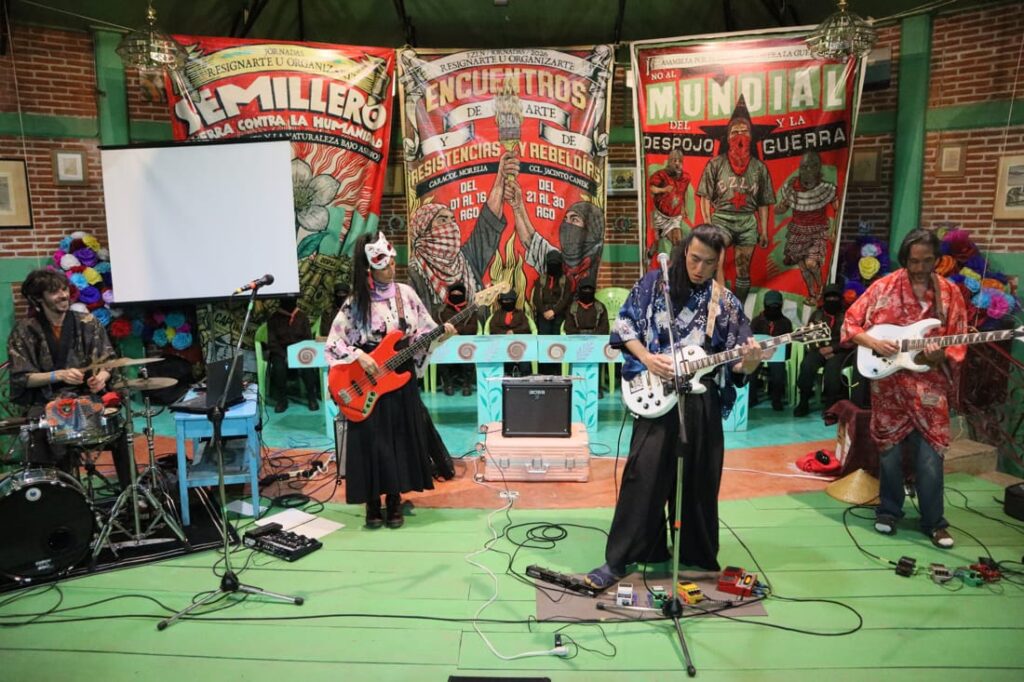
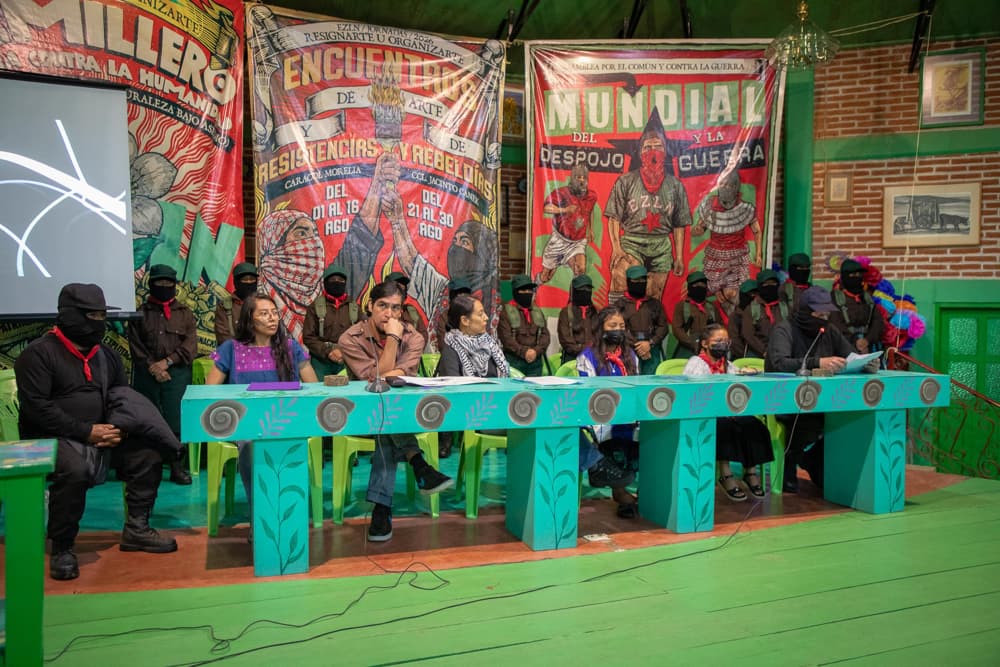
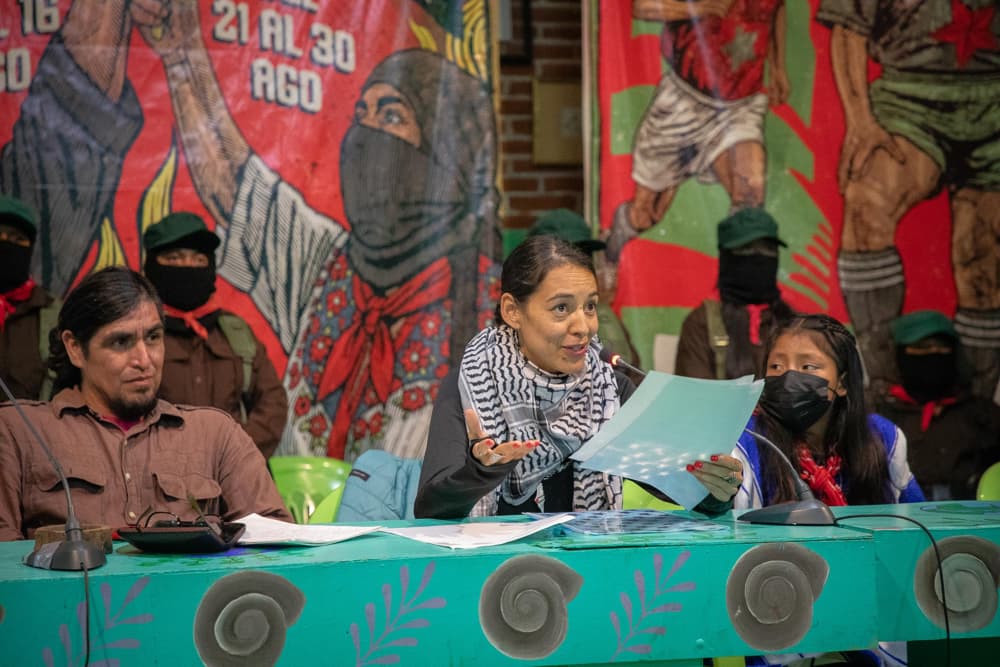
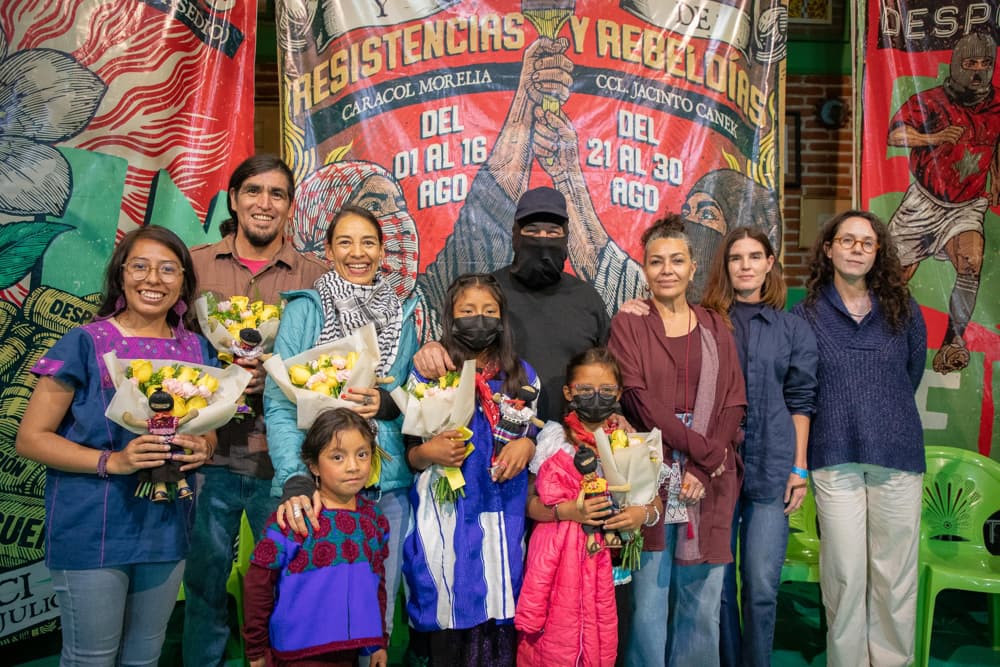
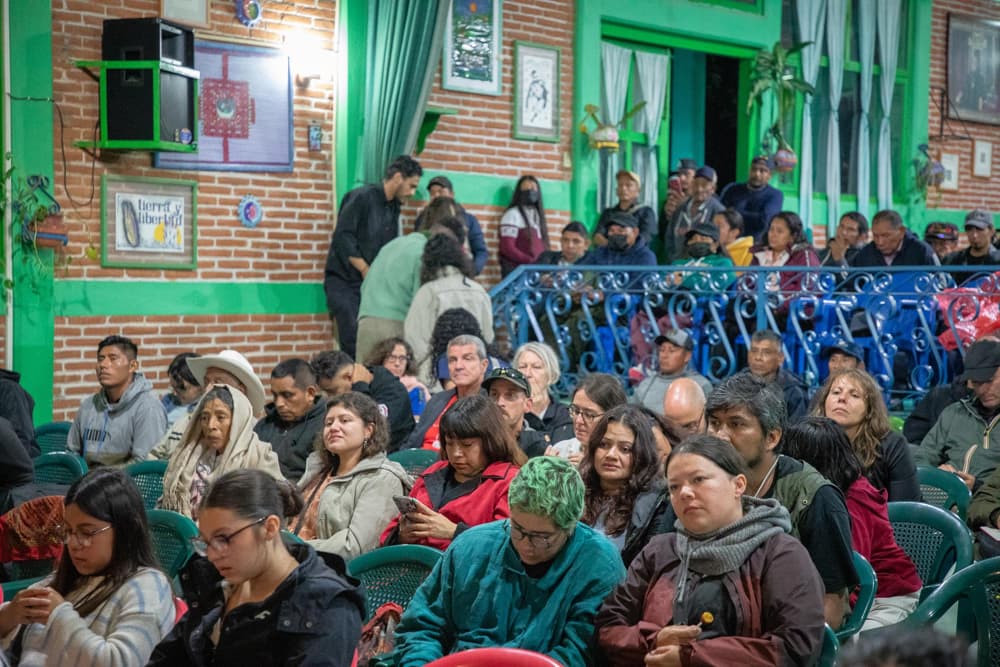
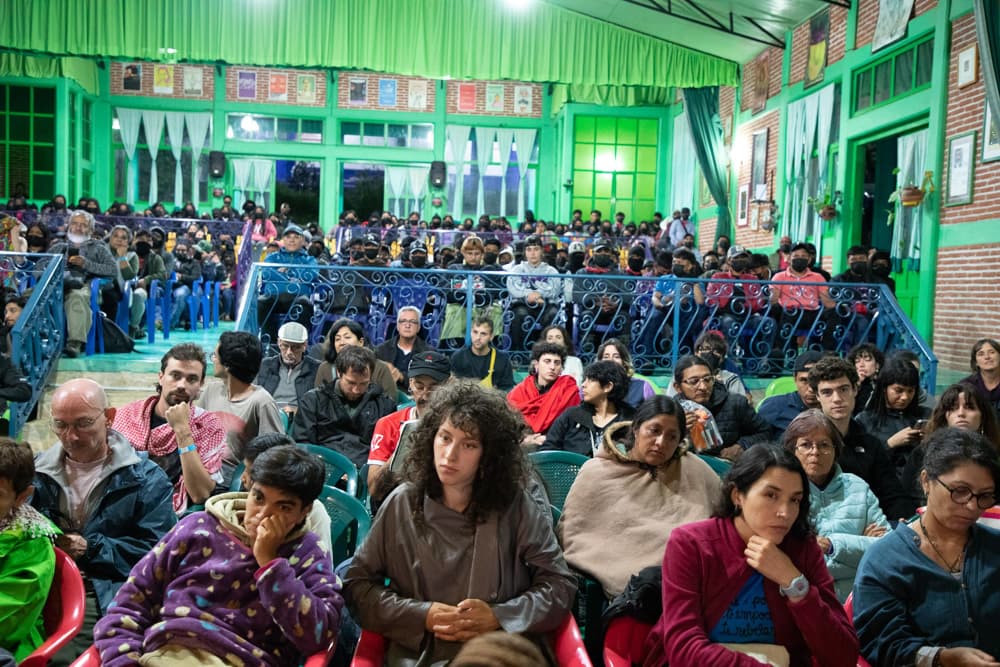
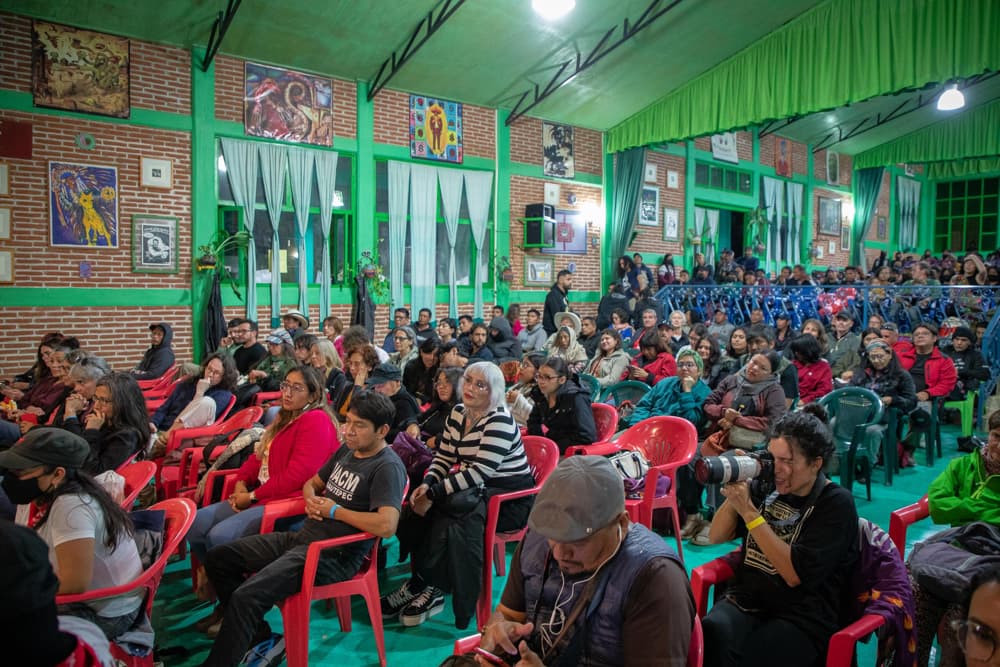
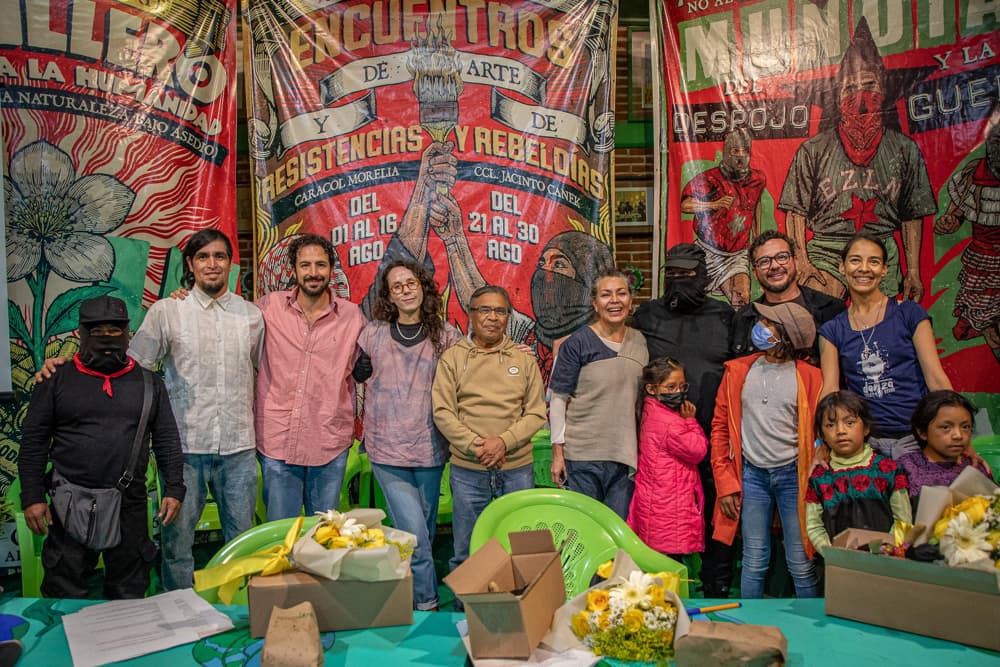
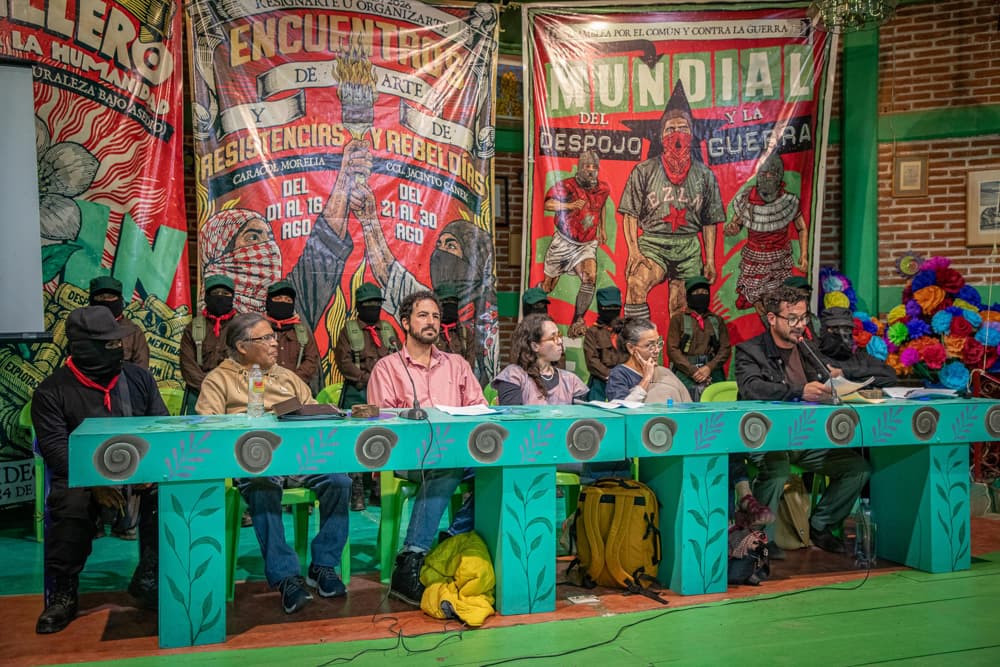
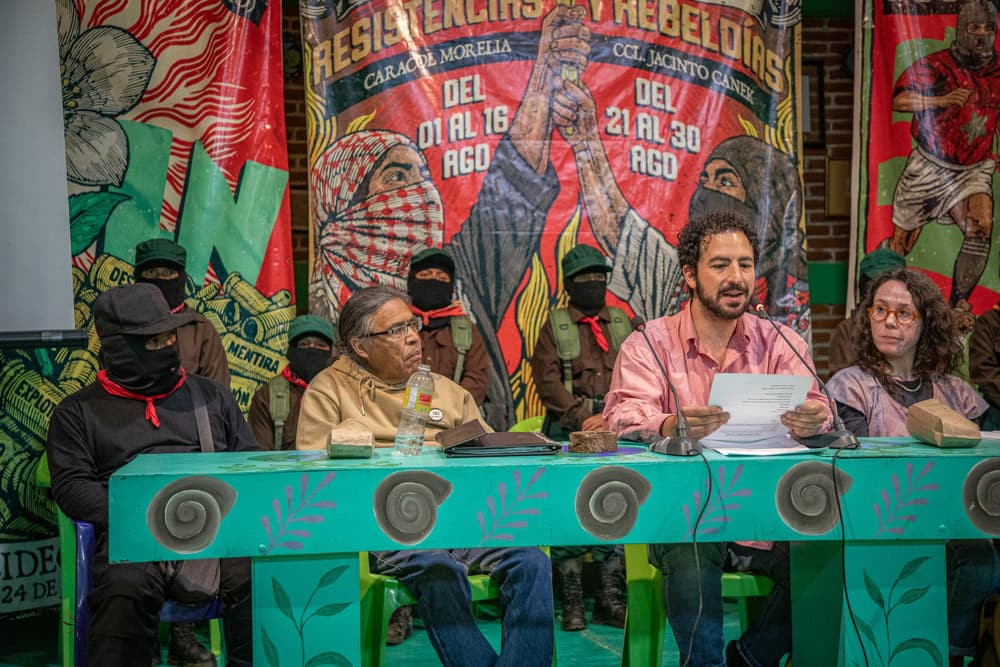
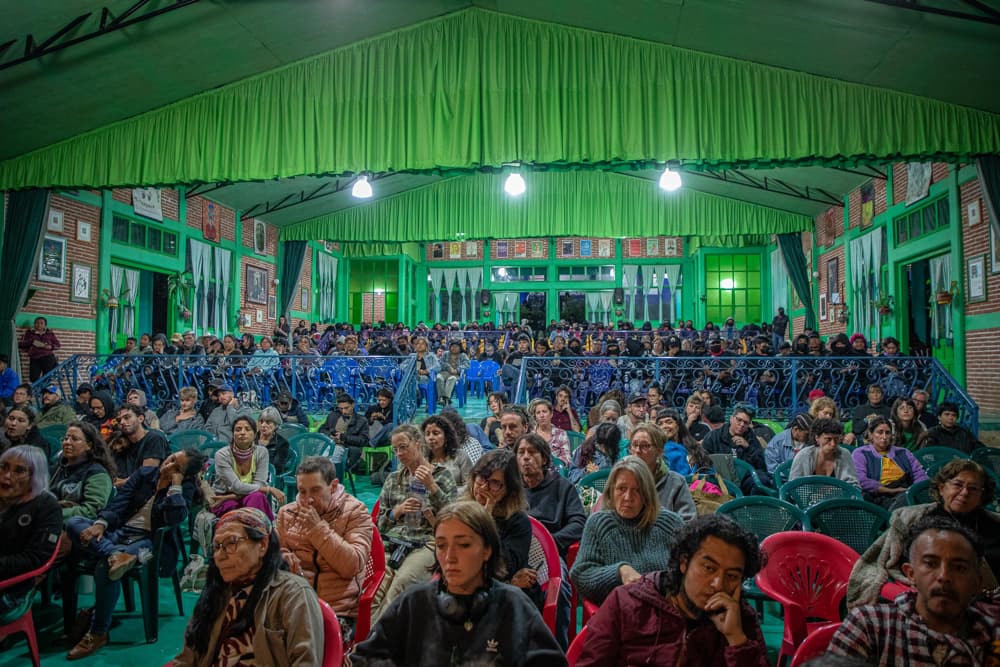
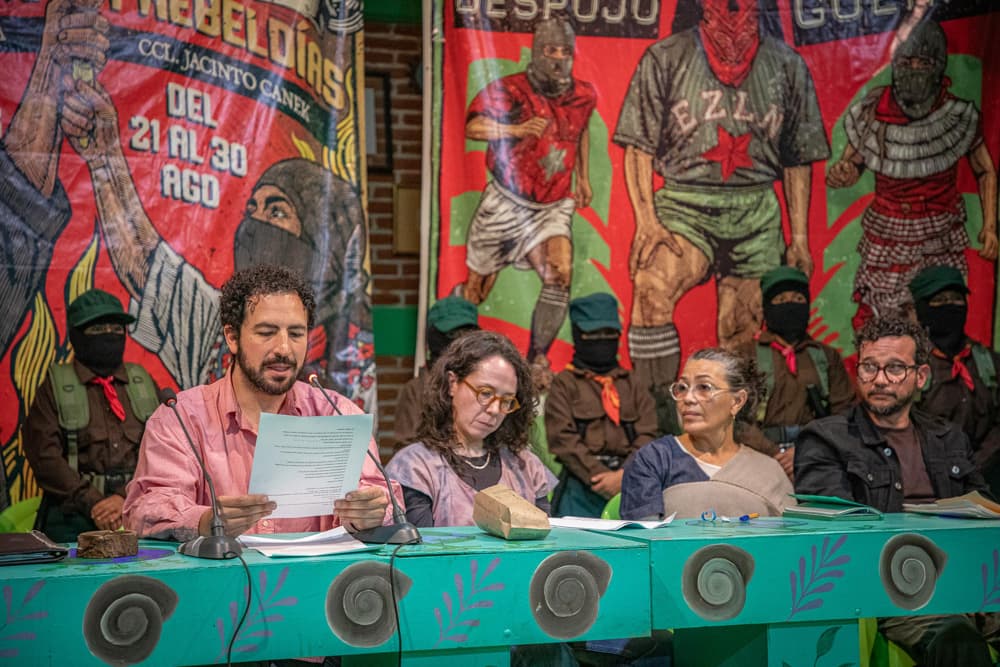
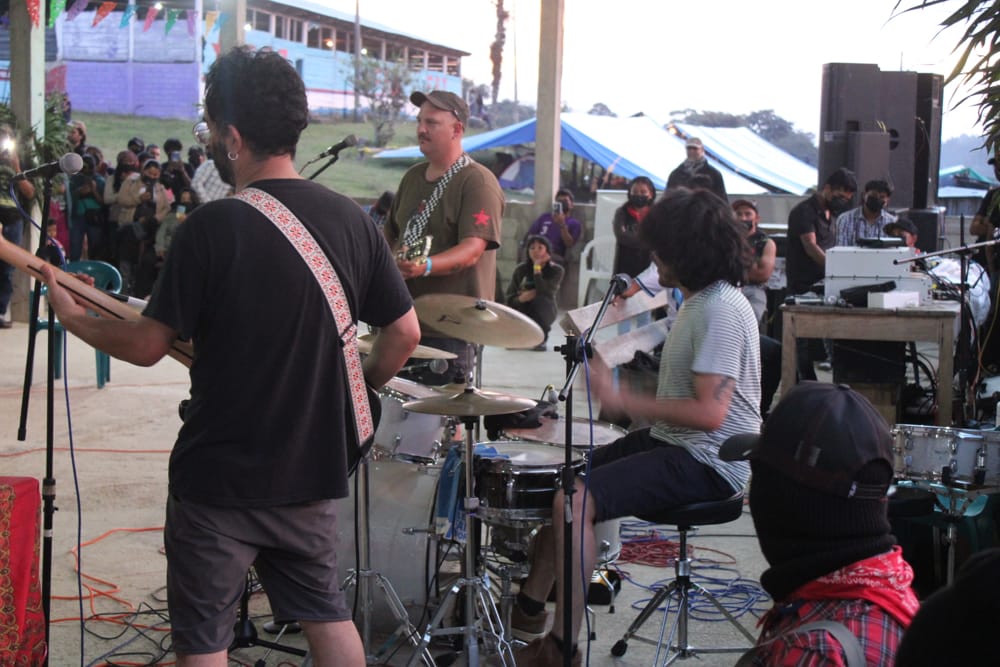
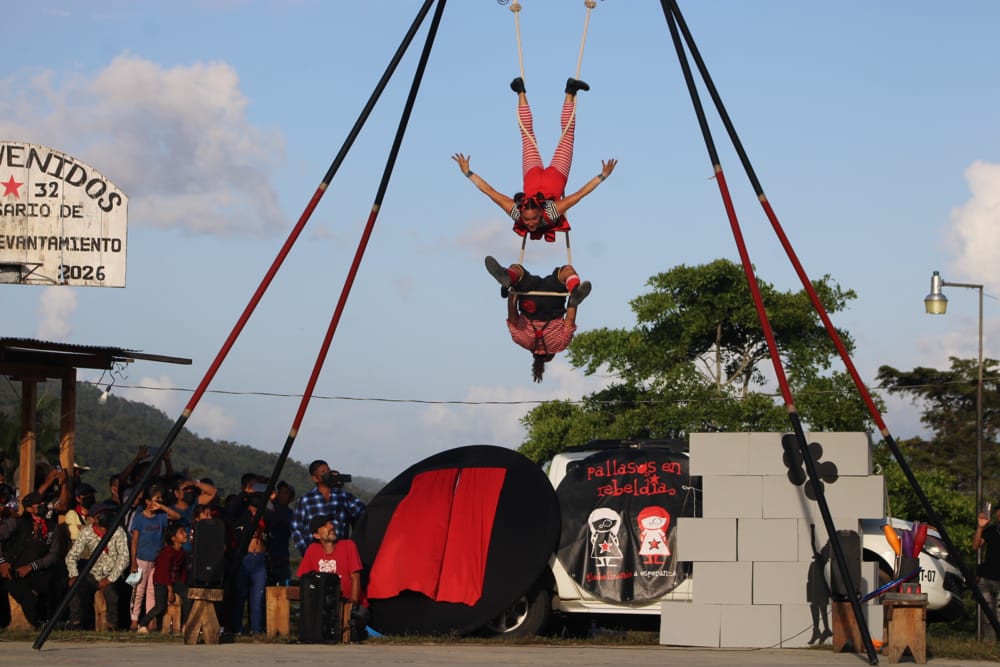
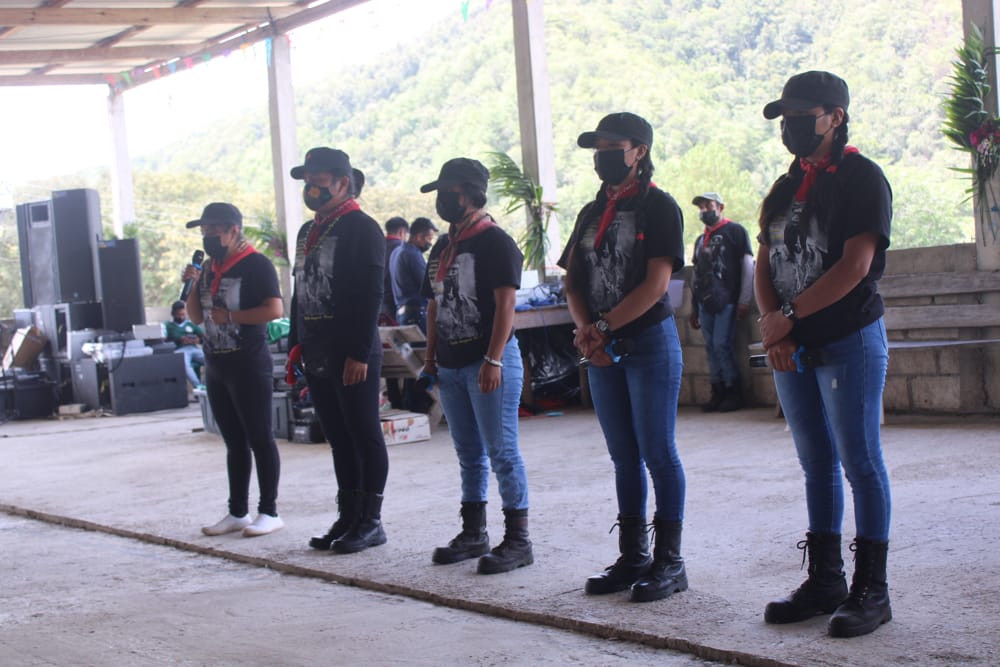
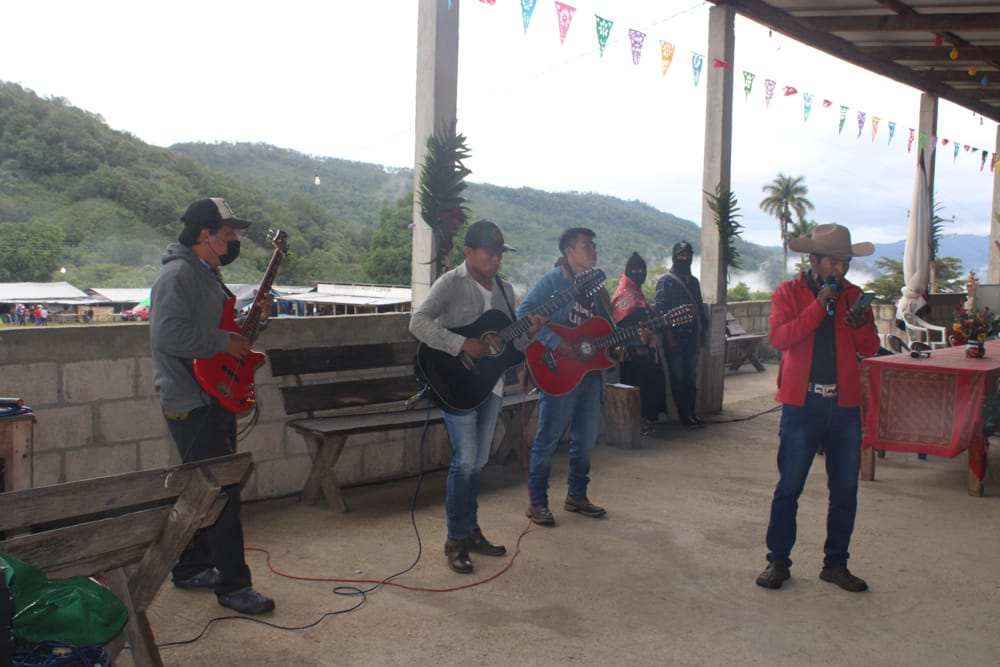
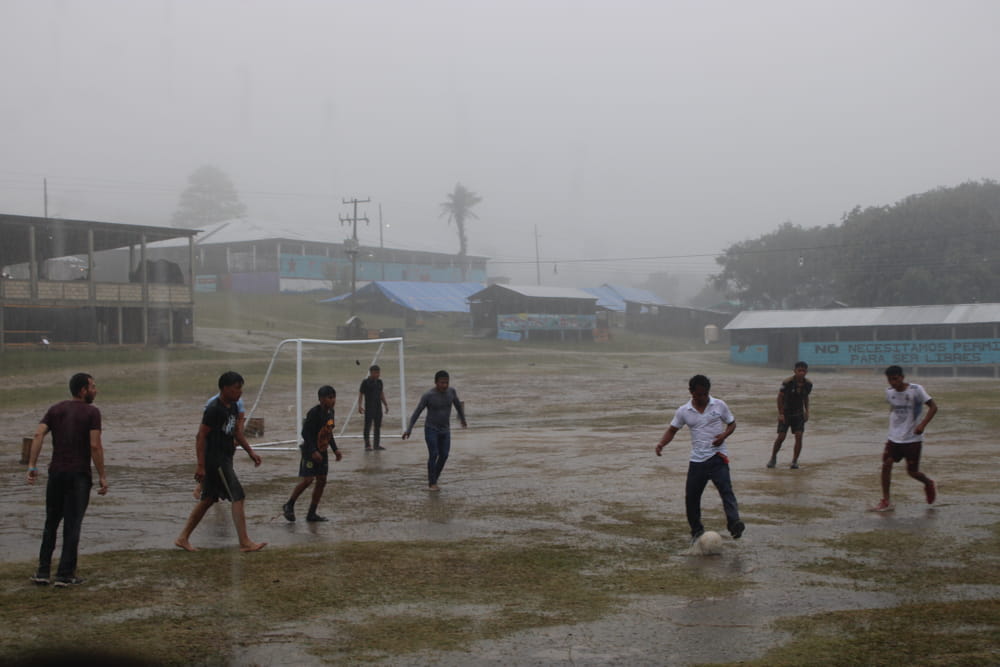
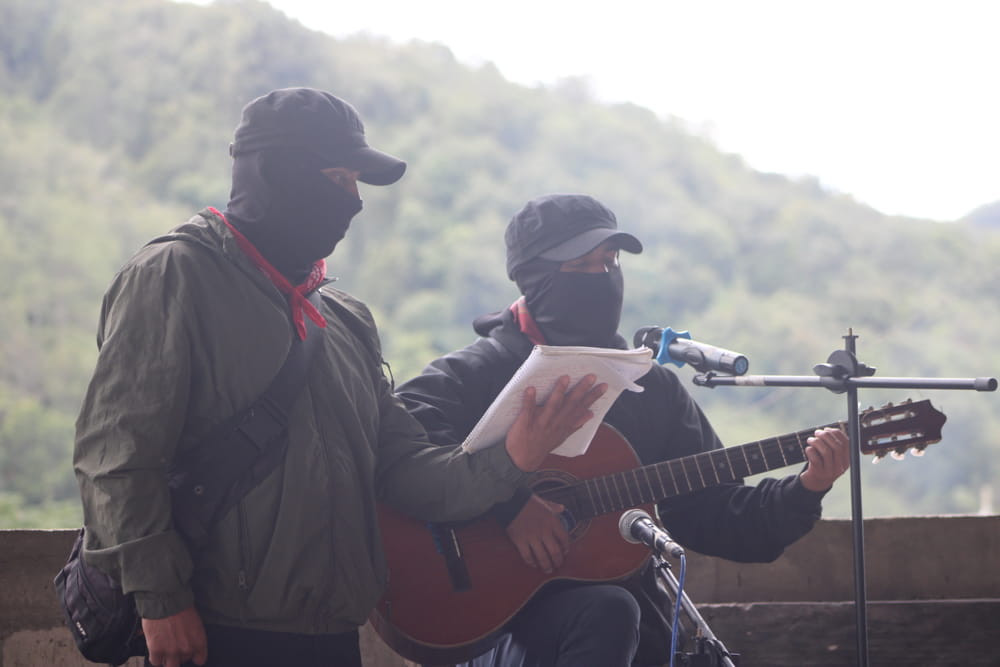
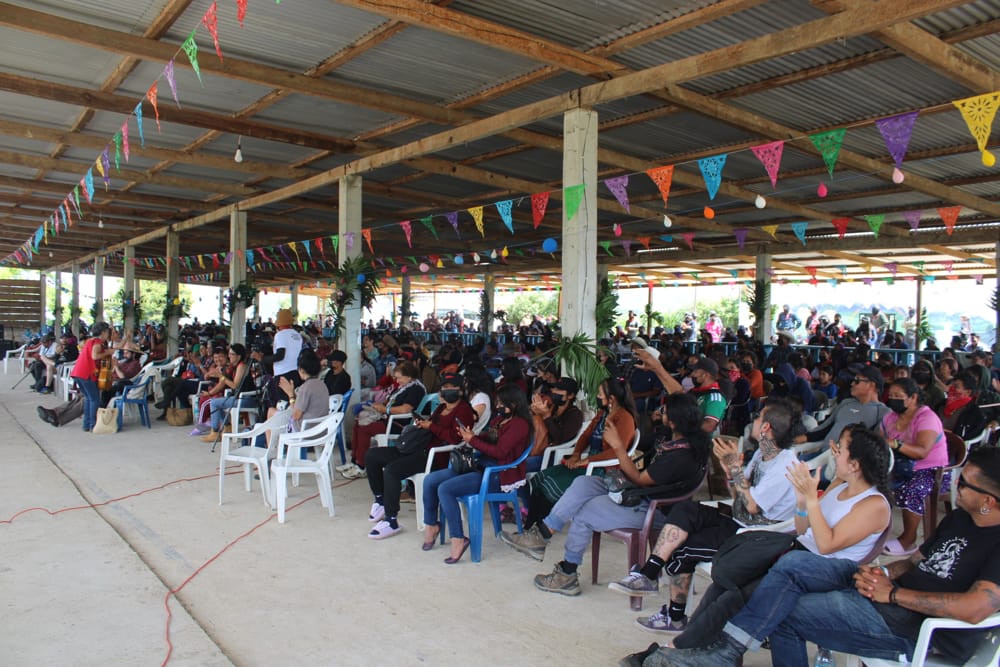
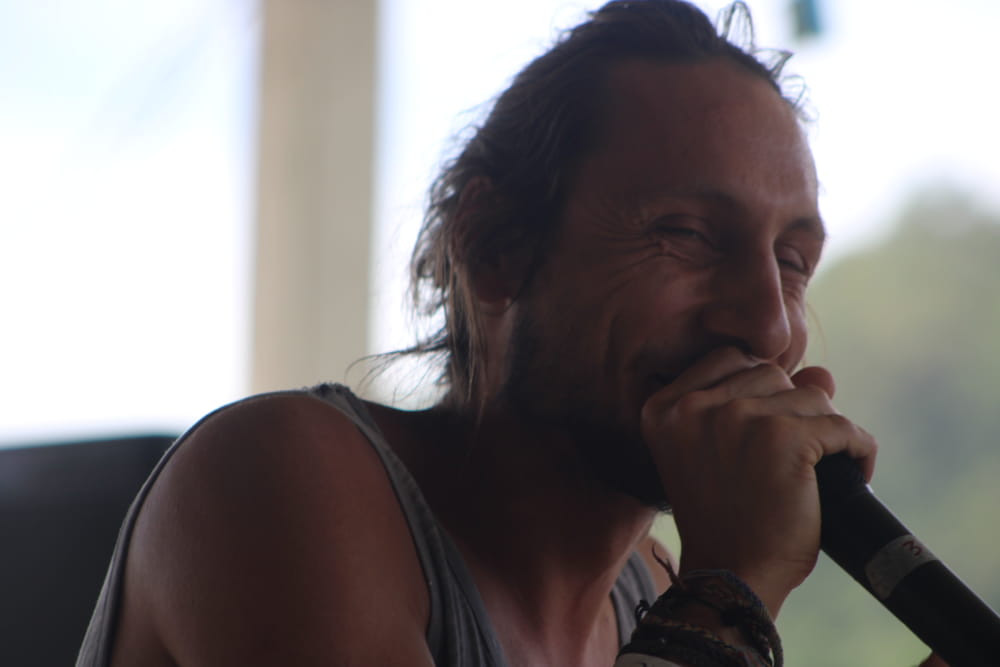
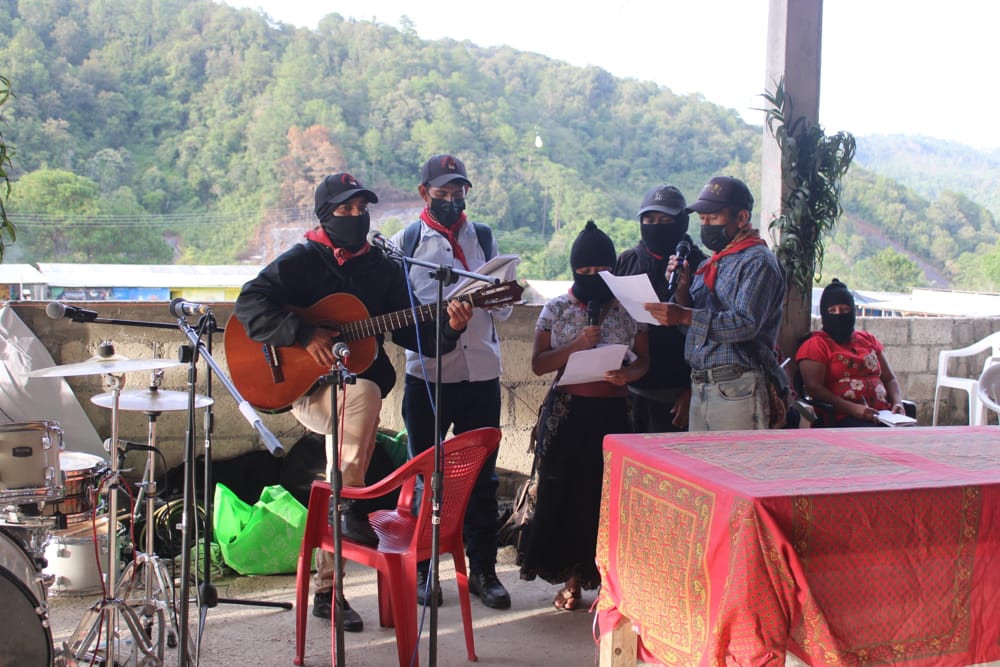
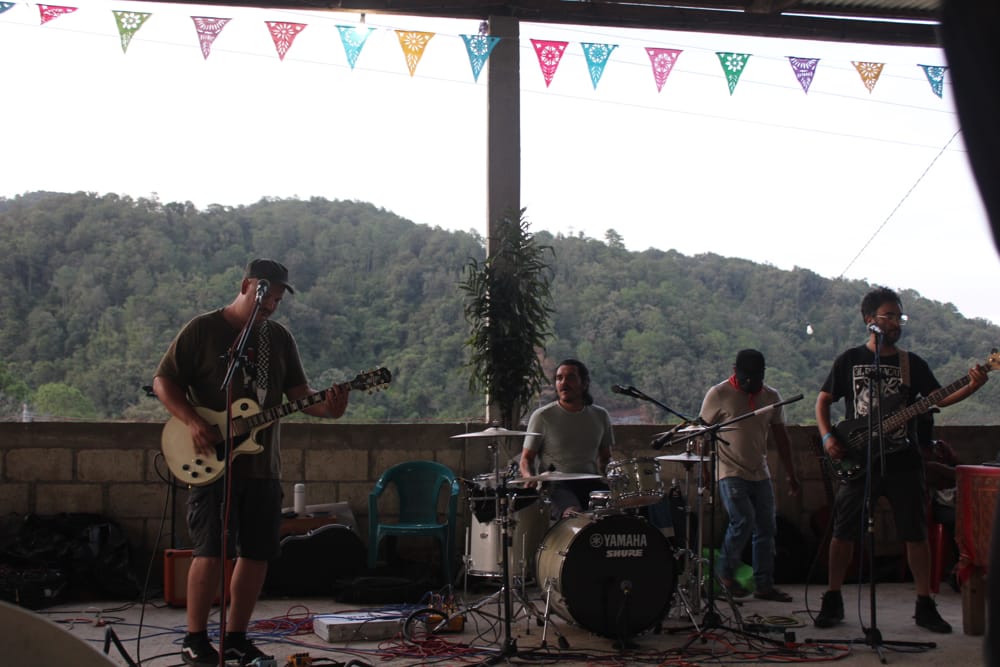
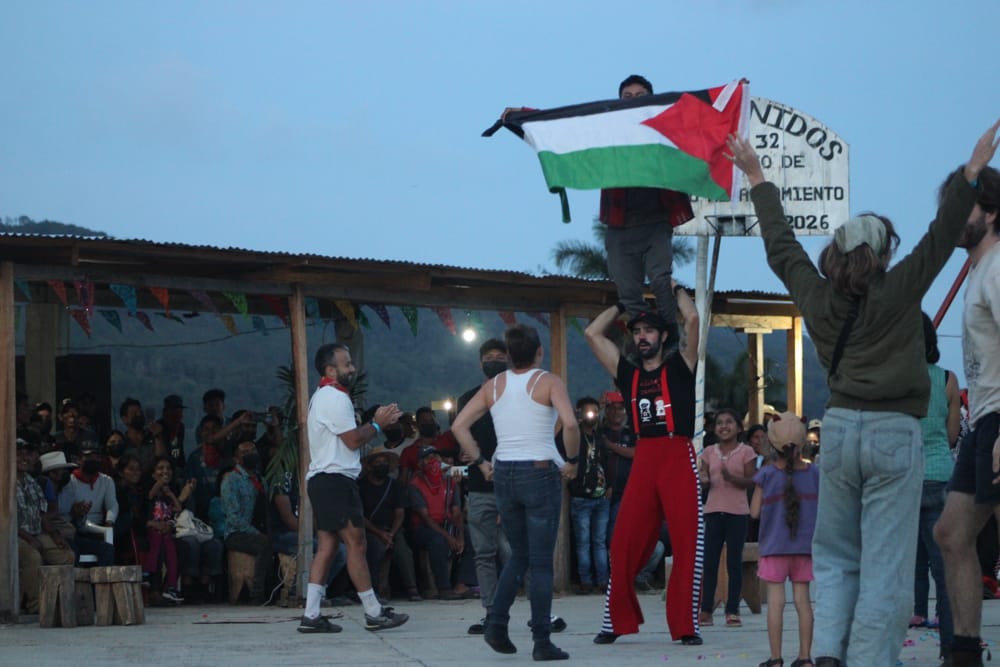
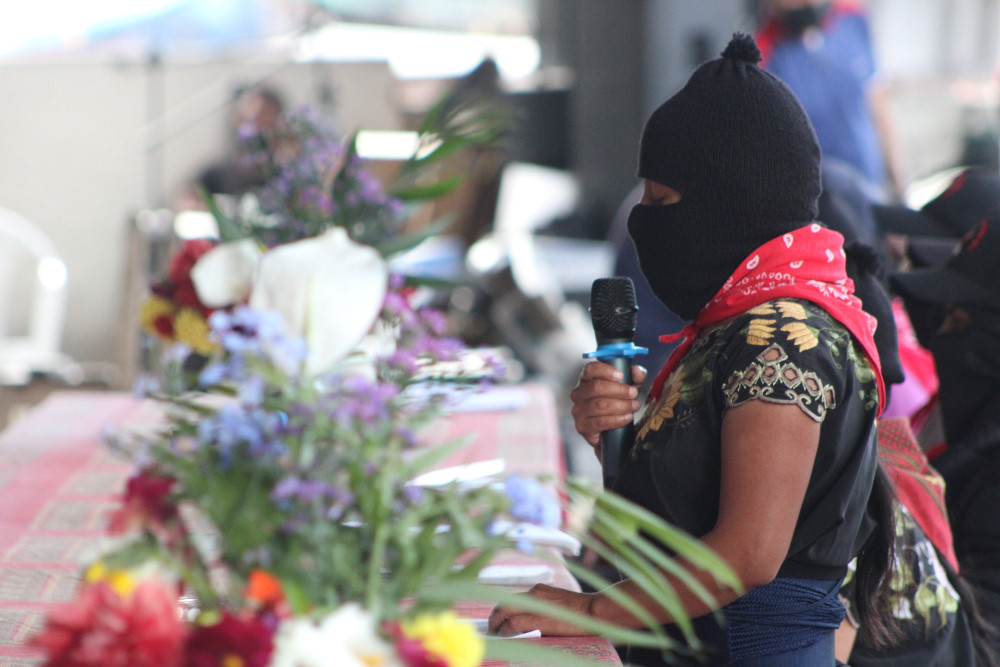
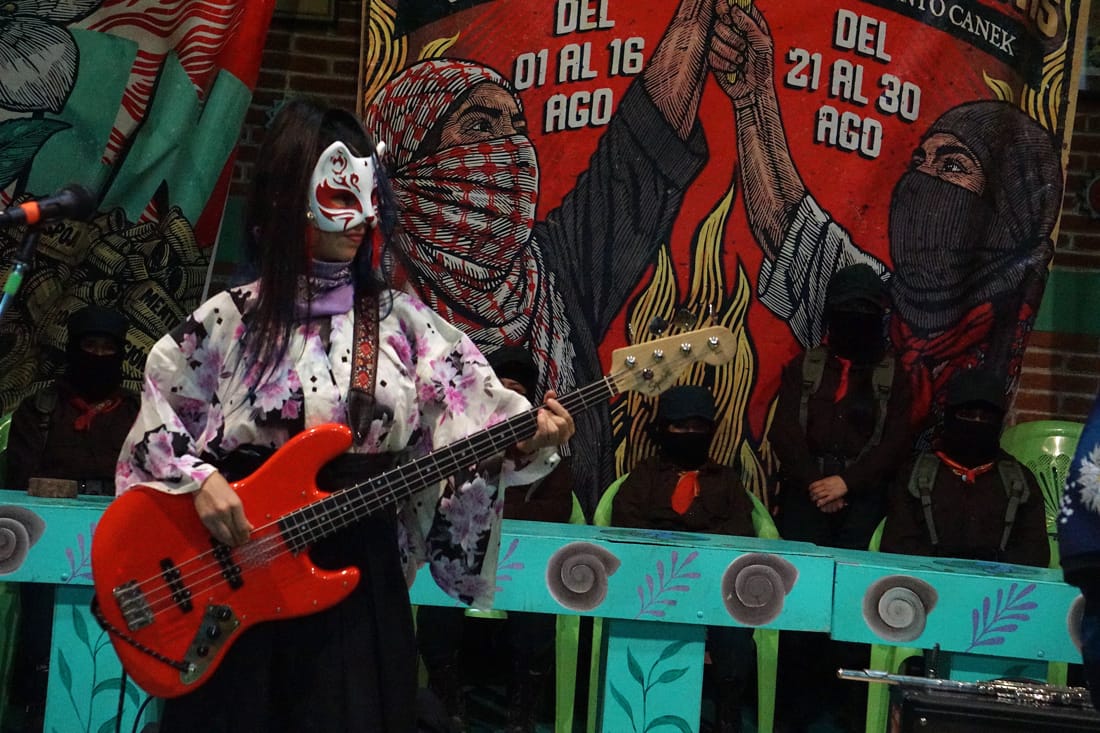
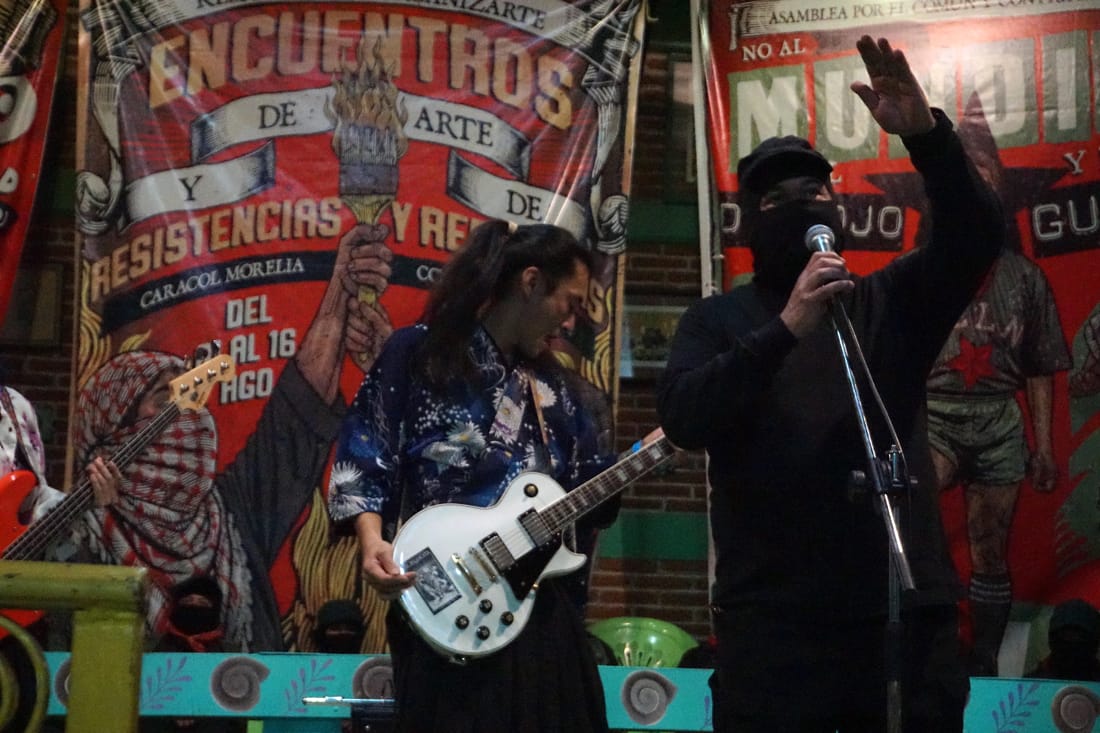
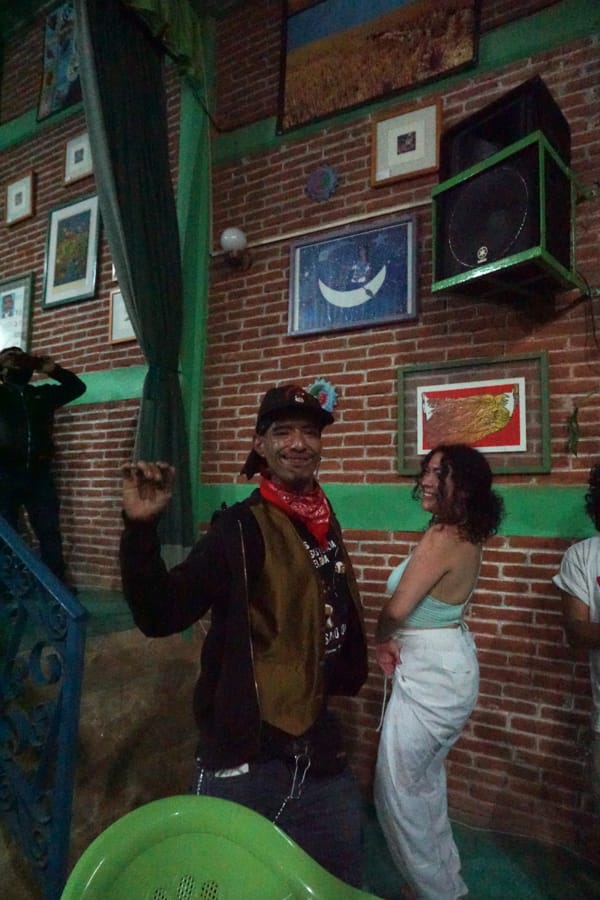
A memória e o olhar dançaram juntos ao ritmo de uma cumbia japonesa no Cideci/Universidad de la Tierra, neste último dia do Semillero “As artes sob assédio”. O extraordinário grupo musical Xaolin Wolf preparou o corpo e o coração coletivo para as reflexões que viriam, insuflando vida e alegria.
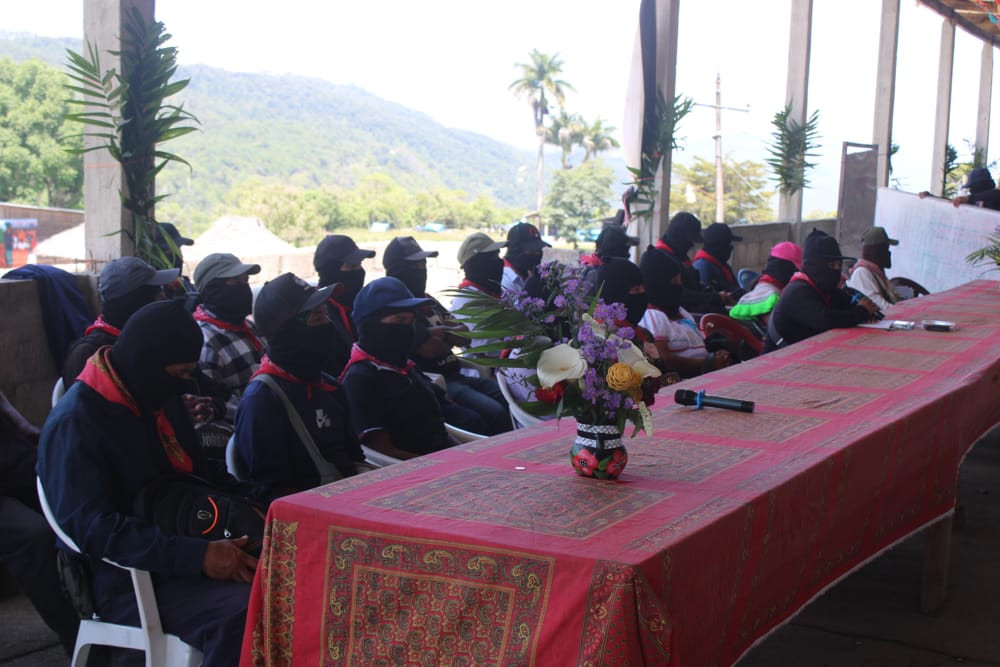
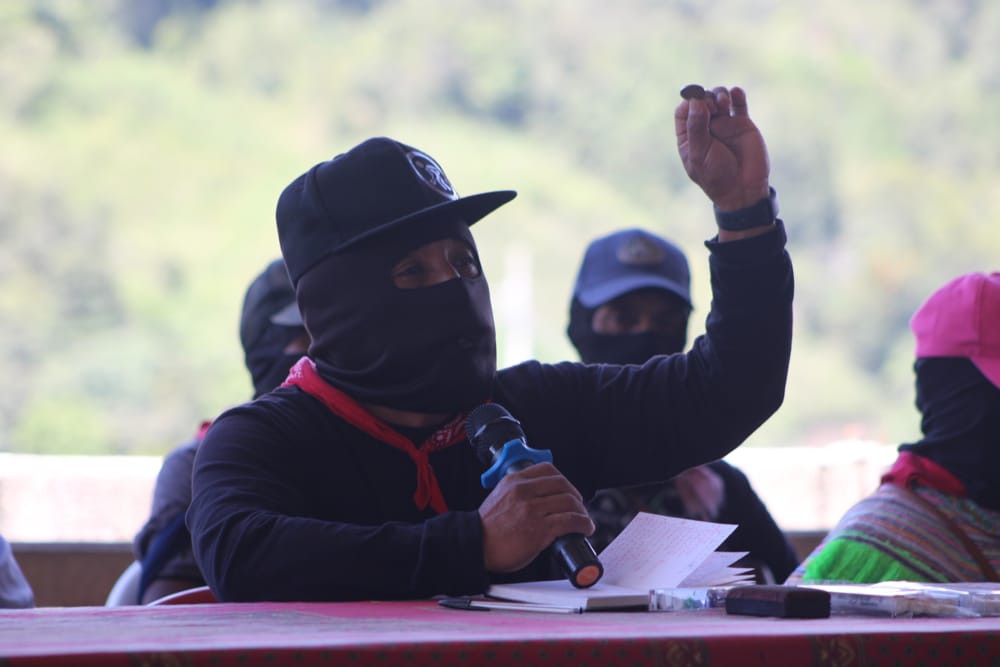
As reflexões daquele dia girariam em torno do teatro, mas, por meio dele, em torno da vida de maneira mais ampla. E, nesse sentido, a memória como resistência e fundamento da comunalidade e o olhar como abraço e como reconhecimento da singularidade das partes na pluralidade do todo estiveram sempre presentes.
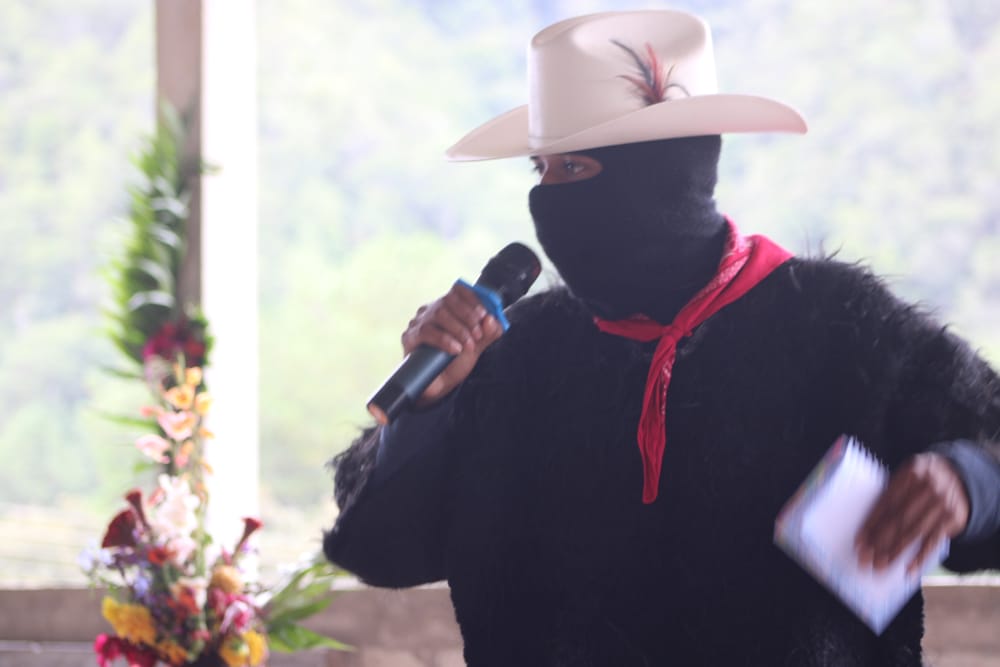
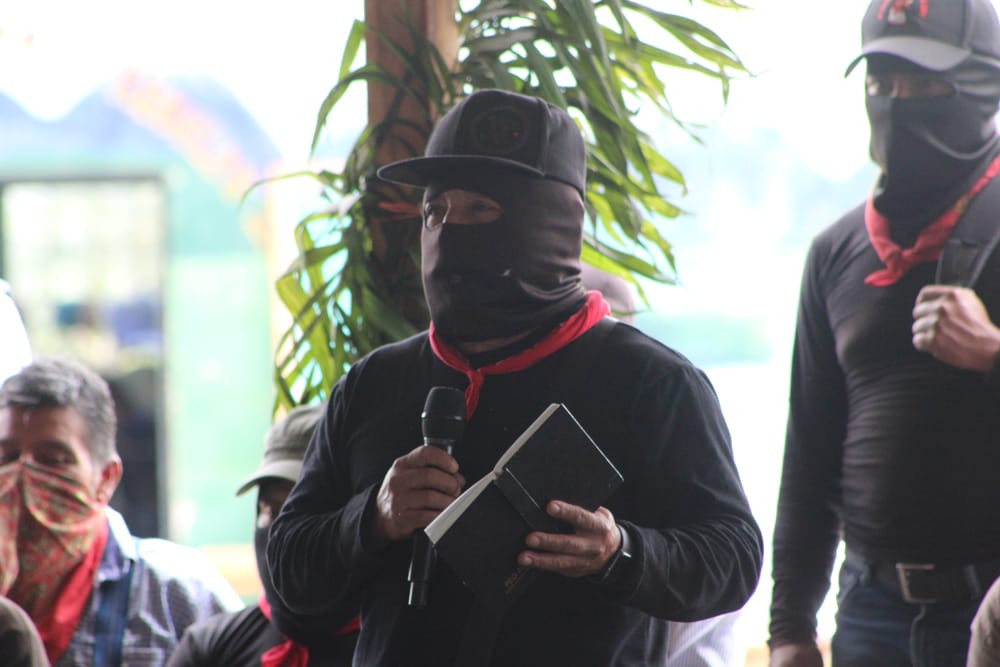
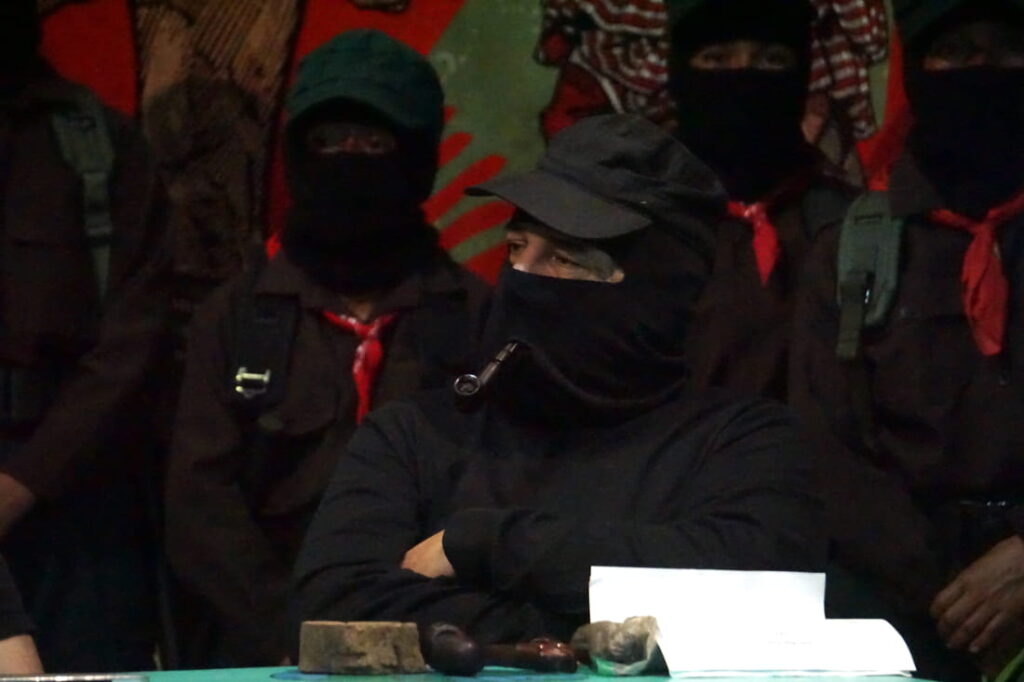
“É a memória o que define o ser humano”, disse o Capitão Marcos. É ela que sustenta a comunidade. E a humanidade é comunidade, embora o sistema-mundo em que vivemos insista em destruí-la justamente por meio do esquecimento.
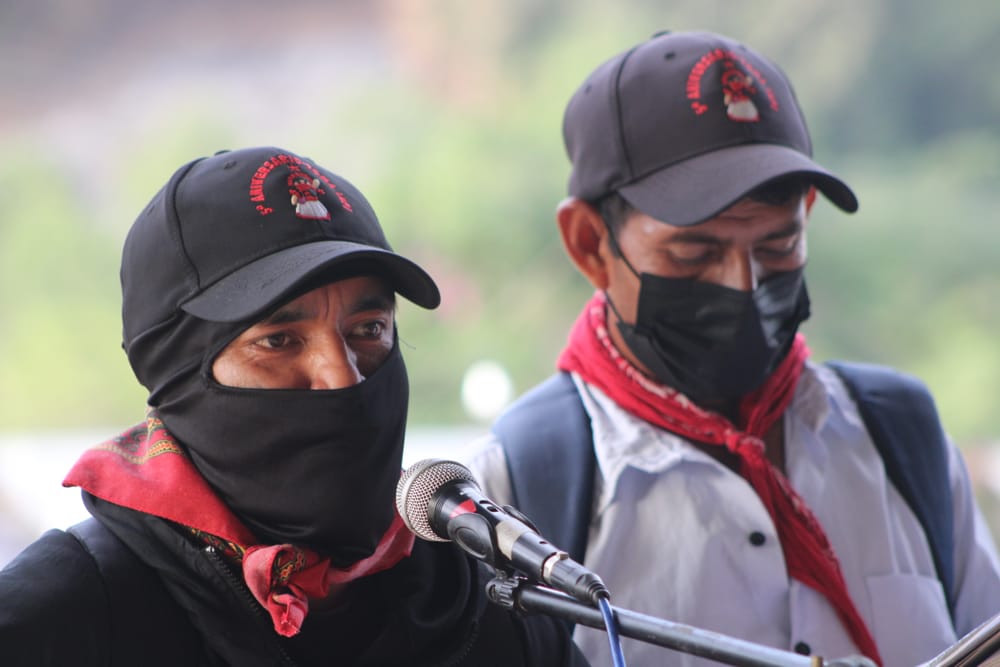
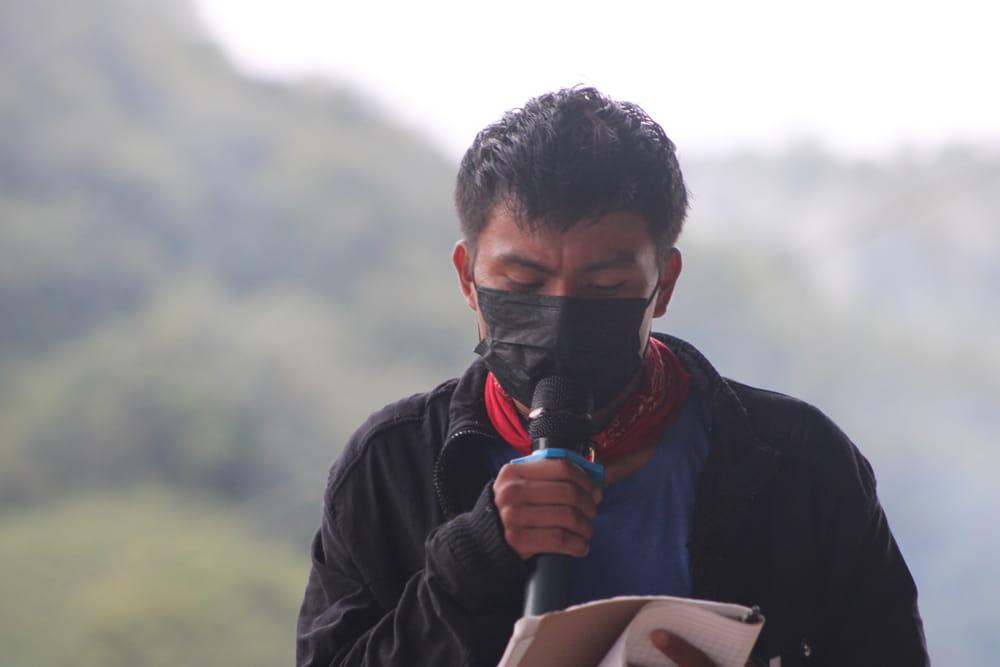
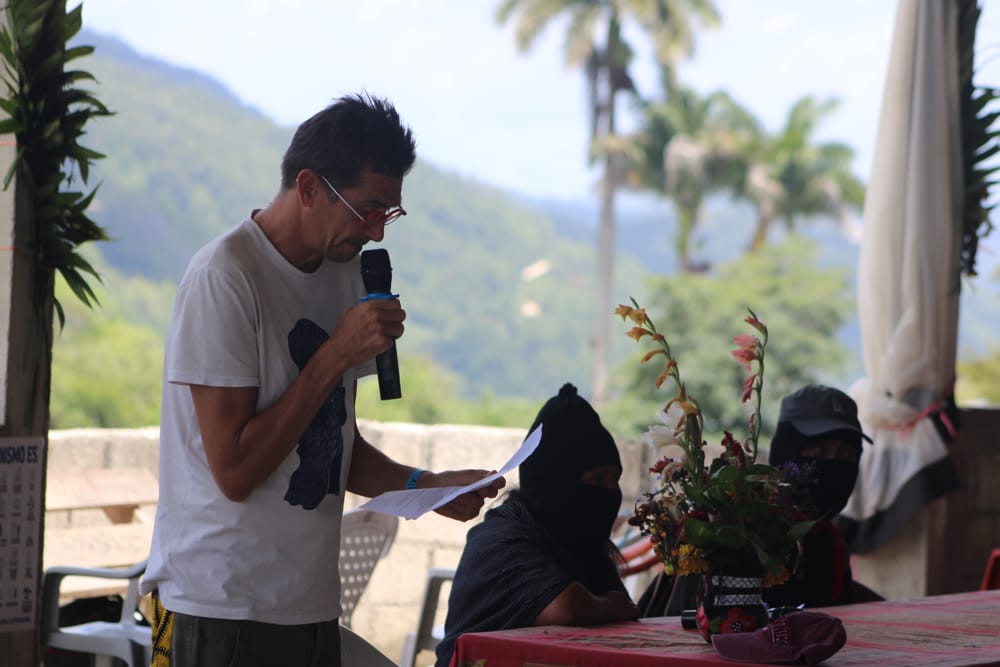
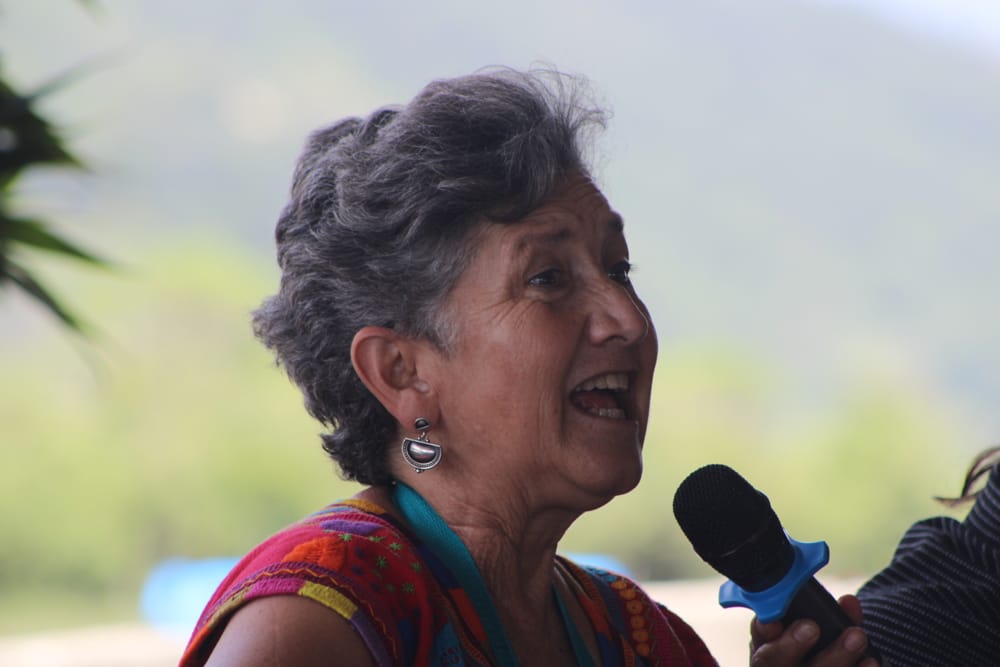
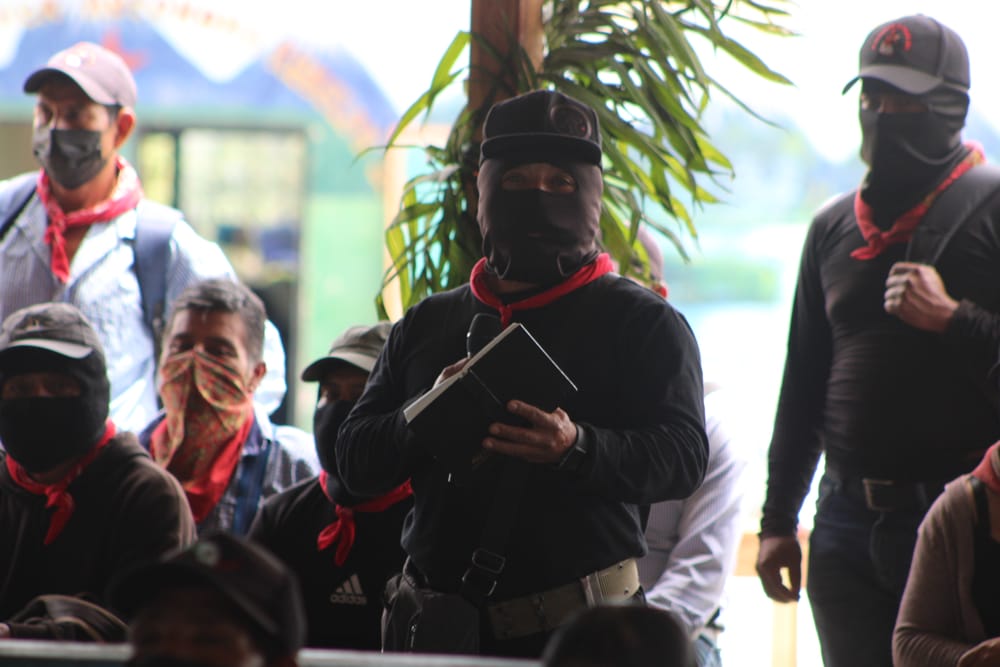
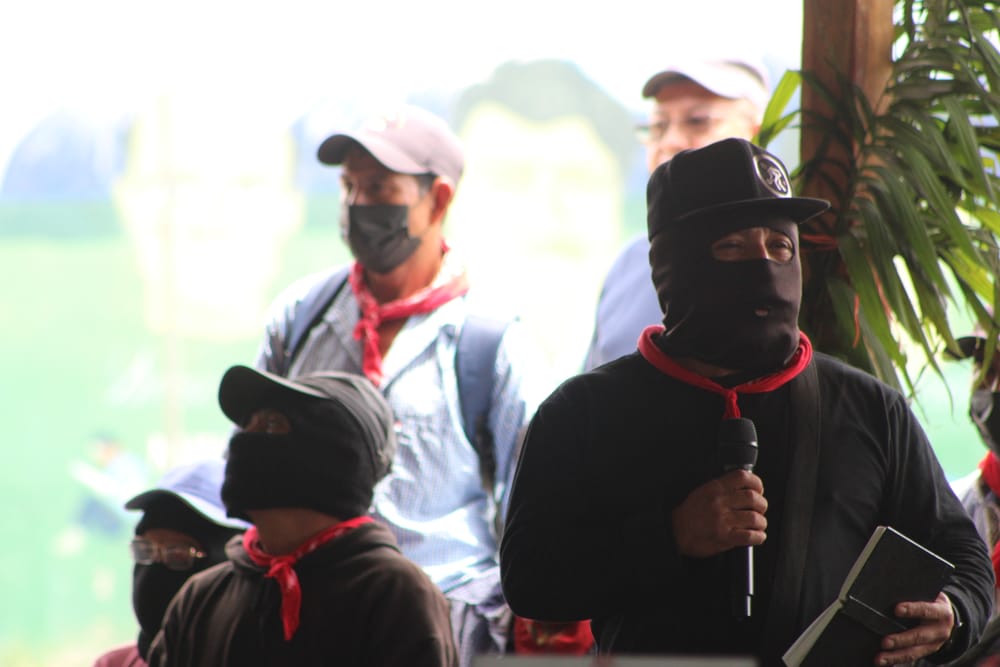
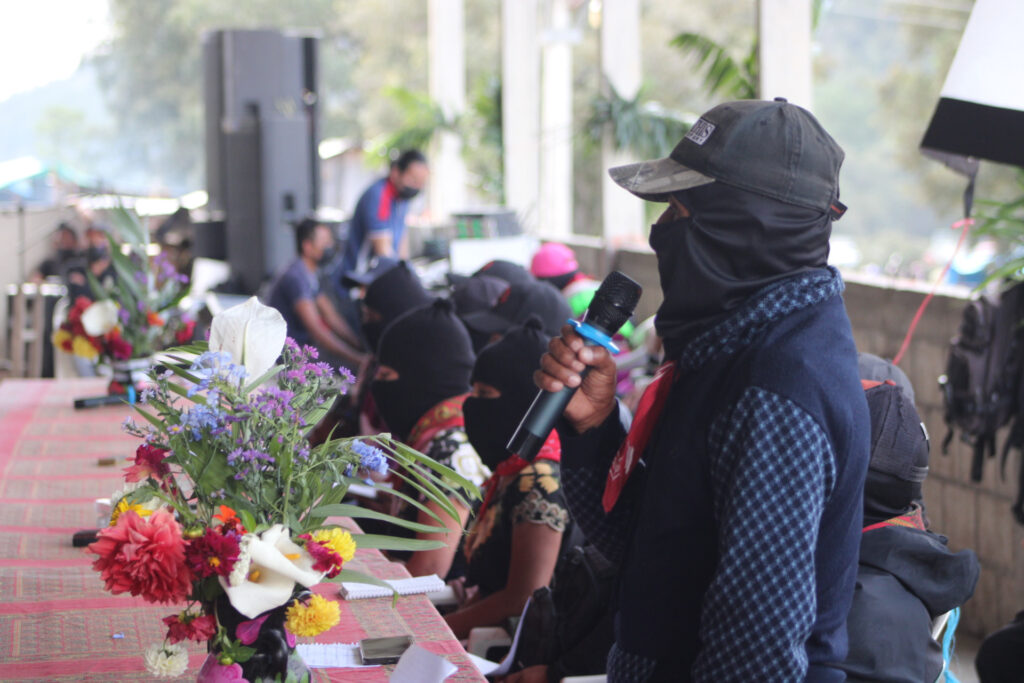
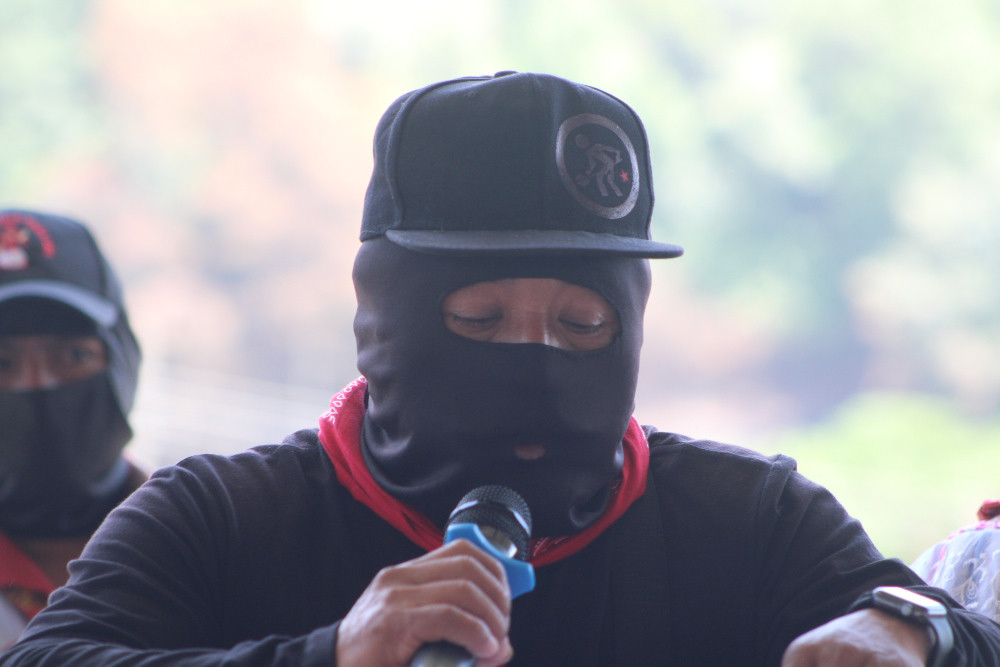
Capitão Insurgente Marcos (Baixe o áudio aqui)
Quando falamos de memória, diz o Capitão, não nos referimos apenas ao ato de lembrar, mas também a contextualizar as lembranças. É dessa contextualização das lembranças que surge o olhar: uma forma particular de ver o mundo e os outros seres, fincada na memória e que constrói o indivíduo e o coletivo.
Quando nos lembramos do Sup Pedro, por exemplo — disse o Capitão —, nós o trazemos de volta, curamos suas feridas de bala, curamos a cicatriz de calibre 30 de carabina em sua bochecha e lhe damos seu café amargo e seu maço de cigarros. E não falamos, apenas nos olhamos; isto é, nos abraçamos.
A comunidade também se constrói e se alimenta por meio do olhar. Mas não de qualquer olhar e, certamente, não do olhar único que se impõe sobre os demais. O olhar que importa, aquele que constrói comunidade, é “aquele que abraça a pródiga pluralidade da vida” e, nela, a particularidade de quem é olhado.
O Capitão citou a obra Seis personagens à procura de um autor, de Luigi Pirandello, na qual, em meio a um ensaio teatral, seis desconhecidos chegam explicando que são personagens de uma história inacabada e que procuram um autor que complete sua história. “Essa peça de teatro representa a reivindicação do olhar”, disse o Capitão, pois os personagens sabem “que é a arte o que lhes permitirá ser olhados”.
O olhar, esclareceu, não é um privilégio da visão, mas do coração. Quem olha ama, pois o amor nasce da surpresa de olhar. Mas o amor é incompleto se aquele que é olhado não sente esse olhar, “não percebe o abraço que todo olhar deve oferecer”.
Por isso vamos à Cidade do México, para fazer saber aos grupos, coletivos e coletivas de mulheres que buscam seus desaparecidos que nós as vemos, e para confirmar a nós mesmos que elas sabem e sentem isso.
Teatro comunitário: memária, olhar e o Comum
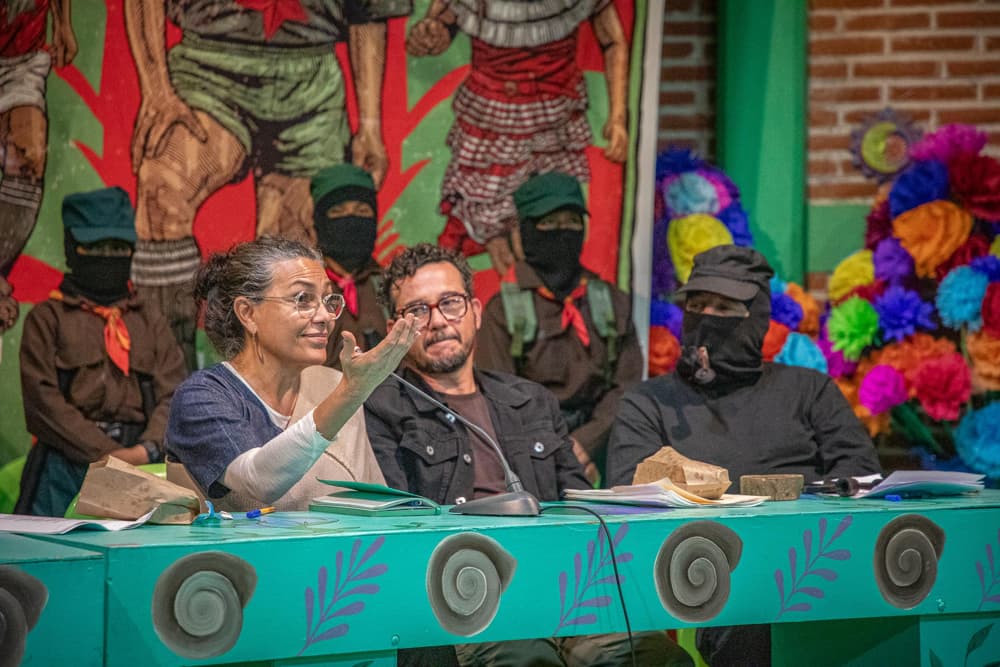
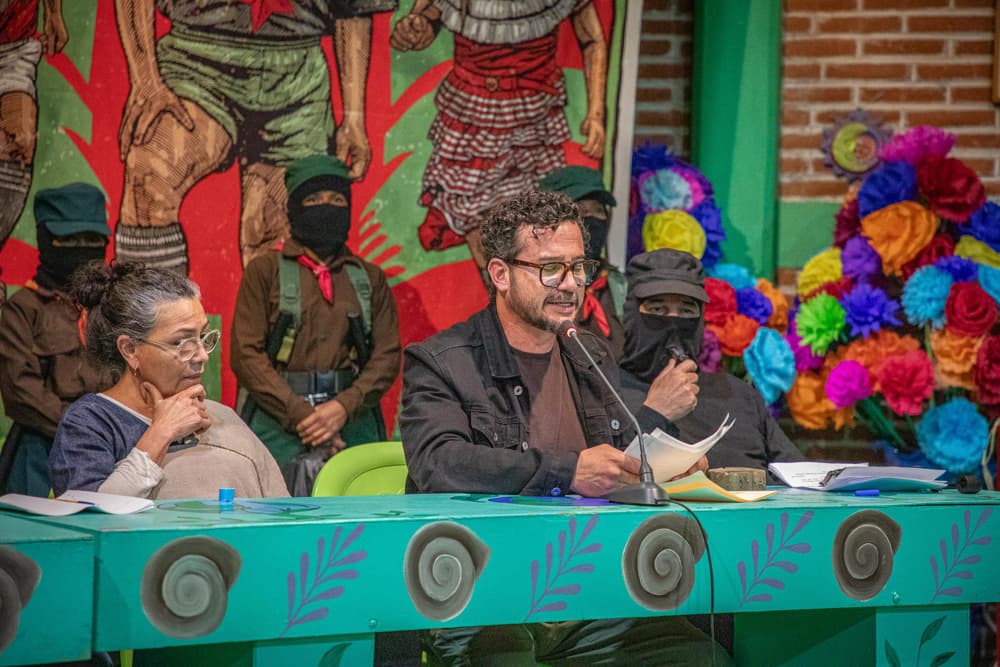
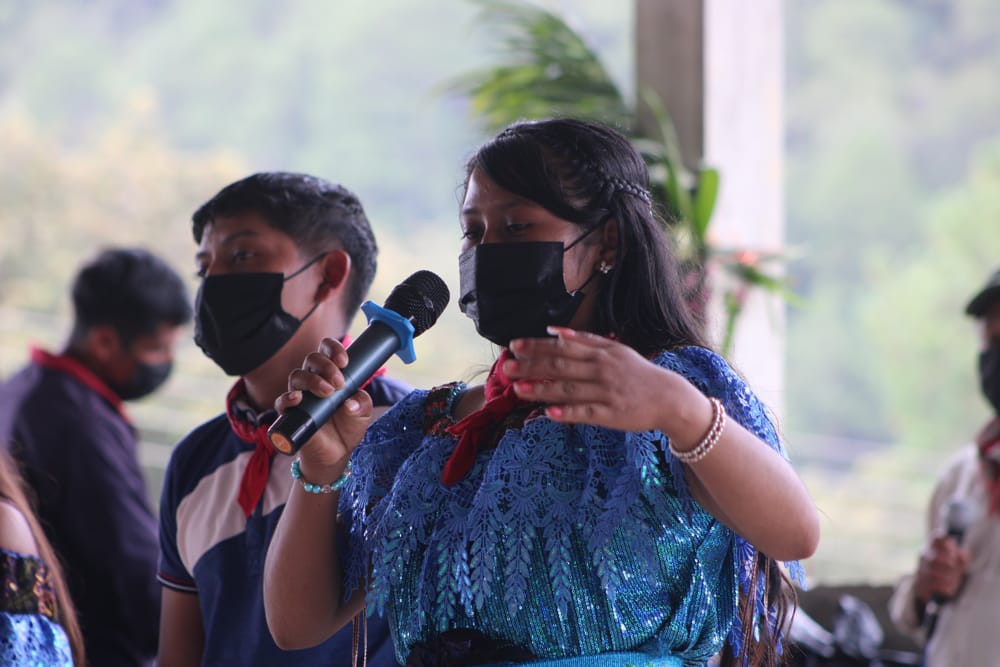
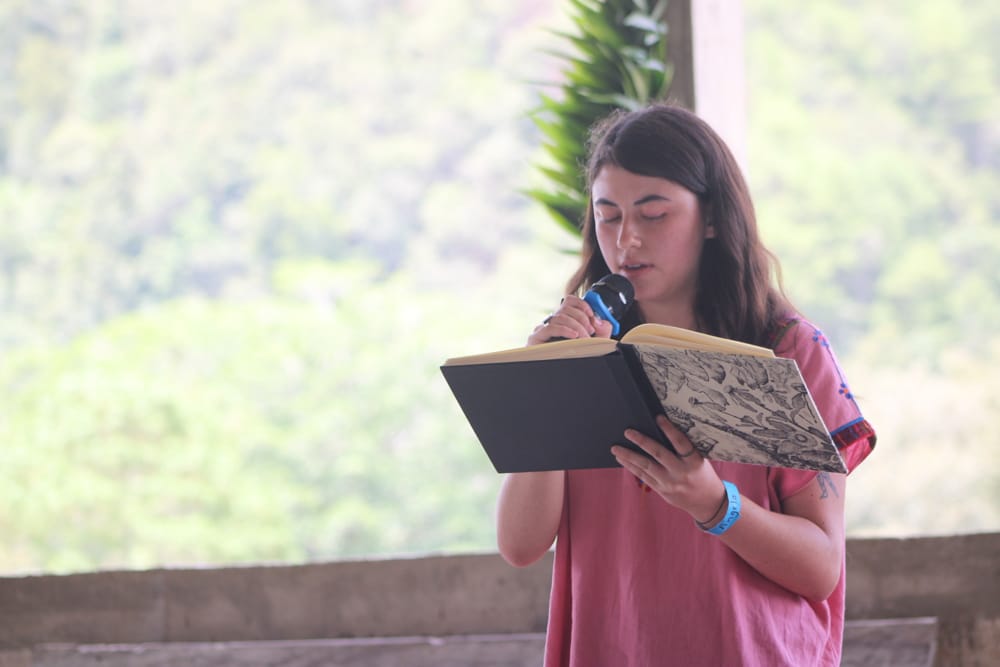
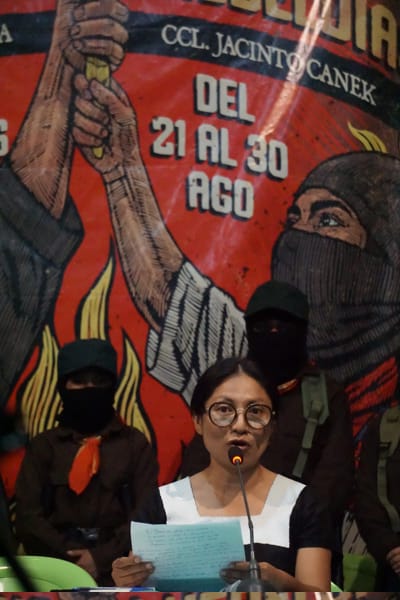
Esmeralda Aragón (Baixe o áudio aqui)
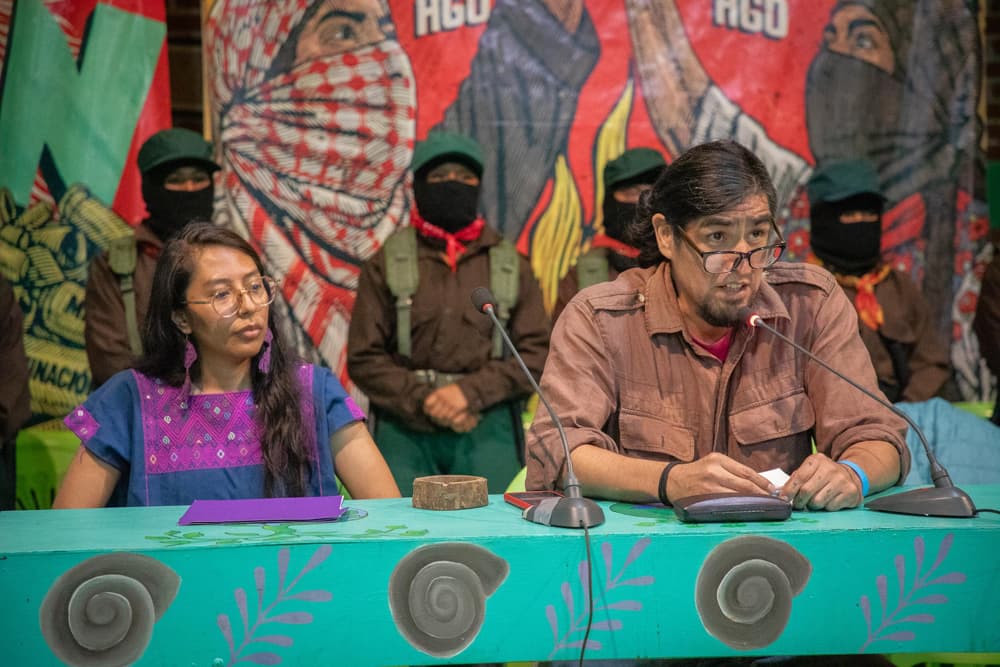
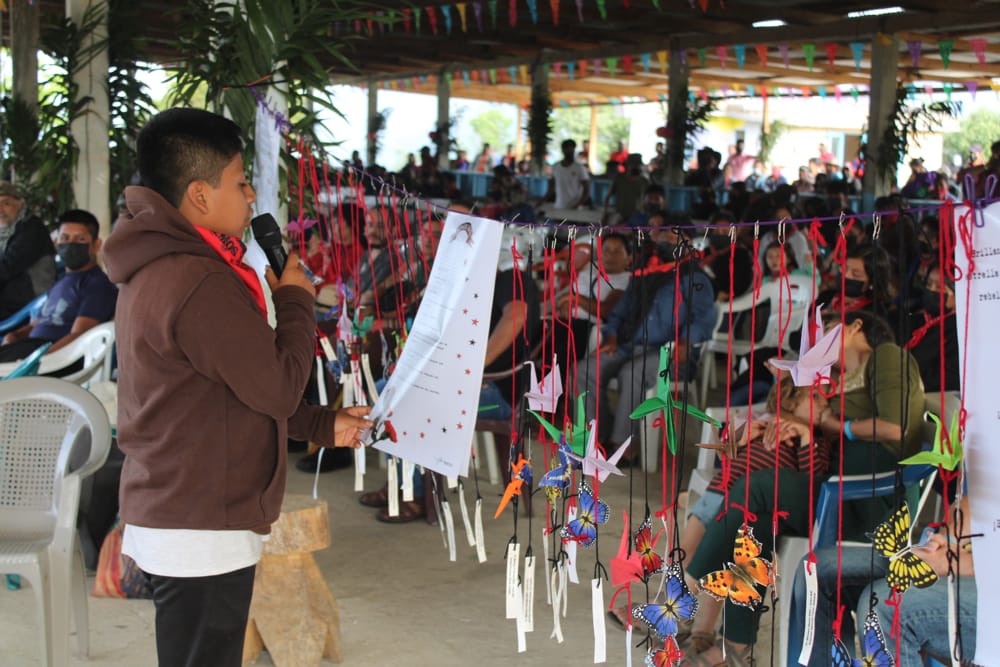
Esmeralda Aragón começou nos sacudindo com memória e olhar, ao ler para nós um texto sobre sua mãe. Autodidata, mulher de luta, sem estudos formais, mas com profundos saberes, parte de uma linhagem de “gerações de mulheres que não pisaram nas salas de aula”, mas que “sabem de tudo”. “Minha mãe sabe de teatro, embora nunca tenha pronunciado a palavra”, pois, nos momentos difíceis, sabe sorrir e contagiar com seu sorriso. “Minha mãe é verdade.”
O Capitão havia nos dito que são a memória e o olhar que sustentam a comunidade. Esmeralda nos mostrou, então, que o teatro comunitário só pode existir fundamentado na memória e no olhar.
Vamos viajar. Outubro de 2018. Em uma pequena comunidade da região chontal baixa de Oaxaca, os habitantes se preparam para assistir a uma peça de teatro, sem saber exatamente o que pode ser isso de “teatro”. Mas chove, e o evento terá que ser cancelado. Não, decidem os pais e mães dos alunos da escola primária, e chegam ao quintal da casa de Esmeralda com lonas, areia para as poças d’água, mais lonas para cobrir o chão e cadeiras emprestadas da escola. E então o espaço vai se enchendo, e é preciso trazer mais cadeiras, e depois mais, até que mais de 800 pessoas se amontoam para assistir a sabe-se lá o quê.
E então algo extraordinário acontece. A peça é memória e é olhar. É, ao mesmo tempo, espelho e luneta. Nela, a comunidade se reconhece. Ri, chora e reflete. Olha para seu cotidiano e, ao olhá-lo, contextualiza a memória. Depois, o cotidiano se rompe e acontece um feminicídio, um terremoto, um ecocídio, a busca por uma filha que todas e todos choram. Laços afetivos se estreitam, vive-se no coletivo. E, ao final da peça, dançam até as três da madrugada.
O que foi arrecadado é utilizado para reconstruir a escola, destruída pelo terremoto de 2017, diante do qual nenhuma instituição decidiu agir.
Teatro comunitário é isso, nos diz Esmeralda. Não aquele que vem de fora uma vez por ano para levar “cultura” ao povoado, como se ele não tivesse a sua própria; não aquele que impõe um olhar externo que se presume universal e ignora o olhar próprio; não aquele que ignora a memória, a deixa de lado, a menospreza.
“Garota danada”, disse-lhe uma tia depois da apresentação, “você não sabe o que acabou de fazer. Está fazendo a gente se tornar gente”.
Pois o olhar externo, o olhar único, o olhar que hegemoniza e homogeneíza tudo, nos diz que, para ser “alguém”, é necessário deixar de ser comunidade. Sair, se afastar, esquecer e desaprender o olhar.
O olhar que é espelho e luneta também serve para semear sementes de outros mundos possíveis. Hoje, o povoado tem um encontro chamado Encontro Nacional de Teatro El Coyul, que já apresentou centenas de espetáculos em quadras, parques, feiras, escolas e outros espaços. Teatro comunitário construído em comum. Teatro no qual a comunidade se olha e que também lhe permite olhar o mundo a partir de seu próprio lugar. E teatro que permite ao mundo olhar não apenas para a realidade dessa pequena parte do todo que é El Coyul, mas também olhar para si mesmo com um outro olhar.
Paisagens
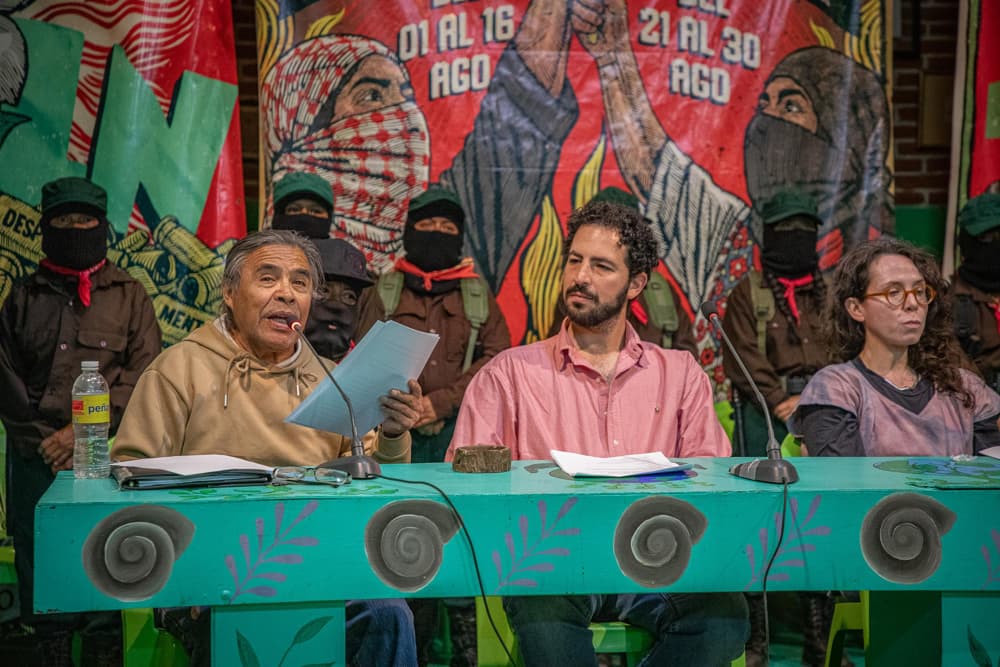
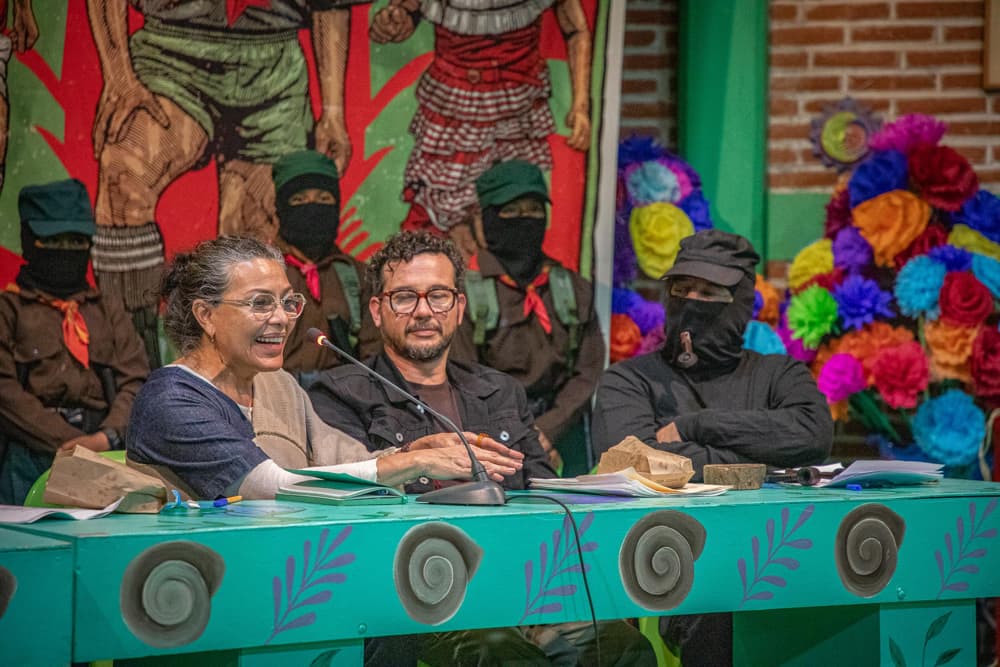
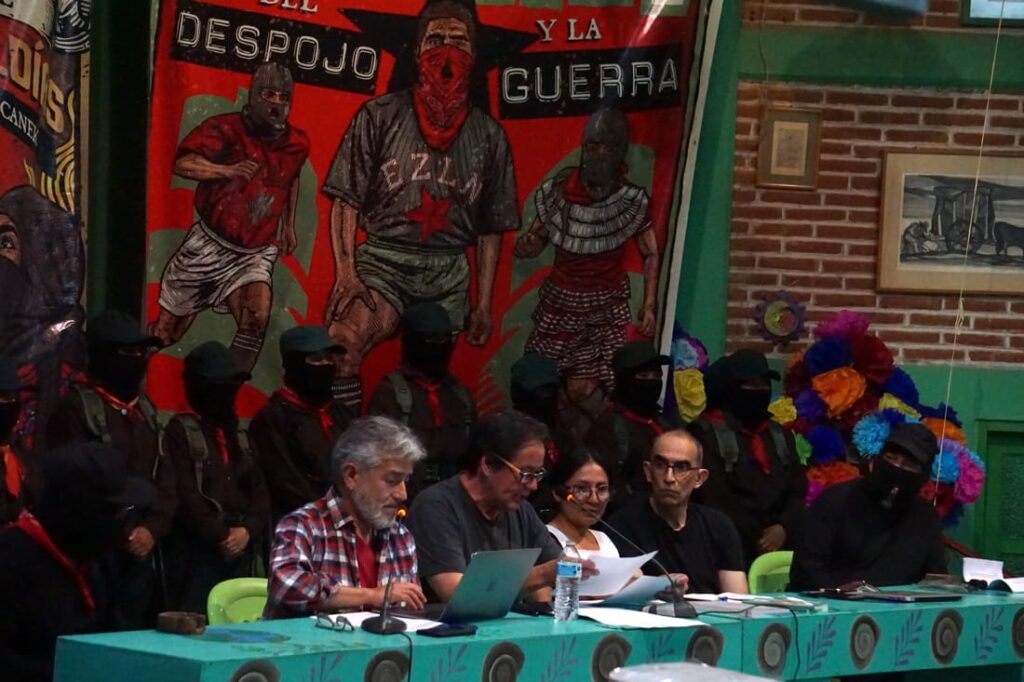
Por meio da experiência do coletivo “Línea de Sombra”, fundado há 33 anos, Jorge Vargas e Eduardo Bernal nos apresentaram um panorama composto por dez “paisagens” — olhares — que, de alguma forma, contribuem para responder às duas perguntas que eles se fazem: Que contas o teatro presta? É possível encontrar gestos de vida em contextos de violência?
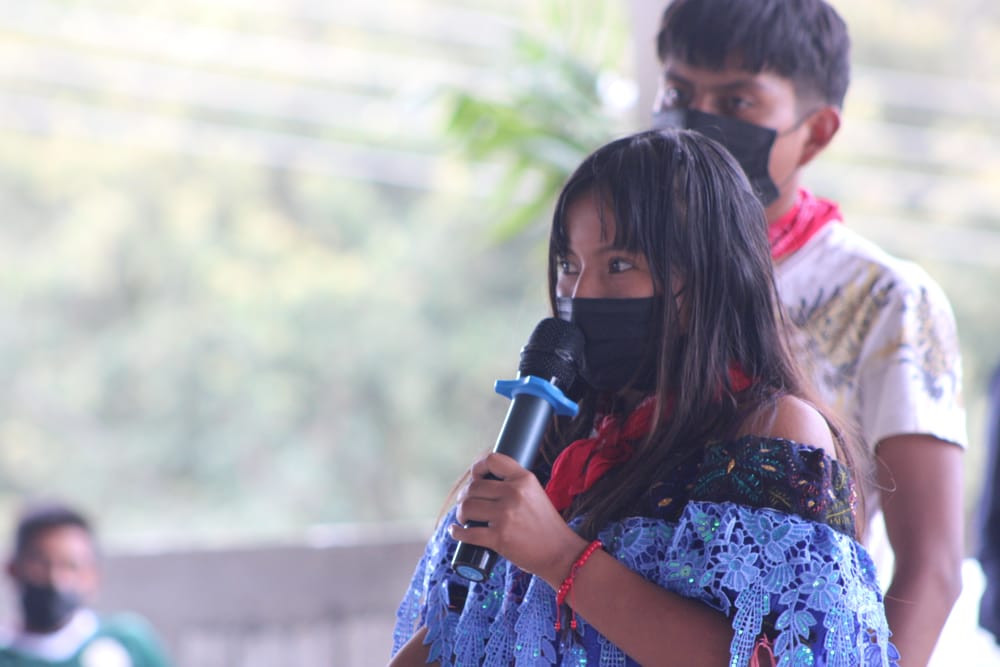
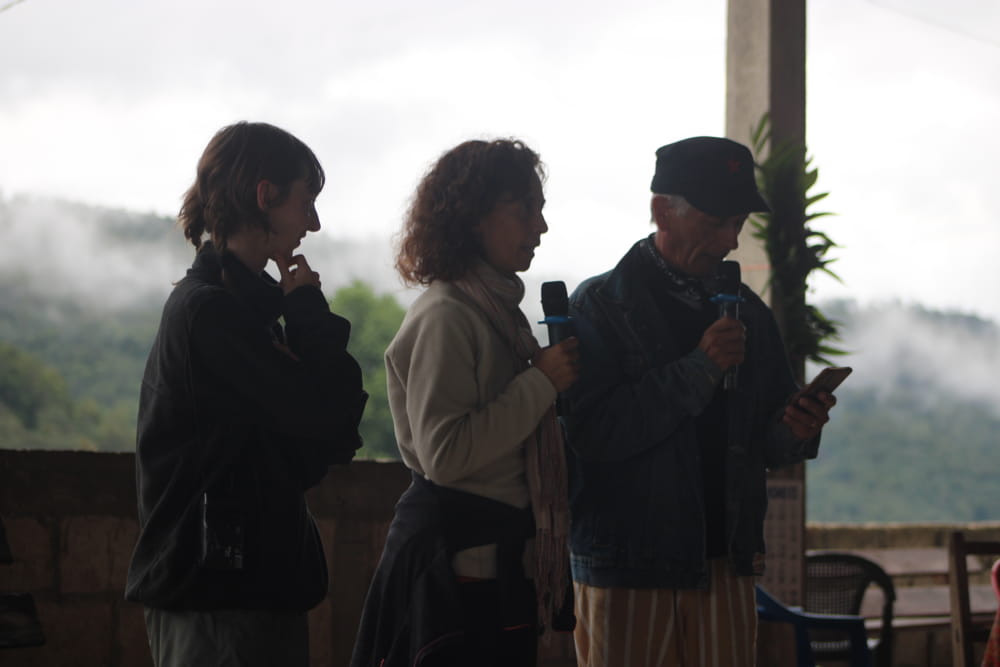
Jorge Vargas e Eduardo Bernal (Baixe o áudio aqui)
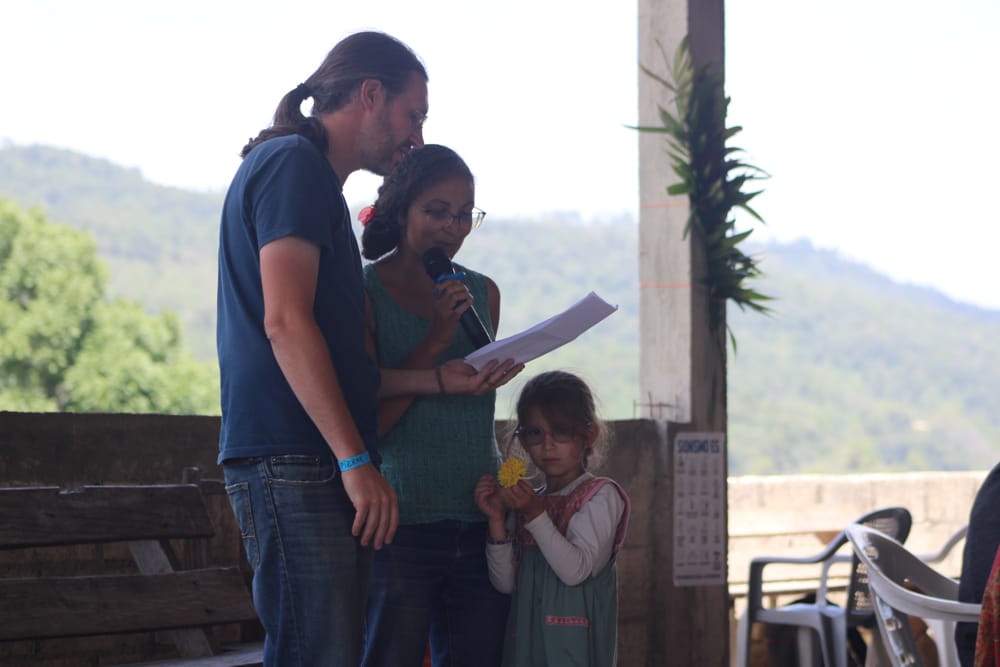
Auto-retratos na Cidade das Mulheres. Não muito longe de Cartagena das Índias, na Colômbia, existe um bairro com 98 casas construídas pelas próprias mulheres deslocadas pela violência, que se organizam em torno de projetos de educação, saúde, justiça e outros. Ali realizou-se uma oficina de “auto-retrato”. Mas um menino fez um retrato da menina que estava à sua frente, e ela fez um retrato dele. Corrigiram as crianças e explicaram o que é um auto-retrato. Mas elas contestaram: fazer um auto-retrato é impossível porque ninguém consegue ver a si mesmo. É necessário o olhar de outra pessoa para saber quem nós somos.
Guardar silêncio para sobreviver. Em um dos países mais perigosos para exercer o jornalismo, o silêncio é uma forma de sobreviver. Levar ao teatro a palavra de jornalistas que compartilham memória e olhar é uma forma de fazer reviver a palavra silenciada.
Habitar o espaço da desolação. Uma colaboração de dois anos com o jornalista Carlos Manuel Juárez, diretor do Elefante Blanco, e Graciela Pérez, buscadora que lidera a Milynali Red, revela que “buscar em campos de extermínio implica um encontro com um mal inimaginável”. Mas também que, ali, “em meio ao horror, encontram-se as razões que nos fazem saber que a vida importa”. A busca é também, apesar de tudo, uma forma de esperança.
Eu não sou mais ninguém, eu não existo mais. Foi o que disse o ex-boxeador Mantequilla Nápoles em entrevista ao jornal La Jornada, em 2019. Inspirados em um conto de Cortázar, “A noite de Mantequilla”, foram a Ciudad Juárez procurá-lo. Descobriram que Mantequilla Nápoles não podia dizer muita coisa, pois sofria de Alzheimer. E, no entanto, a convivência superou em muito o conto de Cortázar. “É como uma declaração de amor a uma cidade em ruínas”, diria um espectador sobre a obra resultante, “Baño Roma”.
Paisagem do êxodo. Em 2009 teve início o projeto “Amarillo”, obra que durou 12 anos e acompanhou os diferentes momentos do êxodo migratório nesse período. Mas o processo também envolveu explorar e intervir nos espaços de tensão entre migrantes, abrigos e as comunidades onde eles se encontram. Assim, construíram um nicho religioso em Tenosique, um forno de pão no abrigo de Ixtepec, uma capela para a despedida de migrantes em Altar, Sonora, entre outras coisas.
Uma bomba de sementes. Cerca de vinte meninas e meninos misturam terra com sementes em um abrigo para migrantes em Tapachula e, com isso, constroem bombas de sementes, que lançam sobre a terra revolvida onde será a futura horta comunitária, semeando assim vida e esperança em meio à violência.
As zonas interditadas e o monte de terra. A última imagem que o público vê é um monte de terra e grama morta suspenso no ar, do qual pendem centenas de fios com peças de barro amarradas, sob os quais é possível caminhar. “Obrigada”, disse Graciela, que busca cinco membros de sua família desaparecidos em agosto de 2012, “porque você me permitiu caminhar onde me impediram de ver”.
Alicia não pode cavar a terra. Não pode porque sua mãe foi lançada ao mar. Na obra “Vuelos nocturnos sobre un mar sin fondo”, Alicia conta a história de sua mãe, Alicia, e, por meio dela, a história da guerra suja e dos infames voos da morte. “Narrar a vida da minha mãe é um ato de gratidão”, diz Alicia, “que corresponde à sua ousadia de me dar à luz em meio à guerra”.
As imagens e a névoa histórica. São a contingência, a imprecisão e a incerteza que impulsionam todos os trabalhos da Línea de Sombra. Fragmentos de experiências próprias e alheias são o que lhes permite “transitar pela névoa histórica na qual hoje se produzem as imagens”.
Cidade sitiada. Em 2008, a Mostra Nacional de Teatro foi realizada em Ciudad Juárez, quando a guerra de Calderón mantinha a cidade sitiada: exército e forças federais, tanques, bloqueios, medo, paralisia. Ninguém saía de casa. E, no entanto, os moradores de Juárez compareceram em massa ao teatro. O teatro se tornou, assim, um “bálsamo para curar as feridas de uma cidade sitiada”.
Descolonizar o olhar, resistir ao esquecimento
Um acontecimento, disse Hernán del Riego, é algo que rompe com o estabelecido, que irrompe e revela algo que antes sequer podia ser nomeado. Marca o início, disse ele, de um “processo de verdade”. Assim foi o levante zapatista; assim é a arte.
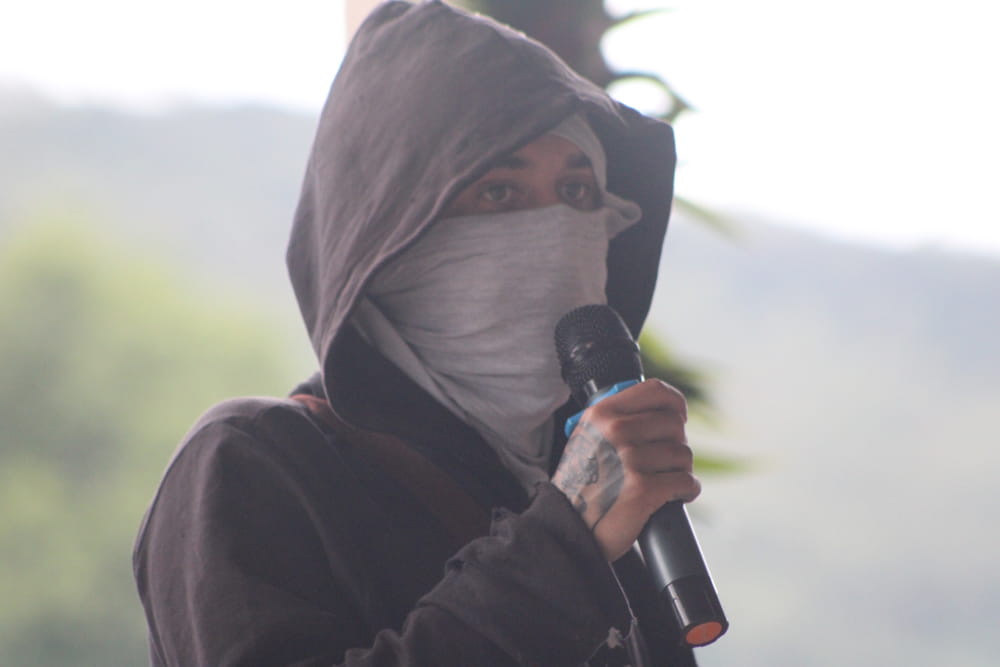
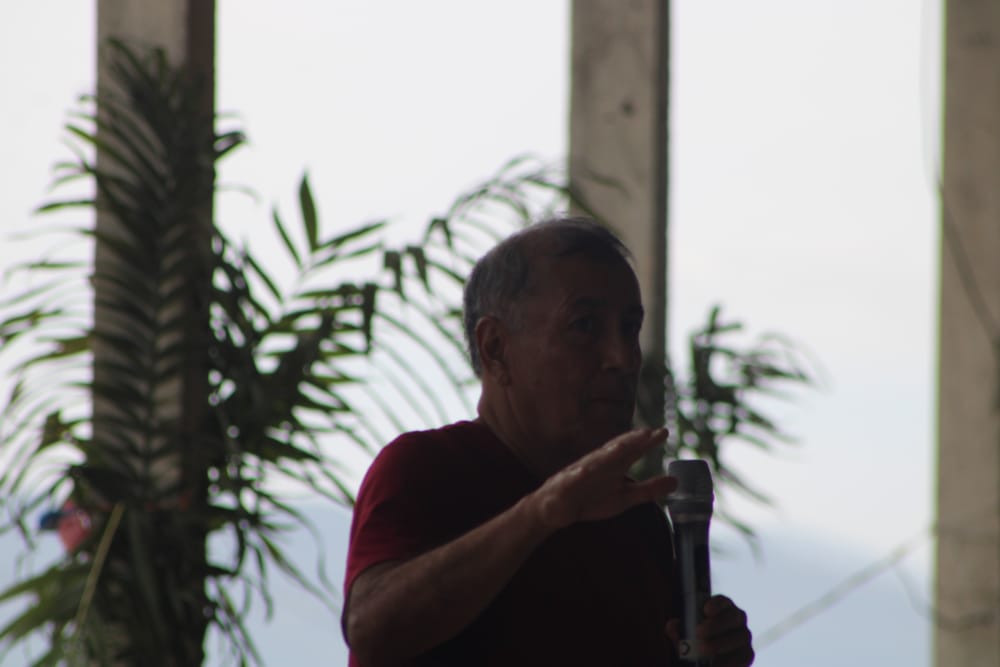
Hernán del Riego (Baixe o áudio aqui)
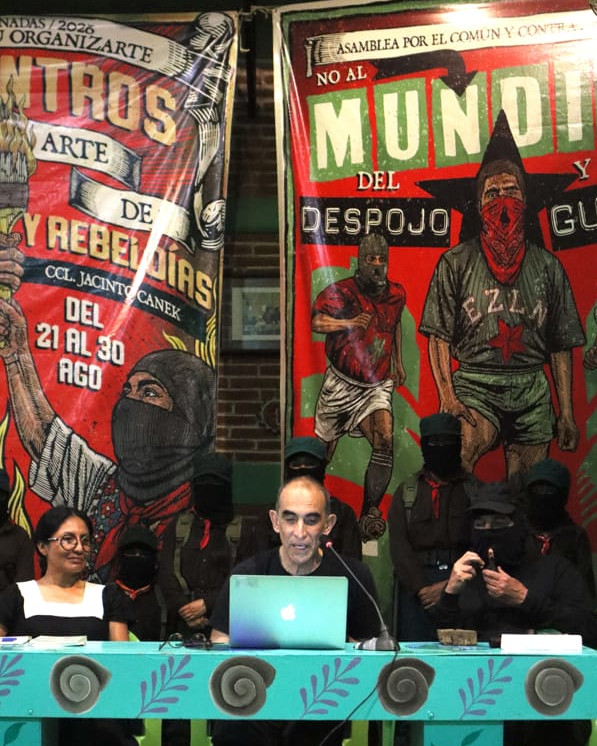
Como acontecimento, a arte também é pensamento crítico. Mas o pensamento crítico é frequentemente eurocêntrico. Os pensadores europeus e estadunidenses, disse ele, esqueceram-se de um pequeno detalhe: o resto do mundo. É por isso que se torna necessário descolonizar o pensamento crítico.
Colonização e colonialidade não são a mesma coisa. A colonização foi um acontecimento histórico; a colonialidade permanece. Ela está nas hierarquias econômicas, raciais, culturais e do conhecimento. Está no olhar. E está no esquecimento.
Descolonizar-se implica recuperar a capacidade de pensar, nomear e criar a partir do próprio território. Implica recuperar línguas, memórias, saberes comunitários e formas próprias de compreender o tempo, a natureza e a vida coletiva. Implica olhar para o mundo entendendo que nossa humanidade é um pluriverso, e não um universo. Implica colocar a comunidade no centro, e não o indivíduo. Colocar no centro a responsabilidade comunitária e a interdependência.
Não se trata de idealizar um passado pré-colonial, mas de transformar a ferida em memória ativa. E construir futuros próprios a partir dessa memória e desse olhar.
Mas também significa abraçar a contradição. É preciso “recuperar o que for possível, buscar o que se tem, ir aonde se intui”, a partir do próprio ser… que é colonizado. Uma forma de abraçar a contradição é “estar mepantla”: esse conceito dos primeiros povos conquistados que significa estar no meio, não ser nem uma coisa nem outra. “Digerir o colonialismo”, como diria Silvia Rivera Cusicanqui. Como também propôs o movimento antropofágico do Brasil.
E, falando de pedagogias descoloniais, referiu-se ao seu projeto “La bola”: “um cancioneiro para resistir ao esquecimento”. O projeto consiste em intervir em canções. Por exemplo, em Ciudad Juárez, testemunhou como, em tempos de violência extrema, um rapaz foi expulso de um parque pelas mães. “Não tenho nada”, diz uma canção de Nina Simone, “o que tenho?”. Tenho esse rapaz dentro de mim, disse Hernán a si mesmo, tenho sua voz, sua vida. Assim, decidiu intervir nessa canção de Nina Simone, incorporando inclusive Ayotzinapa.
E encerrou compartilhando conosco sua intervenção no tradicional son jarocho El Balajú:
Se você foi enganado, venha.
Se não entende mais nada, venha.
Se é um incrédulo, um enganado,
se foi derrotado sem ter perdido, venha.
Se é um irreverente, perguntador,
um provocador incorrigível,
se continua sem acreditar que foi como dizem que foi
e você sabe que não foi assim, que não foi assim, pois.
Se você encontrar muitos outros, muitas outras, muitos mais,
muitos outros que, como você, sabem que sabem, venha.
Venha aqui e escute.
Venha e fique.
Venha e me ajude a chegar à lua,
venha e me ajude a chegar ao mar,
que já estou louco para chegar.
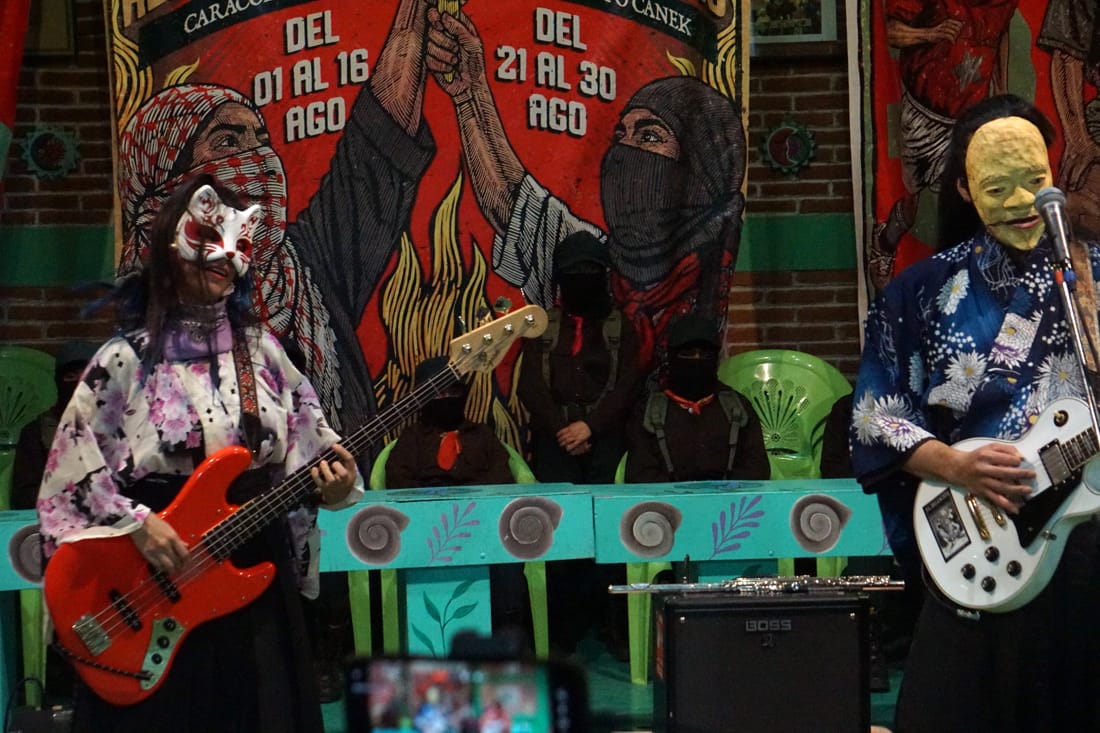
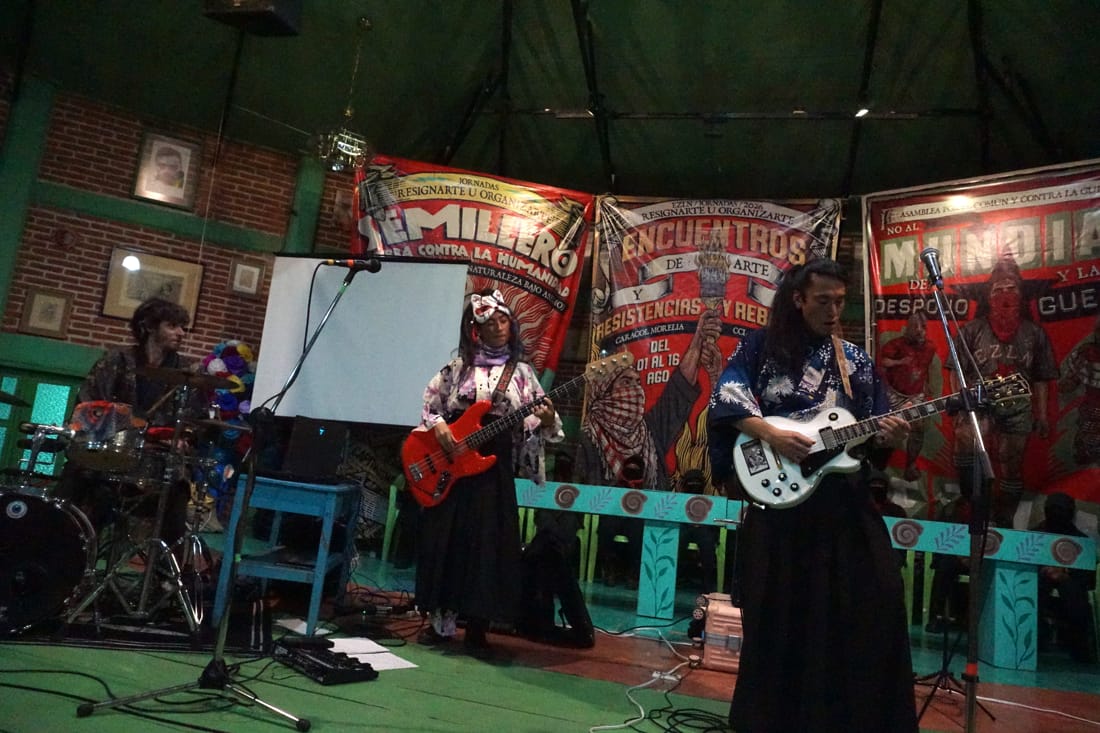
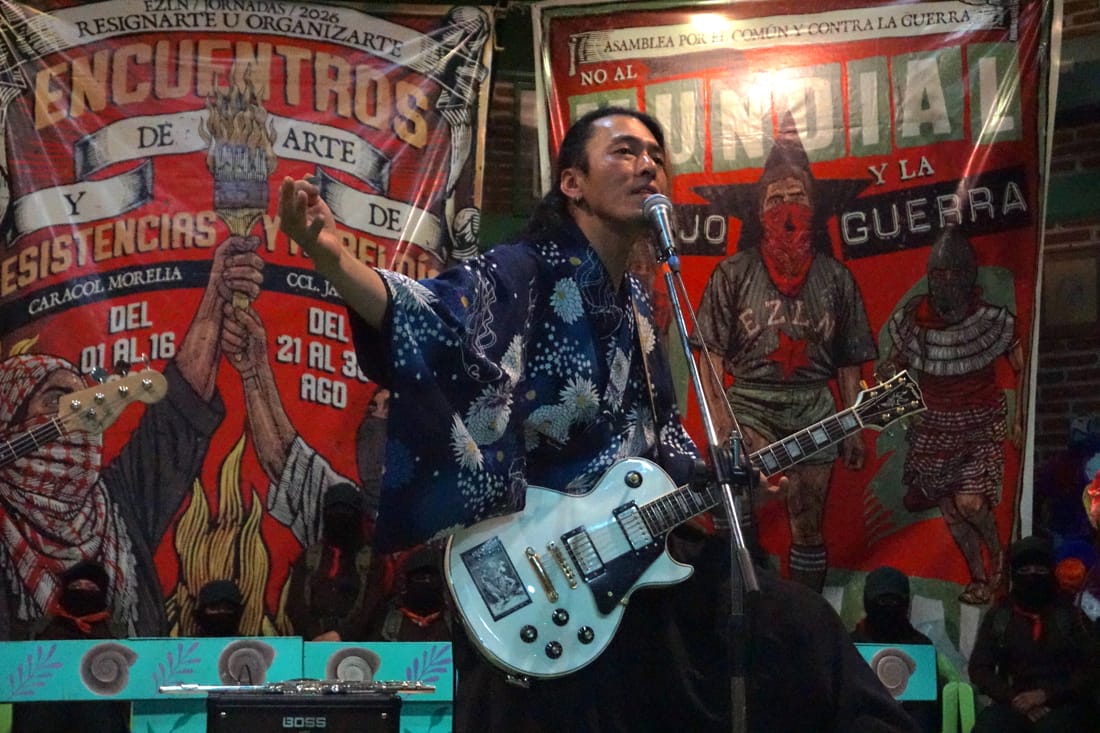
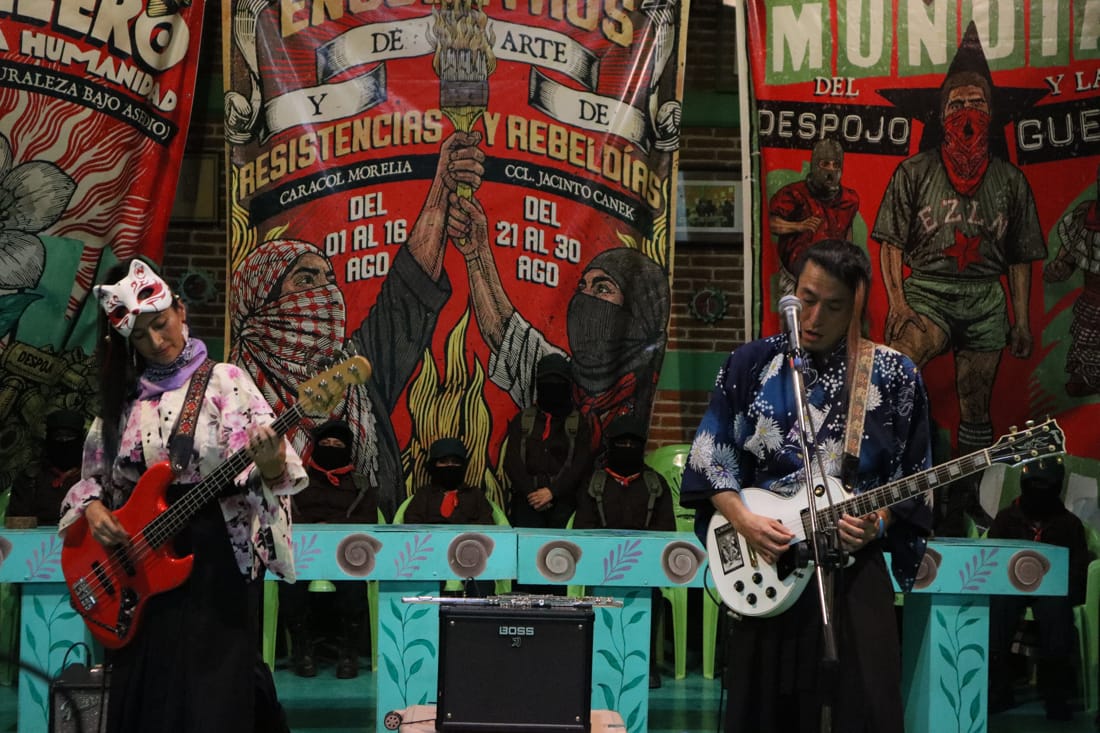
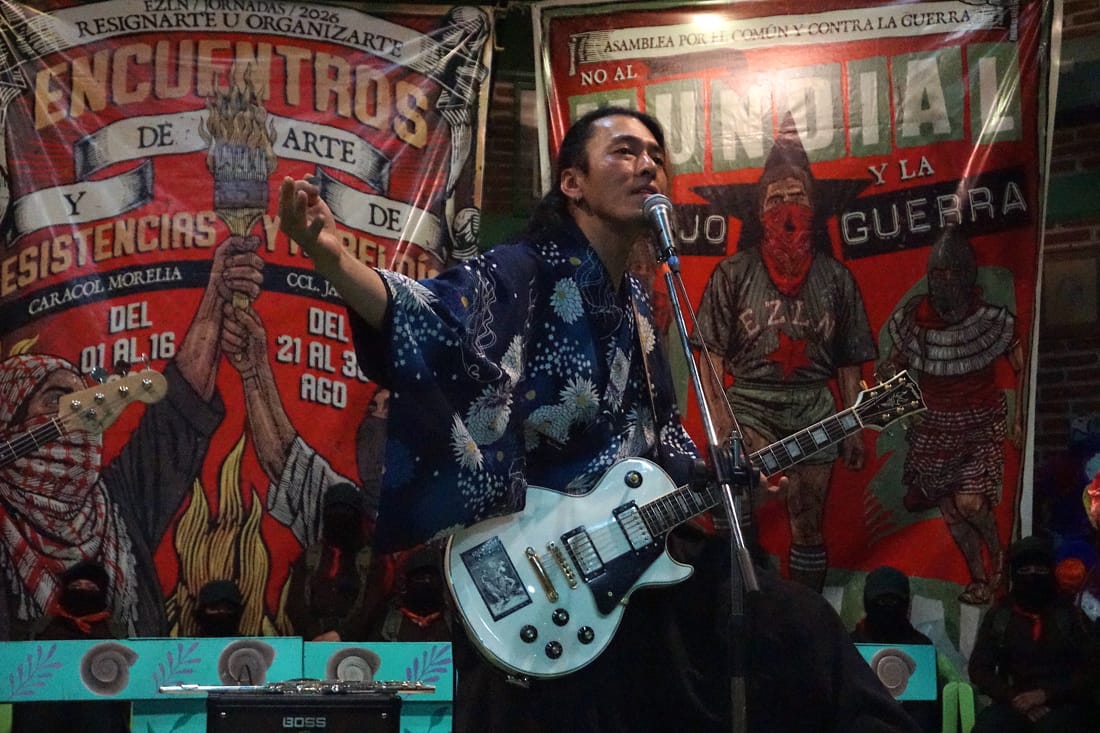
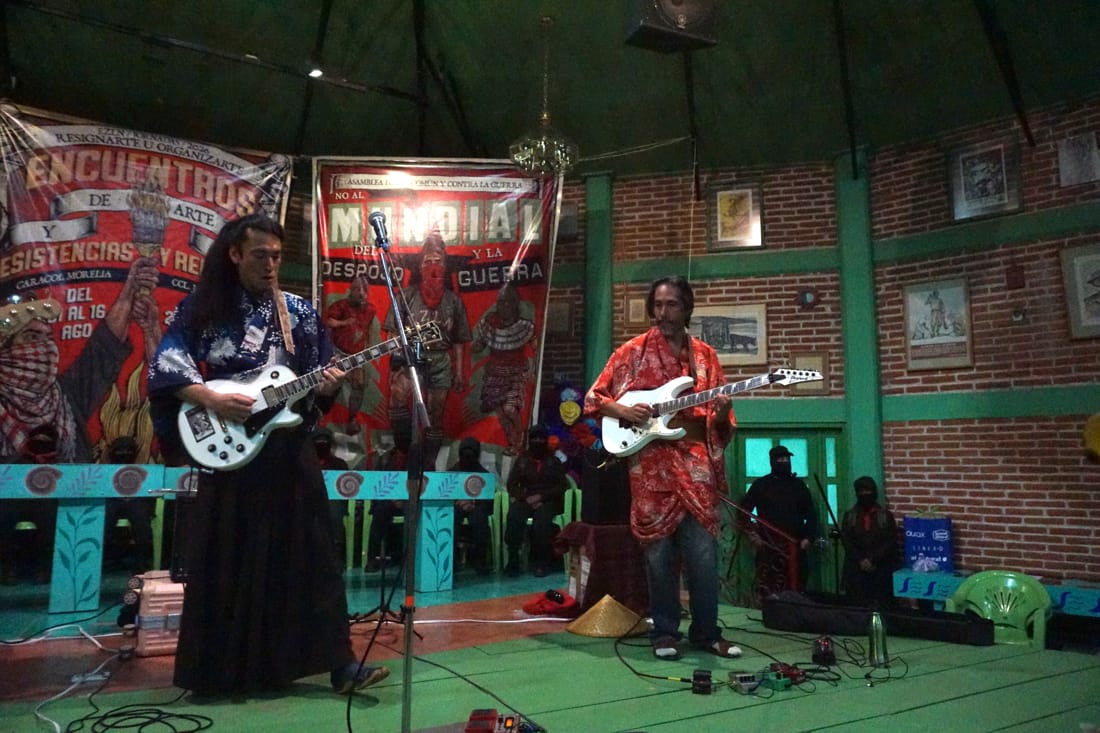
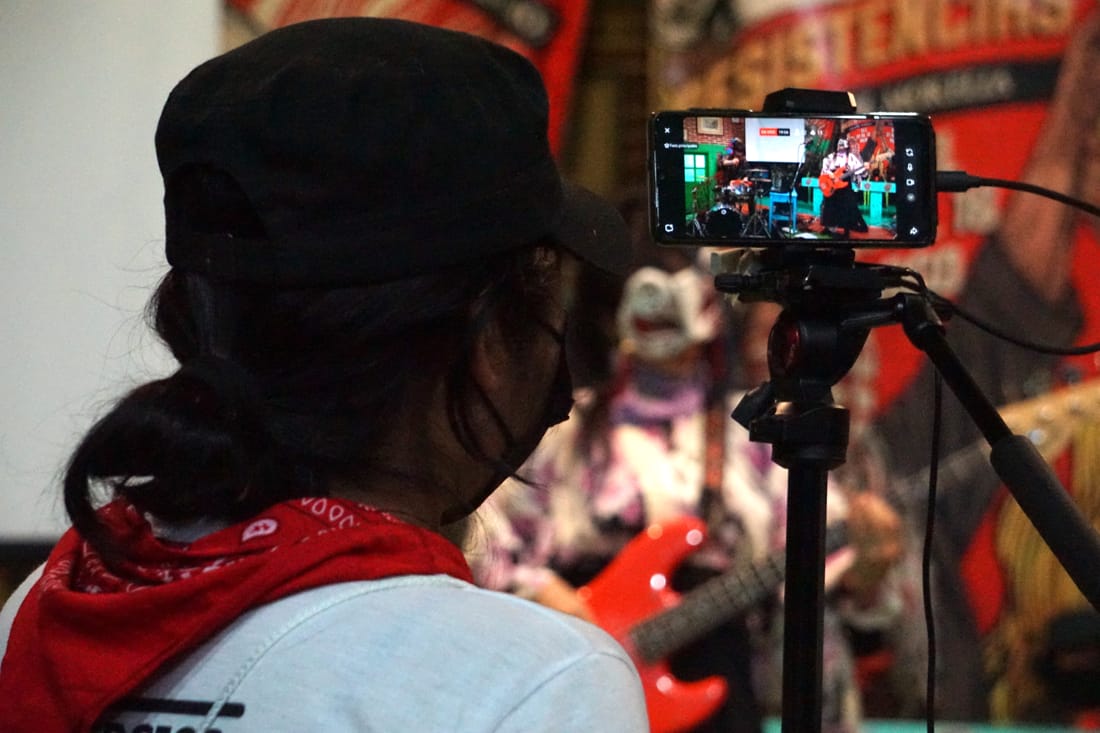
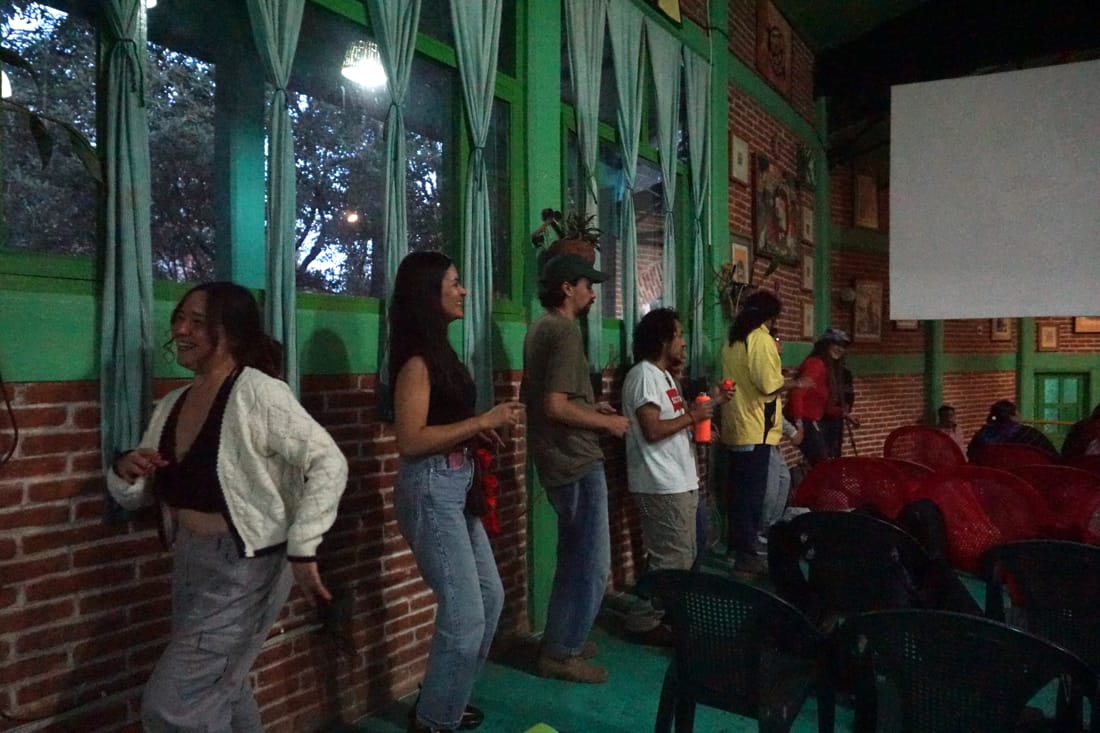
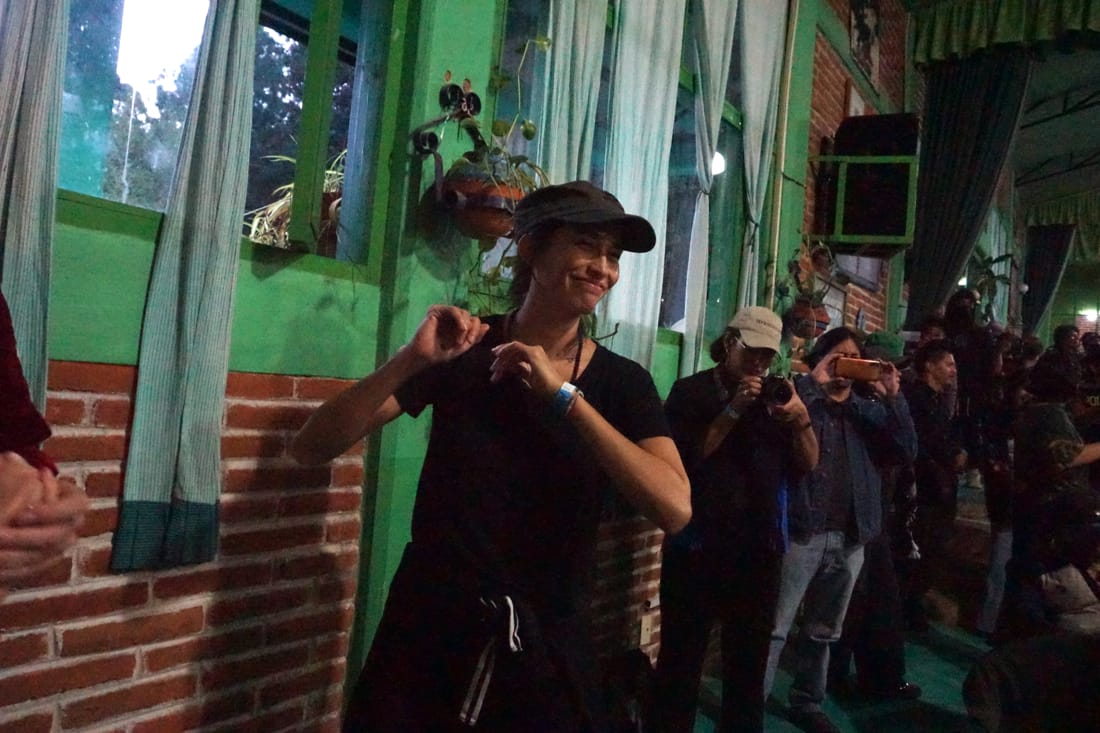
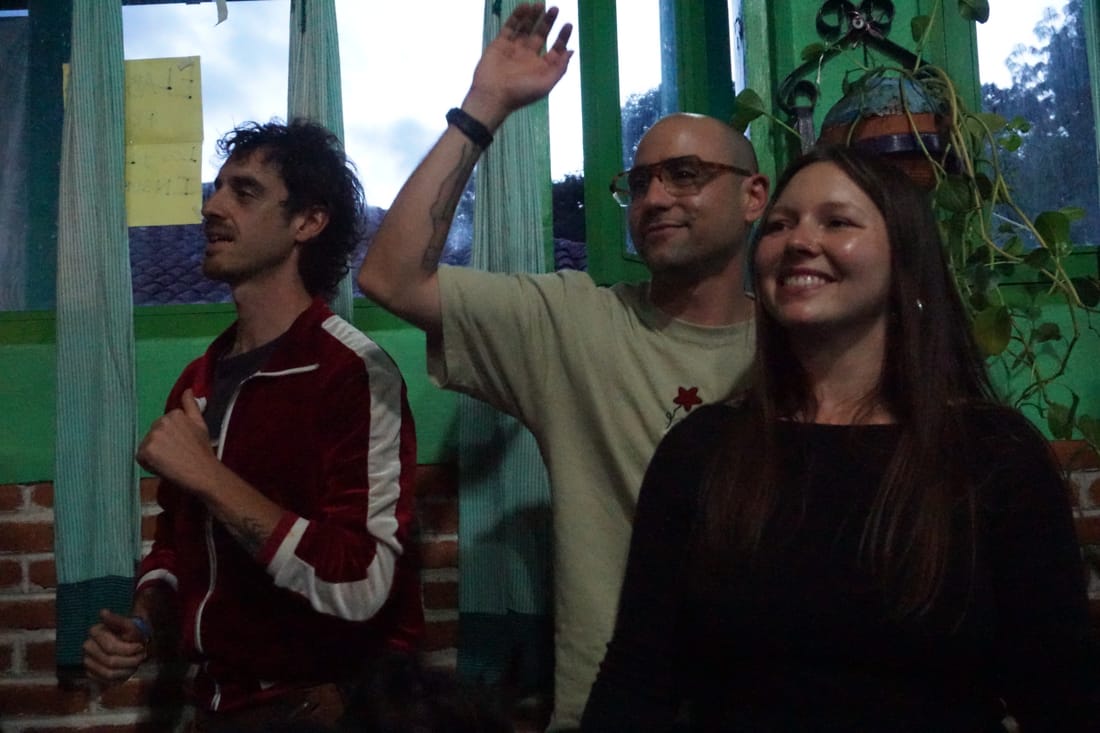
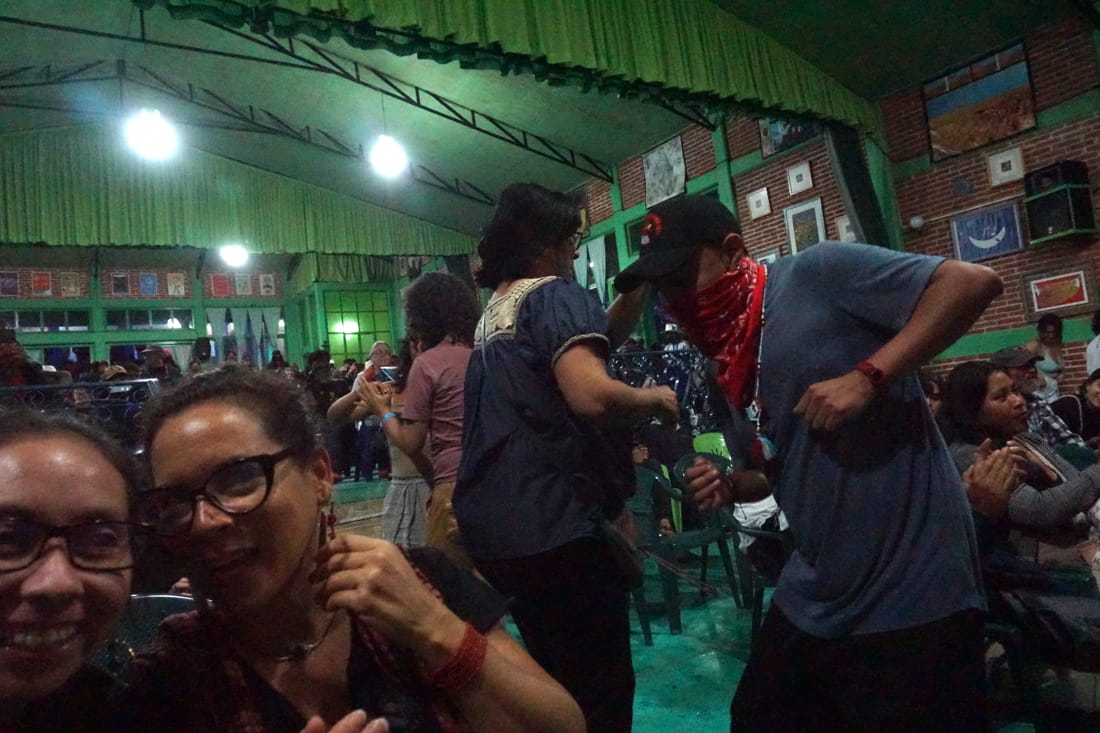
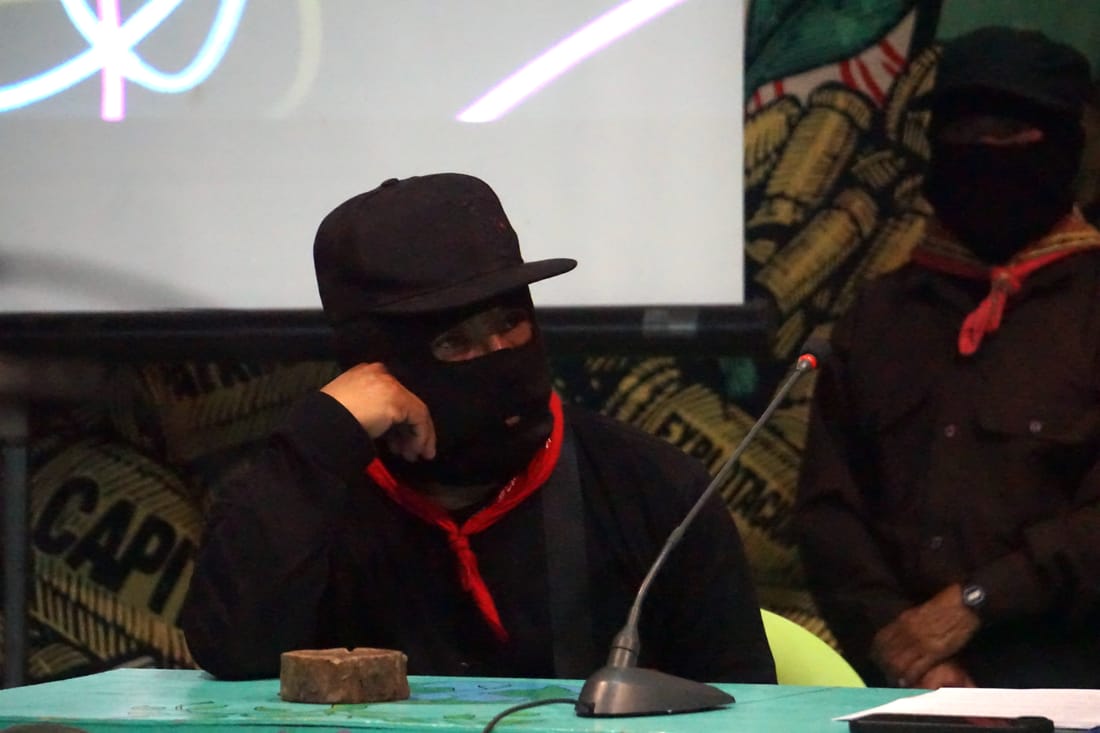
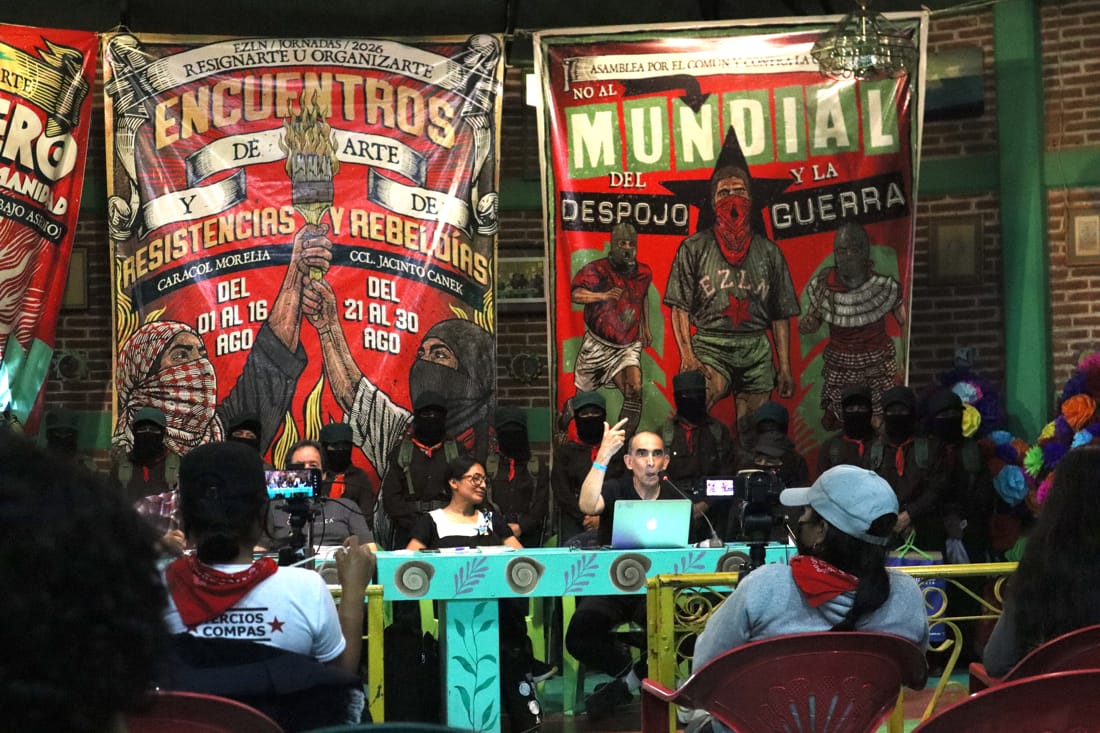
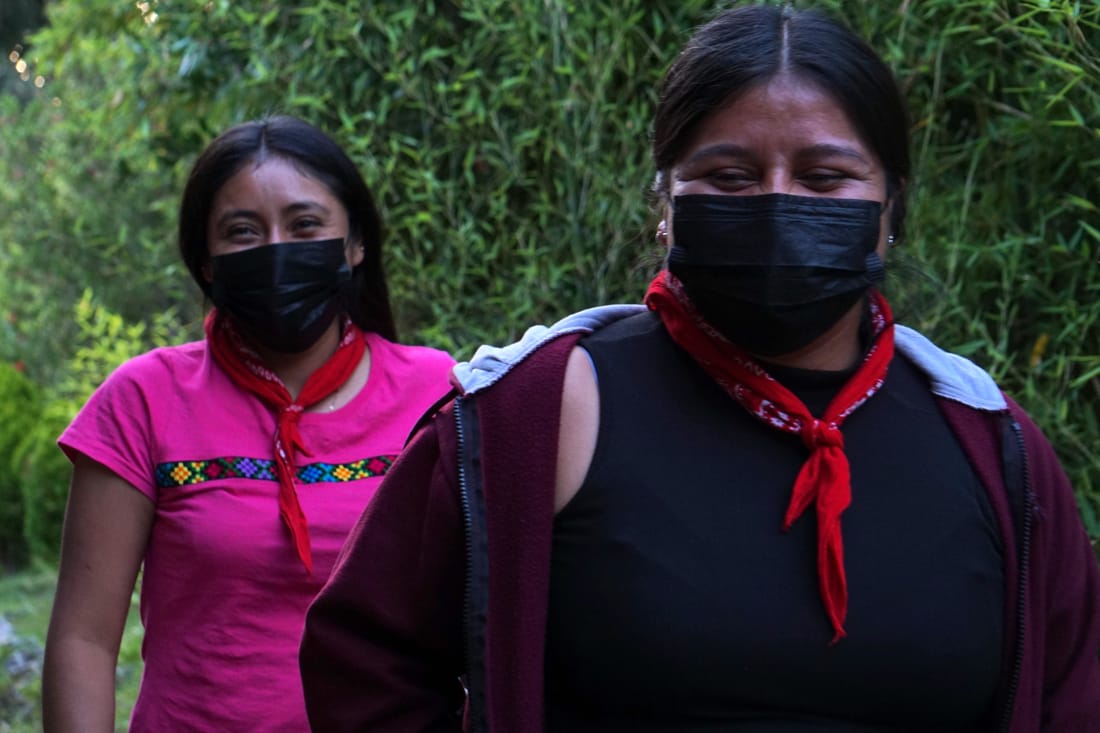
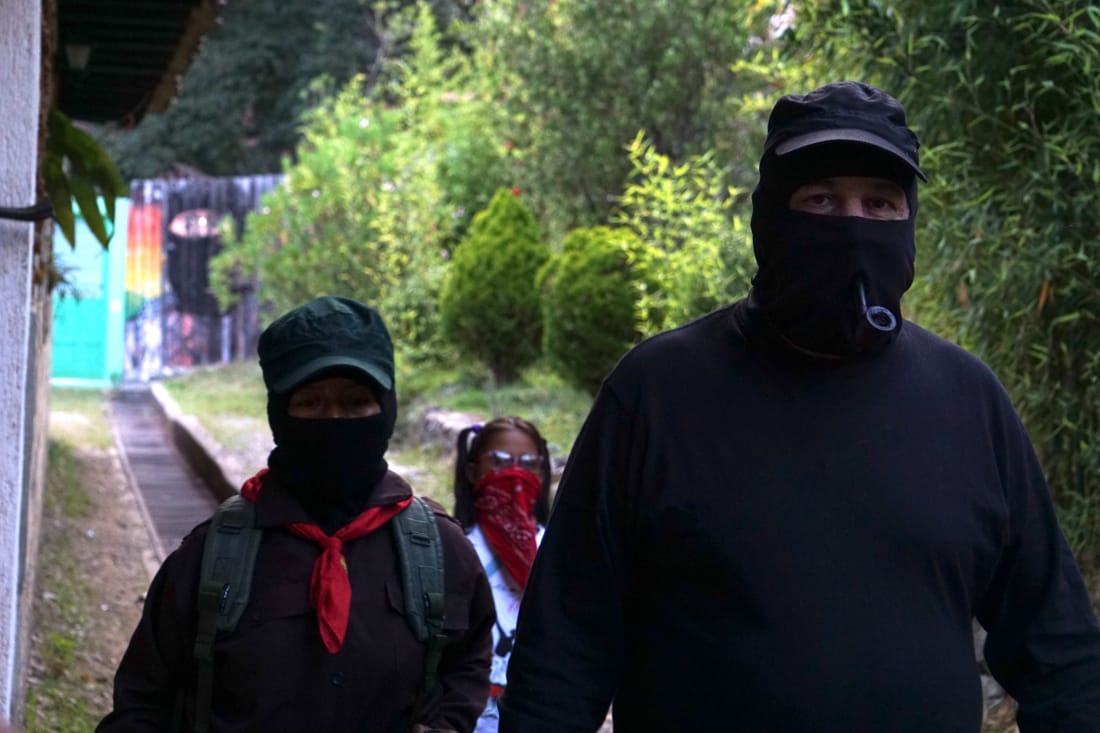
Fotos: Juana Machetes para RZ
Ensaiar o dia depois: teatro, Comum e artes sob assédio
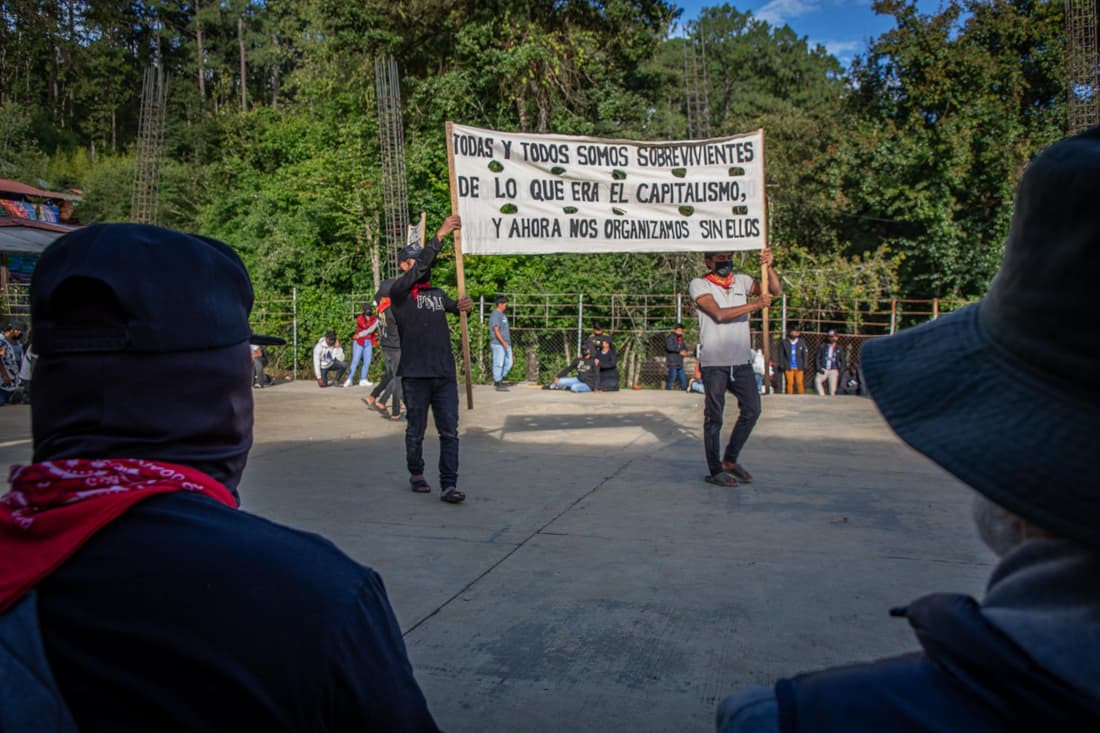
A manhã começou imaginando que o capitalismo já havia terminado.
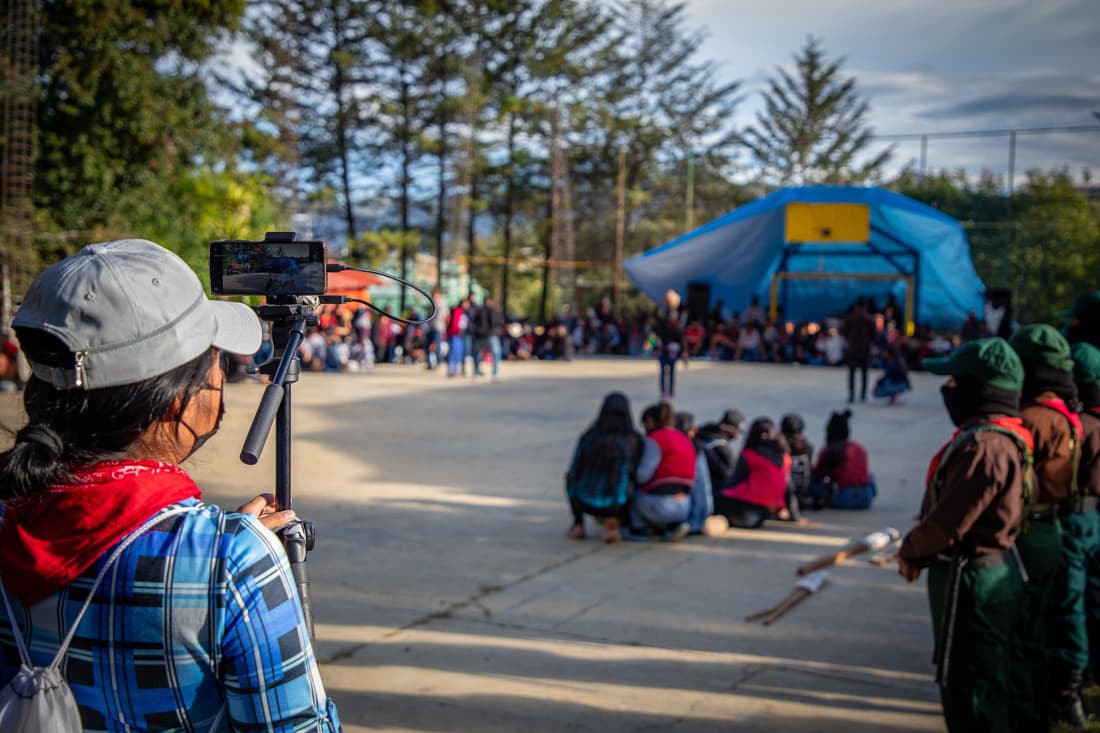
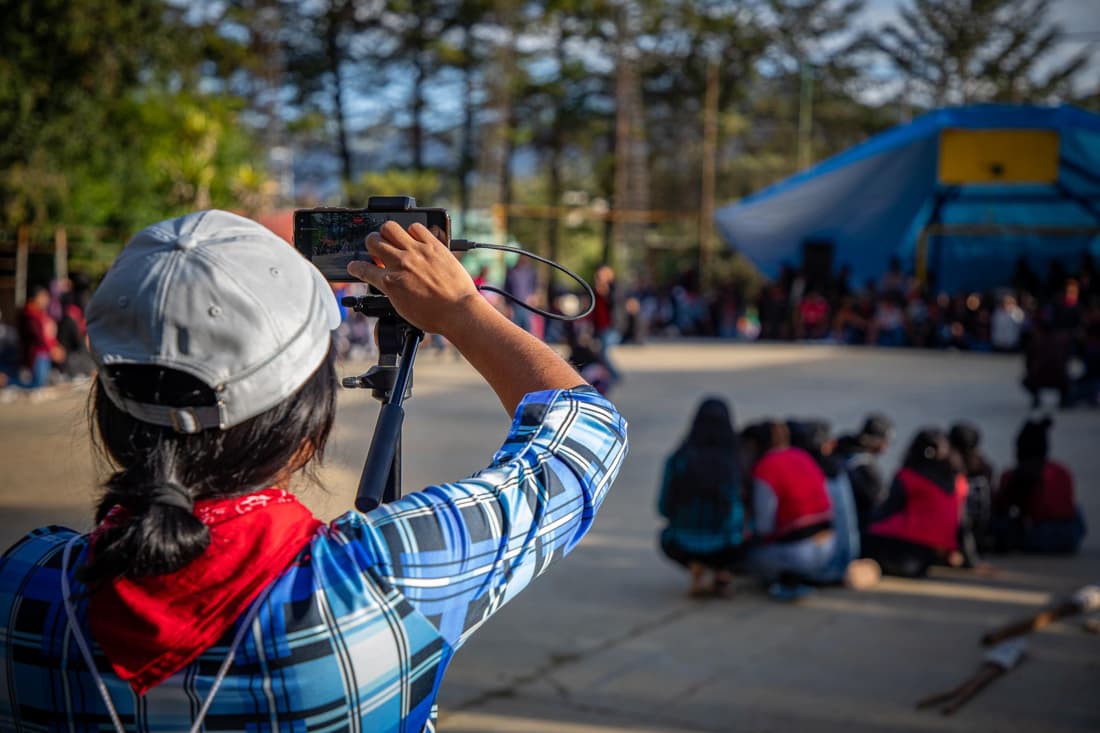
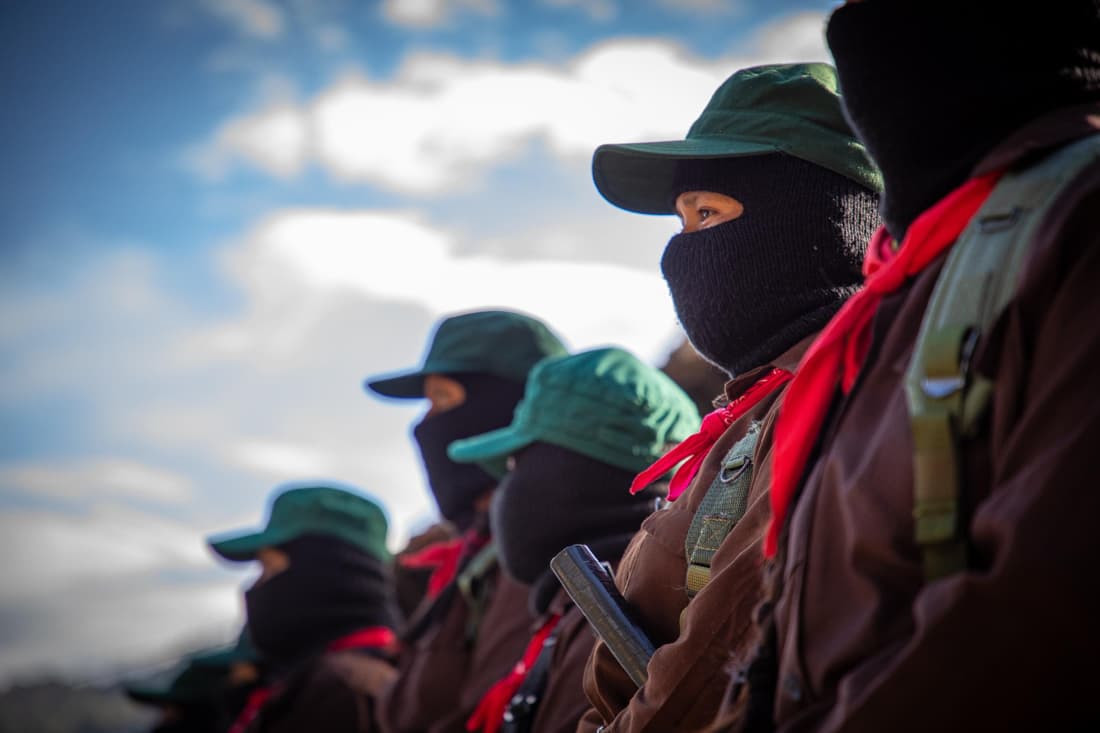
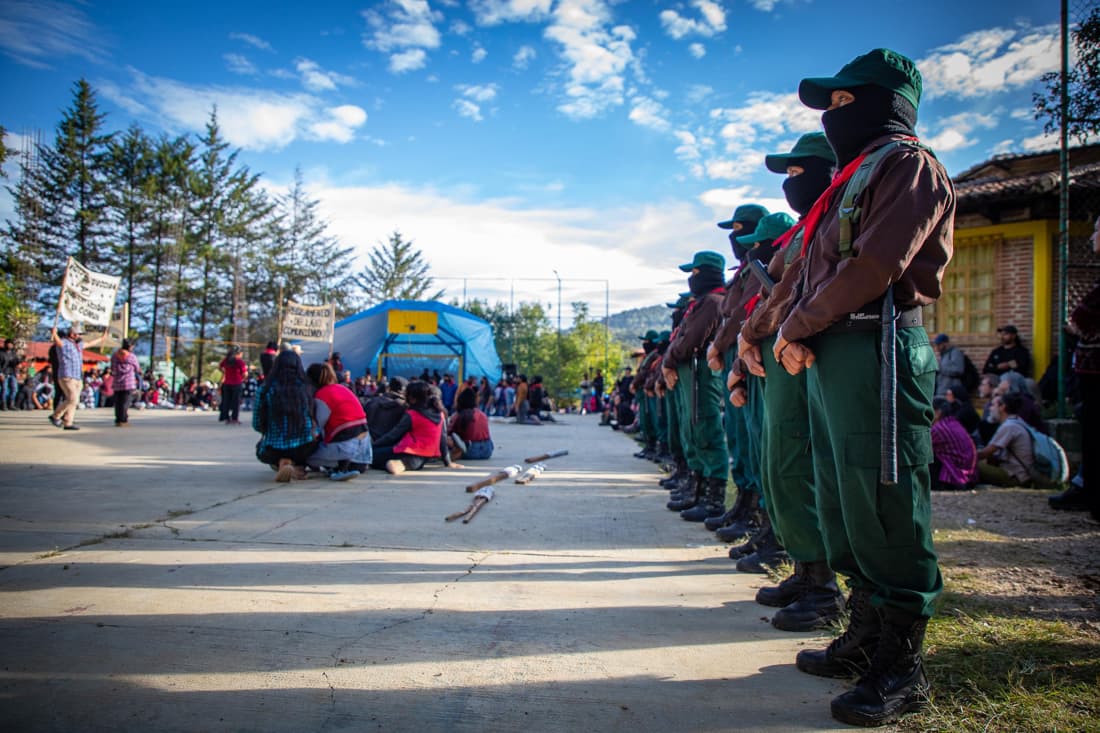
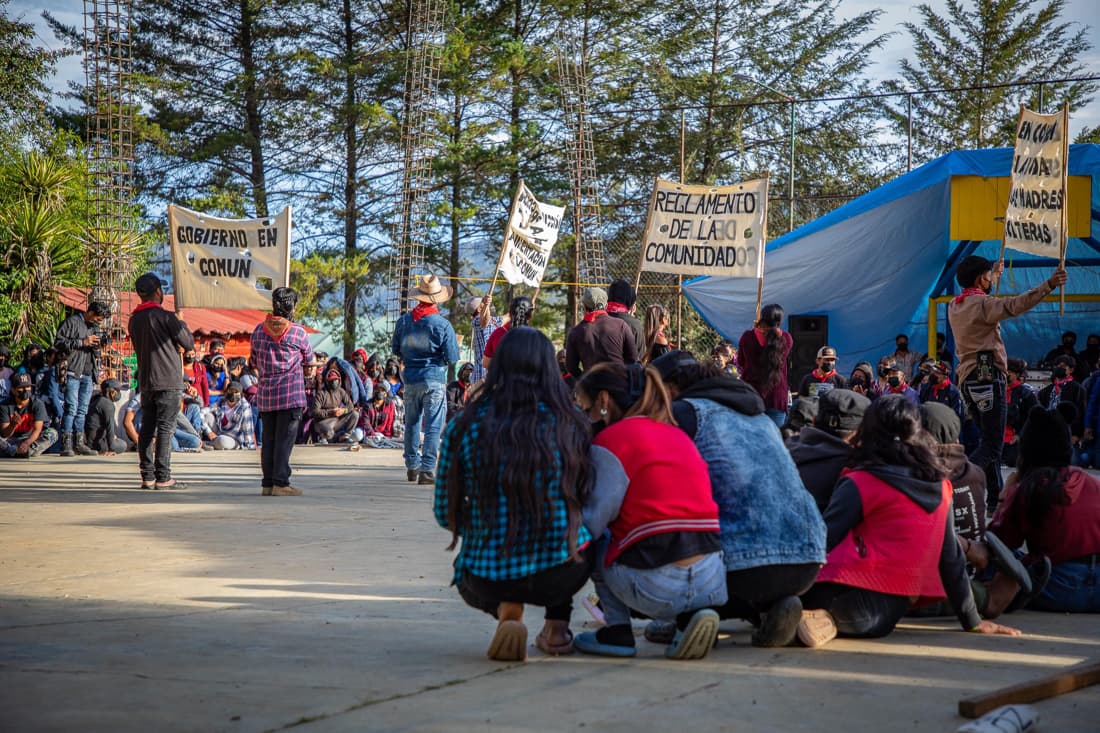
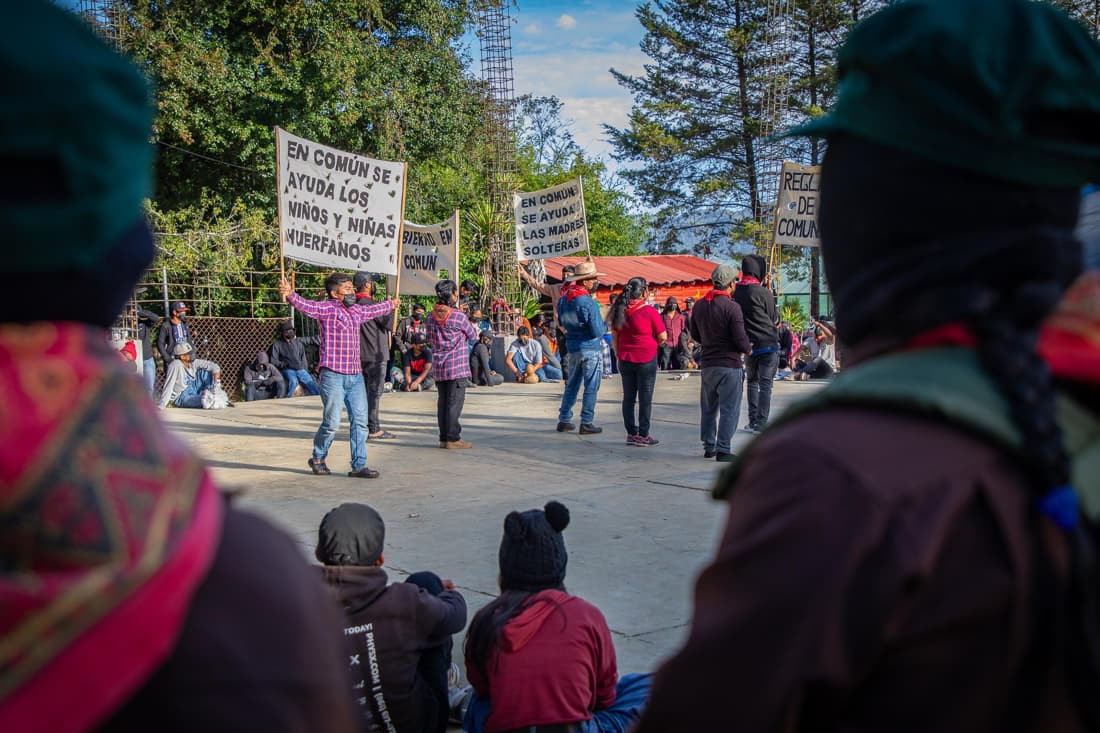
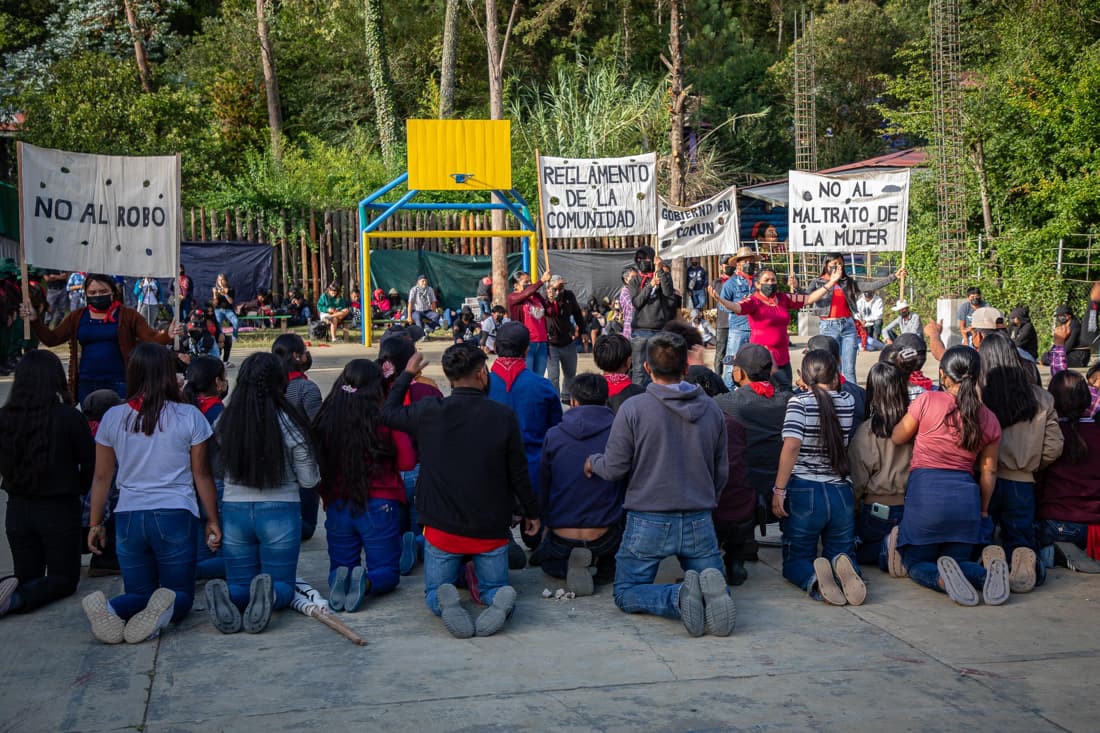
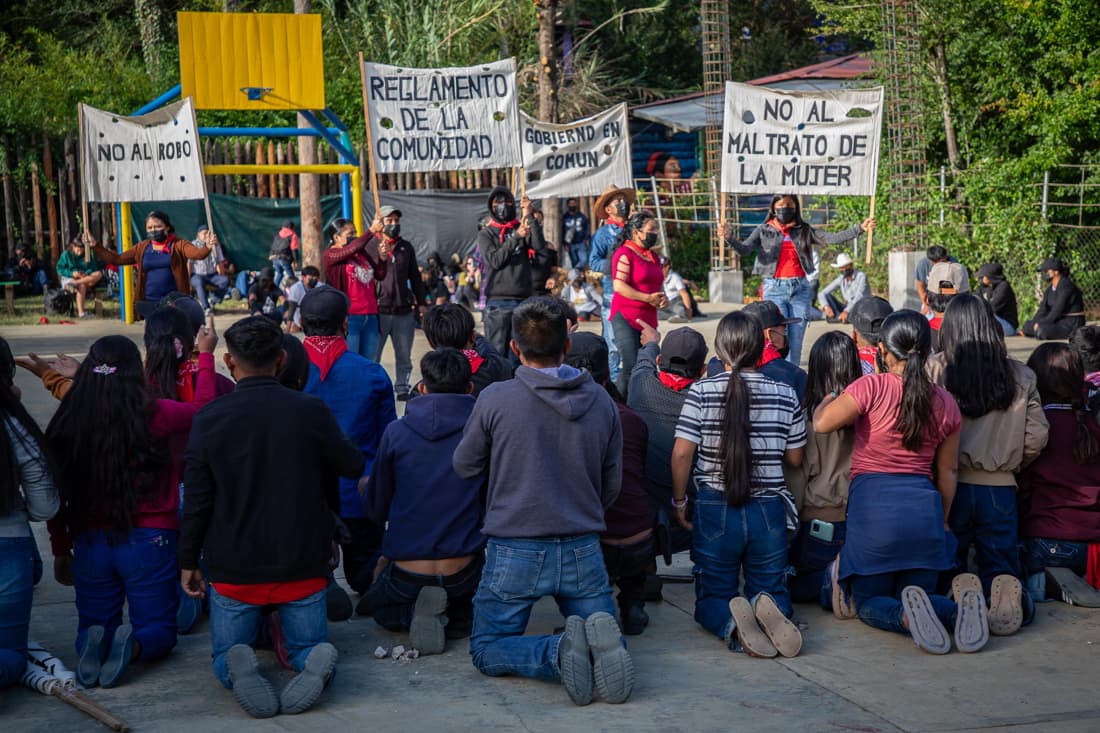
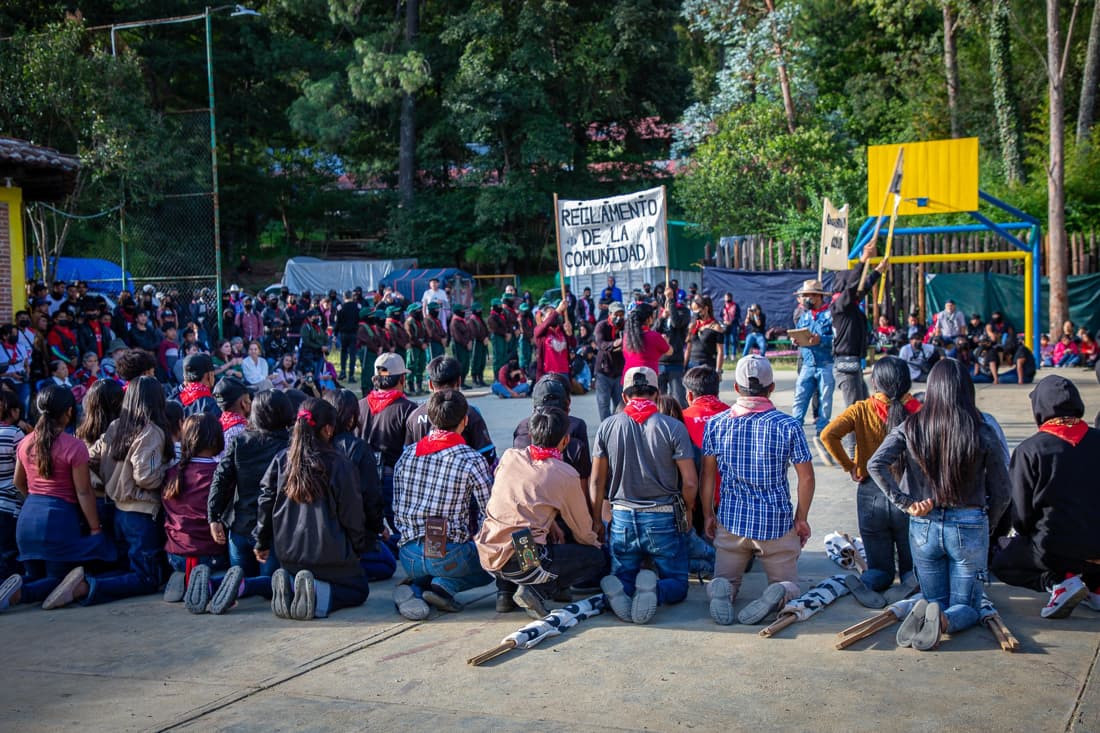
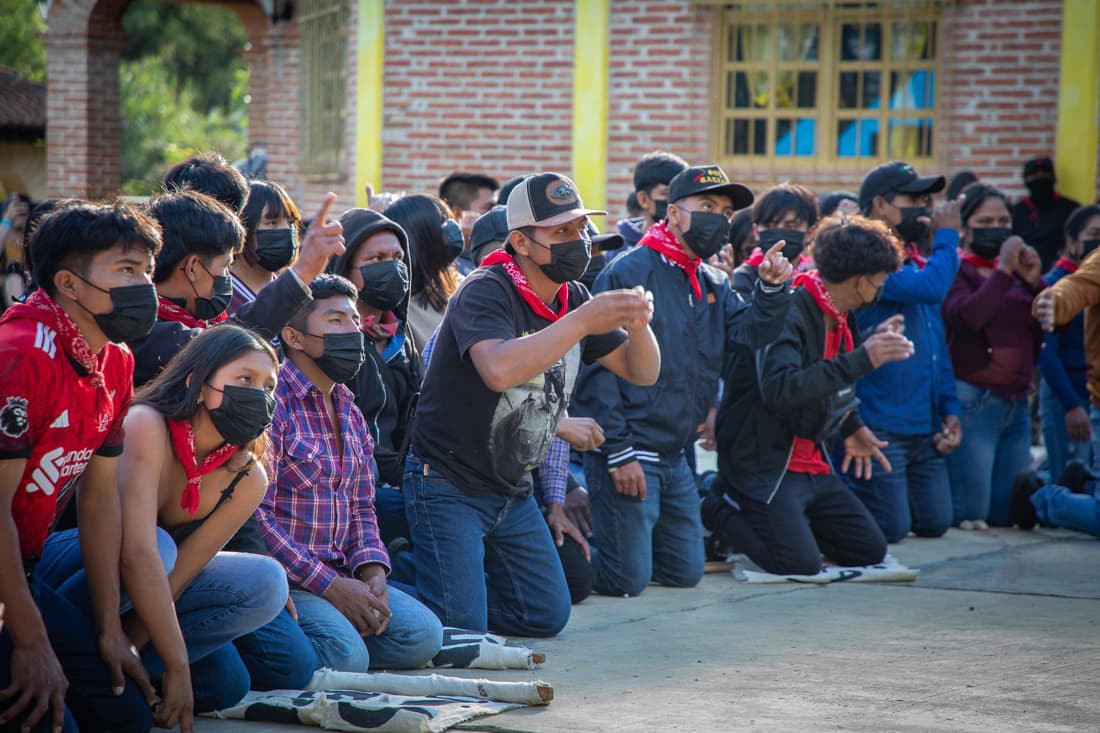
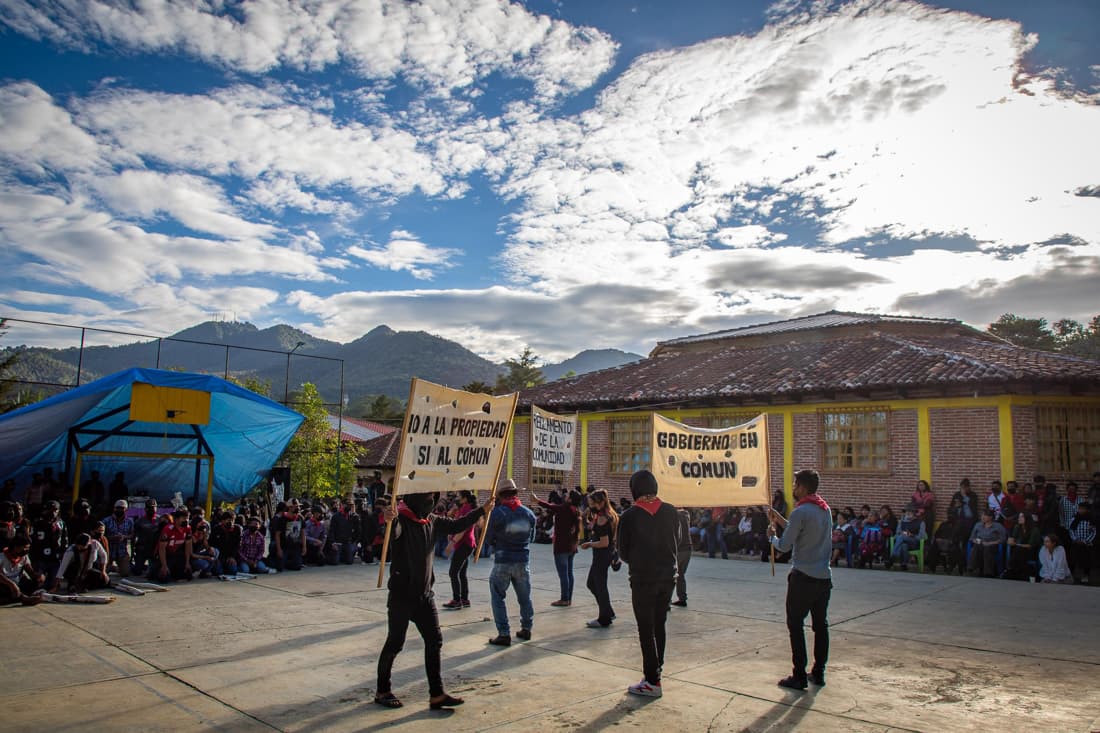
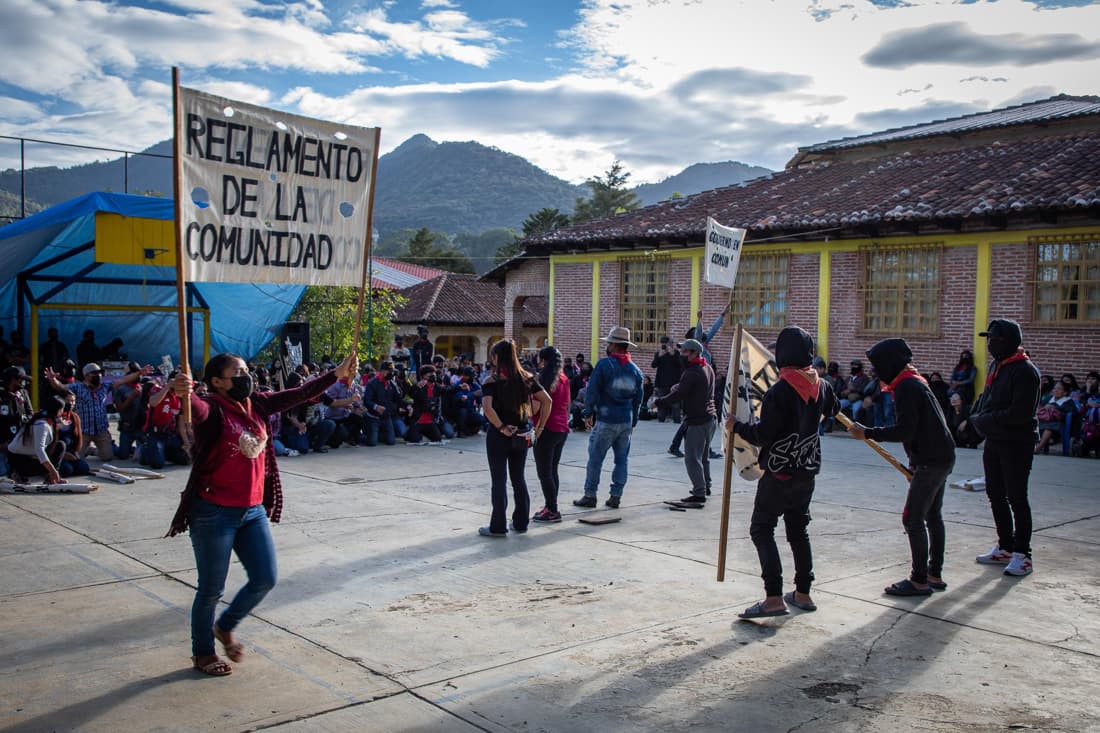
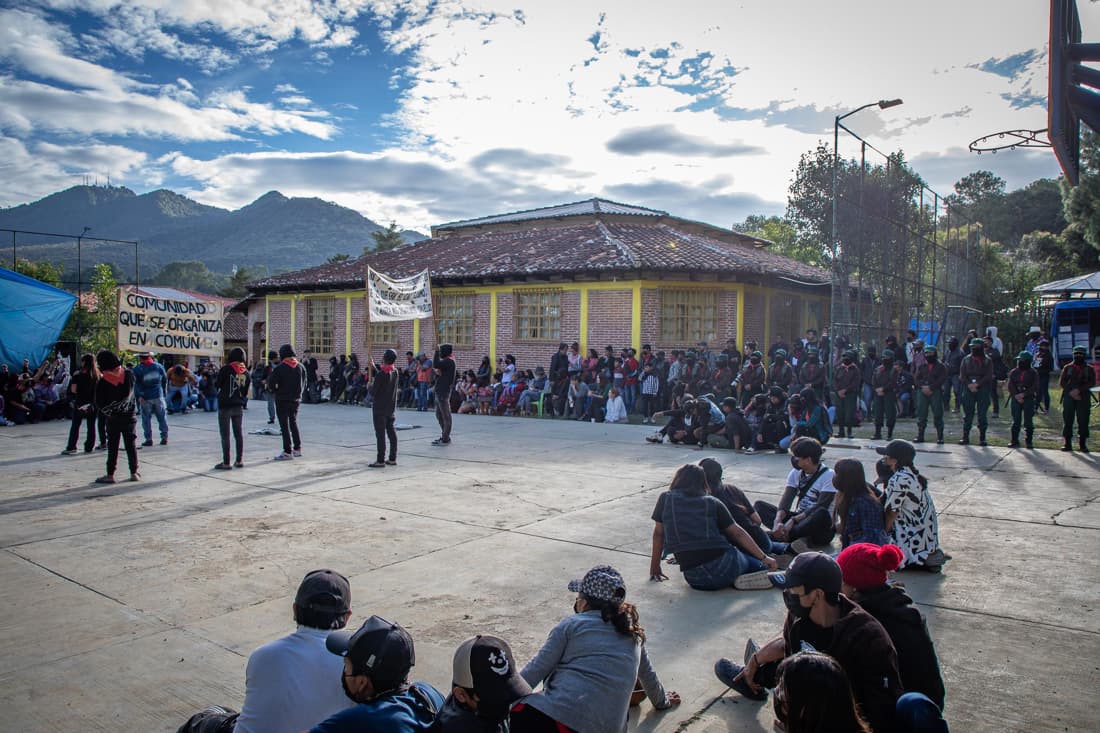
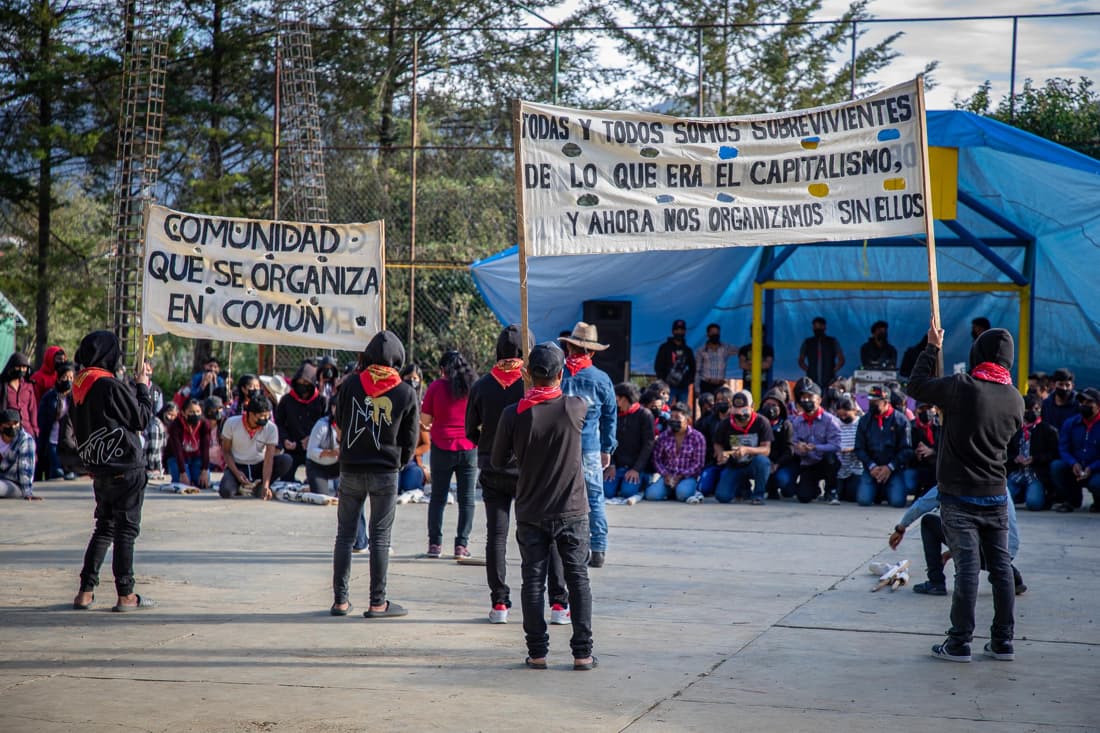
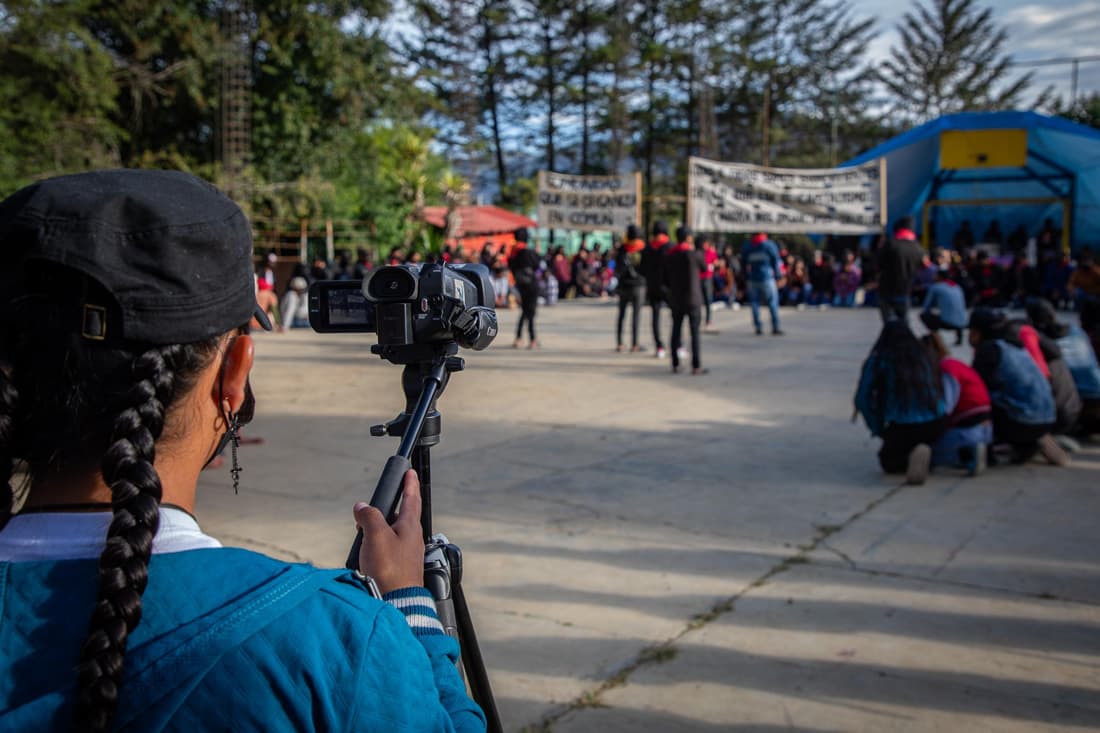
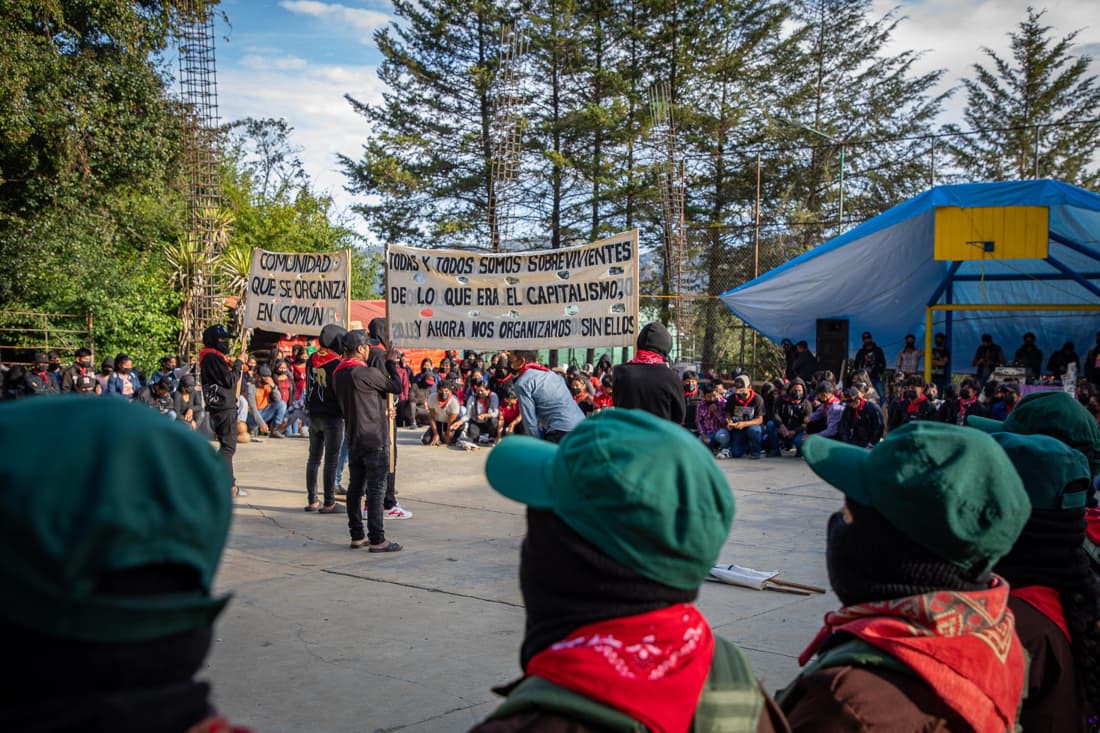
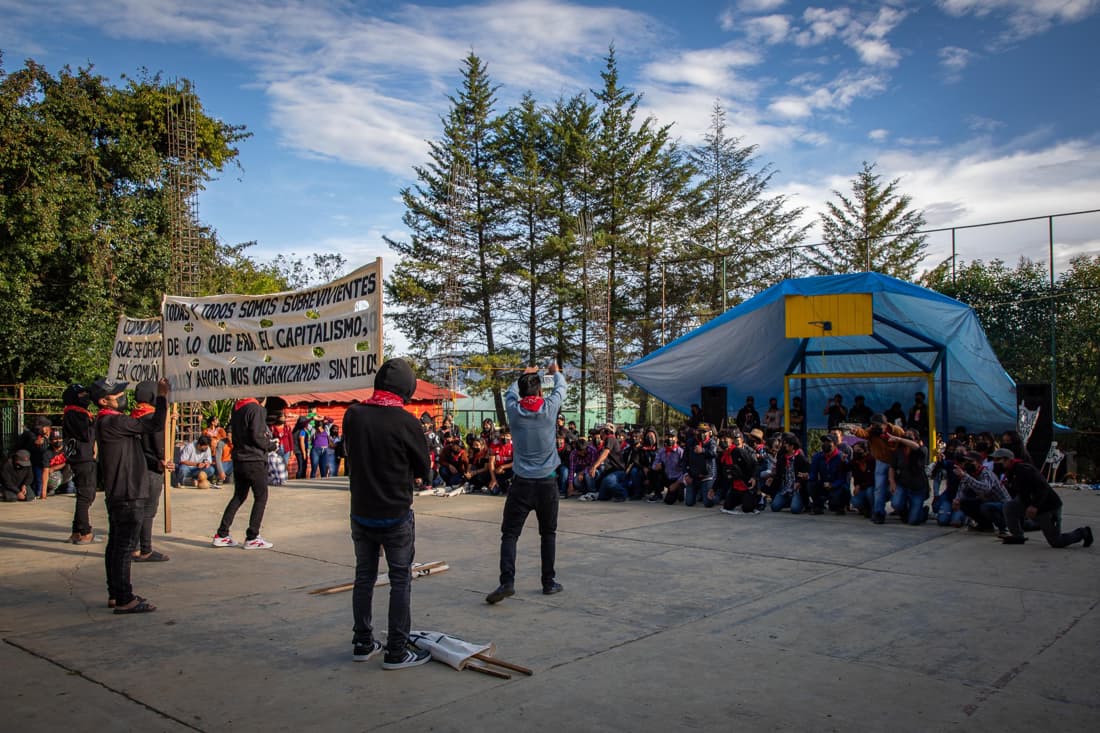
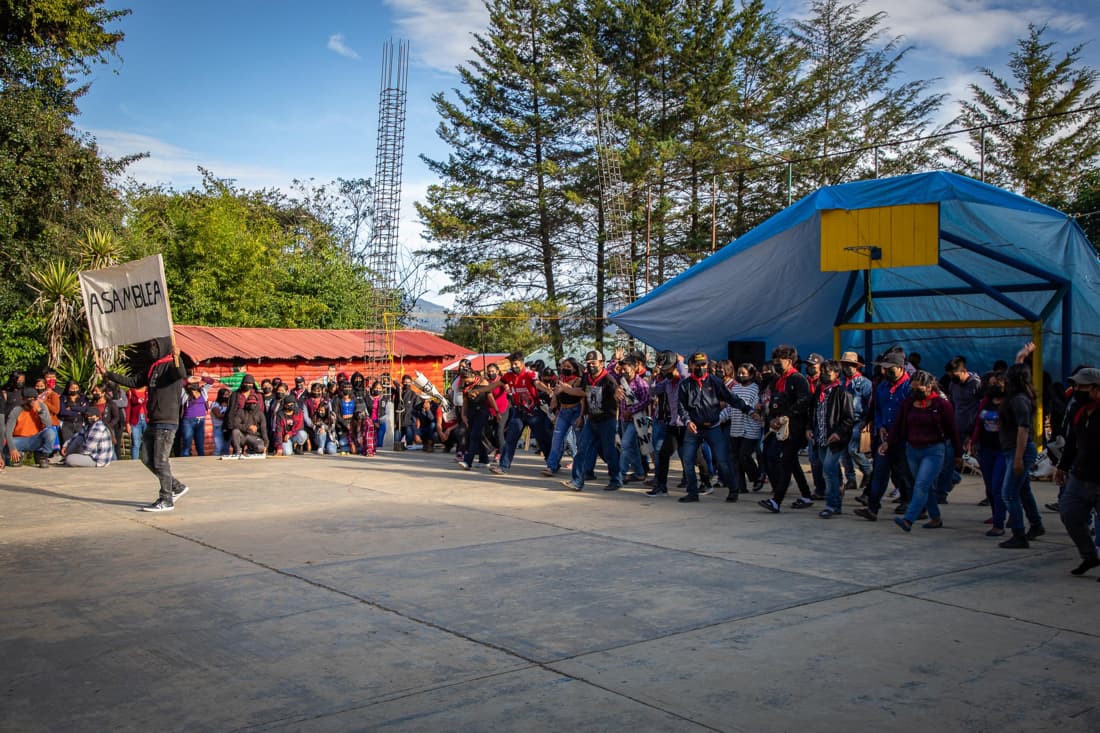
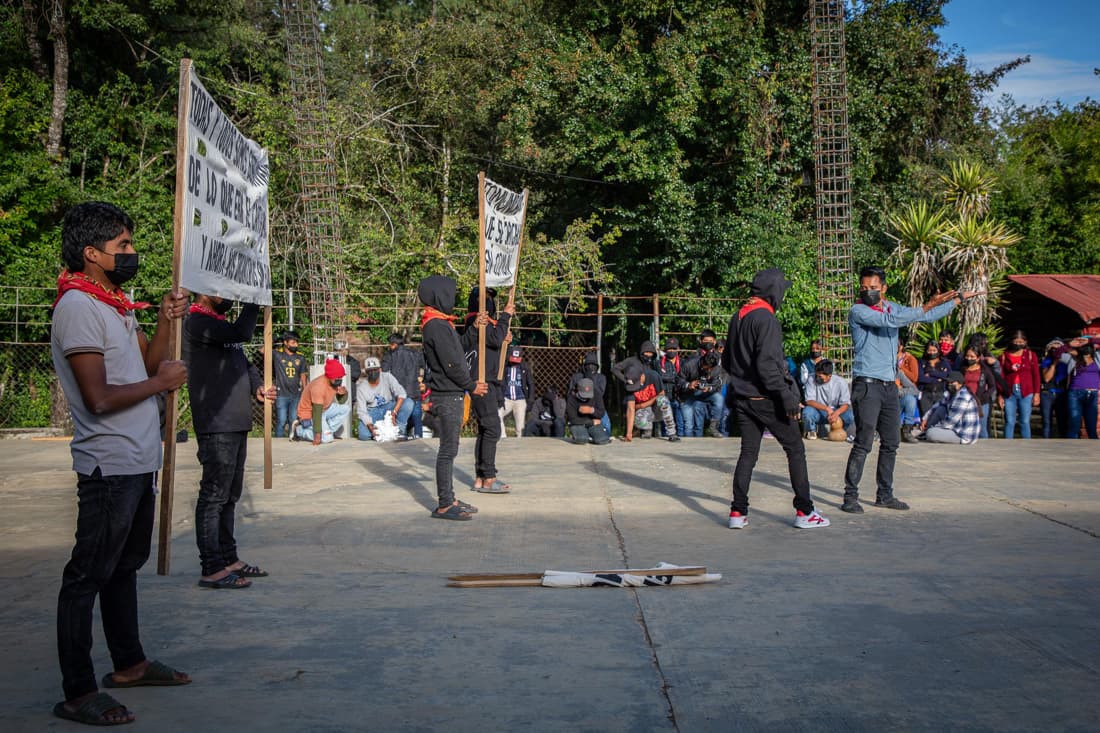
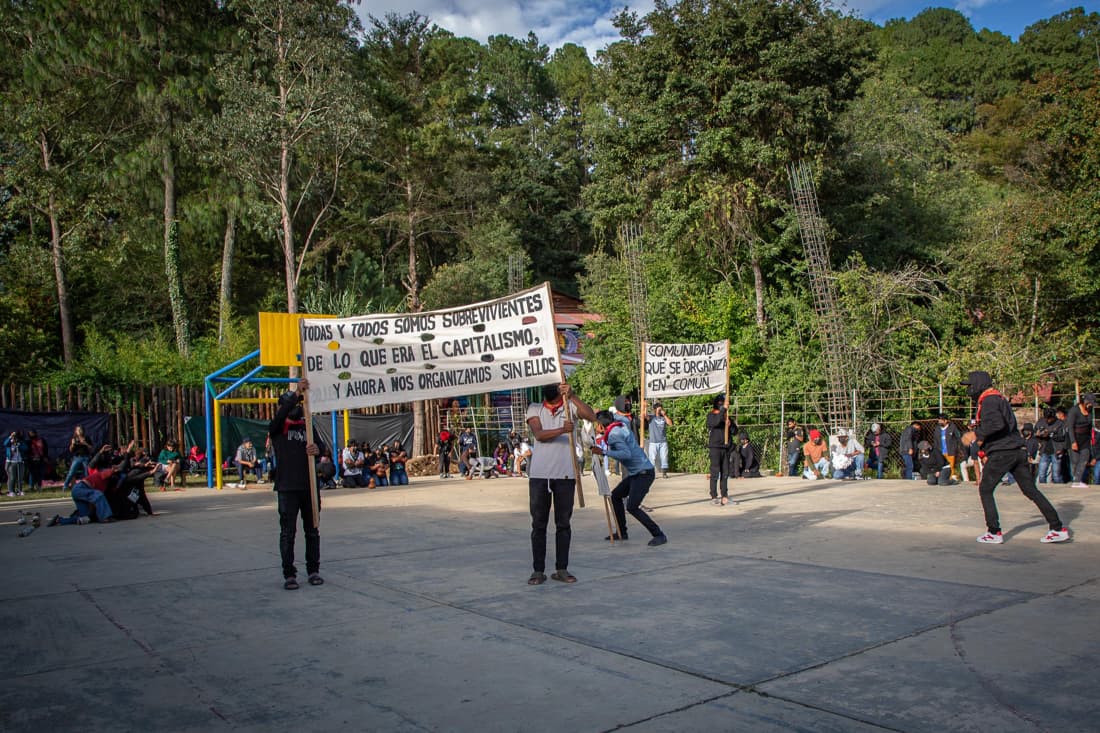
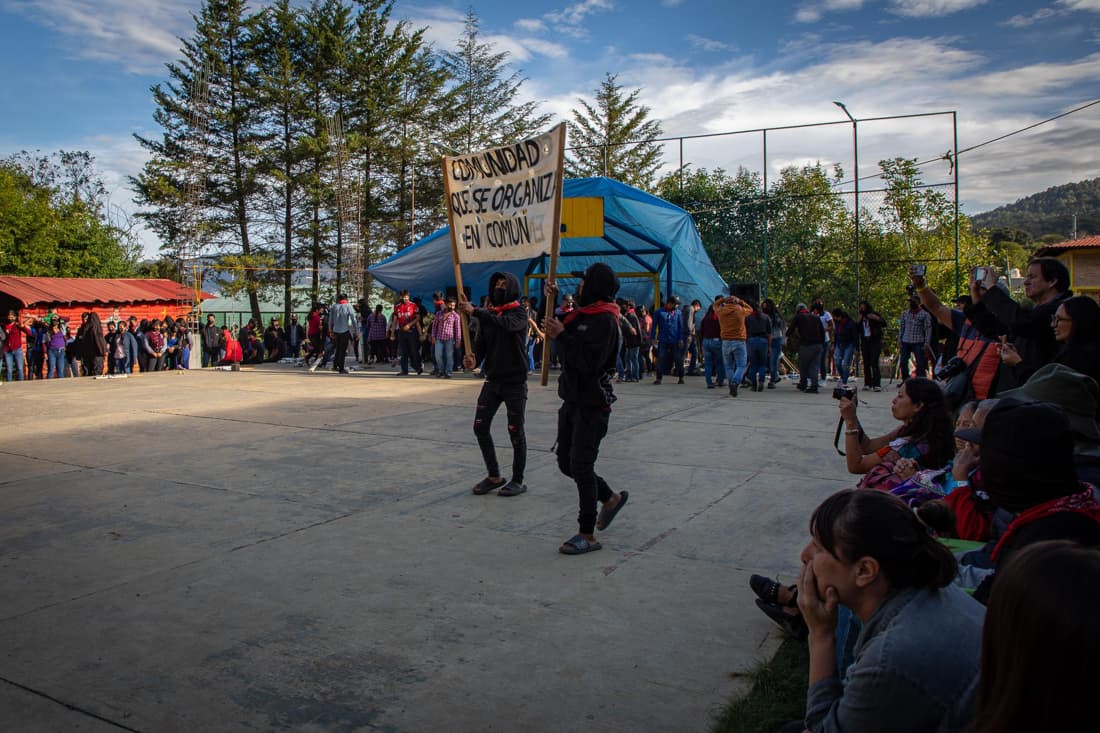
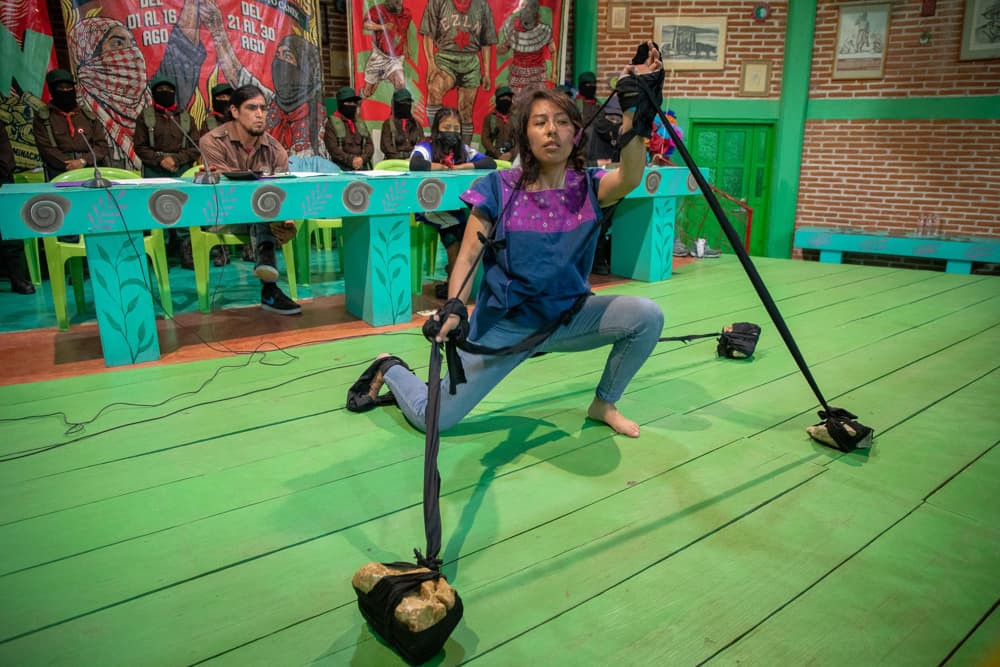
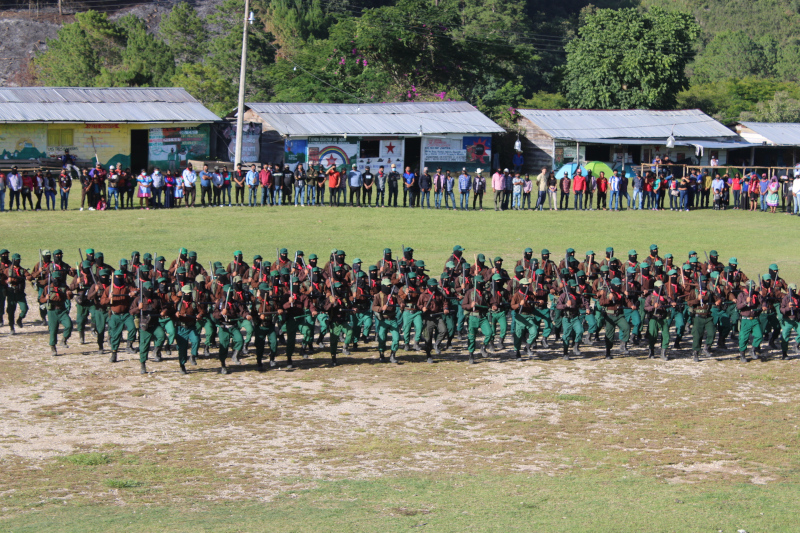
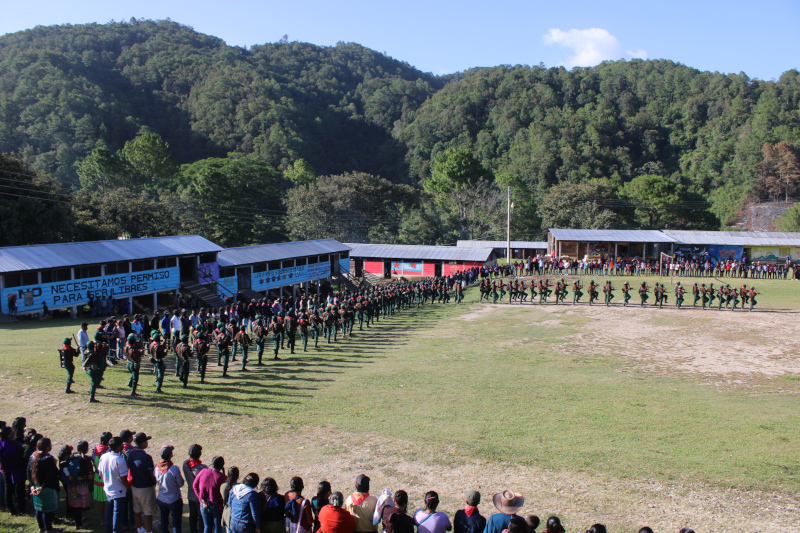
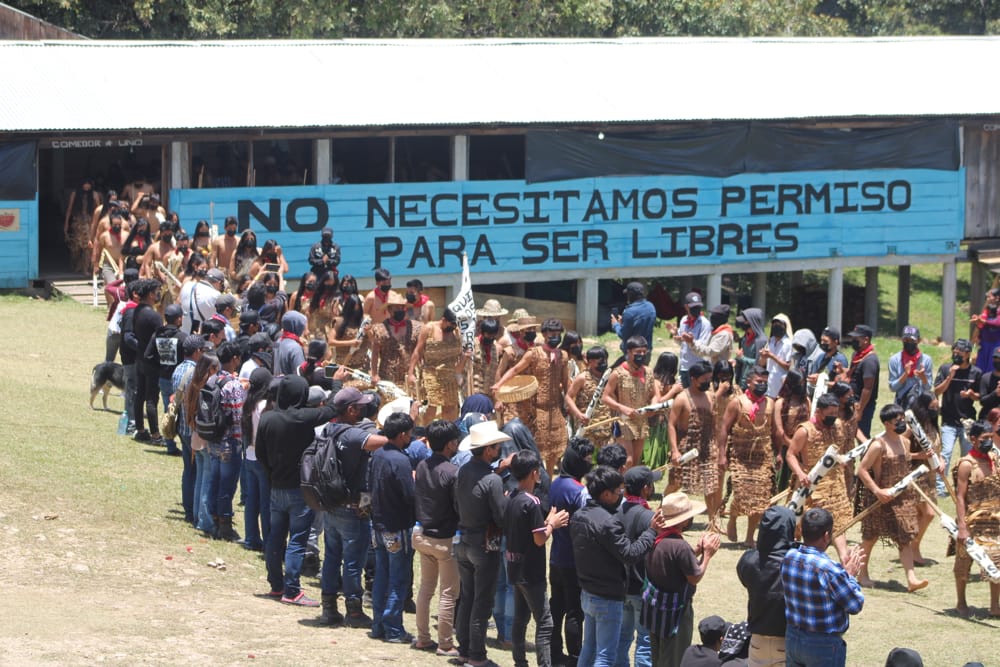
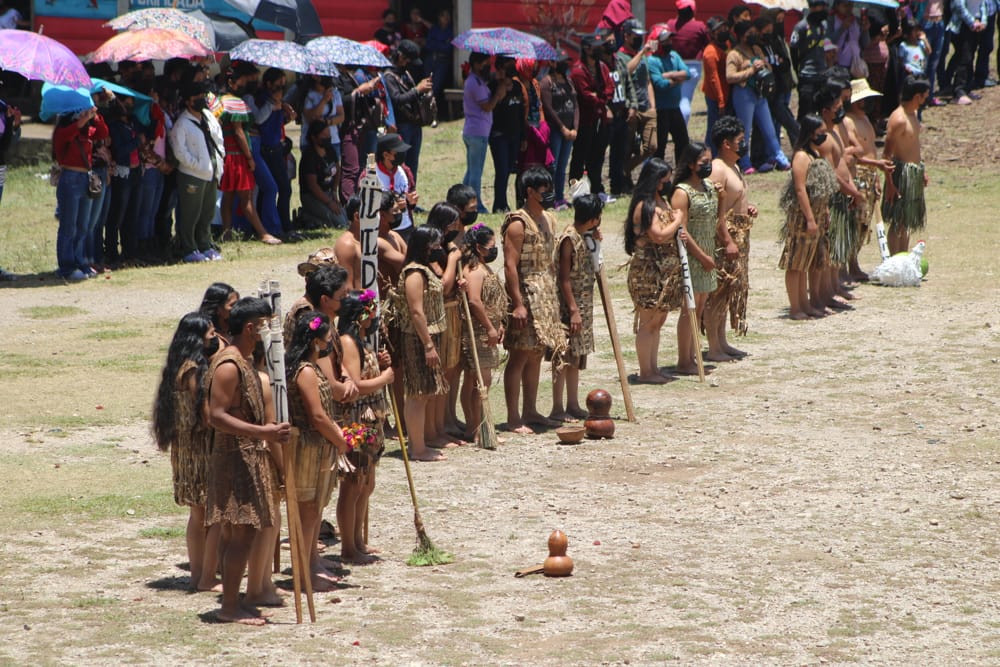
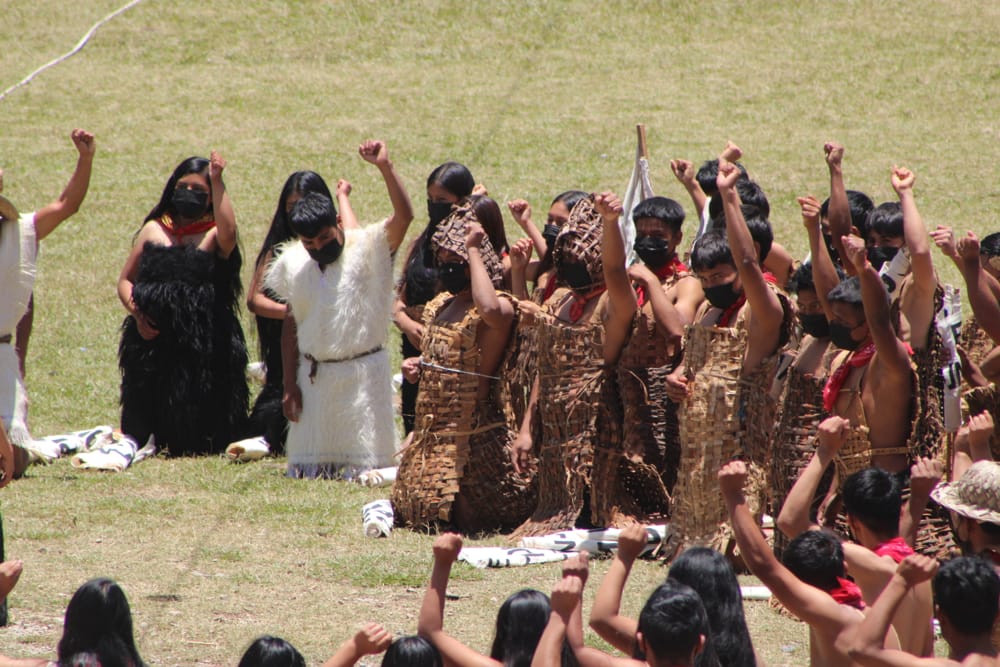
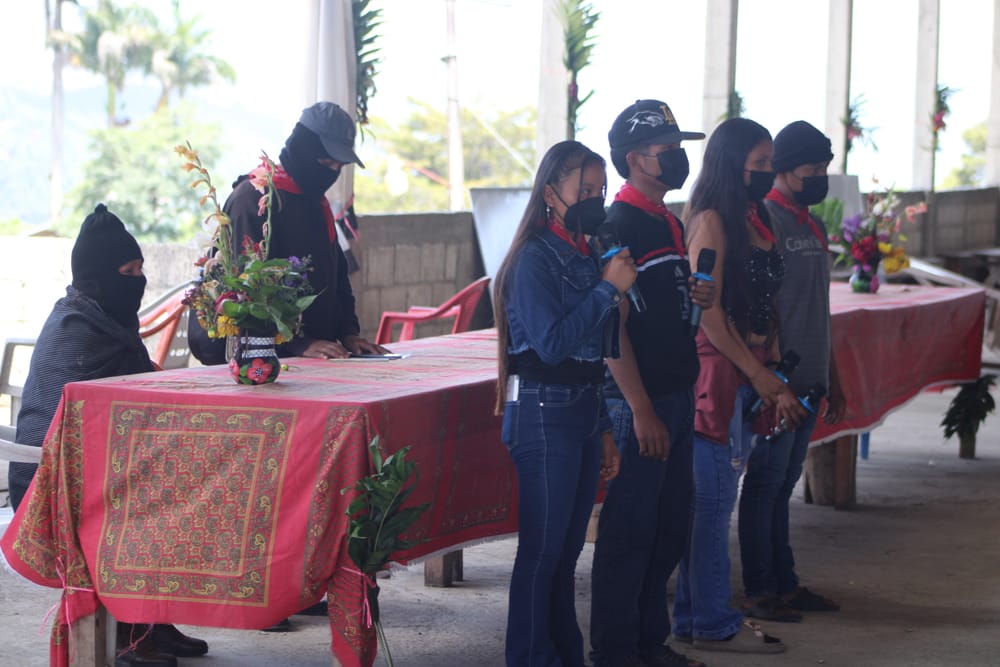
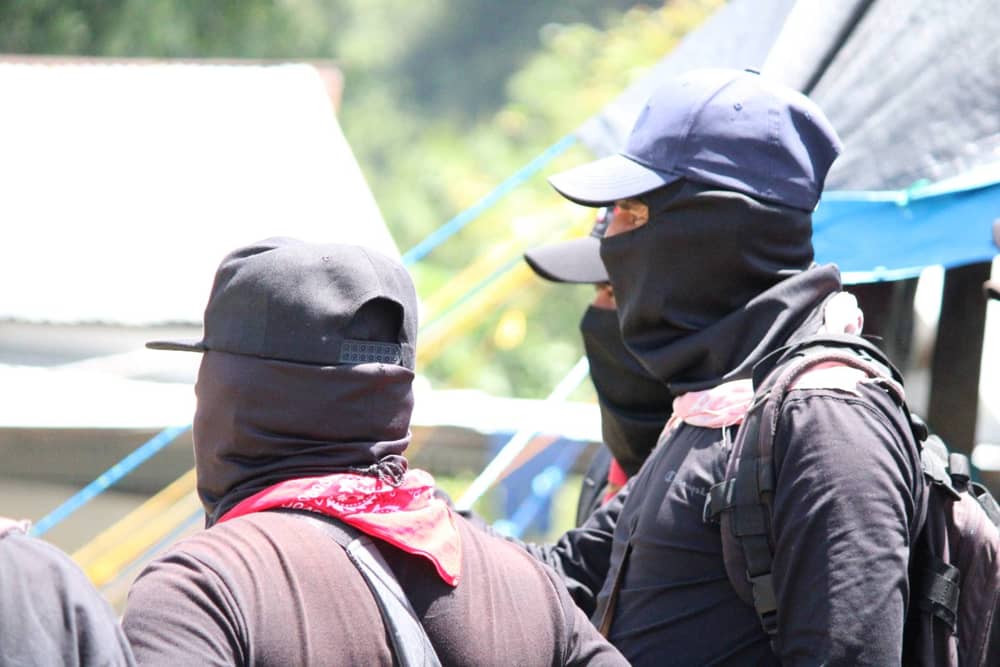
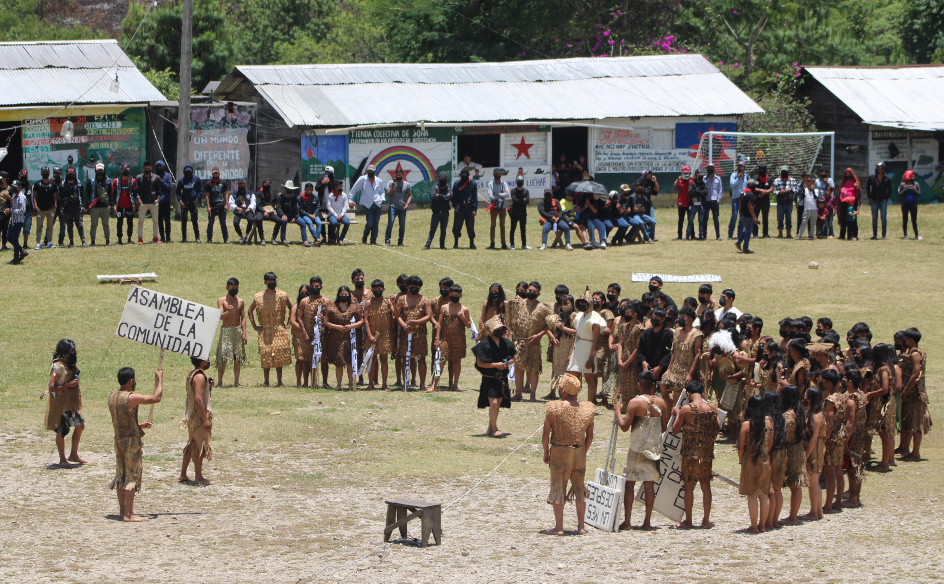
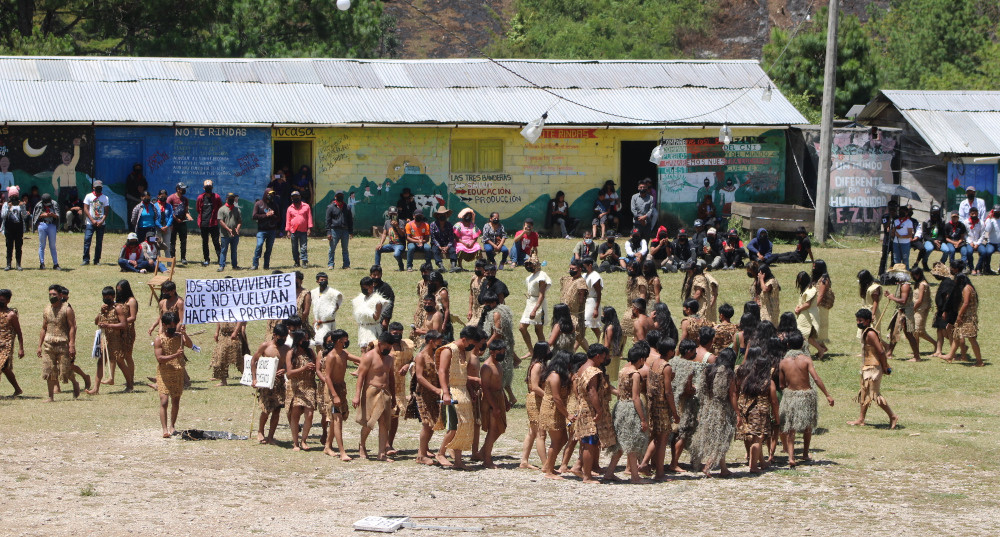
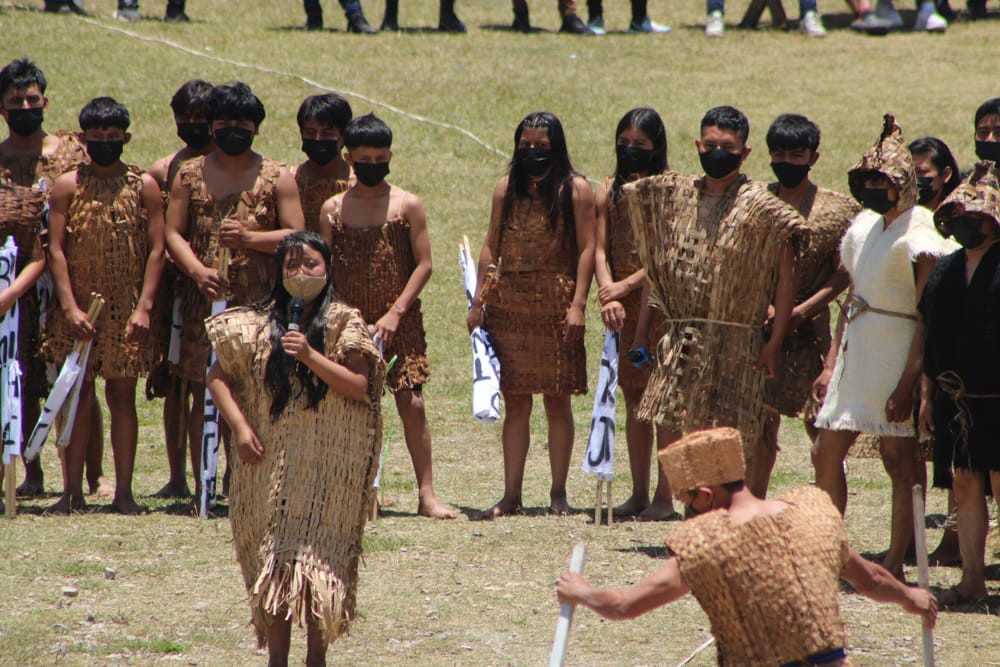
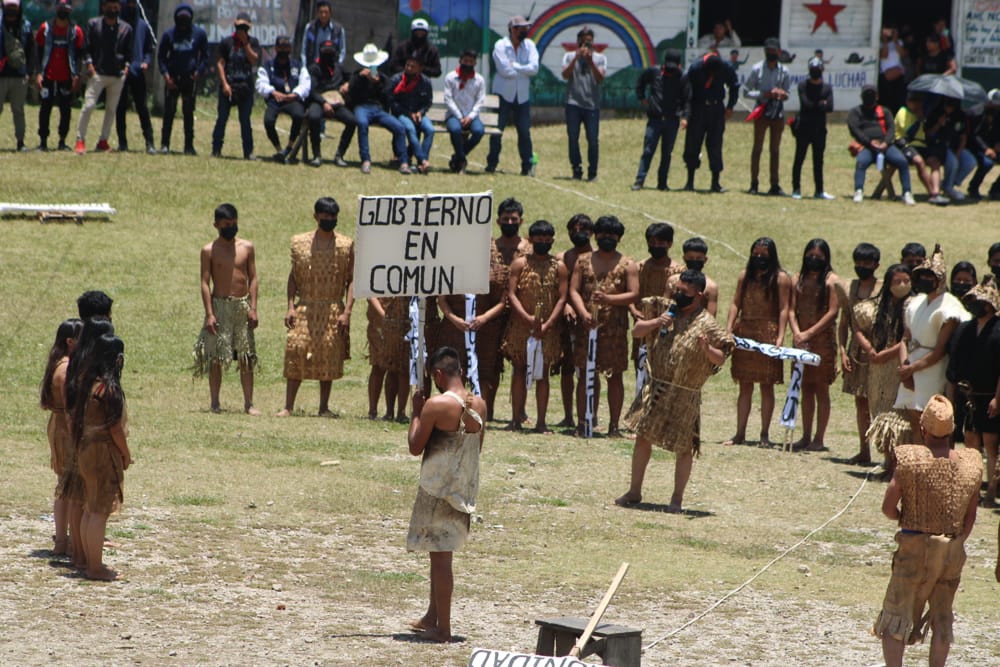
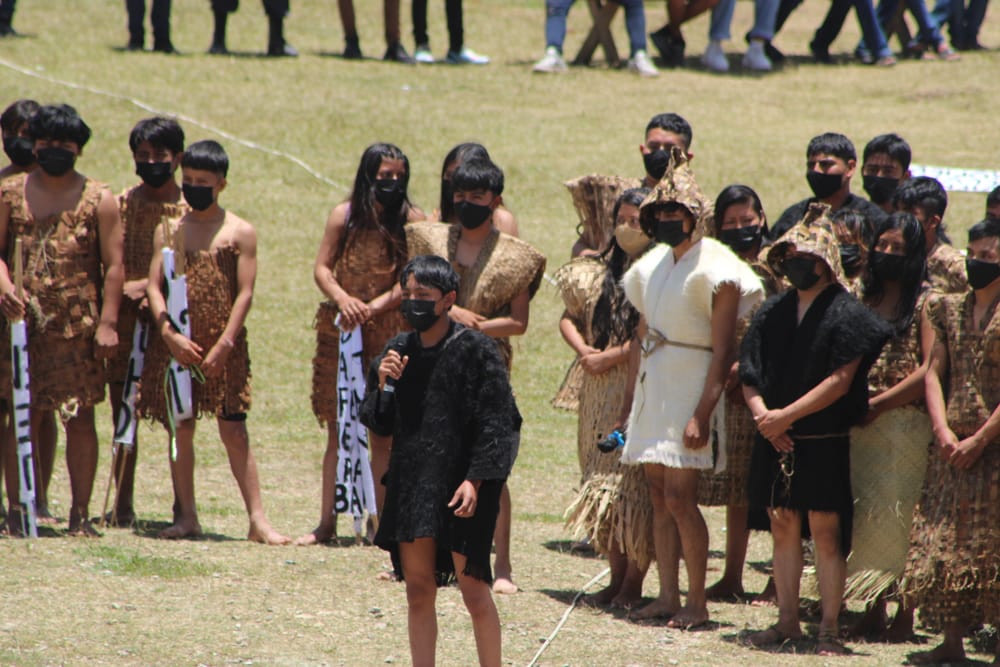
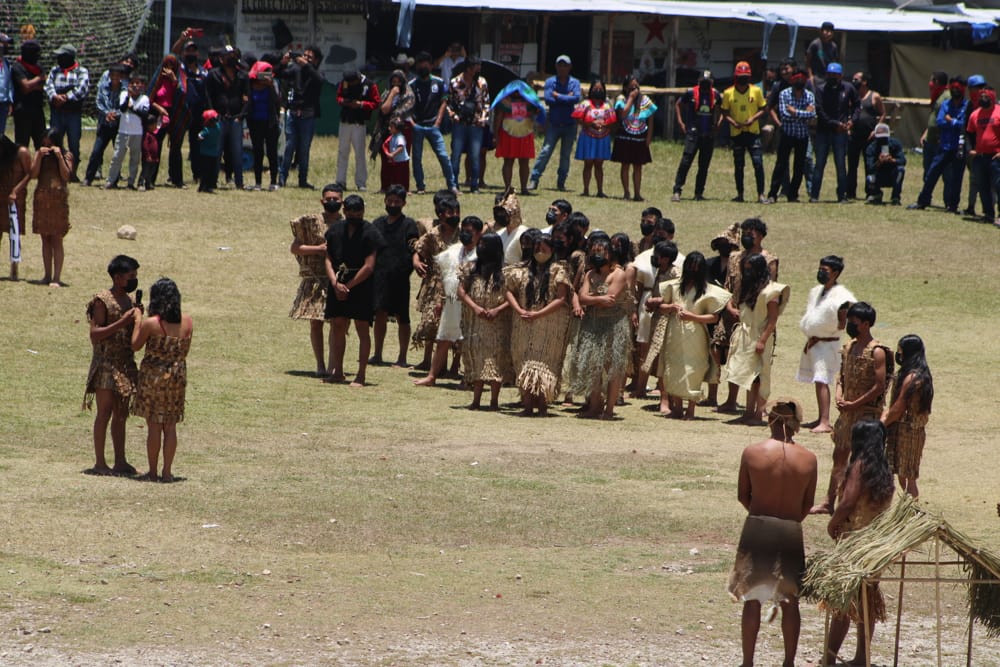
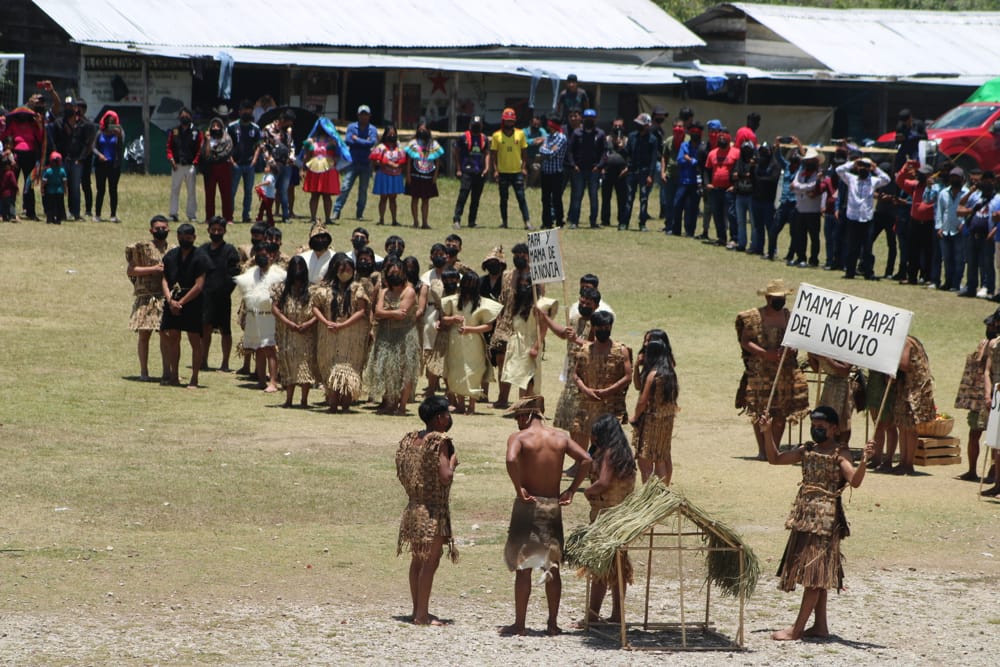
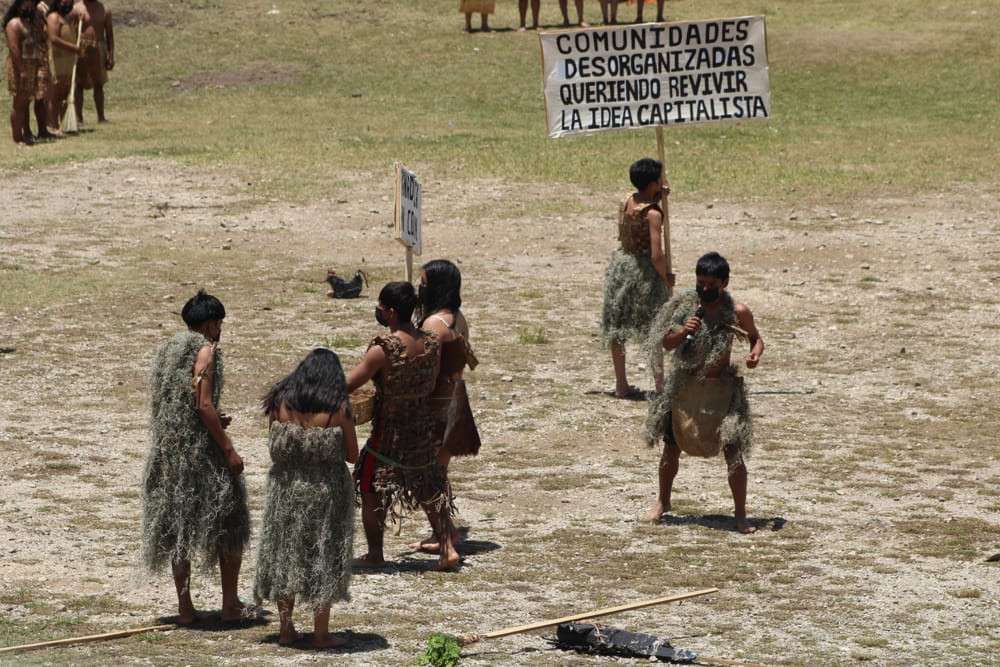
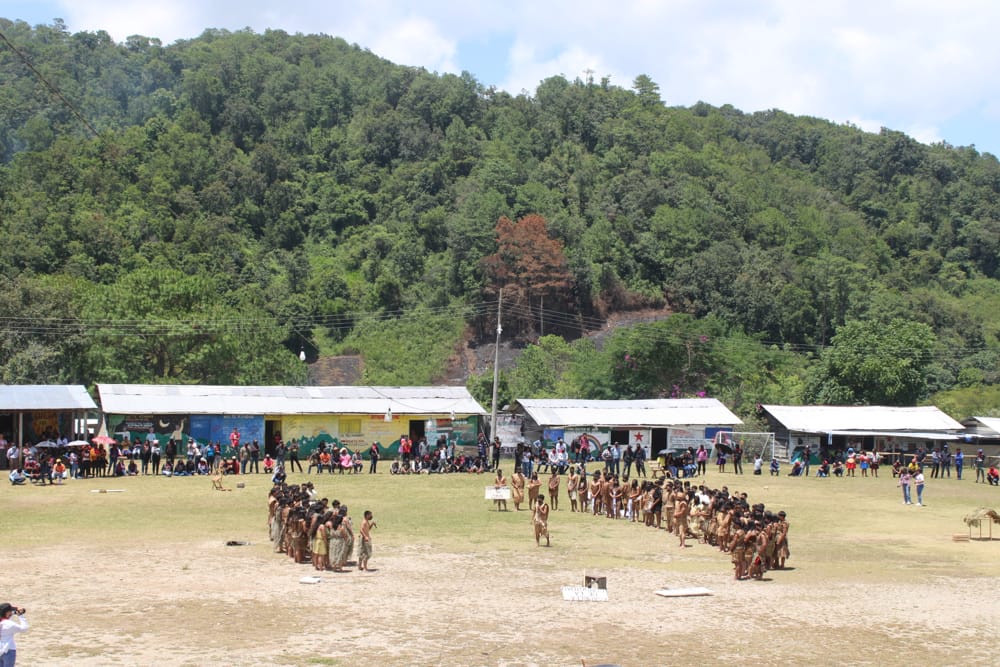
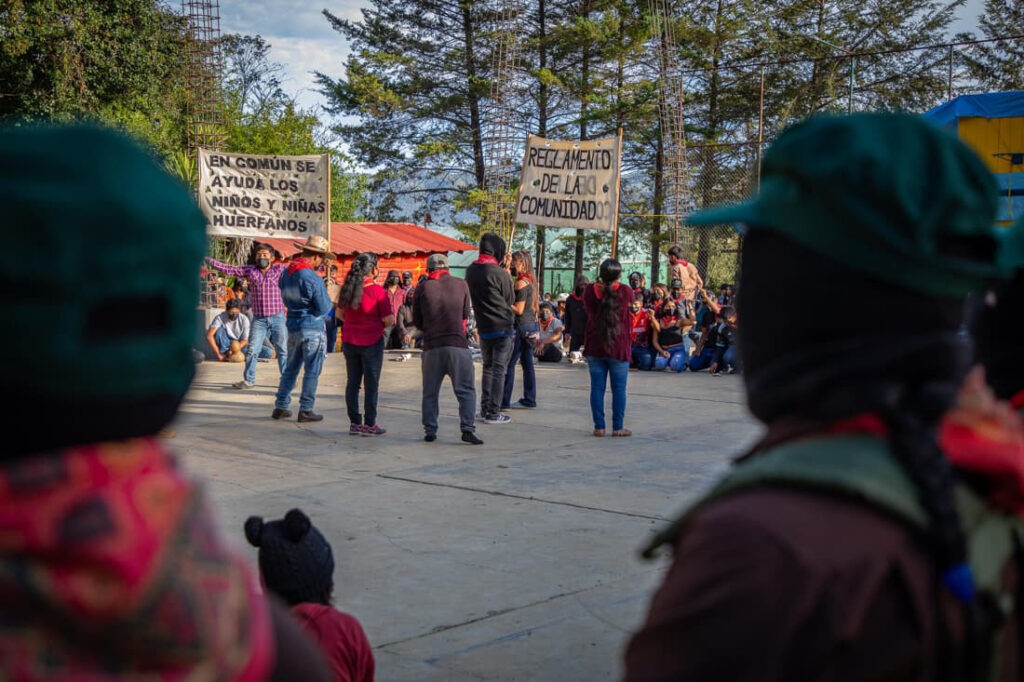
Em uma quadra do CIDECI-Unitierra, sob o céu aberto de San Cristóbal de Las Casas, jovens zapatistas começaram a ocupar o espaço enquanto outras pessoas observavam ao redor. Algumas permaneciam de pé, outras sentadas ou de joelhos. De um lado, uma fila de milicianas e milicianos observava em silêncio. No centro, surgiram faixas sustentadas por longos bastões de madeira.
“Governo em comum”.
“Regulamento da comunidade”.
“Não ao roubo”.
“Não aos maus-tratos contra a mulher”.
“Não à propriedade / Sim ao Comum”.
“Comunidade que se organiza em comum”.
E uma faixa muito maior que as demais:
“Todas e todos somos sobreviventes do que era o capitalismo, e agora nos organizamos sem ele”.
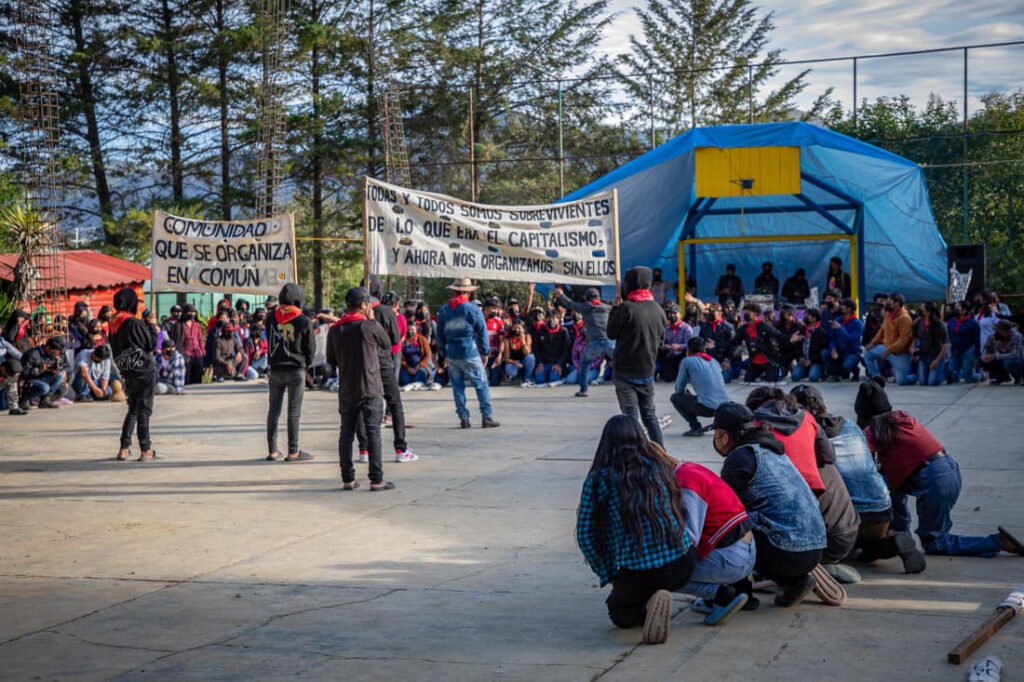
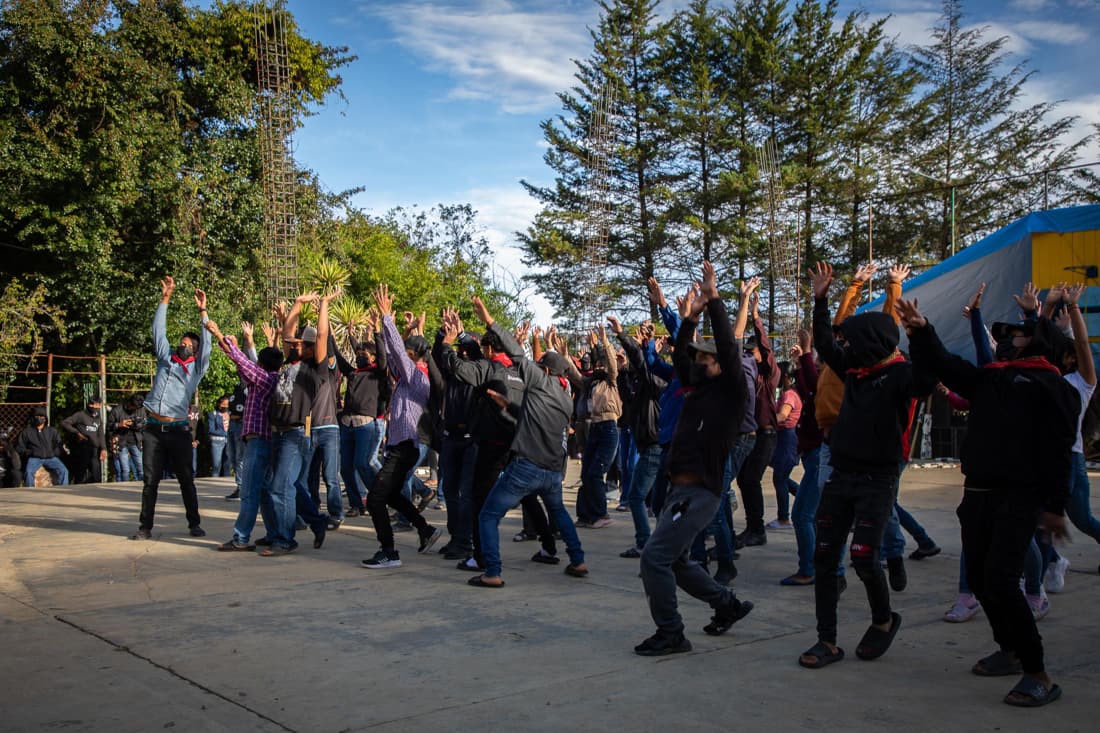
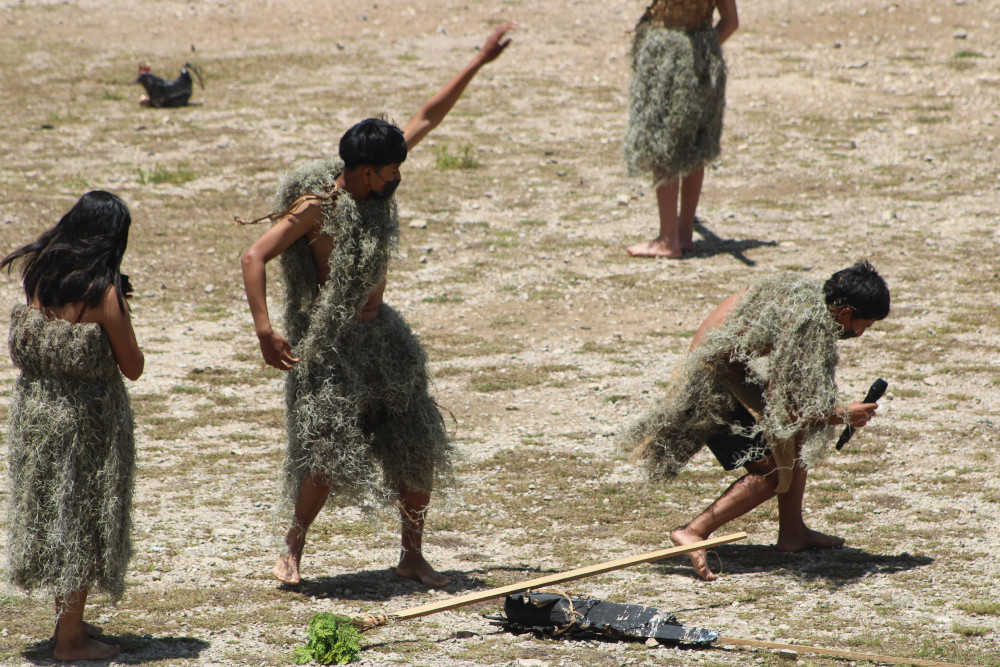
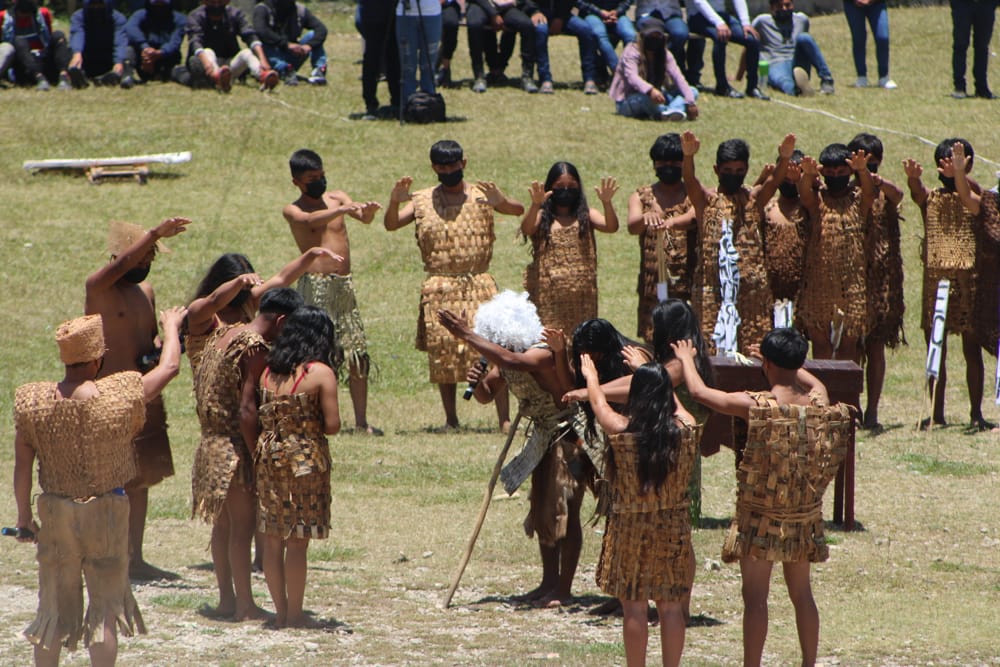
Os corpos se ajoelharam, levantaram-se, estenderam os braços, caminharam em diferentes direções, formaram grupos, dispersaram-se e voltaram a se encontrar. Em determinado momento, dezenas de braços se elevaram simultaneamente, transformando o que parecia um conjunto caótico de movimentos em uma onda. Depois, a onda se organizou.
Aquilo era um ensaio de teatro. A pergunta que começava a tomar forma na quadra era bem maior: como se ensaia uma sociedade que ainda não existe?
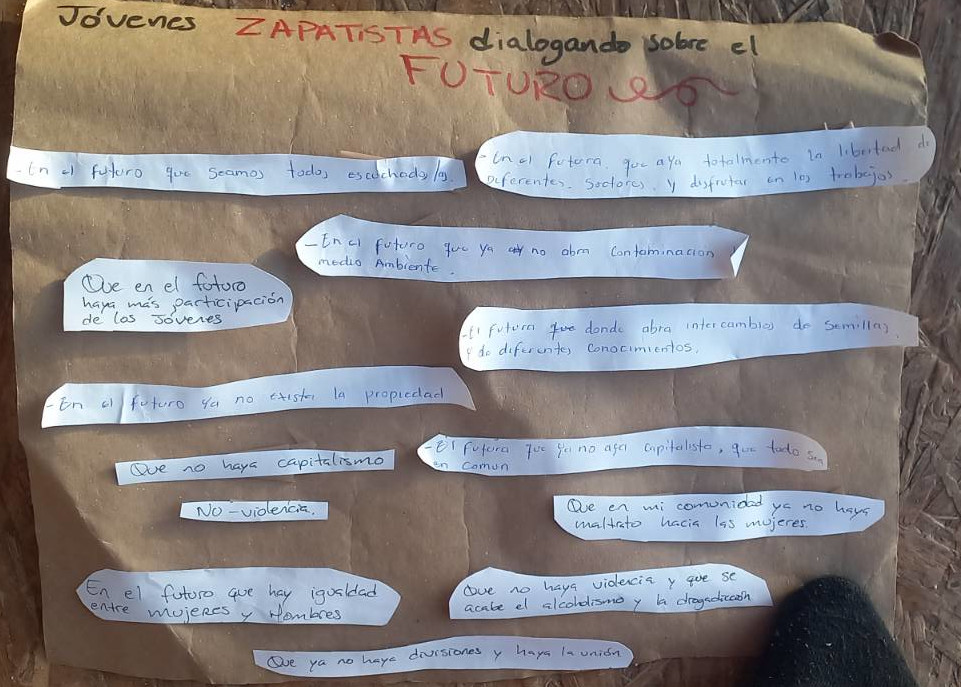
O futuro representado ali tinha regulamentos, assembleias, acordos, problemas, cuidados e conflitos. As faixas falavam de propriedade, violência contra as mulheres, roubos, crianças órfãs, vícios e formas de governo. O dia seguinte ao capitalismo aparecia longe de uma imagem serena da utopia. Era preciso organizá-lo.
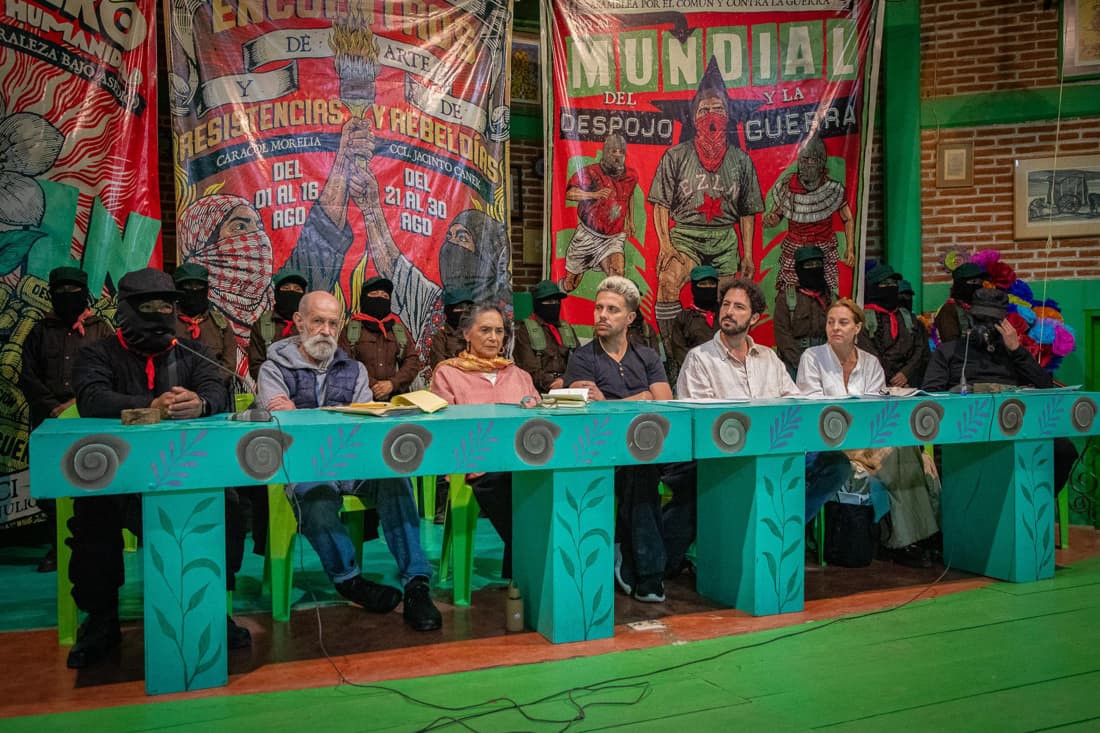
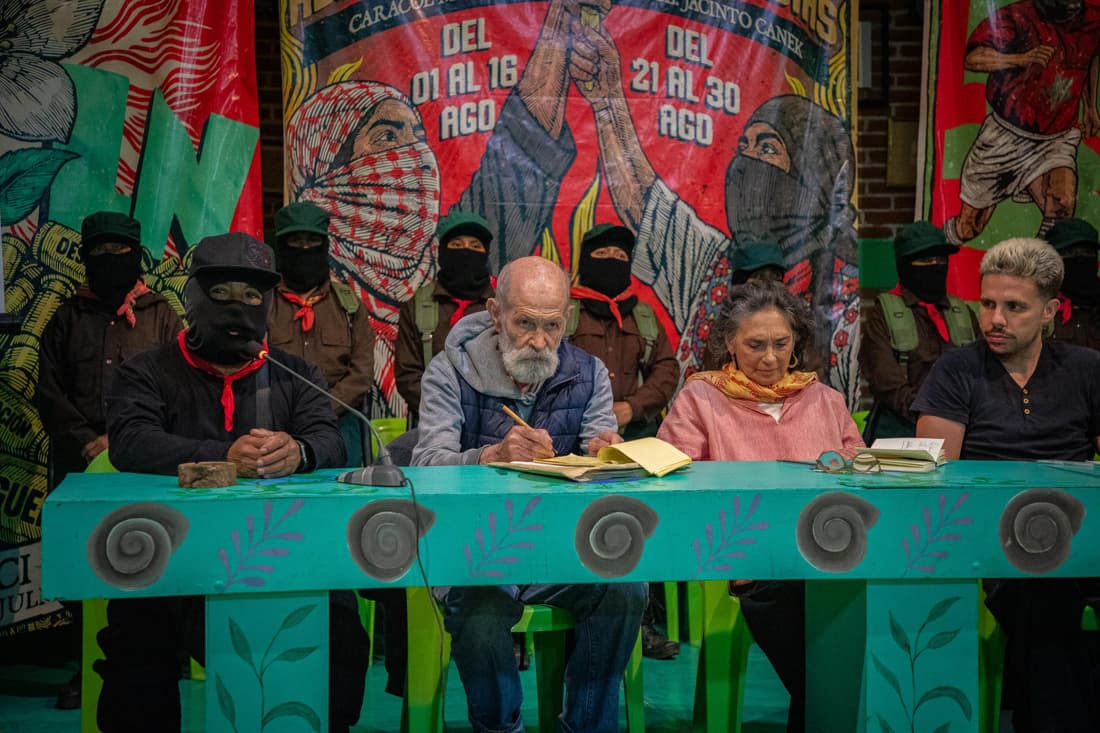
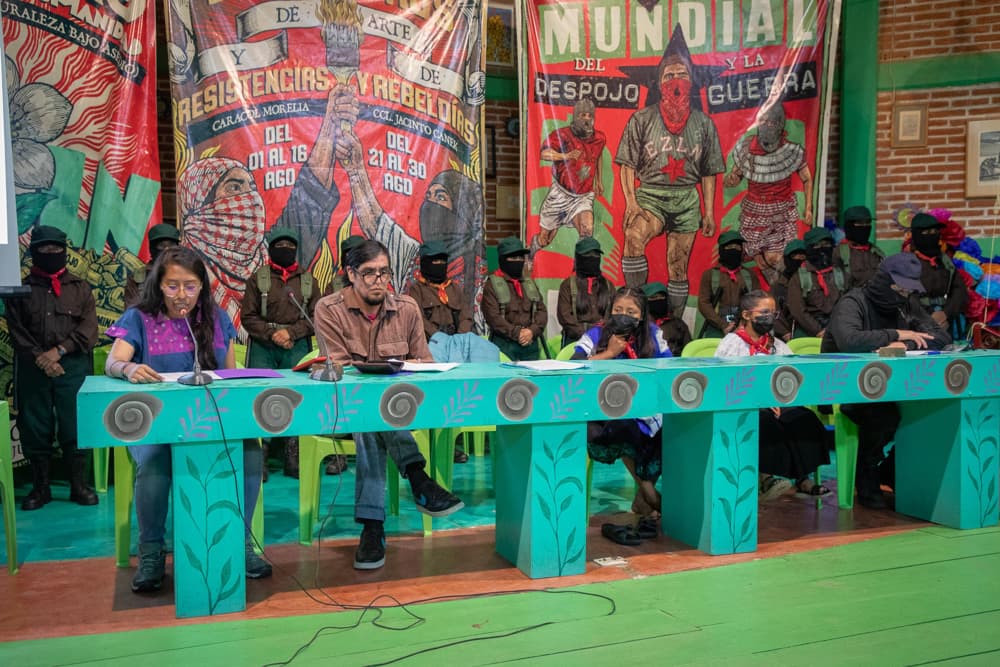
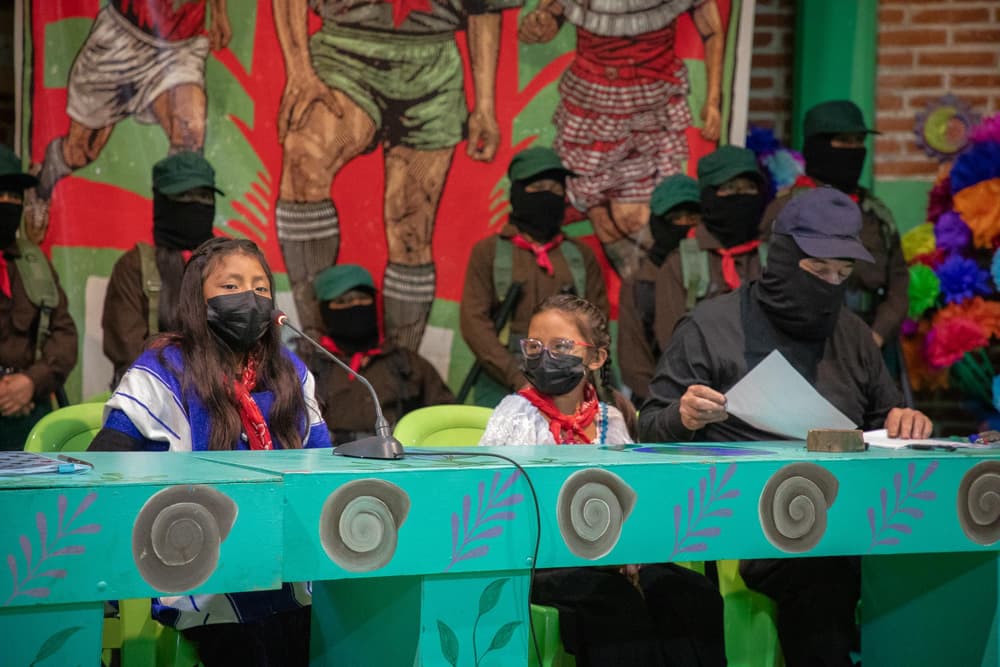
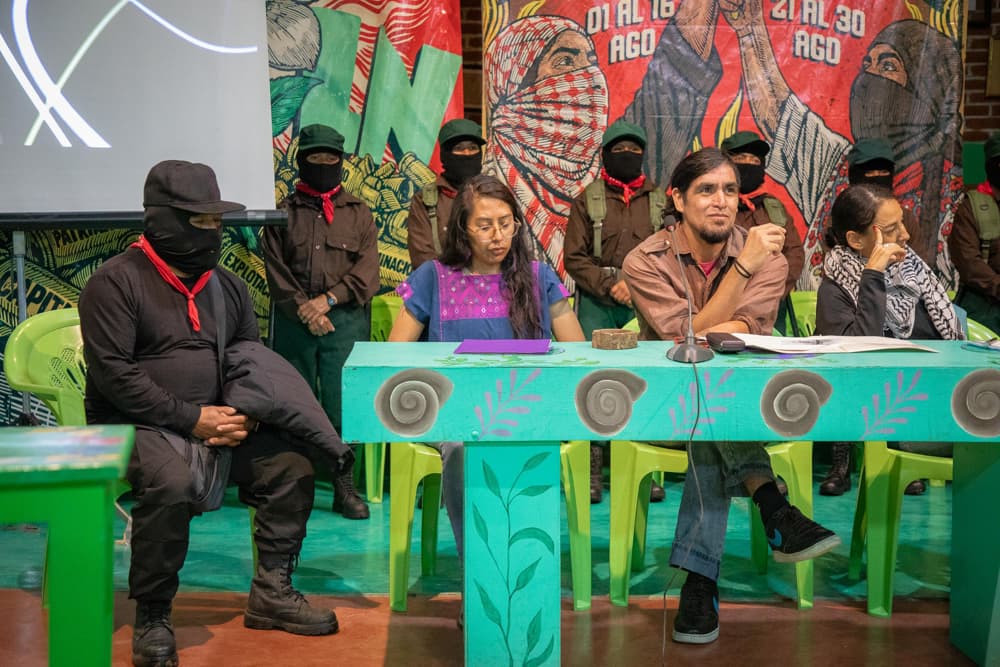
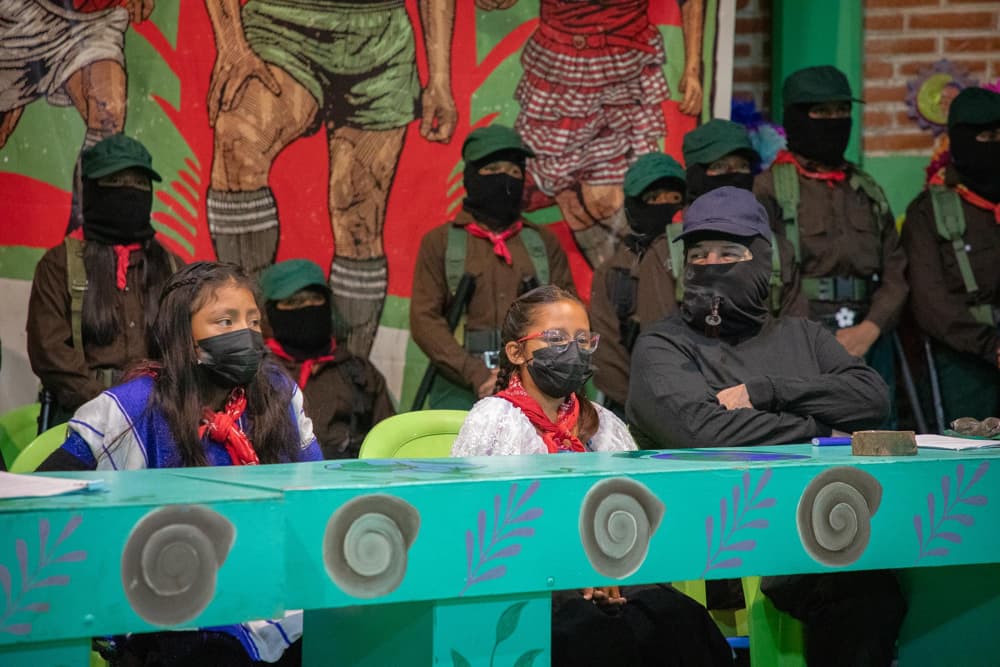
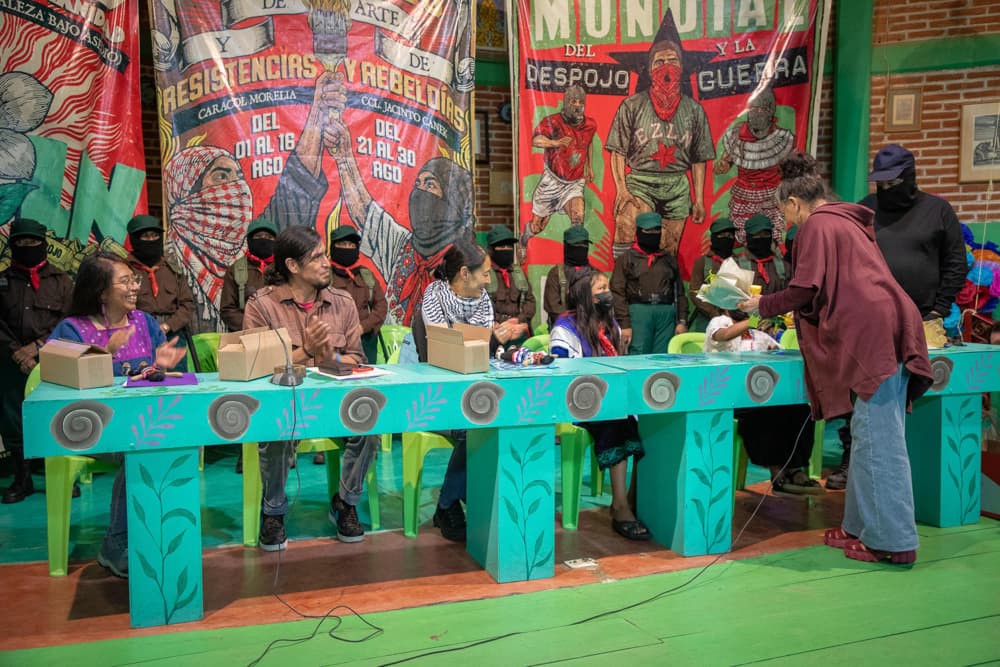
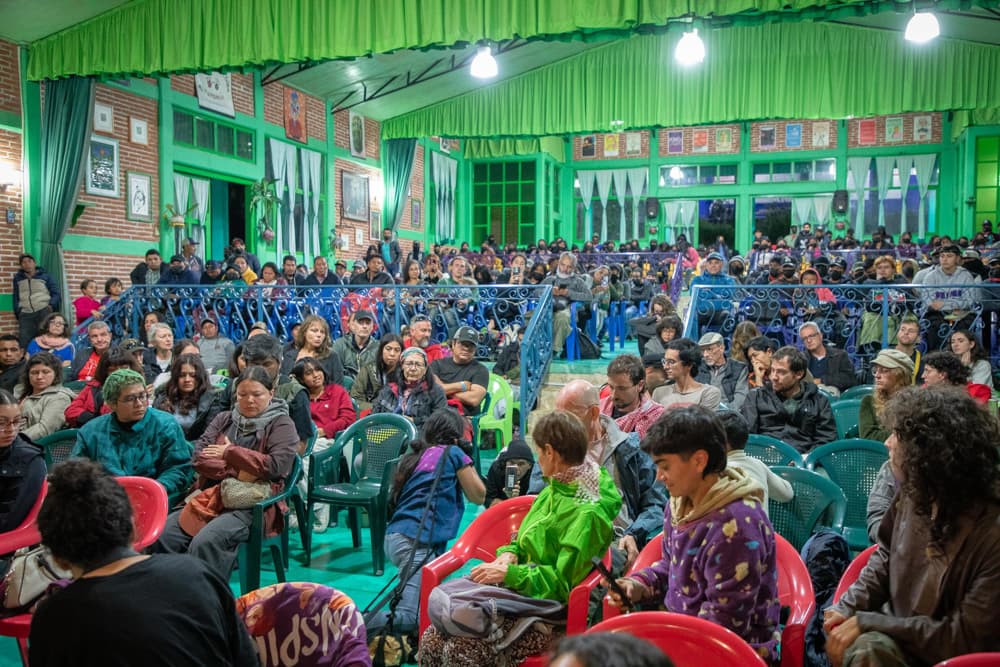
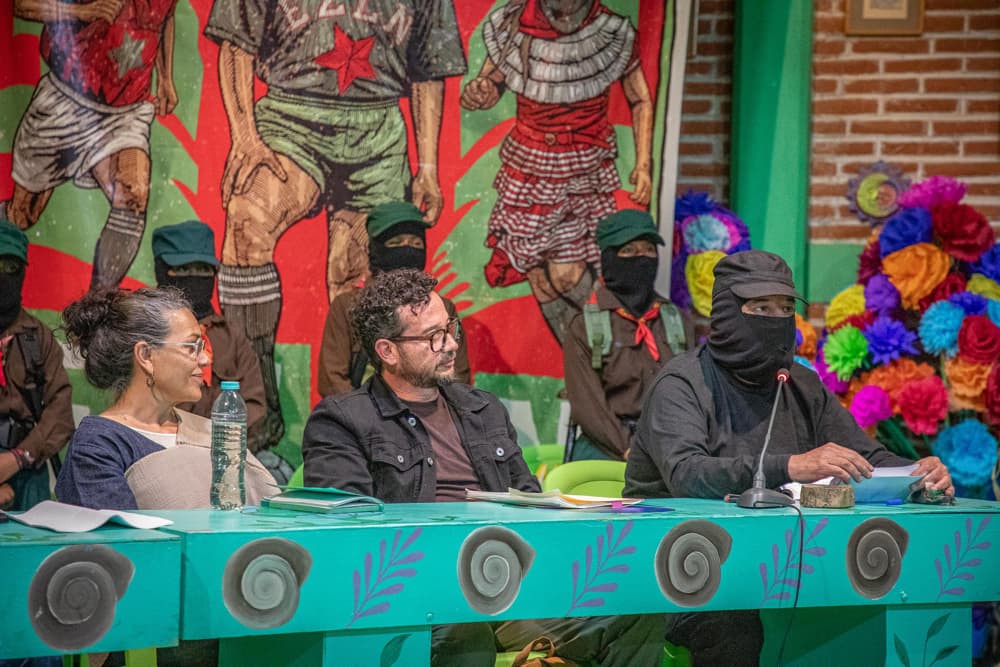
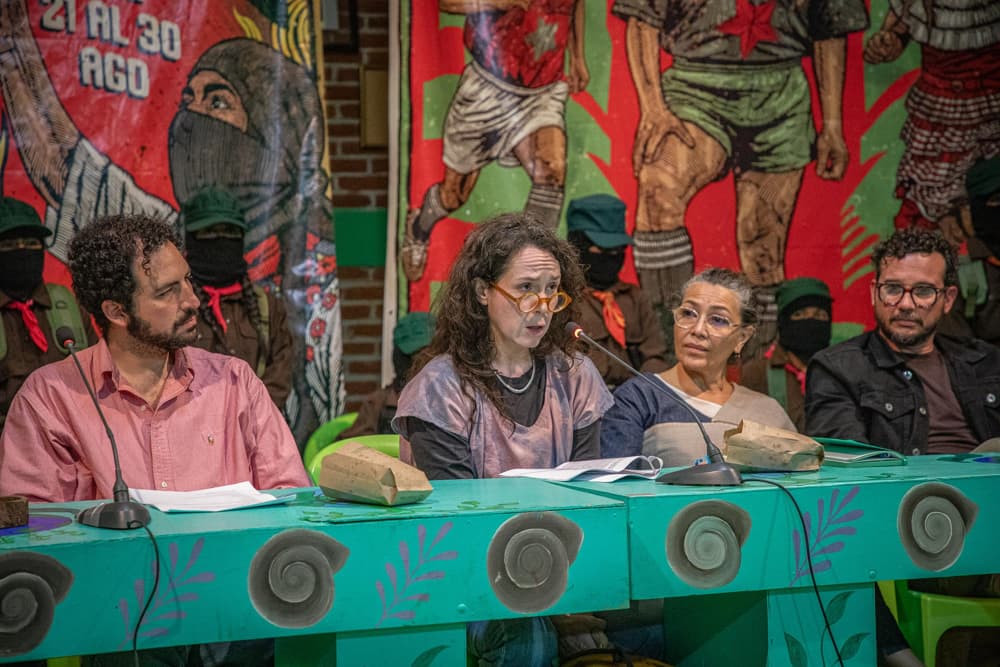
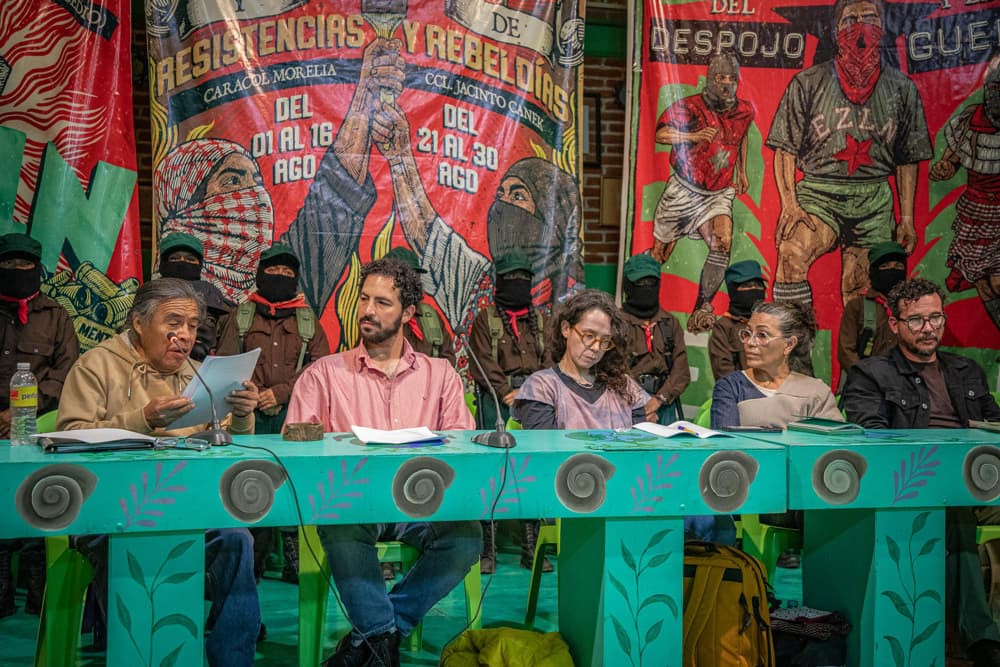
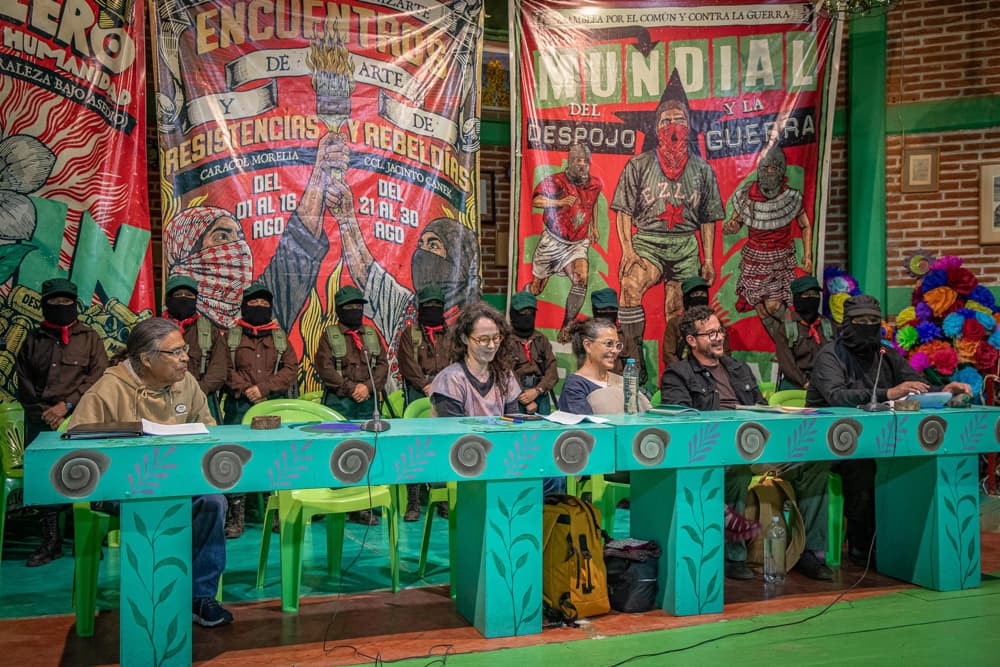
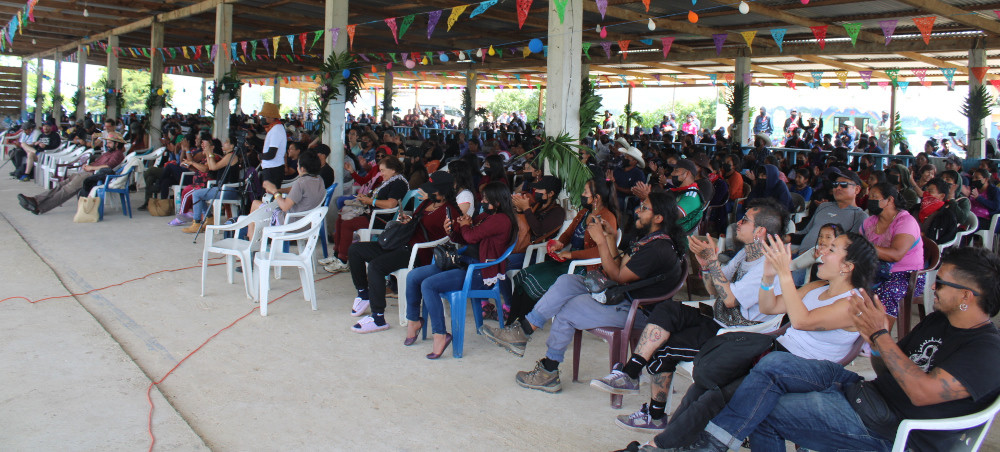
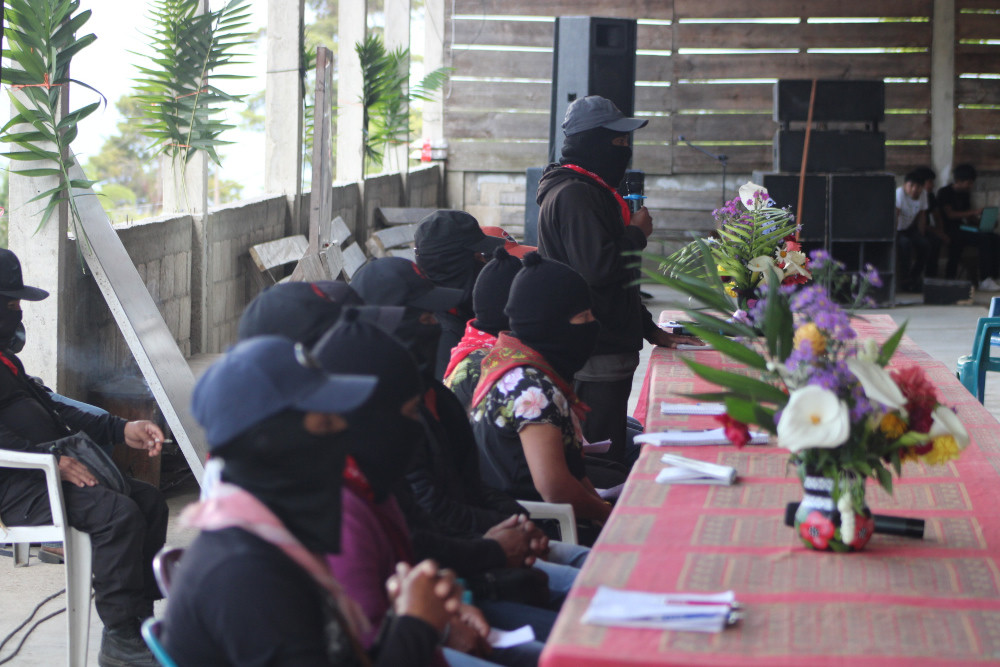
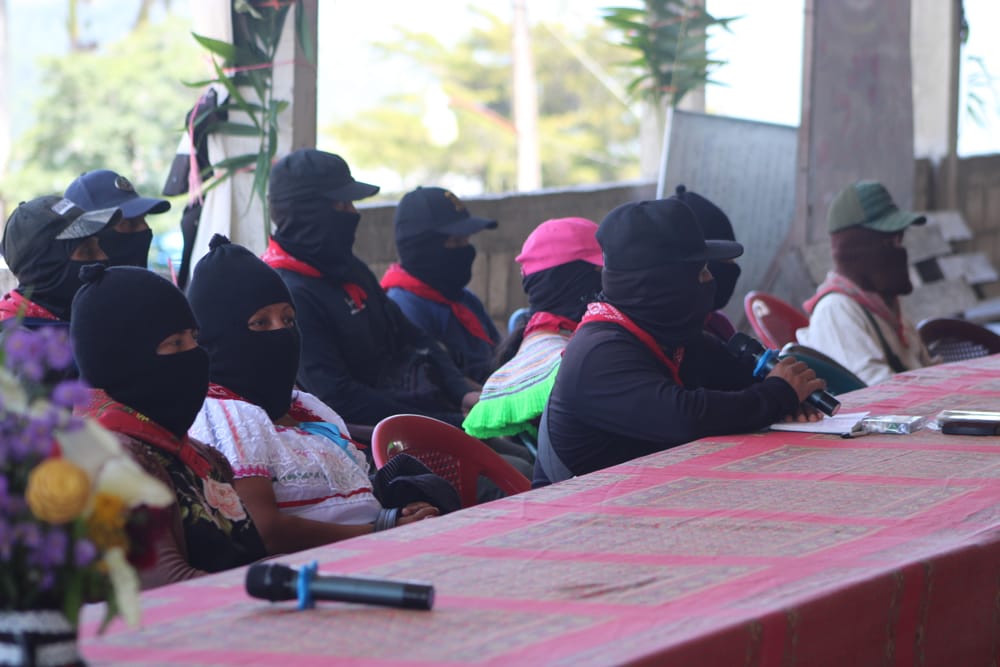
Horas mais tarde, durante a jornada dedicada ao teatro dentro do Semillero Las artes bajo acoso, aquela experiência atravessaria praticamente todas as intervenções. Pela mesa passaram o Subcomandante Insurgente Moisés, Luis de Tavira, Marina de Tavira, Diego del Río, David Gaytán e Ofelia Medina, enquanto a Comissão Sexta acompanhava uma conversa que voltava repetidamente ao mesmo problema: o que acontece quando o teatro deixa de se limitar a imaginar outro mundo e começa também a ensaiar as relações necessárias para construí-lo.
A obra antes da obra
O Subcomandante Insurgente Moisés começou explicando algo que nós, que assistimos a uma obra pronta, dificilmente conseguimos perceber.
“O teatro que fazemos é feito em comum”, disse.
Subcomandante Insurgente Moisés (Baixe o áudio aqui)
O processo começa quando coordenadores e coordenadoras de arte e cultura dos doze Caracoles se reúnem em torno de um tema. Surgem muitas ideias. Elas são discutidas. São organizadas. Elabora-se um primeiro rascunho de cenas e movimentos. Depois chegam atores e atrizes vindos dos Caracoles, e aquilo que parecia resolvido volta a se abrir.
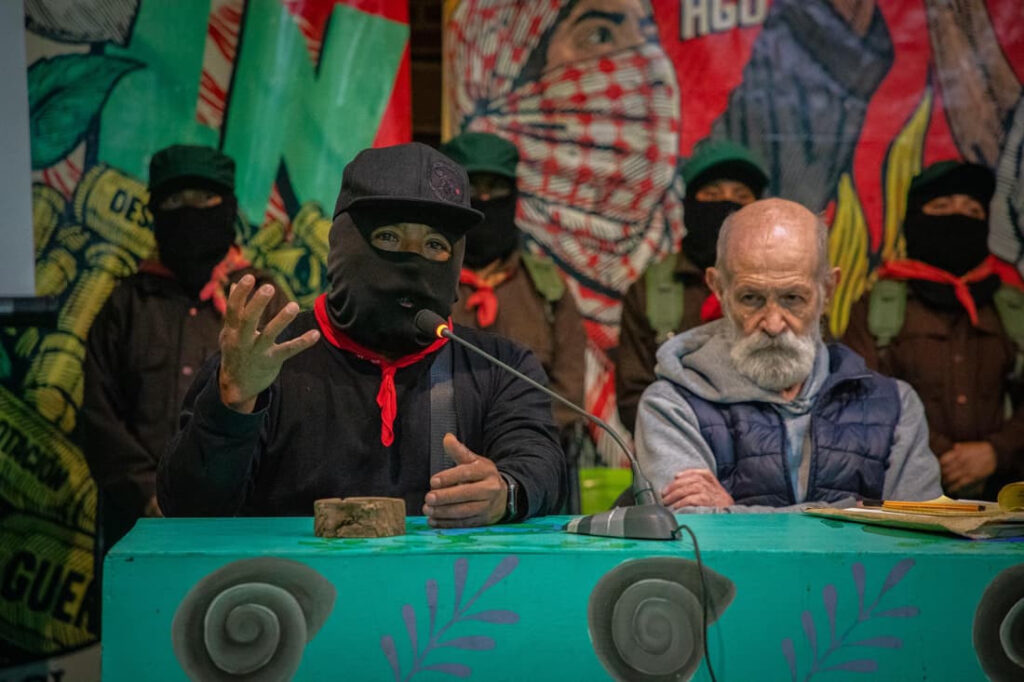
As novas pessoas propõem outros movimentos, objetos, formas de representar, palavras e ações. A obra volta a mudar. Segundo explicou Moisés, “vai surgindo em comum a ideia de como vamos encená-la”. Depois, cada grupo retorna ao seu Caracol. Pratica. Corrige. Treina. Comunica-se com os demais. E, finalmente, os doze Caracoles voltam a se reunir para juntar as partes e continuar ensaiando “até dar certo”.
Moisés usou uma expressão muito menos solene para descrever o método com que começaram a fazer teatro: al romplón. Bora, vamos ver no que dá.
A frase, no entanto, poderia enganar. Por trás dessa aparente desordem existe uma enorme estrutura de coordenação: centenas de pessoas, diferentes regiões, deslocamentos, ensaios locais, comunicação entre grupos, materiais que cada participante desenha e constrói, correções sucessivas e uma ideia que precisa conseguir reunir todas essas diferenças.
A organização antecede a cena. E continua dentro dela.
Moisés insistiu ainda em algo decisivo: ele também não desenha os figurinos, os objetos ou cada movimento. “São eles, são elas” quem os criam. Mesmo quando lhe perguntaram como chamar sua própria função, a palavra diretor pareceu grande demais ou talvez vertical demais. Entre brincadeiras, surgiu outra possibilidade: “pensamento orientador”. Sua tarefa, explicou, consiste sobretudo em coordenar tempos, reuniões e grupos. “Os que fazem são eles, são elas”.
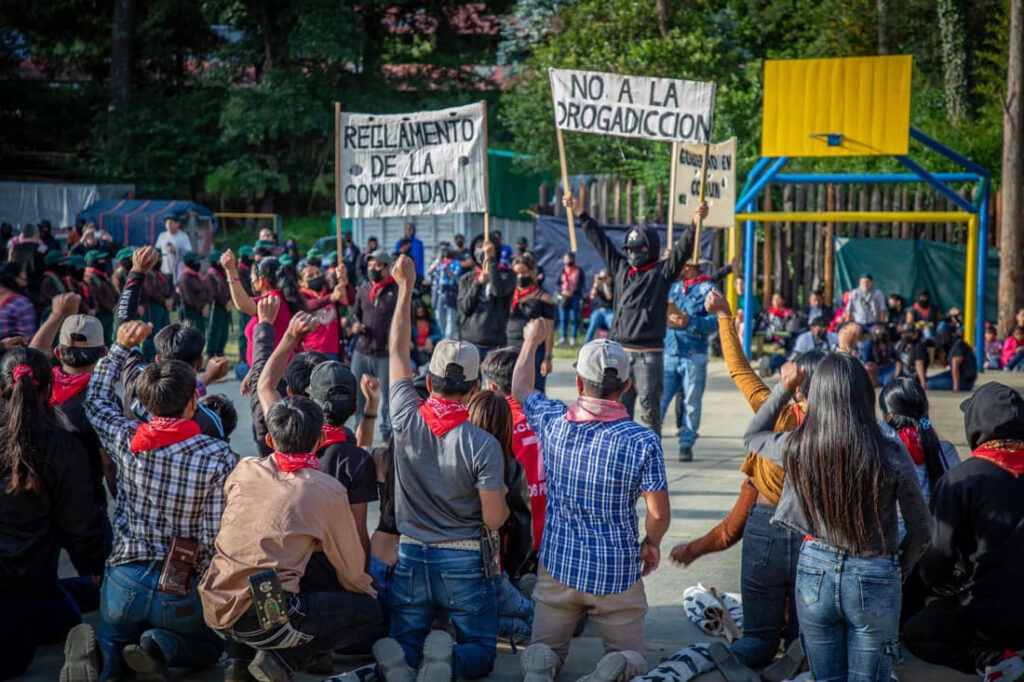
Nessa engrenagem coletiva também foram construídas as duas partes de um mesmo problema teatral. “O tema é um só, mas se divide em dois”, explicou Moisés. Primeiro, o Comum. Depois, o dia seguinte, quando “já não existe o sistema capitalista”. O teatro zapatista começa, então, por uma pergunta política e organiza corpos para torná-la visível.
Do “romplón” à técnica
A presença de Luis de Tavira naquela manhã introduziu outra camada no processo.
Moisés contou que o mestre havia compartilhado com eles “método, forma, técnica”: como evitar que o ator permanecesse como uma estátua, como se expressar, como fazer com que uma ação fosse compreensível para quem observa. Essas ferramentas foram recebidas a partir de um lugar muito concreto: as comunidades já sabiam o que queriam dizer.
“A única coisa que sabemos é que vamos mostrar aquilo que pensamos, aquilo em que acreditamos”, explicou.
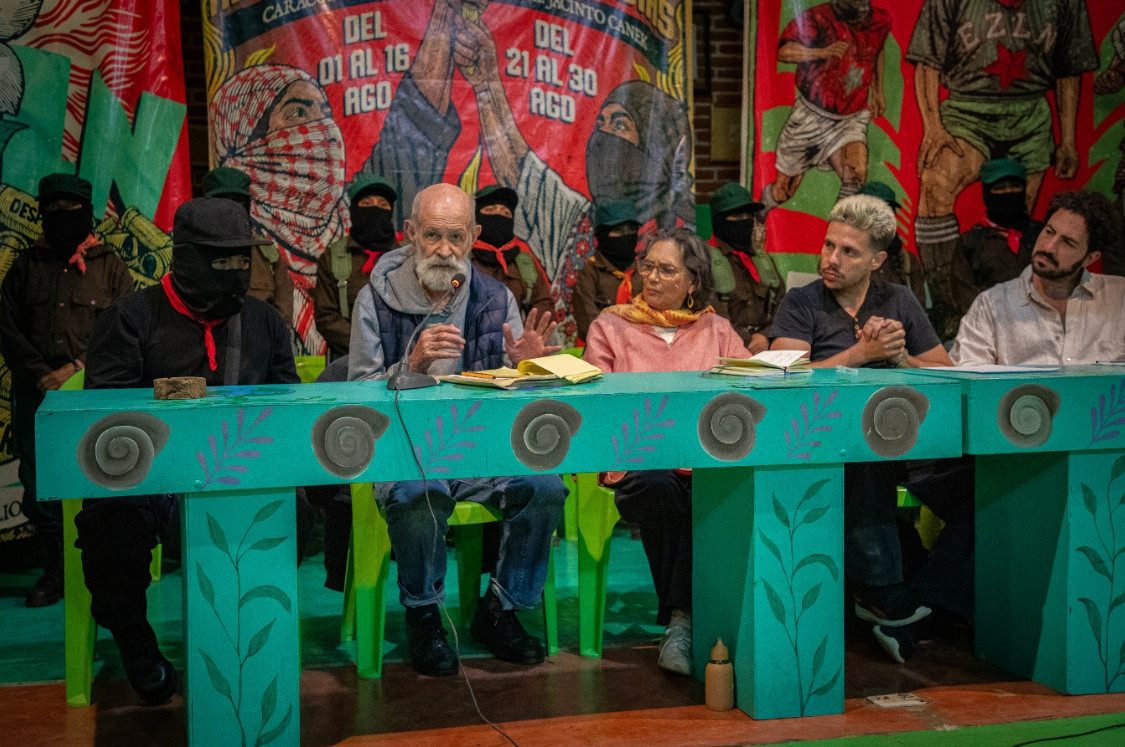
Ali aconteceu um dos encontros mais férteis de toda a jornada. De um lado, décadas de experiência teatral. Do outro, uma prática comunitária construída sem escola formal de atuação e sustentada por centenas de jovens de diferentes comunidades. A técnica circulou sem deslocar o processo coletivo que já existia.
À noite, Tavira ainda parecia atravessado por aquela experiência. Agradeceu várias vezes antes de conseguir começar sua reflexão e reconheceu estar profundamente comovido com o trabalho compartilhado. Falou de cerca de 240 participantes na obra que acabara de assistir e lembrou outra experiência anterior de teatro zapatista, na qual havia encontrado cerca de 500 pessoas em cena. Mais do que o número, impressionava-o a possibilidade de realizar um teatro multitudinário sustentado, ao mesmo tempo, pela exigência e pela busca artística.
Luis de Tavira (Baixe o áudio aqui)
A relação entre aprender e ensinar havia saído do lugar.
De fato, desde a abertura da mesa, falou-se de uma “reunião conspiratória de teatrólogos” ocorrida em outro canto do CIDECI, onde os papéis de mestre e aprendiz mudavam continuamente.
Talvez isso explique uma das coisas mais interessantes do que aconteceu naquela manhã: ninguém saiu ileso do ensaio.
Pensar fazendo
Luis de Tavira retomou uma inquietação que havia surgido durante suas conversas com Moisés. Pensar é necessário. Fazer também. Para Tavira, o teatro acontece justamente nessa relação: é fruto do pensamento e, ao mesmo tempo, realização do pensamento. Ali surgiu o problema que atravessaria boa parte da noite. A ficção pode imaginar um mundo diferente. O desafio é a realidade. Moisés havia formulado essa inquietação durante os intercâmbios anteriores: tudo bem imaginá-lo, mas como aquilo que é representado passa para a vida?
Tavira respondeu voltando a uma das origens ocidentais do teatro. Lembrou como a tragédia grega imaginou uma saída para o ciclo interminável da vingança, sangue que chama mais sangue, por meio de outra possibilidade de organização coletiva. Seu argumento conduzia a uma afirmação deliberadamente forte: o teatro tem intervindo historicamente nas formas nas quais as sociedades imaginam a si mesmas.
“O teatro muda a história”, afirmou.
A afirmação adquire outro sentido diante de uma obra que imagina sobreviventes se organizando depois da catástrofe capitalista. Para Tavira, o teatro também é um mirante: um lugar de onde observar a vida por meio de corpos presentes. A história conta aquilo que aconteceu alguma vez; o teatro pode interrogar aquilo que continua acontecendo.
E daí chegou a uma formulação que desloca radicalmente a centralidade da própria obra: “A verdadeira obra de arte é a sociedade”.
O palco importa porque pode tornar visível algo que ainda não possui uma forma completa na realidade. O futuro aparece, então, como acontecimento aberto. “A esperança não é otimista”, disse Tavira. É uma “espera atenta pelo que ainda não se sabe que vai acontecer”.
Juntar as diferenças
Entre a intervenção de Luis e a de Marina, o Capitão Marcos voltou ao que havia observado nos ensaios zapatistas. O que via, contou, inicialmente parecia uma bagunça. Grupos separados. Cada um trabalhando por conta própria. Pessoas corrigindo umas às outras. Nenhuma figura central percorrendo o espaço para ditar cada movimento. Aquilo lhe parecia particularmente estranho vindo de uma formação militar, na qual existem comando e obediência.
Capitão Insurgente Marcos (Baixe o áudio aquí)
Os e as jovens que faziam teatro, observou, cresceram em assembleias e reuniões comunitárias. Essa experiência reaparecia quando criavam: cada grupo se autogerenciava e, posteriormente, as partes conseguiam se encontrar. “Não há uma voz que se imponha ou que mande”.
Marcos lembrou ter sentido a mesma incerteza ao assistir anteriormente aos ensaios de Bichos. Não conseguia compreender como tantos fragmentos independentes poderiam se transformar em uma obra. Até que a viu completa. Então aquilo que estava disperso encontrou uma forma comum. Para ele, a potência estava justamente ali: “ter conseguido construir essas diferenças em um coletivo, isso é uma arte”. Talvez o teatro zapatista estivesse mostrando algo antes mesmo de começar a representação. A obra podia falar do Comum porque sua própria construção obrigava a praticá-lo.
Uma trincheira contra o intolerável
Marina de Tavira havia chegado com um texto preparado. Quase desde o início, confessou que, depois do que havia vivido naquela manhã, já não sabia muito bem como lê-lo. Havia escrito o texto a partir de certo desalento. Depois de conviver, ensaiar e assistir às apresentações dos jovens zapatistas, a sensação era outra: alegria.
Marina de Tavira (Baixe o áudio aqui)
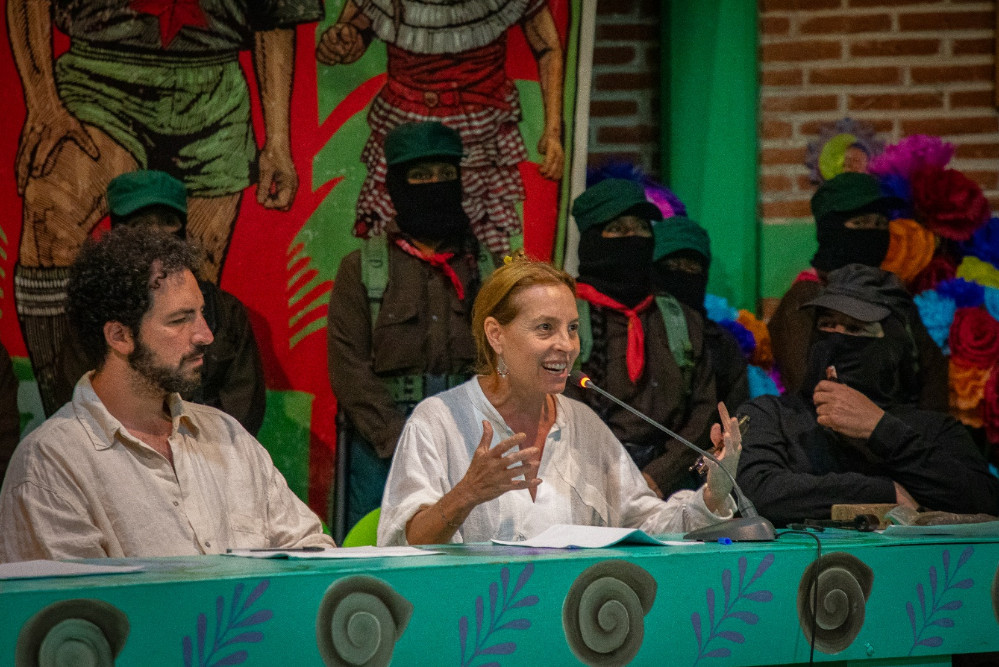
O que encontrou naquela cena foi uma forma de presença e coletividade que confrontava algumas das coisas que o teatro profissional costuma proclamar e que, às vezes, consegue praticar com muito mais dificuldade. Sua reflexão voltou então a uma convicção que a acompanha há décadas: fazer teatro como trincheira contra o intolerável.
O intolerável aparece quando a crueldade começa a se tornar normal. Quando uma imagem de guerra sucede a outra. Quando um corpo desaparecido se transforma em número. Quando a violência perde a capacidade de comocionar.
O teatro pode atuar justamente contra essa anestesia. Colocar um corpo diante de outro. Sustentar o olhar. Tornar difícil desviar-se. Permitir que aquilo que acontece com outra pessoa volte a nos afetar. Mas Marina levou essa pergunta também para aqueles que fazemos arte e para as posições a partir das quais tentamos acompanhar as lutas. Lembrou uma frase que durante anos havia usado para explicar seu trabalho: queria fazer teatro para “dar voz a quem não a tem”.
E então a corrigiu.
“Faço teatro para mudar a mim mesma”, disse. Aquelas pessoas a quem queria dar voz “têm voz, e uma voz muito potente”. A tarefa pode consistir em contribuir para que essa voz reverbere, começando por transformar a própria consciência. A diferença é profunda.
A arte deixa de se colocar diante de outras pessoas como instrumento encarregado de representá-las e começa a perguntar o que precisa mudar em quem olha, escuta, acompanha ou cria.
Ao final de sua intervenção, Marina relacionou essa reflexão às mães que buscam seus desaparecidos e ao país atravessado pelos desaparecimentos. A palavra teatral pode então se transformar em lamento público, denúncia, memória e abraço.
A cena adquire sentido quando abre espaço para escutar uma voz que já existe.
Acompanhar sem apagar
Diego del Río começou praticamente onde Marina havia terminado. Ele e David Gaytán haviam participado, durante a manhã, de uma parte do ensaio com os jovens zapatistas. Diego reconheceu que a experiência de atuar junto com eles, ainda que por alguns minutos, havia modificado sua própria percepção do presente.
Diego del Río (Baixe o áudio aqui)
Eles haviam feito parte da onda. Por um instante, precisaram coordenar seus corpos com muitos outros corpos. Sentir quando se mover. Quando parar. Quando seguir o impulso coletivo. E como fazer parte de uma ação maior sem desaparecer dentro dela. Essa relação reapareceu depois em uma frase proveniente de outra experiência teatral de Diego: “Acompanhar um corpo não significa apagar sua autonomia”.
A frase podia ser ouvida de muitas maneiras naquela mesa.
No teatro, dirigir pode significar acompanhar uma busca e deixar espaço para que quem atua produza algo irredutivelmente próprio. Em uma comunidade, o coletivo pode adquirir forma sem cancelar a singularidade. Em uma relação de solidariedade, acompanhar pode exigir abandonar a pretensão de conduzir aquilo que pertence aos outros.
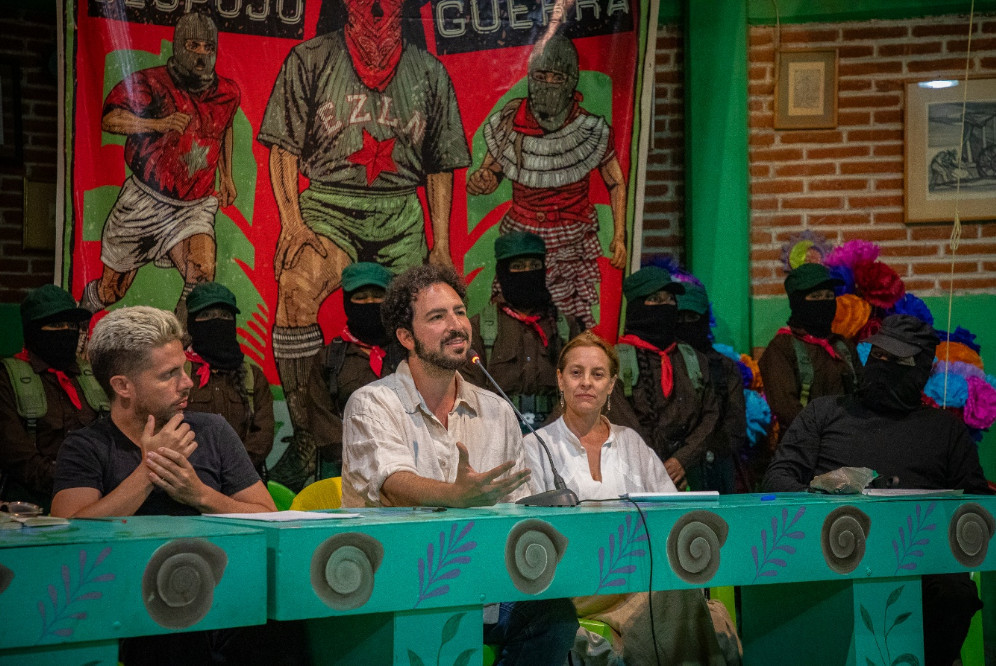
Diego também falou sobre os rituais teatrais. Entrar. Preparar a atenção. Respirar. Encerrar uma apresentação. Guardar o figurino. Despedir-se do espaço.
O teatro precisa desses limiares porque trabalha com presenças. Algo começa quando vários corpos concordam em prestar atenção à mesma coisa e algo termina quando essa energia volta a se dispersar.
Naquela manhã, a quadra havia funcionado exatamente assim. Sem cortina nem poltronas. Sem uma separação estável entre palco e mundo. O espaço se transformou temporariamente em outra coisa porque centenas de pessoas concordaram em habitá-lo como teatro.
O prazer de se organizar
David Gaytán voltou de maneira ainda mais explícita àquela experiência.
David Gaytán (Baixe o áudio aqui)
Falar de teatro sob assédio, disse, exige voltar de vez em quando a uma pergunta elementar: por que fazer teatro?
A profissão oferece inúmeros motivos materiais para desistir: precariedade, pouco reconhecimento, exposição permanente, uma relação absurda entre o tempo investido e a recompensa econômica. Sua resposta foi pensar o teatro como serviço social. E, a partir daí, falar do prazer. O prazer de uma ideia. O prazer do corpo se expressando. O prazer de se mover junto com outras pessoas. O prazer de se coordenar. O prazer de se organizar.
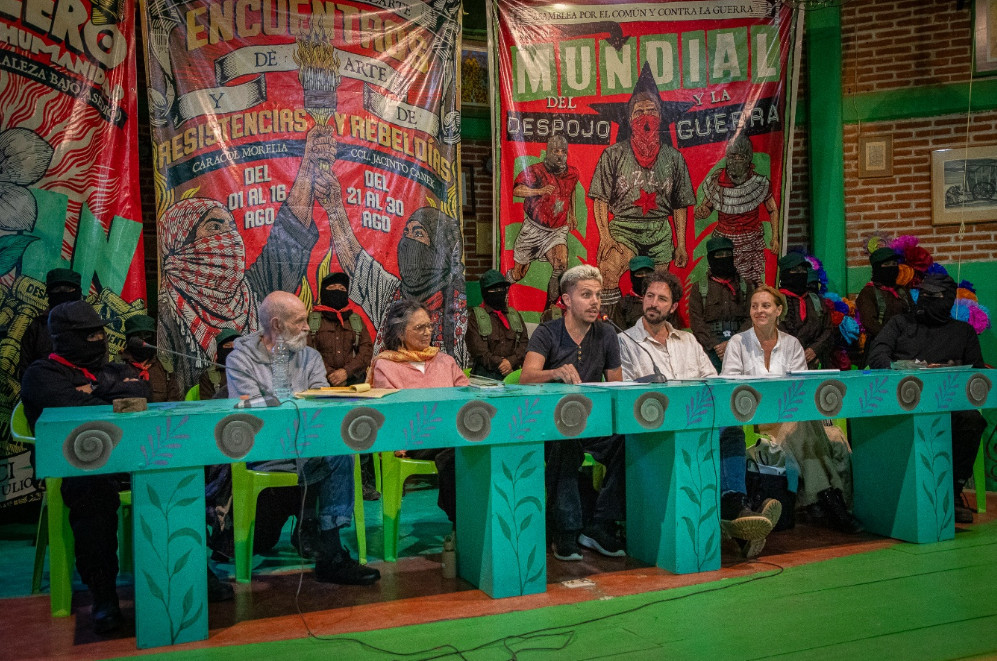
Quando descreveu a manhã, as fotografias pareciam adquirir movimento outra vez.
David lembrou “o prazer de ser uma onda em estado de caos para depois ser um mar de corpos organizados” que explode quatro vezes em uníssono. Também lembrou algo aparentemente insignificante: discutir onde e qual deveria ser o tamanho dos furos nas faixas, para que o vento não impedisse a leitura das frases.
Ali estava o teatro. Na palavra de ordem e no corpo. No tecido e no vento. Na decisão coletiva sobre como fazer com que uma palavra continuasse visível. David formulou então uma das ideias que melhor explicam o que havia acontecido durante o dia: “Fazer uma peça de teatro é a possibilidade de ensaiar a convivência”.
Ensaiar deixa de significar apenas repetir uma cena até executá-la corretamente. Ensaiar é experimentar relações. Distribuir responsabilidades. Escutar divergências. Resolver erros. Aceitar lideranças temporárias. Corrigir uma decisão. Começar outra vez.
A partir dessa perspectiva, a frase que aparecia pela manhã — “Regulamento da comunidade” — adquire uma densidade diferente. O dia seguinte precisa de regras porque a convivência também precisa ser ensaiada. Outra faixa dizia “Assembleia”. Outra, “Governo em comum”. O futuro se construía ali como verbo. Perto do encerramento, David condensou sua intervenção em várias frases: “É preciso fazer obras que sejam oxigênio”. É preciso provocar e agitar a verdade. E, sobretudo: “É preciso nos organizarmos”.
A alegria de fazer algo que nos transcende
Ofelia Medina tomou a palavra por último. Sua intervenção percorreu boa parte de sua vida entre arte, teatro, dança e organização política. Lembrou a formação artística pública de sua infância, o movimento estudantil de 1968, anos de trabalho com povos indígenas, o levante zapatista e as redes de artistas e da sociedade civil que começaram a se organizar depois de janeiro de 1994. Mas todo esse percurso desembocou em uma afirmação muito simples: “Ser comunidade, ser em comum e agir coletivamente. Isso é o futuro”.
Ofelia Medina (Baixe o áudio aquí)
Ofelia voltou então ao que Moisés tinha explicado no início. Antes de fazer uma obra, as pessoas se perguntam o que estão fazendo e para quê. Depois decidem sobre o que ela tratará. Depois criam.
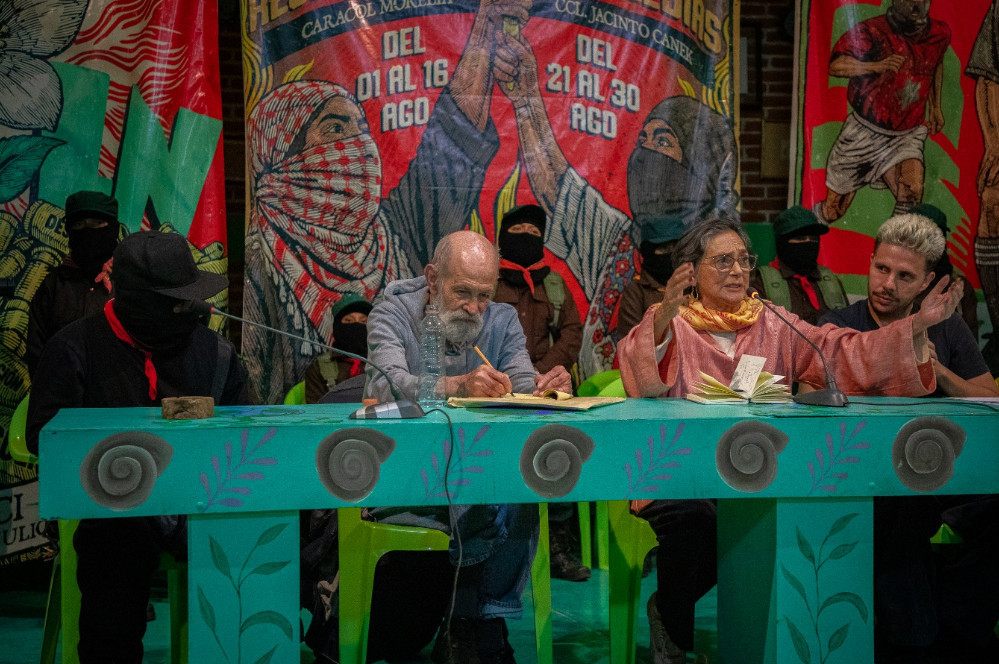
A prática artística em comum compartilha, assim, algo com outras formas de organização comunitária: começa por produzir acordos em torno de uma necessidade ou de um desejo. Diante de uma ideia de arte organizada em torno do indivíduo excepcional, da assinatura, do sucesso e do mercado, Ofelia defendeu outra experiência: criar com outras pessoas, discutir, até mesmo brigar, resolver e continuar. Ao final, voltou a uma palavra que também havia atravessado as jornadas anteriores: alegria.
“O teatro é um ritual”, disse. Quando perde essa dimensão, corre o risco de se transformar simplesmente em mais uma parte do comércio. E então: “A alegria coletiva é o que se produz aqui”.
A afirmação adquiriu imediatamente uma dimensão política. Ofelia falou do assédio atual, da violência que atravessa o país e do encontro que o zapatismo vem propondo com coletivos de mães, mulheres e homens que buscam seus desaparecidos. Esse encontro faz parte dos objetivos anunciados pela Comissão Sexta para sua viagem à Cidade do México: escutá-los, tornar-se eco de suas demandas e levar-lhes o abraço coletivo dos povos zapatistas.
A alegria de que se falava naquela noite estava longe de ser uma fuga. Era a possibilidade de continuar produzindo comunidade em um mundo que trabalha constantemente para rompê-la.
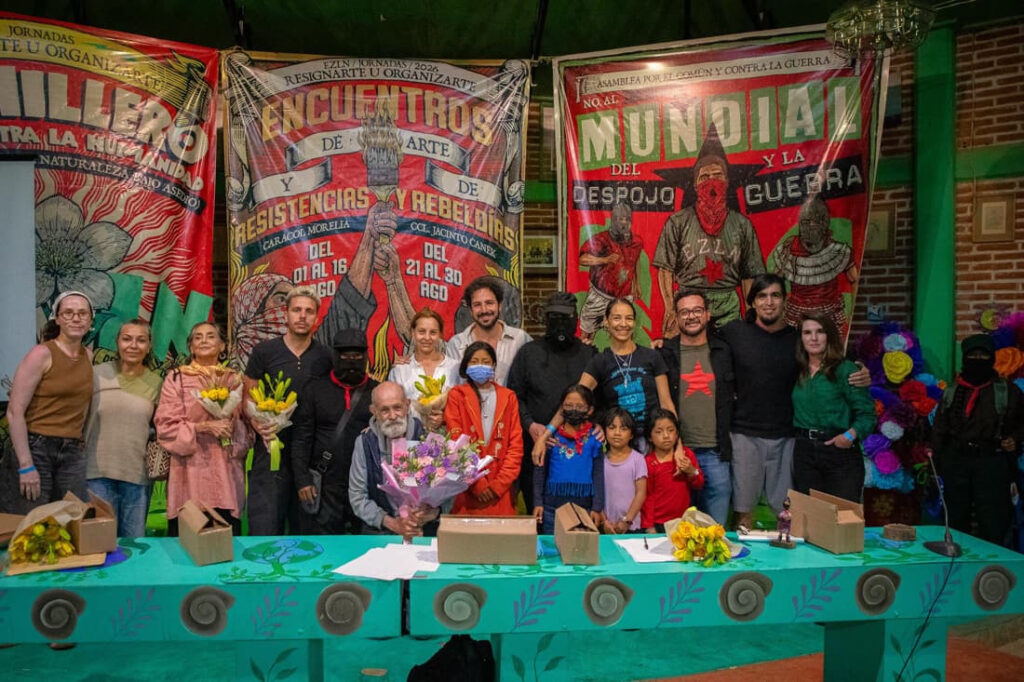
Ensaiar o dia seguinte
Pela manhã, uma faixa havia afirmado algo que ainda era impossível verificar: “Todas e todos somos sobreviventes do que era o capitalismo, e agora nos organizamos sem ele”. O capitalismo estava escrito no passado. Ao redor, centenas de jovens começavam a construir o futuro com seus corpos. Havia assembleia. Cuidados. Problemas. Autogoverno. Violências que precisavam ser enfrentadas. Uma discussão sobre a propriedade. Pessoas que precisavam chegar a acordos. Aquilo que aparecia na quadra podia ser entendido como uma ficção. E justamente por isso podia funcionar como ensaio. A ficção permite colocar um corpo diante de uma pergunta antes que exista a resposta.
Moisés havia explicado que é assim também que suas obras são construídas: surge uma ideia, ela é discutida, experimentada, viaja aos Caracoles, recebe novas contribuições, é corrigida, retorna e volta a ser ensaiada. O dia seguinte parecia seguir o mesmo método.
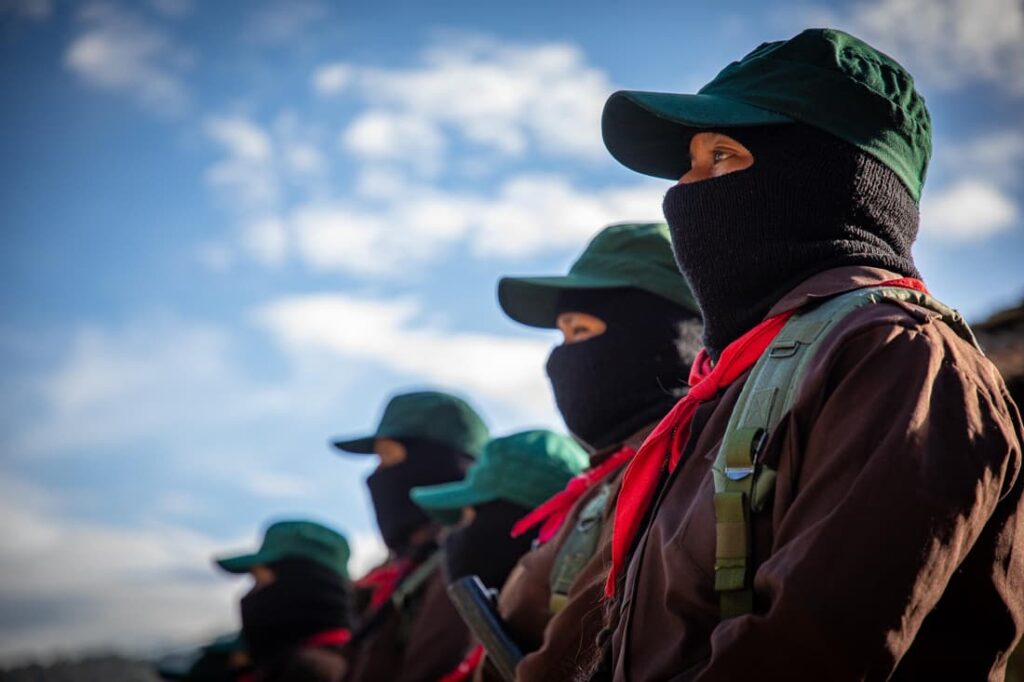
Tavira pensou nisso como uma possibilidade ainda desconhecida.
Marina encontrou ali uma forma de presença capaz de transformar primeiro quem participa.
Diego falou sobre acompanhar corpos preservando sua autonomia.
David sentiu uma onda caótica se transformar em um mar organizado.
Ofelia nomeou a alegria de produzir algo coletivamente.
E o Capitão Marcos observou algo talvez mais difícil de perceber de longe: uma obra feita por grupos que pareciam dispersos podia adquirir forma sem que uma única voz precisasse se impor sobre todas as demais.
A cena daquela manhã continha, então, algo mais do que uma representação do futuro. Era uma prática do presente. Eles se corrigiam. Voltavam a começar, desta vez todos juntos.
Talvez o dia seguinte se pareça menos com uma imagem acabada do que com aquele ensaio. Uma comunidade perguntando a si mesma como quer viver. Experimentando e errando. Corrigindo. Discutindo e voltando a se organizar.
Luis de Tavira havia dito algumas horas antes que a esperança consiste em esperar atentamente aquilo que ainda não sabemos.
Na quadra, enquanto os corpos se moviam sob uma faixa onde o capitalismo já pertencia ao passado, essa espera deixara de ser imóvel.
Durante alguns minutos, o futuro ensaiou-se.