[:es]
Tercera Parte: Dení.
Decía el finado SupMarcos que no se podían entender las razones del alzamiento sin conocer antes la historia de Paticha, la niña menor de 5 años que se le murió en brazos por falta de una pastilla para la fiebre. Yo ahora les digo que no podrán entender lo que luego les explicará con detalle el Subcomandante Insurgente Moisés si no conocen la historia de Dení.
Dení es una niña indígena, de sangre y raíz maya. Es hija de una insurgenta y un insurgente indígenas zapatistas. Cuando nació, hará hace unos 5 años, le pusieron ese nombre para honrar la memoria de una compañera que murió hace muchos años.
A Dení la conoció el finado SupGaleano cuando era un Patz. O sea un tamalito, por lo gorda que estaba. De hecho, así le decía el Sup: “Patz”. Ahora es flaquita, porque anda de un lado para otro. Dení, cuando las insurgentas se reúnen para hacer un trabajo, se pone, según ella, a darles clases de salud autónoma. Y dibuja unos garabatos que, según explicó luego, son unas promotoras de salud. Ella dice que son mejores las promotoras porque luego los hombres no entienden de “como mujeres que somos”. Sostiene firmemente que, para ser promotora de salud, tiene que vas a saber inyectar pero que no te duela. “Porque, ¿qué tal que necesitas inyección y no quieres porque te duele?”
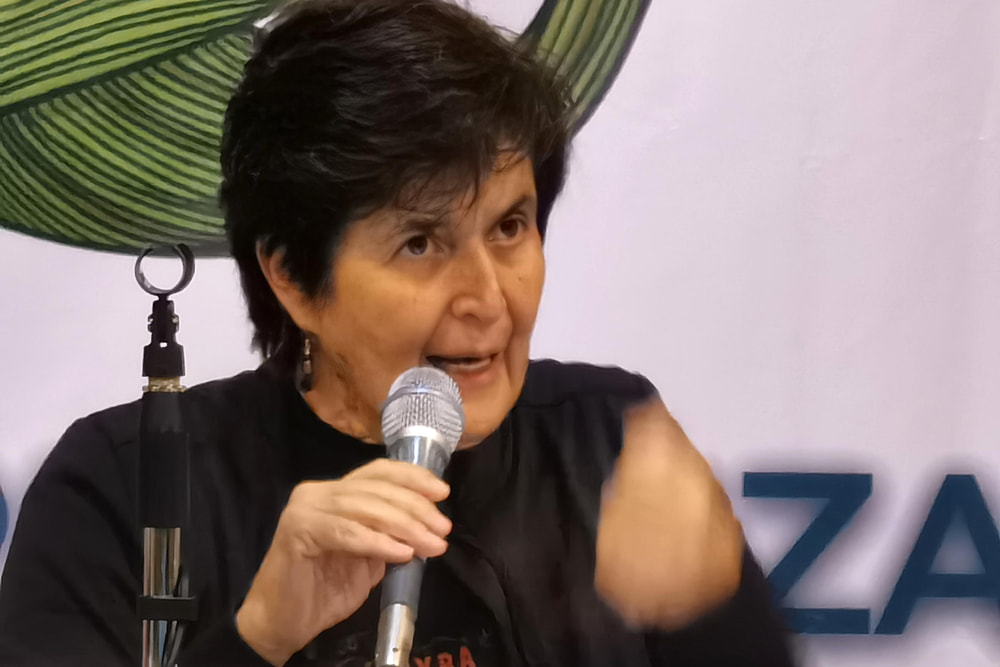
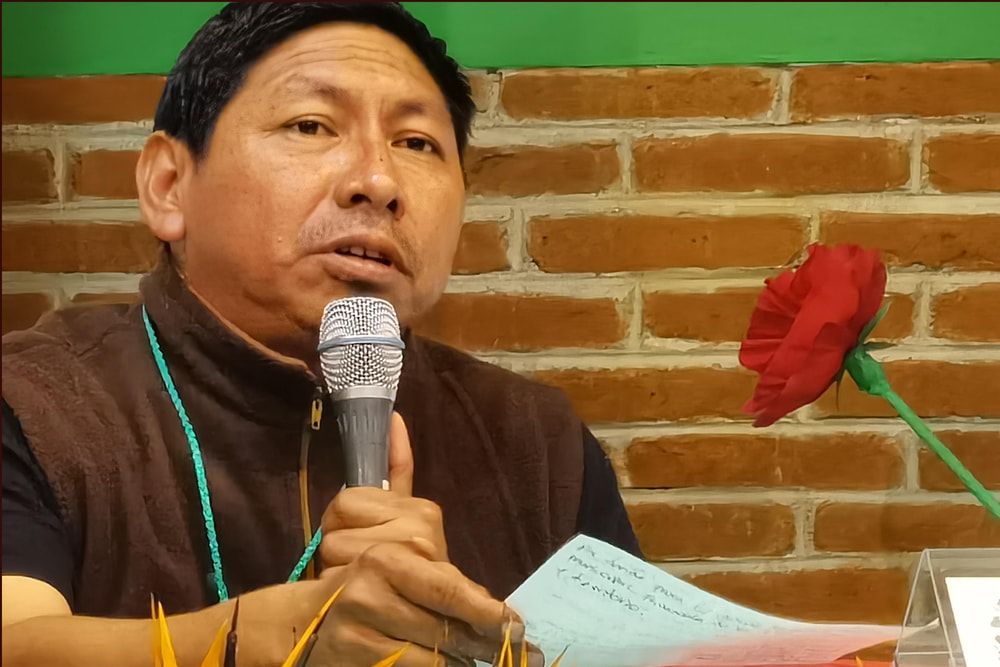
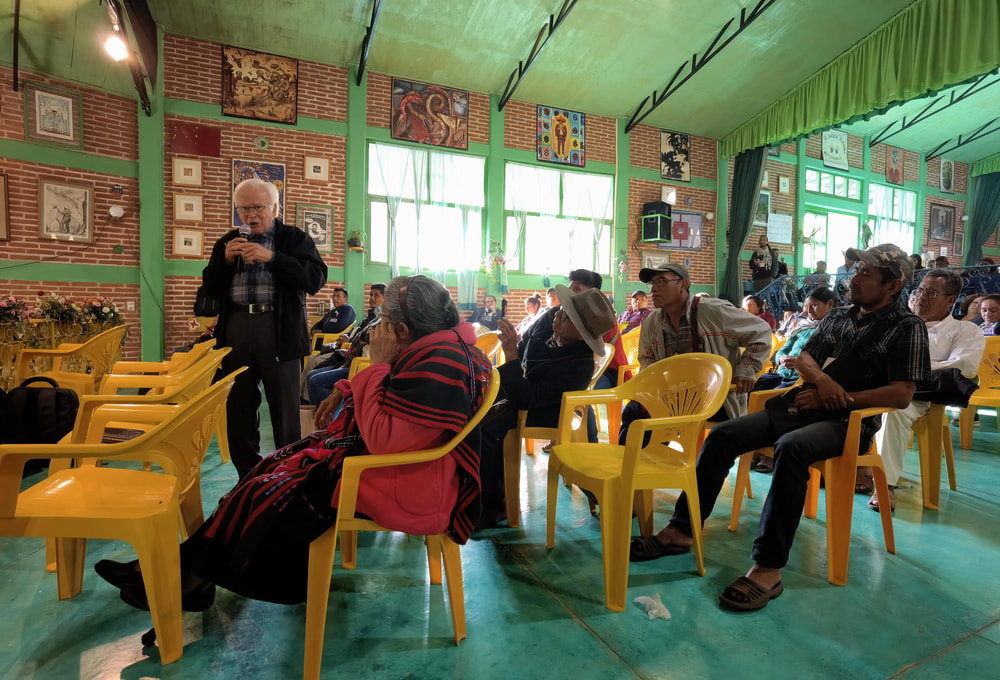
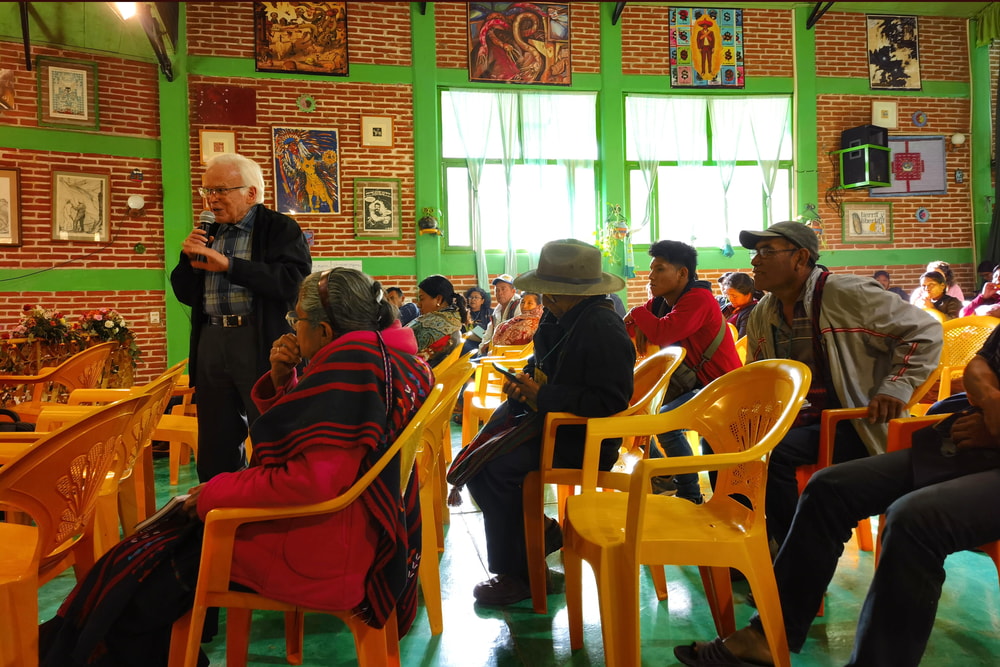
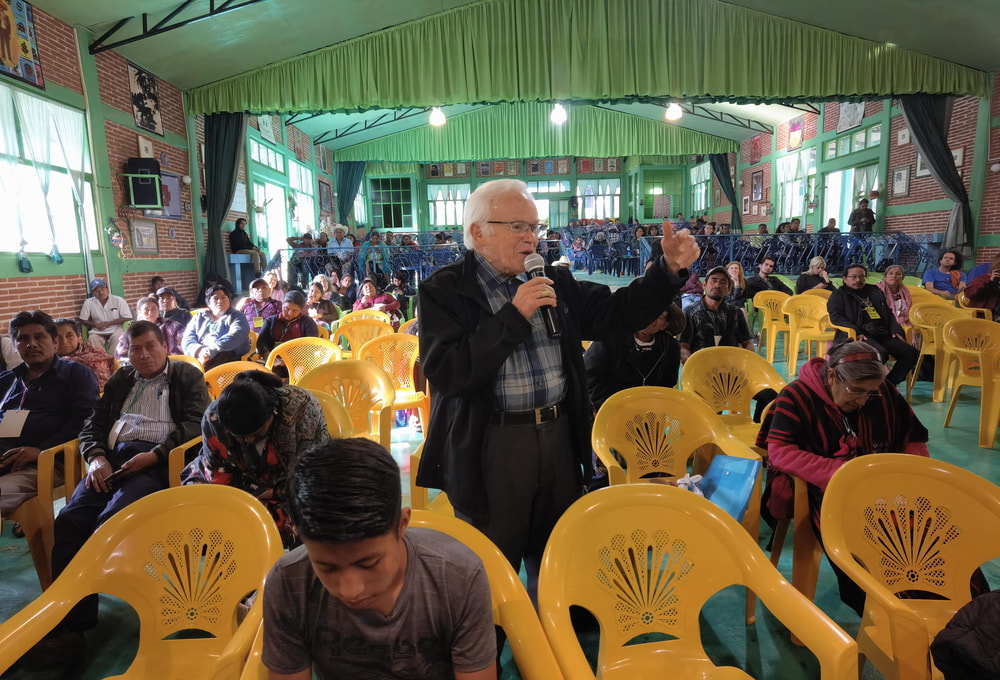
Ahora estamos en una reunión de las jefas y jefes zapatistas. El padre y la madre de Dení no están presentes, pero la niña llegó siguiendo al Tzotz y a la Pelusa, que están echados a los pies del Subcomandante Insurgente Moisés y, al parecer, están atentos a lo que se dice.
Alguien está explicando:
“Aquí está presente Dení y ella es, digamos, la primera generación. Dentro de 20 años, Dení va a tener una cría mujer y le va a poner de nombre “Denilita”, ella sería la segunda generación. Denilita, 20 años después, va a concebir una niña que se va a llamar “Denilitilla”, es la tercera generación. Denilitilla, llegada a sus 20 años, va a procrear una niña que se va a llamar “Denilititilla”, sería la cuarta generación. Denilititilla, al cumplir los 20, va a parir una niña y la va a llamar “Denilí”, la quinta generación. Denilí a los 20 años de edad, va a tener una niña que se va a llamar “Dení Etcétera”, que viene siendo la sexta generación. Dení Etcétera, 20 años después, o sea dentro de 120 años, va a tener una niña que no alcanzamos a ver qué nombre tiene, porque ya está retirado su nacimiento en el calendario, pero ella es la séptima generación.”
Aquí interviene el Subcomandante Insurgente Moisés: “Entonces nosotros tenemos que luchar para que esa niña, que va a nacer en 120 años, sea libre y sea lo que le dé la gana ser. Entonces no estamos luchando para que esa niña sea zapatista o partidista o lo que sea, sino que ella pueda elegir, cuando tenga juicio, cuál es su camino. Y no sólo que pueda decidir libremente, también y, sobre todo, que se haga responsable de esa decisión. Es decir, que tome en cuenta que todas las decisiones, lo que hacemos y lo que dejamos de hacer, tienen consecuencias. Entonces se trata de que esa niña crezca con todos los elementos para tomar una decisión y para hacerse responsable de sus consecuencias.
O sea que no le eche la culpa al sistema, a los malos gobiernos, a sus papás y mamás, a sus familiares, a los hombres, a su pareja (sea hombre o mujer o lo que sea), a la escuela, a sus amistades. Porque eso es la libertad: poder hacer algo sin presiones u obligado, pero respondiendo de lo que se hizo. O sea sabiendo las consecuencias desde antes.”
El SubMoy voltea a mirar al ahora difunto SupGaleano, como diciendo “te toca”. El difunto que todavía no es difunto (pero que ya sabe que pronto lo será), prevé que algún día habrá que platicar eso a extraños e inicia:
“¿Esa Dení a la N Potencia ya no hablará mal de los pinches hombres? Sí lo va a hacer, como de por sí. Pero no van a ser sus argumentos que porque se burlaron de ella, la despreciaron, la violentaron, la acosaron, la violaron, la golpearon, la desaparecieron, la asesinaron, la descuartizaron. No, va a ser por cosas y asuntos normales, como que el pinche hombre echa pedos en la cama y apesta la cobija; o que no le atina a la taza del baño; o que eructa como becerro; o que se compra la playera de su equipo favorito, se pone pantalones cortos, calcetas y zapatos especiales de fútbol, para luego sentarse a ver los partidos mientras se atasca de palomitas con harta salsa picante; o que pone mucho cuidado en elegir el “outfit” que va a usar por décadas: su playera preferida, sus pants favoritos, y sus chanclas predilectas; o porque no suelta el control de la televisión; o que no le dice que la quiere, aunque ella sabe que la quiere, pero no sobra un recordatorio de vez en cuando.”
Entre quienes escuchan, las mujeres mueven afirmativamente la cabeza como diciendo “de por sí”; y los varones sonríen con nerviosismo.
El SubMoy sabe que es su maña del SupGaleano y que ahora va a pasar, en lo que se llama “solidaridad de género”, a mal hablar de las mujeres, así que interrumpe justo cuando el ahora finado está diciendo: “Pero es que las mujeres…”
“Bueno”, dice el SubMoy, “ahora estamos hablando de una niña que va a nacer dentro de 120 años y nos vamos a concentrar en eso”. El que intuye que será finado se sienta, lamentando no haber podido exponer su brillante tesis contra las mujeres. El SubMoy continúa:
“Entonces tenemos que pensar en esa niña. Ver lejos, pues. Y, mirando eso que parece muy lejano, hay que ver qué tenemos que hacer para que esa niña sea libre.
Y esto es importante porque ya tenemos encima la tormenta. La misma de la que advertimos hace casi 10 años. Lo primero que vemos es que la destrucción viene más rápido. Lo que pensamos que pasaría dentro de 10 años, ya está aquí.
Ustedes lo han explicado ya aquí. Nos han contado lo que ven en sus zonas Tzeltal, Tzotzil, Cho´ol, Tojolabal, Mame, Zoque, Quiché. Saben ya lo que está pasando con la madre tierra porque viven y trabajan en ella. Saben que está cambiando el tiempo. “El clima”, como dicen los ciudadanos. Que llueve cuando no toca, que está la seca cuando no toca. Y así. Saben que las siembras ya no se pueden decidir como nuestros anteriores, porque el calendario viene chueco, cambiado pues.
Pero no sólo. También vemos que los comportamientos de los animales cambiaron, aparecen en zonas que no es su costumbre y en temporadas que no les toca. Aquí y en las geografías de pueblos hermanos, aumentan los que llaman “desastres naturales” pero que son consecuencia de lo que hace y deja de hacer el sistema dominante, o sea el capitalismo. Hay lluvias, como de por sí, pero ahora son más fieras y en lugares y temporadas que no son las de antes. Hay sequías muy terribles. Y ahora pasa que, en una misma geografía – por ejemplo aquí en México-, en un lado hay inundaciones y en otro hay sequía y se quedan sin agua. Hay fuertes vientos que es como si el viento se pusiera bravo y dijera su “ya basta” y quiere tumbar todo. Hay temblores, volcanes, plagas como nunca antes. Como si la madre tierra dijera que hasta aquí nomás, que ya no. Como si la humanidad fuera una enfermedad, un virus que hay que sacar afuera vomitando destrucción.
Pero, además de que se ve que la madre tierra está como inconformada, como protestando, pues está lo más peor: el monstruo, la Hidra, el capitalismo, que está como loco robando y destruyendo. Ahora quiere robarse lo que antes no le importaba y sigue destruyendo lo poco que queda. El capitalismo ahora produce la miseria y a quienes huyen de ella: los migrantes.
La Pandemia del COVID, que todavía sigue, mostró la incapacidad de todo un sistema para dar una explicación real y para tomar las medidas necesarias. Mientras morían millones, unos pocos se hicieron más ricos. Ya se asoman otras pandemias y las ciencias ceden el paso a las pseudo ciencias y las charlatanerías convertidas en proyectos políticos de gobierno.
Vemos también lo que llamamos el Crimen Desorganizado, que son los mismos malos gobiernos, de todos los partidos políticos, que se esconden y se pelean por el dinero. Este Crimen Desorganizado es el principal traficante de drogas y personas; el que se queda con la mayor parte de los apoyos federales; el que secuestra, asesina, desaparece; el que hace negocio con la ayuda humanitaria; el que extorsiona, amenaza y cobra derecho de piso con impuestos que son para que un candidato o candidata digan que ahora sí van a cambiar las cosas, que ahora sí se van a portar bien.
Vemos a pueblos originarios hermanos que, cansados de desprecios, burlas y mentiras, se arman para defenderse o para atacar a los caxlanes. Y los ciudadanos espantándose, siendo que ellos mismos, con su modo de mierda, alimentaron ese odio que ahora sufren y que ya no tiene control. Como en la soberbia Jovel, cosechan lo que sembraron.
Y también vemos con tristeza que pelean mismo entre indígenas de mismas sangre y lengua. Pelean entre sí por tener los miserables apoyos de los malos gobiernos. O por quitarse lo poco que tienen o que llega. En lugar de defender la tierra, pelean por limosnas.
-*-
Todo esto se lo avisamos a los ciudadanos y a los originarios hermanos hace casi 10 años. Habrá quién hizo caso, y hay muchos que ni en cuenta. Como que vieron y ven todavía como que todo ese horror les queda muy lejos, en tiempo y en distancia. Como que sólo ven lo que tienen enfrente. No ven más lejos. O ven, pero no les importa.
Como ya sabemos, en todos estos últimos años, nos hemos estado preparando para esta oscuridad. 10 años llevamos preparándonos para estos días de dolor y de pena para quienes somos todos los colores que somos de la tierra. 10 años revisando autocríticamente lo que hacemos y lo que no hacemos, lo que decimos y callamos, lo que pensamos y miramos. Nos hemos preparado a pesar de traiciones, calumnias, mentiras, paramilitares, cercos informativos, desprecios, rencores y ataques de quienes nos reprochan no obedecerlos.
En silencio lo hicimos, sin bullas, tranquilos y serenos porque miramos lejos, como de por sí nos enseñaron nuestros anteriores. Y allá afuera gritándonos que miremos aquí nomás, sólo un calendario y una geografía. Muy pequeñito lo que nos quieren hacer mirar. Pero como zapatistas que somos, nuestro mirar es del tamaño de nuestro corazón, y nuestro caminar no es de un día, un año, un sexenio. Nuestro paso es largo y deja huella, aunque no se mire ahorita o ignoren y desprecien nuestro camino.
La sabemos bien que no ha sido fácil. Y ahora está más peor todo, y como quiera debemos mirar a esa niña dentro de 120 años. O sea que tenemos que luchar por alguien que no vamos a conocer. Ni nosotros, ni sus hijos, ni los hijos de sus hijos, y así. Y tenemos que hacerlo porque es nuestro deber como zapatistas que somos.
Vienen muchas desgracias, guerras, inundaciones, sequías, enfermedades, y en medio del colapso tenemos que mirar lejos. Si los migrantes ahora son miles, pronto serán decenas de miles, después cientos de miles. Vienen peleas y muerte entre hermanos, entre padres e hijos, entre vecinos, entre razas, entre religiones, entre nacionalidades. Arderán las grandes construcciones y nadie sabrá decir por qué, o quién, o para qué. Aunque parece que ya no, pero sí, se va a poner peor.
Pero, así como cuando trabajamos la tierra, desde antes de la siembra, vemos la tortilla, los tamales, el pozol en nuestras casas, así tenemos que ver ahora a esa niña.
Si no miramos a esa niña que ya está con su mamá, pero dentro de 120 años, entonces no vamos a entender lo que estamos haciendo. No lo vamos a poder explicar a nuestros mismos compañeros. Y mucho menos lo van a entender los pueblos, organizaciones y personas hermanas de otras geografías.
Ya podemos sobrevivir a la tormenta como comunidades zapatistas que somos. Pero ahora se trata no sólo de eso, sino de atravesar ésta y otras tormentas que vienen, atravesar la noche, y llegar a esa mañana, dentro de 120 años, donde una niña empieza a aprender que ser libre es también ser responsable de esa libertad.
Para eso, mirando esa niña allá a los lejos, vamos a hacer los cambios y ajustes que hemos estado discutiendo y acordando en común en estos años, y que ya consultamos con todos los pueblos zapatistas.
Si alguien piensa que vamos a recibir un premio, o una estatua, o un museo, o unas letras de oro en la historia, o paga, o agradecimiento; pues ya va siendo hora de que busque por otro lado. Porque lo único que vamos a recibir es que, cuando ya vamos a morir, podremos decir “hice mi parte” y saber que no es mentira.
-*-
Quedó en silencio el Subcomandante Insurgente Moisés, como esperando que alguien saliera. Nadie lo hizo. Siguieron discutiendo, aportando, planeando. Llegó la hora de la comida y llegaron a preguntar que cuándo van a parar para descansar.
El Subcomandante Insurgente Moisés respondió: “Al rato, dentro de 120 años”.
-*-
Les voy a ser sincero, como de por sí. Yo, el capitán, puedo soñar con ese momento en que una niña nace sin miedo, que es libre y que se hace responsable de lo que hace y de lo que no hace. Puedo también imaginarlo. Incluso podría escribir un cuento o una historia de eso. Pero estas mujeres y hombres que tengo enfrente y a un lado, indígenas zapatistas todos de raíz maya, mis jefas y jefes, no sueñan, ni imaginan a esa niña. Ellos y ellas la ven, la miran. Y saben lo que tienen qué hacer para que esa niña nazca, camine, juegue, aprenda y crezca en otro mundo… dentro de 120 años.
Como cuando miran la montaña. Hay en su mirada algo, como si miraran más allá en el tiempo y en el espacio. Miran la tortilla, los tamales y el pozol en la mesa. Y saben que no es para ellos, sino para una niña que ni siquiera está en la intención de quienes serán sus padres, porque no han nacido. Ni ellos, ni los padres de ellos, ni sus abuelos, ni sus bisabuelos, ni sus tatarabuelos, y así hasta 7 generaciones. Siete generaciones que empiezan a contar desde esta Dení, la Dení Primera Generación.
A fe mía que lo vamos a lograr. Sólo que vamos a tardar un poco de tiempo, pero no mucho tampoco.
Apenas poco más de un siglo.
Desde las montañas del sureste mexicano.

Capitán Insurgente Marcos.
México, noviembre del 2023.
P.D.- Cada bomba que cae en Gaza, cae también en las capitales y las principales ciudades del mundo, sólo que todavía no se han dado cuenta. De los escombros nacerá el horror de la guerra de mañana.
P.D. VARIAS GUERRAS ANTES (la víspera, hace casi 120 años):
– “¿No sería mejor declarar la guerra francamente?
El profesor contestó con sencillez: -Nuestro Gobierno quiere, sin duda, que sean los otros los que la declaren. El papel de agredido es siempre el más grato y justifica todas las resoluciones ulteriores, por extremadas que parezcan. Allá tenemos gentes que viven bien y no desean la guerra. Es conveniente hacerles creer que son los enemigos los que nos la imponen, para que sientan la necesidad de defenderse. Sólo los espíritus superiores llegan a la convicción de que los grandes adelantos únicamente se realizan con la espada, y que la guerra, como decía nuestro gran Treitschke, es la más alta forma del progreso.” Los Cuatro Jinetes del Apocalipsis (1916). de Vicente Blasco Ibáñez (España 1867-1928).
[:en]
Third Part: Deni
The late SupMarcos said that the reasons for the uprising could not be understood without first knowing the story of Paticha, the girl under 5 years old who died in his arms due to lack of a fever pill. I now tell you that you will not be able to understand what Insurgent Subcommander Moisés will later explain to you in detail if you do not know the history of Deni.
Dení is an indigenous girl, of Mayan blood and Mayan roots. She is the daughter of an “insurgenta” and an “insurgente” indigenous Zapatistas. When she was born, about 5 years ago, they gave her that name to honor the memory of a woman comrade who died many years ago.
The late SupGaleano met Dení when she was a Patz. In other words, a tamalito, because of how fat she was. In fact, that’s what the Sup called her: “Patz.” Now she is skinny, because she walks from one place to another. When the insurgents meet to do a job, Dení begins, according to her, to give them autonomous health classes. And she draws some doodles that, as she later explained, are health promoters. She says that female promoters are better because from time to time, men do not understand “as women that we are.” She firmly posits that, to be a health promoter, one has to know how to inject in a way that does not hurt. “Because, what if you need an injection and you don’t want to, because it hurts?”
Now we are in a meeting of the Zapatista leaders. Dení’s father and mother are not present, but the girl arrived following Tzotz and Pelusa, who are lying at the feet of Subcomandante Insurgente Moisés and, apparently, are paying attentiont to what is being said.
Someone is explaining:
“Deni is present here and she is, let’s say, the first generation. In 20 years, Dení will have a female offspring and she will name her “Denilita”, she would be the second generation. Denilita, 20 years later, is going to conceive a girl who will be called “Denilitilla”, she is the third generation. Denilitilla, now 20 years old, is going to have a girl who will be called “Denilititilla”, she would be the fourth generation. Denilititilla, when she turns 20, will give birth to a girl and will call her “Denilí”, the fifth generation. At 20 years old, Denilí is going to have a girl who will be called “Dení Etcétera”, she is the sixth generation. «Deni Etcetera, 20 years later, that is, in 120 years, will have a girl whose name we cannot see, because her birth date has already been removed from the calendar, but she is the seventh generation.»
Here Subcomandante Insurgente Moisés intervenes: “So we have to fight so that that girl, who is going to be born in 120 years, is free and is whatever she wants to be. So we are not fighting for that girl to be a Zapatista or a ‘partidista’ or whatever, but rather for her to be able to choose, when she has judgment, what her path is. And not only that she can decide freely, but also and, above all, that she takes responsibility for that decision. That is, take into account that all decisions, what we do and what we don’t do, have consequences. So, this is about that girl is able to grow up with all the elements to make a decision and to take responsibility for its consequences.
That is to say, that she doesn´t blame the system, the bad governments, her parents, her relatives, the men, her partner (whether male or female or whatever), the school, her friendships. Because that is freedom: being able to do something without pressure or obligation, but being responsible for what was done. In other words, knowing the consequences beforehand.”
SubMoy turns to look at the now deceased SupGaleano, as if to say “your turn.” The deceased who is not yet deceased (but who already knows that he will soon be), foresees that one day he will have to talk about this to strangers and begins:
“Will that Deni to the N Power no longer speak ill of the darned men? Yes, she is going to do it, as usual. But her arguments will not be that because they made fun of her, despised her, violented her, harassed her, raped her, beat her, disappeared her, murdered her, dismembered her. No, it’s going to be because of normal things and issues, like the darned man farting in the bed and stinking the blanket; or that he doesn’t hit the toilet bowl; or that he burps like a calf; or that he buys his favorite team’s shirt, puts on shorts, socks, and special soccer shoes, and then sits down to watch the games while stuffing himself with popcorn with lots of hot sauce; or that he takes great care in choosing the “outfit” that he will wear for decades: his favorite t-shirt, his favorite pants, and his favorite flip-flops; or because he doesn’t let go of the television control; or that he doesn’t tell her that he loves her, even though she knows that he loves her, but a little reminder is not bad from time to time.»
Among those listening, the women nod their heads affirmatively as if to say “well, yeah, as usual”; and the men smile nervously.
The SubMoy knows that it is SupGaleano’s trick and that now he is going to start, in what he calls “gender solidarity”, to ill speak about women, so he interrupts him just when the now deceased is starting to say: “But the thing is that the women…»
“Well,” says SubMoy, “now we’re talking about a girl who’s going to be born in 120 years and we’re going to focus on that.” The one who senses that he will be dead sits down, regretting not having been able to present his brilliant thesis against women. The SubMoy continues:
“Then we have to think about that girl. To see far, pues. And, looking at what seems very far away, we need to see what we have to do for that girl to be free.
And this is important because the storm is already upon us. The same one we warned about almost 10 years ago. The first thing we see is that the destruction comes faster. What we thought would happen in 10 years is already here.
You have already explained it here. You have told us what you see in your Tzeltal, Tzotzil, Cho’ol, Tojolabal, Mame, Zoque, Quiché areas. You already know what is happening with Mother Earth because you live and work on it. You know that the weather is changing. “The climate”, as the citizens say. That it rains when it’s not the time for it, that it is dry when it’s not supposed to. And so. They know that sowings can no longer be decided like our previous ones did, because the calendar is crooked, changed, pues.
But not only. We also see that the animals’ behaviors have changed, they appear in areas that are not their custom and in seasons that are not their turn. Here and in the geographies of brother peoples, what they call “natural disasters” increase, but they are a consequence of what the dominant system, that is, capitalism, does and does not do. There is rain, as usual, but now it is fiercer and in places and seasons that are not the same as before. There are very terrible droughts. And now it happens that, in the same geography – for example here in Mexico -, on one side there are floods and on the other there is drought and they are left without water. There are strong winds, as if the wind became angry and said “ya basta” and wanted to knock everything down. There are earthquakes, volcanoes, plagues like never before. As if Mother Earth were saying that’s it, no more. As if humanity were a disease, a virus that must be taken outside, vomiting destruction.
But, in addition to seeing that Mother Earth is as if dissatisfied, as if protesting, there is the worst part: the monster, the Hydra, capitalism, which is like crazy stealing and destroying. He now wants to steal what he didn’t care about before and continues destroying the little that remains. Capitalism now produces misery and those who flee from it: migrants.
The COVID Pandemic, which is still ongoing, showed the inability of an entire system to give a real explanation and to take the necessary measures. While millions died, a few became richer. Other pandemics are already looming and the sciences give way to pseudo-sciences and quackery turned into political projects for government.
We also see what we call Disorganized Crime, which are the very same bad governments, from all political parties, that hide and fight over money. This Disorganized Crime is the main trafficker of drugs and people; the one who gets the majority of federal supports; the one who kidnaps, murders, disappears; the one who makes business with humanitarian aid; the one who extorts, threatens and collects “derecho de piso” with taxes that are used so that a candidate may say that now things are going to change, that now they are going to behave well.
We see brother indigenous peoples who, tired of scorn, mockery and lies, arm themselves to defend themselves or to attack the Caxlanes. And the citizens are getting scared, when it was them, with their shitty ways, who fueled that hatred that they now suffer and that no longer has control. Just as in the proud Jovel, they reap what they sow.
And we also see with sadness that they fight even among indigenous people of the same blood and language. They fight among themselves to get the miserable supports of bad governments. Or to take away from one another the little they have or that arrives. Instead of defending the land, they fight for alms.
-*-
We warned the citizens and the original brothers of all this almost 10 years ago. There will be those who paid attention, and there are many who did not even take us into account. As they saw and still see as if all that horror was very far away, in time and distance. As if they only saw what’s in front of them. They don’t see any further. Or they see, but they don’t care.
As we know, in all these past years, we have been preparing for this darkness. For 10 years we have been preparing for these days of pain and sorrow for those of us who are all the colors of the earth. 10 years self-critically reviewing what we do and what we don’t do, what we say and don’t say, what we think and look at. We have prepared ourselves despite betrayals, slander, lies, paramilitaries, information sieges, contempt, resentment and attacks from those who reproach us for not obeying them.
We did it in silence, without noise, calmly and serenely because we looked far away, as our previous ones taught us todo. And out there yelling at us to just look here, just a calendar and a geography. What they want to make us look at is very small. But as Zapatistas that we are, our gaze is the size of our heart, and our journey is not one day, one year, one six-year period. Our step is long and leaves a mark, even if we do not look at it now or ignore and despise our path.
We know well that it has not been easy. And now everything is worse, and anyway we must look at that girl in 120 years. In other words, we have to fight for someone we are not going to know. Neither us, nor her children, nor her children’s children, and so on. And we have to do it because it is our duty as Zapatistas that we are.
Many misfortunes are coming, wars, floods, droughts, diseases, and in the midst of collapse we have to look far away. If migrants now number in the thousands, soon they will be tens of thousands, then hundreds of thousands. Fights and death will come between brothers, between parents and children, between neighbors, between races, between religions, between nationalities. The great buildings will burn and no one will be able to say why, or who, or for what. Although it seems like not anymore, but yes, it’s going to get worse.
But, just as when we work the land, before planting, we see the tortilla, the tamales, the pozol in our homes, so we have to see that girl now.
If we don’t look at that girl who is already with her mother, but in 120 years, then we won’t understand what we are doing. We are not going to be able to explain it to our own colleagues. And much less will be understood by people, organizations and sister people from other geographies.
We can now survive the storm as Zapatista communities that we are. But now it is not only about that, but about going through this and other storms that will come, it’s about surviving the night, and reaching that morning, 120 years from now, where a girl begins to learn that being free is also being responsible for that freedom.
For that, looking at that girl there in the distance, we are going to make the changes and adjustments that we have been discussing and agreeing on together in these years, and that we have already consulted with all the Zapatista peoples.
If someone thinks that we are going to receive a prize, or a statue, or a museum, or some golden letters in history, or payment, or gratitude; well, it’s time for him to look elsewhere. Because the only thing we are going to receive is that, when we are about to die, we will be able to say “I did my part” and know that it is not a lie.
-*-
Subcomandante Insurgente Moisés remained silent, as if waiting for someone to walk out. Nobody did. They continued discussing, contributing, planning. Lunch time arrived and they came to ask when they were going to stop to rest.
Subcomandante Insurgente Moisés answered: “After a while, within 120 years.”
-*-
I’m going to be honest with you, as usual. I, the captain, can dream of that moment when a girl is born without fear, that she is free and that she takes responsibility for what she does and what she does not do. I can also imagine it. I could even write a short story or a tale about it. But these women and men that I have in front of me and by my side, Zapatista indigenous people all of Mayan roots, my bosses, do not dream or imagine that girl. They see her, they look at her. And they know what they have to do so that that girl is born, walks, plays, learns and grows in another world… in 120 years.
Just as clearly as when they look at the mountain. There is something in their gaze, as if they were looking beyond time and space. They look at the tortilla, the tamales and the pozol on the table. And they know that it is not for them, but for a girl who is not even in the intention of those who will be her parents, because they have not been born. Neither them, nor their parents, nor their grandparents, nor their great-grandparents, nor their great-great-grandparents, and so on up to 7 generations. Seven generations that begin to count from this Dení, the First Generation Dení.
I tell you, we are going to achieve it. It’s just that it’s going to take a little time, but not much either.
Just a little over a century.
From the mountains of the Mexican southeast.

Capitán Insurgente Marcos.
Mexico, November 2023.
P.S.- Every bomb that falls in Gaza also falls in the capitals and major cities of the world, it’s just yhat they haven’t realized it yet. From the rubble the horror of tomorrow’s war will be born.
P.S. SEVERAL WARS BEFORE (the day before, almost 120 years ago):
– “Wouldn’t it be better to declare war frankly?
The professor answered simply: -Our Government undoubtedly wants others to declare it. The role of the victim is always the most pleasant and justifies all subsequent decisions, no matter how extreme they may seem. Over there we have people who live well and do not want war. It is convenient to make them believe that it is the enemies who impose it on us, so that they feel the need to defend themselves. Only superior spirits come to the conviction that great advances are only achieved with the sword, and that war, as our great Treitschke said, is the highest form of progress.” The Four Horsemen of the Apocalypse (1916). by Vicente Blasco Ibáñez (Spain 1867-1928).[:]