[:es]Compartición de la Iniciativa y Colección Al Faro Zapatista
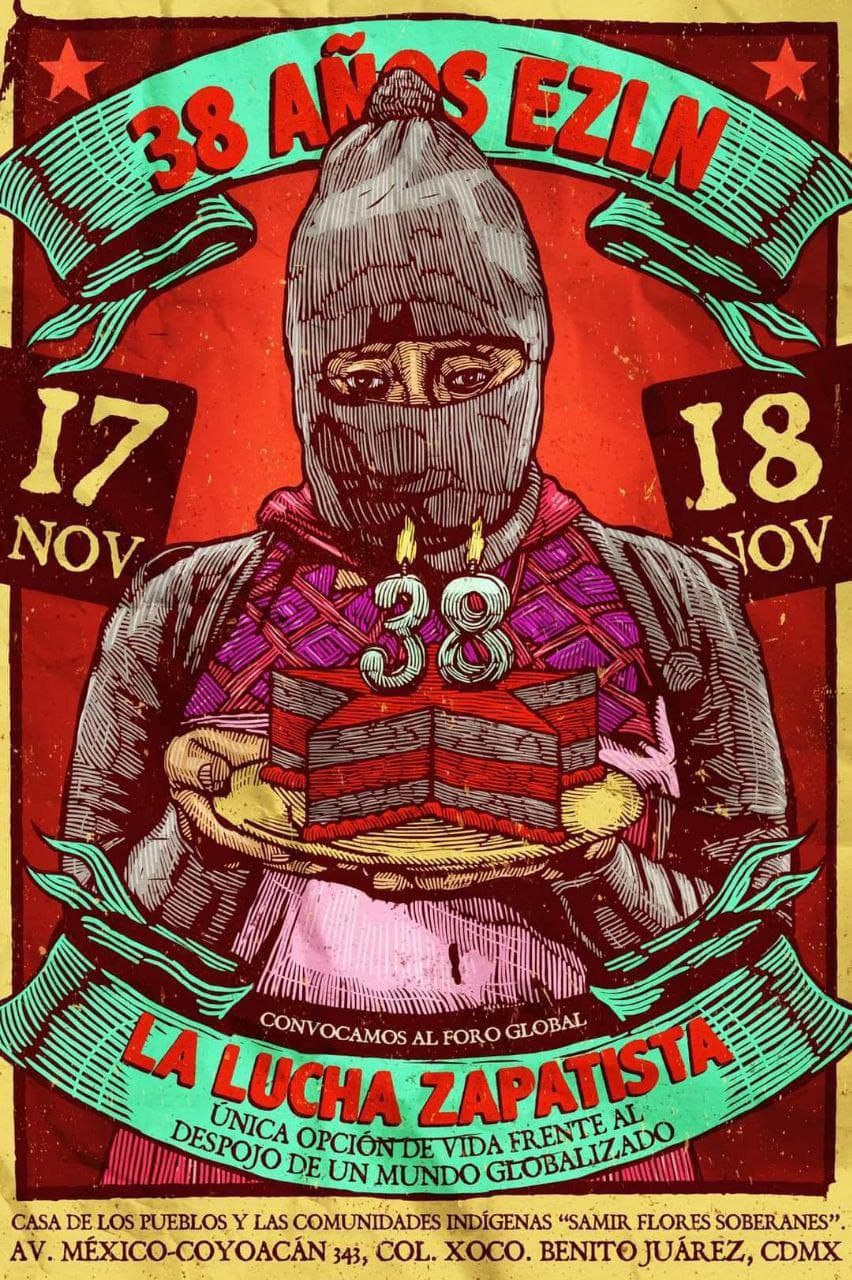
Al Faro Zapatista (AFZ) es una iniciativa en la que más de medio centenar de personas de la Europa insumisa y del Chiapas/México Rebelde hacemos un homenaje al zapatismo en su 28 aniversario a la vez que es nuestra forma de acuerpar -desde lo que somos trabajadorxs de las Ciencias Sociales, artivistas, activistas, feministas- lo que lxs zapatistas y el CNI-CIG han llamado la “Travesía por la Vida”. AFZ es también un sumarse a las acciones mundiales de ¡No a la Guerra! ¡Sí a la Vida! digna, justa y plena para todxs, sobre todo para las mujeres, niñas(os), jóvenas(es), ancianas(os), otroas y hombres de los pueblos zapatistas, de los pueblos de Chiapas, México y el mundo.
Lo que ustedes encontrarán en nuestro sitio web, el video y los primeros libros que hemos co-creado, tienen el sentido de ser materiales que pueden ser consultados libremente y que pueden ser de apoyo a todos aquellos que, en el planeta Tierra, luchan por la Vida. Se trata de materiales audiovisuales y escritos en línea que nos podrían ayudar a comprender por qué, dónde y cómo el zapatismo ha sido un faro para las luchas y movimientos antisistémicos, anti-racistas y antipatriarcales del planeta Tierra. Nos podría aportar algunos elementos contextuales para dimensionar la profundidad histórica y actual de la Travesía por la Vida-Capítulo Europa.
Pretendemos que esta iniciativa y colección contribuya al debate sobre el colapso civilizatorio, los sistemas de muerte en curso y los otros mundos posibles realmente existentes. Contribuya a combatir la invisibilidad de esos otros mundos en los medios de comunicación hegemónicos y a seguirnos tejiendo en esta compleja, cruenta y retadora Lucha por la Vida. Aspiramos a que contribuya pues al sembrar, tejer, compartir, agrietar, todo ello, caminando al Faro Zapatista, del CNI-CIG y de las luchas alter, anti, trans, pluri del planeta Tierra.
Este libro sentipiensa el movimiento zapatista y las redes neozapatistas como fundamentales para la emergencia y el desarrollo de las luchas contrahegemónicas dadas desde abajo y a la izquierda, primordiales para la globalización de la esperanza y la creación de alternativas ante los proyectos de horror, muerte y guerras en curso. Me pregunto: ¿Qué violencias? ¿Qué guerras? ¿Qué cuerpos? ¿Qué cuerpas? A la vez que, desde un conocimiento situado y encarnado, abordo históricamente el tejido de redes, esperanzas y luchas inspiradas en el zapatismo.
El zapatismo nacido en Chiapas ha sido un proceso complejo que ha tenido muchas etapas y ajustes. Desde su aparición pública, en el primer minuto de 1994, hasta 2021 se ha caracterizado por su originalidad y por su gran capacidad de innovación continua. Este movimiento ha sacudido las certezas acostumbradas en torno a la democracia, y ha alumbrado nuevas formas de hacer política para la construcción cotidiana de un mundo donde quepan muchos mundos. Se le ha querido circunscribir a lo regional, pero ha roto todos los cercos en los que se le ha pretendido encerrar con acciones y pensamientos que han tenido fuertes repercusiones a nivel planetario. Se hará una sintética descripción de su devenir y una primera reflexión para destacar que la defensa de la vida ha sido fundamental.
“Soy una semilla zapatista germinada en tierras mediterráneas. No soy única, por el contrario, represento uno de los muchos corazones que, aun siendo originarios de esta geografía conocida como Europa, nos hemos convertido en semillas rebeldes tras ser atravesadas por el zapatismo. Hemos hecho un viaje anticolonial en nuestro propio cuerpo. A contracorriente, fuimos a desaprender al Sur del Sur, a conocer a los hombres, mujeres y otroas de maíz porque sus palabras hablaban otro mundo y ese mundo otro nos ha permitido remirar nuestra propia geografía, nuestra propia historia, nuestras raíces y nos ha empujado a transformar nuestra realidad”. Con estas palabras la autora de este libro nos invita a remirar la trascendencia del zapatismo para las luchas de la “Europa insumisa”, hasta el punto de considerarlo una brújula civilizatoria, imprescindible para navegar hacia un mundo nuevo.
La insurrección zapatista se produjo en un momento histórico especial, cuando las fuerzas contrahegemónicas estaban debilitadas y desarticuladas. Operó en esas circunstancias como un despertador mundial de movimientos antisistémicos. La travesía zapatista de 2021 tiene lugar en un momento semejante. La pandemia produjo desconcierto en mucha gente y en los movimientos sociales y políticos. Proliferan planteamientos e iniciativas que resultan obsoletos en las nuevas circunstancias. Una vez más, los zapatistas ponen el dedo en las llagas que hacen falta e inspiran pensamientos y comportamientos de la nueva realidad. En la primera sección de este libro examino las crisis del patriarcado, el Estado-nación, la democracia y el capitalismo, así como las opciones abiertas desde abajo, para mostrar la importancia de la nueva iniciativa zapatista. En la segunda sección reflexiono sobre los principales aportes teóricos y políticos del zapatismo. Finalmente, relato actividades e iniciativas inspiradas por él.
“La Gira Zapatista es un verdadero regalo para nosotros […] Nos alegra tenerlos aquí, paseando con nosotros, haciéndonos preguntas, aprendiendo mutuamente de nuestras luchas”. Así cierra este libro su autor, al tiempo que le dice a lxs zapatistas: “gracias por venir”. En diálogo con ellos y con todxs lxs lectorxs de este texto, Laurence Cox nos convida a recorrer la ciudad de Dublín y las luchas de la República de Irlanda desde tiempos remotos hasta hoy en día. De esa manera nos invita a comprender por qué los zapatistas importan, les importan, nos importan.
El pasado domingo 7 de noviembre de 2021, en un estadio de Slumil K’ajxemk’op, en Roma, Italia, las mujeres mayas zapatistas saltaron a la cancha vestidas de color morado, todas con su representativo número 7 en la espalda (ver comunicado del EZLN “Después de los 17. (La sección miliciana Ixchel-Ramona)”).
En un evento deportivo público, LA PAZ (Libre Asamblea Pensando-Practicando la Autonomía Zapatista) convocó a las equipas solidarias de Hic Sunt Leones (Boloña), Ancona Respect, Guastafeste (Roma), Atlético San Lorenzo (Roma) y Torpedo (Roma) para jugar fútbol y rugby con la selección femenina del EZLN autodenominada Ixchel-Ramona. El torneo rebelde sucedió en un estadio defendido por el movimiento squat u okupa en tierras insumisas italianas, el cual anteriormente era un galgodromo donde se realizaban apuestas a costa del sufrimiento canino. Estas instalaciones fueron recuperadas por colectivos que lo gestionan de manera autónoma para llevar a cabo diversas actividades culturales y deportivas. Una diversidad de colectivos agrupados en LA PAZ colaboraron para gestionar y organizar la Gira por la Vida por Italia. Prepararon la concentración anterior a la salida hacia la península ibérica de todas las delegaciones de los grupos de Escucha y Palabra del EZLN, femeninos y masculinos, incluyendo al Comando Palomitas, al Congreso Nacional Indígena y al Frente de Pueblos en Defensa de la Tierra y el Agua, es decir, a la Extemporánea en su conjunto.
Para quien tuvo el privilegio de presenciar los partidos, las escenas que se regalaron en el encuentro fueron de lo más emotivas y extrañas para cualquier aficionado habitual al deporte de las patadas. Por principio en las tribunas no existió ese ambiente nacionalista que uno puede presenciar en los estadios cuando dos escuadras de distintos países compiten. No se escuchó lenguaje homofóbico. No hubo distinción entre visitantes y locales. Antes del inicio, poco después del mediodía, a través del sonido local, se advertía a los asistentes que la justa deportiva tenía como objetivo la convivencia solidaria, fraternal, política y militante; contraria a la comercialización del deporte, a la competencia y a los valores de consumo fomentados por el capitalismo.
Isabel Cortés vive en Londres y es parte de los colectivos Chile Solidarity Network y Bordando por la Memoria. También colabora con el sindicato United Voices of the World (Voces del Mundo Unidas).
Photo: Zapatista Solidarity Network
Nuestro viaje fue como una odisea.
El trayecto duró una hora y tomamos tres trenes para llegar a nuestro destino.
No dormí mucho la noche anterior. Tenía esa sensación familiar de cuando estoy a punto de llegar a un entorno repleto de amor en el cual uno se siente acogido. Me parece que tuve ‘the channels’, que según el camarada Mcintosh, es una sensación que los marineros tienen antes de comenzar una travesía.
Pelusa y yo llegamos temprano, primera y segunda generación juntas, sentadas lado a lado, caminando codo con codo, riendo y hablando; y aunque haya 30 años de diferencia entre nosotras, estamos unidas porque las mismas circunstancias revolcaron nuestras vidas, como revolcaron y siguen revolcando la de tantos otros.
Estábamos camino a un evento que sabíamos que iba a ser una experiencia de aprendizaje y al que, definitivamente, era un gran privilegio asistir. Precisamente íbamos comentando esto en nuestro trayecto.
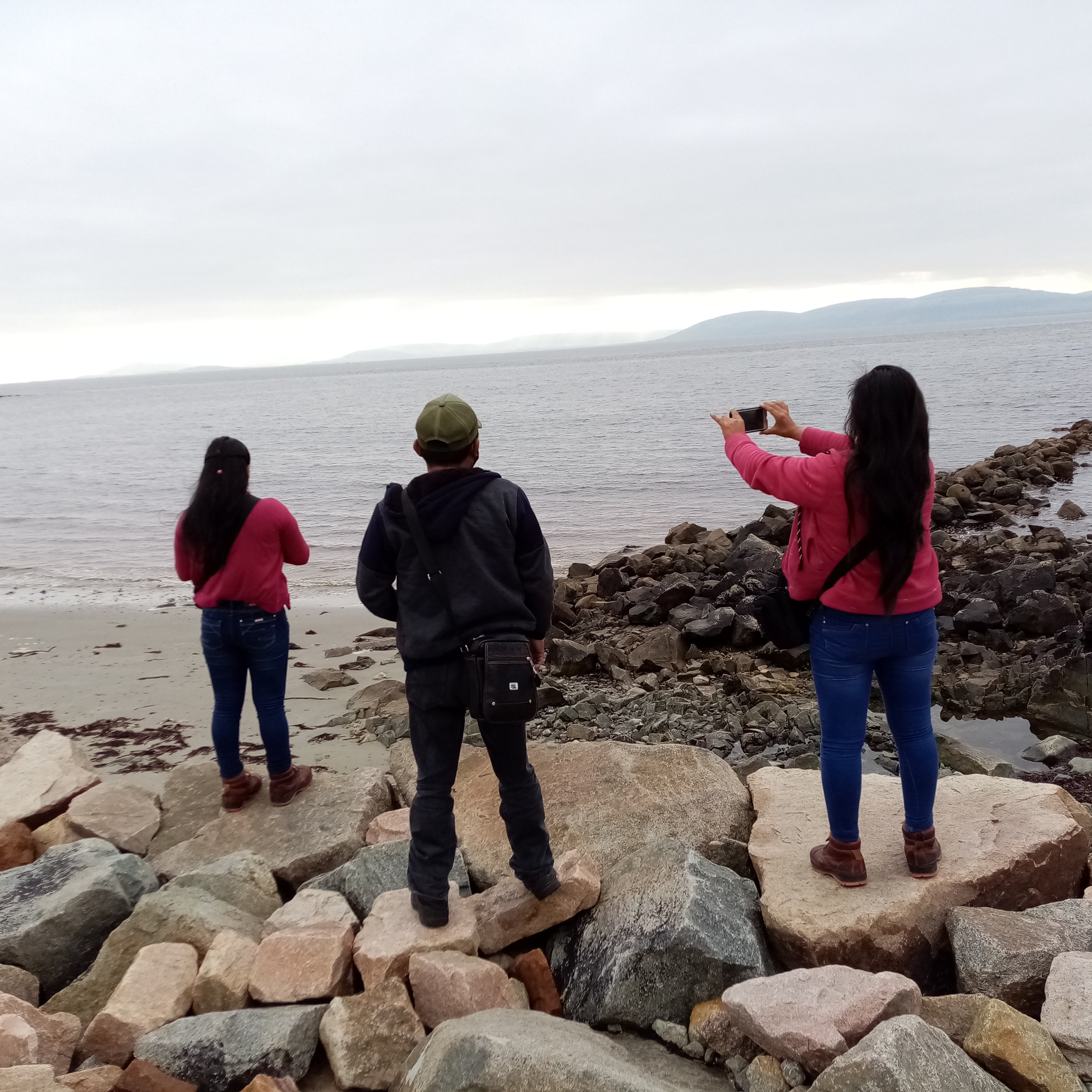
La delegación zapatista respira en el océano en el oeste de Irlanda. 13 de Octubre, 2021. Crèdito: @Zapsgoheirinn
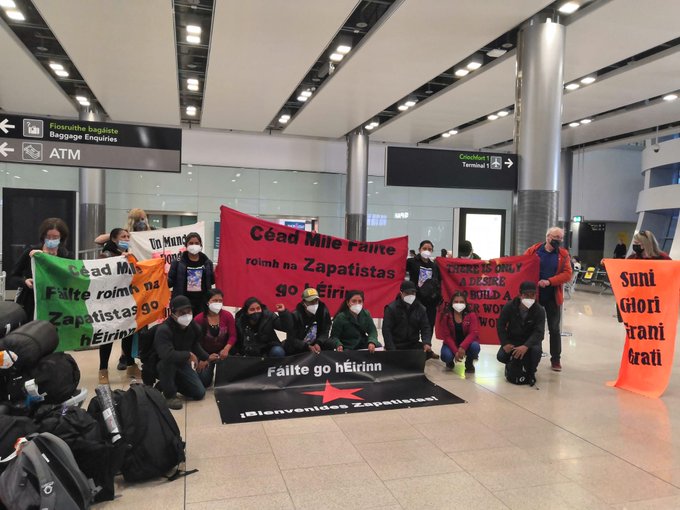
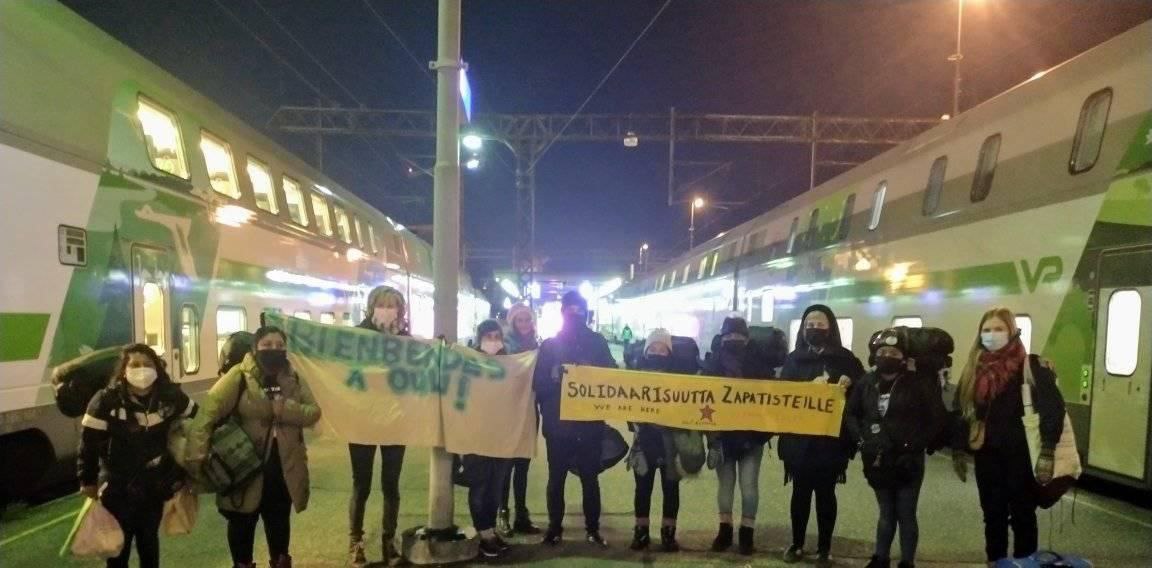
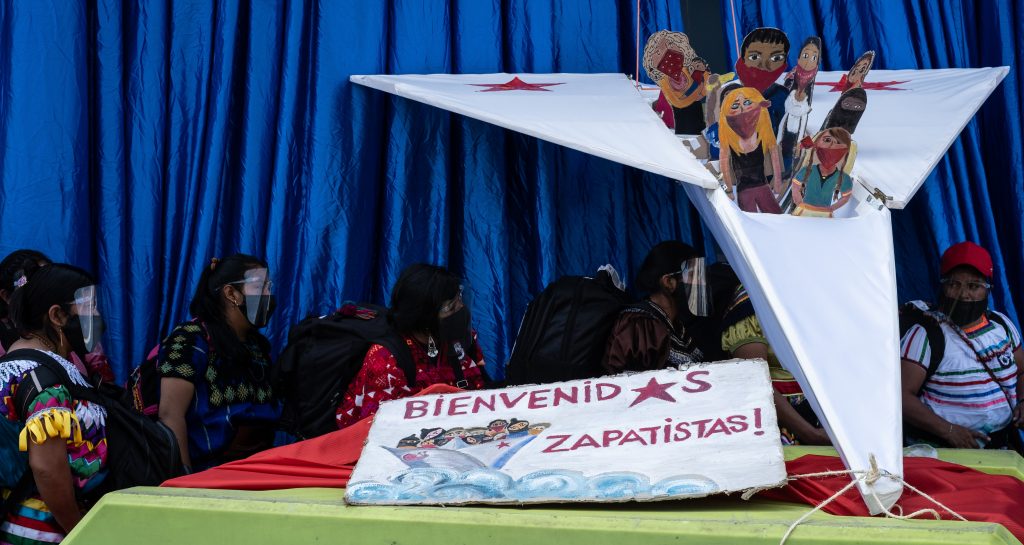
En la tarde del 12 de octubre, un grupo de hombres y mujeres zapatistas aterrizó en el aeropuerto internacional de Dublín. La delegación, formada por dos equipos de Escucha y Habla, fue recibida calurosamente por un grupo de alegres compañeros que tejían coloridas pancartas. La llegada de los zapatistas en este día es notable, ya que el 12 de octubre se cumplen 529 años de la resistencia indígena contra el orden colonial instalado en 1492.
Los zapatistas han llegado a las islas WISE para reunirse con otras luchas y movimientos que comparten su deseo de construir un mundo más justo y mejor. Estamos seguros de que su paso por estas tierras dejará una huella imborrable, y que su lenguaje de resistencia nos dejará a todos más decididos en nuestras luchas por la justicia, la paz y la libertad.
Llegada a Dublin. 12 de Octubre, 2021. Crèdito: @Zapsgoheirinn
★ ★ ★
Octubre 13: Galway
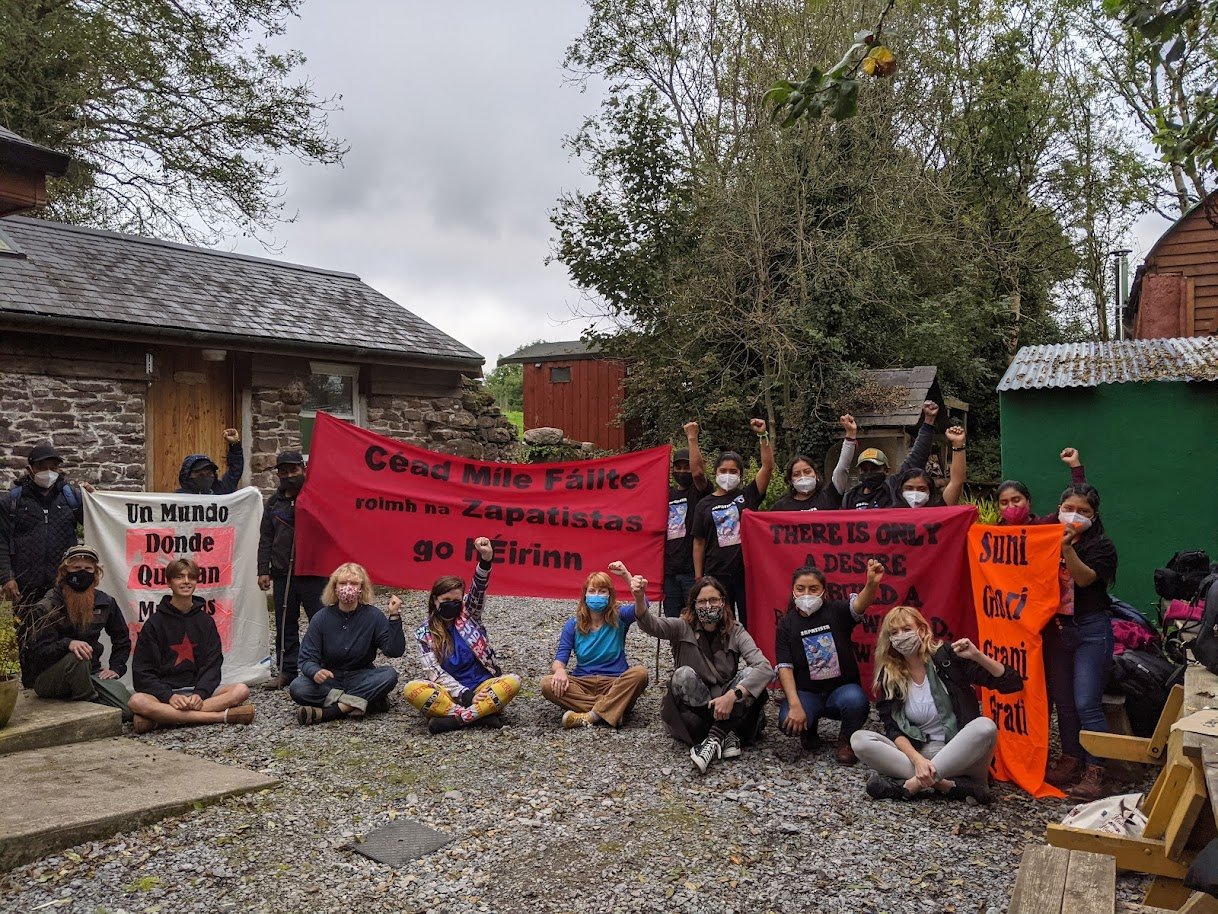
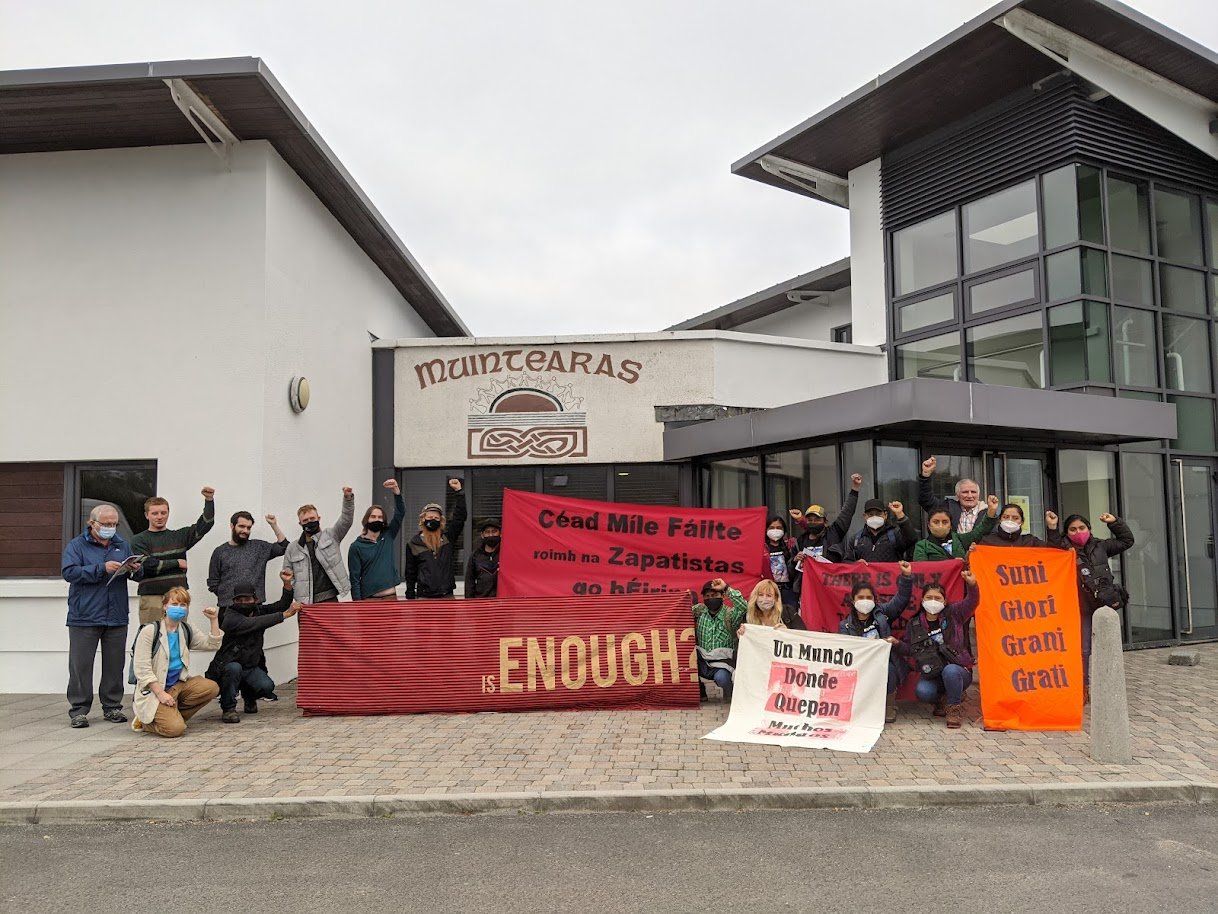
La delegación tuvo una jornada intensa en Galway, donde se reunió con activistas de la lengua irlandesa y colectivos radicales para dialogar sobre la identidad, la lengua y la autonomía
Del irlandés al inglés, al español y a las lenguas mayas (tojolabal, tzeltal, mam, chol, zoque) y viceversa: nuestras historias se desarrollan en el multilingüismo y la traducción.
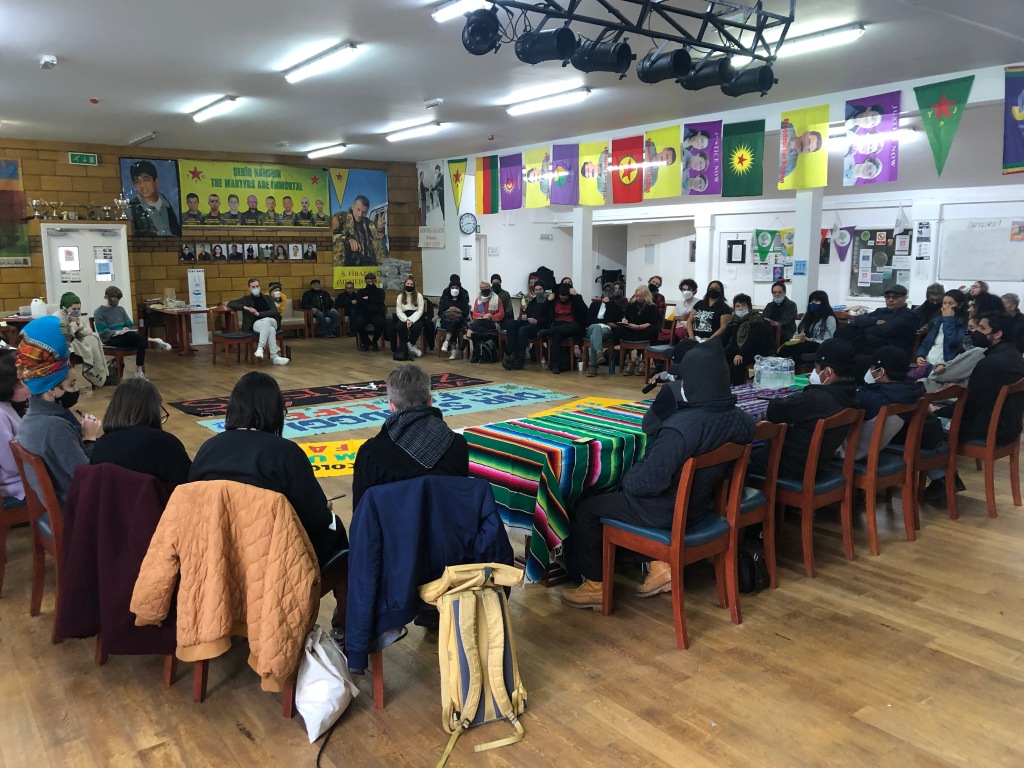
Zapatistas en Galway. 13 de Octobre, 2021. Crèdito: @ZapsgoheirinnZapatistas en el centro comunitario Muintearas. 13 de Octobre, 2021. Crèditp: @Zapsgoheirinn
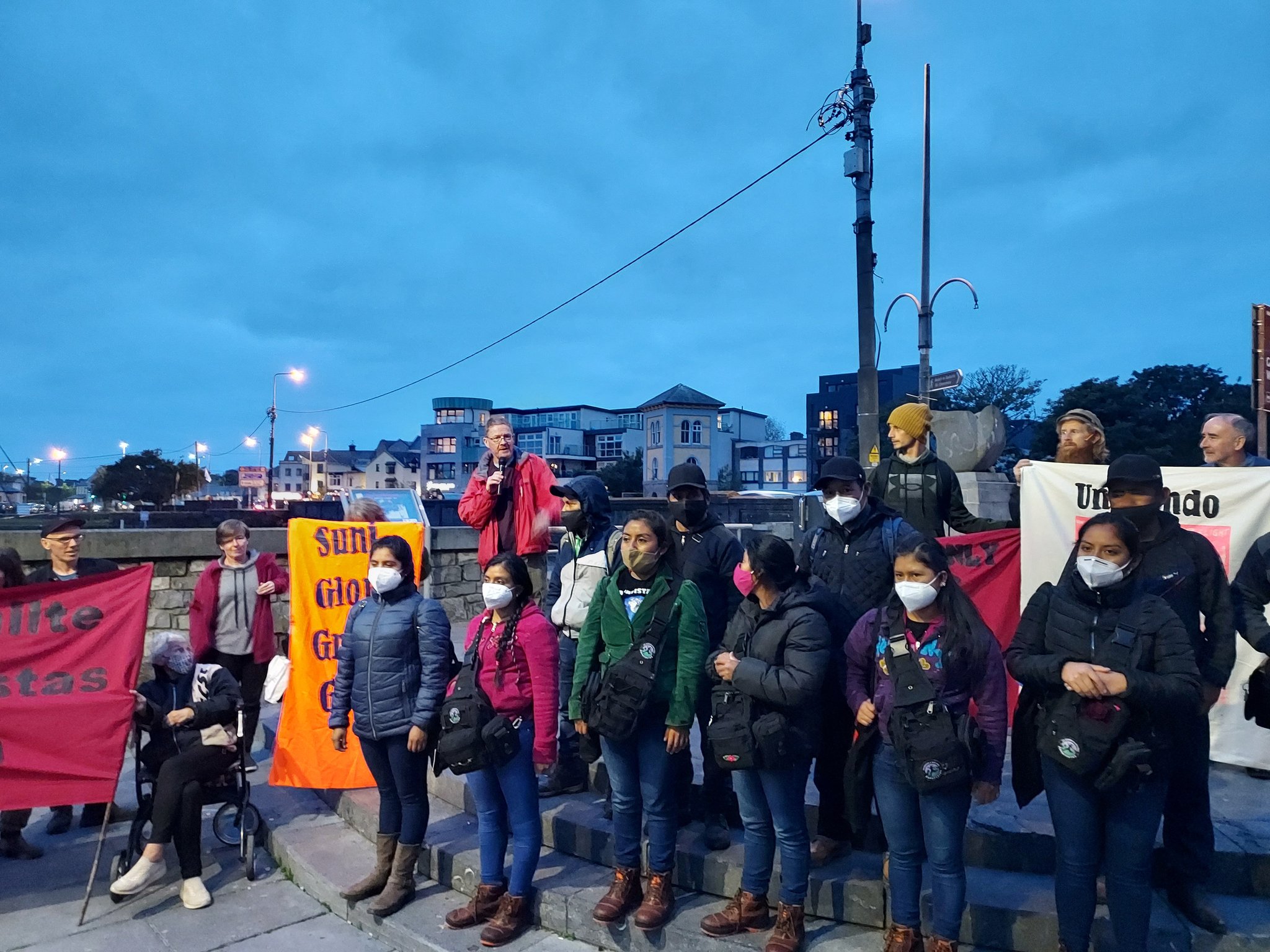
Por la tarde, la delegación se unió a una gran multitud en el Arco de España, donde se hizo eco del pueblo de Galway en su petición de retirar el monumento de la ciudad a Cristóbal Colón.
Zapatistas en Galway. 13 de Octobre, 2021. Crèdito: @Zapsgoheirinn
★ ★ ★
Octubre 14: màs encuentros en Galway
El viaje por Éire continúa en Galway con encuentros con colectivos feministas, la comunidad itinerante irlandesa y grupos de solidaridad con los inmigrantes.
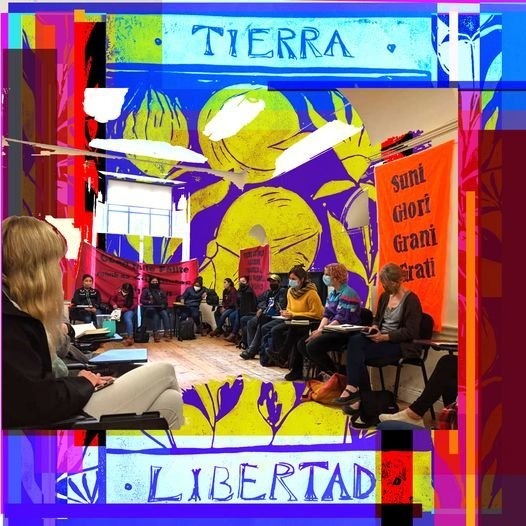
Obra de arte de @RumpusX. Basado en una impresión en linóleo de @cenza_v. Crèdito:@Zapsgoheirinn
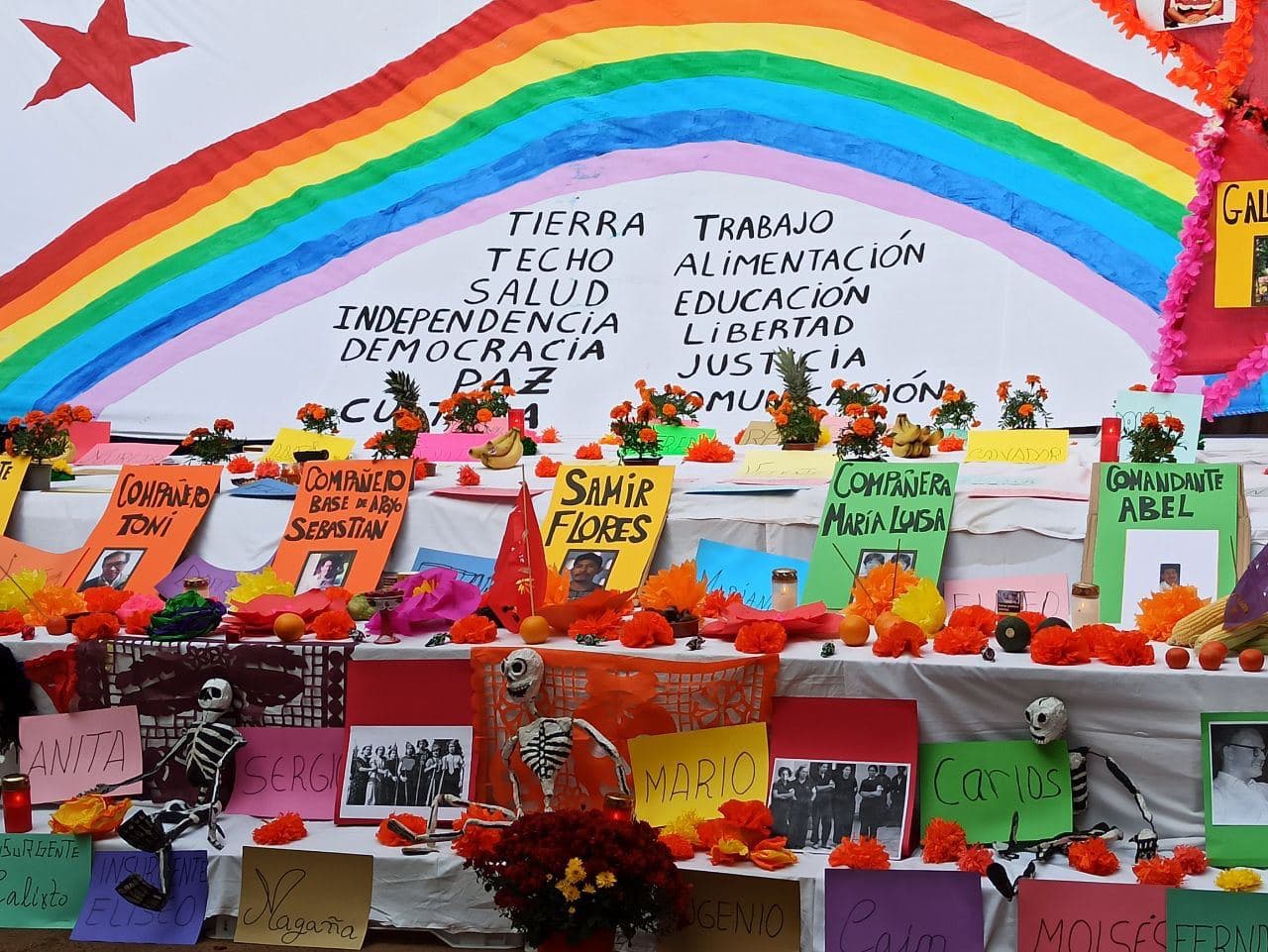
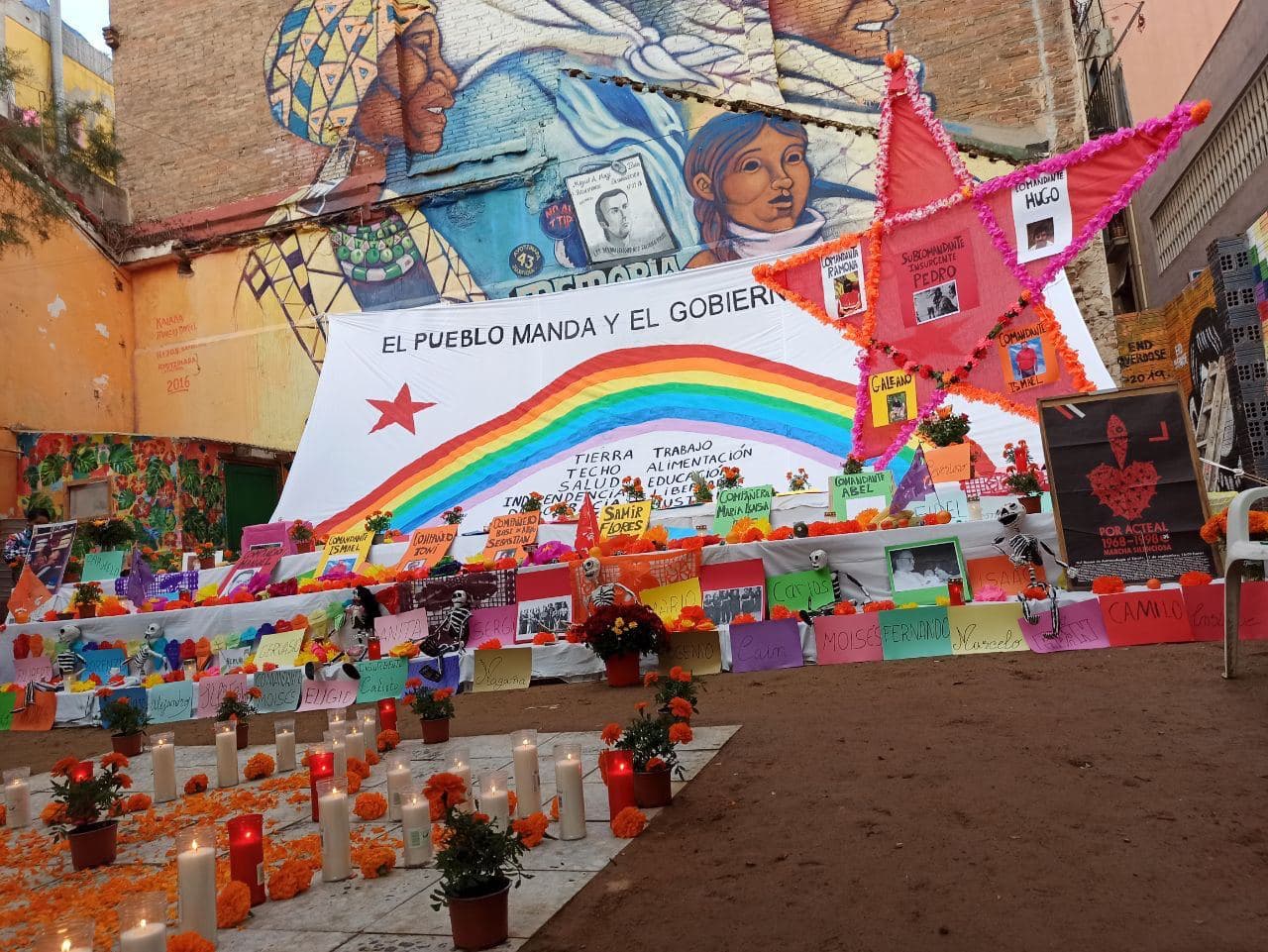
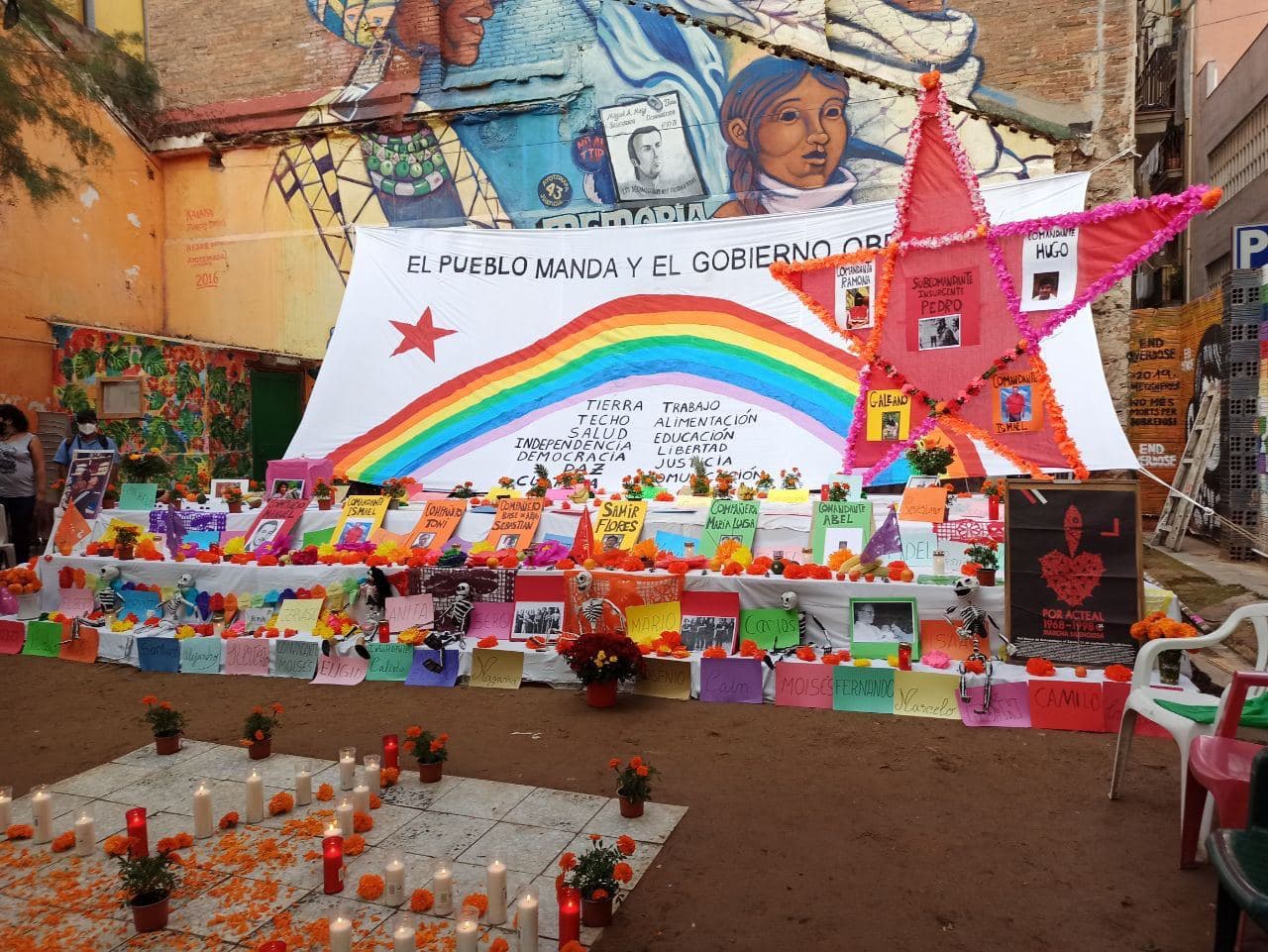
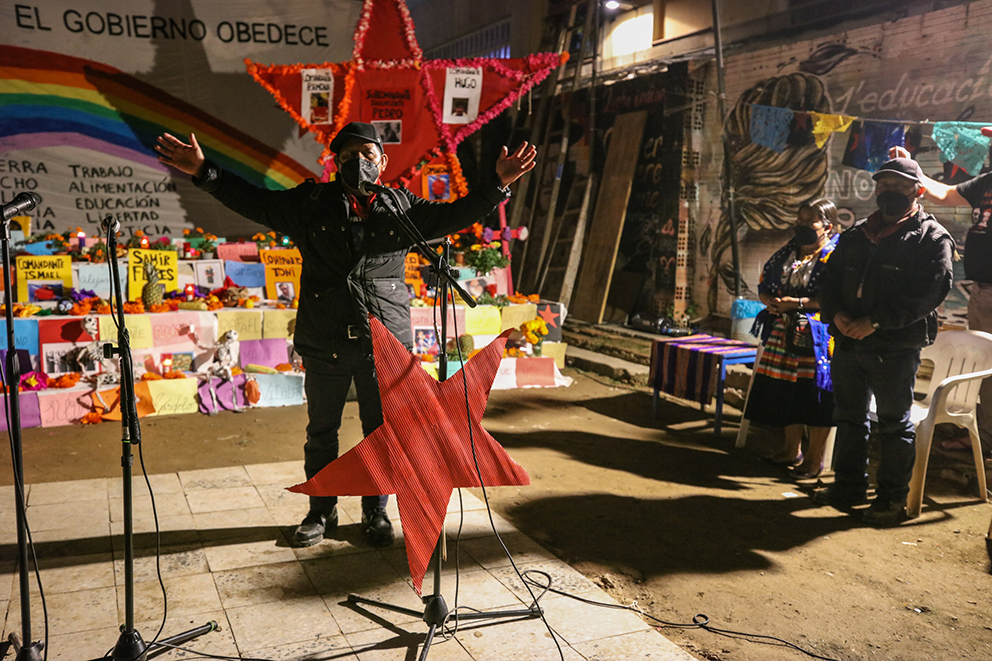
Comandante Zebedeo participa en la ofrenda del altar de muertos. foto: Daliri Oropeza
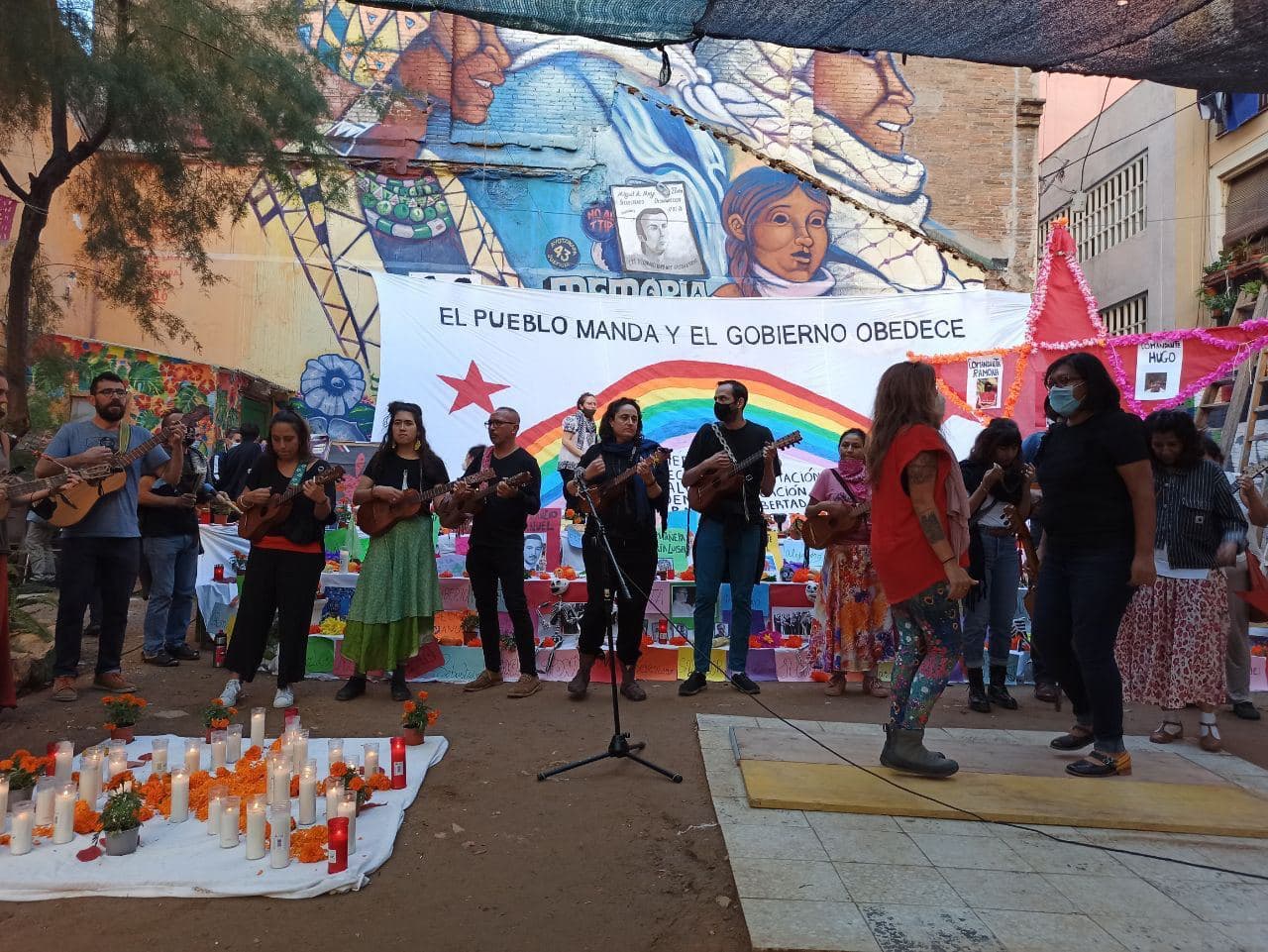
La delegación La Extemporánea inicia su recorrido por la tercera zona europea de la travesía zapatista con un altar de día de muertos en donde rememoraron a comandantas, insurgentes, maestros de sus comunidades de raíz maya que murieron en la búsqueda de autonomía. La Asamblea Catalana les recibe en Barcelona con música, poesía y un altar comunitario
Texto y fotos: Daliri Oropeza
BARCELONA, CATALUNYA.- En este parque antes había una fábrica, pero los obreros la quemaron. Esa rebeldía prevalece en lo que ahora es un coto ocupado, húmedo porque llovió, en medio de la ciudad. Hay lodo en los caminos que contornean jardines en el Raval, un barrio urbano de población migrante, que sufre la gentrificación aunque es reconocido por ser de lucha. Quienes lo habitan ofrendan junto a las zapatistas un altar comunitario.
Es el día de muertos y la delegación zapatista La Extemporánea asegura que habló con los suyos, con quienes les antecedieron y soñaron con un mundo de autonomía sin explotación. Realizan la Travesía por la vida y ya atravesaron las zonas 1 y 2, acaban de llegar a la zona 3: España y Portugal.
“Nuestros muertos están felices porque seguimos caminando”, asegura el comandante Zebedeo al tomar el micrófono. Al inicio de su discurso hace un pase de lista. Pide a las personas presentes decir ‘presentes’ cuando enuncia:
—¡Nuestros muertos!
—¡Presentes! —responden cientos en un coro lleno de rabia.
#AlMomento Integrantes del #EZLN realizan pase de lista antes de compartir la palabra en el Raval, barrio obrero de Barcelona, junto a colectivas, organizaciones y activistas que acompañan con música la bienvenida de la delegación Zapatista #LaExtemporánea a Catalunya.
R:@Dal_airpic.twitter.com/6YTmEDNbZA
La memoria es el motor de este encuentro. El comandante recuerda la esclavitud que han vivido los pueblos de raíz maya sometidos a la esclavitud en fincas, cuando dialogar de derechos, trabajo, salud, educación, era impensable.
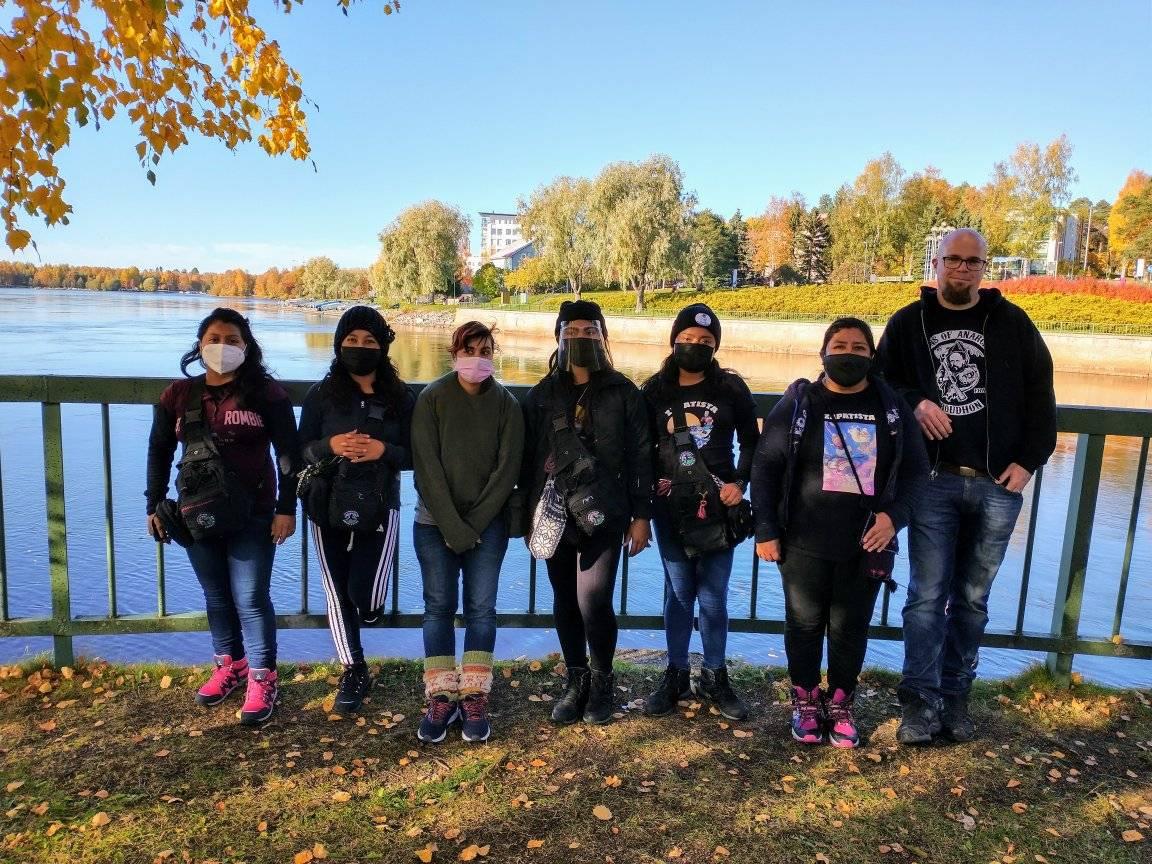
“La Extemporánea” en Finlandia. FOTO: Colectivo Armadillo Suomi
10 de octubre de 2021.- Recorriendo de extremo a extremo Finlandia, la delegación zapatista “La Extemporánea” se ha encontrado con colectivos, organizaciones e individuos conociendo de sus de sus luchas y resistencias, aprendiendo e intercambiando experiencias. El Colectivo Armadillo Suomi de Finlandia ha documentado y compartido distintos momentos de este recorrido que ha llevado a los indígenas mayas rebeldes desde Helsinki en las costas del Golfo de Finlandia hasta el territorio del pueblo Sami, dentro del círculo Polar Ártico, en la localidad de Ohcejohka, donde las fronteras del capital marcan el límite entre Finlandia y Noruega.
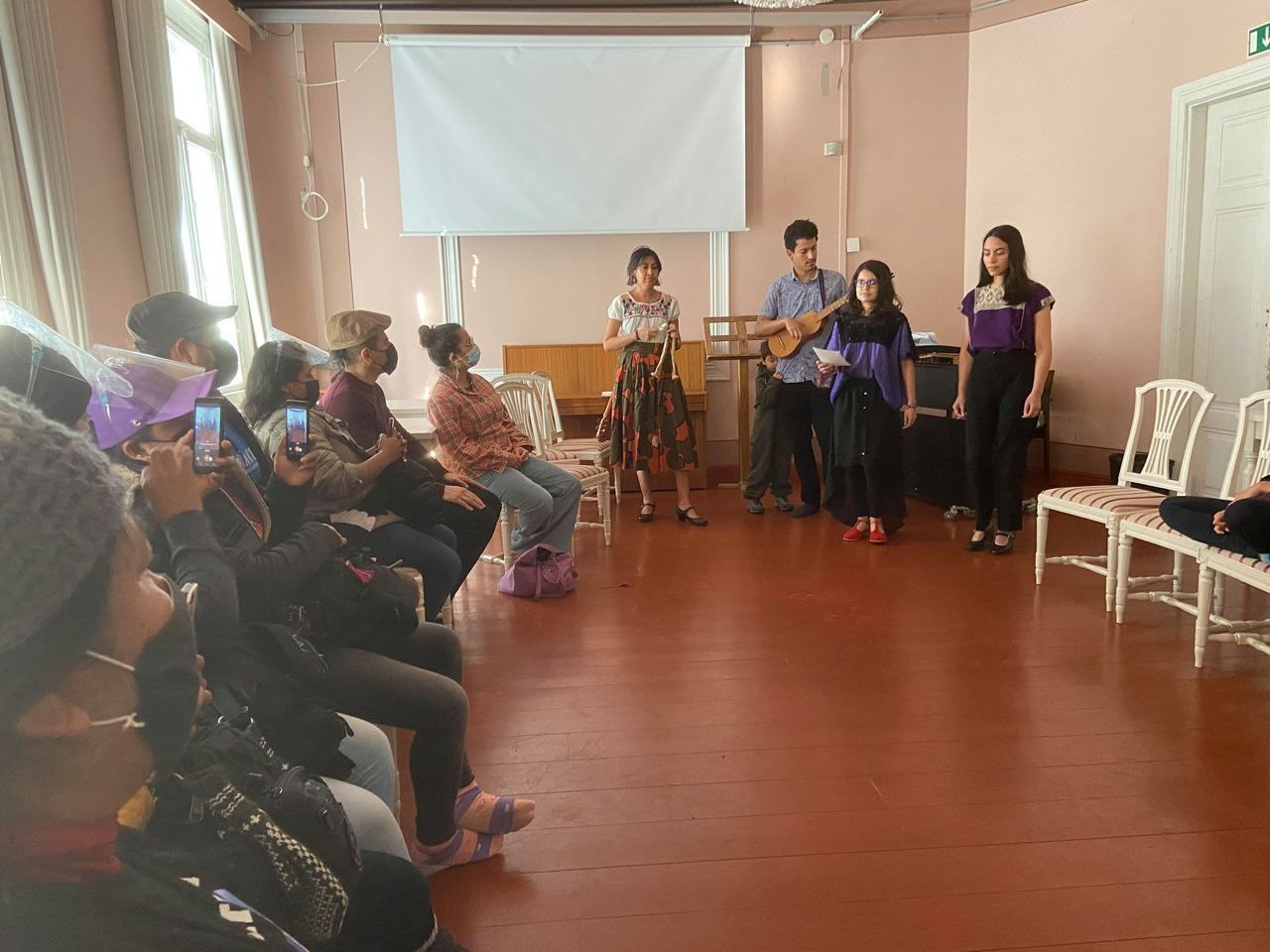
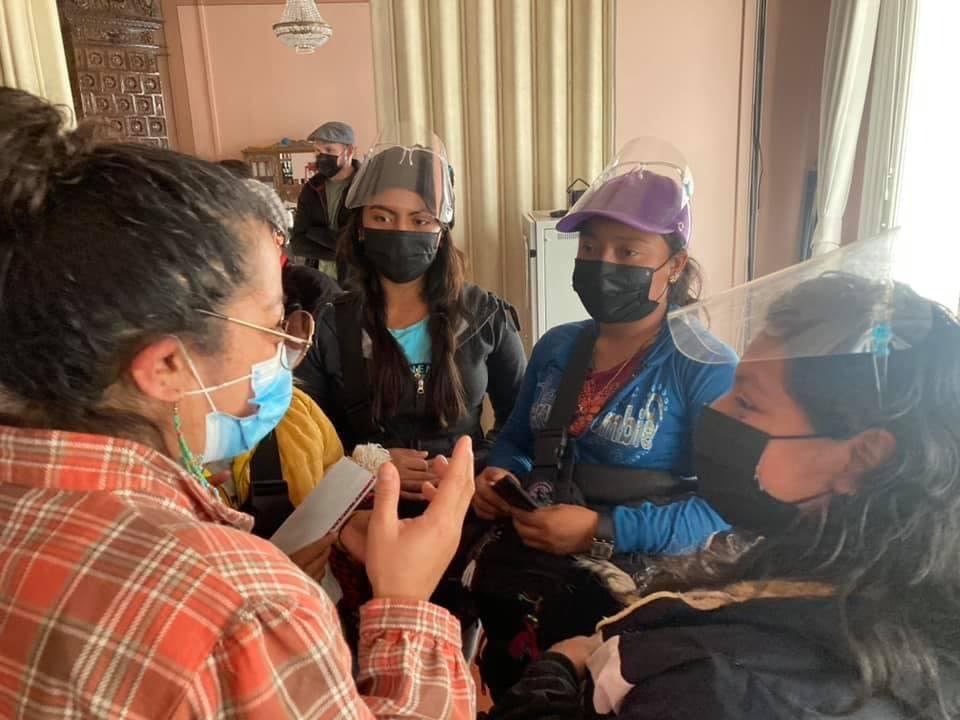
En Helsinki, las compañeras y compañeros zapatistas se reunieron para conocer las experiencias los inmigrantes en Finlandia. En ese encuentro la música se hizo presente a través de “Las Jaranas del Norte” y de un coro finlandés. También en Helsinki, activistas del “Free movement” y otros colectivos en defensa de los derechos de los migrantes compartieron con La Extemporánea sus experiencias de lucha.
Encuentro de zapatistas con colectivos de inmigrantes en Finlandia. Foto: Facebook Colectivo Armadillo Suomi
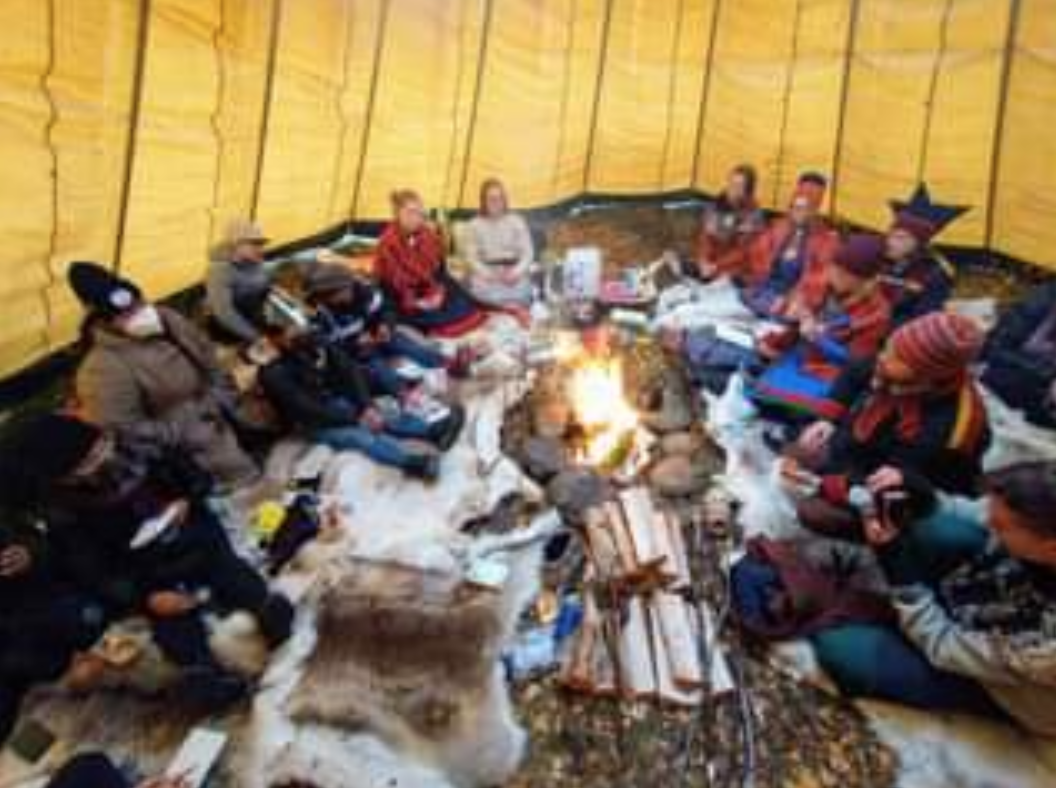
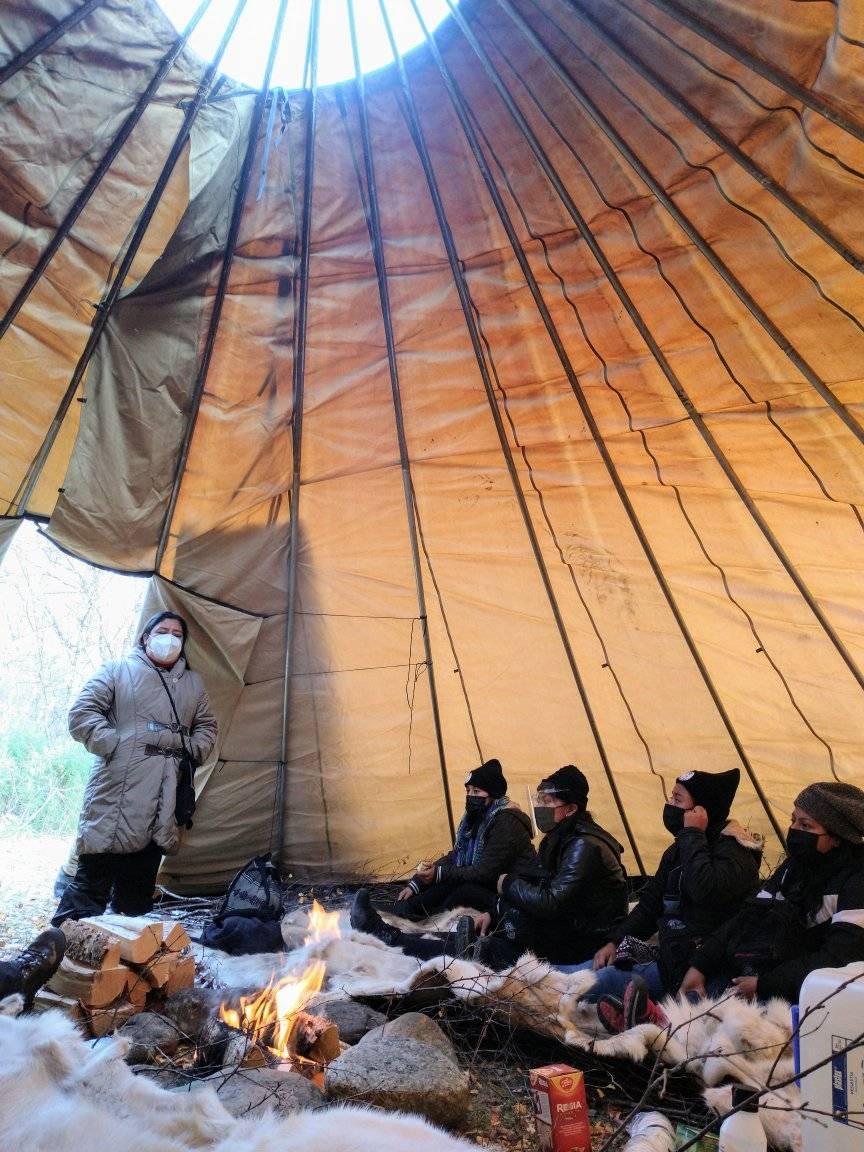
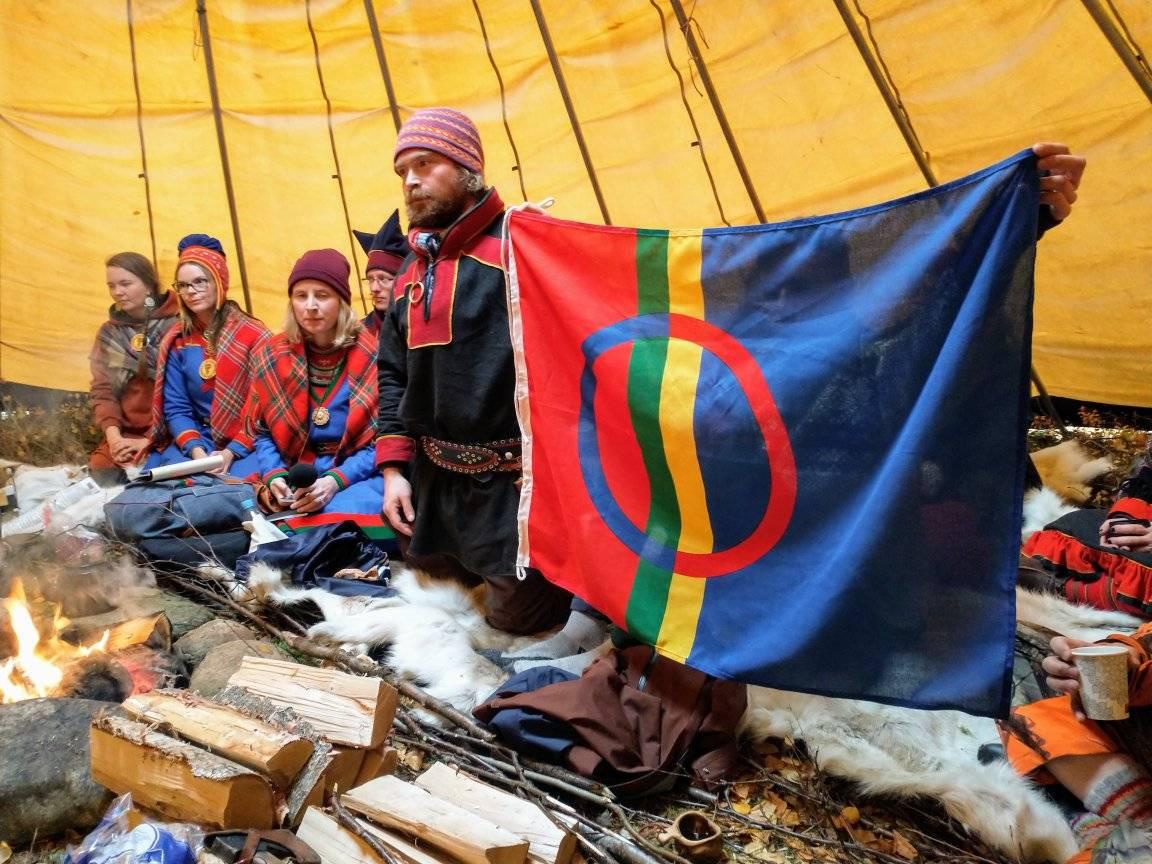
En el extremo norte de Finlandia, en territorio del pueblo Sami, “La Extemporánea” se reunió en una Lavvu, tienda tradicional de los pastores de renos con compañeras y compañeros de la comunidad de Ohcejohka. Allí, conocieron de cómo los proyectos extractivistas amenazan los territorios de pastoreo del pueblo Sami, afectando sus migraciones anuales a través de la taiga nórdica.
Encuentro con el pueblo Sápmi dentro de una gran tienda Lavvu. Foto: Colectivo Armadillo Suomi
En la ciudad de Oulu, en las costas del extremo noreste del Golfo de Botnia, 160km al sur del Círculo Polar Ártico, la Travesía por la Vida incluyó un encuentro con colectivos como Elokapina Oulu, que lucha en defensa del medio ambiente y promueve la desobediencia civil pacífica; Oulutopia, colectivo que ha organizado todo un ciclo de proyecciones de video, pláticas y foros para difundir la lucha zapatista en esta ciudad de Finlandia. Los indígenas mexicanos también se encontraron con el grupo de Punk Paskakaupuni.
Encuentro dela delegación Extemporánea zapatista en la ciudad de Oulu, Finlandia. Foto: Facebook Colectivo Armadillo Suomi
A lo largo de su recorrido por Finlandia, “La Extemporánea” ha participado en diversos foros, simposios y conversatorios con colectivos ambientalistas y feministas intercambiando experiencias de lucha en defensa de la Madre Tierra y en contra del capitalismo que la destruye y amenaza con ello nuestra vida. De la selva a la taiga boreal, la delegación ha llevado a cabo su tarea de aprender e las luchas de otros pueblos y otras tierras.
Movilización en Helsnki el pasado 24 de septiembre, respondiendo al llamado del EZLN, contra las agresiones hacia las comunidades indígenas zapatistas. Foto: Colectivo Armadillo Suomi
Comunidades que se dedican al pastoreo de renos, colectivas feministas, trabajadores migrantes en lucha, colectivos ambientalistas, un llamado a “no olvidar el espíritu de Yanga”, el grito de solidaridad frente a las agresiones del mal gobierno mexicano hacia los zapatistas, han sido algunos de los destellos el recorrido zapatista por tierras finlandesas. Destellos que apenas sugieren lo que, sin brillar, ilumina los pasos de esta delegación, su alegría, preparación y disposición para escuchar.
La delegación aérea La Extemporánea llegó a Europa unos días después del regreso a México del Escuadrón 421. Antes de dividirse en grupos para recorrer todos los territorios de Europa que fueron invitados a visitar, participaron en encuentros con varios movimientos, organizaciones e internacionalistas en la capital austriaca, así como en diversas protestas. Su llegada estuvo marcada por el secuestro de dos compas zapatistas de la Junta de Buen Gobierno en Patria Nueva, Chiapas, un territorio al borde de la guerra civil, donde las comunidades zapatistas de raíces mayas se enfrentan a un número creciente de agresiones por parte de grupos paramilitares y narcotraficantes.
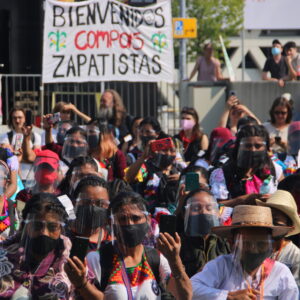
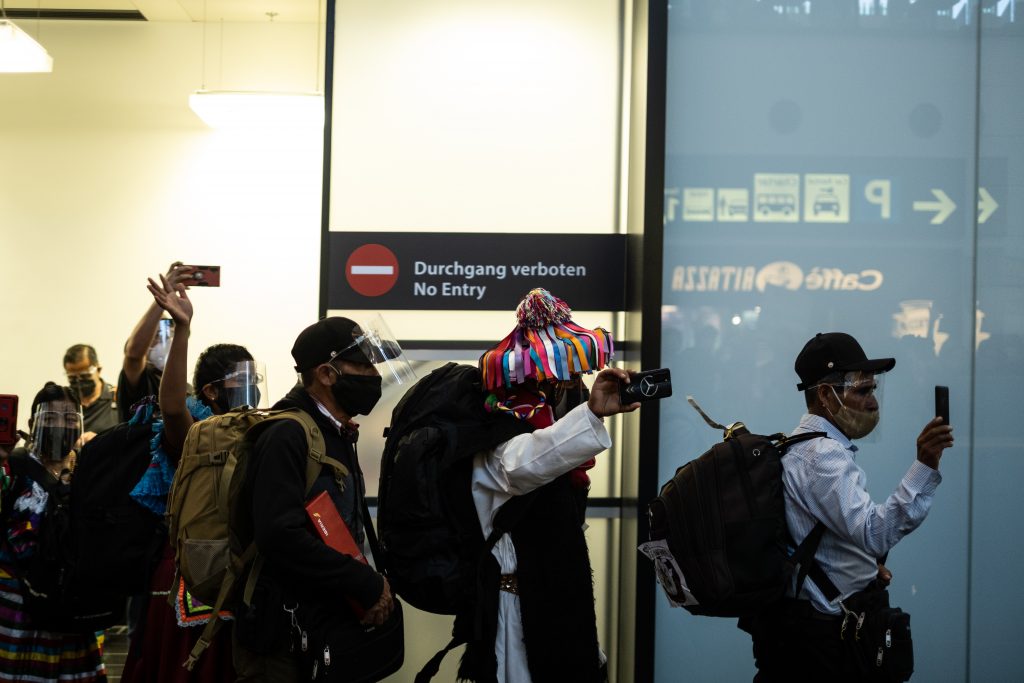
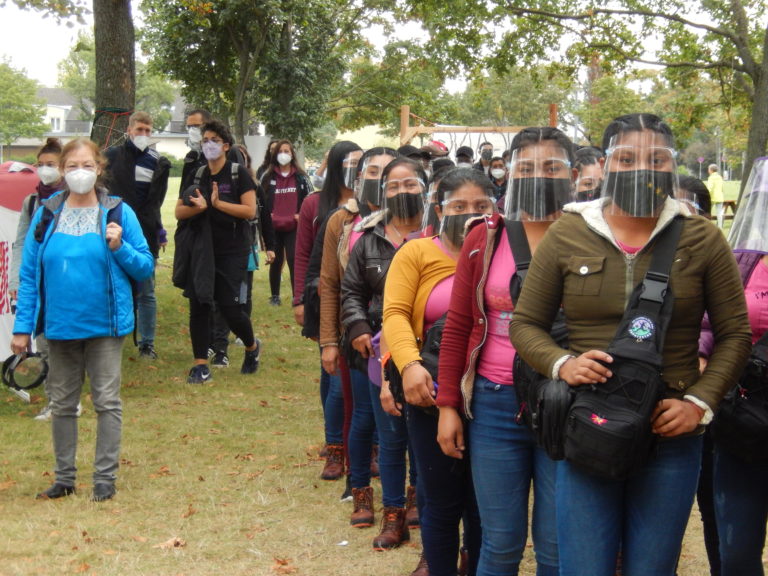
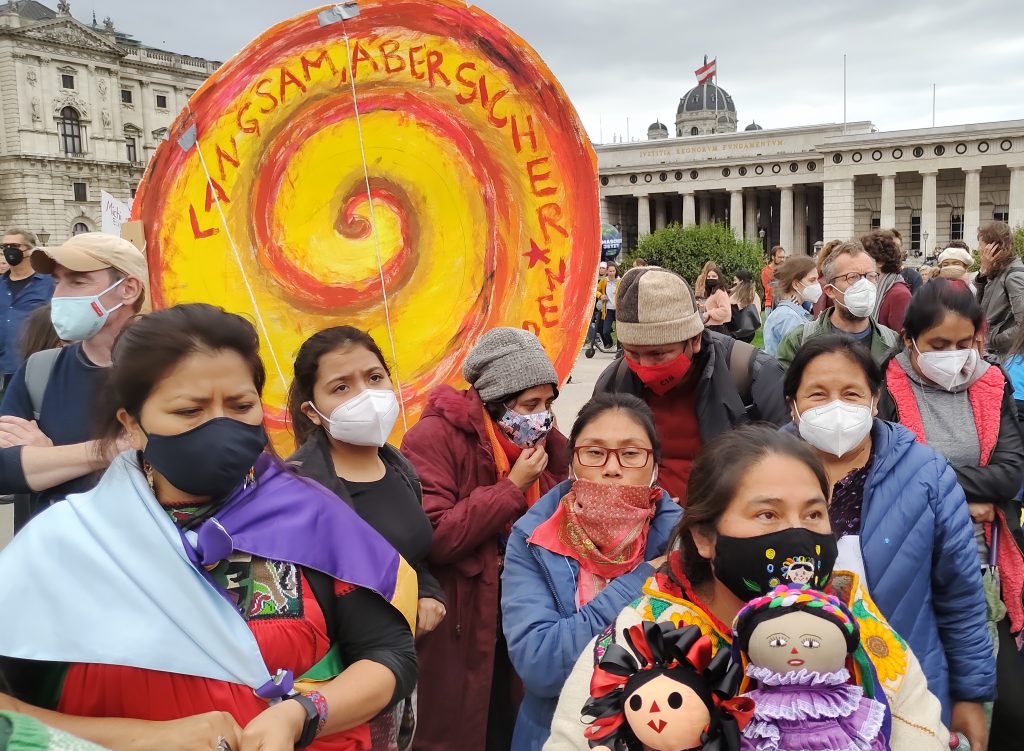
En plena Europa Central, el 14 de septiembre de 2021, un centenar de mujeres, hombres y niños zapatistas aterrizaron en Viena, Austria, la sexta ciudad más poblada de la Unión Europea, cerca de las fronteras con Hungría, República Checa y Eslovaquia. Organizados, con pasaportes, vacunas, protocolos sanitarios, cuarentena, documentación completa y boletos en mano, los compas zapatistas lograron romper el racismo transatlántico que intentó todo para impedir este viaje. El racismo de un México que considera a sus pueblos originarios “extemporáneos” (en el sentido de “inoportuno, inconveniente”, de “uno que no pertenece a estos tiempos”) y el racismo de la Fortaleza Europa que, escudándose en las normas sanitarias, no considera que cientos de reuniones con cientos de organizaciones, pueblos y movimientos en todo el continente sean un caso de fuerza mayor para conceder la entrada de esta delegación de 177 zapatistas.
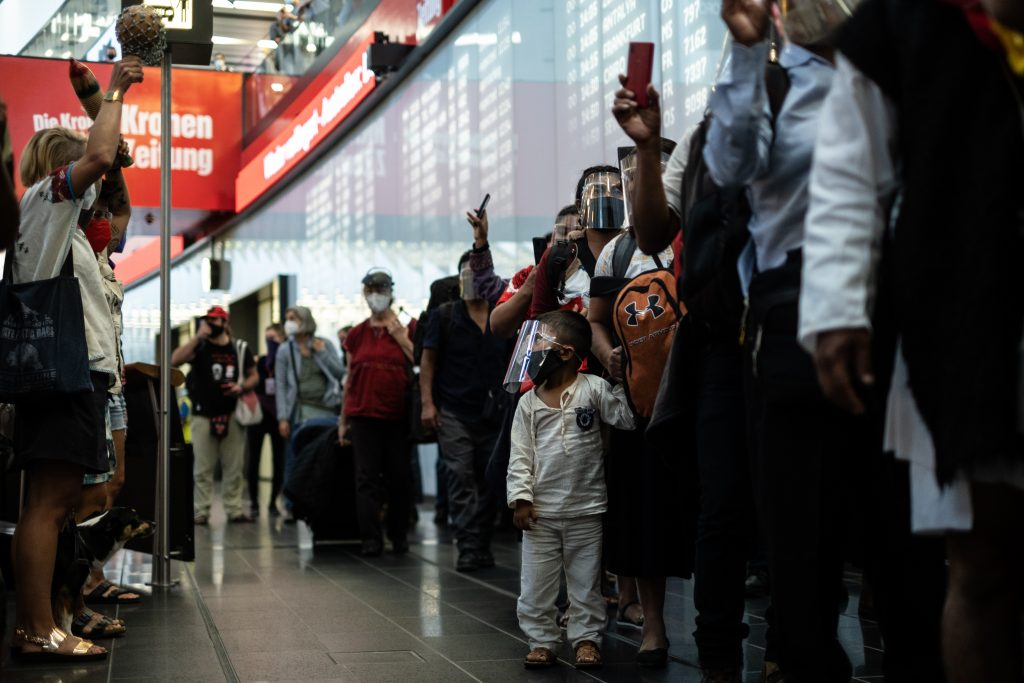
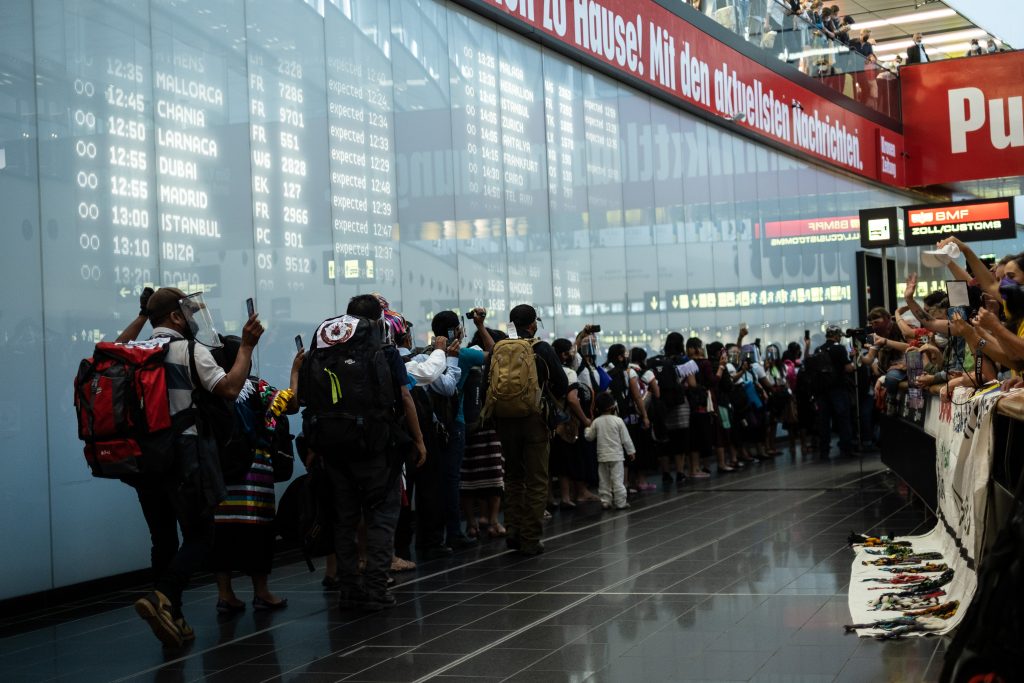
En el aeropuerto de Viena, decenas de colectivos vieneses y de toda Europa -o Slumil K’ajxemk’op (“Tierra Insumisa” en lengua maya), como la rebautizó al continente el Escuadrón 421 a su llegada a Vigo el 22 de junio-, esperaban ansiosos al primer grupo de La Extemporánea. La delegación aérea cruzó las puertas de llegadas alrededor del mediodía, entre aplausos y cánticos de “¡Zapata vive, la lucha sigue!”, “EZLN”, “Los pueblos unidos jamás serán vencidos” y canciones revolucionarias en varios idiomas.
Fotos de Isabel Mateos
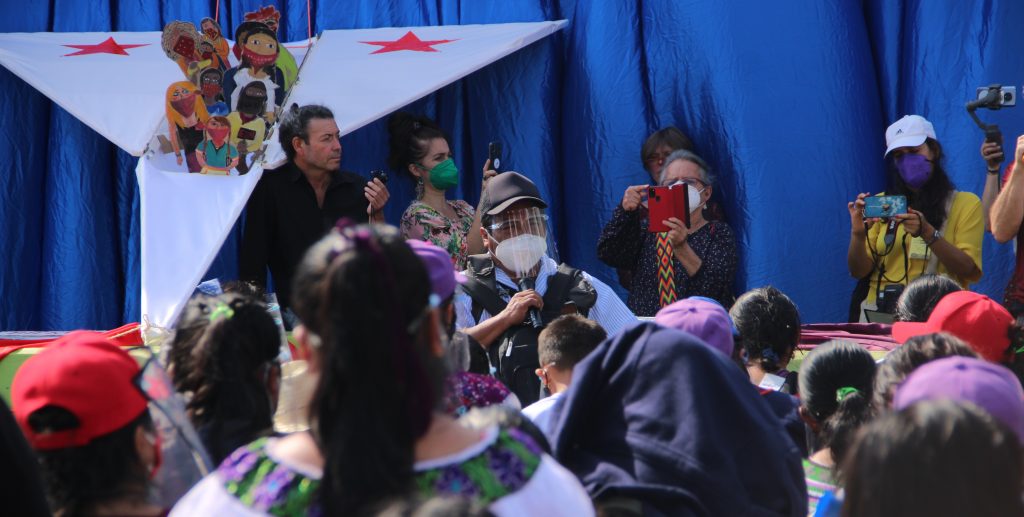
En las afueras del aeropuerto de Viena, la delegación zapatista fue recibida con mucha emoción y cálidas palabras por mujeres y migrantes austriacos que les dieron la bienvenida “a su casa” en alemán y español. Sin quitarse las mochilas, el Subcomandante Insurgente Moisés tomó el micrófono para dirigirse a sus anfitriones en Europa y hablar de la defensa de la naturaleza y la Madre Tierra. “La naturaleza perecerá. Esto es lo que hemos venido a deciros. ¿No lo creéis? Lo veréis”, advirtió. “Su nombre ya lo conocemos: es el capitalismo. Es el capitalismo el que está destruyendo la vida y la naturaleza”. Con camisa azul, gorra, visera de protección sanitaria y el rostro cubierto sólo por una máscara, prescindiendo por primera vez del pañuelo rojo y el pasamontañas, el Subcomandante Insurgente Moisés fue aplaudido durante su discurso de 13 minutos.
“Nosotros, los zapatistas, estamos aquí gracias a nuestros compas que cayeron en el levantamiento de 1994 cuando salimos a luchar contra el mal gobierno (…) Estamos aquí gracias a los compas que cayeron resistiendo y rebelándose. Nuestra rebeldía, nuestra resistencia, es que queremos gobernarnos como pueblos. (…) No queremos matar, no queremos morir. El problema es que no nos dan la oportunidad de hacerlo como nosotros, como hombres y mujeres, creemos que debe ser. Y es lo que llevamos haciendo desde hace 28 años: no disparamos, no matamos y no queremos morir. Queremos la Vida”, afirma el portavoz del EZLN.
Fotos de Amehd Coca e Isabel Mateos
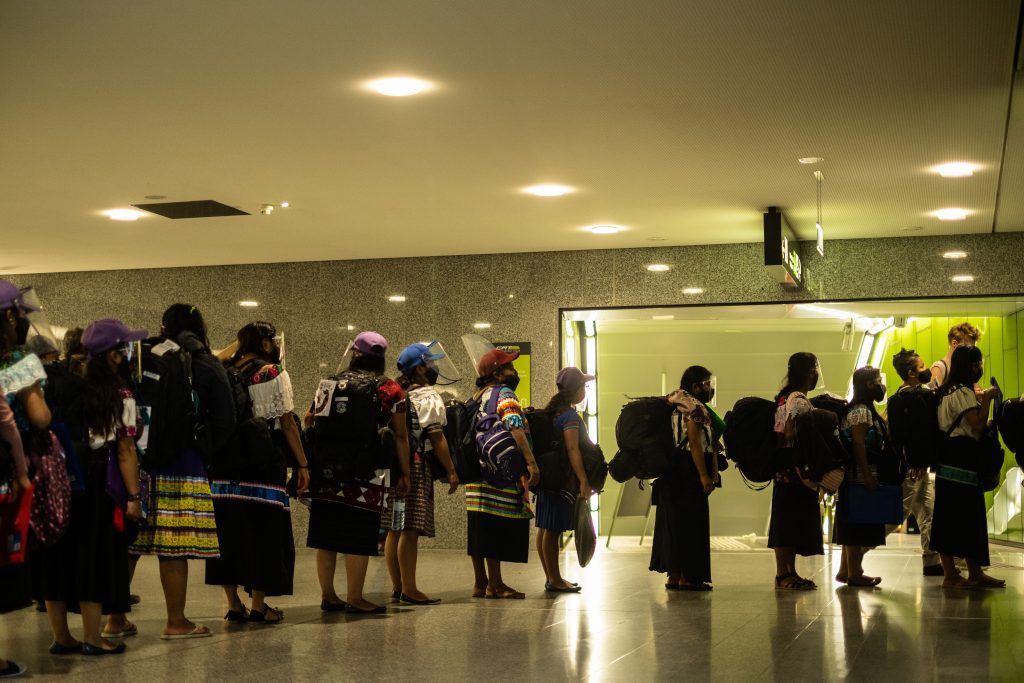
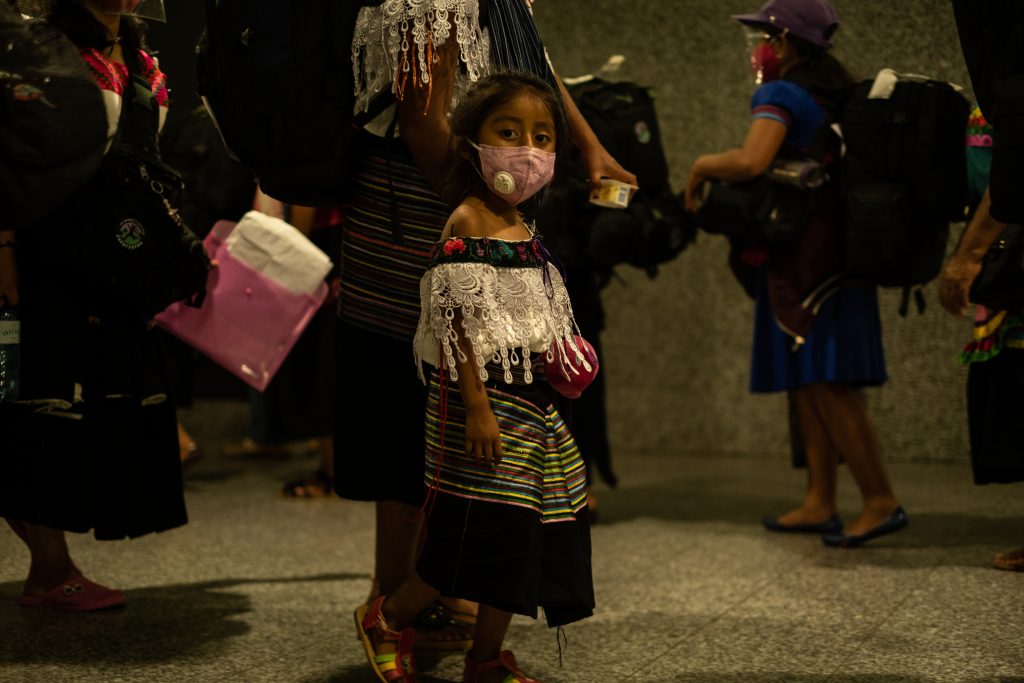
Bajo un sol sorprendentemente fuerte para esta época del año en esta geografía, las mujeres mayas se protegieron del intenso calor con carpetas llenas de documentos, prueba de su lucha por entrar en Europa. Tras el discurso, se refugiaron a la sombra de un edificio y descansaron mientras los grupos se organizaban para llevar a las compas a sus alojamientos en distintos barrios de Viena, hasta donde se desplazaron en transporte público.
La Fuerza Aérea Zapatista aterrizó en una tierra insumisa cuya historia de dolor y resistencia va más allá de los valses y los palacios rococó a las orillas del río Danubio, el más grande de Europa después del Volga. Ricardo Loewe, del Comité de Solidaridad México-Salzburgo, explicó a los medios de comunicación independientes que “junto con Polonia y Hungría, Austria es un país del antiguo imperio de los Habsburgo que hoy lleva la bandera del racismo de Europa; es más que triste, es indignante, enfurece, porque aquí hay dramáticas reminiscencias del fascismo que todavía se sienten. Y, sin embargo, estamos recibiendo a la delegación zapatista; no es casualidad que vengan a Viena, donde hay muchos grupos que tienen gran simpatía por el zapatismo.”
Aparte de la Cripta Imperial, donde los turistas pueden visitar la tumba de Maximiliano, archiduque de Viena y emperador del Sacro Imperio Romano Germánico de 1493 a 1519, el Museo Etnográfico exhibe su eurocentrismo y su narrativa colonial “con el Penacho de Moctezuma que parece un pollo muerto, tumbado, porque se está deshaciendo”. Las palabras de Loewe nos recuerdan también el pasado de la “Viena roja”, anterior a la dictadura fascista de Dolfus, así como el marxismo austriaco cristalizado, por ejemplo, en la plaza Friedrich Engels y el complejo multifamiliar Karl-Marx-Hof. Una compa austriaca, de 80 años, recuerda también los movimientos feminista y queer, el movimiento okupa y la cultura de la lucha anarcocomunista, “pequeña pero bien estructurada, no partidista”.
Algunas personas esperaban en el aeropuerto la recepción del segundo grupo, que se esperaba para la tarde del 14 de septiembre. Aunque este grupo no consiguió embarcar en Madrid en el vuelo de conexión a Viena, el acto cultural se celebró como estaba previsto. Además de la música, la poesía, la percusión y los cánticos colectivos, también hubo intervenciones en varios idiomas que expresaron no sólo la revuelta por el hecho de que el segundo grupo no haya podido embarcar en Madrid, sino también la alegría por la esperada llegada. Un compa migrante exclamó con vehemencia: “Si los zapatistas están atrapados en Madrid, en el corazón del colonialismo, entonces debemos ir por ellos, ¡aunque tengamos que ir caminando!”
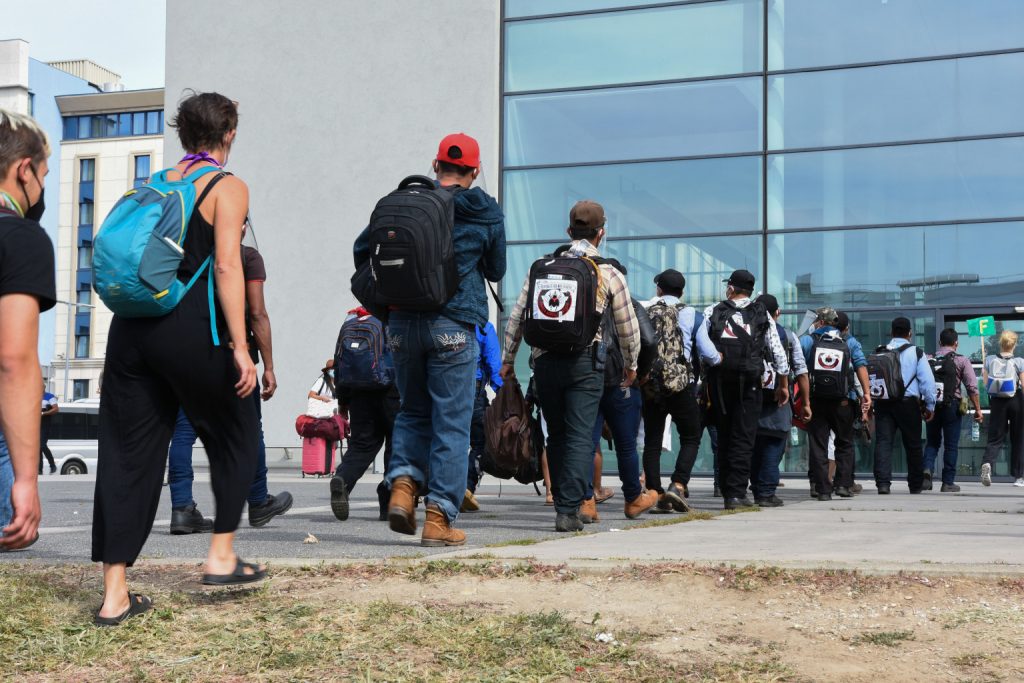
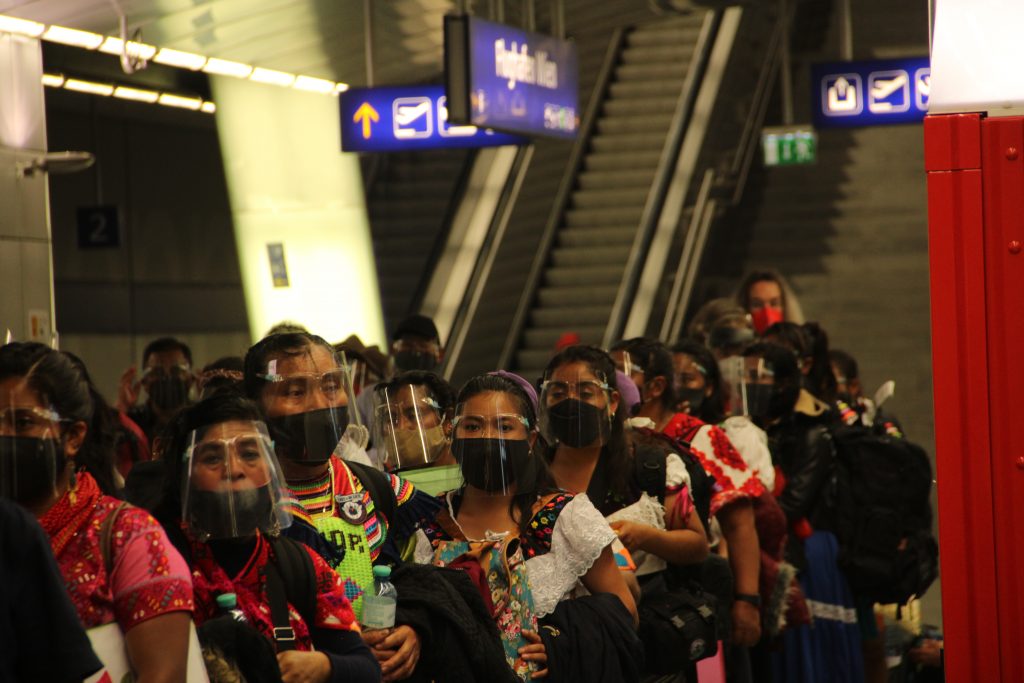
No fue necesario porque, un día después, también alrededor del mediodía, más de 70 zapatistas aterrizaron y formaron alegremente una fila que salió del aeropuerto de la capital austriaca en otra mañana soleada. A pocos metros de la puerta de las llegadas internacionales, un grupo de anfitriones migrantes tomó la palabra:
Querido Compas, los migrantes de lengua española y portuguesa en la geografía de Viena te saludan y te dan la bienvenida. Somos un colectivo que se ha reunido para conocer y acompañar a ustedes, la delegación zapatista. Queremos que la voz de los migrantes se escuche en los diferentes frentes de la organización de la Jornada por la Vida en Austria. Nos preguntamos: “¿Cómo nos hubiera gustado ser recibidos al llegar del otro lado del océano?”. Y la respuesta fue que alguien nos hubiera dicho las siguientes palabras: ‘nosotros, los precarios, nosotros, los racializados, nosotros que luchamos por una voz migrante, nosotros que hablamos alemán con acento en la geografía llamada Viena, ¡os saludamos y os damos la bienvenida! Nuestra casa es vuestra casa”.
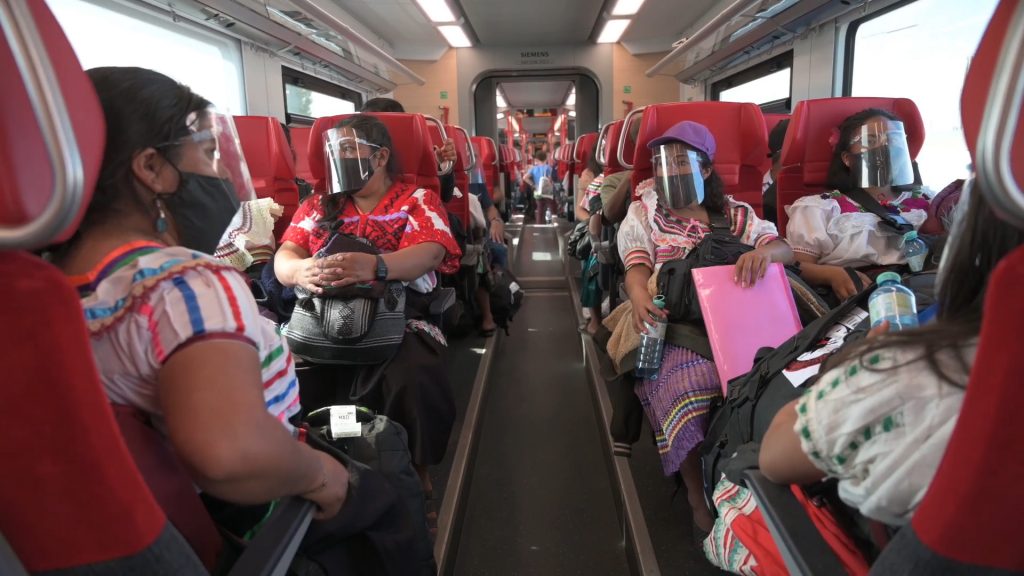
El equipo de streaming se instaló durante dos días consecutivos frente a las puertas de las llegadas internacionales bajo la mirada incrédula de los viajeros y de los policías del aeropuerto. Con varias cámaras, el equipo pudo documentar las emociones de grandes decenas de activistas y simpatizantes del movimiento zapatista al ver las columnas rebeldes, mientras ambos grupos se fotografiaban y filmaban con sus teléfonos. Antes de acompañar a los grupos en los transportes públicos hasta sus alojamientos, los medios independientes realizaron pequeñas entrevistas a los presentes y documentaron los actos de recepción y las actividades culturales y artísticas que marcaron la historia de una invasión muy diferente. Documentaron el reparto por parte del Subcomandante Insurgente Moisés de los billetes de tren a los recién llegados que, a pesar de los largos viajes, se mostraban sonrientes y alegres por pisar por primera vez, tras una larga espera, el “verde pasto” europeo.
Fotos de Lorena Salamanca, Isabel Mateos, Amehd Coca y Lukas David Beck
En ambos actos, estuvieron presentes colectivos y organizaciones internacionalistas, feministas, antifascistas y anticapitalistas de Austria: Zapalotta, Compas Zapatistas Viena, Asamblea Latinoamericana-Viena, Comité de Solidaridad México-Salzburgo, Ni Una Menos Austria, EKH, Frauenzentrum, KomIntern-y de toda Slumil K’ajxemk’op-Colectivo Acción Solidaria, Mujeres y Disidencias de la Sexta en la Otra Europa y Abya Yala-RRR, RAZB (Bélgica), Café Libertad Kollektiv de Hamburgo, y asambleas zapatistas de Berlín, Frankfurt y Wendland (Alemania), LAPAZ (Italia), Yretiemble, ¡Compas Arriba! , Medios de Comunicación Independientes con la Gira, y personas de diferentes organizaciones implicadas en la organización de esta Jornada por la Vida desde Portugal hasta Finlandia, desde el Estado español hasta Eslovenia y Grecia.
Mujeres zapatistas participan en protesta contra los feminicidios en Austria
Foto de Guilhotina.info
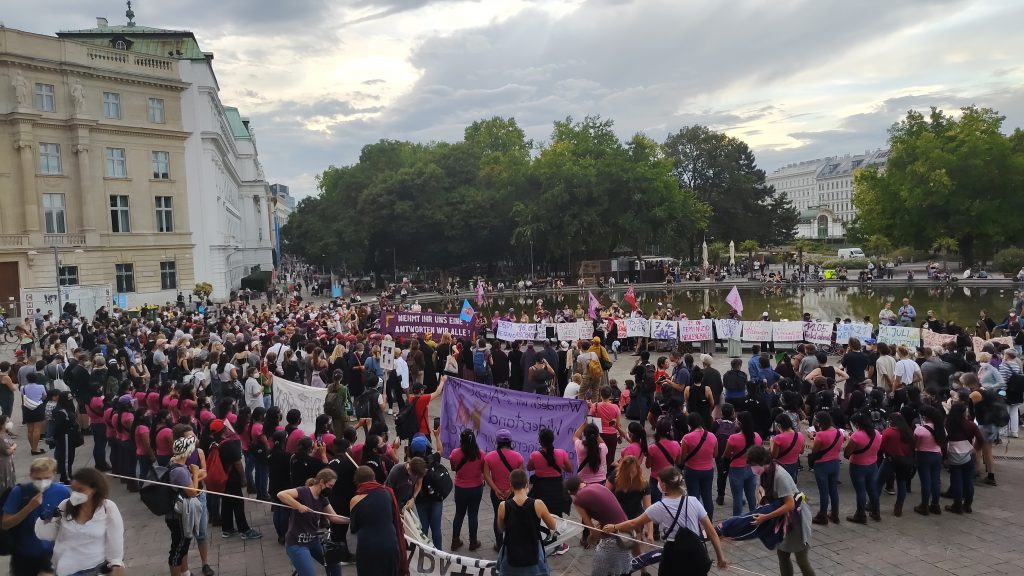
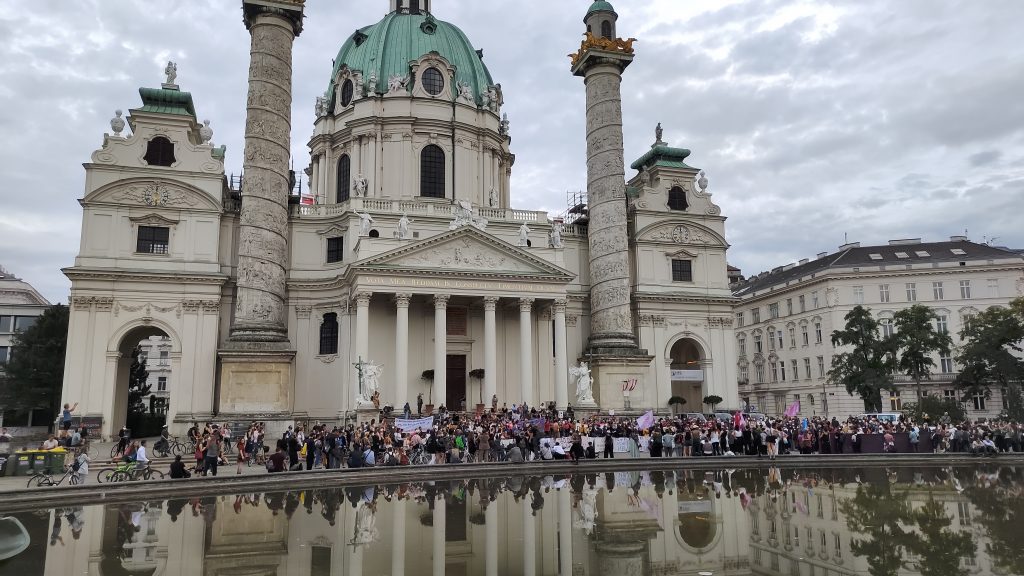
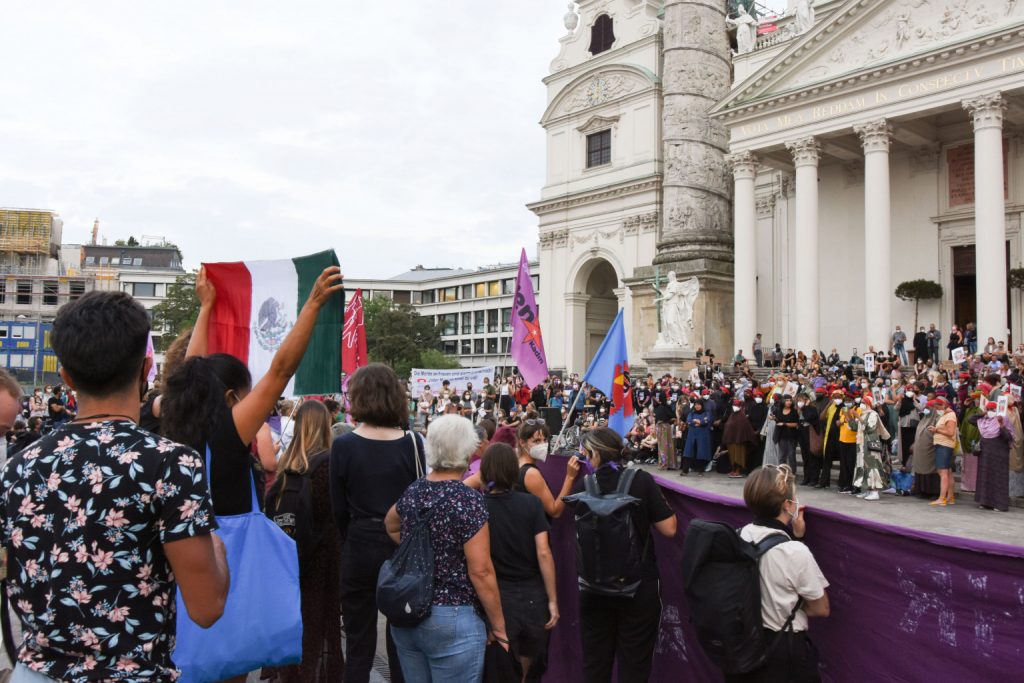
A poco más de 48 horas de haber llegado a la capital austriaca, un gran contingente de mujeres mayas zapatistas se unió a una protesta a última hora del jueves 16 de septiembre para exigir justicia por Shukri y Fadumo, dos mujeres de origen somalí asesinadas dos días antes en Viena, y que este doble feminicidio no quede impune. Esta protesta fue convocada por Ni Una Menos-Austria, que agradeció “a los compas zapatistas su apoyo en nuestra concentración y marcha en este triste día”.
Frente a la monumental iglesia de Karlsplatz, las compas escucharon, aplaudieron y filmaron diferentes intervenciones de mujeres somalíes y de otros países de Europa y África que se expresaron en sus diferentes idiomas, especialmente en somalí, árabe, español y alemán austriaco. Cientos de jóvenes feministas e internacionalistas portaban banderas y carteles contra el patriarcado y el racismo. Gritaron consignas y corearon una versión en alemán de “Canción sin miedo” de Vivir Quintana, antes de encender en silencio las luces de sus teléfonos al caer la noche.
Tras escuchar historias de sufrimiento en varios idiomas, los miembros de La Extemporánea continuaron el recorrido de la marcha de mujeres austriacas y migrantes por las grandes calles rodeadas de imponentes edificios.
Foto de Guilhotina.info
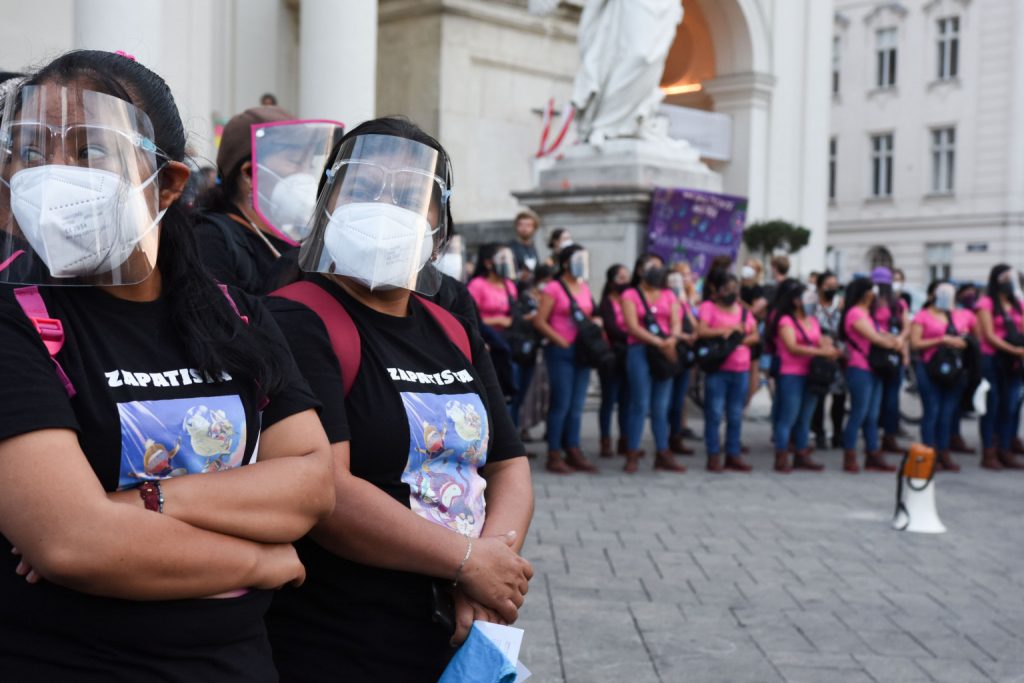
El tañido de la campana de la iglesia de Karlsplatz no pudo ahogar las voces fuertes ni los silencios de las mujeres que expresaban su dolor y que los teléfonos de los compas zapatistas y la cámara de video del compa de Tercios Compas intentaron captar. Asignado con el deber de documentación audiovisual de la delegación del EZLN, fue el único hombre zapatista presente en la concentración y la marcha nocturna. Las vibraciones antipatriarcales, antirracistas e internacionalistas de la primera marcha europea de la Sección Miliciana de Ixchel-Ramona pudieron percibirse en el streaming realizado por los medios de comunicación independientes desde Karlsplatz en Viena, con comentarios en español de los anfitriones de Zapalotta y del Comité de Solidaridad México-Salzburgo, explicando el contexto y el significado de las protestas contra los 21 feminicidios ocurridos en Austria en 2021.
Sin duda, mucha emoción marcará el recuerdo de las compas milicianas, vestidas con camisetas rosas, vaqueros y botas de cuero, dispuestas a caminar y a escuchar, intercambiar y aprender de las luchas de cientos de colectivos insumisos europeos que las invitaron y exigen incansablemente “¡Ni una menos!”, “¡Alerta Feminista!” y “¡Detengan los feminicidios!”
Fotos de Lorena Salamanca
Llegada de La Extemporánea marcada por el secuestro de dos zapatistas en Chiapas
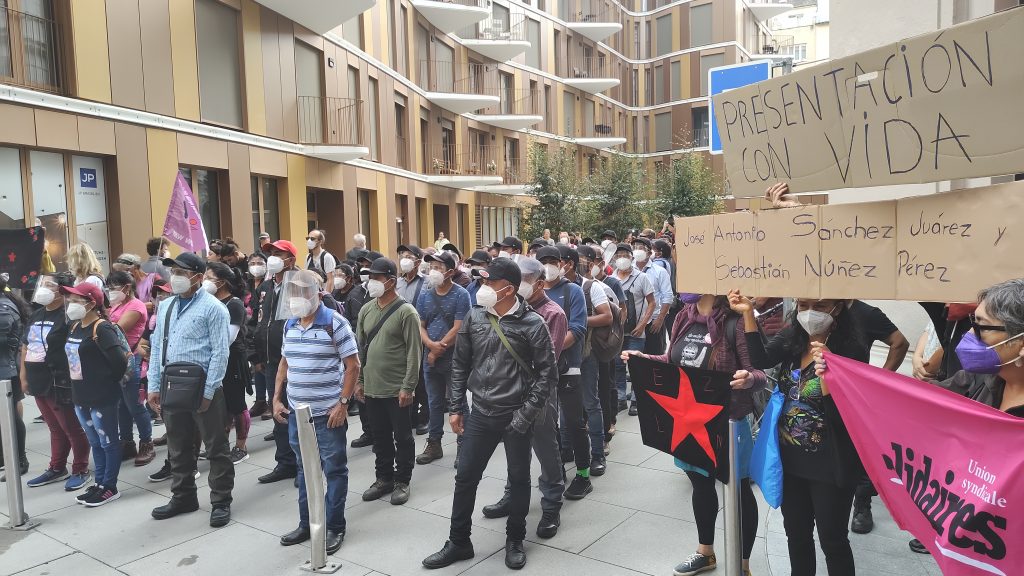
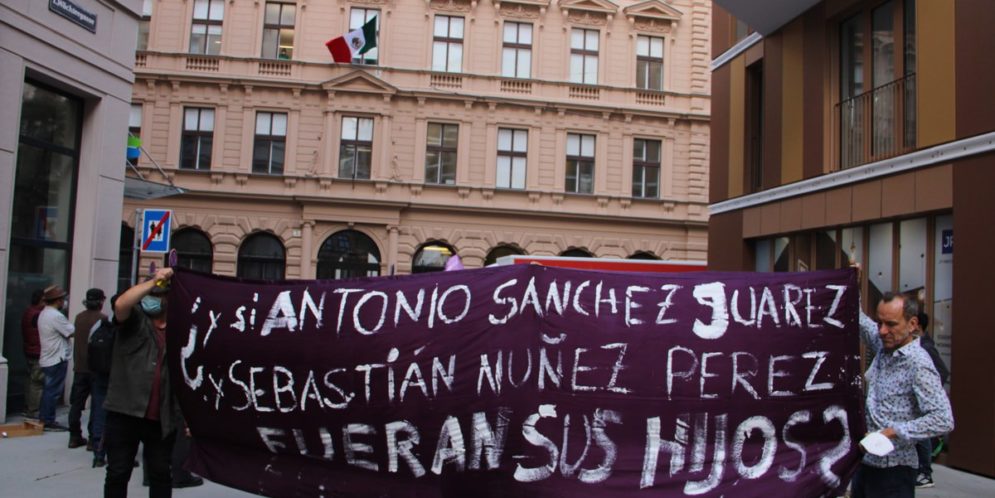
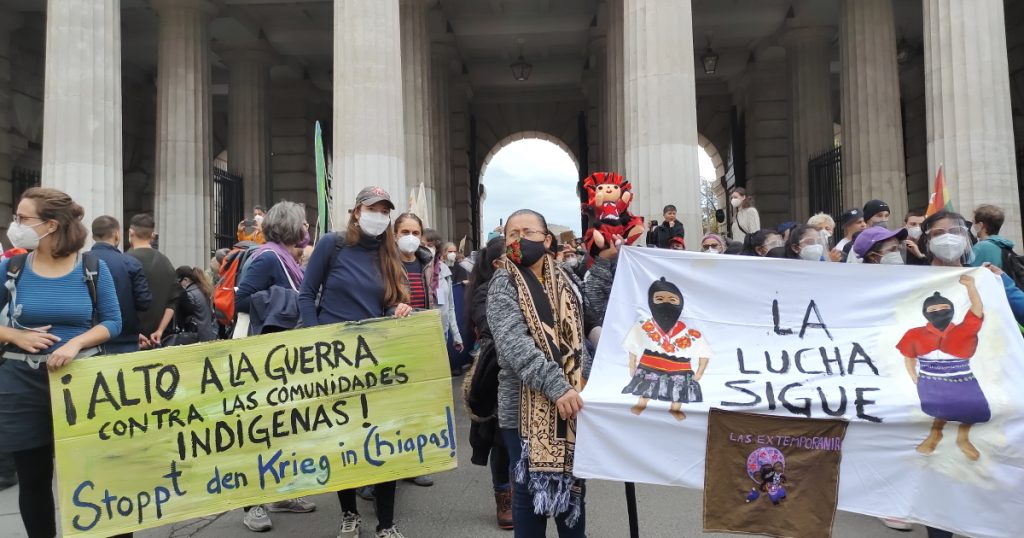
El 17 de septiembre, medio centenar de zapatistas, mujeres y hombres, reforzaron el contingente internacional reunido frente a la embajada de México, en el lujoso centro histórico de la antigua capital del Imperio de los Habsburgo. Esta protesta encendió una campaña internacional para denunciar el paramilitarismo y exigir el regreso con vida de José Antonio Sánchez Juárez y Sebastián Núñez Pérez, compas de la Junta de Buen Gobierno “Nuevo Amanecer en Resistencia y Rebeldía por la Vida y la Humanidad” del Caracol 10 “Floreciendo la Semilla Rebelde”, en Chiapas
Fueron secuestrados el 11 de septiembre en la comunidad 7 de Febrero, municipio de Ocosingo, Chiapas. Esta comunidad es la sede de ORCAO, organización paramilitar que desde hace varios meses viene perpetrando una serie de acciones criminales contra las Bases de Apoyo del EZLN en la comunidad autónoma de Moisés-Gandhi.
Fotos de Guilhotina.info and Pozol.org
Frente al edificio monumental de la diplomacia mexicana, decenas de activistas de toda Europa denunciaron con el megáfono, pancartas y carteles, la implicación del gobierno en la violencia antizapatista. Las intervenciones en español, alemán, griego, francés, portugués y gallego, así como la reciente declaración de las organizaciones que acogen al EZLN y al CNI, denunciaron la complicidad tanto del gobierno federal de López Obrador como de Rutilio Escandón, gobernador de Chiapas, en los ataques paramilitares realizados no sólo contra los campesinos mayas zapatistas, sino también contra los defensores de los derechos humanos.
Al final de la manifestación, el Subcomandante Moisés, vestido de negro y cerrando la columna zapatista, se dirigió al edificio diplomático y, a modo de despedida, levantó dos veces el dedo medio, momento que captamos en video y que publicamos aquí con su consentimiento.
Los zapatistas visitan el campamento contra un megaproyecto en Viena
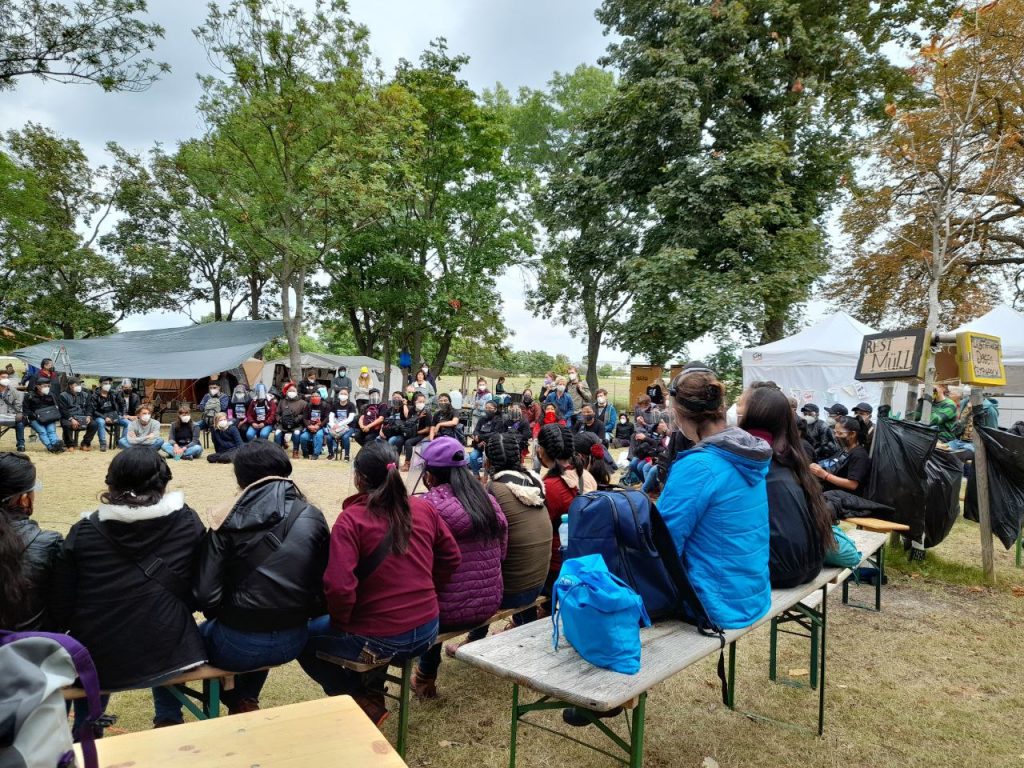
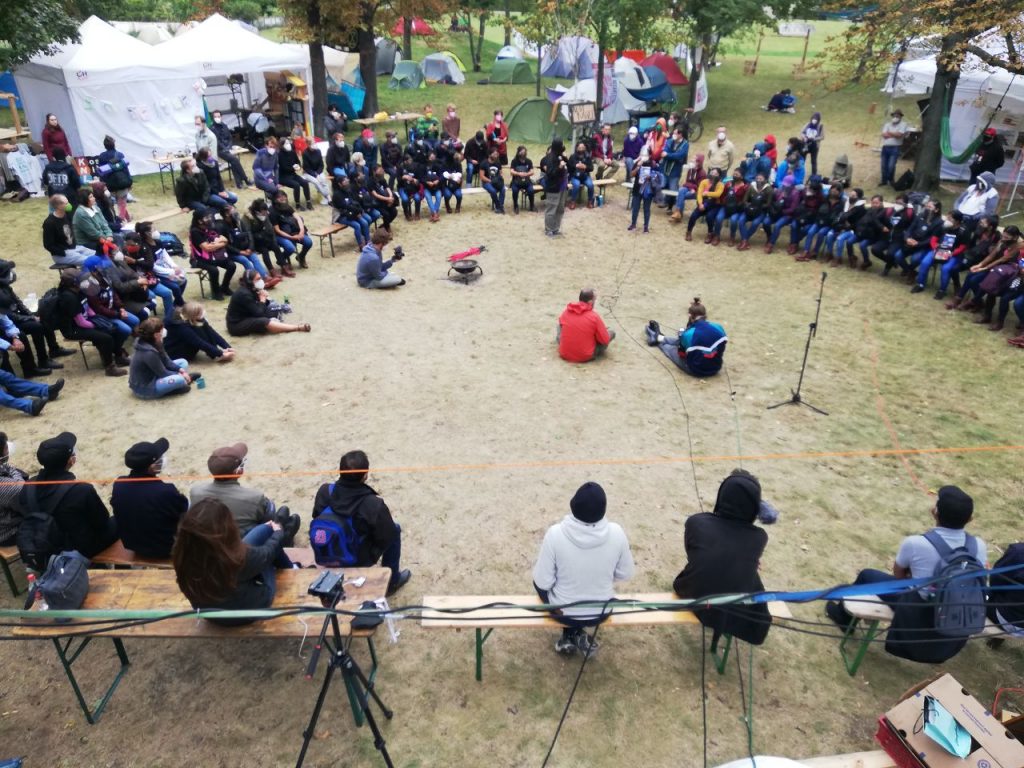
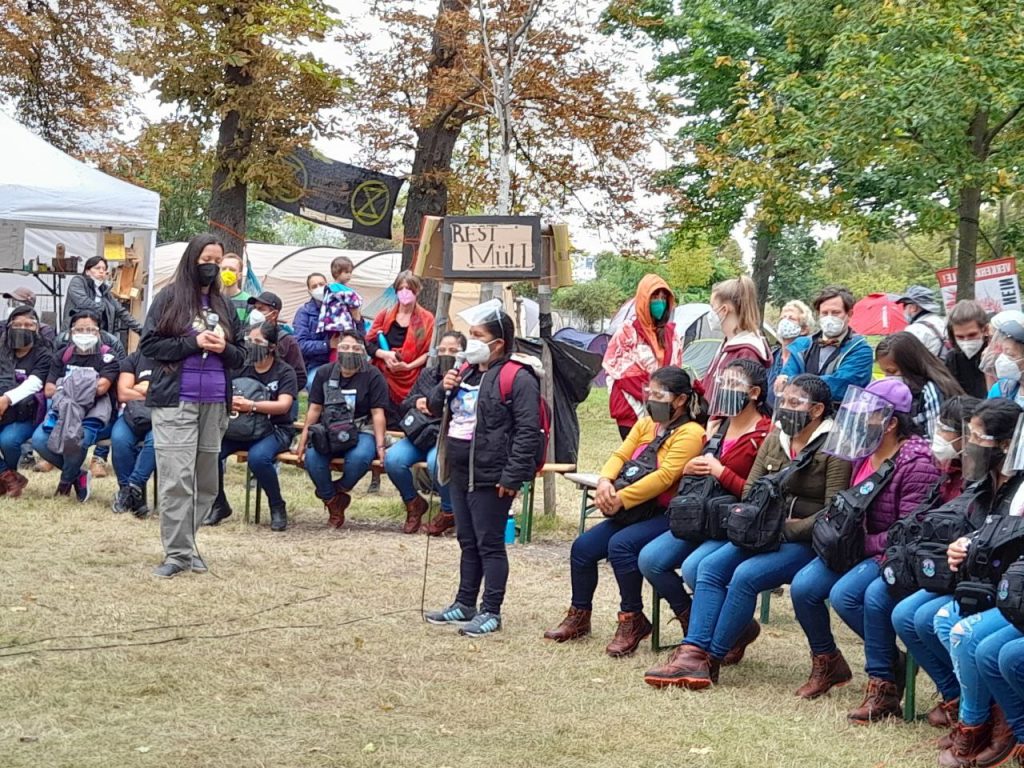
En la mañana del sábado 18 de septiembre, una delegación zapatista tuvo por primera vez un encuentro público con un movimiento de resistencia que, desde abajo y a la izquierda, se enfrenta al mal gobierno en esta Tierra Insumisa. El escenario es un campamento en Lobau, en las afueras de Viena, con una impresionante infraestructura -cocina, cafetería, puntos de información y una treintena de tiendas de campaña-, montado para proteger un raro ecosistema en lo que es uno de los grandes centros de la Hidra capitalista que, en su afán de crecimiento desenfrenado e infinito, se traga montañas, pastizales, ríos y humedales para sustituirlos por metrópolis, desiertos de concreto, agroindustrias, minas y un sinfín de megaproyectos que siembran la muerte donde antes había vida.
Alrededor de 60 zapatistas, hombres y mujeres, se reunieron con jóvenes ambientalistas que, con amplio apoyo de la población local, resisten desde agosto contra los planes del gobierno austriaco de construir una autopista que atraviese la mayor reserva natural de la ciudad, zona protegida desde 1978 y parte del Parque Nacional Danubio-Auen desde 1996.
En un primer momento de intercambio, los participantes en la acampada contaron a los zapatistas la historia del lugar, el proyecto y por qué defienden el que es el único paisaje de este tipo que permanece ecológicamente intacto no sólo en la ciudad, sino en toda Europa Central. Esta zona alberga 800 especies de plantas, así como 100 especies de aves nidificantes, más de 50 especies de mamíferos, reptiles y anfibios y 67 especies de peces.
Entre intervenciones y preguntas de ambas partes, se discutieron las estrategias de resistencia para defender el territorio: se habló de pacifismo, desobediencia civil, ocupación y violencia. Los activistas locales explicaron que todo el movimiento en Lobau es pacífico y que ésta es una condición fundamental para mantener el amplio apoyo de la comunidad. Aunque la mayoría de los acampados son jóvenes, los vecinos han colaborado y ayudado, permitiendo, por ejemplo, que los jóvenes acampados se duchen en sus casas.
Incluso se ha llegado a un acuerdo con la policía para que, si la protesta se mantiene sin violencia, avisen a los ocupantes con un día de antelación en caso de orden de desalojo.
Si esto resulta extraño para alguien que viene de una geografía del sur de Europa y, a diario, ve imágenes de policías reprimiendo y agrediendo violentamente a una población indefensa, no podemos imaginar lo extraño que suena para alguien de México, donde la violencia es una certeza cotidiana, y la policía una fuerza más de represión y violencia gratuita.
“¿Y si no se van?”, preguntan los zapatistas.
Explican que, si se enfrentan a una orden de desalojo y no se van por su cuenta, serían detenidos durante 24 horas y luego liberados, sin ninguna acusación. Lo que significa que “no pasa nada y volvemos a acampar”.
“Es como si yo te dijera ‘te voy a dar una paliza’, y tú me dijeras ‘no, no lo hagas’, y entonces no lo hago”, comenta SubMoy, sorprendido, preguntando entonces si este tipo de acciones tienen algún resultado. Lo cierto es que, desde el inicio de las ocupaciones en Lobau, las obras de construcción de la autopista y sus accesos están paradas.
Después de una buena hora en la que ambos movimientos compartieron sobre sí mismos e intercambiaron ideas e impresiones sobre la resistencia, los zapatistas recibieron un recorrido por el sitio de acampada. Luego partieron hacia un segundo sitio ocupado, a 15 minutos a pie, el patio de construcción con todas las máquinas. Allí, los zapatistas y los demás presentes se dividieron en dos grupos y conocieron los dos campamentos instalados allí, más pequeños que el principal.
Fue en uno de esos campamentos donde todos se reagruparon frente a una torre, construida por los manifestantes, para grabar un video en apoyo a la resistencia de Lobau.
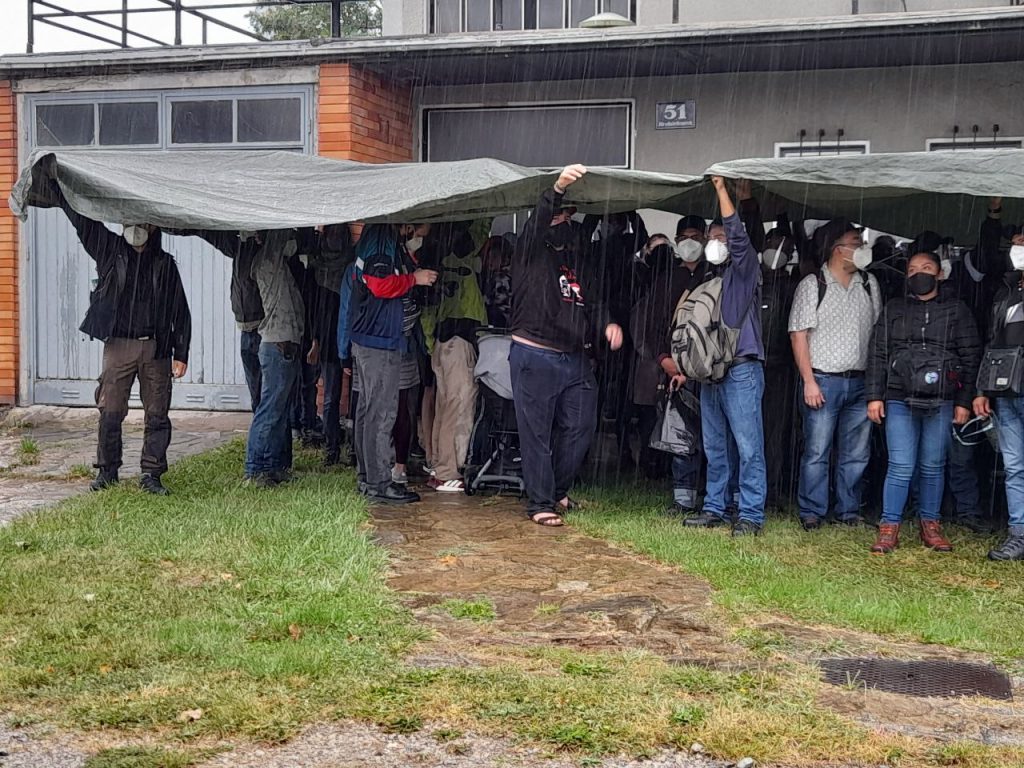
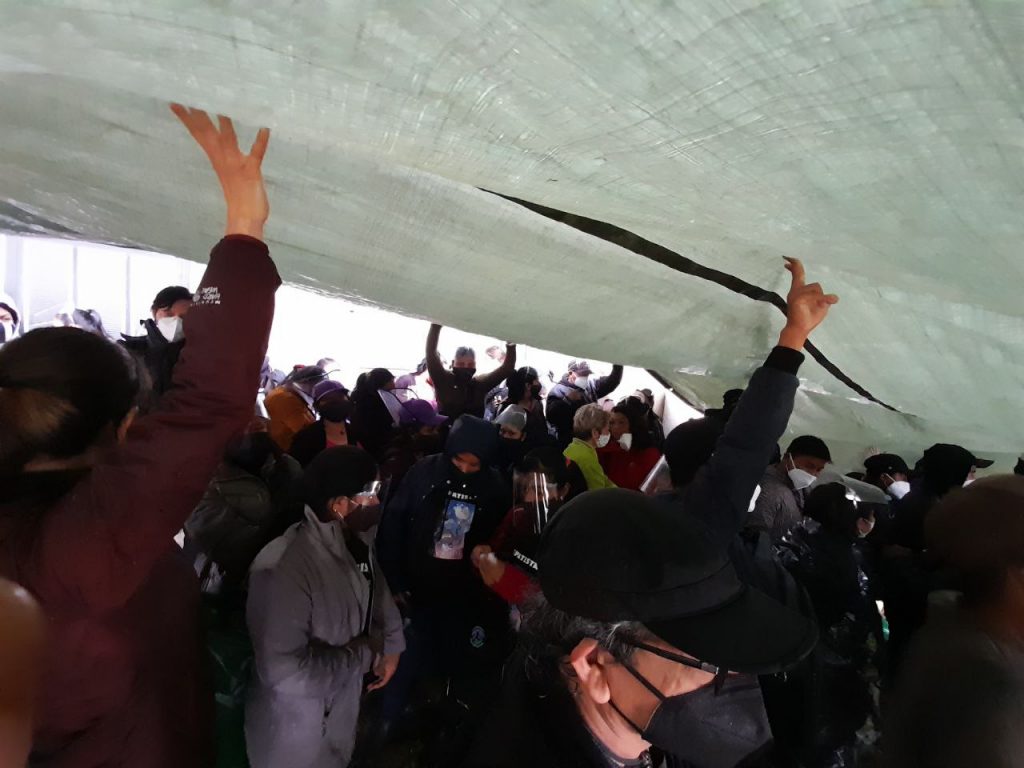
Hasta que, de repente, empezó a llover a cántaros y las decenas de personas tuvieron que refugiarse bajo una larga lona, lo que no impidió que la mayoría se empapara.
En ese momento, la mayoría de los compas zapatistas decidieron regresar a sus alojamientos. Un grupo de mujeres zapatistas alojadas en el Frauenzentrum (Centro de Mujeres) decidieron quedarse en Lobau mientras esperaban la comida a la que habían sido invitadas.
En esa hora de espera, hubo otro momento de discusión e intercambio, esta vez más informal, en el que los compas compartieron la historia del movimiento zapatista desde 1986, la preparación para el levantamiento de 1994 y el papel de sus promotores de salud y educación, poniendo especial énfasis en la participación de las mujeres en todo el proceso. También abordaron el tema del consumo de alcohol en las comunidades, los problemas que surgieron de él tanto en el ámbito militar como en el familiar, y cómo, como comunidades y pueblos, decidieron enfrentarlo.
Un compa menciona que “Los zapatistas vienen a dar esperanza y a inspirarnos con todo lo que ya pudieron construir en Chiapas. Son una verdadera biblioteca ambulante”. Para concluir, los zapatistas subrayan que por el momento son un movimiento pacífico y que se resisten a tomar las armas a pesar de las provocaciones.
La zona de Lobau, en el Parque Nacional Danubio-Auen, es lo que queda de un enorme ecosistema húmedo que se extendía por las márgenes del Danubio, destruido en el proceso de movimiento de tierras para la expansión e industrialización de la capital austriaca a finales del siglo XIX.
Fue en este lugar tan especial donde se produjo el primero de los encuentros entre zapatistas y movimientos y resistencias en la Europa Insumisa, objetivo principal de este primer capítulo del Viaje por la Vida. Fue también en este Parque Nacional donde, en 1984, tuvo lugar uno de los principales procesos de resistencia de la historia reciente de Austria. El plan de construcción de una central hidroeléctrica en el límite oriental del parque desencadenó una oleada de protestas que culminó, en diciembre de ese año, con la ocupación del lugar que las máquinas estaban dispuestas a destruir. El 8 de diciembre, 8.000 personas se manifestaron en el lugar y algunos cientos iniciaron una ocupación permanente del espacio, obligando a detener la construcción.
El 19 de diciembre, un contingente de 800 policías expulsó violentamente a los 3000 manifestantes que permanecían en el lugar. Los enfrentamientos se saldaron con dos docenas de heridos y una ola de indignación en Viena, donde 40 mil personas se manifestaron esa misma noche. Temiendo una revuelta, el gobierno anunció la suspensión del proyecto un par de días después y, a principios de enero, el Tribunal Supremo anunció la prohibición de cualquier construcción en la zona. La ocupación terminó y, meses después, el proyecto se abandonó definitivamente.
Esta lucha se recuerda como uno de los momentos más importantes del proceso democrático en Austria, y fue la primera vez que la desobediencia civil fue ampliamente aceptada como estrategia para hacer valer la voluntad del pueblo frente a las intenciones del mal gobierno. Desde ese año, casi todos los megaproyectos en Austria se han enfrentado a algún grado de resistencia popular. En 1996, la construcción de una central hidroeléctrica en Lambach se retrasó debido a una ocupación y, en 2003, un proyecto similar para la zona de Lobau también se detuvo tras una ocupación simbólica del lugar.
El CNI y el FPDTA llegan a Austria y se unen al EZLN para la manifestación de la Huelga Climática en Viena
Los grupos de Escucha y Habla que conforman La Extemporánea comenzaron, el 22 de septiembre, a viajar a las geografías que constituyen la primera zona de este Viaje por la Vida -Alemania, Escandinavia, Europa del Este y los Balcanes-. A última hora de la tarde de ese mismo día, aterrizó en Viena la delegación de 16 personas del Congreso Nacional Indígena (CNI-CIG) y del Frente de Pueblos en Defensa de la Tierra y el Agua (FPDTA) que acompañan al EZLN en este Viaje.
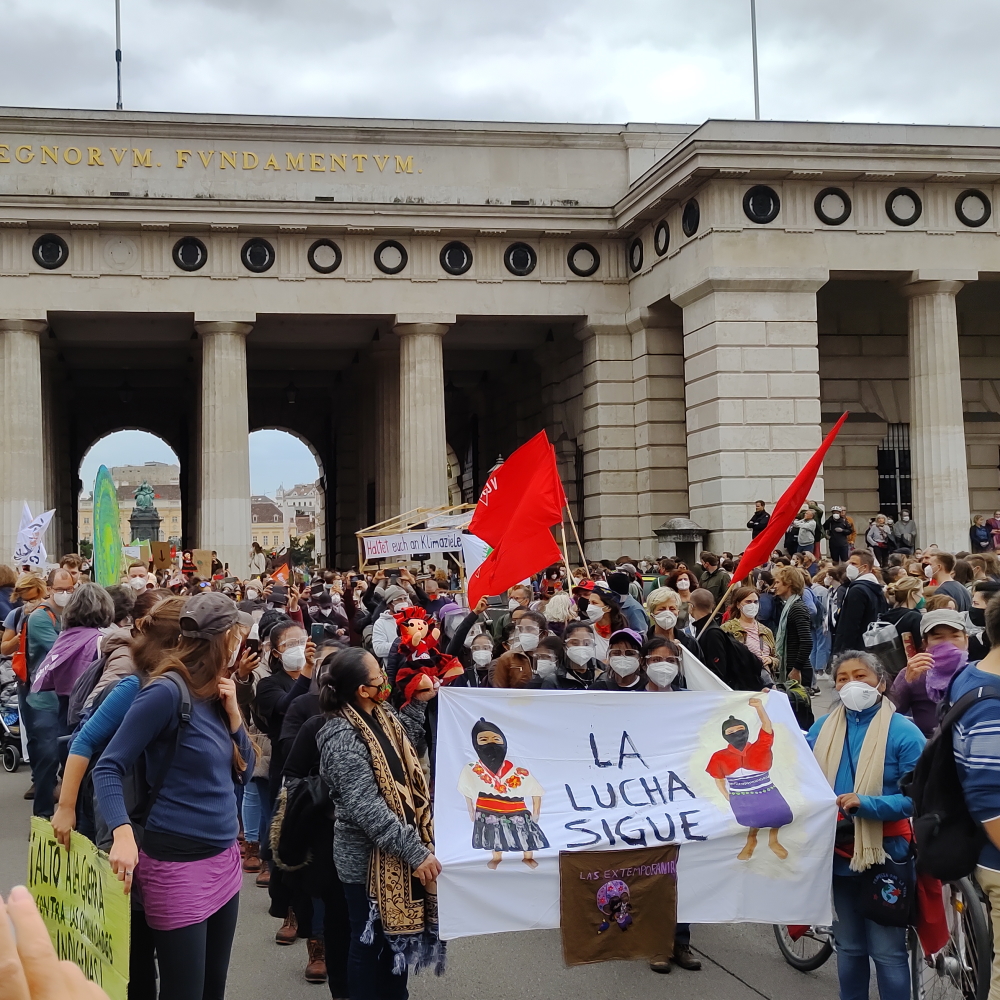
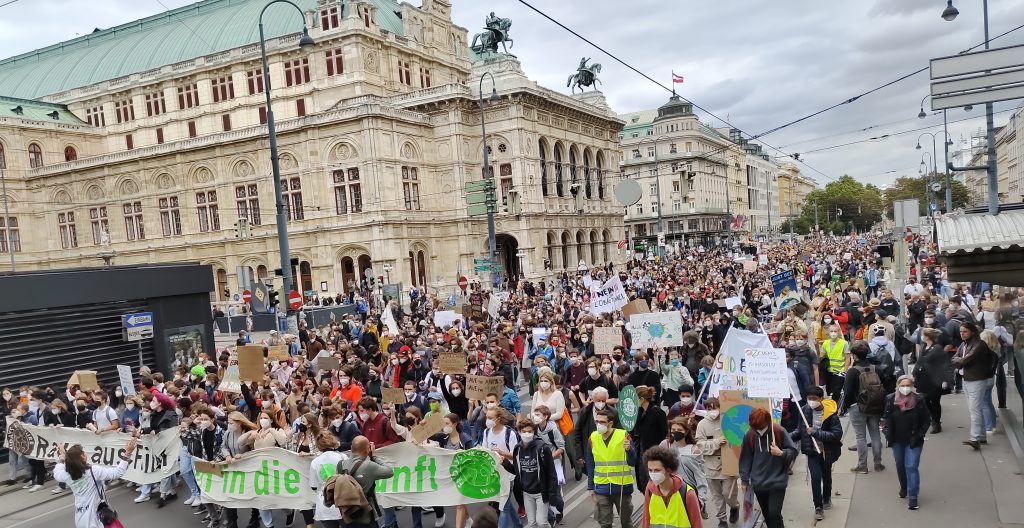
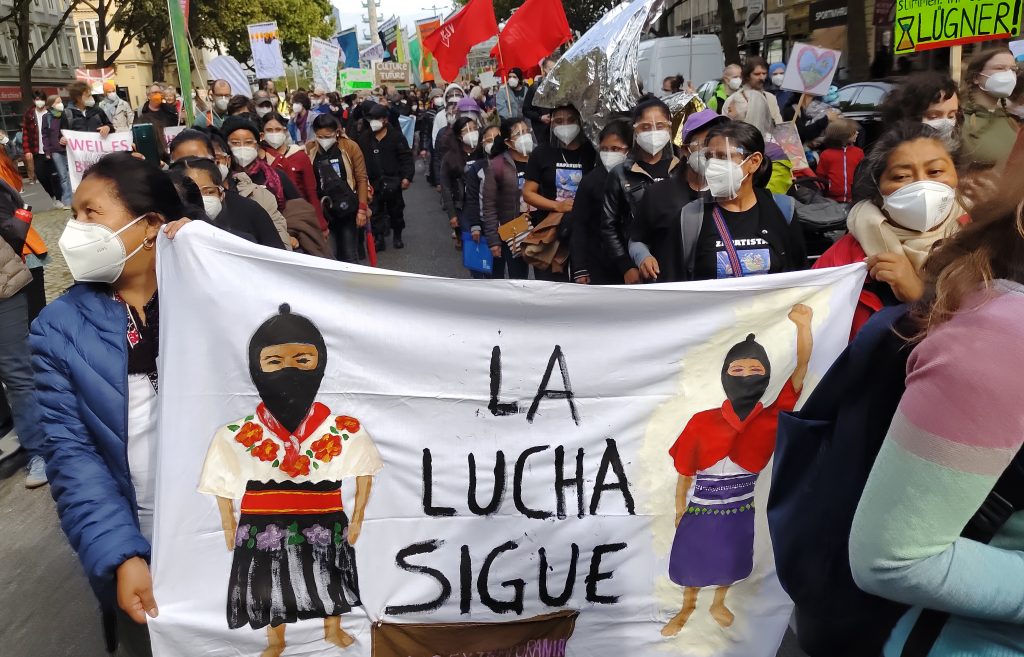
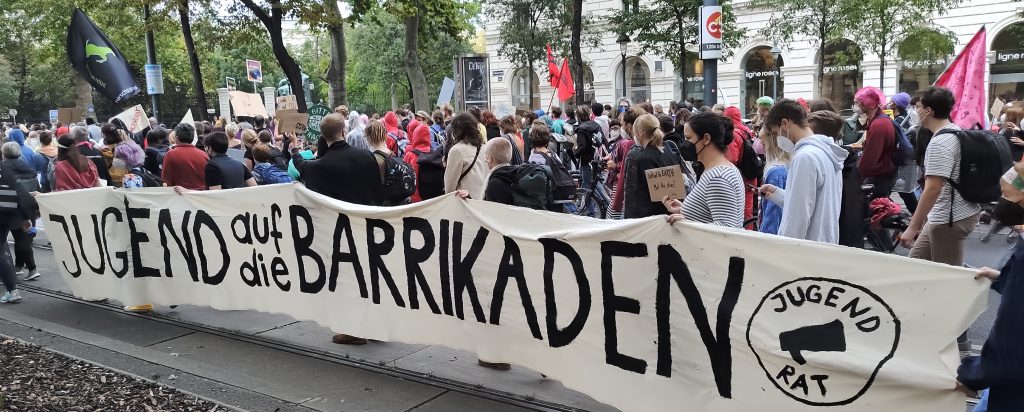
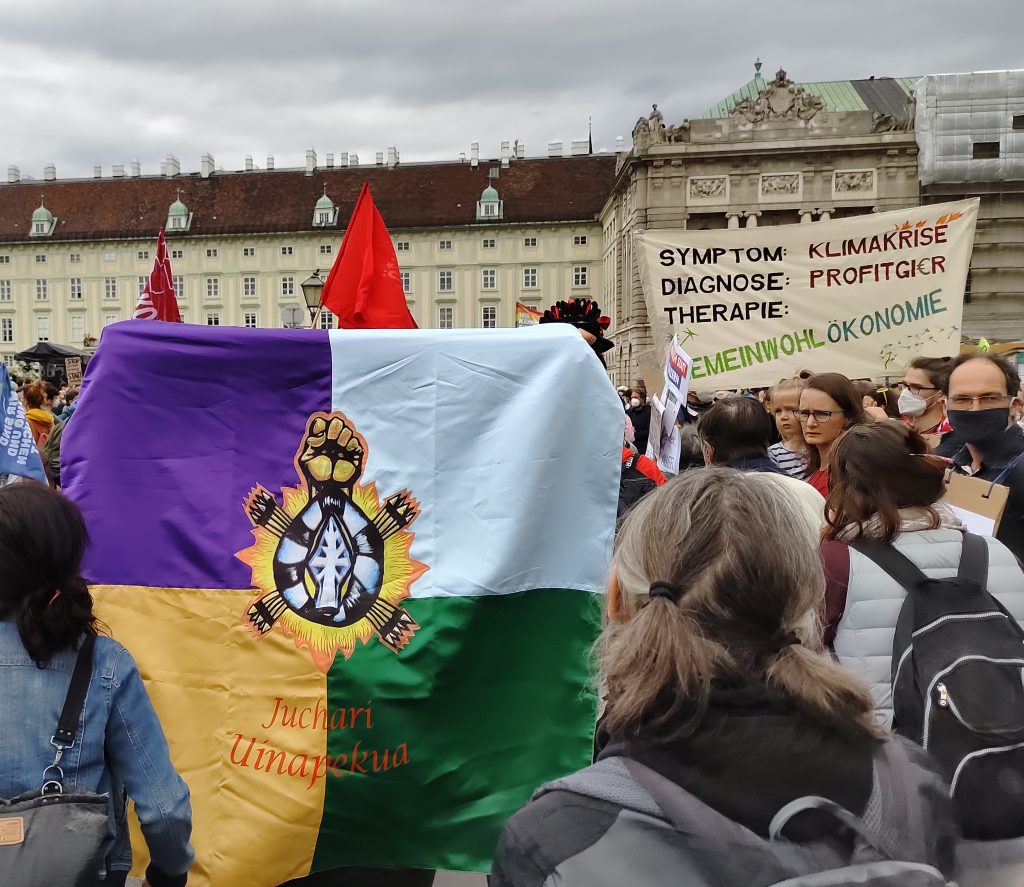
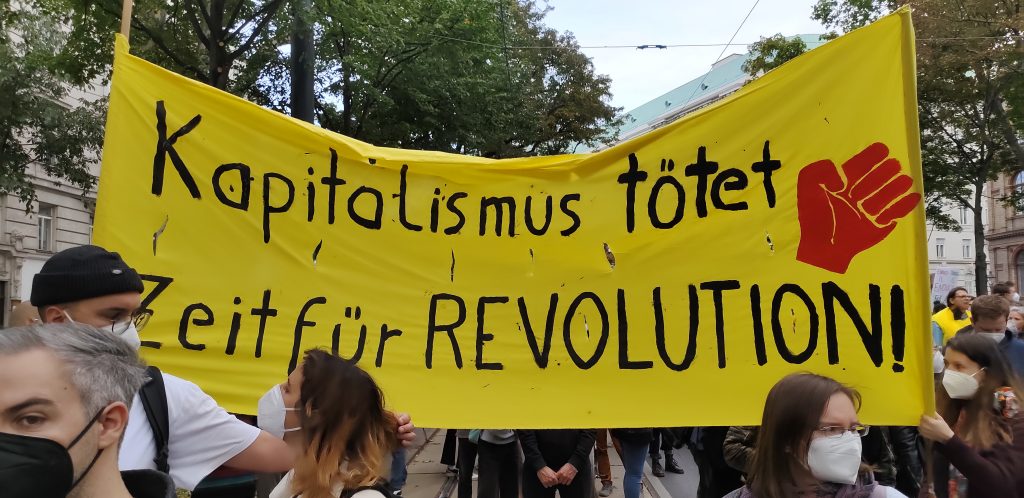
Dos días después, la delegación del CNI y el FPDTA participaron, junto con decenas de zapatistas presentes en la ciudad, en la manifestación de la Huelga Climática. Veinte mil personas salieron a las calles de la capital austriaca exigiendo un cambio urgente para enfrentar la crisis climática.
Foto de Guilhotina.info
La manifestación partió hacia la 1 de la tarde de Praterstern y cruzó las grandes avenidas de Viena en una caminata de 4 km llena de consignas en inglés y alemán que exigían justicia climática, una acción urgente para combatir el calentamiento global, un cambio de sistema y en apoyo de la resistencia en Lobau, en las afueras de la ciudad, contra la construcción de una autopista en su reserva natural más importante. Terminó en el Parlamento austriaco, donde los últimos manifestantes llegaron dos horas y media después del inicio de la marcha.
Tras los discursos de la organización y la actuación de una banda local, los compas subieron al escenario y compartieron el mensaje de los indígenas en México con miles de personas, frente a ese mismo majestuoso balcón desde el que Hitler habló en 1938, siendo aplaudido por cientos de miles de personas y consumando la anexión de este territorio por la Alemania nazi.
Esta vez el mensaje fue muy diferente. Primero habló Libertad, una compa zapatista que contó la historia de una mujer.
No importa el color de su piel, porque tiene todos los colores. No importa su lengua, porque escucha todas las lenguas. No importa su raza ni su cultura, porque en ella habitan todas las formas de vida. No importa su estatura, porque es grande y, sin embargo, cabe en una sola mano. Cada día y cada hora, esa mujer es violada, golpeada, herida, violada, engañada, despreciada. Un macho ejerce su poder sobre ella, cada día y cada hora. Ella viene a nosotros, nos muestra sus heridas, sus dolores, su pena, y nosotros sólo le damos palabras de consuelo, de lástima, o la ignoramos. Tal vez, como una limosna, le damos algo para aliviar sus heridas, pero el macho continúa con su violencia.
Nosotros y tú sabemos cómo terminará esto. Será asesinada y, con su muerte, todo morirá. Podemos seguir dándole palabras de esperanza y remedios para sus dolencias. O podemos decirle la verdad: la única medicina que puede tratarla y curarla por completo es enfrentar y destruir al que la viola. Y también podemos, en consecuencia, unirnos a ella y luchar a su lado.
Nosotros, los pueblos zapatistas, llamamos a esta mujer “Madre Tierra”. Para los machistas que la oprimen y humillan, usen el nombre, la cara y la forma que quieran. Nosotros, los pueblos zapatistas, llamamos a este macho asesino con un nombre: capitalismo.
Y llegamos a esta geografía para preguntarle: ¿vamos a seguir pensando que con pomadas y tranquilizantes podemos resolver los golpes de hoy, aunque sabemos que mañana la herida será más grande y profunda? ¿O lucharemos a su lado?
Nosotros, las comunidades zapatistas, decidimos luchar junto a ella, en su nombre y por ella.
Libertad termina su discurso entre aplausos y cánticos de: “Ah, Anti, Anticapitalistas”. A continuación, Isabel, una mujer otomí residente en la Ciudad de México que forma parte del CNI, toma la palabra y se dirige a la multitud, primero en otomí y luego en español:
Hoy estamos viendo que los que vivimos en la ciudad no tenemos derecho a ella, y los que vivimos en nuestros pueblos estamos desposeídos. Hay muchas empresas que nos han estado engañando sobre el progreso. Tenemos la termoeléctrica, el tren maya, los parques eólicos, los padres de Ayotzinapa, y los agroquímicos que aquí en los países desarrollados ya no se venden y se llevan a nuestros pueblos para matarnos a todos.
Hoy estamos aquí los pueblos del otro lado del mundo para caminar juntos. Por eso nosotros, el Concejo Indígena de Gobierno, estamos caminando al lado de nuestras hermanas y hermanos zapatistas. Esta es una Jornada por la Vida porque, si la Madre Tierra perece, si la matamos todos juntos, pereceremos con ella, moriremos con ella. Por eso le decimos al capitalismo y al patriarcado que lo único que queremos es nuestra autonomía, nuestros pueblos, nuestras aguas libres de contaminación, nuestros ríos. No queremos más capitalismo, no queremos más empresas. Y también decimos que no olvidamos y no nos rendimos y hasta la victoria… ¡Zapata vive!
Y el público responde: “¡La lucha sigue!”
Fotos de Guilhotina.info
A diferencia del discurso de Hitler, estos dos discursos no serán cubiertos por los medios de comunicación, no aparecerán en los libros de historia, pero cumplen la función de, a través de la escucha y la palabra, sembrar esa resistencia y rebeldía, que es el objetivo principal de esta Jornada por la Vida.
Estas dos mujeres indígenas, con sus palabras, conmovieron a miles de personas, la mayoría de ellas jóvenes y niños. Muchos son conscientes de los problemas del mundo, críticos con el sistema capitalista y ansiosos por ver un cambio que sabemos urgente y necesario pero que, en estas tierras europeas, aún no sabemos cómo construir. En el corazón de la bestia, estas dos mujeres indígenas sembraron en la nueva generación la esperanza y la certeza de que la única forma de evitar el colapso colectivo al que se dirige la humanidad -y el planeta- es organizarse y construir esa solidaridad entre los pueblos que no mira fronteras ni distancias, y caminar juntos hacia ese “mundo donde caben muchos mundos”.
Un poco después de estos discursos, mientras comenzaba otro acto musical, los compas zapatistas, el CNI y el FPDTA, junto con otras personas y colectivos solidarios, caminaron hacia la Embajada de México. Como parte de una acción convocada por el EZLN en su último pronunciamiento, “Chiapas al borde de la guerra civil”, que se realizó ese día en más de cincuenta ciudades del mundo, la manifestación exigió el cese inmediato de los ataques a las comunidades zapatistas de Chiapas, que han sido objeto de reiteradas agresiones y provocaciones por parte de grupos paramilitares con el apoyo, cuando no la colaboración directa, de los gobiernos federal y de Chiapas.
Durante estos días, a puerta cerrada, las zapatistas, el CNI y el FPDTA celebraron otros múltiples encuentros de Escucha y Habla con mujeres palestinas, con mujeres de habla hispana y portuguesa, y con otras comunidades y luchas en Viena, para discutir los asuntos que traen estos pueblos indígenas a Europa en esta Travesia por la Vida.
Partes de este artículo se basaron en notas escritas colectivamente por los medios independientes presentes en Viena, publicadas originalmente en español y portugués en Radio Zapatista, Pozol.org y Guilhotina.info.
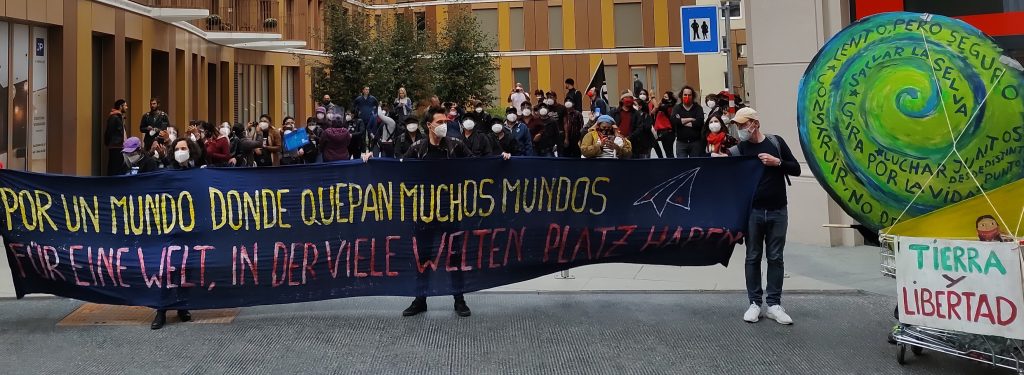
El sàbado fue el dia indicado para la primera excursiòn zapatista fuera de la cuenca de Liubliana. En el marco del Pilar Balcànico, decidimos visitar Bela Krajina, para conocer las luchas locales y el règimen fronterizo de Schengen.
Tras una calurosa bienvenida por parte de la comunidad local en un lugar situado a lo largo del río fronterizo Kolpa, se realizó una amplia presentación de la situación de los activistas e investigadores fronterizos: desde la antigua composición de la población y la historia de la migración en la región, hasta el colapso de Yugoslavia, el cierre y la militarización de la frontera, y la actual xenofobia producida por el mantenimiento de la política europea de fronteras. Explicamos el sistema de retroceso masivo de los migrantes, que ellos mismos describieron sus propias experiencias al venir a Europa, todo lo cual proporcionó un buen punto de partida para comparar la situación en México, que también actúa como zona de amortiguación entre el centro imperial y el sur global. Por la tarde, la delegación zapatista se dirigió al público con una presentación de cinco puntos de su lucha.
Todavía quedaba luz suficiente para subir al punto histórico de la Base 20, donde debatimos sobre la lucha guerrillera, la administración del territorio liberado y el legado de la resistencia en nuestra región. La delegación regresó al valle en total oscuridad, pero sumamente inspirada.
25/09/2021, Ljubljana, Eslovenia
Coordinación para el Encuentro Zapatista en Eslovenia (Camino de los Balcanes)
_______________________________________________
PILAR MEDIO AMBIENTE Y ZONA RURAL: Encuentro con iniciativas medioambientales y reflexiones sobre el campo antiautoritario
Desde los primeros pasos de planificación, los que co-creamos el pilar rural-medioambiental insistimos en llevar a los compañeros y compañeras de Chiapas fuera de Liubliana, lo que hicimos, a pesar de las limitaciones de tiempo. Como sabemos que el capital ataca más a menudo a los que están en los márgenes, lo mismo ocurre, por supuesto, en el contexto de las luchas medioambientales, donde es claramente visible que los proyectos destructivos se sitúan en los entornos locales más vulnerables. Por eso es necesario aliarse allí con quienes luchan contra la degradación de la naturaleza, de la salud y la privación de la posibilidad de formas de convivencia.
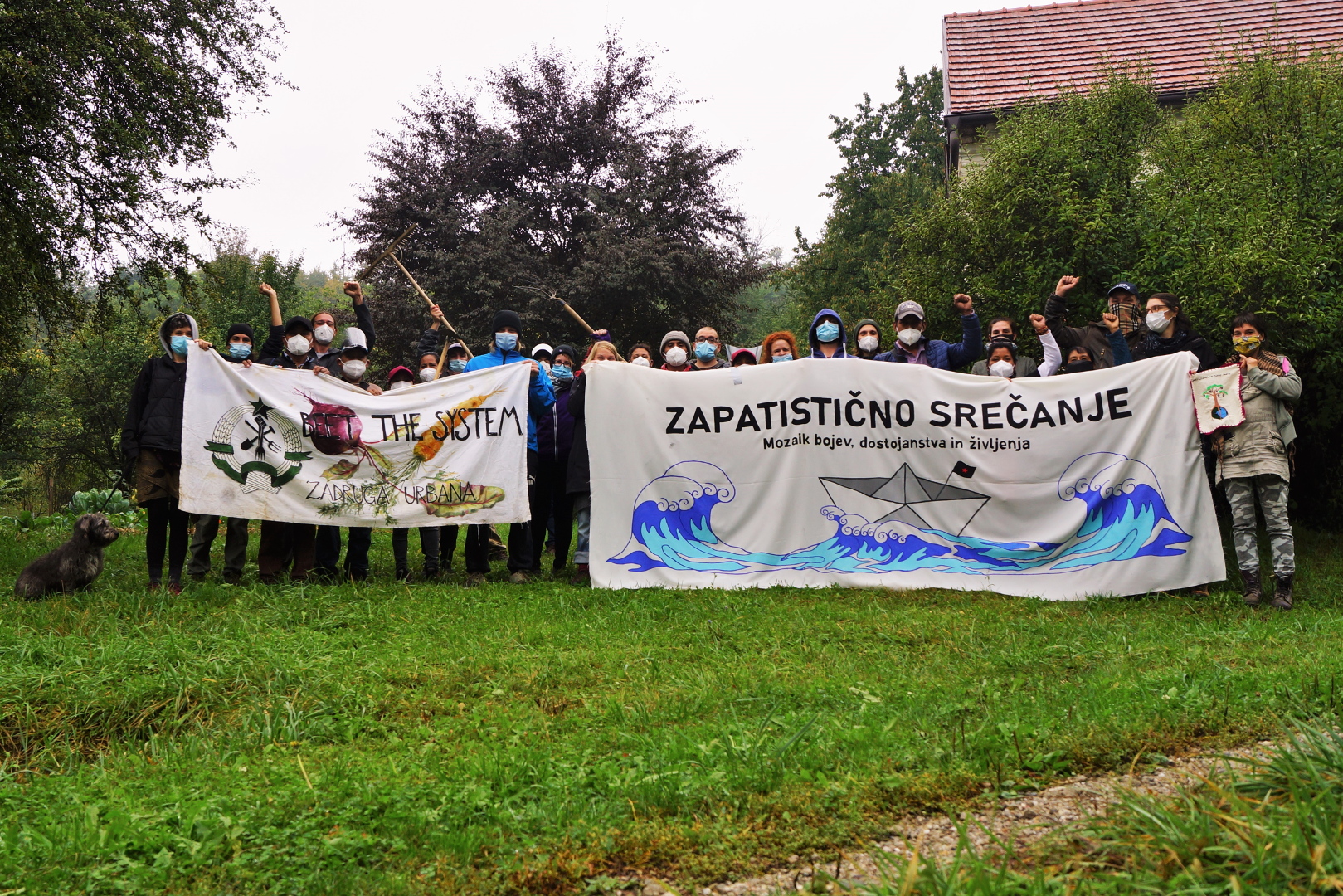
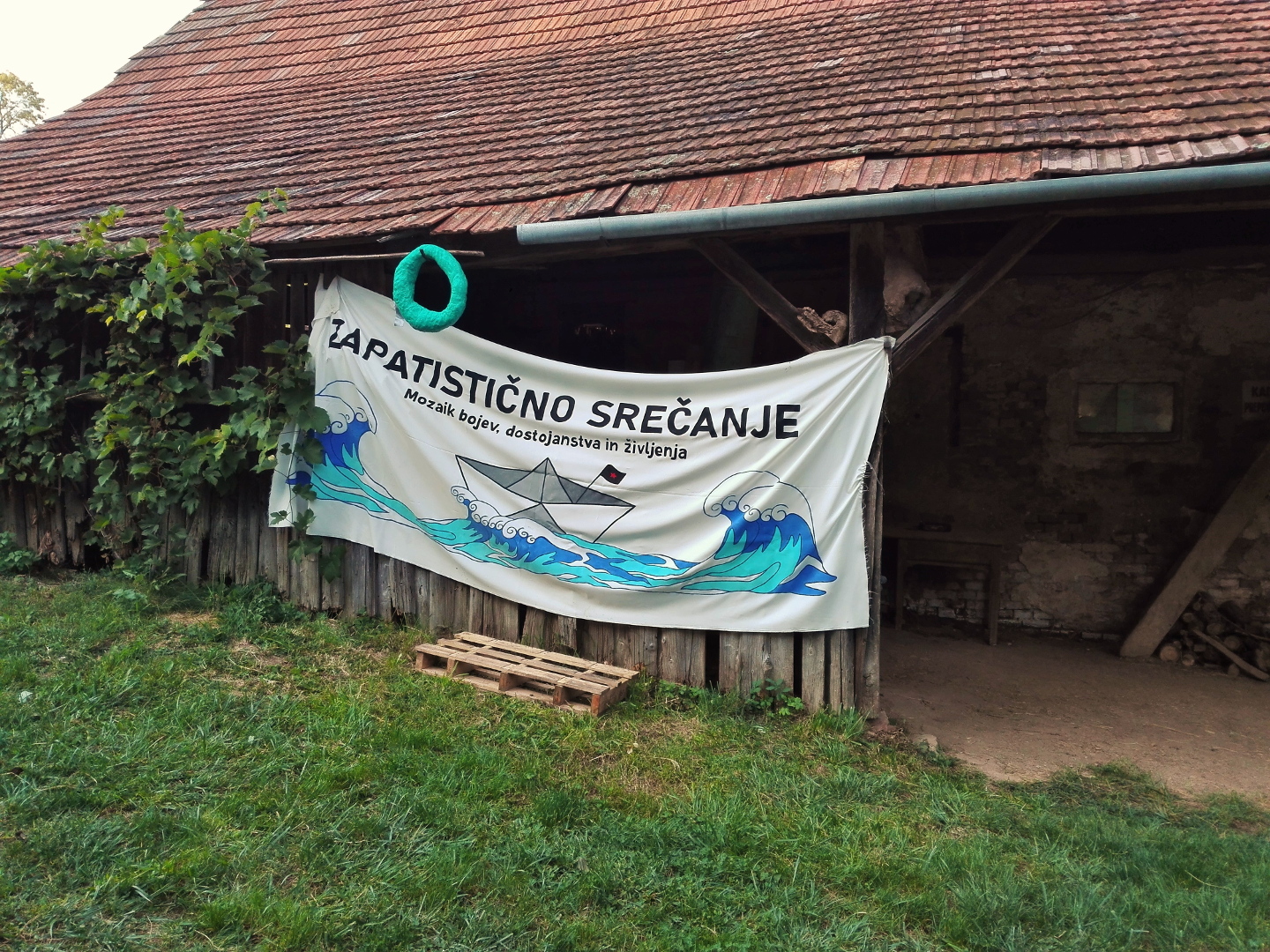
El domingo por la mañana, partimos con nuestros compañeros y camaradas hacia Zasavje, donde nos reunimos con representantes de las iniciativas medioambientales Eko krog y Eko Anhovo y Soča Valley en una granja a una altitud envidiable. Comenzamos presentando varios ejemplos de ataques al medio ambiente y a la naturaleza, que se han hecho especialmente densos en el último año y medio, en el que las autoridades han aprovechado la crisis coronal para introducir una serie de cambios legislativos que abren la puerta a diversos proyectos destructivos. Tras la presentación del contexto medioambiental de Zasavje y el Valle de Soča y otras historias escritas por las luchas contra la destrucción del medio ambiente y la naturaleza, es decir, una sucesión de victorias, derrotas, pero sobre todo perseverancia y compañerismo, siguió un debate. En él descubrimos una y otra vez que reconocemos al capitalismo en proyectos destructivos en todo el mundo -tanto aquí como en otros continentes-, sea cual sea la imagen que adopte, ya sea la de las grandes multinacionales o la de las pequeñas empresas energéticas corruptas, la de los medios de comunicación o la de las autoridades locales y nacionales. Hemos afirmado que sólo hay un planeta y que, en la era del capitalismo globalizado, es necesario globalizar las luchas para preservar la naturaleza y el medio ambiente y, por tanto, la posibilidad de la vida.
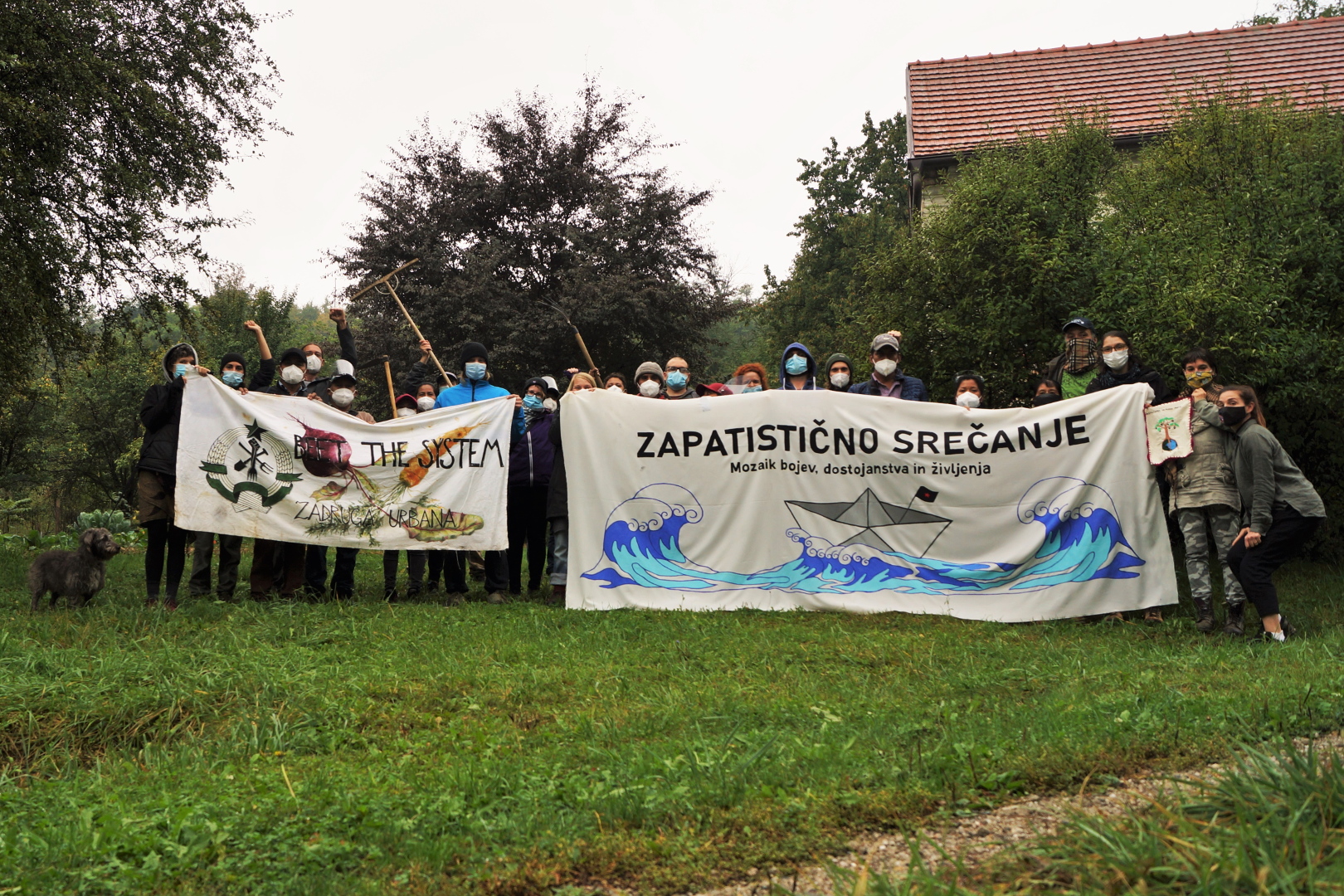
Después de una bienvenida muy hospitalaria por parte de los lugareños y de las iniciativas de los compañeros en Zasavje, partimos hacia Slovenske Gorice, donde planteamos a la delegación zapatista algunas cuestiones que aún no se habían resuelto en la discusión de la mañana. Tocamos los dilemas de las energías verdes y el capitalismo verde, cuestionamos la “búsqueda de alternativas” y miramos en cambio nuestras propias necesidades, y luego, en el punto de la agroecología, que ya prefiguraba los temas del día siguiente, seguimos compartiendo nuestras experiencias en los cinco puntos que la delegación zapatista nos había preparado. Los compañeros nos hablaron de la forma de organización autónoma, de las estructuras y los principios de acción, de la posibilidad de autogestión en su contexto. Terminamos la jornada con poesía, cantos y cuentos, en el marco del programa cultural conjunto autoorganizado Muestra lo que puedes hacer, en muchas expresiones e idiomas.
A la mañana siguiente, a salvo de la lluvia, intercambiamos puntos de vista sobre los diversos procesos por los que el capitalismo está transformando el campo en distintas partes del mundo para acumular beneficios, imposibilitando así el trabajo de la tierra, condición básica para la autosuficiencia de una comunidad y el desarrollo de sus potencialidades. En primer lugar, hicimos un rápido repaso histórico desde el feudalismo hasta el socialismo y recordamos las jerarquías sociales que existían en la producción alimentaria rural. A continuación, a través de algunos ejemplos, esbozamos las tendencias contemporáneas que influyen en el desarrollo rural y cocrean su aspecto específico, así como los numerosos problemas a los que se enfrentan las poblaciones rurales tras la desintegración de Yugoslavia. Mencionamos los procesos de éxodo rural; la falta de incentivos para el desarrollo de pequeñas explotaciones de subsistencia y la burocratización de las políticas agrarias a favor de la agricultura intensiva; la transformación de las zonas rurales en suburbios con estilos de vida individualizados e infraestructuras de acompañamiento; la turistificación del campo o el emplazamiento de proyectos nocivos en el medio rural con la excusa de la creación de puestos de trabajo; la construcción de grandes proyectos de infraestructuras que destruyen la naturaleza para que la geografía local se sitúe en los flujos logísticos globales del capital; y el dilema de la jardinería urbana cuando coopta las prácticas locales tradicionales en aras de la rentabilidad.
Para finalizar, intercambiamos con la delegación zapatista algunas propuestas con las que estamos desarrollando la idea de un campo antiautoritario. Pensamos en cómo pensar en la autosuficiencia alimentaria urbana, en cómo conectarnos a pesar de la dispersión geográfica y la incrustación en los contextos locales de nuestras propias granjas y comunidades, y en cómo trabajar de forma autoorganizada más allá de los marcos de la agricultura cuantificados por las instituciones estatales. La alimentación y el medio ambiente son el punto de partida básico sin el cual ninguna comunidad política puede sobrevivir, independientemente del continente en el que resida. Por ello, el acceso a los alimentos y un medio ambiente sano son condiciones inseparables en nuestra lucha común por un futuro mejor.
26-27/09/2021, Zasavje, Slovenske Gorice.
Coordinación para el Encuentro Zapatista en Eslovenia (Balkan Way)




 [:]
[:]
