
Adiós, Subcomandante
[:es]
“Oigan, está muy oscuro acá, necesito una lucecita.”
Entonces dejó de hablar y acomodó los papeles sobre la mesa. Se apagaron las luces. En la penumbra, alumbrado apenas por la tenue luz de una cámara de video, se levantó.
Caminó algunos pasos hacia la parte trasera del templete.
Con paso lento, atravesó el umbral.
Comenzó a bajar los escalones de madera.
Y su figura se desvaneció lentamente en la oscuridad.
Y dejó de existir.
Entonces se escuchó el silencio cargado de gratitud y de tantas otras cosas de miles de manos que aplaudían al unísono, y los rostros conteniendo las lágrimas, y los corazones repitiendo: Adiós, Subcomandante. “Uno, dos, tres”, se escuchó la voz del Comandante Tacho hablando en el radio. Se encendieron nuevamente las luces. Y dijo el Subcomandante Insurgente Moisés, jefe militar y ahora también vocero del Ejército Zapatista de Liberación Nacional: “Compañeros, compañeras, vamos a escuchar la palabra de otro compañero”.
De las bocinas surgió la voz que hasta hacía unos minutos, desde hace veinte años, perteneció al Subcomandante Marcos, cobrando ahora nueva vida, burlando a la muerte.
“Buenas madrugadas tengan, compañeros y compañeras. Mi nombre es Galeano. Subcomandante Insurgente Galeano. ¿Alguien más se llama Galeano?”
Miles de hombres y mujeres respondieron unidas: “¡Yo me llamo Galeano!” “¡Todos somos Galeano!” “¡Todos somos Galeano!”
“Tras que por eso me dijeron que, cuando volviera a nacer, lo haría en colectivo. Sea pues. Buen viaje. Cuídense, cuídennos. Desde las montañas del sureste mexicano, Subcomandante Insurgente Galeano.”
***

Hacía exactamente una hora, cuando el entonces Subcomandante Marcos empezó a hablar, escuchamos estas palabras:
Quisiera pedirles a las compañeras, compañeros y compañeroas de la Sexta que vienen de otras partes, especialmente a los medios libres compañeros, su paciencia, tolerancia y comprensión para lo que voy a decir, porque éstas serán mis últimas palabras en público antes de dejar de existir.
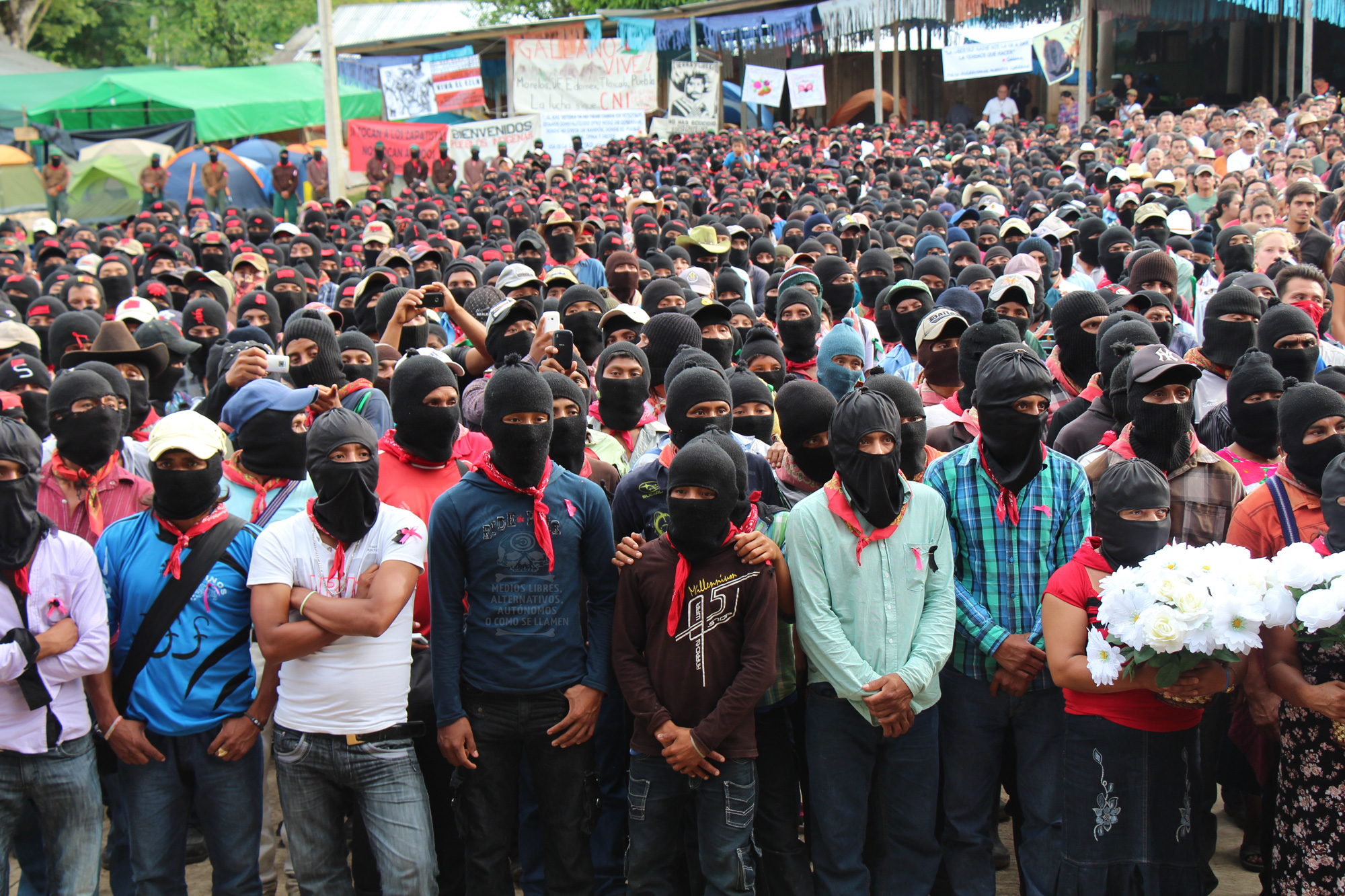 Éramos casi mil mujeres y hombres, adherentes a la Sexta Declaración de la Selva Lacandona de muchas partes de México y de otras geografías, que tras larguísimas travesías llegamos a La Realidad para asistir al homenaje organizado por el EZLN en honor al compañero José Luís Solís López, el maestro Galeano, asesinado con inconcebible saña el 2 de mayo en un ataque paramilitar ejecutado por miembros de la organización supuestamente campesina CIOAC-H y militantes del Partido Verde y del PAN de esa comunidad, y orquestado desde la cúpula del gobierno de Chiapas. Eran también casi tres mil bases de apoyo zapatistas que, con impresionante organización, acudieron desde las cinco zonas del amplio territorio zapatista. Llegamos, todos y todas, cargando el dolor y la rabia y buscando, con la gramática de la ira y la caligrafía de la dignidad, la expresión precisa de una justicia verdadera.
¿Pero qué forma tomaría esa justicia? ¿Cómo conjugar la justicia sin que su forma verbal (en español: “ajusticiar”) adquiriera las tonalidades de la venganza? Está claro que los sistemas jurídicos de nuestras “democracias” ni tienen que ver ni se preocupan siquiera por la justicia. Y está más que claro que, en México como en muchos otros lugares, dichos sistemas jurídicos están al servicio del atropello y del despojo. Pero entonces, ¿qué es la justicia?
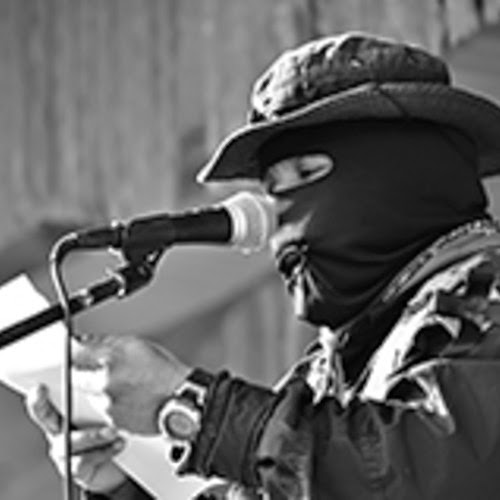 En el transcurso de ese memorable 24 de mayo, el Subcomandante Moisés anunció que la investigación zapatista ya identificó a los autores materiales del crimen. También detalló los lazos que existen entre la dirigencia de la CIOAC-H y los diferentes niveles del gobierno estatal y federal. Y también afirmó que se haría justicia, pero nos pidió que no dirigiéramos nuestra digna y justificable rabia contra aquellos y aquellas que, en su ceguera y avaricia, se convierten en asesinos a servicio de los poderes del capital. Hay que saber dirigir esa rabia contra el sistema, dijo.
En la encrucijada de las preguntas, las últimas palabras del Subcomandante Marcos antes de dejar de existir intentan iluminar ese espacio indeciso entre la luz y la sombra. En 1994, dijo, los zapatistas nos levantamos ejerciendo el derecho a la violencia legítima de los de abajo frente a la violencia de arriba. “Pero en los primeros balbuceos que fueron nuestras palabras advertimos que nuestro dilema no estaba entre negociar o combatir, sino entre morir o vivir.” De manera que, pasados los primeros combates, en vez de fortalecer el ejército guerrillero, los zapatistas se dedicaron a la vida, construyendo educación, salud, dignidad, justicia, esperanza, autonomía y un gobierno del pueblo que manda obedeciendo. Y en todo esto, resistiendo la violencia de arriba sin las armas, con el cuerpo, con la frente en alto y diciendo: “aquí estamos los muertos de siempre, muriendo de nuevo, pero ahora para vivir”.
En el camino, algo fundamental fue cambiando al interior del EZLN, relevos que para mucha gente pasaron desapercibidos:
El de clase: del origen clase mediero ilustrado, al indígena campesino. El de raza: de la dirección mestiza a la dirección netamente indígena. Y el más importante: el relevo de pensamiento: del vanguardismo revolucionario al mandar obedeciendo; de la toma del Poder de Arriba a la creación del poder de abajo; de la política profesional a la política cotidiana; de los líderes, a los pueblos; de la marginación de género, a la participación directa de las mujeres; de la burla a lo otro, a la celebración de la diferencia.
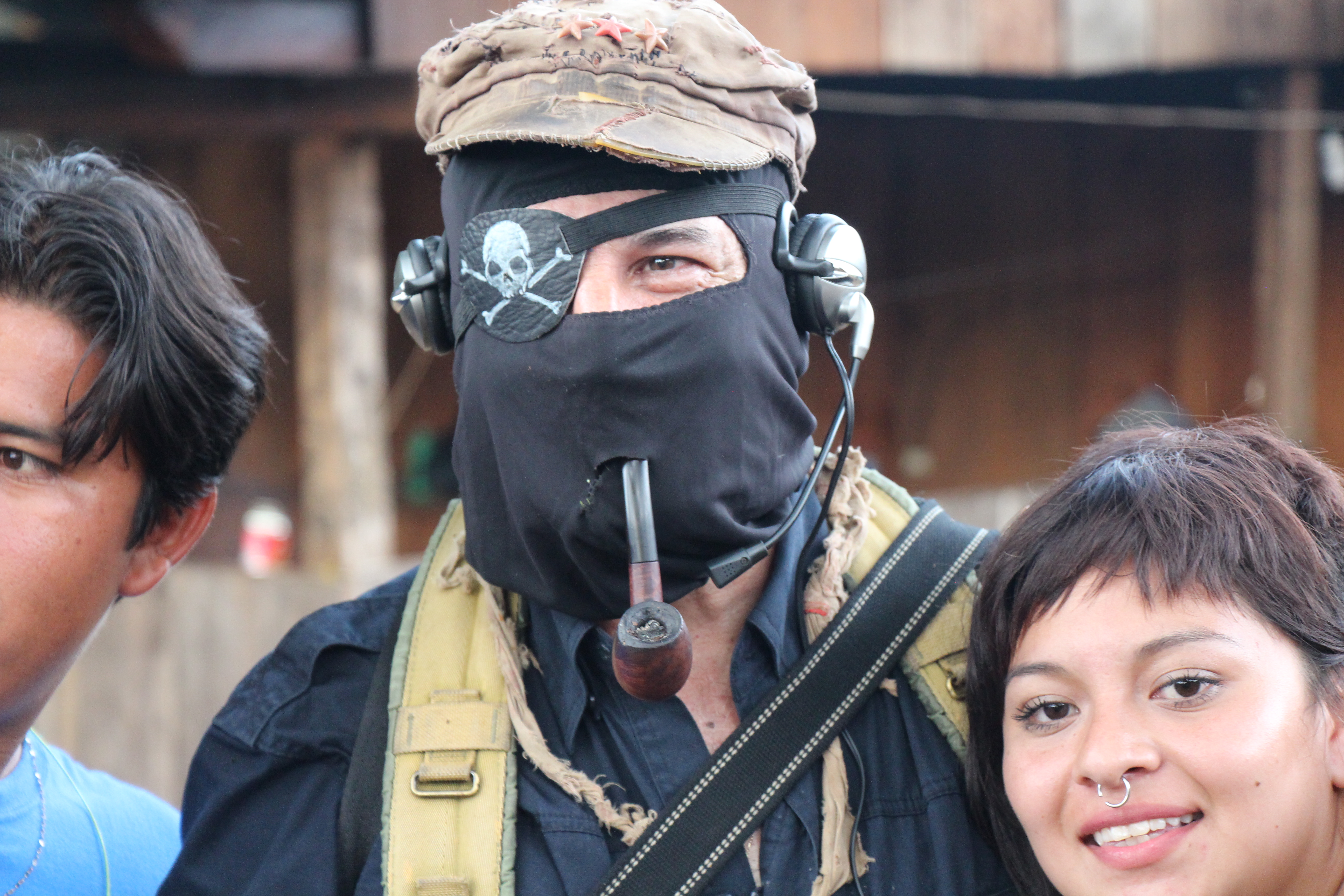 En este camino, ¿quién era Marcos? Hay algo que no deja de sorprendernos a aquellos de nosotros a los que el caminar zapatista nos ha enseñado a ver el mundo de otra forma: el hecho de que, para la gran mayoría de la gente, fuera de las comunidades zapatistas, el EZLN sea solamente Marcos; la incapacidad de la mayoría de la gente de ver a los y las indígenas.
Apenas unos días después [del levantamiento], con la sangre de nuestros caídos aún fresca en las calles citadinas, nos dimos cuenta de que los de afuera no nos veían.
Acostumbrados a mirar desde arriba a los indígenas, no alzaban la mirada para mirarnos.
Acostumbrados a vernos humillados, su corazón no comprendía nuestra digna rebeldía.
Su mirada se había detenido en el único mestizo que vieron con pasamontañas, es decir, que no miraron.
Nuestros jefes y jefas dijeron entonces:
“Sólo lo ven lo pequeño que son, hagamos a alguien tan pequeño como ellos, que a él lo vean y por él nos vean”
Empezó así una compleja maniobra de distracción, un truco de magia terrible y maravillosa, una maliciosa jugada del corazón indígena que somos, la sabiduría indígena desafiaba a la modernidad en uno de sus bastiones: los medios de comunicación.
Empezó entonces la construcción del personaje llamado “Marcos”.
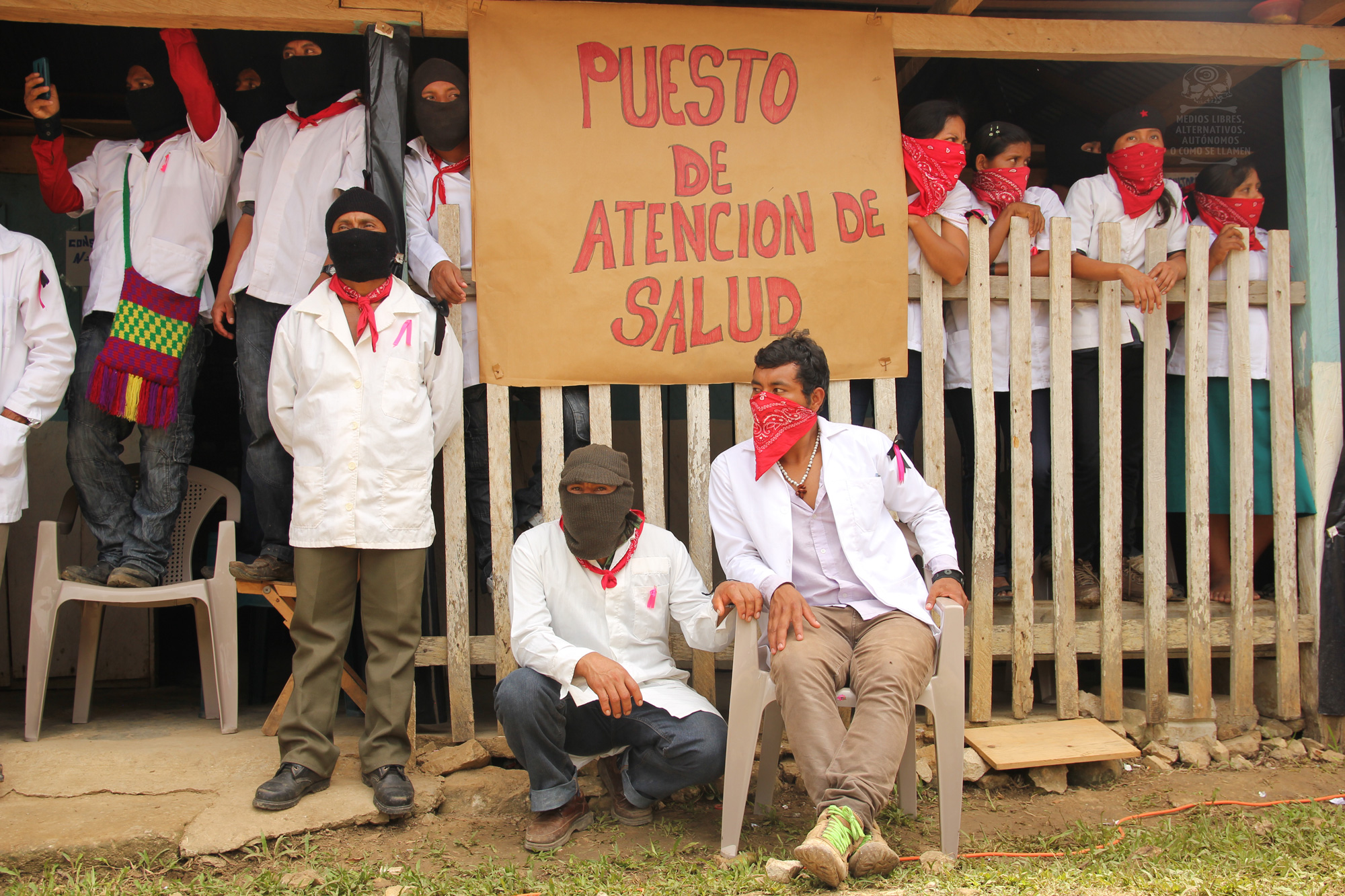 El personaje sirvió para dar a conocer un movimiento que luchaba y lucha por la vida. Pero sirvió, también, como “distractor”, de manera que, mientras los de arriba y los medios de masivos de comunicación se enfocaban en construir y destruir al personaje, los y las zapatistas continuaban su caminar en la construcción de la vida.
En ese caminar el zapatismo siempre buscó al otro, a la otra, por las veredas que buscan la vida no sólo para las comunidades indígenas zapatistas. Y en esa búsqueda, una y otra vez fracasaron: “A quien encontrábamos o nos quería dirigir o quería que lo dirigiéramos”.
Así fue hasta la Sexta Declaración de la Selva Lacandona, la más audaz y la más zapatista de las iniciativas que hemos lanzado hasta ahora. Con la Sexta al fin hemos encontrado quien nos mira de frente y nos saluda y abraza, y así se saluda y abraza. Con la Sexta al fin los encontramos a ustedes. Por fin, alguien que entendía que no buscábamos ni pastores que nos guiaran, ni rebaños a los cuales conducir a la tierra prometida. Ni amos ni esclavos. Ni caudillos ni masas sin cabeza.
Pero faltaba ver si era posible que miraran y escucharan lo que siendo somos. Al interior, el avance de los pueblos había sido impresionante. Entonces vino el curso “La Libertad según l@s zapatistas”. En 3 vueltas, nos dimos cuenta de que ya había una generación que podía mirarnos de frente, que podía escucharnos y hablarnos sin esperar guía o liderazgo, ni pretender sumisión ni seguimiento.
Marcos, el personaje, ya no era necesario.
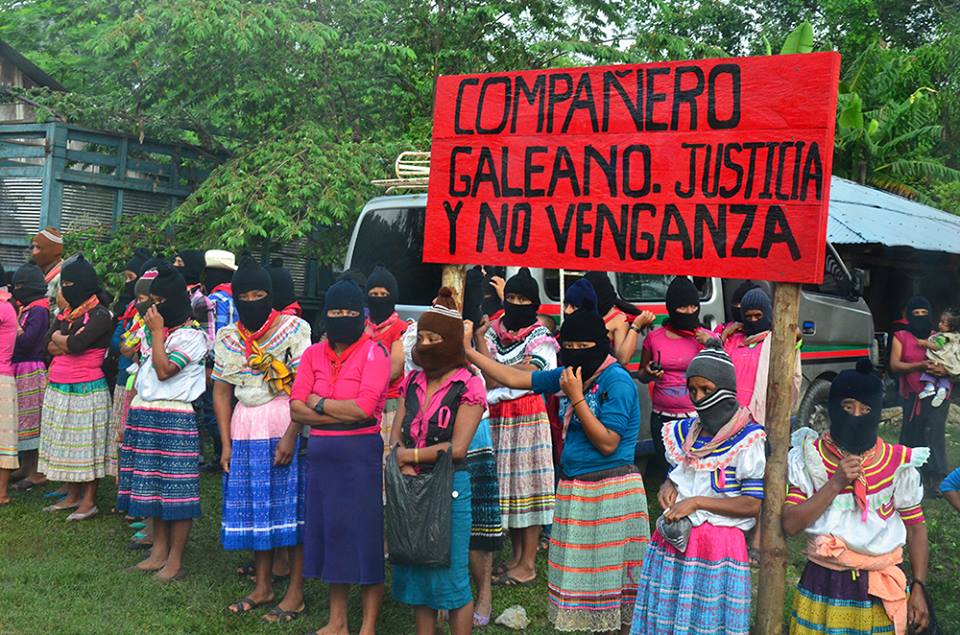 Y entonces regresamos a esa cuestión de la justicia. Del dolor y la rabia, de la gramática de la ira y la caligrafía de la dignidad. Porque a La Realidad llegó la Comandancia General y la dirigencia militar del EZLN con ese dolor y esa rabia, con ese clamor de justicia. Pero, como bien dijo el Subcomandante Marcos, hay otros dolores y otras rabias en tantas otras geografías:
Ahora mismo, en otros rincones de México y del mundo, un hombre, una mujer, unoa otroa, un niño, una niña, un anciano, una anciana, una memoria, es golpeada a mansalva, rodeada por el sistema hecho crimen voraz, es garroteada, macheteada, baleada, rematada, arrastrada entre burlas, abandonada, recuperado y velado su cuerpo, enterrada su vida.
Y como si fuera poco, “la burla mayor” es la pantomima de la “justicia” que jamás amenaza ni castiga ni daña al poder que entierra y pisotea la vida. Ante esto, ¿qué le decimos a nuestros muertos? ¿Es suficiente el susurro impotente del dolor y la indignación? “Nuestros susurros”, dijo Marcos, “no son sólo para lamentar la caída de nuestros muertos injustamente. Son para así poder escuchar a otros dolores, hacer nuestras otras rabias y seguir así en el complicado, largo y tortuoso camino de hacer de todo eso un alarido que se transforme en lucha libertadora.”
La justicia pequeña se parece tanto a la venganza. La justicia pequeña es la que reparte impunidad, pues al castigar a uno, absuelve a otros. La que queremos nosotros, por la que luchamos, no se agota en encontrar a los asesinos del compa Galeano y ver que reciban su castigo (que así será, que nadie se llame a engaño). La búsqueda paciente y porfiada busca la verdad, no el alivio de la resignación. La justicia grande tiene qué ver con el compañero Galeano enterrado. Porque nosotros nos preguntamos no qué hacemos con su muerte, sino qué debemos hacer con su vida.

Desde temprano ese día, la Comandancia General del EZLN dijo que habían llegado para desenterrar al maestro Galeano. Pero para que Galeano viva, dijo Marcos, es necesario que otro muera.
Y qué mejor que sea alguien que de por sí nunca ha existido. Y para que esa impertinente que es la muerte quede satisfecha, en su lugar de Galeano ponemos otro nombre para que Galeano viva y la muerte se lleve no una vida, sino un nombre solamente, unas letras vaciadas de todo sentido, sin historia propia, sin vida.
Así que hemos decidido que Marcos deje de existir hoy.
***
Cuando dejó de escucharse la voz del ahora Subcomandante Insurgente Galeano y los aplausos se fueron desvaneciendo en ese lugar indeciso entre la luz y la sombra, bajo la llovizna de esa madrugada en la Realidad zapatista, nos invadió un silencio impregnado por la certidumbre de que algo “terrible y maravilloso” acababa de suceder. Algo que aún no entendíamos, algo que quizás tardaríamos días, meses, años, toda la vida, en entender. Algo que sería, para nosotras y nosotros, los que tuvimos la suerte de presenciarlo, fuente perpetua de búsqueda y la convicción de jamás claudicar.

Por Alejandro Reyes
Texto: (CC) Radio Zapatista – Medios libres, alternativos, autónomos o como se llamen
Imágenes: (CC) Medios libres, alternativos, autónomos o como se llamen
Para escuchar las últimas palabras del Subcomandante Marcos antes de dejar de existir, haz clic aquí: ENTRE LA LUZ Y LA SOMBRA
[:en]
“Hey, it’s very dark here, I need a little light.”
Then he stopped talking and straightened the papers on the table. The lights went out. In the penumbra, illuminated just by the faint light of a video camera, he stood up.
He walked a few steps toward the rear of the stage.
Walking slowly, he crossed the threshold.
He began to go down the wooden stairs.
And he slowly faded into the darkness.
And he ceased to exist.
Then a silence spoke out charged with gratitude and so many other things from thousands of hands clapping in unison, and the faces holding back tears, and the hearts repeating: Farewell, Subcomandante. “One, two, three,” the voice of Comandante Tacho was heard talking on the radio. The lights went on again. And Subcomandante Insurgente Moisés, military leader and now also spokesperson of the Zapatista Army of National Liberation, said: “Compañeros, compañeras, we are going to listen now to the voice of another compañero.”
From the speakers came the voice which until a few minutes ago, for the last twenty years, belonged to Subcomandante Marcos, now coming to life anew, mocking death. “Have a good pre-dawn, compañeras and compañeros. My name is Galeano. Subcomandante Insurgente Galeano. Is anyone else called Galeano?”
Thousands of men and women responded together: “My name is Galeano!” “We all are Galeano!” “We all are Galeano!”
“So that’s why they told me that when I was reborn, I would do it collectively. So be it then. Have a good trip. Take care of yourselves, take care of us. From the mountains of the Mexican Southeast. Subcomandante Insurgente Galeano.”
***
Exactly one hour before, when the then Subcomandante Marcos began to speak, we heard these words:
I would like to ask the compañeras, compañeros, and compañeroas of the Sixth Declaration who come from other places, especially the free media compañeros, for their patience, tolerance, and understanding for what I am going to say, because these will be my last words in public before ceasing to exist.
We were almost one thousand women and men, adherents to the Sixth Declaration of the Lacandon Jungle from many parts of Mexico and from other geographies, who after long travesties came to La Realidad to attend the homage organized by the EZLN in honor of compañero José Luís Solís López, maestro Galeano, murdered with inconceivable cruelty on May 2nd in a paramilitary attack carried out by members of the supposedly peasant organization CIOAC-H, members of the Green Party and the PAN in that community, and orchestrated from the core of the Chiapas government. There were also close to three thousand Zapatista support bases who, with impressive organization, traveled from the five zones of the large Zapatista territory. We arrived, all of us, filled with pain and rage and seeking, with the grammar of wrath and the calligraphy of dignity, the precise expression of true justice.
But what form would that justice take? How to conjugate justice without its verbal form (in Spanish: “ajusticiar,” to execute) acquiring the tonalities of revenge? It is clear that the legal systems of our “democracies” have nothing to do with justice, nor are they concerned about it. And it is more than clear that, in Mexico as in many other places, those legal systems are at the service of abuse and plunder. But then, what is justice?
Over the course of that memorable May 24th, Subcomandante Moisés announced that the Zapatista investigation had already identified the material authors of the crime. He also detailed the ties between the leadership of the CIOAC-H and the various levels of state and federal governments. And he also affirmed that justice would be done, but he asked us not to direct our dignified and justifiable rage against those who, in their blindness and avarice, turn into murderers at the service of the powers of capital. We must direct that rage against the system, he said.
At the crossroads of questions, Subcomandante Marcos’s last words before ceasing to exist attempted to illuminate that indecisive space between light and shadow. In 1994, he said, the Zapatistas rose up exercising the right to legitimate violence of those from below in the face of the violence from above. “But in the first stammers that were our words we realized that our dilemma was not between negotiating or fighting, but between dying or living.” Therefore, after the first combats were over, instead of strengthening the guerilla army, the Zapatistas dedicated themselves to life, building education, health, dignity, justice, hope, autonomy, and a government of the people which commands by obeying. And in all this, resisting the violence of above without weapons, with their body, head held high and saying: “we, the same dead as always, are here dying again, but now in order to live.”
Along the way, something fundamental was changing within the EZLN, changes that went unnoticed by many people:
That of class: from the enlightened middle-class origin, to the indigenous peasant.
That of race: from the mestizo leadership to the truly indigenous leadership.
And the most important: the relay of thought: from revolutionary vanguardism to leading by obeying; from the taking of Power from Above to the creation of power from below; from professional politics to everyday politics; from the leaders, to the peoples; from the marginalization of gender, to the direct participation of women; from mocking the other, to the celebration of difference.
Along this path, who was Marcos? There is something which does not cease to surprise those of us to whom the Zapatistas have taught to see the world in a different way: the fact that, for the great majority of people outside of the Zapatista communities, the EZLN is only Marcos; most people’s inability to see the indigenous.
Just a few days later [after the uprising], with the blood of our fallen still fresh in the city streets, we realized that those from outside did not see us.
Accustomed looking at the indigenous from above, they did not raise their eyes to look at us.
Accustomed to seeing us humiliated, their heart did not understand our dignified rebellion.
Their eyes were fixed on the only mestizo they saw with a balaclava, that is to say, one they did not look at.
Our bosses told us then:
“They only see their own smallness, let’s make someone as small as them, so they may see him and through him they may see us.”
A complex maneuver of distraction began then, a terrible and marvelous magic trick, a malicious play of the indigenous heart that we are, the indigenous knowledge challenging modernity in one of its bastions: the media.
The character called “Marcos” started then to be built.
The character served to make known a movement which struggled and struggles for life. But it also served as a “distracter,” in a way that, while those from above and the mass media were busy building and destroying the character, the Zapatistas continued their walk in the construction of life.
In that walk Zapatismo always reached out to the other, on the paths that seek life not only for the indigenous Zapatista communities. And in that search, they failed time and again: “Those we found either wanted to lead us or wanted to be led by us.”
It was so until the Sixth Declaration of the Lacandon Jungle, the boldest and most Zapatista of the initiatives that we have launched up to now. With the Sixth Declaration we finally found those who see us face to face and greet us and embrace us, and that’s how one greets and embraces. With the Sixth Declaration, at last, we found you. Finally, someone who understood that we did not seek pastors to guide us, nor herds to lead to the promised land. Neither masters nor slaves. Neither bosses nor headless masses.
But it remained to be seen whether it was possible for you to look at and listen to what, being, we are. Internally, the advance of our peoples has been impressive. Then came the course, “Freedom according to the Zapatistas.” In 3 rounds, we realized that there now was a generation that could look at us face to face, that could listen to us and speak to us without seeking a guide or a leader, nor professing submission or followership.
Marcos, the character, was no longer necessary.
And so we return to the issue of justice. Of pain and rage, of the grammar of wrath and the calligraphy of dignity. Because the General Command and the military leadership of the EZLN came to La Realidad with that pain and that rage, with that cry for justice. But, as Subcomandante Marcos well said, there are other pains and other rages in so many other geographies:
Right now, in other corners of Mexico and the world, a man, a woman, an other, a boy, a girl, an elder, a memory, is beaten in cold blood, surrounded by a system of voracious crime, clubbed, macheted, shot, finished off, dragged among taunts, abandoned, their body then recovered and mourned, their life buried.
And as if that were not enough, “the greatest mockery” of all is the pantomime of “justice” which never threatens nor punishes nor harms the power which buries and tramples life. In the face of this, what do we say to our dead? Is the impotent whisper of pain and rage sufficient? “Our whispers,” said Marcos, “are not only to lament the unjust fall of our dead. They are to allow us to listen to other pains, to make other rages ours, and to continue treading along the complicated, long, and torturous path of making all that become a roar which is transformed into a struggle for liberation.”
Small justice looks so much like revenge. Small justice is that which distributes impunity; as it punishes one, it absolves others. The justice we seek, that for which we struggle, does not end with finding the murderers of compa Galeano and seeing that they receive their punishment (they will, make no mistake about it). The patient and adamant search seeks truth, not the relief of resignation. Great justice has to do with the buried compañero Galeano. Because we ask ourselves not what to do with his death, but what we must do with his life.
From early that day, the General Command of the EZLN said that they had arrived to bring maestro Galeano back from the grave. But in order for Galeano to live, said Marcos, someone else must die.
And what a better choice than someone who never existed in the first place. So to satisfy the impertinence that is death, in the place of Galeano we put another name so that Galeano may live and death may take away not a life, but only a name, some letters devoid of all meaning, without a history of their own, lifeless.
So we have decided that today Marcos ceases to exist.
***
When the voice of the now Subcomandante Insurgente Galeano ceased to be heard and the clapping died out in that indecisive space between light and shadow, under the drizzle of that pre-dawn morning in Zapatista reality, we were overcome by a silence impregnated by the certainty that something “terrible and marvelous” had just happened. Something which we still did not understand, which perhaps would take days, months, years, our whole life, to understand. Something that would be, for us, for those who had the fortune of witnessing it, a perpetuous source of search and the conviction to never falter.
By Alejandro Reyes
Images: (CC) Medios libres, alternativos, autónomos o como se llamen
Translated from Spanish by Henry Gales.
To listen to Subcomandante Marcos’s last words before ceasing to exist, clic here: BETWEEN LIGHT AND SHADOW[:]


Buena onda.
Comentario by Don Nadie — Jun-08-2014 @ 23:06