Noticias:News:

Temas

image/svg+xml image/svg+xml
radio
EZLN

[:es]EZLN | Décima Parte: Acerca de las Pirámides y sus usos y costumbres. Conclusiones del ánalisis crítico de MAREZ y JBG.[:en]EZLN | Tenth Part: Regarding pyramids and their uses and customary regimes.[:]

[:es]

Décima Parte: Acerca de las Pirámides y sus usos y costumbres.
Conclusiones del análisis crítico de MAREZ y JBG.
(Fragmento de la entrevista hecha al SubComandante Insurgente Moisés en los meses de agosto-septiembre del 2023, en las montañas del Sureste Mexicano)

Noviembre del 2023.

Introducción. –

¿Quién construyó Tebas, la de las siete Puertas? En los libros aparecen los nombres de los reyes. ¿Arrastraron los reyes los bloques de piedra? Y Babilonia, destruida tantas veces, ¿quién la volvió siempre a construir? ¿En qué casas de la dorada Lima vivían los constructores? ¿A dónde fueron los albañiles la noche en que fue terminada la Muralla China? La gran Roma está llena de arcos de triunfo. ¿Quién los erigió?

Bertold Brecht.

Sabida es la obsesión que tienen los sistemas dominantes, a lo largo de su historia, en rescatar la imagen de las clases o castas dominantes derrotadas.  Como si en el vencedor estuviera la preocupación de neutralizar la imagen del vencido: obviar su caída.  En el estudio de los restos de la civilización o cultura vencida, se suele hacer hincapié en los grandes palacios de los gobernantes, las construcciones de carácter religioso de la alta jerarquía, y en las estatuas o monumentos que los dominantes de entonces hacían de sí mismos.

No siempre con genuino interés antropológico o arqueológico (no es lo mismo), se estudian, por ejemplo, las pirámides. Su sentido arquitectónico-religioso -a veces también científico-, y lo que en los folletos turísticos (y los programas políticos de todo el espectro) llaman “el esplendor del pasado”.

Es natural que los distintos gobiernos se fijen y, no sin suspiros anhelantes, se concentren en reyes y reinas. Los grandes palacios y pirámides pueden ser señalados como referentes del avance científico de esas épocas, de la organización social y de las causas “de su desarrollo y declive”, pero a ningún gobernante le gusta ver reflejado su futuro en el pasado.  Por eso retuercen la historia pasada y es posible reagendar fundaciones de ciudades, imperios y “transformaciones». Así que, sin darse cuenta, cada selfie que se toman en sitios arqueológicos oculta más de lo que muestra.  Allá arriba, el vencedor del hoy será el derrotado del mañana.

Pero, si no se menciona que esas construcciones debieron tener quiénes las diseñaran -sus arquitectos, ingenieros y artistas-, mucho menos habrá referencia a “la mano de obra”, es decir, a los hombres y mujeres sobre cuyas espaldas (en más de un sentido) se levantaron esas maravillas que asombran a turistas de todo el mundo, mientras hacen tiempo para ir al antro, al mall y a la playa.

De ahí a ignorar que la descendencia de esa “mano de obra” se mantiene viva y actuante, con lengua y cultura, hay un solo paso.  Las originarios que levantaron, por ejemplo, las pirámides de Teotihuacán y de la zona Maya en el sureste mexicano, existen (es decir, resisten) y, a veces, agregan a su resistencia ese componente subversivo que es la rebeldía.

En el caso de México, los distintos gobiernos prefieren a los originarios como artesanía viva y, a veces, como coreografía a modo.  El gobierno actual no representa ningún cambio en esto (bueno, no sólo en eso, pero no es el tema).  Los pueblos originarios siguen siendo objeto de la limosna (esa aspirina para sinvergüenzas), acarreo electoral, curiosidad artesanal y punto de fuga para quienes administran la destrucción en curso: “voy a destruir tu vida, es decir, tu territorio; pero no te preocupes, voy a conservar las pirámides de quienes explotaron a tus ancestros y esas cosas chistosas que hablas, vistes y haces”.

Dicho lo anterior, esta “imagen” de la pirámide -la punta superior angosta y la base inferior ancha-, es usada ahora por el Subcomandante Insurgente Moisés para explicarnos algo de lo que fue el análisis (feroz e implacable, a mi entender) del trabajo de los MAREZ y Juntas de Buen Gobierno.

El Capitán

Algo de historia, no mucha, sólo de 30 años.

Los MAREZ y Juntas de Bueno Gobierno no fueron todo mal.  Hay que recordar cómo llegamos a ellos y a ellas.  Para los pueblos zapatistas fueron como una escuela de alfabetización política.  Una auto alfabetización.

La mayoría no sabíamos leer, ni escribir, ni hablar español.  Además, hablamos distintas lenguas.  Eso fue bueno, porque entonces nuestra idea y nuestra práctica no vino de fuera, sino que tuvimos que buscar en nuestras cabezas, en nuestra historia como indígenas, en nuestro modo pues.

Nunca habíamos tenido la oportunidad de gobernarnos.  Siempre fuimos gobernados.  Aún desde antes de los españoles, el imperio Azteca, al que mucho quiere el actual gobierno -creo porque les gusta eso de los mandones-, oprimía a muchas lenguas y culturas.  No sólo en lo que ahora es México, también en lo que ahora es Centroamérica.

La situación en la que estábamos pues era de muerte y desesperación.  Nos cerraron todo.  No había ni puertas, ni ventanas, ni rendijas.  Como que querían que muriéramos ahogados.  Entonces pues, como quien dice, tuvimos que abrir una grieta en ese muro que nos encerraba y nos condenaba.  Como si todo fuera oscuridad y con nuestra sangre prendiéramos una lucecita.  Eso fue el alzamiento zapatista, una lucecita en la noche más oscura.

Luego vino que mucha gente pidió que alto al fuego, que hay que hablar.  De eso pues ya saben los ciudadanos.  A muchos de ellos les había pasado lo mismo que a nosotros, que los malos gobiernos no cumplen nunca.  Y no cumplen porque los gobiernos son los principales opresores.  Entonces pues teníamos que escoger si esperamos que algún día cumplen, o le buscamos por nuestro lado.  Y escogimos buscar nuestro camino.

Y bueno, pues había que organizarse para eso.  Nos habíamos organizado y preparado durante 10 años para levantarnos en armas, para morir y matar, pues.  Y entonces resulta que teníamos que organizarnos para vivir.  Y vivir es libertad.  Y justicia.  Y poder gobernarnos nosotros mismos como pueblos, no como niños chiquitos que así nos ven los gobiernos.

Ahí fue donde llegó en nuestra cabeza que tenemos que hacer un gobierno que obedezca.  O sea que no haga como quiere, sino que cumpla con lo que dicen los pueblos.  O sea “mandar obedeciendo”, que es la palabra que ahora plagian los sinvergüenzas de ahora (o sea que no sólo plagian tesis. Nota de la redacción).

Entonces con los municipios autónomos aprendimos que sí podemos auto gobernarnos.  Y eso fue posible porque muchas personas nos apoyaron sin interés para encontrar el camino de vida.  O sea que esa gente no vino a ver qué sacaba -como ésos que me imagino que tú les vas a contar a los de afuera cuando hables de los 30 años-, sino realmente se comprometió con un proyecto de vida.  Y hubo quien quiere decirnos cómo debemos hacer.  Pero no nos alzamos en armas para cambiar de patrón.  No hay patrón bueno.  Pero hubo otras personas que sí nos respetaron nuestro pensamiento, nuestro modo.

El valor de la palabra.

Cuando nosotros obtenemos ese apoyo, pues es como un compromiso que hacemos nosotros.  Si decimos que necesitamos apoyo para hacer escuelas y clínicas, para preparar promotores de salud y de educación, por dar un ejemplo, pues tenemos que cumplir.  O sea que no podemos decir que es para una cosa y la usamos para otra.  Teníamos y tenemos que ser honrados, porque esa gente no viene a explotarnos, sino a animarnos.  Así lo vimos.

Entonces pues tenemos que aguantar los ataques y las chingaderas de los malos gobiernos, de los finqueros, de las grandes empresas, que están dale y dale para probarnos a ver si aguantamos o fácil es que nos caemos en una provocación para acusarnos que decimos mentiras, que queremos también Poder y paga.  Y eso del Poder pues es como una enfermedad que mata las buenas ideas y corrompe, o sea que como que enferma a la gente.  Y ahí tienes que una persona que parece buena gente, pues ya con Poder pues se enloquece.  O tal vez ya estaba loco y el Poder como que le encueró su corazón.

Entonces pues pensamos que necesitamos organizar, por ejemplo, nuestra salud.  Porque claro vimos y vemos que lo que hace el gobierno es una gran mentira que sólo es para robar y no le importa que la gente se muera, sobre todo si es indígena.

Y pasó que, cuando hacemos esa grieta en el sistema y nos asomamos, pues vemos muchas cosas.  Pero también mucha gente nos ve.  Y entre esa gente, hay quien nos miró y se arriesgó en ayudar y apoyar.  Porque ¿qué tal que somos mentirosos y no hacemos lo que decimos?  Pero bueno, se arriesgaron y pues nos comprometieron.

Mira, allá afuera, en las ciudades, la palabra no vale.  Pueden decir una cosa en un momento, y en un minuto después dicen lo contrario y como si nada, tranquilos.  Ahí está por ejemplo la que dicen “mañanera”, que un día una cosa y otro día lo contrario.  Pero, como da paga, pues le aplauden y contentos porque les da unas limosnas que ni siquiera sale esa paga de su trabajo, sino de lo que da la gente trabajadora a los gobiernos con los impuestos, que son como el “cobro de piso” del crimen desorganizado.

Entonces esa gente nos apoya y empezamos poco a poco con medicina preventiva.  Como ya habíamos recuperado las tierras, pues mejoramos nuestra alimentación, pero se necesitaba más.  Entonces pues salud.  Hay que recuperar los conocimientos de herbolaria, pero no bastan, se necesita también la ciencia.  Y gracias que doctores y doctoras, que les decimos “fraternidades” porque son como nuestros hermanos, se pusieron a modo y nos orientaron.  Así pues que nacieron o se formaron los primeros formadores de Salud, o sea los que preparan a los promotores.

Y también pues la educación, sobre todo la castilla.  Porque para nosotros es muy importante el español porque es como el puente en que podemos comunicarnos y entendernos entre lenguas diferentes.  Por ejemplo, si hablas tzeltal pues vas a batallar para comunicarte con lengua cho´ol, o tzotzil, o tojolabal, o zoque, o mame, o quiché.  Entonces pues hay que aprender el español.  Y las escuelas autónomas son muy importantes para eso.  Por ejemplo, nuestra generación pues habla combinado lengua y español, o sea no mero bien, o sea que hablamos chueco.  Pero ya hay generaciones de jóvenes, que aprendieron en escuelas autónomas, que lo saben mejor la castilla que algunos ciudadanos.  El finado SupMarcos decía que esos jóvenes podían corregirle los escritos a estudiantes de Universidad.  Y tú lo sabes que, antes, para hacer una denuncia, tenía que irse a la Comandancia para redactar.  Pero luego ya no.  En cada autoridad autónoma había un o una escribidora, y pues cabal salía.

Luego pues un avance como que empuja a otro.  Y al poco tiempo pues esos jóvenes quieren más, aprender más.  Entonces organizamos nuestra salud en cada pueblo, cada región y zona. Vamos avanzando en cada área de la salud, parteras, plantas medicinales, hueseros, laboratorio, dentista, ultrasonido, entre otras áreas, hay clínicas.  E igual en la escuela, es decir, educación. Decimos escuela, porque educación nos falta también los adultos, es muy amplio para nosotros, educación, y no solo los niños y adolescentes.

Además, organizamos el trabajo productivo porque ya tenemos tierra, que antes estaba en manos de los finqueros.  Y así trabajamos en familiar y en colectivo la milpa, el frijolar, el cafetal, hortalizas, granjas.  Y algo de ganado, que más se usa para emergencias económicas y para las fiestas.  El trabajo colectivo permitió la independencia económica de las compañeras y eso trajo muchas cosas más.  Pero de eso ya han hablado ellas.

Una escuela.

O sea que como quien dice que aprendimos a gobernarnos y así pudimos hacer a un lado a los malos gobiernos y a organizaciones que dizque son izquierdistas, progresistas y no sé qué tanto.  30 años aprendiendo de lo que es ser autónomo, o sea que nos auto dirigimos, nos autogobernamos.  Y no ha sido fácil, porque todos los gobiernos que han pasado de PRI, PAN, PRD, PT, VERDE y MORENA pues no se acaba su gana de destruirnos.  Por eso, igual que en los gobiernos pasados, en éste salió eso de que ya nos desaparecimos, o que ya nos huimos, o que ya estamos muy derrotados, o que ya no hay de zapatista, que nos fuimos a Estados Unidos o a Guatemala.  Pero ya ves, pues aquí estamos.  En resistencia y rebeldía.

Y lo más importante que aprendimos en los MAREZ es que la autonomía no es de teoría, de escribir libros y hacer discursos.  Es de hacer.  Y lo tenemos que hacer nosotros como pueblos, y no esperar que alguien viene a hacerlo por nosotros.

Todo eso es, digamos que lo bueno de MAREZ: una escuela de autonomía práctica.

Y las Juntas de Buen Gobierno pues también fueron muy importantes porque con ellas aprendimos a intercambiar ideas de luchas con otros hermanos de México y del mundo, donde vimos bien la agarramos y donde vimos que no, lo desechamos.  Algunos nos dicen que tenemos que obedecer así como dicen.  ¿Dónde va a ser eso?  Si nosotros pusimos nuestra vida en juego.  O sea que eso valemos: nuestra sangre y la de generaciones de antes y de las que vienen.  No estamos para que nadie nos venga a decir qué vamos a hacer, aunque muy sabedor se presuma.  Con las JBG aprendimos a encontrarnos y a organizarnos, a pensar, a opinar, a proponer, a discutir, a estudiar, a analizar y a decidir por nosotros mismos.

O sea que, como resumen, te digo que los MAREZ y JBG sirvieron para que aprendiéramos que la teoría sin práctica es pura lengua.  Y que la práctica sin teoría, pues andas como ciego.  Y como de lo que empezamos a hacer no hay teoría o sea que no hay manual o un libro, pues entonces también lo hemos tenido que hacer nuestra propia teoría.  A los tropezones hicimos la teoría y la práctica.  Creo por eso no muy nos quieren los teóricos y las vanguardias revolucionarias, porque no sólo les quitamos la chamba.  También les mostramos que una cosa es el palabrerío y otra la realidad.  Y aquí estamos los ignorantes y retrasados como nos dicen, que no podemos encontrar el camino porque somos campesinos.  Pero aquí estamos y aunque nos nieguen, existimos.  Ni modos.

La Pirámide.

Bueno, pues sigue lo malo.  O más que malo, es que demostró ya no va a servir para lo que viene.  Además de las fallas que de por sí.  Según me dices, eso de cómo empezó todo esto o sea cómo llegó en nuestra cabeza, les vamos a contar luego, ahí lo vamos a ver.

El principal problema es la maldita pirámide.  La pirámide fue separando a las autoridades de los pueblos, se fueron alejando entre pueblos y autoridades.  No bajan tal cual las propuestas de autoridades a los pueblos, ni tampoco llegan a las autoridades las opiniones de los pueblos.

Por razón de la pirámide se cortan muchas informaciones, las orientaciones, sugerencias, apoyos de ideas que explican los y las compañeras de CCRI.  No transmite cabal la Junta de Buen Gobierno y la misma cosa pasa cuando es explicado los Autoridades de los Municipios Autónomos Rebelde Zapatistas, de nueva cuenta se repite cuando los MAREZ le informan a las asambleas de autoridades de los pueblos y por ultimo así sucede con los autoridades de los pueblos cuando explican ya cada pueblo. Muchos cortes de información o interpretaciones, o agregados que no estaba así en su originalidad.

Y también se hicieron muchos esfuerzos en la formación de las autoridades y cada 3 años se salen y entran nuevos.  Y la base principal de sus autoridades de los pueblos no se está preparando.  O sea, no se forman relevos.  “Colectivo de gobierno” dijimos y no se cumplía a cabalidad, pocas veces se hacían así los trabajos y es más lo que no se cumple, tanto en MAREZ y en las JBG.

Se estaba cayendo ya en querer decidir ya ellas, las autoridades, los quehaceres y las tomas de decisiones, como MAREZ y JBG.  Querían dejar un lado los 7 principios del mandar obedeciendo.

También hubo Ongs, que a fuerzas quieren que se acepte sus proyectos que llevaban en las JBG y en los MAREZ y no es lo que necesitaban los pueblos.  Y personas que visitaban, quedan como amigos y amigas de una familia o un pueblo y a ellos sólo a ellas les mandaban alguna ayuda.  Y algunos visitantes de plano querían dirigirnos y tratarnos como sus mozos.  Y pues con mucha amabilidad teníamos que recordarles que somos zapatistas.

Y también hubo, en algunos MAREZ y JBG, mala administración de recursos de los pueblos, y, claro, fueron sancionados.

O sea que, en resumen, se vio que la estructura de cómo se estaba gobernando, de pirámide, no es el camino.  No es de abajo, es de arriba.

Si el zapatismo fuera sólo el EZLN pues es fácil dar órdenes.  Pero el gobierno debe ser civil, no militar.  Entonces mismo el pueblo tiene que buscar su camino, su modo y su tiempo.  Dónde y cuándo qué cosa.  Lo militar debe ser sólo para defensa.  Pirámide puede servir tal vez para militar, pero no para civil.  Eso es lo que vemos.

Ya en otra vuelta contaremos cómo está mero la situación acá en Chiapas.  Pero ahora sólo decimos que está como en cualquier otra parte.  Está más peor que los años pasados.  Ahora los matan en sus casas, en sus calles, en sus pueblos.  Y no hay gobierno que vea y escuche las exigencias de los pueblos.  Y no hacen nada porque ellos meros son los criminales.

No sólo eso.  Ya lo hemos dicho que se ven muchas desgracias que van a llegar o que ya están aquí.  Si ves que va a llover o que ya están cayendo las primeras gotas y el cielo está negro como alma de político, pues sacas tu nailon y buscas dónde te vas a meter.  El problema es que no hay dónde te vas a proteger.  Tienes que construir tu propio refugio.

El asunto es que vimos que con MAREZ y JBG no se va a poder enfrentar la tormenta.  Necesitamos que la Dení crezca y viva y que nazcan y vivan todas las otras siete generaciones.

-Por todo esto y lo demás, entramos a una gran serie de reflexiones y llegamos a conclusión que sólo nos queda una gran discusión de todos los pueblos y análisis, de qué forma enfrentar la nueva y mala situación y al mismo tiempo de cómo vamos a seguir gobernándonos.  Se llevaron a cabo reuniones y asambleas, zona por zona, hasta llegar a un acuerdo de que ya no van existir Juntas de Buen Gobierno ni los Municipios Autónomos Rebeldes Zapatistas.  Y que necesitamos una nueva estructura, o sea acomodarnos de otra forma.

Claro, esta propuesta no es sólo de reorganizar.  Es también una nueva iniciativa.  Un nuevo reto.  Pero creo que eso es lo que diremos después.

Así en general, sin tanto rollo, pues, los MAREZ y JBG sirvieron, y mucho, en esa etapa.  Pero ya sigue otro paso y esas ropas ya nos quedan cortas, rabonas, y se rompen y aunque vas remendando, de balde.  Porque va a llegar un momento en que pura tira de tela.

Entonces lo que hicimos pues es cortar la pirámide.  La mochamos pues de la punta.  O más bien como que la volteamos, la pusimos de cabeza.

¿Celebrar el pasado o el futuro?

Tenemos que seguir caminando y en plena tormenta.  Pero ya estamos hallados como pueblos a caminar con todo en contra.

Este diciembre y enero que vienen, no celebramos los 30 años del alzamiento.  Para nosotros cada día es una celebración, porque estamos vivos y luchando.

Vamos a celebrar que empezamos un camino que nos va a llevar al menos 120 años, tal vez más.  Ya llevamos rodando más de 500 años, así que no falta mucho, apenas poco más de un siglo.  Y eso ya no queda tan retirado.  Es, como dice José Alfredo Jiménez, “ahí nomás tras lomita”.

Desde las montañas del Sureste Mexicano.
Subcomandante Insurgente Moisés.

(Fragmento de la entrevista realizada por el Capitán Marcos, para los Tercios Compas.  Copyleft México, noviembre del 2023.  Autorización de la JBG… ah caray, si ya no hay Juntas… bueno, del MAREZ… pues tampoco… Bueno, el asunto es que sí está autorizado.  La entrevista fue realizada a la antigüita, o sea como antes hacían los reporteros, con cuaderno y lapicero. Ahora ya ni siquiera van al lugar a buscar la nota, la sacan de las redes sociales.  Sí, una pena, oiga).

Doy fe.

El capitán, practicando la cumbia “Sopa de Caracol”. ¡Tállele manque haiga lodo![:en]

Tenth Part: Regarding pyramids and their uses and customary regimes.
Conclusions from the critical analysis of MAREZ and JBG.
(Fragment of the interview with Subcomandante Insurgente Moisés
during the months of August-September 2023,
in the mountains of Southeast Mexico)

November 2023.

Introduction. –

Who built Thebes of the 7 gates? In the books you will read
the names of kings. Did the kings haul up the lumps of rock?
And Babylon, many times demolished, who raised it up so many times?
In what houses of gold glittering Lima did its builders live? Where,
the evening that the Great Wall of China was finished, did the masons go? Great Rome
is full of triumphal arches. Who erected them?

Bertold Brecht.

Known is the obsession that dominant systems have, throughout their history, in rescuing the image of the defeated dominant classes or castes. As if in the winner inhabited the worry of neutralizing the image of the defeated: avoiding his fall. In the study of the remains of the defeated civilization or culture, emphasis is usually placed on the great palaces of the rulers, the religious buildings of the high hierarchy, and the statues or monuments that the dominant people of that time made of themselves.

Not always with genuine anthropological or archaeological interest (it is not the same thing), for example, are the pyramids studied. Its architectural-religious sense –sometimes also scientific–, and what tourist brochures (and political programs across the spectrum) call “the splendor of the past.”

It is natural that the different governments take notice and, not without longing sighs, concentrate on kings and queens. The great palaces and pyramids can be pointed out as references of the scientific advance of those times, of the social organization and of the causes «of its development and decline», but no ruler likes to see his future reflected in the past. That is why they twist past history and it is possible to reschedule foundations of cities, empires and “transformations». So, without realizing it, every selfie taken at archaeological sites hides more than what it shows. Up there, the winner of today will be the defeated of tomorrow.

But, if there are no mentions about these constructions having someone who designed them –their architects, engineers and artists–, there will be even lesser references to «the labor force», that is, to the men and women on whose backs (in more than a sense) were built the wonders that amaze tourists from all over the world, while they make time to go to the club, the mall and the beach.

From that point to ignoring that the descendants of that “labor force” remain alive and active, with language and culture, there is only one step. The natives who built, for example, the pyramids of Teotihuacán and the Mayan area in the Mexican southeast, exist (that is, resist) and, sometimes, they add to their resistance that subversive component that is rebellion.

In the case of Mexico, the different governments prefer the natives as living crafts and, sometimes, as choreography ad hoc. The current government does not represent any change in this (well, not only in that, but that is not the point). Native peoples continue to be objects of alms (that aspirin for scoundrels), electoral hauling, artisanal curiosity and a vanishing point for those who administer the ongoing destruction: “I am going to destroy your life, that is, your territory; but don’t worry, I’m going to preserve the pyramids of those who exploited your ancestors and those funny things you say, and dress and do.»

Having said this, this “image” of the pyramid –the narrow upper tip and the wide lower base–, is now used by Subcomandante Insurgente Moisés to explain to us something of what was the analysis (ferocious and implacable, in my opinion) of the work of the MAREZ and Good Government Juntas.

The Captain

Some history, not much, just 30 years

The MAREZ and Good Government Juntas were not all bad. We must remember how we got to them. For the Zapatista towns they were like a school of political literacy. A self-literacy.

Most of us did not know how to read, write, or speak Spanish. Furthermore, we spoke different languages. That was good, because then our idea and our practice did not come from outside, but rather we had to search in our heads, in our history as indigenous people, in our own way.

We had never had the opportunity to govern ourselves. We were always governed. Even before the Spanish, the Aztec empire, which the current government loves very much –I think because they like bossy people— oppressed many languages ​​and cultures. Not only in what is now Mexico, also in what is now Central America.

The situation we were in was one of death and despair. They closed everything to us. There were no doors, no windows, no cracks. As if they wanted us to drown. So, as they say, we had to open a crack in that wall that enclosed us and condemned us. As if everything were darkness and with our blood we lit a little light. That was the Zapatista uprising, a little light in the darkest night.

Then it came that many people asked for a ceasefire, that we had to talk. The citizens already know about that. The same thing had happened to many of them as to us, that bad governments never fulfilled their word. And they do not comply because governments are the main oppressors. So we had to choose if we hope and wait that one day they comply, or if we look for a solution on our own. And we chose to find our way.

And well, you had to organize for that. We had organized and prepared for 10 years to take up arms, to die and kill. And then it turns out that we had to organize ourselves to live. And living is freedom. And justice. And to be able to govern ourselves as people, not as little children which is the way governments see us.

That’s where it got into our heads that we have to make a government that obeys. In other words, that it did not do as it pleased, but rather, did what the people say. In other words, “command by obeying”, which are the words that today’s scoundrels plagiarize (in other words, they do not only plagiarize theses. Editorial note).

So with the autonomous municipalities we learned that we can govern ourselves. And that was possible because many people supported us, without any interests, to find the path of life. In other words, those people did not come to see what they could get –like those that I imagine you are going to tell outsiders when you talk about 30 years—, but rather they really committed themselves to a life project. And there were those who wanted to tell us how we should do it. But we did not take up arms to change the boss. There is no good boss. But there were other people who did respect our thoughts, our way.

The value of the word.

When we obtain that support, it is like a commitment that we make. If we say that we need support to create schools and clinics, to prepare health and education promoters, to give an example, then we have to comply. In other words, we cannot say that it is for one thing and use it for another. We had then and have now to be honest, because these people do not come to exploit us, but to encourage us. That’s how we saw it.

So we have to put up with the attacks and the bullshit from the bad governments, from the landowners, from the big companies, who are trying hard to test us to see if we can endure it or it is easy for us to fall into a provocation so they are able to accuse us of telling lies, that we also want power and pay. And the thing about power is that it is like a disease that kills good ideas and corrupts, that is, it makes people sick. And there you have a person who seems like a good person, well, with power, he goes crazy. Or maybe he was already crazy and power sort of stripped naked his heart.

So we think that we need to organize, for example, our health. Because of course we saw and see that what the government does is a big lie that is only to steal and does not care that people die, especially if they are indigenous.

And it happened that, when we make that crack in the system and look out, we see many things. But also many people see us. And among those people, there are those who looked at us and took the risk of helping and supporting us. Because what if we are liars and don’t do what we say? But hey, they took a risk and they committed us.

Look, out there, in the cities, giving your word is no good. They can say one thing in one moment, and a minute later they say the opposite and is as if nothing had happened, all is calm. There is, for example, what they call “mañanera”, that one day they say one thing and another day the opposite. But, as it pays, they applaud him and are happy because he gives them alms that do not even come from his work, but from what working people give to governments with taxes, which are like the “cobro de piso” of disorganized crime.

So those people support us and we start little by little with preventive medicine. Since we had already recovered the lands, we improved our diet, but more was needed. So, health. We must recover herbal knowledge, but it is not enough, science is also needed. And thanks to doctors, that we call “fraternities” because they are like our brothers, who got on board and guided us. So the first Health trainers were born or formed, that is, those who prepare the promoters.

And also education, especially Castilian. Because for us Spanish is very important because it is like the bridge through which we can communicate and understand each other between different languages. For example, if you speak Tzeltal, you are going to struggle to communicate with the Cho’ol language, or Tzotzil, or Tojolabal, or Zoque, or Mame, or Quiché. So, you have to learn Spanish. And autonomous schools are very important for that. For example, our generation speaks combined tongue and Spanish, that is, not all well, that is, we speak crooked. But there are already generations of young people, who learned in autonomous schools, who know Castilian better than some citizens. The late SupMarcos said that these young people could correct the writings of university students. And you know that, before, to make a complaint, you had to go to the Command to write it. But then not anymore. In each autonomous authority there was one writer, and well, it worked.

Then it is like one advancement kind of pushes another. And soon after, these young people want more, to learn more. So we organize our health in each town, each region and zone. We are advancing in each area of ​​health, midwives, medicinal plants, bones, laboratories, dentists, ultrasound, among other areas, there are clinics. And the same in school, that is, education. We say school, because we adults also lack education, it is very broad for us, education, and not just children and adolescents.

Furthermore, we organized productive work because we already had land, which was previously in the hands of landowners. And so we work as a family and as a collective in the cornfield, the bean fields, the coffee fields, vegetables, and farms. And some livestock, which is used more for economic emergencies and for holidays. The collective work allowed the economic independence of women comrades and that brought many more things. But they have already talked about that.

A school.

In other words, we learned to govern ourselves and thus we were able to put aside bad governments and organizations that say they are leftist, progressive and I don’t know what else. 30 years learning what it means to be autonomous, that is, we direct ourselves, we govern ourselves. And it has not been easy, because all the governments that have passed from PRI, PAN, PRD, PT, VERDE and MORENA, their desire to destroy us does not end. For this reason, just as in past governments, in this one they say that we have already disappeared, or that we have already fled, or that we are already very defeated, or that there is no longer any Zapatista, that we went to the United States or Guatemala. But you see, well here we are. In resistance and rebellion.

And the most important thing we learned in the MAREZ is that autonomy is not about theory, about writing books and making speeches. It is something that needs to be done. And we have to do it as towns, and not wait for someone to come and do it for us.

All of this is, let’s say, the good thing about MAREZ: a school of practical autonomy.

And the Good Government Juntas were also very important because with them we learned to exchange ideas about struggles with other brothers from Mexico and the world, where we saw it right we took it and where we saw it was not, we discarded it. Some tell us that we have to obey just as they say. Where is that going to happen? If we put our lives at stake. In other words, that is what we are worth: our blood and that of generations that came before and those to come. We are not here for anyone to come and tell us what we are going to do, even if they say that they are very knowledgeable. With the JBG we learned to meet and organize, to think, to give an opinion, to propose, to discuss, to study, to analyze and to decide for ourselves.

So, as a summary, I tell you that the MAREZ and JBG helped us learn that theory without practice is pure words. And practice without theory, well it is as if you walked like a blind man. And since there is no theory of what we started to do, that is, there is no manual or book, then we have also had to make our own theory. We stumbled through theory and practice. I think that’s why the theorists and the revolutionary vanguards don’t like us very much, because we didn’t just take away their jobs. We also showed them that talking is one thing and reality is another. And here we are, the ignorant and backwards, as they call us, the ones who cannot find the way because we are peasants. But here we are and even if they deny us, we exist. Too bad.

The Pyramid.

Well, now it’s time for the bad things. Or rather not bad, but it proved that it will no longer be useful for what is to come. In addition to the inherent flaws. As you tell me, we will talk later about how all of this started, about how it got into our heads, we’ll see it later.

The main problem is the damn pyramid. The pyramid separated the authorities from the towns, they distanced themselves between towns and authorities. The proposals from authorities did not go down as they were to the people, nor do the opinions of the people reach the authorities.

Because of the pyramid, a lot of information is cut, the guidelines, suggestions, support of ideas that the CCRI comrades explain. The Good Government Junta does not fully transmit and the same thing happens when things are explained to the Authorities of the Zapatista Rebel Autonomous Municipalities, the same again is repeated when the MAREZ inform the assemblies of authorities of towns, and finally this is what happens with the authorities of the towns when they explain to each town. Many cuts of information or interpretations, or additions that were not there originally.

And many efforts were also made in the training of authorities and every 3 years new ones leave and enter. And the main base of village authorities is not being prepared. In other words, no relays were formed. “Government collective” we said and it was not fully fulfilled, the work was rarely done this way and the greater part what not fulfilled, both in MAREZ and in the JBG.

It was already falling into wanting to decide themselves, the authorities, the tasks and the decisions, as in MAREZ and JBG. They wanted to leave aside the 7 principles of commanding by obeying.

There were also NGOs, who forcefully want the projects that they had in the JBG and the MAREZ to be accepted and they are not what the people needed. And people who visited remain friends of a family or a town and they only sent some help to them. And some visitors outright wanted to direct us and treat us like their waiters. And so with great kindness we had to remind them that we are Zapatistas.

And there was also, in some MAREZ and JBG, poor administration of people’s resources, and, of course, they were sanctioned.

In other words, in summary, it was seen that the structure of how we were governed, as a pyramid, was not the way. It’s not from below, it’s from above.

If Zapatismo were only the EZLN, it is easy to give orders. But the government must be civil, not military. Then the people have to find their way, their way and their time. Where and when to do what. The military should be only for defense. Pyramid may be useful for military purposes, but not for civilian purposes. That’s what we see.

On another occasion we will tell what the situation is here in Chiapas. But now we just say that it is like anywhere else. It is worse than last years. Now they kill them in their homes, in their streets, in their towns. And there is no government that sees and listens to the demands of the people. And they don’t do anything because they themselves are the criminals.

Not only that. We have already said that we see many misfortunes that are going to arrive or that are already here. If you see that it is going to rain or that the first drops are already falling and the sky is black as a politician’s soul, then you take out your nylon and look for where you are going to go. The problem is that there is nowhere to protect yourself. You have to build your own shelter.

The thing is that we saw that with MAREZ and JBG we will not be able to face the storm. We need the Deni to grow and live and for all the other seven generations to be born and live.

-For all this and the rest, we entered into a great series of reflections and came to the conclusion that we only have left a great discussion of all the towns and analysis, of how to face the new and bad situation and at the same time how we are going to continue to govern us. Meetings and assemblies were held, area by area, until an agreement was reached that there would no longer be Good Government Juntas or Zapatista Rebel Autonomous Municipalities. And that we need a new structure, that is, to accommodate ourselves in another way.

Of course, this proposal is not just about reorganizing. It is also a new initiative. A new challenge. But I think that’s what we’ll say later.

So in general, without much fuss, then, the MAREZ and JBG were very useful at that stage. But another step follows and those clothes are already too short for us, and they break and even though you mend them, it’s for nothing. Because there will come a time when you’re left with pure rags.

So what we did is cut the pyramid. So we cut it from the tip. Or rather, we turned it upside down.

Do we celebrate the past or the future?

We have to keep walking and in the middle of the storm. But we as towns are already used to walking with everything against us.

This coming December and January, we do not celebrate the 30 years of the uprising. For us every day is a celebration, because we are alive and fighting.

We will celebrate that we began a path that will take us at least 120 years, maybe more. We’ve been rolling for more than 500 years, so it won’t be long, just over a century. And that is no longer so far away. It is, as José Alfredo Jiménez says, “just there behind the mound.”

From the mountains of the Mexican Southeast.
Subcommander Insurgent Moisés.

(Fragment of the interview conducted by Captain Marcos, for the Tercios Compas. Copyleft Mexico, November 2023. Authorization of the JBG… ah wow, if there are no more Juntas… well, of the MAREZ… well, neither… Well, the thing is that it is authorized. The interview was conducted the old-fashioned way, that is, like reporters used to do, with a notebook and pen. Now they don’t even go to the place to look for the note, they take it from social networks. Yes, a shame, my man).

I attest.

The Captain, practicing the cumbia “Sopa de caracol”. Dance! No matter there’s mud!


 [:]

radio
Avispa Midia

[:es]Comunidad Maya de Ixil logra medida provisional que reconoce el derecho a sus tierras[:]

[:es]Fuente: Avispa Midia

Por Sare Frabes

Defensores y Protectores del Futuro de IXIL

La comunidad maya de Ixil, en el estado de Yucatán, obtuvo en la justicia la suspensión provisional, dictada por el Juzgado Primero de Distrito de Yucatán, que deja sin efecto una orden de la Fiscalía General del Estado, implementada el 17 de agosto mediante un violento operativo de la Secretaría de Seguridad Pública, que resultó en el cierre de cientos de hectáreas de tierras comunitarias que cultivan familias indígenas y campesinas.

Te puede interesar – Yucatán: Tras represión, indígenas de Ixil se mantienen en resistencia

De acuerdo a un comunicado de prensa de la comunidad, miembros de las familias Abimerhi y Millet, con vínculos políticos y personales con el gobernador Mauricio Vila Dosal y con el titular de la Secretaría de Seguridad Pública, Luis Felipe Saidén Ojeda, han intentado apropiarse de estas tierras comunitarias desde agosto de 2022.

La orden de la Fiscalía, emitida en el marco de una “supuesta investigación de la cual la comunidad no tiene conocimiento, está siendo utilizada para despojar a la comunidad”, sostienen. Las familias “están marcando lotes en las tierras comunitarias para avanzar en la planeación de un megaproyecto inmobiliario”.

Te puede interesar – Indígenas mayas de Ixil encaran al sector inmobiliario en Yucatán

La orden emitida por la Fiscalía impidió la ampliación de un sistema colectivo de riego fotovoltaico planeado en el marco de un proyecto de investigación financiado por el Consejo Nacional de Humanidades, Ciencias y Tecnologías (CONAHCYT), dado que su implementación estaba planeada para los meses de septiembre y octubre, informan.

En el ámbito del proyecto ya existen tres sistemas de riego colectivo fotovoltaico instalados, además de otras acciones implementadas con grupos de productores de hortalizas y de mujeres y jóvenes que comparten el uso de un vivero tecnificado. “Todas estas instalaciones se encuentran en las tierras aseguradas por la Fiscalía, de las que pretenden apropiarse las familias Abimerhi y Millet”, señalan.

(Continuar leyendo…)

radio
Avispa Midia

[:es]Militarización, ecocidio y división comunitaria deja a su paso tren maya en Campeche[:]

[:es]Fuente: Avispa Midia

Por Aldo Santiago

En portada: El ejido Paraíso Nuevo está dividido por el paso de vías férreas. Con las obras del tren maya, la separación de la comunidad se acentúa. Foto: Santiago Navarro F.

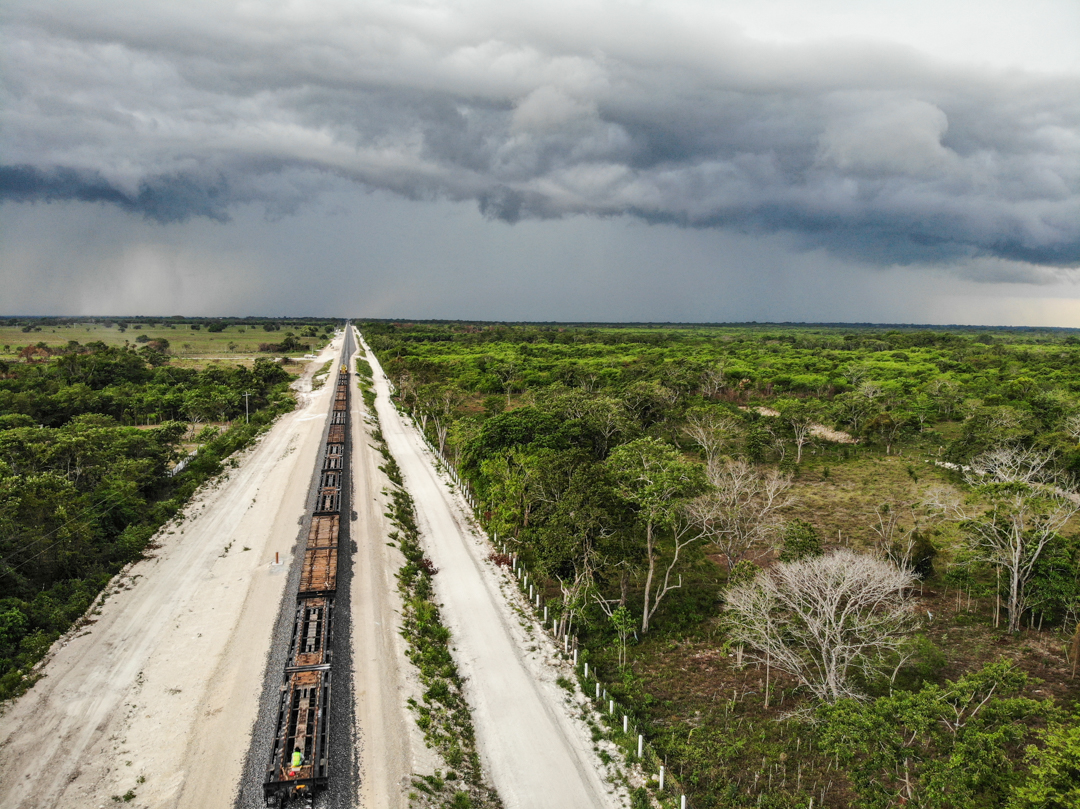
Perla Rubí Garduza Pablo, ama de casa del ejido Paraíso Nuevo, Campeche, suspira tras la pregunta: ¿Qué opina de la declaración del presidente sobre que no se iba a tirar un solo árbol? El cielo nublado sobre nosotros, ruge, anticipando la lluvia y su respuesta: “¡Es mentira! A nosotros nos han dañado la flora, fauna y nuestra vida”, exclama molesta por el paso del tren maya por su comunidad.

La devastación que atestiguan en el ejido Paraíso Nuevo se repite a lo largo de otros territorios. De acuerdo a un análisis de imágenes satelitales realizado por CartoCrítica, para junio de 2023 se han deforestado 6,659 hectáreas en la península de Yucatán por la construcción del tren maya. CartoCrítica enfatizó que, de esta área, 5,769 hectáreas fueron desmontadas ignorando la legislación ambiental pues no se promovieron ni autorizaron cambios de uso de suelo a través de la Secretaría de Medio Ambiente y Recursos Naturales (Semarnat).

Tala de árboles en los alrededores del ejido Paraíso Nuevo. Foto: Santiago Navarro F.

Rubí reclama por el incumplimiento de las promesas hechas por funcionarios de otorgar beneficios a la población para que aceptara el tren. Sostiene que los estragos por las obras del megaproyecto son palpables en la cotidianidad de esta población, al sur de Campeche.

Un equipo de Avispa Mídia visitó el ejido Paraíso Nuevo, correspondiente al tramo 1 del tren. Los pobladores refieren que las consecuencias negativas del megaproyecto no son cosa del futuro, sino algo que han vivido desde hace tres años, cuando en plena pandemia de la Covid-19, inició la construcción.

(Continuar leyendo…)

radio
Cátedra Jorge Alonso

[:es][Libro] Internacionalismo crítico y luchas por la vida[:]

[:es]

????????????????? ???́???? ? ?????? ??? ?? ????: ????? ?? ???????????́? ?? ?????????? ??????? ????? ??? ???????????? ? ????????́??

A unos días de cumplirse 40 años de la fundación del Ejército Zapatista de Liberación Nacional, estrenamos este trabajo colectivo que pretende reflexionar desde el caminar colectivo, algunos de los aprendizajes que nos han brindado los pueblos en su afán tenaz de transformar el mundo injusto en que vivimos. Desde las perspectivas internacionalistas que abarcan geografías amplias, se reflexiona sobre la Travesía por la Vida impulsada por las comunidades autónomas y al Congreso Nacional Indígena junto con muchas otras experiencias de lucha.

Francisco De Parres Gómez (Coordinador). Autores: Gilberto López y Rivas / Alicia Castellanos Guerrero / Luis Hernández Navarro / Inés Durán Matute / Hernán Ouviña / Carlos Alonso Reynoso / Jorge Alonso / Márgara Millán / Carolina Díaz Iñigo / Lola Cubells / María Ignacia Ibarra / Bruno Baronnet / Francesca Cozzolino / Argelia Guerrero / Xochitl Leyva Solano / Raúl Zibechi / Azize Aslan / Raúl Romero

Libro coeditado desde la Cátedra Jorge Alonso, el CIESAS Occidente, la Universidad de Guadalajara , el Cucsh Udg, Clacso – Consejo Latinoamericano de Ciencias Sociales , el Grupo de Trabajo: Cuerpos, Territorios, Resistencias, el Instituto de Investigaciones en Educación UV de la Universidad Veracruzana, Retos Nodo Chiapas Cooperativa Editorial Retos, la Cátedra Carlos Montemayor, la RERI. Red de Estudios sobre las Resistencias Indígenas y el Cotric – Colectivo Transdisciplinario de Investigaciones Críticas.

Lee y/o descarga en nuestra sección de libros para descargar.[:]

radio
Subcomandante Insurgente Moisés

[:es]EZLN | Novena Parte: La Nueva Estructura de la Autonomía Zapatista.[:en]EZLN | Ninth Part: The new structure of Zapastista Autonomy[:]

[:es]

Novena Parte: La Nueva Estructura de la Autonomía Zapatista.

Noviembre del 2023.

Herman@s y compañer@s:

Les voy a tratar de explicar cómo es que reorganizamos la autonomía, o sea la nueva estructura de la autonomía zapatista.  Ya les explicaré más luego con más detalle.  O tal vez no les explicaré más, porque la práctica es lo que importa.  Claro que también pueden venir al aniversario y mirar las obras de teatro, canciones, poesías y lo de arte y cultura de esta nueva etapa de nuestra lucha.  Si no, ahí los Tercios Compas les mandarán fotos y videos.  En otro momento les contaré lo que vimos de bueno y de malo en la valoración crítica de MAREZ y JBG.  Ahora sólo les diré cómo queda.  Va:

Primero. – La base principal, que es no sólo donde se sostiene la autonomía, también sin la cual no pueden funcionar las otras estructuras es el Gobierno Autónomo Local, GAL.  Hay un GAL en cada comunidad donde habitan bases de apoyo zapatistas.  Los GAL zapatistas son el núcleo de toda la autonomía.  Son coordinados por los agentes y comisariados autónomos y están sujetos a la asamblea del pueblo, ranchería, comunidad, paraje, barrio, ejido, colonia, o como se autonombre cada población.  Cada GAL controla sus recursos autónomos organizativos (como escuelas y clínicas) y la relación con pueblos hermanos no-zapatistas vecinos.  Y controla el buen uso de la paga.  También detecta y denuncia las malas administraciones, las corrupciones y los errores que puede haber.  Y está pendiente de quienes se quieren hacer pasar como autoridades zapatistas para pedir apoyos o ayudas que usan para beneficio propio.

Entonces, si antes había unas decenas de MAREZ, o sea de Municipios Autónomos Rebeldes Zapatistas, ahora hay miles de GAL zapatistas.

Segundo. – De acuerdo a sus necesidades, problemas y avances, varios GAL se convocan en Colectivos de Gobiernos Autónomos Zapatistas, CGAZ y aquí se discuten y se toman acuerdos sobre asuntos que interesan a los GAL convocantes.  Cuando así lo determinen, el Colectivo de Gobiernos Autónomos convoca a asamblea de las autoridades de cada comunidad. Aquí se proponen, discuten y se aprueban o rechazan los planes y necesidades de Salud, Educación, Agroecología, Justicia, Comercio, y las que se vayan necesitando.  A nivel de CGAZ están los coordinadores de cada área.  No son autoridades.  Su trabajo es que se cumplan los trabajos que piden los GAL o que se ven necesarios para la vida comunitaria.  Como, por ejemplo: campañas de medicina preventiva y vacunación, campañas para enfermedades endémicas, cursos y capacitación especializada (como técnicos en laboratorio, rayos X, ultrasonido, mastografías y los que vayamos aprendiendo), de alfabetización y niveles superiores, encuentros deportivos, culturales, festividades tradicionales, etc.  Cada región o CGAZ tiene sus directivos, que son los que convocan a asambleas si hay algún problema urgente o que afecta a varias comunidades.

Es decir que, donde antes habían 12 Juntas de Buen Gobierno, ahora habrá centenares.

Tercero. – Luego siguen las Asambleas de Colectivos de Gobiernos Autónomos ZAPATISTAS, ACGAZ.  Que son lo que antes se conocían como zonas.  Pero no tienen autoridad, sino que dependen de los CGAZ.  Y los CGAZ dependen de los GAL.  La ACGAZ convoca y preside las asambleas de zona, cuando sean necesarias según las peticiones de GAL y CGAZ.  Tienen su sede en los caracoles, pero se mueven entre las regiones.  O sea que son móviles, según las demandas de atención de los pueblos.

Cuarto. – Como se podrá ver en la práctica, el Mando y Coordinación de la Autonomía se ha trasladado de las JBG y MAREZ a los pueblos y comunidades, a los GAL.  Las zonas (ACGAZ) y las regiones (CGAZ) están mandadas por los pueblos, deben rendir cuentas a los pueblos y buscar la forma de cumplir con sus necesidades en Salud, Educación, Justicia, Alimentación y las que se presenten por emergencias ocasionadas por desastres naturales, pandemias, crímenes, invasiones, guerras, y las demás desgracias que depare el sistema capitalista.

Quinto. – Se ha reorganizado la estructura y disposición del EZLN de modo de aumentar la defensa y seguridad de los poblados y de la madre tierra en caso de agresiones, ataques, epidemias, invasión de empresas depredadoras de la naturaleza, ocupaciones militares parciales o totales, catástrofes naturales y guerras nucleares.  Nos hemos preparado para que sobrevivan nuestros pueblos, incluso aislados unos de otros.

Sexto. – Entendemos que tengan problemas para asimilar esto.  Y que, durante un tiempo, van a batallar en entenderlo.  A nosotros nos tomó 10 años pensarlo, y de esos 10 años, 3 en prepararlo para su práctica.

También entendemos que les parezca que está revuelto su pensamiento.  Por eso es necesario que se cambien su canal de entendimiento.  Sólo mirando muy lejos, hacia atrás y hacia adelante, se podrá entender el paso presente.

Esperamos que comprendan que es una estructura nueva de autonomía, que apenas estamos aprendiendo y que tardará un poco en caminar bien.

En realidad, este comunicado tiene sólo la intención de decirles que la autonomía zapatista sigue y avanza, que pensamos que estará así mejor para los pueblos, comunidades, parajes, barrios, colonias, ejidos y rancherías donde viven, es decir, luchan las bases de apoyo zapatistas.  Y que ha sido su decisión de ellos, tomando en cuenta sus ideas y propuestas, sus críticas y autocríticas.

También, como se irá viendo, es que esta nueva etapa de la autonomía se hace para enfrentar lo peor de la Hidra, su bestialidad más infame y su locura destructiva.  Sus guerras e invasiones empresariales y militares.

No existen para nosotros fronteras ni geografías lejanas.  Todo lo que pasa en cualquier rincón del planeta, nos afecta e incumbe, nos preocupa y duele.  En la medida de nuestras muy pequeñas fuerzas, apoyaremos a seres humanos en desgracia sin importar su color, raza, nacionalidad, creencia, ideología y lengua.  Aunque no sepamos muchos idiomas ni entendamos muchas culturas y modos, sabemos comprender el sufrimiento, el dolor, la pena, y la digna rabia que provoca el sistema.

Sabemos leer y escuchar a los corazones hermanos.  Seguiremos tratando de aprender de ellos, de sus historias y de sus luchas.  No sólo porque hemos padecido eso por siglos enteros y sabemos lo que es.  También y sobre todo porque, como desde hace 30 años, nuestra lucha es por la vida.

Seguramente hemos cometido muchos errores en todos estos años.  De seguro haremos más en los siguientes 120 años.  Pero NO nos rendiremos, NO cambiaremos de camino, NO nos venderemos.  Siempre estaremos revisando con mirada crítica nuestra lucha, sus tiempos y modos.

Siempre estarán nuestra mirada, nuestro oído, nuestra cabeza y nuestro corazón, dispuestos a aprender de otros que, aunque diferentes en muchas cosas, tienen nuestras mismas preocupaciones y semejantes anhelos de democracia, libertad y justicia.

Y siempre buscaremos lo mejor para nuestros pueblos y para las comunidades hermanas.

Somos, pues, zapatistas.

Mientras haya al menos un, una, unoa zapatista en cualquier rincón del planeta, resistiremos en rebeldía, es decir, lucharemos.

Ahí lo vean amigos y enemigos.  Y los que no son ni una cosa ni otra.

Sólo por ahora.

Desde las montañas del Sureste Mexicano.

Subcomandante Insurgente Moisés.
México, noviembre del 2023.
Más de 500, 40, 30, 20, 10 años después.

P.D.- Aquí les dejo un dibujo a ver si se entiende un poco.


 [:en]

Ninth Part: The new structure of Zapastista Autonomy

November 2023

Brothers, sisters, comrades:

I am going to try to explain to you how we reorganized the autonomy, that is, the new structure of the Zapatista autonomy. I will explain more to you later in more detail. Or maybe I won’t explain more, because practice is what matters. Of course you can also come to the anniversary and watch the plays, songs, poems and the art and culture of this new stage of our struggle. If not, Tercios Compas will send you photos and videos. At another time I will tell you what we saw good and bad in the critical evaluation of MAREZ and JBG. Now I’ll just tell you how it looks. Here it goes:

First: The main base, which is not only where autonomy is sustained, also without which the other structures cannot function, is the Local Autonomous Government, LAG [GAL for its acronym in Spanish]. There is a GAL in each community where Zapatista support bases live. The Zapatista GALs are the core of all autonomy. They are coordinated by autonomous agents and commissioners and are subject to the assembly of the town, ranchería, community, area, neighborhood, ejido, colony, or however each population calls itself. Each GAL controls its autonomous organizational resources (such as schools and clinics) and the relationship with neighboring non-Zapatista brother towns. And controls the proper use of the pay. It also detects and reports mismanagement, corruption and errors that may exist. And is attentive to those who want to pass themselves off as Zapatista authorities to ask for support or aid that they use for their own benefit.

So, if before there were a few dozen MAREZ, that is, Zapatista Rebel Autonomous Municipalities, now there are thousands of Zapatista GALs.

Second. – According to their needs, problems and advances, various GALs are convened into Collectives of Zapatista Autonomous Government, ZAG [CGAZ for its acronym in Spanish], and here discussions are held and agreements are made on matters that interest the convening GALs. When they so determine, the Collective of Autonomous Governments calls an assembly of the authorities of each community. Here the plans and needs of Health, Education, Agroecology, Justice, Commerce, and those that are needed are proposed, discussed and approved or rejected. The coordinators of each area are at the CGAZ level. They are not authorities. Their job is to ensure that the work requested by the GAL or that are deemed necessary for community life. Such as, for example: preventive medicine and vaccination campaigns, campaigns for endemic diseases, courses and specialized training (such as laboratory technicians, x rays, ultrasound, mammograms and those that we learn on the way), literacy and higher levels, sporting and cultural events, traditional festivities, etc. Each region or CGAZ has its directors, who are the ones who summon assemblies if there is an urgent problem or one that affects several communities.

That is to say, where before there were 12 Good Government ‘Juntas’, now there will be hundreds.

Third. – Next, the Assemblies of Collectives of ZAPATISTA Autonomous Governments, ACZAG [ACGAZ for its acronym in Spanish]. Which are what were previously known as zones. But they have no authority, and depend on the CGAZ. And the CGAZ depend on the GAL. The ACGAZ convenes and presides over zone assemblies, when necessary according to the requests of GAL and CGAZ. They are based in the caracoles, but move between regions. In other words, they are mobile, according to the towns demands for attention.

Fourth. – As will be seen in practice, the Command and Coordination of Autonomy has been transferred from the JBG and MAREZ to the towns and communities, to the GAL. The zones (ACGAZ) and the regions (CGAZ) are governed by the towns, they must be accountable to the towns and must find a way to meet their needs in Health, Education, Justice, Food and those that arise due to emergencies caused by natural disasters, pandemics, crimes, invasions, wars, and the other misfortunes that the capitalist system brings.

Fifth. – The structure and disposition of the EZLN has been reorganized in order to increase the defense and security of towns and mother earth in the event of aggressions, attacks, epidemics, invasion of companies that prey on nature, partial or total military occupations, natural catastrophes and nuclear wars. We have prepared so that our towns survive, even isolated from each other.

Sixth. – We understand that you may have problems assimilating this. And that, for a while, you will struggle to understand it. It took us 10 years to think about it, and of those 10 years, 3 to prepare it for its practice.

We also understand that it seems to you that your thinking is scrambled. That is why it is necessary to change your channel of understanding. Only by looking far away, backwards and forwards, can the present step be understood.

We hope you understand that it is a new structure of autonomy, that we are just learning and that it will take a while to get going well.

In reality, this statement has only the intention of telling you that Zapatista autonomy continues and advances, that we think it will be better for the towns, communities, places, neighborhoods, colonies, ejidos and rancherías where they live, that is, the bases of Zapatista support. And that it has been their decision, taking into account their ideas and proposals, their criticisms and self-criticisms.

Also, as will be seen, this new stage of autonomy is made to confront the worst of the Hydra, its most infamous bestiality and its destructive madness. Their wars and business and military invasions.

For us, there are no borders or distant geographies. Everything that happens in any corner of the planet affects us and concerns us, worries us and hurts us. To the extent of our very small strength, we will support human beings in distress regardless of their color, race, nationality, belief, ideology and language. Although we do not know many languages ​​or understand many cultures and ways, we know how to understand the suffering, pain, sorrow, and proud rage that the system provokes.

We know how to read and listen to brother hearts. We will continue trying to learn from them, their stories and their struggles. Not only because we have suffered from this for centuries and we know what it is like. Also, and above all because, as for 30 years, our fight is for life.

Surely we have made many mistakes in all these years. We will surely do more in the next 120 years. But we will NOT give up, we will NOT change path, we will NOT sell out. We will always be reviewing our struggle, its times and ways with a critical eye.

Our eyes, our ears, our heads and our hearts will always be ready to learn from others who, although different in many things, have our same concerns and similar desires for democracy, freedom and justice.

And we will always seek the best for our people and for our sister communities.

We are, therefore, Zapatistas.

As long as there is at least one man, one woman, one ‘otroa’ Zapatista in any corner of the planet, we will resist in rebellion, that is, we will fight.

See it for yourselves, friends and enemies. And those who are neither one thing nor another.

That is it, for now.

From the mountains of the mexican southeast.

Insurgent Subcommander Moisés.

Mexico, November 2023.

More than 500, 40, 30, 20, 10 years later.

P.S.- Here I leave you a drawing to see if you understand it a little.

 [:]

radio
Capitán Insurgente Marcos

[:es]EZLN | Octava Parte: P.D. QUE HAY QUE LEER PARA SABER DE QUÉ TRATA.[:en]EZLN | Eighth Part: P.S. WHAT YOU HAVE TO READ TO KNOW WHAT IT’S ABOUT.[:]

[:es]

Octava Parte: P.D. QUE HAY QUE LEER PARA SABER DE QUÉ TRATA.

Noviembre del 2023.

Cuenta la leyenda que, en los tiempos en que el tiempo no importaba, lluvia y noche cubrieron la Casa de los Seres.  Entonces se fue la luz.  Todo era oscuridad.  Las mujeres, los hombres y otroas andaban a los tropezones y chocaban entre sí.  Por esa causa, discutían y peleaban entre hermanos y vecinos.  Ni siquiera se reconocían, siendo que eran familiares y conocidos, porque muy oscuro estaba.  Mucho se regañaban.

Los dioses primeros, los que nacieron el mundo, estaban de haraganes, tirados en sus hamacas, contando chistes y cuentos.  Pero la bulla en la Casa de los Seres llegó hasta ellos.  “¿De quién es esa bulla?”, preguntó uno.  “A saber”, dijo otro.  Ixmucané, que era la diosa madre, dijo: “Vamos a mirar por qué es esa bulla”, pero al bajarse de la hamaca, se cayó y llegó su cara en el suelo y le quedó como bollada, o sea como con rajaduras.  La Ixmucané se levantó del suelo y no dijo groserías porque todavía no se habían inventado las groserías.  Se sacudió el polvo.  Se alzó un poco la nagua y salió corriendo rumbo a la Casa de los Seres.

Los dioses se miraron entre sí y no dijeron nada, pero pensaron “¿A poco nos va a ganar una mujer?” y se bajaron de sus hamacas, pero con cuidado, y corrieron para alcanzar a la Ixmucané.  Pero resulta que, como se la habían pasado de haraganes, no habían chaporreado su sitio y había mucho monte.  Puro acahual, pues.  Abundaban tzaw ch´ix (espinas), ramas secas, zacate cortador (que también le dicen gezau h´ak) y el ch´oox tz´an, que es un bejuco con espinas.  Pero ahí van corriendo y brincando como pueden y quejándose en la corredera esos dioses, porque no iban a permitir que les ganara una mujer.  Llegaron ya después a la Casa de los Seres, todos rasguñados y abollados en cara y manos.  Pero nadie los miró que están todos golpeados, porque no había luz.  Por eso se cree que los dioses no tienen heridas.

Los dioses tampoco miraban nada.  Todo era oscuro.  Sólo por el sonido se sabía que había más gente.  “¿Y ora?”, se preguntaron los dioses.  Ixmucané no se preguntó nada, sino que quedó pensando.  Los dioses varones siempre eran muy fanfarrones y empezaron a decir que hay que ir por ocote.  Otro que ya hay que inventar el focador y el quinqué.  Otro que había que juntar un buen de luciérnagas.  Y así.

Ixmucané pensó: “Hay que reponer la luz.  Pero para reponerla, tenemos que encontrarla.  Y para encontrarla, tenemos que saber dónde buscarla.  Y para saber dónde buscarla, tenemos que saber mero qué pasó”.

Ixmucané reunió a los hombres, mujeres y otroas de maíz.  En ese entonces sólo había hombres, mujeres y otroas de maíz, de muchos colores eran y cada quien tenía su modo.  No había religiones, ni naciones, ni Estados, ni partidos políticos, ni todo eso que nació después como semillas de la guerra.  Entonces, cuando la Ixmucané dijo “vengan hermanitos y hermanitas”, guiados por su voz llegaron todos los hombres y mujeres, y también otroas -porque no se sentían excluidoas-.

Se reunieron pues en asamblea. No se miraban porque no había luz, pero se podían hablar y escuchar.

La Ixmucané les preguntó “¿Qué vamos a hacer?”.  Los hombres, mujeres y otroas no se miraron entre sí -pues porque no había luz-, sino que se quedaron callados.  Hasta que una voz dijo “Pues tú dinos qué vamos a hacer”.  Los aplausos no se vieron, pero se escucharon claro.  Ixmucané se río de buena gana y dijo “Acaso yo lo sé.  No sabemos de por sí, pero tal vez así reunidos, en asamblea y hablando, de repente salen algunas ideas de qué vamos a hacer”.  Quedaron todos en silencio, pensando qué van a hacer.

El único ruido que se escuchaba era la bulla de los dioses varones que estaban peleando entre sí, que dónde madres quedó el ocote, que si alguien se acordó de crear las luciérnagas, que si yo no fui, que si eso le tocaba a no sé quién que de por sí se hace pato, y que qué cosa es “pato” si todavía no se hacen los patos.  Y así.

En la asamblea ya estaban hablando y proponiendo cómo hacer.  Primero sólo unas pocas voces, ya luego más.  Ya luego tuvieron que hacer un orden de turno para hablar y poner a alguien a escribir si es que hay acuerdo.  Como no había luz para escribir ni para leer, sólo había la palabra hablada, entonces nombraron a la Ixmucané que ella lo guarda en su cabeza lo que se dice y ya luego lo platica.

Muchas ideas y palabras se dijeron, y ya no cabían en su cabeza de la Ixmucané.  Entonces las empezó a guardar en el cabello y se fue haciendo largo su cabello, por eso las mujeres tienen el pelo largo.  Pero luego tampoco bastó, aunque lo iba acomodando su cabello y ahí se inventó el “prensa pelo” que, como lo indica su nombre, quiere decir “agarra ideas”.  Ya llegaba hasta el suelo su pelo de la Ixmucané y seguían hablando ideas y palabras.  Entonces la Ixmucané empezó a guardar las ideas en las heridas que se había hecho al caer y con las espinas y bejucos. En todas partes tenía heridas: en la cara, en los brazos, en las manos, en las piernas.  Todo su cuerpo estaba lleno de heridas, así que pudo guardar todo.  Por eso dicen que la gente de edad, de juicio pues, que tiene muchas arrugas y cicatrices, quiere decir que tiene muchas ideas e historias.  O sea que sabe mucho.

Ya en otra vuelta les cuento lo que acordaron en esa asamblea primera que hubo en la Casa de los Seres, pero en ésta les digo lo que dijo la Ixmucané: “Bueno, pues ya tenemos como quien dice un plan para enfrentar este problema que tenemos.  Como apenas está naciendo el mundo y le estamos poniendo nombre a cada cosa o caso, según, para no confundirnos, a esto que hicimos le vamos a llamar “en común”, porque todos participamos: unas dando unas ideas, otros proponiendo otras, y hay quien da la palabra y hay quien lleva el apunte de lo que se dice”.

Hubo un silencio primero.  Pesado, fuerte era el silencio.  Luego empezó a escucharse que una aplaudía, luego otro, luego todos aplaudieron y se escuchaba que estaban muy contentos.  Y no echaron baile porque no se veía ni madres.  Pero mucho reían porque habían encontrado una nueva palabra que se llama “en común”, que quiere decir “buscar juntos el camino”.  Y no fue que la inventaron los dioses primeros, los que nacieron el mundo, sino que llegó que fueron los hombres, mujeres, y otroas de maíz, que, en común, lo encontraron la palabra, o sea, el camino.

-*-

  Ixmucané era la más sabedora de todos los dioses y, como fue la primera que llegó a la Casa de los Seres, tenía más heridas, por la caída y por la carrera que hizo en el acahual, y así quedó marcada con esas cicatrices.  “Arrugas” y “cicatrices”, les nombraron.  Desde entonces, las arrugas y las cicatrices representan la sabiduría.  Más arrugas y cicatrices, más saberes.  Claro, en ese entonces no había redes sociales y nadie andaba usando maquillajes y modificando sus fotos con conocida aplicación virtual.  Y luego pasa que ves la foto del perfil y luego ves la realidad, y ya quieres salir corriendo.  No, las arrugas y las cicatrices eran un orgullo y no cualquiera.  Incluso los hombres y mujeres jóvenes se pintaban arrugas y cicatrices, o de plano se metían al monte para que las espinas y bejucos les arañaran la cara.  Porque no valía quién más bonita o bonito, sino quién más sabedora o sabedor.  En lugar de “followers” y “likes” se buscaba quién más arrugas y cicatrices.

Y ya.

-*-

  Sí, yo también quisiera saber qué pasó con la luz perdida.  Tal vez luego, en otra posdata, lo vamos a saber.  Por ahora, pues tenemos que aprender a caminar y vivir así en la oscuridad.  Ni modos.

Desde las montañas del Sureste Mexicano.

El Capitán.

Noviembre del 2023.  40, 30, 20, 10 años después.[:en]

Eighth Part: P.S. WHAT YOU HAVE TO READ TO KNOW WHAT IT’S ABOUT.

Legend has it that, in the times when time did not matter, rain and night covered the House of Beings. Then the power went out. Everything was darkness. Women, men and ‘otroas’ were stumbling and crashing with each other. For this reason, they argued and fought between brothers and neighbors. They didn’t even recognize each other, even though they were family members and acquaintances, because it was very dark. They scolded each other a lot.

The first gods, those who created the world, were lazy, lying in their hammocks, telling jokes and stories. But all the noise coming from the House of Beings reached them. “Whose noise is this?” asked one. “Who knows,” said another. Ixmucané, who was the mother goddess, said: “Let’s see what the noise is about,” but when she got out of the hammock, she fell and her face landed on the ground and it looked like it was dented, that is, like it had cracks. Ixmucané got up from the ground and did not swear because swear words had not yet been invented. She dusted herself off. She raised her skirt a little and ran towards the House of Beings.

The gods looked at each other and said nothing, but they thought, “Are we going to let a woman beat us?” and they got down from their hammocks, but carefully, and ran to catch up with Ixmucané. But it turns out that, since they had been lazy, they had not made or cleared path and there was a lot of bush. Pure ‘Acahual’, you see. There was an abundance of tzaw ch’ix (thorns), dry branches, sharp grass (which is also called gezau h’ak) and ch’oox tz’an, which is a vine with thorns. But there they went running and jumping as best they could and complaining on the way, those gods, because they were not going to allow a woman to beat them. They later arrived at the House of Beings, all scratched and dented on their faces and hands. But no one looked at them and noticed that they were all beaten up, because there was no light. That is why it is believed that the gods do not have wounds.

The gods didn’t look at anything either. Everything was dark. Just by the sound you knew there were more people. “And now?” the gods asked themselves. Ixmucané did not wonder anything, but remained thinking. The male gods were always very boastful and began to say that you have to go for ocote. Another said that they had to invent the the lamp. Another one said that had to gather a lot of fireflies. And so.

Ixmucané thought: “We have to replace the light. But to replace it, we have to find it. And to find it, we have to know where to look for it. And to know where to look for it, we just have to know what happened.

Ixmucané gathered the men, women and ‘otroas’ of corn. At that time there were only men, women and ‘otroas’ made out of corn, they came in many colors and everyone had their own way. There were no religions, no nations, no States, no political parties, nor everything that was born later as seeds of war. So, when Ixmucané said “come, little brothers and sisters,” guided by her voice, all the men and women arrived, and ‘othroas’ too – because they did not feel excluded.

So they met in an assembly. They didn’t look at each other because there was no light, but they could talk and listen to each other.

Ixmucané asked them “What are we going to do?” The men, women and ‘otroas’ did not look at each other – because there was no light – but remained silent. Until a voice said “Well, you tell us what we are going to do.” The applause was not seen, but it was clearly heard. Ixmucané laughed heartily and said, “Do you think I know. We don’t know as it is, but maybe gathered together, in an assembly and talking, suddenly some ideas emerge about what we are going to do.» They were all silent, wondering what they were going to do.

The only noise that could be heard was the noise of the male gods who were fighting among themselves, saying where the hell was the ‘ocote’, and whether someone had remembered to create the fireflies, and whether it was not me, and whether that was up to I don’t know who but he always plays dumb or acts like a duck, and someone asked what is a “duck”, because the ducks were not made yet. And so.

In the assembly they were already talking and proposing how to do it. First just a few voices, then more. Then they had to make a list in order to speak in turns and have someone write if there is an agreement. Since there was no light to write or read, there was only the spoken word, so they named Ixmucané, for her to keep in her head everything that is said, and then talks about it.

Many ideas and words were said, and they no longer fit in his Ixmucané head. Then she began to keep them in her hair and her hair became long, that’s why women have long hair. But then it wasn’t enough either, although she adjusted her hair and that’s when the “hair press” was invented, which, as its name indicates, means “grab ideas.” Ixmucané’s hair was already reaching the ground and they continued speaking ideas and words. Then Ixmucané began to keep her ideas in the wounds she had gotten when she fell and with the thorns and vines. She had wounds everywhere: on her face, on her arms, on her hands, on her legs. Her entire body was full of wounds, so she was able to save everything. That’s why they say that old people, that is, sensible people, who have many wrinkles and scars, means that they have many ideas and stories. That is to say they know a lot.

In another turn I will tell you what they agreed on in that first assembly that took place in the House of Beings, but in this one I will tell you what Ixmucané said: “Well, we already have, as it were, a plan to face this problem that we have. Since the world is just being born and we are giving a name to each thing, so as not to confuse ourselves, we are going to call this thing we did «in common», because we all participated: some giving some ideas, others proposing other ideas, and there are those who speak and there are those who keep notes of what is said.

There was silence first. Heavy, strong was the silence. Then you could hear someone start to applaud, then another, then everyone applauded and you could hear that they were very happy. And they didn’t dance because you could see nothing at all. But they laughed a lot because they had found a new word called “in common,” which means “to seek the path together.” And it was not that the first gods invented it, those who created the world, but it came to be that it was men, women, and ‘otroas’ made of corn, who, in common, found the word, that is, the way.

-*-

Ixmucané was the most knowledgeable of all the gods and, as she was the first to arrive at the House of Beings, she had more wounds, from the fall and from the race she did in the ‘Acahual’, and thus she was marked with those scars. “Wrinkles” and “scars,” they were called. Since then, wrinkles and scars represent wisdom. More wrinkles and scars, more knowledge. Of course, back then there were no social networks and no one was wearing makeup and modifying their photos with a well-known virtual application. And then it happens that you see the profile photo and then you see reality, and you want to run away. No, the wrinkles and scars were a source of pride and not something anybody could have. Even young men and women painted wrinkles and scars, or simply went into the mountains so that the thorns and vines scratched their faces. Because it didn’t matter who was prettier, but rather who was more knowledgeable. Instead of “followers” ​​and “likes” they looked for who had the most wrinkles and scars.

And that’s it.

-*-

Yes, I would also like to know what happened to the lost light. Maybe later, in another postscript, we will know. For now, we have to learn to walk and live like this in the dark. There is no other way.

From the mountains of the Mexican southeast.

The Captain
November 2023. 40, 30, 20, 10 years after.[:]

radio
Radio Zapatista

[:es]Entrevista con Fuad Abu Saif en Palestina sobre Gaza[:en]Interview with Fuad Abu Saif in Palestine about Gaza[:]

[:es]

Estamos cansados de estar bajo ocupación por 75 años

Escucha la entrevista en inglés aquí:
[podcast]https://radiozapatista.org/wp-content/uploads/2023/11/Interview-UAWC-Palestine.mp3[/podcast]

Desde hace más de un mes, Israel ha bombardeado Gaza por aire, mar y tierra, en respuesta al ataque realizado por Hamás el 7 de octubre con el objetivo de acabar con el bloqueo impuesto a Gaza por 17 años, que ha causado la muerte de miles de personas, la mayoría niños. Alrededor de 1,400 personas murieron en el ataque, aunque reportes recientes desde Israel indican que es muy probable que muchos, si no la mayoría de los muertos, fueron víctimas del fuego indiscriminado por parte del mismo ejército israelí.

La ofensiva de Israel contra Gaza ha matado alrededor de 11 mil personas hasta ahora, de las cuales al menos 4 mil 500 son niños. En violación a las legislaciones internacionales y las convenciones de derechos humanos, Israel continúa masacrando a la población civil indiscriminadamente, atacando hospitales, escuelas, ambulancias, refugios, mezquitas, hogares, edificios y campos de refugiados, además de la infraestructura. Desde el 7 de octubre, Israel ha atacado por lo menos 12 mil blancos con 25 mil toneladas de explosivos, según Euro-Med Human Rights Monitor, lo que equivale a dos bombas nucleares. Enormes manifestaciones en todo el mundo han condenado lo que a todas luces es un proyecto genocida de limpieza étnica por parte de Israel, cometido no sólo por medio de las masacres directas, sino también del hambre y la privación, cortando el acceso a los alimentos y al agua limpia para una población de 2.5 millones de palestinos.

Desde Cisjordania, hablamos con Fuad Abu Saif, director general de la Unión de Comunidades de Trabajo Agrícola (UAWC), quien explicó la situación.


Foto: El Mundo

Gracias, Fuad, por estar con nosotros. Nos gustaría saber cómo está la situación en Gaza en este momento, pero antes quisiéramos saber cómo ha sido la vida en Gaza los últimos 16 a 17 años, desde que Israel cerró las fronteras en 2006.

La historia de Gaza, Cisjordania y toda Palestina no comenzó el 7 de octubre ni hace 16 o 17 años; comenzó hace 75 años con la ocupación israelita de Palestina en 1948. En 2006 se realizaron elecciones nacionales en Palestina y Hamás ganó en Gaza. De inmediato, Israel impuso un bloqueo en todo Gaza, lo cual ha hecho la vida muy difícil. Gaza es un área muy pequeña de 665 km2, rodeada por todos lados por Israel y el mar al otro lado, con una población de 2.5 millones, todos sitiados. Eso quiere decir que nadie puede entrar o salir sin pasar por la frontera con Israel. Prohibieron la entrada a Gaza de unos 100 diferentes materiales, lo que significa que las necesidades básicas no pueden entrar. Y desde luego no hay aeropuertos o cualquier otra conexión con el mundo exterior, excepto por Egipto, que tiene acuerdos con Israel y también cerró su frontera.

Trabajamos con Gaza de cerca porque nuestra oficina tiene la responsabilidad de estar en contacto con la gente allá diariamente. Miles de personas han muerto porque no hay suficiente atención en los hospitales y no hay materiales, combustible o electricidad. Desde antes del 7 de octubre, sólo había electricidad durante cuatro horas por día. El agua está contaminada, no hay agua limpia en Gaza, y nadie puede entrar o salir desde hace 16 o 17 años. La vida era imposible…

Hay quienes describen a Gaza como la mayor prisión al aire libre del mundo…

Es más que una prisión al aire libre. Israel inició cinco guerras antes de ésta en estos 16 años, matando a miles de palestinos y arrestando a muchos más. Muchos palestinos han muerto por entrar a sus tierras cerca de la frontera entre Israel y Gaza… quien se acerque después de las 6 pm es asesinado. Cientos de agricultores murieron porque llegaron tarde a sus tierras y los israelitas los atacaron. Muchos manifestantes que intentaron protestar contra la situación fueron asesinados o heridos por organizar manifestaciones cerca de la frontera con Israel; esto ha sucedido desde 2014. Las guerras significan que las operaciones militares pueden suceder en cualquier momento, y esto ha sucedido cinco veces sin ninguna razón. En los últimos 16 años, Israel inició estas operaciones militares sin ser atacados desde Gaza.

¿Cómo está la situación ahora después del 7 de octubre?

El 7 de octubre Israel inició esta guerra genocida en Gaza. El número de víctimas crece de manera asustadora, hasta anoche eran casi 11 mil palestinos asesinados en un mes y más de 55 mil heridos por los ataques aéreos contra civiles, hogares e infraestructura en Gaza. El problema es que más de 69% de las víctimas son niños y mujeres. La mayoría de la gente en Gaza son jóvenes y niños, más del 60%, por lo que todas las casas están llenas de niños, y sin alertar a nadie bombardean casas y edificios en todo Gaza. Como dije, es un área muy pequeña. No se puede describir la vida allí. No hay ningún lugar seguro en Gaza, y además del bloqueo impuesto por Israel desde hace 17 años, ahora impusieron otro tipo de bloqueo: cortaron toda la electricidad desde el 10 de octubre. Cortaron acceso a la alimentación y están utilizando el hambre en esta guerra contra la población civil palestina. Cortaron los caminos, el agua; no hay comida, agua, ningún lugar seguro…


Foto: Mahmud Hams, AFP

¿Cómo sobrevive la gente con esta falta de alimentos, agua y movilidad?

Como organización humanitaria, desde el inicio de la guerra iniciamos un programa para apoyar el acceso a la alimentación. No hay alimentos provenientes del exterior, dependemos de los pocos alimentos que hay en Gaza. Gaza es un área agrícola. Hay dos diferentes lugares. Uno es la zona de amortiguación, una gran extensión de tierra cerca de la frontera con Israel, la cual está bloqueada por Israel y nadie puede acercarse. Hay también un área pequeña dentro de Gaza, lo que llamamos los huertos caseros, donde la gente planta alrededor de sus casas. Ésta es la única fuente de alimentos que tienen. Y hay algunos proveedores grandes de alimentos en Gaza que tenían alimentos y materiales desde antes de la guerra. Estamos en contacto con ellos y en los últimos tres o cuatro días los alimentos se están acabando. Hay muy poco alimento y se está racionando entre las familias: esto para mañana, esto para pasado mañana. Uno de ellos me dijo: “Nosotros no tenemos problema con eso, pero es difícil decirle a los niños que no tenemos comida y sólo podemos comer una vez al día, que a veces es sólo pan o arroz; se los decimos y empiezan a llorar, no lo entienden, pero es la única manera de enfrentar el hambre”. Lo mismo con el agua. Por ejemplo, en Rafah, en el sur de Gaza, a donde casi 900 mil palestinos tuvieron que desplazarse, huyendo del norte, más el casi millón de personas que ya vivían allí. Tienen un solo pozo y tienen que esperar cuatro o cinco horas para llenar un recipiente de 30 a 40 litros, y si tienen suerte, tienen agua, si no, hay que regresar al día siguiente. Tratan de no usar el baño, hay un acuerdo que sólo se usa una vez al día. Las historias que nos llegan son muy duras, sobre todo para los niños. Y claro que no hay leche, y el pan a veces está tan duro que tienen que mezclarlo con agua para que los niños se lo puedan comer.

Han dejado entrar algunos camiones, unos 150 desde el inicio. Algunos vienen cargados con sólo 30% a 40% de su capacidad, y la mayoría de los productos están caducados. Otros traen cosas que la gente no necesita ahora, como ropa.


Foto: Said Khatib, AFP

Hace unas horas el EZLN publicó un comunicado. Te quiero leer una parte:

La niñez palestina asesinada no es una víctima colateral, es el objetivo principal de Netanyahu, siempre lo fue. Esa guerra no es para eliminar a Hamás. Es para matar el futuro. Hamás será sólo la víctima colateral. El gobierno de Israel ya perdió la batalla mediática, porque resulta que el genocidio, aunque se disfrace de venganza, no tiene tantos seguidores como creían. Ahora es capaz de la crueldad más inimaginable. Quien tal vez sí podría detener la masacre es… el pueblo de Israel.

Eso me lleva a un par de preguntas. La primera tiene que ver con las verdaderas intenciones de esta barbarie, apoyada por los Estados Unidos, Inglaterra y otros países europeos. ¿Cuáles son los verdaderos intereses económicos y geopolíticos en juego, y cuáles son las verdaderas intenciones de Israel y sus aliados?

Algunos hechos son obvios para todos. No sé cómo el mundo puede aceptar esto, escuchar y no hacer nada real contra este genocidio contra civiles y sobre todo niños. Israel no es sólo Netanyahu. Todos los líderes israelitas, y más aún los “civiles”, han declarado desde el inicio que no debe sobrevivir ningún civil en Gaza, que hay que matarlos a todos. Hace unos días, 100 doctores firmaron una petición exigiéndole al gobierno israelí que destruya Gaza por completo, incluyendo a los niños. Yo creo que con el apoyo incondicional de los Estados Unidos y otros gobiernos occidentales, está claro que quieren cambiar toda la región y reestructurarla en beneficio de Israel. Desde el primer momento, fueron a Israel a expresar su solidaridad y concordaron con el proyecto israelí de desplazar a los palestinos de Gaza y empujarlos a Rafah primero y después de Rafah al desierto de Sinaí. Hasta ayer, los israelitas habían matado 175 palestinos en Cisjordania, donde no está Hamás, donde no hay ninguna operación militar. Eso significa que están preparando otro desplazamiento hacia Jordania; Israel ya empezó a hablar de este proyecto de empujar a la población de Gaza al Sinaí y a la de Cisjordania a Jordania. Es un proyecto espeluznante, limpieza étnica en Cisjordania y genocidio en Gaza, con todo el apoyo de los gobiernos europeos y de los Estados Unidos, y desde luego los palestinos no lo permitirán. Lo que sucede en Gaza y la forma en que la gente está resistiendo es un ejemplo, pero es muy peligroso para todos. No hay ningún lugar para la ley internacional ahora, y están alentando a Israel a ignorarla. Están atacando a Siria de nuevo, a Líbano… hacen lo que quieren con el apoyo de Europa y de los Estados Unidos…


Foto: Mahmud Hams, AFP

Y desde luego esto sucede en el contexto de una crisis de los Estados Unidos como potencia mundial, mientras Rusia, China y BRICS se fortalecen y amenazan la hegemonía occidental.

Los Estados Unidos ven a Israel como una importante base militar. Hay gas en Gaza, grandes cantidades descubiertas en 1996 pero más aún en 2000. O sea que no sólo usan a Israel como base militar. Eso explica por qué Biden visitó a Israel al día siguiente y pronunció un discurso lleno de mentiras, está claro que está mintiendo, no hay ninguna evidencia que apoye sus declaraciones. Saben que los palestinos no tienen verdadero poder, no tenemos tanques, armas… tenemos recursos naturales. Y se trata también del acceso al mar desde Gaza, hemos sabido de este plan desde hace décadas, y la única forma de lograrlo es desplazando al pueblo de Gaza.

En este contexto, ¿qué papel juegan los otros países árabes?

Algunos son muy débiles y otros apoyan a Israel. Hablo de los gobiernos. Entre Gaza y Egipto no hay israelitas, pero la frontera está cerrada. Desde 2006, el gobierno egipcio cerró la única vía de acceso al mundo exterior para el pueblo de Gaza. O sea que están contribuyendo en la práctica. Egipto es el mayor país árabe y puede cambiar todo. Pero hacen exactamente lo contrario. Los otros países árabes están amenazados por los Estados Unidos, que ha traído todo su poder y tropas al mar, para advertirles que si se mueven o muestran su apoyo, habrá consecuencias en sus propios países. Son demasiado débiles y fragmentados y los Estados Unidos los atrajo a su lado, y a veces hasta condenan a Palestina y apoyan a Israel.

¿Qué salidas ves? El presidente Biden dijo que esto no va a parar, y Netanyahu descarta toda posibilidad de un cese al fuego. ¿A dónde va todo esto?

Es difícil hablar del futuro entre esos criminales y ese tipo de pensamiento de Biden y otros. Me espanta que todos vean a la gente morir de esa forma después de 35, 40 días de guerra y que lo justifiquen diciendo que hay que seguir atacando para evitar que Hamás se reconstruya; pero eso no es verdad. No quieren un cese al fuego porque quieren mantener la presión sobre la gente para que se desplace al sur. La ciudad de Gaza está cercada ahora y siguen matando y atacando a la gente y la gente empieza a desplazarse al sur. Eso es lo que hizo Israel en 1948, cuando atacó a más de 500 pueblos palestinos y los siguió atacando hasta que evacuaron y se desplazaron a Jordania, Líbano, Siria, etc., volviéndose refugiados. Están haciendo lo mismo ahora. Es claramente un pensamiento genocida, y todo mundo lo ve como si fuera una película. Tengo miedo de que, con la luz verde de los Estados Unidos, seguirán matando, y las cosas se pondrán cada vez más difíciles en Gaza… y todo es posible, para ser franco. No les importa el número de víctimas. No estoy optimista, tengo miedo, todos tenemos miedo de que esto continúe y se vuelva algo normal y que después de algunas semanas ya nadie hable al respecto.

Sin embargo, hay una indignación y apoyo sin precedentes en todo el mundo, con grandes manifestaciones, incluyendo a muchas comunidades judías en muchos países que dicen no, no en nuestro nombre, no aceptaremos este genocidio. ¿Ves alguna esperanza en este movimiento mundial en defensa de Palestina?

Los palestinos vemos dos fuentes de esperanza en toda esta oscuridad. Una de ellas es la resiliencia del pueblo palestino en Cisjordania y en Gaza. En Cisjordania las cosas también están muy difíciles, impusieron un bloqueo, están disparándonos y matándonos… La resiliencia del pueblo palestino es una esperanza y es fuerte.

La otra esperanza, sí, es ese movimiento en todo el mundo. Si continúa o crece, podría… por ejemplo, en Francia e incluso en los Estados Unidos, empezamos a ver un cambio muy pequeño, en palabras, no un cambio real en su posición, pero están empezando a hablar de un cese al fuego, porque hace una o dos semanas no se hablaba de eso. En Francia, lo que Macron dijo en Jerusalén fue que debería haber una alianza contra Hamás. Y después de esas grandes movilizaciones, empezaron a exigir un cese al fuego de manera muy abierta y pública. Entonces, es una esperanza. Pero es la única esperanza. No hay otras opciones para que esto termine.


Foto: Hollie Adams, Reuters

Puesto que estás en Cisjordania, ¿nos puedes contar cómo está la situación allá?

Está muy difícil y hay mucho riesgo. No podemos salir de nuestras ciudades o pueblos, cercaron todo. Hay rejas en todas las ciudades y pueblos palestinos. No se puede entrar o salir sin pasar por ellas y por los puntos de control. Si te acercas, te pueden disparar, y muchos palestinos han muerto así. Según los acuerdos de Oslo, Cisjordania se dividió en tres áreas. El área C abarca 63% de Cisjordania y contiene la mayoría de la tierra y los recursos. Desde el 7 de octubre, han estado desplazando a la gente de esa área, que es muy grande y donde se espera poder construir el Estado palestino en el futuro. Los colonos atacan las comunidades palestinas en el área C todos los días; atacan las casas, las queman, queman los ranchos, se roban las pertenencias, tumban árboles. Estamos en plena estación de las olivas, que para los palestinos es como un carnaval, pero nadie puede cosechar sus olivas porque los colonos se las roban o tumban los árboles o le disparan a los agricultores palestinos que intentan llegar a sus tierras. La semana pasada, por ejemplo, cerca de Nablus mataron algunos palestinos que cosechaban sus olivas.

Este mes mataron a 175 palestinos; sólo ayer mataron a 16 en el campo de refugiados de Yenín. Hay 5 mil 500 palestinos en la cárcel, detenidos en los últimos 20 años; pero sólo este mes, 2 mil 500 palestinos fueron arrestados.

Todos los puntos de control están cerrados. Incluso la comida aquí, aunque tenemos más espacios y proveedores, pero si continúa así, habrá escasez. Y pueden cortarnos el agua y la electricidad en cualquier momento.

¿Hay algo más que te gustaría decirle a nuestro público?

Creo que el único mensaje que todos los palestinos tenemos es que necesitamos nuestra libertad. Estamos cansados de estar bajo ocupación por 75 años. Necesitamos que nuestros hijos tengan esperanza y un futuro como todos los niños del mundo. Necesitamos estar seguros en nuestras tierras, nuestros hogares y nuestros campos. No queremos más campos de refugiados palestinos, queremos que los refugiados regresen, queremos tener un país independiente y un futuro, queremos tener soberanía sobre nuestros recursos, como los israelitas, como todos. No somos diferentes de los israelitas, somos tan humanos como todo mundo. No queremos que muera más gente. Queremos que esto pare, este ciclo de guerras, porque esta es la sexta en 15 años en Gaza. Debemos parar esto para siempre. Odiamos ver la hipocresía de los países occidentales y de los Estados Unidos al apoyar y participar directamente en el asesinato de los palestinos. Esto debe acabar. Tenemos que respetar los derechos humanos y la ley internacional, no se puede aplicar a los palestinos, a las víctimas, y dejar que Israel haga lo que quiera. Somos luchadores por la dignidad, por la libertad. No luchamos para matar o para odiar. Eso es lo que quiero que todo el mundo sepa, y que se unan a los palestinos para lograrlo. Se trata de valores humanos, no sólo palestinos. Luchar contra la ocupación aquí y en cualquier lugar es un valor humano fundamental en todo el mundo. La historia está llena de casos como éste, pero todos terminaron, y necesitamos que éste termine también y que los palestinos sean libres.


Foto: El Mundo

[:en]Listen to the interview:
[podcast]https://radiozapatista.org/wp-content/uploads/2023/11/Interview-UAWC-Palestine.mp3[/podcast]

For over a month now, Israel has been bombing Gaza through air, sea, and land, in retaliation for the attack by Hamas on October 7, aimed at lifting the deadly blockade imposed on Gaza for 17 years, which has led to thousands of deaths, most of whom are children. Around 1,400 people died in that attack, although recent reports from Israel indicate that there is a strong possibility that many, if not most of the dead were killed by indiscriminate Israeli fire that day.

Israel’s offensive against Gaza has killed close to 11,000 people so far, at least 4,500 of whom are children. In violation of international law and all human rights conventions, Israel continues to massacre the civilian population indiscriminately, attacking hospitals, schools, ambulances, shelters, mosques, homes, buildings, and refugee camps, as well as infrastructure. Since October 7, Israel has hit at least 12,000 targets with 25,000 tons of explosives, according to Euro-Med Human Rights Monitor—the equivalent to two nuclear bombs. Massive demonstrations all around the world have condemned what is evidently Israel’s ethnic cleansing and genocidal project, not only committed through direct massacres, but also employing hunger and deprivation, cutting off access to food and clean water for a population of 2.5 million Palestinians.

From the West Bank, we spoke with Fuad Abu Saif, General Director of the Union of Agricultural Work Communities (UAWC), who explained the situation.


Foto: El Mundo

Thank you for being with us, Fuad. We would like to know what the situation is like in Gaza right now, but before we do that, we would like to know what life was like in Gaza for the last 16 or 17 years, since the borders were closed by Israel in 2006.

The story of Gaza, the West Bank and all of Palestine started not just on October 7 or even 16 or 17 years ago; it started 75 years ago when Israel occupied Palestine in 1948. In 2006, there was a national election in Palestine and Hamas won. Immediately, Israel imposed a siege in all of Gaza, which has made the life of people there very difficult. Gaza is a very small area: 665 km2 surrounded on all sides by Israel and the sea on the other side, and about 2.5 million people living there, all of them under siege. That means that there is no way to go in or out without passing through the Israeli border. They forbid about 100 different materials from entering Gaza, which means that all the fundamental and basic needs for life are prohibited from entering Gaza. And of course, there is no airport or other connection with the outside world, except through Egypt, which is also in agreement with Israel and also blocked that border.

We work closely with Gaza because our office is responsible for being in daily touch with people there. Thousands of people have died because there is not enough care in the hospitals, no materials, no fuel, no electricity. Even before October 7, electricity was only available for four hours a day. The water is contaminated, there is no clean water in Gaza, and no one can go in or out of Gaza for 16 or 17 years. So life was impossible…

Some people have described Gaza as the largest open-air prison in the world…

It’s not just an open-air prison. Israel waged five wars before this one during these 16 years, killed thousands of Palestinians and arrested many others. Thousands of Palestinians were killed because they entered their land in the area near the border between Israel and Gaza… everyone entering after 6 pm, they shoot them. Hundreds of farmers lost their life because they were late in their farm and the Israelis attacked them. Protesters who tried to protest and condemn this situation in the area were killed or injured because they organized a kind of march near the Israeli border—this has happened since 2014. The wars mean that military operations can happen at any moment, and it has happened five times without any reason to justify it. In the past 16 years, Israel initiated these military operations without having any attacks from Gaza.

What is it like now on the ground after October 7?

Since October 7, Israel started this genocide war in Gaza. The number of victims is increasing in a crazy way, until last night it was almost 11,000 Palestinians killed in one month, more than 55,000 injured by the Israeli air strikes against civilians, homes, and infrastructure in Gaza. The problem is that more than 69% are children and women. The way they are killing cannot be described. They bomb houses full of civilians and children. As you may know, the majority of people in Gaza are young and children, more than 60%. So all houses are full of children, and without alerting anyone, they bomb them, the houses, the buildings and everywhere in Gaza. Like I said, it is a very small area. Life cannot be described. There’s no safe place in all of Gaza, and in addition Israel, beside the siege imposed for 17 years, they imposed a different kind of siege—they totally cut off electricity on October 10. They cut off food and are using starvation in this war against civilian Palestinians. They cut roads, cut water, there is no food, no water, no safe place…


Foto: Mahmud Hams, AFP

How are people surviving with this lack of food, water, and mobility?

As a humanitarian organization, we launched from the beginning of this war a program to support people to have access to food. No food is available from the outside, we’re relying on the limited food inside Gaza. Gaza is an agricultural area. There are two different places: the buffer zone, which is a huge land area next to the Israeli border, where Israel isolated that area from the people and farmers, so no one can have access to that area. There is another small area, which is the land inside Gaza itself, where there is what we call the home gardens, where people plant around their homes. This is the only source of food they have. Plus there are some big suppliers in Gaza who had already stored food and materials before the war. We are in contact with them and they have almost run out in the last three or four days. They are managing with the very little food, and are scheduling between the families: this for tomorrow, this for after tomorrow. And as one of them told me: “Look, for us, we have no problem, but it’s difficult for me to describe that to my children, that we don’t have food and we have only one meal, which might sometimes be only bread or rice, and we explain this to the children and they start crying, they don’t understand what that means, but this is the only way that we are managing this starvation.” Water is the same… as an example, in Rafah, which is in the south of Gaza, where almost 900,000 Palestinians were forced to move from the north, plus the close to 1 million already living in that area. They have one well working manually because there is no electricity, and sometimes you have to wait four or five hours to fill your container with 30 to 40 liters, and if you are lucky you have water; if not, you come back the next day. They try not to use the bathroom, for example, this is an agreement, only one time per day. The stories coming from them are very hard, especially for children. Of course, there is no milk, and the bread sometimes is so dry that they have to mix it with water so children can eat it.

They allowed some trucks to enter Gaza, 150 trucks from the beginning. Some of the trucks were only filled to 30-40% of their capacity, and most of the materials and food were expired. Others bring things that the people don’t need, such as clothing.


Foto: Said Khatib, AFP

A few hours ago, the EZLN published a communiqué. Let me read you a part of it:

The murdered Palestinian children are not collateral victims, they are and always have been Netanhayu’s main objective. This war is not about eliminating Hamas. It is about killing the future. Hamas will only be the collateral victim. Israel’s government has lost the media battle because it turns out that genocide, even if disguised as revenge, does not have as many followers as it believed. It is now capable of the most unimaginable cruelty.  The only ones who may perhaps end the massacre are… the people of Israel.

This brings me to a couple of questions. The first one has to do with the true motivations for this barbarism, which is backed by the United States, England, and other European countries. What are the economic and geopolitical interests at play here, and what are Israel’s and its allies’ true intentions?

There are some facts that have become clear for everyone. I don’t know how the world is accepting this, listening and not taking any real action in this genocide against civilians and in particular against children. Israel is not just Netanyahu. All Israeli leaders and even more the “civilians” declared from the beginning that no civilians are to survive in Gaza and that we have to kill them all. A few days ago, 100 doctors signed a petition demanding from the Israeli government to burn Gaza totally, including the children. I think that with this strong support from the United States and other Western governments, it is clear that they want to change the face of the whole region and restructure it so it is more beneficial for Israel. From the first moment, they moved rapidly to visit Israel and express their solidarity, and they agreed with the Israeli project to displace the Palestinians from Gaza and push them to Rafah as the first step, and the next step, from Rafah to Sinai. Until yesterday, Israelis have killed 175 Palestinians in the West Bank, where there is no Hamas, no military operations here. Which means that they are also preparing for another displacement to Jordan, and Israel is now putting that on the table and started speaking of this Israeli project, where Gaza will be pushed to the Sinai and the West Bank to Jordan. It is a horrifying project, ethnic cleansing in the West Bank and genocide in Gaza, with the full support of European governments and the US, and of course Palestinians will not allow this to happen. What is happening in Gaza and the way people are resisting is an example, but it’s risky for everyone. There is no room now for international law, and they encourage Israel to be above international law. They are attacking Syria again on a regular basis, Lebanon… they do whatever they want with the support of Europe and the US…


Foto: Mahmud Hams, AFP

And of course, this is happening in the context of a crisis of the United States as a world power, as Russia, China, and BRICS acquires more power and threatens Western hegemony.

The US is dealing with Israel as an important military base here. There is gas in Gaza, huge quantities discovered in 1996 but that became clearer in 2000. So they are not just using Israel as a military base. This explains why the next day Biden visited Israel, with a statement full of lies, and it’s clear that he’s lying, there is no evidence for his statements. They know that the Palestinians don’t have real power, we have no tanks, no weapons… we have natural resources. It is also about having access to the sea through Gaza, we’ve heard of this plan for decades, and the only way to do that is to displace the Gazan people.

In this context, what is the role of the other Arab countries?

Some of them are too weak, and others are supporting Israel. I mean the governments. Between Gaza and Egypt there are no Israelis, but the border is heavily closed. Since 2006, the Egyptian government closed the only gate for Gazans to have access to the world. So yes, they are contributing in a practical way. Egypt is the biggest Arab country and has the power to change everything. But they do the opposite exactly. The other Arab countries, the United States is scaring them, they are bringing all the US power and troops in the sea here, to alert them that if you move or support, there will be a mess in your country. They are very weak, fragmented, and the US has brought them to their side, and they sometimes even condemn Palestine and support Israel.

What do you see as possible outcomes? President Biden has said that there is no way this is going to stop, and Netanyahu denies all possibility of a ceasefire… where is this going?

It is difficult to talk about the future among those criminals and this kind of way of thinking from Biden and others. I am shocked that everyone is seeing people being killed in this way after almost 35, 40 days from the war, and they are justifying it saying that they keep attacking because they  won’t give any chance to Hamas to rebuild; but that is not true at all. They don’t want a ceasefire because they want to keep the pressure on the people to keep pushing them to the south. They are surrounding Gaza City right now and they keep pushing and killing and attacking the people, and the people are starting to move to the south again. This is what they did in 1948, when Israel attacked more than 500 Palestinian villages and kept attacking them until they evacuated and displaced these villages to Jordan, Lebanon, Syria, etc., after which they became refugees. They are doing the same now again. It is a genocidal thinking clearly, everyone is watching as if it was a movie. This should be stopped; not just stopped, they should be held accountable for their crime. I’m a bit scared that, with this green light from the US, they will continue killing, and things will be increasingly difficult in Gaza… and everything is possible, frankly speaking. They don’t care about the number of victims. I’m not optimistic, I’m scared, we are all scared that this will continue and will become a normal part of the agenda, and after a few weeks no one will be talking about this.

Yet there is an unprecedented outrage and support around the world, with very large demonstrations, including by Jewish communities in many countries who are saying no, not in our name, we will not accept this genocide. Do you see any hope in this world movement in defense of the Palestinian cause?

As Palestinians, we see two sources of hope among all this darkness. One of them is the steadfastness of the Palestinian people in the West Bank and Gaza. In the West Bank, it is also very hard, they imposed closure, siege, killing, shooting… The steadfastness of the Palestinian people is one hope and it’s a strong one.

The other hope is, yes, this kind of huge demonstrations all around the world. If it continues or grows, it might… for example, in France, and even in the US, we start hearing a very small change in words, not in a real change in their position, where they are talking about a ceasefire, because there was no talk of a ceasefire at all one or two weeks ago. In France, what Macron said in Jerusalem is that there should be an alliance against Hamas. And after these huge demonstrations, they started demanding a ceasefire in a very open and public way. That’s the only hope we have, no other hopes. There are no other options to see an end.


Foto: Hollie Adams, Reuters

Since you are in the West Bank, can you tell us what the situation is like there?

It is very difficult and risky. We cannot move from our cities or villages, they cut everything. They put gates in all the Palestinian cities and villages. You cannot go out or in without passing through the gates and checkpoints. If you get closer they might shoot you, and many Palestinians have been killed that way. According to the Oslo agreements, they divided the West Bank in three areas. Area C, is composed of 63% of the West Bank, the majority of land and resources are there. From October 7, they have displaced people from that area, which is huge and where there is hope to build the Palestinian state in the future. Settlers have raided Palestinian communities in Area C on a daily basis; they attack houses, burn houses, burn farms, steal Palestinian assets, uproot trees. We’re in the middle of the olive season, which is like carnival for the Palestinian people, and no one can harvest their olives because the settlers either steal the olives or uproot the trees or they shoot at Palestinian farmers who try to have access to their land. Last week for example, near Nablus, they killed some Palestinians picking their olives.

This month they killed 175 Palestinians; yesterday alone they killed 16 Palestinians in the Jenin camp. We have in 5,500 Palestinians in prison, arrested in the last 20 years; but in this month, 2,500 Palestinians have been arrested.

All checkpoints are closed. Even the food here, we have more spaces and food suppliers, but if it continues like this, there will be a shortage of food. They might turn off water and electricity at any moment if they decide so.

Is there anything else you would like to tell our audience?

I think the only message that all Palestinians have is that we need to get our freedom. We are tired of being under occupation for 75 years. We need our children to have hope and a future similar to all the children around the world. We need to be safe in our land, in our homes, in our camps. We don’t want to see more Palestinian refugee camps, we need Palestinian refugees to come back, we need to have an independent country and a future, we need sovereignty over our resources, similar to the Israelis, similar to everyone. We are no different from Israelis, we are as human as others. We don’t want to have people killed. We need to put an end to this situation, to this cycle of war, because this is the sixth time in the last 15 years in Gaza. So we need to stop this forever. We hate seeing Western countries’ hypocrisy and the US supporting and participating in killing Palestinians directly. This should end. We all have to respect human issues and international law, it cannot be applied to the Palestinians, the victims, while allowing Israel to do whatever they want. We are fighters for dignity, we are fighters for freedom. We are not fighting to kill or to hate. So this is what I would like the whole world to be aware of, and to stand with the Palestinians to achieve that. These are human values, not just for the Palestinians. Fighting occupation here or elsewhere is a fundamental human value all around the world. History is full of stories like this but they all finished, and we need it also to finish here and give Palestinians their freedom.


Foto: El Mundo

 [:]

radio
Capitán Insurgente Marcos

[:es]EZLN | Séptima Parte: Un Escarabajo en Streaming[:en]EZLN | Seventh Part: A Streaming Beatle[:]

[:es]

Séptima Parte: Un Escarabajo en Streaming

Noviembre del 2023

Durito me ha reenviado esto que le llegó a uno de sus millones (eso dijo) de fans:

Agrega lo siguiente:

Aunque es un detalle que hayan cambiado el color negro por el azul, lo que protege mi identidad secreta, puede ser que quieran eludir el pago de derechos de autor.  Sobre todo, por mi discreta participación en la huelga de SAG-AFTRA, al lado de mi admirada Susan.  Como quiera, agradezco el humilde homenaje de HBO al más grande superhéroe que ha parido el planeta tierra: yo mero

Casi al mismo tiempo, me ha llegado esto del Community Manager de HBO:

«En relación con el anuncio de la programación de la película referida, HBO aclara que no se refiere a Don Durito (DD para cuestiones legales) ni es una referencia al próximo aniversario del EZLN.  Es una mera coincidencia.  HBO reitera su compromiso con el sistema y ya está en trámites para amonestar a los responsables de nuestra programación en este lamentable malentendido.  HBO no hace películas, ni programa la exhibición de filmes de superhéroes reales, sólo de ficticios.  Y, previendo demandas del referido DD, advertimos que ya está, en nuestro departamento legal, toda la documentación que ampara nuestra inocencia.  No aceptaremos demandas mayores a 10 millones de USD, aunque estaríamos en disposición de redirigir a Guerrero la indemnización, siempre y cuando sea una cantidad razonable que no exceda el monto referido y que no pase por el Congreso de la Unión del cementerio llamado México.  Estamos en entera disposición para llegar a un arreglo razonable.  Atentamente.  El CEO de HBO»

Creo que esto ya se salió de control.

Ahora Durito estará insoportable.  Bueno, ya estaba, pero más (¿o es Max?).

Desde el despacho del Representante Artístico de DD (para cuestiones legales).

El Capitán.
Noviembre del 2023.

 [:en]

Seventh part: A Streaming Beetle

November 2023

Durito forwarded me this that reached one of his millions (so he said) of fans:


And he adds the following:

Although it is a nice touch that they have changed the black color to blue, which protects my secret identity, the reason might be that they want to avoid paying copyright. Above all, for my discreet participation in the SAG-AFTRA strike, alongside my admired Susan. In any case, I appreciate HBO’s humble tribute to the greatest superhero that planet Earth has ever given birth to: myself.»

Almost at the same time, I received this from the HBO Community Manager:

«In relation to the announcement of the programming of the aforementioned film, HBO clarifies that it does not refer to Don Durito (DD for legal issues) nor is it a reference to the next anniversary of the EZLN. It’s a mere coincidence. HBO reiterates its commitment to the system and is already taking steps to reprimand those responsible for our programming for this regrettable misunderstanding. HBO does not make films, nor does it schedule the exhibition of films, of real superheroes, only fictional ones. And, anticipating demands from the aforementioned DD, we want to warn that all the documentation that protects our innocence is already in our legal department. We will not accept demands greater than 10 million USD, although we would be willing to redirect the compensation to Guerrero, as long as it is a reasonable amount that does not exceed the amount referred to and is discussed by the Union Congress of the cemetery called Mexico. We are at your disposal to reach a reasonable arrangement. Sincerely. The CEO of HBO»

I think this has already gotten out of control.

Now Durito will be unbearable. Well, that was it, but more (or is it Max?).

From the office of the DD Artistic Representative (for legal issues).

The Captain.
November 2023.[:]

radio
Avispa Midia

[:es]Comunidad El Roto Viejo se inunda tras la crecida de río Salinas en Sayaxché[:]

[:es]Fuente: Avispa Midia

Por Elmer Ponce

Siete comunidades de Sayaxché, Petén, ha perdido sus cosechas por las lluvias de los últimos días. Las familias han tenido que dejar sus casas y buscar refugio, porque el nivel del agua creció tanto que es imposible mantenerse en ellas. Las autoridades reconocieron no tener la capacidad para atender la emergencia.

Las intensas lluvias de un segundo frente frío en Guatemala y la creciente del río Salinas dejaron inundadas varias viviendas en la comunidad de El Roto Viejo, en la microrregión de Tierra Blanca, en Sayaxché, Petén.

Esta pequeña comunidad de 800 personas, integrada por unas 144 familias, ha tenido que dejar sus casas por que el agua las inundó a tal grado que ya no pueden permanecer en ellas, por lo que han buscado refugio en los albergues habilitados en la zona, en escuelas o iglesias.

Otros tienen sus viviendas en alto y se resguardan ahí de la lluvia que no cesa.

Pese a la emergencia, hay quienes prefieren permanecer en sus casas, para cuidar sus pertenencias, pues lo poco o mucho que posean es el fruto de los esfuerzos logrados por su trabajo. Colocando sus pertenencias en las vigas o en el tabanco como los locales les denominan.

(Continuar leyendo…)

radio
Avispa Midia

Criminalizan a voluntarios de Centro Agroecológico en la UNAM

[:es]Fuente: Avispa Midia

Por Sare Frabes

El Centro Agroecológico Tlacuache Fantasía es un espacio que forma parte de la Universidad Nacional Autónoma de México (UNAM), en ciudad de México (CDMX), ubicado justo frente al Metro Universidad. Es un espacio donde antes había grandes cantidades de basura y ratas. Desde 2013, diversos voluntarios lo han recuperado. Pero hoy están siendo criminalizados por las autoridades de la universidad y del gobierno de CDMX.

El pasado 2 de octubre, las voluntarias que actualmente forman parte de este espacio recibieron una notificación de la Fiscalía General de la República, requiriendo que María Vargas Hernández, quien había fungido como voluntaria anteriormente, se presente a las autoridades por ocupación de este inmueble.

La notificación está apegada al artículo 395 fracción del Código Penal Federal el cual establece: “Se aplicará la pena de tres meses a cinco años de prisión y multa de cincuenta a quinientos pesos: I. – Al que de propia autoridad y haciendo violencia o furtivamente, o empleando amenaza o engaño, ocupe un inmueble ajeno o haga uso de él, o de un derecho real que no le pertenezca”.

De acuerdo con un comunicado emitido por las activistas de agroecología, quien interpuso la demanda han sido autoridades de la propia Universidad.

“Aclaramos que muchxs voluntarixs han conformado el espacio y que María fungió como voluntaria del espacio de 2020 a 2023, no obstante, no es responsable del proyecto”, aclaran las integrantes del espacio.

(Continuar leyendo…)