
[:es]Campaña de desinformación para el mayor proyecto europeo de litio[:en]Portugal // Against the disinformation campaign about the lithium mine in Barroso[:]
[:es]
Campaña de desinformación para el mayor proyecto europeo de litio

(ENGLISH) (PORTUGUÉS) (Rebelión)
Texto de Francisco Norega publicado en http://guilhotina.info
Adaptación y traducción al castellano por Carlos Soledad, Agatha Floriano y Lorena Salamanca
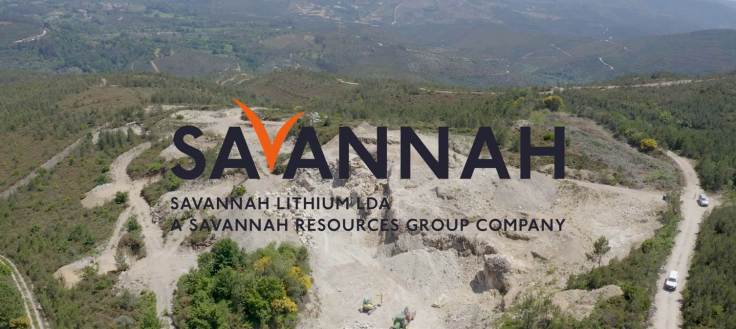
El pasado sábado 28 de agosto se publicó en el suplemento Dinheiro Vivo del Diário de Notícias -siendo portada en ambos- una entrevista de la periodista Joana Petiz al australiano David Archer, director ejecutivo de la minera británica Savannah Resources, la empresa que quiere abrir una mina de litio a cielo abierto de 593 hectáreas en Covas do Barroso. Esta entrevista, disfrazada de periodismo, forma parte de la campaña de desinformación y publicidad gratuita impulsada por esta compañía minera y varios medios de comunicación nacionales.
La cereza del pastel es la editorial firmada por la misma Petiz, que acompaña a la entrevista. Una editorial en tono insultante, que ridiculiza a la población de Barroso, la cual desde hace varios años se organiza y moviliza para defender su territorio.
Ante el silencio de los reconocidos proyectos de verificación de datos, decidimos someter estas dos piezas a una rigurosa comprobación de la información para determinar la veracidad de los hechos, así sin más rodeos pasamos a nuestros argumentos.
Barroso – ¿Una «región moribunda»?
En su editorial, Petiz califica a Barroso como “una región cada vez más desprovista de personas y de capacidad para subsistir o diversificar sus medios de sostenimiento”: lo que ella califica como una “región moribunda” es en realidad designada por la FAO como Patrimonio Agrícola Mundial desde 2018 “en base a la forma tradicional de trabajar la tierra, de cuidar el ganado y por la ayuda mutua entre sus habitantes”. Es la única región de Portugal con esta clasificación y una de las 7 de Europa. Gran parte de esta región también forma parte de la Reserva de Biosfera Transfronteriza Gerês-Xurés, creada en 2009.
En esta región, la “capacidad de subsistir” y los “medios de sostenimiento” proceden en gran parte de la actividad agrícola y ganadera, especialmente de la raza Barrosã. Se trata de una raza bovina que ya estuvo en peligro de extinción, precisamente durante los periodos de mayor actividad minera en la región (mayoritariamente durante la extracción subterránea de tungsteno hasta la década de los 80), y su carne , según muchos, es la mejor de Portugal.
La mayoría de los pueblos todavía tienen tierras comunales, los “baldios”, los cuales se siguen gestionando colectivamente. En muchas partes de Barroso también se conservan otras prácticas ancestrales de gestión colectiva del agua y otros recursos. En los pueblos que nos encontramos en la montaña, también pudimos ser partícipes de una dinámica de vida asociativa y cultural.
Si bien es cierto que se trata de una región con una población longeva y que ha ido perdiendo habitantes en las últimas décadas, como de hecho sucede con casi todo el interior del territorio portugués, esta puede ser calificada de varias formas pero menos de ser una región moribunda “desprovista de gente y de capacidad de subsistencia”.
De los 800 puestos de trabajo a las minas inteligentes
En la entrevista, David Archer asegura que la mina generará “unos 200 empleos directos y 600 indirectos”, cifras ya conocidas desde el Estudio de Impacto Ambiental (EIA) presentado por la empresa y seguramente basadas en las serias previsiones de un reconocido especialista. Archer va más allá y sugiere que “en estos 200 puestos directos estamos hablando de familias, por lo que el impacto en las personas que se benefician puede ser tres veces mayor”.
Cualquiera que haya estado en Barroso y haya tratado de conocer a las poblaciones y su forma de vida, puede comprender fácilmente lo que representa una enorme cantidad de minas a cielo abierto para una región que prospera con la agricultura y el pastoreo.
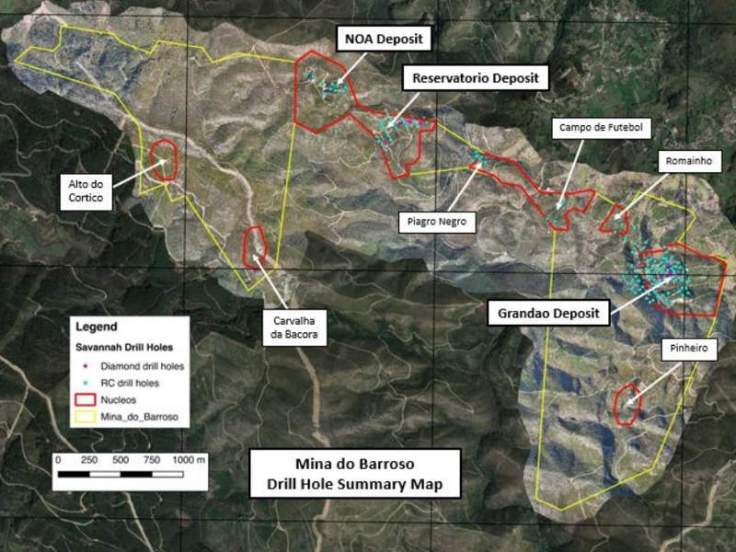
Las explosiones, el polvo, el desvío de los cursos de agua para uso de las explotaciones mineras y la contaminación de otros ríos son incompatibles con este estilo de vida. Más aún cuando hablamos de minas que estarán a tan solo 40 metros de las casas más cercanas, esse es el caso de la mina de Borralha, o a 200 metros, en el caso de la mina proyectada para Covas do Barroso.
En estos estudios y previsiones, se contabilizan puestos de trabajo procedentes no se sabe bien de dónde, pero no se cuentan las personas cuya subsistencia se ve amenazada por estos megaproyectos. Si todos los proyectos mineros para la región de Barroso siguieran adelante, ¿cuántos cientos de agricultores, pastores, ganaderos y apicultores, y por supuesto sus familias, tendrían que abandonar el modo de vida que siempre han conocido?
Volviendo a los 200 puestos de trabajo… Si nos preguntamos cuáles son esos puestos de trabajo, y quiénes se beneficiarán de ellos, encontramos la respuesta en esta misma entrevista. David Archer dice que “se tratan de empleos especializados como enfermeros, geólogos, científicos ambientales, contables, técnicos informáticos, o sea, carreras de valor y con salarios por encima del promedio de la región”. En otras palabras, ciertamente no esos cientos de familias que viven de la agricultura y la ganadería, sino gente del exterior.
Pero seguro que necesitarán mucha mano de obra no especializada para proyectos de estas dimensiones, ¿no? Archer aclara: «Estamos (…) en colaboración con numerosas empresas portuguesas (…) para desarrollar una mina inteligente, que se controla de forma remota con una serie de sensores de monitoreo ambiental que provean información en tiempo real por aplicación, etc.»
Es decir, procesos automatizados, donde gran parte del trabajo es realizado o asistido por máquinas. Estas promesas de trabajo se utilizan para intentar comprar a la población local, pero ni siquiera son para ellos. Basta mirar hacia la mina Lousas, en la vecina parroquia de Couto de Dornelas, de donde Felmica extrae cuarzo y feldespato desde 2008, para ver en qué se convierten estas promesas. Los puestos de trabajo terminan siendo… ni una docena.
La mina, el desarrollo de la región y el trabajo con la comunidad
En la entrevista, David Archer afirma: “este proyecto (…) traerá demanda de viviendas, [tiene el potencial para] catalizar la reubicación de servicios públicos – escuelas, servicios de salud, oficinas de correos, etc. La mina será parte de la solución para revitalizar esta región, invertir la deserción hacia las zonas urbanas,traer un mercado para los productos agrícolas, y fomentar esas y otras actividades ”.
Pero, al fin, ¿Es realmente posible revitalizar e invertir el desplazamiento poblacional de una región haciéndole agujeros? ¿Quién quiere vivir junto a enormes cráteres, escuchando explosiones diarias de 720 kilos – en el caso de Mina da Borralha -, o ver desde la ventana de su casa escombreras de casi 200 metros de altura – como planean en Covas do Barroso?
Después de todo, ¿cómo se crea un mercado para los productos agrícolas y se fomentan estas producciones y actividades en una zona llena de minas? ¿Quién querrá comer carne de vacas que viven en medio de polvo, suelo y agua contaminadas? ¿Quién logrará siquiera ser pastor o criar ganado en estas condiciones? ¿y el apicultor? ¿y el agricultor?
Las preguntas de Petiz orientan la entrevista de manera cómoda para el CEO, evitando cuestiones difíciles y críticas. Incluso se compartió información sobre los fantásticos programas de Savannah con la comunidad: “Savannah Lithium también ha establecido fondos de compensación de 600.000 euros/año para trabajar junto con la comunidad y en programas de buena vecindad. ¿Cómo se va a materializar esto? “
A lo que Archer responde: “Podrían ser escuelas profesionales, acciones de promoción de negocios locales, formación, podría ser la compra de ambulancias”. Porque a sus ojos, las y los Barrosões son un montón de campesinos que se dejan comprar por cualquier cosa. Pero no es así.
Sostenibilidad, responsabilidad y cambio climático
Cuestionado acerca de la decisión final de la APA sobre el Estudio de Impacto Ambiental de la Mina de Savannah, Archer dice que “hemos presentado una propuesta responsable para el desarrollo sostenible” y que “no esperamos la desaprobación. Creemos que estamos haciendo un desarrollo responsable para avanzar en beneficio de todos los portugueses porque esto (…) es un activo que beneficia a todo el país ”. Afirma que existen una serie de mecanismos que garantizan “la mitigación progresiva de los efectos durante el período de explotación y al final de la vida de la mina” e incluso sugiere que, cuando la mina sea desmantelada, “el pozo se transformará en un lago para recreación o eventualmente en instalaciones que permitan la explotación de energías renovables”.
Tanto de un lado como del otro, Savannah es presentada siempre como una empresa responsable y sostenible. Al leer esta entrevista, encontramos un maravilloso proyecto que beneficiará a «todo el país» y «todos los portugueses». Todos menos los Barrosões.
Se realizaron 170 participaciones en el período de consulta pública del EIA, por parte de asociaciones ambientalistas y movimientos locales y por la Municipalidad de Boticas, con opiniones de muchos otros expertos sobre cómo el proyecto contamina el territorio y el agua y pone en riesgo a especies protegidas y a las poblaciones del región. Sin embargo, para Petiz esto parece ser sólo un pequeño detalle, tanto así que solo lo menciona, de pasada, al final de la entrevista de 4 páginas.
Asociado a esto viene una construcción de la imagen de una Savannah que pretende actuar en favor del bien común, defender nuestro planeta del cambio climático, y no buscar ganancias a cualquier costo. El empresario australiano “con particular experiencia en la minería de oro” nos cuenta:
“El desarrollo de la industria del litio nos ha aportado nuevas esperanzas de actuar verdaderamente a favor de la transformación contra el cambio climático. Y la movilidad eléctrica permitirá una increíble mejora de la vida en Europa, en nuestras ciudades, en la calidad del aire, con un impacto positivo en todos los ámbitos, reduciendo las emisiones de CO2. Y el litio es la materia prima que hace posible ese cambio. No se pueden fabricar estas baterías sin el litio “.
Podríamos deconstruir este discurso explicando en detalle que los coches de litio no son sostenibles porque las baterías tienen una vida útil muy corta (entre 4 y 10 años), que puede ser aún más corta si la batería está expuesta a climas cálidos; que hay varias dificultades y obstáculos para su reciclaje; que el precio de estos autos es muy alto, siendo solo accesible para una pequeña élite; que la “transición energética” y la “movilidad eléctrica” siguen basándose en la lógica del coche individual, siendo nada más que una transformación tecnológica que beneficia a los mismos de siempre, y no un cambio de paradigma, como sería la creación y el refuerzo de las redes de transporte colectivo y la recuperación de tecnologías como los tranvías, que existen desde hace más de un siglo y no necesitan baterías para funcionar.
Pero más importante que esto es verificar la afirmación de David Archer de que “el litio es la materia prima que hace posible este cambio” y que “estas baterías no se pueden fabricar sin litio”. ¿Es así?
China recientemente fue noticia en varios periódicos nacionales e internacionales por estar buscando una “alternativa viable” al litio debido tanto a “escasez como a su precio y demanda crecientes”. En efecto, el desarrollo de baterías de sodio ya está en marcha.
Según la empresa china CATL, “las baterías de iones de sodio proporcionan recargas de hasta el 80% de su capacidad en tan solo 15 minutos y prometen una alta densidad energética y una buena estabilidad térmica en diversos escenarios. Este último aspecto es especialmente importante y una ventaja sobre el litio, que pierde rendimiento cuando hace demasiado calor o demasiado frío ».

El primer lote de baterías de sodio a gran escala está programado para 2023, adelantándose a la fecha prevista por Archer para que la mina Savannah esté plenamente operativa, 2024.
Pero hay más alternativas. El episodio 30 del programa Biosfera de RTP2 trata de las baterías ecológicas, alternativas al litio. Hablan con investigadores de diversas universidades que explican los distintos tipos de baterías que ya se han desarrollado: baterías de flujo, baterías de vanadio, baterías que combinan sal y sosa cáustica, entre otras.
Se tratan de baterías no inflamables ni tóxicas, o que son más duraderas y utilizan materiales de fácil reutilización y reciclaje, o todo al mismo tiempo. Más eficientes y menos perjudiciales para el medio ambiente que cualquier batería de litio disponible en la actualidad.
Maria Helena Braga, investigadora y profesora de la Facultad de Ingeniería de la Universidad de Oporto, ha desarrollado una batería que utiliza sal y soda cáustica para almacenar energía y, al mismo tiempo, autocargarse. Esta batería combina capacitancia negativa y resistencia negativa en la misma celda, lo que le permite autocargarse sin perder energía. La investigadora advierte, aun así, que esta “no es una máquina perpetua de suministro de energía”. Sin embargo, María Helena «todavía tiene en casa la primera batería que produjo, y la utiliza como suministro continuo de electricidad desde el verano de 2015. Es decir, aunque no sea una fuente con un tiempo infinito, su autocarga ya ha durado 5 años», explica la periodista.
Pero si disponemos las tecnologías necesarias para producir teléfonos móviles, ordenadores y coches con baterías más sostenibles y duraderas, ¿por qué estas no se introducen en el mercado? Maria Helena Braga lo explica:
“Lo que he aprendido en los últimos años (…) es que esto no depende de la ciencia, depende mucho más de la industria. La industria tiene que venir, tiene que pagar, tiene que tener el equipo, tiene que construir una fábrica… (…) Lo que pasa es que las industrias han invertido mucho en el ion de litio. (…) El otro punto que pongo aquí: las empresas de baterías tienen que vender baterías, si duran mucho tiempo sin tener que ser reemplazadas, la industria pierde. Nosotros ganamos como consumidores, gana la naturaleza, pero la industria… »
UE: Paraíso de las normativas medioambientales
Otro argumento con el que David Archer defiende su negocio es que “Es mejor producir según las leyes europeas del medio ambiente, mucho más duras y serias en Europa, y en un contexto político de liderazgo por la sostenibilidad (…) que ir, por ejemplo, a la República Democrática del Congo “.
Joana Petiz, que entrevistó a David Archer, refuerza la idea en su editorial: “una operación minera limitada por estrictas reglamentaciones europeas siempre tendrá todas las ventajas sobre un proyecto desarrollado en una región del planeta donde el dinero habla más que cualquier precaución – ambiental, de desarrollo económico e incluso de derechos humanos ”.

Un tono de desprecio arrogante, paternalista y colonialista hacia otras regiones del planeta. Como si en Europa el dinero no hablara más fuerte que cualquier precaución medioambiental y que los derechos humanos. Como si en Europa no hubiera también catástrofes medioambientales como consecuencia de la negligencia de empresas y gobiernos. Como si en 2010 no hubiera habido un desastre de lodos tóxicos en Hungría. Como si en Almaraz, a orillas del río Tajo, no hubiera una central nuclear cuyo cierre se pospone repetidamente a pesar de los frecuentes accidentes. Como si hace tres o cuatro años, en Portugal, no se hablara de la prospección de gas de lutita y de la extracción de petróleo en las costas de Alentejo y Algarve. Como si una gran parte de Andalucía, y ahora también del Alentejo, no estuviese entregada a producciones agrícolas intensivas que chupan el agua ya tan escasa en estas regiones, y emplea a personas migrantes en condiciones que no respetan los derechos humanos más básicos. Como si los ayuntamientos no cometieran delitos ambientales, violando las leyes y reglamentos ambientales para determinadas intervenciones, en contubernio con la propia Agencia Portuguesa de Medio Ambiente (APA) que supuestamente debe hacer cumplir estas leyes – como sucedió con la destrucción y el terraplenamiento, hecho por el Ayuntamiento de Coimbra, de la franja ribereña del río Mondego entre Rebolim y Portela, destruyendo galerías ribereñas que son ecosistemas protegidos. Como si la APA no aprobara proyectos que incluso los tribunales reprueban, como es el caso del aeropuerto de Montijo, cuya Declaración de Impacto Ambiental emitida por la APA fue arrasada por un juez del Tribunal Administrativo de Almada por “ignorar de forma evidente y manifiesta los impactos ambientales, tanto en la fase de construcción como en la de explotación sobre zonas sensibles legalmente protegidas, de importancia nacional, comunitaria e internacional ». Como si aquí tan cerca, en Touro, Galicia, en una mina de cobre que fue desactivada en los años 80, no continuasen a ocurrir drenajes ácidos que siguen contaminando el agua de la zona.
Los movimientos antiminas
Lo más ofensivo de todo son los insultos contra quienes luchan contra la destrucción de alrededor del 10% de nuestro territorio por causa de la minería de litio a cielo abierto, planeada por el gobierno en complot con la Comisión Europea y las empresas mineras, e otro tanto del territorio por la extracción de otros minerales.
Petiz nos llama “supuestos ecologistas” en “guerras huecas y egoístas” – “Marchas contra turbinas eólicas que matan pajaritos, protestas contra represas que estropean el ecosistema, levantamientos populares que arrasan con paneles solares que calientan el aire”. “El pueblo se manifiesta a favor de las energías limpias, pero se opone ferozmente a todos los medios que las hacen posibles”.
El pueblo no está en contra de las energías limpias. El pueblo está en contra de destruir los territorios, las formas de vida de las poblaciones y las generaciones futuras, con el pretexto de una energía supuestamente “limpia” que no lo es. Sin consultar ni siquiera informar a la población local. Todo para que, en este caso, una pequeña élite urbana pueda desplazarse de un lugar a otro sin cargo de conciencia, sin preguntarse qué pasa con las regiones de donde proviene la materia prima, ni qué va a pasar con las baterías de litio al final de su vida útil.
En la entrevista, Petiz pregunta en un momento dado: “Siendo el litio esencial para la transición energética defendida por estas organizaciones, ¿ve usted esta oposición a la extracción del litio aquí como una cuestión de “no en mi patio trasero”? Archer responde: “No me parece correcto que los consumidores quieran electricidad verde, pero no quieran involucrarse en la materia prima necesaria para alimentarla”.
David Archer desestima los movimientos y manifestaciones recientes diciendo que “gran parte de lo que son estos movimientos y muchos manifestantes vienen de Francia y otros países, forman parte de un grupo antidesarrollo que protesta contra todo tipo de proyectos”.
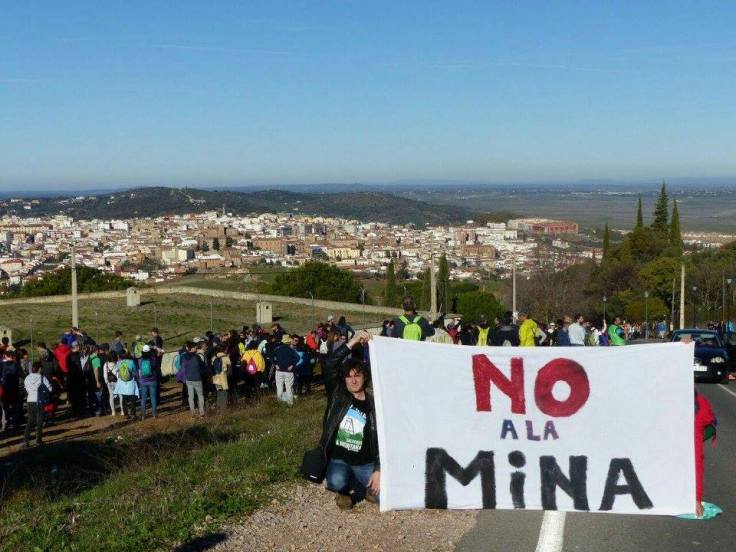
Si miramos el Campamento en Defensa de Barroso, en Covas, vemos que participó gente de todo Barroso y de todo el país -de ciudades y otros pueblos y localidades con movimientos antimineros- de varios partes de la Península Ibérica, de Suiza, de México y, sí, también de Francia. Estuvieron presentes porque muchos también están enfrentando megaproyectos en sus regiones y están interesados en conocer lo que sucede en otros lugares y apoyar las otras luchas. Porque saben que estos problemas no son sólo problemas en su patio trasero, sino problemas comunes a toda la humanidad, en todas las partes del mundo.
El sistema en pánico ante las crecientes movilizaciones
En Barroso hay una creciente movilización y resistencia a los distintos proyectos mineros de la región, especialmente fuerte este mes de agosto. Ambientalistas, periodistas y muchas otras personas han visto el pueblo y la región con sus propios ojos, han conocido a su gente y su lucha, así como otras luchas vecinas también presentes, y las han llevado a sus pueblos y ciudades, a sus propias luchas.
Antes, durante y después del campamento, mientras los medios convencionales portugueses permanecían más o menos callados sobre esta iniciativa, se publicaron reportajes en el Estado español, México [1 y 2], Turquía, Alemania [1, 2, 3 y 4], Francia, País Vasco, Mozambique e Indonesia. En el pasado, la televisión francesa ARTE e incluso Euronews ya habían publicado reportajes en profundidad sobre el tema.
Estas dos piezas y las portadas de DN y Dinheiro Vivo no son más que una maniobra necesaria para que el sistema enfrente la creciente movilización en Barroso. Una maniobra desprovista de ética periodística para intentar controlar la narrativa del litio y de la minería, ensalzando lo espectacular y verde que será, todo en nombre de la “transición energética”, la “movilidad verde” y de un mundo más sostenible, nunca en nombre del interés y beneficio de un puñado de particulares.
La verdad es que les asusta la unidad y determinación del pueblo Barrosão en la defensa de su territorio.
Tratan a Barroso como una región moribunda que necesita ser salvada por los señores iluminados de las ciudades desarrolladas. Escondido detrás de los hermosos discursos está el deseo de destruir un paraíso en la Tierra en nombre de la codicia de media docena de inversores y directores ejecutivos. Y, en algún otro lugar subdesarrollado o moribundo que nadie conoce, nace también un cementerio de baterías “verdes” llenas de sustancias tóxicas y contaminantes, que nadie sabe cómo reciclar.
La mayoría de los argumentos que utilizamos aquí se pueden encontrar fácilmente en una búsqueda rápida. Petiz dice que “no es seria ni responsable la actitud de quienes se comportan así” [que contestan el litio]. Lo que no es serio es su labor como supuesta periodista. Petiz trata a los Barrosões como idiotas, pero es ella la que pasa por ignorante.
[:en]
The british mining company Savannah and the disinformation campaign about Europe’s biggest project of lithium mine in Covas do Barroso, in the north of Portugal.
A few months ago we had the honor of appearing on prime time in the portuguese television and seeing one of our articles dissected by the fact-checking of Polígrafo/SIC. It’s a pity that these respectable organizations don’t fact-check the mass media, which so often misrepresent reality and behave as organs of disinformation.
On saturday september 28th, it was published in the supplement Dinheiro Vivo (Living Money) of national newspaper Diário de Notícias – covering both front pages – an interview by the journalist Joana Petiz with David Archer, CEO of the british Savannah Resources. This mining company wants to open an open-air lithium mine of 593 hectars in Covas do Barroso, in the north of Portugal. This interview, disguised as journalism, is part of a campaign of disinformation and free publicity driven by Savannah and several media.

The cherry on top of the cake is the editorial, signed by the same Petiz, which goes along with the interview. An editorial in an insulting and ridiculing tone towards the Barroso population that for several years has been organizing and mobilizing in defense of their territory.
Facing the silence of the recognized fact-checking projects, we have decided to subject these two pieces to a rigorous fact-check ourselves, for which we will proceed without further ado.
Barroso – A «moribund region»?
In her editorial, Petiz classifies Barroso as «a region increasingly deprived of people and of means of subsistence or diversification of sources of income.» What she classifies as a «moribund region» is actually classified by the FAO as Globally Important Agricultural Heritage Systems (GIAHS) since 2018 «based on the traditional way of working the land, treating livestock, and on the mutual aid of its inhabitants.» It is the only region in Portugal with this classification and one of the 7 in Europe. Much of the region is also part of the Gerês-Xurés Transboundary Biosphere Reserve, created in 2009.
In this region, the “means of subsistence” and the “sources of income” come greatly from agricultural activity and cattle raising, namely from the Barrosã breed. This is a cattle breed that has already been in danger of extinction, precisely during the periods of greatest mining activity in the region (mostly tungsten extracted in galleries until the 80s), and its meat is, according to many, the best in Portugal.
Most part of the villages still have communal lands, the “baldios”, which continue to be collectively managed. In many parts of Barroso, other ancestral practices of collective management of water and other resources are also preserved. In the villages that we come across in the mountains, one can also find a dynamic cultural and associative life.
If it is true that it is a region with an aging population and that it has been losing population in the last decades, like almost the entire portuguese countryside, this is anything but a dying region «deprived of people and means of subsistence».
From the 800 jobs to the smart mines
In the interview, David Archer claims that the mine will create «about 200 direct and 600 indirect jobs», numbers already known from the Environmental Impact Study (EIA) presented by the company and certainly based on the serious predictions of a renowned expert. Archer goes even further, suggesting that «in those 200 direct we are talking about families, so the impact of people who benefit may be three times greater».
Whoever has been to Barroso, and got to know the people and their way of life, easily understands what a huge number of open-pit mines represent for a region that lives from agriculture and animal husbandry.
The explosions, the dust, the deviation of water courses for its use in mining and the contamination of the remaining rivers are incompatible with this lifestyle. Even more so when we talk about mines that will be just 40 meters away from the nearest houses, in the case of the Borralha mine, or 200 meters away, in the case of the mine planned for Covas do Barroso.
In these studies and forecasts, they count jobs from who knows where, but they don’t count the people whose subsistence is threatened by these projects. If all the mining projects for the Barroso region were to go ahead, how many hundreds of farmers, shepherds, cattle ranchers, and beekeepers, and their families of course, would have to abandon the way of life they have always known?
Back to the 200 jobs… If we ask ourselves what jobs are those, and who will benefit from them, we will find the answer in that same interview. David Archer states that «they are specialized jobs like nurses, geologists, environmental scientists, accountants, IT technicians, that means, careers of value and with salaries above the average of the region». In other words, certainly not for those hundreds of families that live off agriculture and livestock, but for people coming from outside.
But they will certainly need a lot of non-specialized workforce for projects this big, won’t they? Archer clarifies: «We are (…) in collaborations with lots of Portuguese companies (…) to develop a smart mine, which is remotely controlled with a series of environmental monitoring sensors, which provide real-time information by app, etc.»
That is, automated processes, where much of the work is done or assisted by machines. These job promises are used to try to buy off local populations, but they are not even for them. To see what the promises turn into, just look at the Lousas mine in the neighbouring parish of Couto de Dornelas, where Felmica has been extracting quartz and feldspar since 2008. The jobs do not reach… a dozen.
The mine, the development of the region, and the work with the community
In the interview, David Archer affirms: «this project (…) will bring demand for housing, [has the potential to] catalyze relocation of public services – schools, health services, post offices, etc. The mine will be part of the solution to revitalize this region and reverse desertification and it will bring market for agricultural products, and encourage those productions and other activities as well.»
But, after all, how do you revitalize and reverse the desertification of a region by digging holes in it? Who will want to live next to huge craters, next to daily explosions of 720 kilos – in the case of Borralha Mine -, to see from the window of their house heaps almost 200 meters high – as they plan to do in Covas do Barroso?
After all, how do you create a market for agricultural products and encourage these productions and activities in an area full of mines? Who will want to eat meat from cows that live in the middle of dust, contaminated soils and water? Who will even be able to be a shepherd or raise cattle under these conditions? Or a beekeeper? Or a farmer?
Petiz’s questions drive the interview comfortably for the CEO, avoiding difficult and critical questions. She even shares the information herself about Savannah’s fantastic programs with the community: «Savannah Lithium has also set up 600 thousand euros/year compensation funds to work together with the community and in good neighbor programs. How will that materialize?»
To which Archer replies: «It could be professional schools, actions to promote local businesses, training, it could be the purchase of ambulances». Because, in their view, the Barrosões are a bunch of peasants who will let themselves be bought for anything. Except that they don’t.
Sustainability, responsibility and climate change
Asked about the APA’s final decision on the Savannah Mine Environmental Impact Study, Archer says that «we have delivered a responsible proposal for sustainable development» and that «we don’t expect a disapproval. We believe that we are doing responsible development to move forward in a way that benefits all Portuguese people because this (…) is an asset that benefits the whole country.» He states that there are a series of mechanisms that ensure «the progressive mitigation of the effects during the time of exploration and at the end of the mine’s life» and even suggests that, when the mine is deactivated, «the hole will be transformed into a lake for recreation or eventually into facilities that allow exploration of renewable energy.»
In both articles, Savannah is always presented as a responsible and sustainable company. Reading this interview, we find a wonderful project that will benefit «the whole country» and «all the Portuguese people». Everyone, except the Barrosões.
There have been 170 participations in the EIA public consultation period, by environmental associations, local associations and movements and the Boticas City Council, with opinions from many other specialists on how the project contaminates the land and water and puts protected species and the region’s populations at risk. But for Petiz this seems to be just a minor detail, so much so that she only mentions it, briefly, at the end of the 4-page interview.
Associated with this comes the building of the idea of a Savannah that wants to act for the common good, defend our planet from climate change, and not seeking profit at any cost. We are told by the Australian businessman “with particular experience in gold mining”:
«The development of the lithium industry has brought us a new hope to truly act for change against climate change. And electric mobility will allow an incredible improvement of life in Europe, in our cities, in air quality, with positive impact in all areas, reducing CO2 emissions. And lithium is the raw material that makes that change possible. You can’t make these batteries without lithium.»
We could dismantle this speech by explaining in detail that lithium cars are not sustainable because the batteries have a short life span (somewhere between 4 and 10 years), which can be even shorter if the battery is exposed to hot climates; that there are several difficulties and obstacles to their recycling; that the price of these cars is very high, being accessible only to a reduced elite; that the “energy transition” and “electric mobility” are still based on the logic of the individual car, being nothing more than a technological transformation that benefits the same people as always and not a paradigm shift, as would be the creation and strengthening of collective transport networks and the recovery of technologies such as streetcars, which have existed for over a century and do not need batteries to work.
But more important than this is to check this statement by David Archer that «lithium is the raw material that makes this change possible» and that «you can’t make these batteries without lithium». Is that so?
China recently made headlines in several national and international newspapers for looking for a «viable alternative» to lithium due to its «shortage and its increasing price and demand». The development of sodium batteries is already in progress.
According to the Chinese company CATL, «Sodium-ion batteries contemplate recharging up to 80% of their capacity in just 15 minutes and promise high energy density and good thermal stability in a variety of scenarios. This last aspect is especially important and an advantage over lithium, which loses performance when it is too hot or too cold».
The first batch of sodium batteries produced on a large scale is planned for as early as 2023, before Archer’s target date for the Savannah Mine to be in full operation, 2024.
But there are more alternatives. Episode 30 of RTP2’s Biosfera program focuses on eco-friendly batteries, alternatives to lithium. They talk to researchers from various universities who explain several types of batteries that they have already developed – flux batteries, vanadium batteries, batteries that combine salt and caustic soda, among others.
These are batteries that are non-flammable and non-toxic, or more durable and use materials that are easy to reuse and recycle, or all at the same time. More efficient and less harmful to the environment than any lithium battery available today.
Maria Helena Braga, researcher and professor at the Faculty of Engineering of the University of Porto, developed a battery that uses salt and caustic soda to store energy and, at the same time, to self-charge. This battery combines negative capacitance and negative resistance in the same cell, which allows it to self-charge without losing energy. The researcher warns, still, that this «is not a perpetual energy supply machine». However, Maria Helena «still has at home the first battery she produced, and has been using it as a continuous supply of electricity since the summer of 2015. Which means, although it is not a source with an infinite time, its self-charging has already lasted for 5 years», explains the journalist.
But, if we have the necessary technologies to produce cell phones, computers and cars with more sustainable and durable batteries, why aren’t they introduced in the market? Maria Helena Braga explains:
«What I have learned from these last years (…) is that this does not depend of science, it depends much more of industry. The industry has to come, has to pay, has to have the equipment, has to make a factory… (…) What happens is that the industries have invested a lot in lithium ion. (…) The other question I raise: battery companies have to sell batteries, if they last a long time without having to be replaced, the industry loses. We win as consumers, nature wins, but the industry…»
EU – Environmental Regulations Paradise
Another argument with which David Archer defends his mine is that «It is better to produce according to European environmental laws, which are much tougher and more serious in Europe, and in a political context of leadership for sustainability (…) than to go, for example, to the Democratic Republic of Congo.»
Joana Petiz, who did the interview with David Archer, reiterates the idea in her editorial: «a mining operation limited by the tight european regulations will always have every advantage over a project developed in a region of the globe where money speaks louder than any precautions – environmental, economic development and even human rights.”
An arrogant, paternalistic, colonialist tone of despise toward the other regions of the planet. As if in Europe money did not speak louder than any environmental precaution and human rights. As if environmental disasters didn’t happen also in Europe as a result of corporate and government negligence. As if in 2010 there wasn’t a toxic mud disaster in Hungary. As if in Almaraz, on the banks of Tagus river, there wasn’t a nuclear facility which closure is repeatedly postponed despite frequent accidents. As if in Portugal, until three or four years ago, they weren’t talking about fracking and petroleum extraction off the coast of Alentejo and Algarve. As if a large part of Andalusia, and now also Alentejo, were not given over to intensive agricultural production that drains the already scarce water and employs migrant people in conditions that do not respect the most basic human rights. As if the municipalities did not commit environmental offenses, violating the environmental laws and regulations for certain interventions, with the connivance of the Portuguese Environmental Agency (APA), which is supposed to ensure compliance with these laws – as happened with the destruction and leveling of the Mondego riverside strip between Rebolim and Portela, by Coimbra’s city council, destroying the riparian galleries which are protected ecosystems. As if the APA would not approve projects that even the courts would reject, as is the case of Montijo airport, whose Environmental Impact Statement emitted by the APA was rejected by a judge at the Almada Administrative Court for «evidently and manifestly neglecting the environmental impacts, both in the construction phase and in the operation phase, on legally protected sensitive areas of national, communitarian, and international importance». As if so close here, in Touro, Galicia, in a copper mine that was deactivated in the 80’s, acid drains were not continuously contaminating the waters of the area.
The anti-mining movements
The most offensive of all are the insults against those who are fighting against the destruction of about 10% of our territory by open-pit lithium mining, planned by the government in connivance with the European Commission and the mining companies, and just as much by the extraction of other minerals.
Petiz calls us “wannabe environmentalists” in “hollow and selfish wars” – «Marches against the wind shovels that kill little birds, protests against dams that spoil the ecosystem, popular uprisings that raze solar panels that heat the air.» «The people protest for clean energies but are fierce opponents of all the means that enable them.»
The people are not against clean energy. The people are against that, on the pretext of a supposedly “clean” energy that is not clean, the territories and the ways of life of people and future generations are destroyed. Without consulting or even informing the local population. All so that, in this case, a small urban elite can move from one place to another without a guilty conscience, without wondering what happens to the regions where the raw material comes from or what happens to the lithium batteries at the end of their useful lifespan.
In the interview, Petiz asks at one point: «Since lithium is essential to the energy transition – which these organizations defend – do you see this opposition to lithium exploitation here as a “not in my backyard” issue?» Archer replies: «It doesn’t seem right to me that consumers want green electricity but don’t want to be involved in the raw materials needed to power it.»
David Archer overlooks the recent movements and manifestations stating that «a lot of what these movements are and a lot of the protesters come from France and other countries, they are part of an anti-development group that protests against all kinds of projects.»
If we look at the Camp in Defense of Barroso, in Covas, we see that it had the participation of people coming from all over Barroso and from all over the country – from cities and other villages and towns with anti-mining movements -, from various parts of the Iberian Peninsula, from Switzerland, from Mexico and, yes, also from France. They were present because many also face megaprojects in their regions and are interested in knowing what is happening in other places and supporting the other struggles. Because they know that these problems are not just problems of their backyard, but common problems for all humanity, in all parts of the world.
The system panics facing the growing mobilizations
In Barroso there is a growing mobilization and resistance against the several mining projects in the region, especially strong this month of August. Environmentalists, journalists, and many other people have seen with their own eyes the village and the region, have gotten to know its people and their struggle, as well as other neighbouring struggles also present, and are now carrying them back to their villages and cities, to their own movements.
Before, during and after the camp, while the portuguese conventional media remained more or less silent about this initiative, reportages were published in Spain, Mexico [1 and 2], Turkey, Germany [1, 2, 3 and 4], France, Basque Country, Mozambique and Indonesia. In-depth reports had already been published in the past by French television ARTE and even by Euronews.
These two articles and the covers of DN and Dinheiro Vivo are a necessary move for the system to cope with the growing mobilization in Barroso. A move deprived of journalistic ethics to try to control the lithium and mining narrative, exalting how spectacular and green it will be, all in the name of the “energetic transition”, of the “green mobility” and of a more sustainable world, never in the name of the interest and profit of a handful of private individuals.
The truth is that they are frightened by the unity and determination of the Barrosão people in the defense of their territory.
They treat Barroso as a dying region that needs to be saved by the enlightened lords of developed cities. Behind the pretty speeches hides the will to destroy a paradise on earth in the name of the greed of a handful of investors and CEOs. And in some other underdeveloped or dying place that nobody knows about, a graveyard of “green” batteries full of toxic and contaminating substances, which no one knows how to recycle, is also born.
Much of the arguments we use used here can be easily found in a quick search. Petiz says that «the attitude of those who behave this way» [who contest lithium] «is neither serious nor responsible». What is not serious is her work as a so-called journalist. Petiz treats the people of Barroso as fools, but she is the one playing the fool.[:]

