[:es]La Tormenta, el Centinela y el Síndrome del Vigía.[:en]The Storm, the Sentinel, and the Night Watch Syndrome[:]
[:es]
La Tormenta, el Centinela y el Síndrome del Vigía.
Abril del 2015.
A loas compañeroas de la Sexta:
A loas interesadoas:
Aunque no lo parezca, ésta es una invitación… ¿o un reto?
Si usted es adherente a la Sexta, si usted es de un medio libre, autónomo, alternativo, independiente o como se diga, si usted está interesado en el pensamiento crítico, entonces tome como suya esta invitación al Seminario “El Pensamiento Crítico frente a la Hidra Capitalista”. Si, además de aceptar la invitación, quiere asistir, por favor siga este link: http://enlacezapatista.ezln.org.mx/registro-al-seminario-de-reflexion-y-analisis-el-pensamiento-critico-frente-a-la-hidra-capitalista/
Si usted ha sido invitada, invitado, invitadoa como ponente, una misiva parecida a ésta le llegará por el mismo medio en que se le contactó. La diferencia estriba en que la carta invitación a ponentes tiene una “cláusula secreta”.
Bien, la invitación es, como quien dice, la envoltura.
Dentro, más abajo y a la izquierda, está…
El Reto.
Oh, lo sé. Los clásicos inicios de las reflexiones zapatistas: desconcertantes, anacrónicos, desubicados, absurdos. Como no queriendo, como así nomás, como “ahí les dejamos”, como “ahí lo vean”, como “va en su cuenta”. Como si aventaran una pieza de un rompecabezas y esperaran a que se entendiera que no están describiendo una parte de la realidad, sino que están imaginando la imagen completa. Como que miran el rompecabezas ya completado, con sus figuras y colores cabales, pero con los bordes de las piezas visibles, como señalando que el conjunto lo es gracias a las partes, y, claro, que cada parte adquiere su sentido en su relación con las otras.
Como si la reflexión zapatista emplazara a ver que falta lo que falta, y no sólo lo que hay, lo que se percibe como inmediato.
Algo como lo que hizo Walter Benjamin con el “Angelus Novus” de Paul Klee. Al reflexionar sobre la pintura, Benjamin la “completa”: ve al ángel, pero también ve lo que el ángel ve, ve hacia dónde es arrojado por lo que ve, ve la fuerza que lo agrede, ve la huella brutal. Ve el rompecabezas completado:
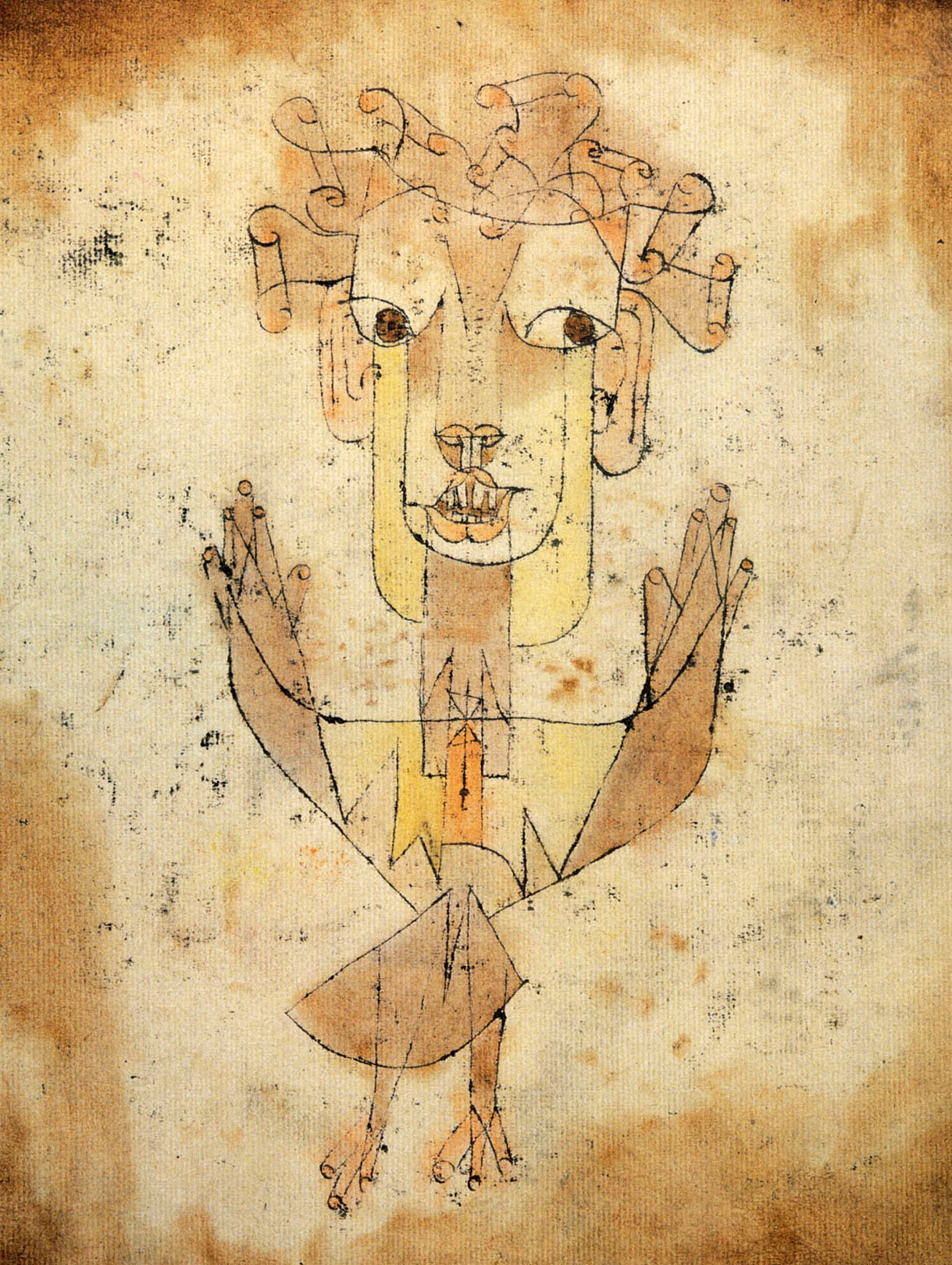
“Hay un cuadro de Klee que se llama Angelus Novus. En él se muestra a un ángel que parece a punto de alejarse de algo que le tiene paralizado. Sus ojos miran fijamente, tiene la boca abierta y las alas extendidas; así es como uno se imagina al Ángel de la Historia. Su rostro está vuelto hacia el pasado. Donde nosotros percibimos una cadena de acontecimientos, él ve una catástrofe única que amontona ruina sobre ruina y la arroja a sus pies. Bien quisiera él detenerse, despertar a los muertos y recomponer lo despedazado, pero desde el Paraíso sopla un huracán que se enreda en sus alas, y que es tan fuerte que el ángel ya no puede cerrarlas. Este huracán le empuja irresistiblemente hacia el futuro, al cual da la espalda, mientras los escombros se elevan ante él hasta el cielo. Ese huracán es lo que nosotros llamamos progreso.” (X, “Tesis sobre filosofía de la historia”)
Entonces es como si nuestras reflexiones fueran un reto, un enigma del Acertijo, un desafío de Mr. Bane, un comodín en las manos del Guasón mientras inquiere “¿Por qué tan serios?”.

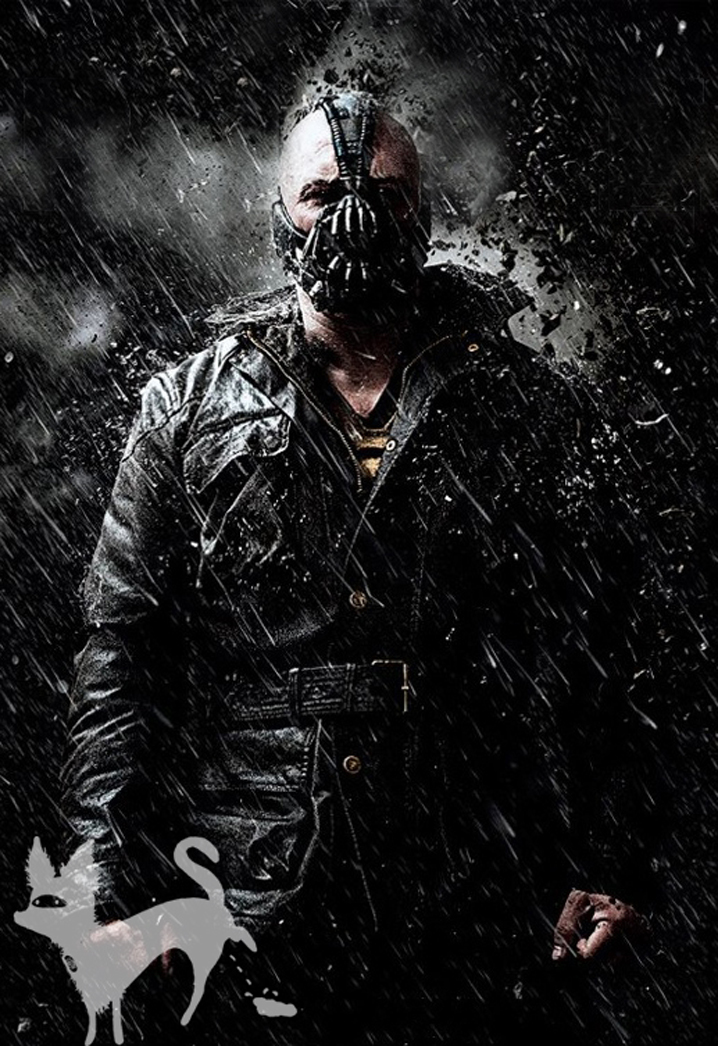

Como si el gato-perro, súper héroe y súper villano, Sherlock y Moriarty, irrumpiera acosando con preguntas: ¿qué miramos?, ¿por qué?, ¿hacia dónde?, ¿desde dónde?, ¿para qué?
Es como si lo pensáramos al mundo, cuestionando su torpe girar, debatiendo su rumbo, desafiando su historia, disputando la racionalidad de sus evidencias.
Es como si, por un momento apenas, fuéramos…
-*-
El Centinela.
Usted puede ver que, por lo regular, en una instalación militar hay puestos en su periferia. Se les llama “Puestos de Observación”, “Puestos de Guardia” o “Puestos del Vigía”. El trabajo de esos puestos es vigilar los alrededores y los accesos al establecimiento, de modo de saber qué o quién se aproxima o se mueve o permanece en los alrededores del lugar. Bien, ese puesto de vigilancia (en los campamentos zapatistas le decimos “la posta”, ignoro la razón; por ejemplo, decimos “te toca la posta a las 0000 hrs”, “el relevo de la posta es a las 1200″, etc.), avisa o advierte al resto de la instalación, y contiene o detiene a quien trata de ingresar sin autorización. Quien ocupa el puesto de observación es el guardia, el vigía, el centinela. Además de observar y estar atento a lo que ocurre, el centinela es quien da la voz de alarma en caso de ataque y frente a cualquier eventualidad.
Según nosotras, nosotros, zapatistas, la reflexión teórica, el pensamiento crítico tiene ese trabajo de centinela. A quien trabaja con el pensamiento analítico, le toca el turno de guardia en el puesto del vigía. Podría extenderme sobre la ubicación de ese puesto en el todo, pero por ahora sólo baste plantear que es una parte también, nada más, pero nada menos. Digo esto por aquellos, aquellas y aquelloas (no olvidar la equidad de género y el reconocimiento de la diversidad) que pretenden:
.- O estar por encima y afuera del todo, como algo aparte, y se esconden detrás de la “imparcialidad”, la “objetividad”, la “neutralidad”. Y dicen que analizan y reflexionan desde la asepsia de un imposible laboratorio materializado en la ciencia, la cátedra, la investigación, el libro, el blog, el credo, el dogma, la consigna.
.- O trastocan su papel de vigías y se adjudican el de nuevos sacerdotes doctrinarios. Siendo apenas centinelas, se comportan como si fueran el cerebro dirigente que muta en tribunal penal a conveniencia. Y desde ahí ordenan lo que debe hacerse, juzgan y absuelven o condenan. Aunque hay que reconocerles que el hecho de que nadie les haga caso, marcadamente la realidad siempre rebelde, no los inhiba de su delirio (etílico, no pocas veces).
El centinela tiene que ver con el puesto del vigía en cuestión. Pero ya volveremos sobre esto en alguna de nuestras intervenciones en el seminario.
Por ahora, baste decir que, abrumado, sobrepasado por la tarea de observación crítica en un mundo tramposamente instantáneo, en su turno en el puesto de guardia, el vigilante puede caer en…
-*-
El Síndrome del Vigía.
Bien, pues resulta que el centinela “agota” su capacidad de vigilancia después de un período.
Este “agotamiento” (al que nosotras, nosotros, zapatistas, llamamos “el síndrome del vigía”) consiste, grosso modo, en que la persona que está en el puesto de vigilancia desarrolla, después de un tiempo de estar de guardia, una especie de “percepción en bucle” o “constancia de la percepción”. Es decir, reproduce en su percepción consciente una y otra vez la misma imagen, como si nada se alterara, o como si los cambios fueran parte de la misma normalidad de la imagen. Tiene que ver, supongo, con algo de percepción visual, pero también con el deseo de que nada altere la rutina. Así, por ejemplo, el vigilante no desea que un peligro aparezca, y ese deseo lo traslada a lo que vigila. “Todo está bien, no va a pasar nada malo”, se repite una y otra vez, y eso se traslada a su valoración de la realidad. Su objetivo es poder entregar un reporte de vigilancia lacónico: “sin novedad”.
Esto que les explico es producto de una observación empírica, no de un estudio científico. A lo largo de años y años de vigilancia, es lo que concluimos de nuestra propia (y reducida) experiencia. Con la persistente duda de si ciencia o usos y costumbres, preguntamos con alguien que sí le sabe a eso de la neurociencia. Nos dijo que el fenómeno existe, aunque no está precisado el mecanismo que lo provoca (antes de que quieran degollarme las distintas corrientes o posiciones en psicología, aclaro que lo único que confirmé es que el fenómeno es real, comprobable). Ahora bien, ¿por qué se da? bueno, ahí véanlo ustedes -sería bueno que, ya en eso, se pongan de acuerdo en cuál es el objeto de conocimiento de la “ciencia” de la psicología-.
Bueno, esa persona nos explicó lo que es la “atención selectiva” y nos mandó un libro de ésos de los de antes (o sea que se entiende lo que explica). Palabras más, palabras menos, se trata de que sólo atendemos una pequeña parte de lo que vemos en un determinado momento e ignoramos el resto. Bueno, pues ese resto que ignoramos es la “ceguera al cambio” o “ceguera por inatención”. Es como si, al filtrar las partes de la imagen que vemos, nos volviéramos ciegos a lo que no seleccionamos como importante.
Por ahora no desarrollaremos esto, pero, en resumen, el “síndrome del centinela” consiste en que:
a).- No se vigila el todo, sino sólo una parte de ese todo.
b).- Cuando se “cansa”, la guardia no percibe los cambios que se presentan en la zona vigilada porque le son imperceptibles (es decir, no son dignos de atención).
Para contrarrestar eso, usamos varios recursos:
Uno de ellos es la vigilancia no directa, la “visión periférica” o, en término coloquiales, “mirar por el rabillo del ojo”. Esto es que la mirada indirecta permite detectar alteraciones de la rutina. También debe de haber una explicación de esto en la neurociencia, pero creo que nos falta estudio.
Otras formas de solucionar la fatiga del centinela, son: poner dos o más vigías cubriendo el mismo punto; o reducir el tiempo de vigilancia y aumentar la frecuencia del relevo.
Puede y hay otras formas de que la tarea del centinela se cumpla.
Pero lo importante es que hay que estar avizores de cualquier señal de peligro. No se trata entonces de advertir el peligro cuando ya está presente, sino de mirar los indicios, valorarlos, interpretarlos, en suma, pensarlos críticamente.
Por ejemplo: esos nubarrones en el horizonte, ¿significan que viene una lluvia pasajera, cuál es su intensidad, se dirige hacia acá o se aleja?
¿O se trata de algo más grande, más terrible, más destructivo? Si es así, habrá que alertar a tod@s de la inminencia de…
La Tormenta.
Bueno, el asunto es que lo que nosotros, nosotras, zapatistas, miramos y escuchamos es que viene una catástrofe en todos los sentidos, una tormenta.
Pero…, resulta que nosotras, nosotros, zapatistas, también miramos y escuchamos que personas con grandes conocimientos dicen, a veces con su palabra, siempre con su actitud, que todo sigue igual.
Que lo que la realidad nos está presentando, son sólo pequeñas variaciones que no alteran en nada importante el paisaje.
O sea que nosotras, nosotros, zapatistas, vemos una cosa, y ellos ven otra.
Porque vemos que se sigue recurriendo a los mismos métodos de lucha. Se sigue con marchas, reales o virtuales, con elecciones, con encuestas, con mítines. Y, de manera concomitante, surgen y se desarrollan los nuevos parámetros de “éxito”, una especie de aplausómetro que, en el caso de las marchas de protesta, es inverso: mientras más bien portada sea (es decir mientras menos proteste), mayor su éxito. Y se hacen organizaciones partidarias, se trazan planes, estrategias y tácticas, haciendo verdaderos malabares con los conceptos.
Como si fueran equivalentes Estado, Gobierno y Administración.
Como si el Estado fuera el mismo, como si tuviera las mismas funciones de hace 20, 40, 100 años.
Como si el sistema fuera también el mismo y mismas las formas de sometimiento, de destrucción. O, para ponerlo en términos de la Sexta: las mismas formas de explotación, represión, discriminación y despojo.
Como si allá arriba el Poder hubiera mantenido invariable su funcionamiento.
Como si la hidra no hubiera regenerado sus múltiples cabezas.
Entonces pensamos que en nosotros o en ellos, hay el “síndrome del centinela”.
Y nosotros, nosotras, zapatistas, miramos de reojo esos movimientos en la realidad. Ponemos entonces más atención, subimos a lo alto de la ceiba para tratar de ver más lejos, no lo que pasó, sino lo que viene.
Bueno, pues lo que vemos no es nada bueno.
Vemos que viene algo terrible, más destructivo si posible fuera.
Pero otra vez vemos que quienes piensan y analizan nada dicen de eso. Siguen repitiendo lo de hace 20 años, 40 años, un siglo.
Y vemos que organizaciones, grupos, colectivos, personas, siguen en lo mismo, presentando falsas opciones excluyentes, juzgando y condenando a lo otro, a lo diferente.
Y más: despreciándonos por lo que decimos que vemos.
Entonces, pues ya ve usted, somos zapatistas. Y eso quiere decir muchas cosas, tantas que en los diccionarios de su lengua de usted no existen palabras para eso.
Pero también quiere decir que siempre pensamos que podemos estar equivocados. Que tal vez todo sigue sin cambios fundamentales. Que tal vez el Mandón sigue mandando igual que hace décadas, siglos, milenios. Que puede ser que lo que viene no es algo grave, sino apenas una descompensación, un reacomodo de ésos que ni la pena valen.
Entonces o nada de pensamiento, de análisis, de teoría, o lo mismo de siempre antes.
Entonces nosotros, nosotras, zapatistas, pensamos que tenemos que preguntar a otros, a otras, a otroas, de otros calendarios, de geografías distintas, qué es lo que ven.
Creo que es como cuando a un enfermo le dicen que sí, que ya está muy grave, o sea que “está cabrón”, decimos acá. Y entonces pues, como quien dice, hay que buscar una segunda opinión.
Entonces decimos que está fallando el pensamiento, la teoría. Sea que falla la nuestra, sea que fallan los otros pensamientos. O tal vez fallan los dos.
Entonces, pues somos desconfiados, desconfiadas, como de por sí. Pero sí un poco lo confiamos las compañeras, compañeros y compañeroas de la Sexta. Pero bien sabemos que el mundo es muy grande, y que hay otros, otras, otroas, que también le hacen a eso de pensar, analizar, mirar.
Entonces pensamos que necesitamos pensarlo al mundo, y también pensar así su calendario y su geografía de cada quien.
Y pensamos que más mejor si hacemos ahora sí que como un intercambio de pensamientos. No como se dice un intercambio de mercancías, como en el capitalismo, sino como si dijéramos que echemos trato de que yo te lo digo mi pensamiento y tú me lo dices el tuyo. O sea como una reunión de pensamientos.
Pero entonces no pensamos que es una reunión así nomás, sino que tiene que ser grande, muy grande, mundial se dice.
Y, bueno, nosotros, nosotras, zapatistas, no conocemos mucho. Si acaso y batallando, algo lo sabemos de nuestroas compañeroas, compañeras y compañeros de la Sexta.
Entonces vemos que a esas reuniones de pensamientos en algunas partes les dicen “seminarios”, creemos que porque “seminario” quiere decir “semillero” o sea que ahí se hacen semillas que a veces rápido crían y a veces tardan.
Y entonces decimos que hagamos un semillero de ideas, de análisis, de pensamientos críticos de cómo está actualmente eso del sistema capitalista.
Entonces el seminario o semillero no es un sólo lugar ni en un sólo tiempo. Sino que tarda y es en muchas partes.
Y entonces pues por eso decimos que es dislocado, o sea que no todo en un sólo lugar, sino que muchas partes y en muchos lados. Y decimos que es mundial, bueno, pues porque en todos los mundos hay pensamientos críticos, que se están preguntando qué pasa, por qué, qué hacemos, cómo, y esas cosas que se piensan en la teoría.
Pero entonces, pensamos, en algún lado empieza y en un tiempo.
Entonces, pues, empieza en un lugar ese semillero colectivo, y ese lugar es en un caracol zapatista. ¿Por qué? Bueno porque acá los pueblos zapatistas lo usamos el caracol para alertar y para llamar al colectivo.
Así que, por ejemplo, si hay un problema de la comunidad, o un asunto que hay que resolver, pues se toca el caracol y ya todo el pueblo sabe que hay reunión del colectivo para que el pensamiento hable su palabra.
O para ver cómo hacemos para resistir.
Así que digamos que el caracol es uno de los instrumentos del centinela. Con él avisa que hay un peligro.
Entonces el lugar es, pues, un caracol zapatista: el caracol de Oventik, montañas del sureste mexicano, Chiapas, México.
Y la fecha del inicio es el 3 de mayo. ¿Por qué el 3 de mayo?
Bueno, en nuestros pueblos es el día de la siembra, de la fertilidad, de la cosecha, de la semilla. Es el día de la Santa Cruz.
En los pueblos se acostumbra sembrar una cruz en donde nace el río, el arroyo o el manantial que le da vida al poblado. Así es como se señala que ese lugar es sagrado. Y es sagrado porque el agua es la que da la vida. Entonces el 3 de mayo es el día de pedir el agua para la siembra y la buena cosecha. Van entonces los pobladores a donde nace el agua a darle ofrendas. O sea que como que le hablan al agua, le dan sus flores, le dan su taza de atole, su incienso, su caldo de pollo sin sal. En otros pueblos le dan una copita de trago, pero en los pueblos zapatistas está prohibido el alcohol y entonces le dan refresco al agua. El caldo de pollo que se le da al agua es sin sal, para que no se seca el agua. Al mismo tiempo que están en esa ceremonia de ofrenda, tocan música y empiezan la bailadera tod@s, niñ@s, joven@s, ancian@s. Ya cuando termina la ofrenda, empieza la convivencia del pueblo. Se reparten la comida que llevan: atole agrio, pollo, frijol, calabaza. Todo lo que es comida, ahí lo comen en colectivo, junto al nacimiento del agua. Ya terminado eso, regresan en sus casas. Y ya por pura alegría, le siguen a la bailadera en el pueblo y comen en común y toman café con pan. También hay compas zapatistas que son albañiles, y entonces también lo celebran y cuentan que hacen una cruz de cualquier madera que encuentran y la ponen cuando empiezan la construcción. Dicen que porque es su responsabilidad del trabajador. O sea que el trabajador se hace así responsable de la construcción y le echa ganas para que queda bien, porque va en su cuenta que quede bien.
Entonces pues ya lo sabe usted. Ahí lo vea. Si acepta o no el reto, va en su cuenta.
Ojo: lo que sigue es sólo para ponentes. O sea que sólo va a ir en las invitaciones formales que se les mandan a l@s ponentes. No lo ande usted publicando porque es una…
Cláusula Secreta:
Todo esto es para que usted entienda, como quien dice, el contexto del seminario.
¿Qué esperamos de usted?
Pues que entienda que vienen personas de muy lejos, que hacen el sacrificio de su paga y su tiempo para llegar a escuchar lo que usted va a exponer. No vienen por ocio, ni porque vayan a ganar algo. No vienen por moda o ignorancia. Vienen porque tal vez ven esos nubarrones en sus horizontes, porque las lluvias y vientos ya los azotan, porque el hambre de tratar de entender no se sacia, porque sienten que la tormenta se acerca.
Así como nosotros, nosotras, zapatista, le respetamos a usted, así le pedimos que respete a esas personas. Habrá un@ que otr@ colad@, pero la mayoría son nuestr@s compas. Son personas que viven y mueren luchando, sin que nadie, como no seamos nosotros, nosotras, zapatistas, les lleve la cuenta. No hay para ell@s museos, ni estatuas, ni canciones, ni poemas, ni sus nombres están en vagones del metro, calles, colonias. Son nadie, cierto. Y no a pesar de eso, sino precisamente por eso, para nosotras, nosotros, zapatistas, son todo.
Entonces, no se ofenda usted, pero no traiga consignas, dogmas, autos de fe, modas; no repita lo que ya dijeron otros antes o en otro lado; no aliente el pensamiento haragán; no trate de imponer el pensamiento dogmático; no difunda el pensamiento mentiroso.
Le pedimos que traiga su palabra y que ella provoque el pensamiento, la reflexión, la crítica. Le pedimos que prepare su mensaje, que lo afile, que le saque brillo. Que con él honre no a la academia y a sus pares, sino a quien lo recibe, ya sea como sacudida, o como bofetada, o como grito.
La semilla que para este seminario o semillero le pedimos, es la que cuestione, provoque, aliente, impulse a seguir pensando y analizando. Una semilla para que otras semillas escuchen que hay que crecer y lo hagan según su modo, según su calendario y su geografía.
Oh, sí, lo sabemos: no verá ni engrosado su prestigio, ni su cuenta bancaria, ni su caudal de fama. Tampoco verá si consiguió nuevos seguidores, discípulos, rebaños.
Es más, el único indicio de éxito no lo verá, y será que en muchas partes, en otros calendarios y en geografías diversas, otras, otros, otroas, desafíen todo y discutan, debatan, cuestionen, critiquen, imaginen, creen.
Eso le pedimos. Eso, sólo eso.
Desde la conserjería de la Escuelita, habilitada ahora como “Oficina de protocolo, diseño e impresión de invitaciones para bodas, XV años, divorcios, bautizos, graduaciones frustradas, seminarios y otros”, y colgando unos letreros que dicen “Hoy no se fía, mañana tampoco”, “Salvavidas sobre pedido”, “Lleve su catalejo pirata, bara-bara-todo-legal-mi-buen-qué-pasóóó´”, “En este establecimiento no se discrimina por razón de su miopía”.
El SupGaleano.
México, Abril del 2015.
[:en]Dear friends and enemies: so… err… umm… the thing is… well… remember that at the end of our March 19, 2015 text entitled “About the Homage and the Seminar,” we said that the organization of the seminar was a mess? Well, we have honored that claim: the email address to which we asked you to send your registration information is wrong, erroneous, in other words, that’s not the one. The correct email is: seminario.pensamientocritico15@gmail.com. Okay, okay, okay. It’s on me. Sincerely, yo merengues.
The Storm, the Sentinel, and the Night Watch Syndrome
April 2015.
To the compañeroas of the Sixth:
To all those interested:
Although it may not look like it, the following is an invitation… or is it a challenge?
If you are an adherent to the Sixth, if you are from the free, autonomous, alternative, independent media or whatever it’s called, if you are interested in critical thought, then accept this invitation to the seminar, “Critical Thought versus the Capitalist Hydra.” If in addition to accepting this invitation you would also like to attend the seminar, please follow this link: http://enlacezapatista.ezln.org.mx/registro-al-seminario-de-reflexion-y-analisis-el-pensamiento-critico-frente-a-la-hidra-capitalista/
If you are an invited speaker,[i] a similar letter will be sent to you via the same channels through which you have already been contacted. The difference will be that the invitation letter sent to the speakers will contain a “secret clause.”
Ok then, the invitation is really something like the wrapping paper.
Inside, further down below and to the left, you will find…
The Challenge
Oh, I know. The classic beginnings to a Zapatista reflection: disconcerting, anachronistic, silly, absurd. As if not really putting in any effort, as if just sort of putting it out there, a kind of “we’ll leave you to it,” or “see what you can do with it,” or something like “it’s on you.” It’s almost like they toss out a piece of a jigsaw puzzle and expect that people would understand that they are not just describing one part of reality, but have the entire image in mind. As if they saw the completed jigsaw puzzle, with its precise figures and colors in place, but with the border of each piece still visible, as if to point out that the whole exists because of all the parts, and of course, that each part acquires its meaning in relation to all the others.
As if Zapatista thinking demands that we see that what is missing is that which is not, that there is more than what is, that there is more than what is immediately perceptible.
This is something like what Walter Benjamin did with Paul Klee’s “Angelus Novus.” Reflecting on the painting, Benjamin “completes” it: he sees the angel, but he also sees what the angel sees, he sees how it has been thrown back by what it sees, he sees the force that assaults it, the brutal footprint of that force. He sees the jigsaw puzzle as complete:
“There is a painting by Klee named ‘Angelus Novus.’ It shows an angel looking as though he is about to move away from something that has him paralyzed. His eyes stare, his mouth is open, his wings are spread. This is how one imagines the Angel of History. His face is turned toward the past. Where we perceive a chain of events, he sees a single catastrophe that piles ruins upon ruins and hurls it at his feet. The angel would like to stay, awaken the dead, and mend that which has been shattered, but a hurricane blows in from Paradise that entangles itself in his wings and is so strong that the angel can no longer close them. The hurricane overpoweringly propels him into the future, to which his back is turned, while the pile of debris before him grows skyward. This hurricane is what we call progress.” (X, “Theses on the Philosophy of History”)
And so, it is as if our reflections were a dare, one of the Riddler’s enigmas, one of Mr. Bane’s challenges, one of the wildcards the Joker pulls while asking, “Why so serious?”
It is as if the cat-dog—at once superhero and supervillain, Sherlock and Moriarty—bursts onto the scene harassing everyone with questions: “What do we see? Why? Toward where? From where? For what?”
It is as if we were thinking the world, questioning its clumsy rotation, debating its course, challenging its history, disputing the rationality of its evidence.
It is as if, for even just one moment, we were…
-*-
The Sentinel
You can observe that a military installation will usually have posts set up along its periphery. They’re called “Observation Towers,” “Guard Posts,” or “Watchtowers.” These posts are there for surveillance of the surroundings and access points to the installation in order to know who or what approaches or moves or stays in the surrounding area. Well, these surveillance posts (in the Zapatista camps we call it “la posta”, I’m not sure why; for example, we say, “You take the posta at 0000 hrs,” or “the posta’s shift changes at 1200,” etc.) serve to inform or alert the rest of the installation, and to contain or detain anyone who tries to enter without authorization. Whoever is currently occupying the observation post is the guard, the lookout, the sentinel. In addition to keeping watch and staying alert to whatever happens, the sentinel is the one who sounds the alarm in case of an attack or any other event.
According to us Zapatistas, theoretical reflection and critical thought have the same task as the sentinel. Whoever works on analytic thinking takes a shift as guard at the watchpost. I could go into detail about the location of watch post within the whole, but for now it’s enough simply say that it is also part of the whole, nothing more, but nothing less. I say it for all those[ii] who would claim to:
– Be either above or outside of everything, as if they were something separate, and hide behind “impartiality,” “objectivity,” “neutrality.” They claim to analyze and reflect from a standpoint of indifference in their impossible laboratory that manifests as science, seminar, research study, book, blog, creed, dogma, slogan.
– Or those who confuse their role as night watch and instead designate themselves as the new doctrinaire priests. Although they are only sentinels, they behave as if they were the leading brain which mutates into criminal tribunal whenever convenient. From there, they order everyone around, judging, absolving, or condemning. While we recognize the fact that nobody pays any attention to them—reality always being so markedly rebellious—it does nothing to restrain them from their (not infrequently intoxicated) delirium.
The sentinel is related to the observation post in question. But we will return to this in one of the interventions we make in the seminar.
For now, it’s enough to say that, overwhelmed, overtaken by the task of critical observation in a world that is so deceivingly instantaneous, during his shift as guard, the lookout can fall into…
-*-
Night Watch Syndrome
Well, it turns out that after some time, the sentinel “exhausts” his capacity for vigilance. This “exhaustion” (which we Zapatistas refer to as “Night Watch Syndrome”) consists of, broadly speaking, the development, after some time spent on watch, of a type of “looped perception” or “recorded perception”. That is, the night watch reproduces the same image over and over in their conscious perception, as if nothing ever changed, as if any changes were part of the image’s normal state of being. It has to do partly, I suppose, with visual perception but it also has to do with the desire to not have anything change up the routine. So, for example, the night watch does not want any danger to appear, and that desire actually affects what he sees. “Everything is fine, nothing bad is going to happen,” he repeats to himself over and over, and this translates over into his actual evaluation of reality. His objective is to be able to hand in a brief report about his watch: “nothing new.” All of this that I’m explaining comes from empirical observation, not from a scientific study. Over years and years of keeping watch, it is what we concluded from our own (limited) experience. Having the persistent doubt about whether we should rely on science or on traditions and customs, we asked someone who would know about neuroscience. They told us that the phenomenon does exist, although they don’t know exactly why (before you all pelt me with the different strains and positions within psychology, I’d like to clarify that the only thing that I confirmed is that the phenomenon is real, verifiable). So then, well, why does it happen? Well, you all can figure that out—it would be good if while you’re at it, you come to an agreement on what the object of study is in the “science” of psychology.
So then, that person told us that about something called “selective attention” and sent us a book that was written a long time ago (that is, one that is written clearly and easily understood). In so many words, it is about how we only pay attention to a small part of what we see in a given moment and ignore the rest. So then, this ignoring the rest is our “blindness to change” or “blindness by inattention.” It is as if, by filtering the parts of the image that we see, we become blind to that which we have not selected as important.
For now we won’t develop this idea further, but, in sum, “night watch syndrome” consists of:
a) Not keeping watch over the whole, but only one part of the whole.
b) When the guard “tires,” the guard does not perceive the changes that appear in the zone under watch because those changes are imperceptible to him (that is, they don’t merit attention).
In order to counteract this, we use various tactics: One of them is indirect observation, “peripheral vision,” or, in colloquial terms, “looking sideways.” The indirect gaze allows the person to detect changes in the routine. There should be explanations for this in neuroscience also, but I think that in that area we are lacking study.
Other forms of resolving the sentinel’s fatigue are: assign two or more guards to cover the same post; or reduce the time at the post and increase the frequency of shift changes.
Perhaps there are other ways to ensure that the sentinel does his job.
But the important thing is that one must be vigilant for any sign of danger. This does not mean sounding the alarm once the danger is present, but rather to watch for the signs, evaluate them, interpret them—in sum, think about them critically.
For example, those storm clouds on the horizon, do they signal a passing rainshower? How intense will it be? Is it coming closer or moving away? Or, is it something bigger, more terrible, more destructive? If that is the case, one must alert everyone to the imminence of….
The Storm
Okay, so the thing is that we, the Zapatistas, see and hear a catastrophe coming, and we mean that in every sense of the term, a perfect storm.
But… it’s also true that we Zapatistas see and hear that people with great knowledge say, sometimes with their words and sometimes with their attitude, that everything continues on more or less the same.
They say that the reality that we are confronted with presents only small variations that do not significantly alter its path.
In other words, we see one thing and they see another.
We see the tendency to resort to the same tactics of struggle, to continue with marches, real or virtual, with elections, surveys, and rallies. And at the same time and in related manner, we see the development of new parameters for “success,” a kind of applause-o-meter that functions, in the case of protest marches, inversely: the better behaved the march (that is, less protest), the more successful. New partisan organizations are created, plans are laid out, strategies and tactics developed, creating a veritable juggling act out of actual concepts.
As if state, government, and administration were all the same thing.
As if the state were the same, and had the same functions, as it did 20, 40, 100 years ago.
As if the system were also the same and used the same forms of subordination and destruction. Or, to put it the terms used by the Sixth: the same forms of exploitation, repression, discrimination, and dispossession.
As if up there, above, Power had continued on without varying its mode of operation.
As if the hydra had not regenerated its multiple heads.
So we think that either they or we have “sentinel’s syndrome.”
We Zapatistas look sideways at these shifts in reality. We pay more attention, climb to the top of the ceiba [tree] to try to see further, not to see what has happened but to see what is coming.
And well, what we see is not good at all. We see that what is coming is something terrible, even more destructive than before, if that’s possible.
But we also see that those who think and analyze aren’t saying anything about this. They keep repeating what they were saying 20 years ago, 40 years ago, a century ago.
We see that organizations, groups, collectives and individuals continue doing the same old thing, presenting false and exclusionary options, judging and condemning the other—that which is different.
And what’s more: expressing disdain toward us for what we see.
So, as you know, we are Zapatistas. And that means a lot of things, so many that in the dictionaries in your languages there aren’t even words for it.
But it also means that we always think that we could be mistaken. That perhaps everything continues on pretty much the same, without major changes. That perhaps the Ruler continues to rule the same as decades ago, centuries ago, millennia ago. That what is coming is perhaps not so serious, but just a minor adjustment, a resettling of the sort that isn’t even worth talking about.
So the options presented are either no thinking, no analysis, no theory, or the same as always.
So we Zapatistas think that we have to ask others,[iii] from other calendars, different geographies, what it is that they see.
I think it’s like when a sick person is told that what they have is very serious, or like we say here, “está cabrón”, and so they have to look for a second opinion.
So we say in this case that there is a failing in the thinking, or theory. That could be our failing or that of others, or maybe both.
So despite being generally distrustful, which is indeed our tendency, we do have some faith in the compañeras, compañeros and compañeroas of the Sixth. But we know that the world is very big, and that there are others who also engage in this task of thinking, analyzing, watching.
So we think that we need to think about the world, and also about each of our calendars and geographies.
We think that, even better, we should have an exchange of thought. Not like an exchange of commodities, like in capitalism, but rather as if we make a deal that I’ll tell you what I’m thinking and you tell me what you’re thinking, like a meeting of our thoughts.
But we don’t think that this is any old meeting, but rather a big one, very big, worldwide even.
We Zapatistas, well, we don’t know a lot. Just a little, and even that with struggle, about our compañeroas, compañeras, and compañeros of the Sixth.
And we’ve seen that in some places, these meetings of thought are called “seminarios” [seminar or seedbed], and we think this is because seminario means seedbed, that is, where seeds are started that sometimes grow quickly and sometimes take awhile.
So we think we should make a seedbed of ideas, of analysis, of critical thinking about how the capitalist system currently works.
And that seminar or seedbed is not just one place or time. Rather, it takes awhile and happens in many places.
That’s why we say that it’s a “dislocated” event, that it doesn’t happen in just one place but in many places, all over the place. And we say that it is worldwide because there is critical thinking in all of the worlds that there are, that everywhere people are asking what is going on, why, what to do, how, and all of these things that are thought through theory.
But, we think, this has to start in a place and at a time.
So, this collective seedbed will start in a particular place, and that place is a Zapatista caracol. Why? Because here the Zapatista communities use the caracol to call and convoke the collective.
So for example, if there is a community problem, an issue that has to be resolved, the caracol is sounded and all of the community knows that there is a collective meeting so that thought can be spoken.
Or to see what we will do to resist. So we could say that the caracol is also one of the instruments of the sentinel; it alerts the community to danger.
So the place is, then, a caracol Zapatista: the caracol of Oventik, in the mountains of the Mexican southeast, Chiapas, Mexico.
And the starting date is May 3. Why May 3?
Well, in our communities this is the day of planting, of fertility, of harvest, of seeds. It is the day of Santa Cruz.
Custom in the communities is to plant a cross in the earth at the beginning of the river, or the stream or spring that gives life to the village. This signals that the place is sacred, and it’s sacred because water is what gives life. So May 3 is the day that the communities ask for water for the planting and for a good harvest. The villagers go to the source of the water to make offerings, that is, they talk to the water, give it flowers, a cup of atole, incense, some chicken soup without salt. In other villages they give it a shot of alcohol, but since alcohol is prohibited in the Zapatista communities they give it soda pop. The chicken soup they offer the water doesn’t have salt so that the water doesn’t dry up. While they are carrying out the offering ceremony, they play music and everyone begins to dance, children, young people, old people. When the offering is over the community gathering begins. The food they have brought is distributed: atole agrio, chicken, beans, squash. They eat there together next to the water source, collectively. After that, they go home. And out of pure joy they continue dancing in the village and eat together and share coffee and bread. There are Zapatista compas who are carpenters, and they celebrate this idea too; they say they make a cross out of whatever wood they can find and put it in the ground when they begin construction. They say this is because of the responsibility of the worker—with this act the worker expresses responsibility for the construction and puts effort into it so that it turns out well, because it is on him that it turn out well. So now you know. See what you can do with it. If you accept the challenge or not, it’s on you.
Note: the following is only for those who are going to present. That is, it will only go out in the formal invitations that we send to those who are going to speak. Don’t go around publishing it because it is a….
Secret Clause:
All of this is so that you understand the context, as they say, of the seminar.
What do we expect of you?
We want you to understand that people are coming from very far away, and will have sacrificed pay and time to come listen to what you are going to present. They do not come out of idleness, or because they are going to learn something. They don’t come because it is trendy or because they are ignorant. They come because perhaps they see those storm clouds on the horizon, because the rains and winds are already battering them, because their hunger to understand what is happening is not satisfied, because they sense the storm that is coming.
So just like we Zapatistas respect you, we ask that you respect these people. There will be a gate-crasher here and there, but the majority are our compas. They are people that live and die struggling, without anyone, other than us Zapatistas, noticing. For them there will be no museums, no statues, no songs, no poems, and their names will never appear on subway cars, as street names or neighborhood names. They are no one, of course. And not despite that but precisely because of it, for us Zapatistas they are everything.
So don’t be offended, but do not bring with you slogans, dogmas, condemnations, or fads; don’t repeat what others have said before or elsewhere; don’t nourish lazy thinking; don’t try to impose dogmatic thinking; don’t spread deceptive thinking.
We ask that you bring your word and use it to provoke thought, reflection, critique. We ask you to prepare your message, sharpen it, polish it. We ask that you use your message to honor those who will receive it, and not academia or its equivalents, even if that might come in the form of a shaking, a slap, or a scream.
The seed that we ask of you for this seminar or seedbed is one that questions, provokes, feeds, and compels us to keep thinking and analyzing. It is a seed that allows other seeds to hear that they must grow and they must do it their way, on their calendar and in their geography. Oh yes, we know: your prestige will not swell, nor your bank account, nor your share of fame. Neither will you find new followers, disciples, or flocks.
What’s more, you won’t even see the only sign of success that will come as a result, which is that in other places, on other calendars and in different geographies, others[iv]will challenge it all and discuss, debate, question, critique, imagine, believe.
This is what we ask of you. This and only this.
From the concierge of the Little School, now outfitted as the “Office of Protocol, Design, and Printing for weddings, quinceñeras, divorces, baptisms, frustrated graduations, seminars, and other events.” I am currently hanging signs that say “No credit available today, or tomorrow either,” and “Life vests available upon order,” “Get your pirated telescope very-cheap-everything-legal-my-dear-of-course,” “This establishment does not discriminate on the basis of myopia.”
SupGaleano
Mexico, April of 2015.
[i] The text uses “invitadoas,” or invited speakers, to give a range of possible gendered pronouns including male, female, transgender and others.
[ii] The text uses “aquelloas” to give a range of possible gendered pronouns including male, female, transgender and others.
[iii] The text uses “otroas” meaning “other,” to give a range of possible gendered pronouns including male, female, transgender and others.
[iv] See iii.[:]


no veo la misma cosa que Walter Benjamin cuando miro el dibujo de Paul Klee, pero me gusta la mirada del sup. Buen seminario companer@s !
Comentario by evelyne — Abr-02-2015 @ 14:04