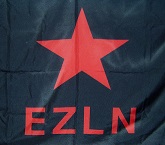
Rebobinar 2: De la muerte y otras coartadas
REBOBINAR 2:
DE LA MUERTE Y OTRAS COARTADAS.
Diciembre del 2013.
“Uno sabe que ha muerto cuando las
cosas que lo rodean han dejado de
morir.”
Elías Contreras.
Profesión: Comisión de Investigación del EZLN.
Estado Civil: Difunto.
Edad: 521 años y contando.
Es madrugada, y si a mí me preguntaran, que no lo han hecho, diría que el problema con los muertos son los vivos.
Porque luego suele aparecer esa disputa absurda, ociosa e indignante por su ausencia.
Rewind 2:
On Death and Other Alibis.
December 2013.
“One knows one has died when
everything around them has
stopped dying.”
Elías Contreras.
Profession: EZLN Investigation Commission.
Civil Condition: Dead.
Age: 521 years old and counting.
It is before dawn, and, if they should ask me, which they haven’t, I would say that the problem with the dead is the living.
Because in their absence, you tend to get that absurd, meaningless, and outrageous argument: “I knew them/ saw them/ was told by them,” really just an alibi that hides the real statement “I am the administrator of that life because I administer its death.”
It’s something like having a “copyright” on death, thus converting it into merchandise that can be possessed, exchanged, circulated, and consumed. There are even historiographical books, biographies, museums, commemorations, theses, newspapers, magazines, and colloquia for this.
El “yo los conocí-vi-me dijeron” es sólo una coartada que oculta el “yo soy el administrador de esa vida porque administro su muerte”.
Algo así como el “copyright” de la muerte, entonces convertida en mercancía que se posee, se intercambia, circula y es consumida. Vaya, hasta hay establecimientos para ello: libros de historiografía, biografías, museos, efemérides, tesis, periódicos, revistas y coloquios.
Y está esa trampa de la edición de la historia propia para limar errores.
Se usan entonces a los muertos para sobre de ellos levantarse un monumento.
Pero, según mi humilde opinión, el problema con los muertos es sobrevivirlos.
O se muere uno con ellos, un poco o un mucho cada vez.
O se adjudica uno mismo el título de vocero de ellos. Al fin y al cabo no pueden hablar, y no es su historia, la de ellos, la que se cuenta, sino que se justifica la propia.
O se puede también usarlos para pontificar con el aburrido “yo a tu/su edad”. Cuando la única forma honesta de completar ese chantaje barato y nada original (casi siempre dirigido a jóvenes e infantes), sería rematar con un “había cometido más errores que tú/usted”.
Y, detrás del secuestro de esos muertos, está el culto por la historiografía, tan de arriba, tan incoherente, tan inútil. Eso de que la historia que vale y cuenta es la que está en un libro, una tesis, un museo, un monumento, y en los equivalentes actuales y futuros, que no son sino una forma pueril de domesticar la historia de abajo.
Porque están quienes viven a costa de la muerte de otros, y sobre su ausencia construyen tesis, ensayos, escritos, libros, películas, corridos, canciones, y otras formas más o menos estilizadas de justificar la inacción propia… o la acción estéril.
El “no has muerto” puede no ser más que una consigna, si nadie sigue caminando. Porque en nuestro modesto y no académico punto de vista, lo que importa es el camino no el caminante.
Y, aprovechando que estoy rebobinando esta cinta de días, meses, años, décadas ya, pregunto, por ejemplo:
Del SubPedro, del señor Ik, de la comandanta Ramona ¿valen sus árboles genealógicos? ¿Sus ADN? ¿Sus actas de nacimiento con nombre y apellidos?
¿O lo que vale es el camino que con los sin nombre y sin rostro –es decir, sin linaje familiar y/o escudo heráldico- anduvieron?
De SubPedro ¿vale su nombre real, su rostro, su modo, recogidos en una tesis, una biografía –es decir, en una mentira documentada a conveniencia-?
¿O vale la memoria que de él hay en los pueblos que organizó? Seguro que los fanáticos de la religión lo hubieran acusado, juzgado y condenado por ser ateo, y los fanáticos de la raza también, pero por ser mestizo y no tener la piel del color de la tierra, en ese racismo inverso que se pretende “indígena”.
Pero la decisión de luchar de SubPedro, del Comandante Hugo, de la Comandanta Ramona, de los insurgentes Álvaro, Fredy, Rafael, ¿vale porque alguien le pone nombre, calendario, geografía? ¿O porque esa decisión es colectiva y hay quien sigue?
Cuando alguien vive y muere luchando, ¿nos dice en su ausencia “recuérdenme”, “hónrenme”, “cárguenme”? ¿O nos impone “sigan”, “no se rindan”, “no claudiquen”, “no se vendan”?
Quiero decir, yo siento (y hablando con otros compas sé que no es sólo mi sentimiento) que la cuenta que tengo que darle a nuestros muertos es qué se ha hecho, qué falta y qué se está haciendo para completar lo que motivó esa lucha.
Probablemente esté equivocado, y alguien me diga que el sentido de toda lucha es perdurar en la historiografía, la historia escrita o hablada, porque es el ejemplo de los muertos, su biografía administrada, la que motiva a los pueblos a luchar, y no las condiciones de injusticia, de esclavitud (que es el nombre real para la falta de libertad), de autoritarismo.
He platicado con algunas compañeras, compañeros, zapatistas del EZLN. Cierto, no con tod@s, pero sí con quienes todavía puedo ver, con quienes puedo estar.
Hubo tabaco, café, palabras, silencios, acuerdos.
No fue el ansia de perdurar, sino el sentido del deber lo que nos colocó aquí, para bien o para mal. La necesidad de algo hacer frente a la injusticia milenaria, esa indignación que sentimos como la característica más contundente de “humanidad”. No pretendemos lugar alguno en museos, tesis, biografías, libros.
Así que, en el aliento postrero, una zapatista, un zapatista, nos preguntamos “¿me recordarán?” O nos preguntamos “¿se dio un paso en el camino?”, “¿hay quién lo sigue andando?”
Nosotras, nosotros, cuando vamos a la tumba de Pedro, ¿le decimos lo que hemos hecho para que lo recuerden o le contamos lo que se ha hecho en la lucha, lo que hace falta (siempre falta lo que falta), lo pequeños que somos aún?
¿Le damos buenas cuentas si tomamos el “Poder” y si le levantamos una estatua?
¿O si le podemos decir “Oí Pedrín, aquí seguimos, no nos vendimos, no claudicamos, no nos rendimos”?
Y, bueno, ya en esto de cuestionar…
Esto de tomar otro nombre y ocultar el rostro, ¿es para escondernos del enemigo o para desafiar su escalafón de mausoleo, su nomenclatura jerárquica, sus ofertas de compra-venta así sea disfrazadas de puestos burocráticos, premios, loas y alabanzas, clubes grandes o pequeños de seguidores?
/sí mi buen, los tiempos cambian, antes al maestro o maestra –o al equivalente de mandarín del conocimiento- se le cortejaba cargándole los libros, lisonjeando sus palabras, mirándol@ con arrobamiento. Ahora se postea en sus escritos, se dan “likes” en sus páginas web, se suma en el número de seguidores que trinan desordenados…/
Quiero decir, ¿nos importa quiénes somos? ¿O nos importa lo que hacemos?
La evaluación que nos interesa y afecta, ¿es la de afuera o la de la realidad?
¿La medida de nuestro éxito o fracaso está en lo que de nosotros aparezca en los medios de paga, en las tesis, en los comentarios, en los “pulgares arriba”, en los libros de historia, en los museos?
¿O en lo logrado, lo fallado, lo acertado, lo pendiente?
Y rebobinando más…
De la Chapis, ¿importa que era creyente y una cristiana consecuente, o importa que vivió y luchó, con y en su ser cristiana, por quienes nunca la conocieron? Seguro que los fanáticos del ateísmo la hubieran acusado, juzgado y condenado por no profesar la religión de los ismos que pretende monopolizar la explicación y dirección de todas las luchas.
Alguna vez, después de leer “El Evangelio según Jesucristo” de José Saramago, la Chapis buscó al literato y compañero para decirle no sólo que no le gustaba su libro, también que ella iba a escribir su propia versión del tema. ¿Importa si llegó a encontrarse con Saramago, si le dijo eso, si escribió su versión? ¿O importa su decisión de hacerlo?
Y del Tata Don Juan, ¿vale sólo por sus apellidos “Chávez Alonso”, su sangre purépecha, el sombrero que más lo cubría y lo mostraba, como si un pasamontañas portara? ¿O vale también por los caminos que se honraron con su paso originario en varios continentes?
Las niñas y los niños asesinados en la Guardería ABC, en Hermosillo, Sonora, México, que apenas alcanzaron unas letras de biografía, ¿valen por las líneas y minutos que alcanzaron en los medios de comunicación? ¿O valen por la sangre que sangre y vida les dio, y ahora se empeña en una digna terquedad que busca justicia? Porque esos niños y niñas valen también ahora, aunque ausentes, por los padres y madres que con su muerte parieron.
Porque la justicia, amigos y enemigos, es también evitar que se repita la injusticia, o que cambie de nombre, de rostro, de bandera, de coartada ideológica, política, racial, de género.
-*-
Quiero decir, nosotros (y otr@s como nosotros, muchos, muchas, tod@s) luchamos por ser mejores, y aceptamos cuando la realidad nos dice que no lo hemos logrado, pero no por eso dejamos de seguir luchando.
Porque no es que acá no honremos a nuestros muertos. Lo hacemos, sí. Pero es que luchando lo hacemos. Todos los días, a todas horas. Y así hasta que miremos el suelo, primero al mismo nivel, luego hacia arriba, cubriéndonos con el paso compañero.
-*-
En fin, se alargan las cuartillas y con ellas crece también la certeza de que todo esto no le importa a nadie, que no es trascendente, que no es lo que la-Nación-el-momento-histórico-la-coyuntura demanda, que es mejor contar un cuento… o hacer una biografía… o levantar un monumento.
Y de las 3 cosas, estoy firmemente convencido de que la única que vale la pena es la primera.
Así que les contaré, tal y como me la refirió Durito, la historia del Gato-Perro (ojo: ahora sí leer “rebobinar 3”).
Vale. Salud y, de los muertos, mirad sobre todo el camino que su paso anduvo, que aún necesita pasos que lo caminen.
El Sup acomodándose el pasamontañas con macabra coquetería.
P.D. QUE TOMA PARTIDO EN UN DEBATE REALMENTE DE ACTUALIDAD.- “Los videojuegos son la continuación de la guerra por otros medios”, sentencia Durito. Y agrega: “En la milenaria lucha entre los fanáticos del PS y el Xbox sólo puede haber un perdedor: el usuario”. No me atreví a preguntarle a qué venía eso, pero supongo que más de un@ entenderá.
P.D. DEMASIADO EXTENSA PARA CABER EN UN “TUIT” (debe ser por lo abultado de la factura).- El autodenominado “gobernador” de Chiapas, México, ha declarado solemnemente que su administración “se ha apretado el cinturón” con un programa de austeridad. Como muestra de su decisión, se ha gastado más de 10 millones de dólares en una campaña publicitaria nacional que no por masiva y costosa es menos ridícula… e ilegal. Pero como algunos medios se llevan su tajada, el “imberbe”, “inexperto” e “inmaduro” empleado de un negocio que ni es partido, ni es verde, ni es ecologista, ni es de México (bueno, ni él es gobernador, así que para qué detenerse en detalles) es ahora, en las páginas y segmentos de la misma prensa que lo atacaba por “niñato”, un “hombre de Estado” que no gasta en su promoción personal, sino “en atraer turismo a Chiapas”. Sí mi buen, ya las agencias turísticas lanzan el turipaquete “Conozca al Güero Velasco”, en plan “all included” que viene con un “kit” con anteojeras para no ver a los grupos paramilitares, ni la miseria y el crimen que pululan en las principales ciudades chiapanecas (Tuxtla Gutiérrez, San Cristóbal de las Casas, Comitán, Tapachula, Palenque), en una entidad donde se supone que los indígenas sean los pobres, no los mestizos. Si el gran ladrón, Juan Sabines Guerrero, pagó millonadas a los medios para simular gobierno donde sólo hubo despojo, el actual “junior” de la política local paga más porque ha aprendido, del actual titular del Ejecutivo Federal (creo que se llama Enrique Manlio Emilio… ¿no? ¿ya ven lo malo de no tener cuenta en tuiter?), que se puede pasar de una averiguación judicial a una lista de candidatos presidenciales para el 2018, con sólo algunas decenas de millones de dólares, un buen Photoshop y una telenovela rosa.
P.D. DE COYUNTURA REITERADA.- Permítame usted, dama, caballero, señor, señora, señorita, niño, niña, otroa. Permítame que, impertinente al fin, no le deje cerrar la puerta y quedarse solo, sola, rumiando su frustración y buscándole responsables, que es así como rabian quienes tienen un altar fijo y un ídolo cambiante. Y si no pongo el pie para evitar que cierre usted la puerta y quede a salvo en su castillo de dogmas, y, en cambio, meto las narices donde no me toca, acháquelo usted a mi nariz, ya de por sí impertinente en tamaño y forma. Ande, permita que interrumpa su odio amortiguado, seco, estéril, inútil.
Venga, sosiéguese, tome asiento, respire hondo. Sea fuerte y compórtese con estudiada sensatez, como esas parejas que se separan “como personas maduras” aunque se mueran de ganas por romperle la cabeza al susodicho… o susodicha (no olvidar la equidad de género).
¿De modo que, cuando ustedes obtienen algo es por su solo esfuerzo? Ah, pero cuando cosechan una derrota, ahí sí democratizan la responsabilidad… y se autoexcluyen. “Los foros son una farsa”, sentenciaron. “No se aceptan encapuchados”, decretaron (y ni pensar en poner una reclamación en la CONAPRED por discriminar la forma de vestir). “Sólo nosotros solos triunfaremos y la Nación nos estará eternamente agradecida, estarán nuestros nombres en libros de texto, congresos, estatuas, museos”, se alegraron de antemano.
Luego pasó lo que pasó y, como antes, ahora voltean a ver a quién culpar del fracaso de esa lucha arriba. “Faltó la unidad”, dicen, pero piensan “faltó que se subordinaran a nuestra dirección”.
El despojo disfrazado de reforma constitucional no inició en este gobierno. Empezó a formalizarse con Carlos Salinas de Gortari y su reforma al artículo 27. El despojo agrario fue entonces “cubierto” por las mismas mentiras que ahora envuelven las mal llamadas reformas: ahora el campo mexicano está completamente destrozado, como si un paquete de bombas atómicas lo hubiera arrasado. Y pasa ya con el total de las reformas. La gasolina, la energía eléctrica, la educación, la justicia, todo será más caro, de peor calidad, más escaso.
Antes de eso y aún antes de las actuales reformas, los pueblos originarios eran y son despojados de sus territorios, que lo son también de la Nación. El oro líquido moderno, el agua y no el petróleo, ha sido hurtado sin que eso llame la atención de los grandes medios. El hurto del subsuelo, tan claramente denunciado en la cátedra Tata Juan Chávez Alonso por el Congreso Nacional Indígena, apenas recibió unas cuantas líneas desganadas en la prensa de paga que hoy lamenta que EL PUEBLO, esa entelequia tan a modo político mediático, no haga nada para frenar el robo legal e ilegítimo que se titula “reforma energética”. El despojo es todos los días y en todas partes. Pero es hasta ahora que se dice que la Patria fue traicionada.
Y ahora usted, que fue sordo, se indigna porque no lo escuchan ni siguen.
Y dice que no se hace nada porque no ve nada. Dice y se dice: “vale lo que YO hago o lo que bajo mi tutela, en mi calendario y en mi geografía se hace. Lo demás, no existe porque no lo veo”.
¿Y cómo podría ver algo si usa las anteojeras que el Poder le regala?
¿Ahora descubre que el Estado no sólo renuncia a ser un amortiguador en el vendaval de despojos que es el Neoliberalismo, sino que, además, acude presuroso a disputarse las migajas que el verdadero Poder le arroja?
Mire usted, lo que pasa es que el mundo es redondo, da vueltas, cambia. Y de poco o nada le puede servir ese catálogo de evidencias duales: izquierda y derecha, reaccionario y progresista, antiguo y moderno, y sinónimos y antónimos tan de moda en la política de arriba.
Mire, lo que ocurre es, simple y sencillamente, que su pensamiento está decrépito.
Y empezó a vencerse en el momento mismo en que decidió abrazar al de arriba (usando el viejo truco –que ahora se les revierte- de derecha-izquierda-progresista-reaccionario, inventándose coartadas y vistiéndolas de las mismas palabras que hoy le entrampan), olvidando que los de arriba no aceptan abrazos sino genuflexiones.
No, no es que usted no tenga ideas y banderas. Es sólo que están desvencijadas. No importa cuánta modernidad las vista, ni cuántas palabras altisonantes se digan en torno a ellas, ni cuántos tuits las repitan, ni cuántos “likes” y comentarios convoquen.
Usted, que esperaba una proclama, la sangre anónima derramada, el clarín con su bélico acento, las ocho columnas, las imágenes con sangre ofrendada en el altar de la Patria que, faltaba más, ustedes, y sólo ustedes, habrán de redimir.
/ No mi buen, si le digo que el zapatismo ya no es lo que era antes, ¿se acuerda cómo hace casi 20 años nos emocionábamos con las imágenes de los muertos tan anónimos que ni rostro ni nombre alcanzaban, tan lejanos, tan indígenas, tan chiapanecos? / Por cierto, ¿Ocosingo queda en Medio Oriente? / Ah, y sus iniciativas, tan brillantes cuando había un templete para nosotr@s. / Por otro lado, ¿quién puede tomar en serio a quien declina inscribirse en la movilización o movimiento (ojo: no es lo mismo, ya aprendan a diferenciar) de moda? ¿O a analizarla, clasificarla, juzgarla, archivarla? / Lo dicho, están acabados, ya ni a la prensa invitan a sus celebraciones, ¿qué pueden celebrar como no sea nuestra absolución o condena? / Ah, pero lo que nunca les perdonaremos a estos zapatones, no es sólo que no se hayan muerto todos –y con ello nos hubieran negado el derecho a administrar sus muertes en el largo laberinto de los mausoleos, los corridos, los “no has muerto camarada, tu muerte será administrada”-, sino que también a sus muertes las hayan hecho tan… tan… tan rebeldes /.
Y nada, que en lugar de eso… ¡posdatas!
Ya sé que no le importa, pero para las encapuchadas y encapuchados de acá, la lucha que vale no es la que se ha ganado o perdido. Es la que sigue, y para ella se preparan los calendarios y las geografías.
No hay batallas definitivas, ni para vencedores ni para vencidos. La lucha seguirá, y quienes ahora se regodean en el triunfo verán derrumbarse su mundo.
Por lo demás, no se preocupe. Usted no ha perdido nada porque por nada ha luchado realmente. Lo único que ha hecho es delegar en otro el conseguirle el monopolio de una victoria que no llegará.
El de arriba caerá, sin duda. Pero su derrumbe no será producto de una lucha monopolizada, excluyente y fanática de sí misma.
Si gusta, siga usted tirando de arriba, celebrará cada pequeño movimiento del monolito, pero la cuerda se reventará una y otra vez.
Las estatuas y los autoritarismos se tumban desde abajo, de modo que no quede el basamento para que un nuevo busto supla al anterior.
Mientras tanto, y es mi humilde opinión, lo único que vale la pena hacer allá arriba es lo que hacen las aves: cagarse.
Vale de helado de nuez, manque haga frío.
El Sup preparándose para…
Ve y escucha los videos que acompañan este texto.
Del grupo ibérico de Rock Punk Arzua25, esta rola llamada “Zapatista”, del disco “Bienvenido a la Resistencia”.
Con el grupo SKA-FE, de Colombia, la rola “Muerte a la Muerte”. ¡Brincooooolín!
De la serie “Como debió haber terminado”, la finales alternativos a “Batman, el caballero de la noche asciende”. Video dedicado a l@s enmascarad@s “mal@s” (que no son aceptad@s en las movilizaciones “trascendentales”), como Gatúbela y Bane (con su pasamontañas invertido y su excelente dicción).
Del inmortal Cuco Sánchez, “No soy monedita de oro”, que se explica por sí misma.
Then there is that trick of editing one’s own history in order to smooth over one’s errors.
And so they use the dead to build a monument to themselves.
But, in my humble opinion, the problem with the dead is the task of surviving them.
One can die with them, a little or a lot each time.
One can name oneself their spokesperson. After all, they can’t talk, and it’s not their history anyway being told, they are just the justification for one’s own story.
One can also use them to pontificate with that boring mantra of “When I was your age…” when really the only honest way to complete that cheap and unoriginal blackmail (almost always aimed at young people and children) would be to finish it off with “I had made more errors than you have.”
And behind the hijacking of the dead is that incoherent, useless cult of historiography from above, the belief that the history that counts is the one that is found in a book, a thesis, a museum, a monument, and their current and future equivalents, that are nothing other than an infantile way to domesticate history from below.
Because there are those who live at the cost of others’ death, and upon their deaths they construct theses, essays, writings, books, films, lyrics, songs, and other more or less stylized ways of justifying their own inaction… or their fruitless action.
The saying, “you haven’t died,” remains merely a slogan if nobody continues on the path the dead had walked. Because in our modest and non-academic point of view, what is important is the path, not the one who walks it.
Taking advantage of the fact that I am rewinding this tape days, months, years, decades already, I ask, for example: for SubPedro, Señor Ik, Comandanta Ramona, is it their genealogical tree that matters? Their DNA? Their birth certificates with full names?
Or is what matters the path they walked with those without name and without face—that is, without family lineage or crest?
Is what is important about SubPedro his real name, his face, his way of being, all collected in a thesis, a biography—that is, in a documented and convenient lie?
Or is what matters the memory of him held in the villages and peoples that he organized? Religious fanatics would surely accuse, judge, and condemn him for being an atheist; race fanatics would too, because he was mestizo and did not have skin the color of the earth, in that inverse racism that pretends to be “indigenous.”
But does the decision to struggle made by SubPedro, by Comandante Hugo, by Comandanta Ramona, by the insurgents Álvaro, Fredy, and Rafael matter because someone gave it a name, a calendar and a geography? Or because that decision was collective and there are those who continue to carry it out?
When someone lives and dies in struggle, does their absence say “remember me, honor me, carry me”? Or does it tell us to “keep going,” “don’t give up,” “don’t give in,” “don’t sell out”?
I feel (and talking to other compas I know that I am not alone) that the accounting I have to give to our dead is in regard to what has been done, what still has to be done, and what we are doing to complete or fulfill what first motivated this struggle. Probably I am mistaken, and someone will tell me that the meaning of all struggle is to go down in history, in spoken or written history, because it is the example of the dead—and their administered biography—which motivates people to struggle, and not the conditions of injustice, of slavery (which is the real name for the lack of freedom), and of authoritarianism.
I have talked to some compañeras, compañeros, zapatistas of the EZLN. Not all of them, it’s true, but with those I can still see, those whom I can still be with.
There was tobacco, coffee, words, silences, agreements.
It was not the eagerness to “survive” but a sense of duty that put us here, for better or for worse. It was the necessity to do something in the face of millennial injustice, the indignation that we felt was the most forceful characteristic of “humanity.” We are not striving for any place whatsoever in museums, theses, biographies, books.
In that sense, in our last breath, do we Zapatistas ask ourselves “will they remember me?” Or do we ask our selves “did we take a step along the path?” and “will someone keep walking it?”
When we go to Pedro’s grave, do we tell him what we have done so that people remember him, or do we tell him what steps have been taken in struggle, what is still missing (what is missing is always yet to come), how small we still are?
Do we tell him good stories about how if we take “Power” we’ll put up a statue for him?
Or do we say “Hey there Pedrín, we are still here, we haven’t given in, haven’t given up, haven’t sold out”?
And while we’re in questioning mode…
This thing about taking another name and hiding one’s face, is that done to hide from the enemy or to challenge their ladder-climbing to a privileged spot in the mausoleum, to a title in the hierarchy, to the buy-off and sell-out offers disguised as bureaucratic posts, prizes, praise and acclamations, or small or large clubs of followers?
“Yes my dear, times change. Before, one courted the teacher—or their equivalent in the regime of knowledge—by carrying their books, hanging on their every word, gazing at them with rapture. Now one posts their writings, gives them “likes” on their webpage, and adds oneself to the number of followers that trill along in disorder…”
What I mean to say is, does it matter who we are? Or does it matter what we do?
Is the evaluation that interests and affects us that of outside observers or that of reality?
Is the measure of our success or our failure in what is said about us in the mass media, in theses, in the comments section, in the number of “thumbs up” we get, in history books, in museums?
Or is it in what we have achieved, in where we have failed, in what we have gotten right, in what is still pending?
And if we rewind even more…
In the case of Chapis, does it matter that she was a believer, a Christian who acted according to her beliefs, or that she lived and struggled, with and in her Christian being, for those who she never met? The atheist fanatics will surely accuse, judge, and condemn her for not professing the religion of the –isms that try to monopolize the explanation and direction of all struggles.
At some point, after reading “The Gospel According to Jesus Christ” by José Saramago, Chapis went to look for that writer and compañero to tell him not only that she didn’t like his book, but also that she was going to write her own version. Does it matter if she managed to meet with Saramago, if she told him this, if she wrote her version? Or is it her decision to do so that matters?
And Tata Don Juan, was he important because of his last names “Chávez Alonso,” his purépecha blood, the hat that both shielded and showed him, as if it were a ski mask? Or was he important because of the paths he honored with his indigenous step on various continents?
The children that were murdered in the ABC Daycare in Hermosillo, Sonora, Mexico, who barely reached a few letters of biography, are they important because of the number of lines and minutes they got in the media? Or because of the blood that gave them life and blood and which now maintains a dignified stubbornness in the search for justice? Because these children also appear and matter now, although absent, in the mothers and fathers that their death gave birth to.
Because justice, friends and enemies, also means putting and end to the repetition of injustice, so that it cannot simply change the name, face, flag, ideological alibi, or political, racial, or gendered justification.
-*-
What I mean is that we (and others like us, many others, all others) struggle to be better, and we accept when reality tells us we have failed in this, but that does not mean we stop struggling.
It isn’t that here we don’t honor our dead. We do. But we do so by struggling, every day, every hour. And on and on until we meet the ground, first at eye level, and then above us, covering us with the step of a compañero.
-*-
Anyway, the sheets of paper grow long and with them the certainty that none of this matters to anyone, that it is not significant, that it isn’t what the Nation-historic-moment-current-conjuncture demands, that it is better to tell a story… or write a biography… or put up a monument.
Of those three things, I am firmly convinced that the only the first is worthwhile.
So I will tell you, just as Durito told me, the history of the Cat-Dog (note: now you can read “Rewind 3”).
Vale. Cheers and, about the dead, look above all, at the path they tread, that still needs steps to walk it.
El Sup, adjusting his ski mask in a macabre flirtation.
P.S. THAT INTERVENES IN A CURRENT DEBATE: “Videogames are the continuation of war by other means,” concludes Durito. He adds, “In the never ending struggle between the fans of PS and Xbox there can only be one loser—the user.” I didn’t dare ask him what this has to do with anything , but I imagine that more than one of you will understand.
P.S. THAT IS TOO LONG TO FIT IN A “TWEET” (probably because of the size of the invoice). The self-proclaimed “governor” of Chiapas, Mexico, has solemnly declared that his administration has “tightened its belt” with the implementation of an austerity program. As evidence of his resolve, the governor has spent more than 10 million dollars in a national publicity campaign whose enormity and cost doesn’t make it any less ridiculous…not to mention illegal. Yet, due to the fact that some in the media have received a nice slice of this pie, the “inexperienced” and “immature” employee of that business which is not a party, not green, not ecological and not even Mexican (well, why even get caught up in details given that he’s not even a governor) in the very pages and sections of the same press that at first attacked him for being a “brat,” is now a true “statesmen” who isn’t spending money on personal publicity but rather on “attracting tourism to Chiapas.” That’s right my friend, the tourist agencies have already launched their “all inclusive” tourist package: “Come meet El Güero Velasco,” which comes with a special “kit” including special blinders so as not to see the paramilitary groups, the poverty, or the crime that flourishes in the major cities of Chiapas (Tuxtla Gutiérrez, San Cristóbal de Las Casas, Comitán, Tapachula and Palenque), a state where it’s presumed that the indigenous are the poor, not the urban mestizo. If that giant thief, Juan Sabines Guerrero, paid the media millions of dollars in order to simulate government where there was only dispossession, the current “junior” of local politics pays the media even more because he’s learned from the current national president (I think his name is Enrique Manlio Emilio… right? See what happens when you don’t have a twitter account?) that you can move from the list of those being investigated by the courts to the list of presidential candidates for 2018 with tens of millions of dollars, a little photoshop, and a racy soap opera.
P.S. REGARDING THE REPETITIVE CONJUNCTURE: Allow me—ladies, gentlemen, mister, misses, boys, girls, others—allow me, impertinent till the very end, to not allow you to close that door, leaving you all alone, ruminating in your frustration and searching for who to blame, which is how those that have a fixed altar but a changing idol rage.
Come now, calm yourself, have a seat and take a deep breath. Be strong and act sensibly, like those couples that break up “like mature adults” even though they are dying to crack each other (man or woman, let’s not forget about gender equality) over the head.
So, let’s get this straight: when you all obtain something it’s all due to your own efforts? But when it’s time to harvest defeat then you democratize responsibility and automatically exclude yourself from it. “Forums are a farce,” you declared. “We won’t accept anyone that is masked” you pronounced (and there was no chance of filing a complaint with the CONAPRED for discrimination based on dress). “Only we can triumph and the nation will be eternally grateful to us, our names will be all over textbooks, conferences, statues, and museums” and you were already so happy.
Then what happened happened, and just like last time now you look around to see who you can blame for the defeat handed to you in that struggle taking place up above. “A lack of unity,” you say, but what you really mean is, “they didn’t subordinate themselves to our leadership.”
Dispossession dressed in the guise of constitutional reform did not begin with this administration; it was first instituted by Carlos Salinas de Gortari and his reforms to article 27 of the Mexican Constitution. Agrarian dispossession was then “hidden” behind the same lies that are today being used to envelope the inappropriately named reforms: today the Mexican countryside is completely destroyed, as if some atomic bombs had flattened it. And the same thing will result from all these reforms—gasoline, electricity, education, justice; everything will be more expensive, of lesser quality, and scarce.
But even before that and way before the contemporary reforms, the indigenous peoples were and still are dispossessed of their territories, which also belong to the Nation. In addition, that modern liquid gold, water not petroleum, was stolen without even a mention in the established media. The theft of our subsoil, that was so clearly denounced at the Seminar Tata Juan Chávez Alonso by the National Indigenous Congress warranted a few measly lines in the commercial press, the same press that today laments the fact that “THE PEOPLE” (that pipe dream that’s so fashionable in the political press) aren’t doing anything to put an end to the that legal but illegitimate robbery that goes under the name of “reform of the energy sector.” Dispossession takes place everyday and everywhere. But only now do they claim that the country was betrayed.
And now you, who has up until now been deaf, become indignant because they don’t listen to you and they don’t follow you.
And you say that nothing is being done because you don’t see anything being done. You say and it is said, “what matters is what I do, what take place under my guidance, on my calendar, and in my geography. Everything else doesn’t exist because I don’t see it.”
But how are you going to see anything if you wear the blinders that Power has given you?
So, not only do you just discover that the State has renounced its roll as social cushion in this whirlwind of dispossession called Neoliberalism, but now you also run to fight over the crumbs that the real Power hurls at you?
Look, the fact is, the world is round, it turns on its axis, and it changes. And that catalog of dualisms that are so in fashion in the politics up above are totally useless—left and right, reactionary and progressive, old and modern, synonyms and antonyms.
Look, it’s simple, your thought is decrepit and it expired on the very day that you decided to embrace that guy above (using that old trick which is now turned back on you: left-right, progressive and reactionary, creating excuses and dressing them up in the very same words that are today used to trap you), ignoring that that those above never accept embraces, they demand genuflections.
It’s not that you don’t have ideas or banners. It’s that your ideas are totally dilapidated and that won’t change no matter how hard you try to dress them up as modern, how many highfalutin sounding words you use to describe them, how many times they are retweeted, or how many “likes” and comments they may elicit.
You, who awaited the call, the anonymous blood that would be spilled, that warlike call of the bugle, the images of blood sacrificed on the altar of the fatherland that of course, you and only you were going to save.
“No dude, I’m telling you, Zapatismo is not what it was before. Do you remember how almost 20 years ago we were overjoyed with the images of the dead? They were so anonymous that they didn’t even have a face or a name, so far away, so indigenous, so Chiapan.” “Oh by the way, is Ocosingo in the Middle East?” “Ah yes, and their initiatives were so brilliant as long as there was space on stage for us.” “On the other hand, who can possibly take someone seriously when they refuse to sign up to (or analyze, or classify, or judge, or archive) the latest fashionable mobilization or movement.” (Note: they’re not the same thing, learn how to understand the difference.) “That’s right, they’re done for, they don’t even invite the press to their celebrations anymore. What could they possibly celebrate that isn’t our own condemnation or absolution?” “Yes, but what we will never forgive these Zapatistas is not just that they didn’t all die, and thus they denied us the right to manage over their deaths in the long halls of the mausoleums, in song and verse, in the “you haven’t died comrade, your death will be managed.” It’s that their deaths made them so…so….so rebellious.”
But no you say, instead of all that all we got was a bunch of Postscripts!
I know it doesn’t matter to you, but for those masked men and women here the struggle that matters to them isn’t the one that has been won or lost. It’s the struggle that lies ahead, and for that calendars and geographies must be prepared.
There are no definitive battles for either victors or vanquished. The struggle continues and those that today bask in their victory will see their world crumble.
But regarding everything else, don’t worry, you haven’t really lost anything because you haven’t even really struggled. All that you’ve done is delegate to someone else the search for a victory that will never arrive.
The one above will fall, there’s no doubt. But his fall will not be the product of a struggle that is exclusive, monopolized, and fanatical of itself.
If you want keep pulling from above, you will celebrate every little movement of the monolith, but the rope will break each and every time.
Statues and authoritarianism have to be taken down from below, so as to assure that the base upon which they stood disappears and thus to assure that a new face doesn’t simply replace the one that was there before.
In the meantime, and this is just my humble opinion, the only thing worthwhile doing on that monolith up above is what the birds do: shit on it.
Vale de Helado de Nuez. Even though it’s cold.
The Sub preparing to………
Watch and listen to the videos that accompany this text.
From the Iberian Punk Rock group Arzua25, this track called “Zapatista,” from the album “Welcome to the Resistance.”
From the group SKA-FE, from Colombia, the track “Death to Death”. ¡Brincooooolín!
From the series “How it should have ended,” alternative endings to “Batman, the Dark Knight Rises.” Video dedicated to the masked “bad guys” (who aren’t accepted in the “important” mobilizations), like Gatúbela and Bane (with their inverted skimasks and excellent diction).
From the immortal Cuco Sánchez, “No soy monedita de oro,” (I’m not a little gold coin) which explains itself.

