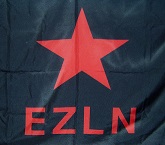
[:es]EZLN convoca al Conversatorio “Miradas, Escuchas y Palabras: ¿Prohibido Pensar?” – 15-25 abril 2018[:en]EZLN invites to the dialogue (or seedbed) “To Watch, to Listen, to Speak: No Thinking Allowed?” 15-25 Apr 2018[:]
[:es]
La Comisión Sexta del Ejército Zapatista de Liberación Nacional convoca al CONVERSATORIO (o semillero, según): “Miradas, Escuchas y Palabras: ¿Prohibido Pensar?”
EJÉRCITO ZAPATISTA DE LIBERACIÓN NACIONAL.
Comisión Sexta del EZLN.
México.
Marzo del 2018.
A las personas, grupos, colectivos y organizaciones que, en todo el mundo, entendieron e hicieron suya la iniciativa del Concejo Indígena de Gobierno y su vocera:
A la Sexta nacional e internacional:
A quienes firmaron por la vocera del Concejo Indígena de Gobierno:
CONSIDERANDO QUE:
Primero y único:
La Familia Feliz.
Un poblado, o ciudad, o como se diga. Un lugar del mundo. Un muro. Pegado en la rugosa superficie del gran muro, un afiche, cartel, o como se diga. En la imagen, un hombre y una mujer sonríen frente a una mesa rebosante de comida variada. A un costado de la pareja, una niña sonriente; al otro costado, un niño mostrando su reluciente dentadura. Sobre de ellos, en letras grandes e intimidantes, se lee “LA FAMILIA FELIZ”. El cartel está ya viejo, con la pátina del tiempo apagando los colores que, suponemos, alguna vez fueron brillantes y, sí, se podría decir que felices. Algunas manos anónimas han agregado, en papel, pequeños letreros: “La familia feliz es feliz sólo con la bendición del divino”; “No a la familia homoparental, ¡mueran los maricas y las machorras!”; “La maternidad es lo que define a la mujer feliz”; “Se destapan caños. Presupuesto sin compromiso”; “Se renta casa feliz para familia feliz. Familias infelices, absténganse”.
Al frente, por la acera al pie del muro, la gente transcurre de un lado a otro sin apenas prestarle atención a la imagen opaca. De vez en cuando, alguna perece aplastada por un pedazo que cae del muro decrépito. Cierto, cada vez con más frecuencia suceden esos derrumbes parciales. Gajos del muro se desprenden y aplastan a veces a una sola persona o a un pequeño grupo, a veces a comunidades enteras. La conmoción en la muchedumbre dura apenas unos instantes, y reanuda su camino bajo la mirada pálida de la familia feliz.
Catástrofes menores y mayores, eso no debe distraernos de lo esencial ahora: cada tanto de tiempo, el supremo hacedor de “familias felices”, anuncia la elección, libre y democrática, del cuidador del afiche. Y precisamente ahora, el feliz calendario que, ahora se percata usted de ello, se puede ver detrás de la familia feliz, marca que es el tiempo de elegir. En estas fechas, una febril actividad recorre al gentío que, sin detenerse, opina, discute y pelea por las distintas opciones que se ofrecen para cuidar el gigantesco cartel.
Hay quien señala el peligro de que la impericia manifiesta de sus oponentes, ponga en riesgo la ya maltrecha imagen, símbolo de identidad del poblado, ciudad, o como se diga. Una persona ofrece remozarlo y devolverle el brillo y el color que alguna vez tuvo (en realidad, nadie recuerda ese tiempo, así que ni siquiera se puede asegurar que alguna vez existió –claro, en el dado caso de que se le pueda atribuir existencia al tiempo-). Otra más dice que las administraciones anteriores han descuidado la imagen y a eso se debe su visible deterioro.
Las distintas propuestas encienden las discusiones en los transeúntes. Se cruzan acusaciones, calumnias, falacias, argumentos con la solidez de lo efímero, condenas y sentencias apocalípticas. Se reflexiona sobre la importancia y trascendencia del momento, la necesidad de la participación consciente. No en balde se ha luchado tantos años para poder elegir a quien cuide la feliz imagen de la familia feliz.
Se forman bandos: allá el de quienes insisten en una renovación prudente; aquel otro insiste en el postulado científico de que “más vale malo por conocido, que bueno por conocer”; otro bando aglutina a quienes ofrecen probidad, buen gusto, modernidad. Unos y otros gritan: “¡No pienses!, ¡Vota!”. Una pancarta estorba el trasiego de la gente, en ella se lee “Cualquier llamado a razonar el voto, es un llamado a la abstención. No es tiempo de pensar, sino de tomar partido”.
Las discusiones no siempre son mesuradas. Es tan importante elegir al responsable de la imagen, que no pocas veces los bandos llegan a la violencia.
Hay quien habla de cuantiosas cantidades de felicidad para quien resulte vencedor, pero, lejos de los intereses mundanos, en los rostros adustos de los contendientes se advierte la seriedad del asunto: es un deber histórico, el futuro está en la mano titubeante de quienes habrán de elegir, es una grave responsabilidad pesando sobre los hombros de la gente; peso que, felizmente, será aliviado cuando se sepa quién se alza con el triunfo, y vea de procurar felicidad a la feliz imagen de la familia feliz.
Es tal el frenesí, que todos se olvidan por completo de la imagen retratada. Pero la familia feliz luce, en la soledad del muro, su perenne e inútil sonrisa.
Al pie de la alargada y alta pared, una niña levanta la mano pidiendo hablar. Los bandos apenas si la notan, pero no falta quien diga: “pobrecita, es una niña y quiere hablar, dejémosla”. “No”, dice otro bando, “es un truco del bando contrario, es para dividir el voto, es un distractor para que no reparemos en la gravedad del momento, es un claro llamado a la abstención”. El bando de más allá, objeta: “¿Qué capacidad puede tener una niña para opinar siquiera sobre el cartel? Le faltan estudios, crecer, madurar”. Y por aquel lado: “no vamos a perder el tiempo escuchando a una niña, debemos concentrarnos en lo importante: decidir quién es mejor para cuidar el cartel”.
La “Comisión de Nitidez y Legitimidad para la Elección del Encargado de Cuidar la Imagen de la Familia Feliz” (CNLEECIFF, por sus siglas), emitió un serio y breve comunicado, acorde con la gravedad de los tiempos: “Las reglas son claras: NO SE ADMITEN NIÑAS”.
Nuevas reflexiones de los analistas especializados: “lo único que logró la niña fue legitimar a la CNLEECIFF. Al pedir la palabra, la niña entró al juego y perdió, lo demás son consuelos”; “El fracaso de la niña es síntoma del fracaso del proceso renovador, las instituciones deberían dejar que la niña hable”; “Fue conmovedora, ella con su manita levantada, pidiendo atención, pobrecita”; “Fue un resultado adverso, producto de un análisis erróneo de la coyuntura, el contexto y la correlación de fuerzas, eso señala la ausencia de una vanguardia revolucionaria que dirija a las masas”; “Etcétera”.
Pero las discusiones apenas duraron unos minutos, y el ir y venir de pasos y sinrazones siguió su curso. No se escuchó a la niña hablar, mientras señalaba, no a la imagen, sino al muro sobre el que la familia feliz lucía su ya deteriorada placidez.
Parada sobre uno de los escombros, rodeada de cadáveres de niñas y de piedras desgajadas, la niña señaló, lacónica, lo evidente:
“Se va a caer”.
Pero nadie escuchó…
Un momento… ¿nadie?
(¿Continuará?…)
-*-
En base a lo anteriormente expuesto, la Comisión Sexta del EZLN convoca al:
CONVERSATORIO (o semillero, según):
“Miradas, Escuchas y Palabras: ¿Prohibido Pensar?”
En el que diversas personas del Congreso Nacional Indígena, del Concejo Indígena de Gobierno, de las artes, las ciencias, el activismo político, el periodismo y la cultura, nos compartirán lo que miran y escuchan.
El conversatorio se llevará a cabo los días del 15 al 25 de abril del 2018, en el CIDECI-Unitierra, San Cristóbal de Las Casas, Chiapas, México.
Han confirmado su participación, entre otr@s:
Marichuy (vocera del Concejo Indígena de Gobierno).
Lupita Vázquez Luna (concejala del Concejo Indígena de Gobierno).
Luis de Tavira Noriega (director de Teatro).
Mardonio Carballo (escritor).
Juan Carlos Rulfo (cineasta).
Paul Leduc (cineasta).
Cristina Rivera-Garza (escritora).
Abraham Cruzvillegas (artista visual).
Néstor García Canclini (antropólogo).
Emilio Lezama (escritor y analista político).
Irene Tello Arista (columnista y activista).
Erika Bárcena Arévalo (abogada y antropóloga).
Ximena Antillón Najlis (psicóloga, especialista en víctimas de la violencia).
Jacobo Dayán (académico y activista por los Derechos Humanos).
Marcela Turati (periodismo de investigación).
Daniela Rea Gómez (periodista).
Carlos Mendoza Álvarez (filósofo).
John Gibler (periodista).
Javier Risco (periodista).
Alejandro Grimson (antropólogo).
Enrique Serna (novelista).
Paul Theroux (escritor).
Juan Villoro (escritor).
Pablo González Casanova (sociólogo y zapatista, no necesariamente en ese orden).
Gilberto López y Rivas (antropólogo).
Alicia Castellanos Guerrero (antropóloga).
Magdalena Gómez Rivera (abogada).
Bárbara Zamora (abogada).
Margara Millán Moncayo (socióloga feminista).
Sylvia Marcos (psicóloga y socióloga feminista).
Jorge Alonso Sánchez (antropólogo).
Fernanda Navarro y Solares (filósofa).
Néstor Quiñones (artista gráfico).
Raúl Romero (sociólogo).
Rafael Castañeda (militante político).
Luis Hernández Navarro (periodista).
Carlos Aguirre Rojas (sociólogo y economista).
Sergio Rodríguez Lascano (militante político).
Carlos González (abogado y activista en la lucha de los pueblos originarios).
Adolfo Gilly (militante político, historiador y analista).
Carolina Coppel (videasta).
Mercedes Olivera Bustamante (antropóloga feminista).
María Eugenia Sánchez Díaz de Rivera (socióloga).
“Lengua Alerta” (musiquero).
“Panteón Rococó” (musiqueros).
“El Mastuerzo” (guacarockero).
“Batallones femeninos” (musiqueras feministas).
“Los Originales de San Andrés” (musiqueros zapatistas).
“La Dignidad y la Resistencia” (musiqueras zapatistas).
Conforme vayan confirmando l@s demás invitad@s (cuyo nombres no se señalan para proteger a l@s inocentes) se hará pública la lista completa, así como los días y horarios de la participación de cada quien.
La dirección para registrarse como escucha-vidente, medio libre o de paga, es:
asistentesemillero@enlacezapatista.org.mx
(por favor poner nombre, ciudad, estado o país, individual o colectivo).
Dicho lo anterior, no falten… o falten, el asunto es que miren, escuchen y piensen.
Desde las montañas del Sureste Mexicano.
Por la Comisión Sexta del EZLN (sección “Invitaciones y obviedades)
SupGaleano.
México, marzo del 2018.
Fuente: Enlace Zapatista[:en]
The Sixth Commission of the Zapatista Army for National Liberation convokes a ROUNDTABLE DISCUSSION (or seedbed, depending on who you ask): “To Watch, to Listen, to Speak: No Thinking Allowed?”
ZAPATISTA ARMY FOR NATIONAL LIBERATION
Sixth commission of the EZLN.
Mexico.
March, 2018.
To the persons, groups, collectives and organizations throughout the world who understood and took on as their own the initiative of the Indigenous Governing Council and its spokeswoman:
To the national and international Sixth:
To everyone who contributed their signature in support of the Indigenous Governing Council’s spokeswoman:
CONSIDERING:
First and only:
The Happy Family.
A town, or a city, or whatever it’s called. A place in the world. A wall. Hung on the rough surface of the huge wall is a flyer, a poster, or whatever you call it. In the image, a man and woman smile in front of a table brimming with a wide variety of food. To the couple’s right, a smiling girl; to their left, a boy grinning to display gleaming teeth. Above them in large and intimidating letters reads “THE HAPPY FAMILY”. The poster is old by now, time’s march forward having muted the colors that, we assume, were once bright and, yes, happy. Anonymous hands have added small paper signs to the wall: “The happy family is happy only with God’s blessing”; “No to gay parenting! Death to faggots and dykes!”; “Motherhood is what defines a happy woman”; “We unclog pipes: no-obligation estimates”; “Happy home available for rent to a happy family. Unhappy families need not apply”.
Along the sidewalk that runs in front of the wall, people hurry from one place to another without paying any attention to the opaque image. Occasionally, someone is crushed to death under a huge chunk that falls off the decrepit wall. In fact, these partial rockslides are becoming more and more frequent. Loose pieces of the wall break off and crush sometimes one person, sometimes a small group, sometimes whole communities. The crowd is thrown into commotion only for an instant before resuming its trajectory under the pale gaze of the happy family.
Catastrophes big or small, these should not distract us from what is most important now: every so often, the supreme maker of “happy families” announces the free and democratic election of who will preside over the poster.[i] And precisely at this moment, you are just now noticing, a happy calendar that can be seen behind the happy family indicates that it’s election season. Around this time, a feverish activity runs through the crowd that, without stopping, discusses, offers opinions and argues about the different options presenting themselves as potential stewards of the enormous poster.
There are those who point out the danger posed to the image on the already battered poster—the symbolic identity of the city or town or whatever—by their opponents’ obvious inexperience. One person offers to renovate the poster and return to it the brightness and color it once had (in reality, nobody remembers that time, so we can’t be sure that it actually existed—if, of course, we can in fact attribute existence to time). Someone else says that previous administrations have neglected the image, and that this is what has caused its visible deterioration.
The different proposals ignite arguments among passers-by: accusations, insults, fallacies, arguments of a purely ephemeral base, condemnations and apocalyptic predictions fly back and forth. People reflect on the importance and transcendence of this moment, on the necessity of conscious participation. It wasn’t for nothing that they struggled for so many years to be able to choose who presides over the happy image of the happy family.
Factions are formed: on one side are those who insist on a sensible renovation; on the other are those who insist on the scientific postulate, “better the devil you know than the devil you don’t”; another faction consists of those calling for proper behavior, good taste and modernity. A few here and there shout, “Don’t think! Vote!”. A giant placard obstructs the flow of people; it reads “Any call to think rationally about voting is a call to abstention. This is not a time to think, it is time to take sides”.
The discussions are not always level-headed. The selection of the steward of the image is so important that many times the competing groups resort to violence.
Some talk of the boundless happiness that accrues to whomever ends up the victor, but, far from mundane worldly interests, the severe faces of the contenders belie the seriousness of the matter: it’s an historic task; the future is in the trembling hands of those who must choose; this most serious responsibility weighs heavily on the shoulders of the people. Happily, though, this weight will be lifted once the winner is known and sets him or herself to the task of procuring happiness for the happy image of the happy family.
The frenzy is such that everyone forgets entirely about the image portrayed. But on the lonely wall, the happy family still displays its perennial and useless smile.
t the foot of the long, high wall, a little girl raises her hand, asking to speak. The factions barely take notice, but someone finally says, “Poor little thing, she wants to talk, we should let her.” “No,” says another faction, “it’s a trick from the opposition group, an attempt to divide the vote, a distraction designed to stop us from reflecting on the gravity of the moment, a clear call to abstention.” Another faction objects: “What capacity could a little girl have to even opine about the poster? She needs to study, grow, and mature.” And from another wing: “We’re not going to waste time listening to a little girl. We should concentrate on what’s important: deciding who is best suited to take care of the poster.”
The “Commission on Transparency and Legitimacy for the Election of the Person in Charge of Stewarding the Image of the Happy Family” (abbreviated CTLEPCSIHF) released a brief and serious memo, in accordance with the gravity of the times: “The rules are clear: NO LITTLE GIRLS ALLOWED.”
Specialized analysts publish new reflections: “The only thing the little girl achieved was the legitimization of the CTLEPCSIHF. In asking for the floor, the girl entered the game and lost; the rest is consolation.”; “The failure of the girl is symptomatic of the failure of the renovation process, the institutions should let the girl talk”; “It was very moving, the little girl with her little hand raised, asking for attention, poor little thing”; “It was an adverse outcome, the product of an erroneous analysis of the conjuncture, the context and the correlation of forces. This signals the absence of a revolutionary vanguard to direct the masses”; “Etcetera”.
But the discussions lasted only a few minutes before the coming and going of footsteps and injustices continued its course. No one listened to the girl speak as she pointed, not to the image, but to the wall upon which the happy family shone its by now deteriorated tranquility.
Standing on a pile of rubble, surrounded by the cadavers of little girls and broken stones, she stated, flatly, the obvious:
“It’s going to fall.”
But no one listened…
Just a minute…no one?
(To be continued?)
-*-
Based on the above statement, the Sixth Commission of the EZLN convokes:
A ROUNDTABLE DISCUSSION (or seedbed, depending on who you ask):
“To Watch, to Listen, to Speak: No Thinking Allowed?”
In which various participants from the National Indigenous Congress, the Indigenous Governing Council, the arts, the sciences, political activism, journalism and culture will share with us what they are seeing and hearing.
The roundtable will take place from April 15-25, 2018, at the CIDECI-Unitierra in San Cristóbal de las Casas, Chiapas, Mexico.
The following, among others, have confirmed their participation:
Marichuy (spokeswoman for the Indigenous Governing Council).
Lupita Vázquez Luna (councilwoman of the Indigenous Governing Council).
Luis de Tavira Noriega (theater director).
Mardonio Carballo (writer).
Juan Carlos Rulfo (filmmaker).
Paul Leduc (filmmaker).
Cristina Rivera-Garza (writer).
Abraham Cruzvillegas (visual artist).
Néstor García Canclini (anthropologist).
Emilio Lezama (writer and political analyst).
Irene Tello Arista (columnist and activist).
Erika Bárcena Arévalo (lawyer and anthropologist).
Ximena Antillón Najlis (psychologist specializing in victims of violence).
Jacobo Dayán (academic and human rights activist).
Marcela Turati (investigative journalist).
Daniela Rea Gómez (journalist).
Carlos Mendoza Álvarez (philosopher).
John Gibler (journalist).
Javier Risco (journalist).
Alejandro Grimson (anthropologist).
Enrique Serna (novelist).
Paul Theroux (writer).
Juan Villoro (writer).
Pablo González Casanova (sociologist and Zapatista, not necessarily in that order).
Gilberto López y Rivas (anthropologist).
Alicia Castellanos Guerrero (anthropologist).
Magdalena Gómez Rivera (lawyer).
Bárbara Zamora (lawyer).
Margara Millán Moncayo (feminist sociologist).
Sylvia Marcos (psychologist and feminist sociologist).
Jorge Alonso Sánchez (anthropologist).
Fernanda Navarro y Solares (philosopher).
Néstor Quiñones (graphic artist).
Raúl Romero (sociologist).
Rafael Castañeda (political militant).
Luis Hernández Navarro (journalist).
Carlos Aguirre Rojas (sociologist and economist).
Sergio Rodríguez Lascano (political militant).
Carlos González (lawyer and activist for the struggles of originary peoples).
Adolfo Gilly (political militant, historian and analyst).
Carolina Coppel (video artist).
Mercedes Olivera Bustamante (feminist anthropologist).
María Eugenia Sánchez Díaz de Rivera (sociologist).
“Lengua Alerta” (musician).
“Panteón Rococó” (musicians).
“El Mastuerzo” (guacarocker[ii]).
“Batallones femeninos” (feminist musicians).
“Los Originales de San Andrés” (Zapatista musicians).
“La Dignidad y la Resistencia” (Zapatista musicians).
As the rest of those invited confirm their attendance (and whose names are not listed here so as to protect the innocent) the complete list will be made public, as well as the dates and times of each participant’s contribution.
The email address to register as a listener-observer, or member of the free or paid press, is:
asistentesemillero@enlacezapatista.org.mx
Please include your name, city, state or country, and whether you are attending as an individual or member of a collective.
That said, don’t miss it… or do miss it, the point is that you watch, listen, and think.
From the mountains of the Mexican Southeast.
For the Sixth Commission of the EZLN (Department of “Invitations and Stating the Obvious”).
SupGaleano.
Mexico, March, 2018.
[i] The original Spanish used here is “cartel,” which can mean a poster or sign, but also literally means cartel, as in, for example, a drug cartel.
[ii] “Guacarock” was coined by Mexican rock band “Botellita de Jerez” (of which “El Mastuerzo” was a member) to describe their unique style of fusing Mexican popular rhythms with the sounds of rock’n’roll. The term combines the Mexican word for avocado (aguacate) with rock.[:]

