EZLN
Turismo en Chiapas: Estrategia para quebrar la resistencia, entrevista a Hermann BellinghausenTourism in Chiapas: A stretegy to break resistency, a conversation with Hermann Bellinghausen
Originalmente publicado en: Albasud http://www.albasud.org/noticia/es/408/turismo-en-chiapas-una-conversaci-n-con-hermann-bellinghausen
KAROLINA CAICEDO FLÓREZ | RADIO ITINERANTE / ALBA SUD
El turismo en Chiapas se ha convertido en parte de una estrategia de los grandes capitales y el gobierno para quebrar la resistencia de las comunidades zapatistas y en rebeldía, y facilitar así el despojo de sus territorios.
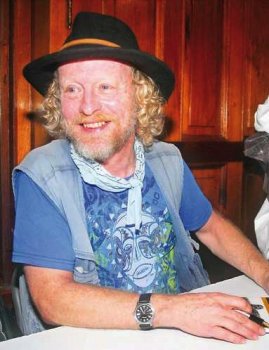
Crédito Fotografía: Hermann Bellinghausen. Fotografía de La Jornada.
Hermann Bellinghausen nació en 1953 en Ciudad de México. Estudio medicina, aunque actualmente se desempeña como periodista y escritor. Es corresponsal de Chiapas en el periódico La Jornada, donde escribe acerca de la lucha zapatista y las agresiones que sufren esas comunidades, sobre los presos políticos y los megaproyectos en este Estado. Es también director del suplemento mensual Ojarasca, donde se tratan temas de literatura, arte y luchas indígenas. Ha dirigido películas como Corazón en el tiempo, sobre la lucha zapatista. Una de sus obras periodísticas más destacadas fue sobre la masacre de Acteal. Desde este conocimiento profundo de la realidad chiapaneca, conversamos con él a propósito del creciente desarrollo del turismo en este Estado y sus múltiples implicaciones.
Karolina Caicedo Flórez:¿Cuáles han sido las estrategias más comunes del gobierno de México para poder desarrollar los proyectos turísticos en Chiapas?
Hermann Bellinghausen: El primer problema que tiene el Estado cuando quiere hacer proyectos turísticos, o de cualquier tipo de aprovechamiento abusivo de los espacios, es el despojo de las tierras.Todos los grandes centros turísticos de México inician con un despojo. Así se hizo Huatulco. Y aquí es lo mismo. Chiapas se ha puesto de moda como atractivo turístico porque tiene los espacios naturales más llamativos de México, es un lugar donde abunda el agua, está lleno de ríos increibles, parajes, cascadas, una gran riqueza natural. Es sobre estos espacios que se centra la presión del gobierno para desarrollar proyectos turísticos. Además, en el caso particular de Chiapas el gancho turístico está garantizado porque hay una cultura indígena atractiva, hay artesanías, paisaje,…. Pero Chiapas es la punta de lanza para otra cosa, el turismo no es la verdadera meta en Chiapas, sino la enajenación del territorio.
El problema es que estos proyectos se han encontrado con el obstáculo de las comunidades autónomas, en resistencia total, o simplemente las comunidades organizadas. Eso ha impedido que hagan la carretera a Palenque, un proyecto ambicioso de una autopista que atraviesa todo el territorio tradicional del pueblo tseltal.
Hoy existe una política deliberada del gobierno de Chiapas por el turismo porque es una fuente de ingreso de divisas, pero yo creo que esto tiene un límite, hay un tamaño para el turismo. Pero si tu logras que los pueblos puedan perder el control de sus tierras, esto significa dar paso a las mineras, a las hidroelécticas, a las autopistas, a todo eso, que ya no tiene que ver con el turismo.
Los proyectos turísticos se venden como un atractivo financiero para los pobladores de esos lugares, y les dicen que van a tener trabajo, que van a recibir ingresos, pero lo que sabemos es que los vuelven empleados o sirvientes del turismo. Entonces, pasan de ser los señores de su tierra a ser los recamareros, meseros, o sea los esclavos, pasan de ser los dueños del lugar a unos empleados en el último lugar.
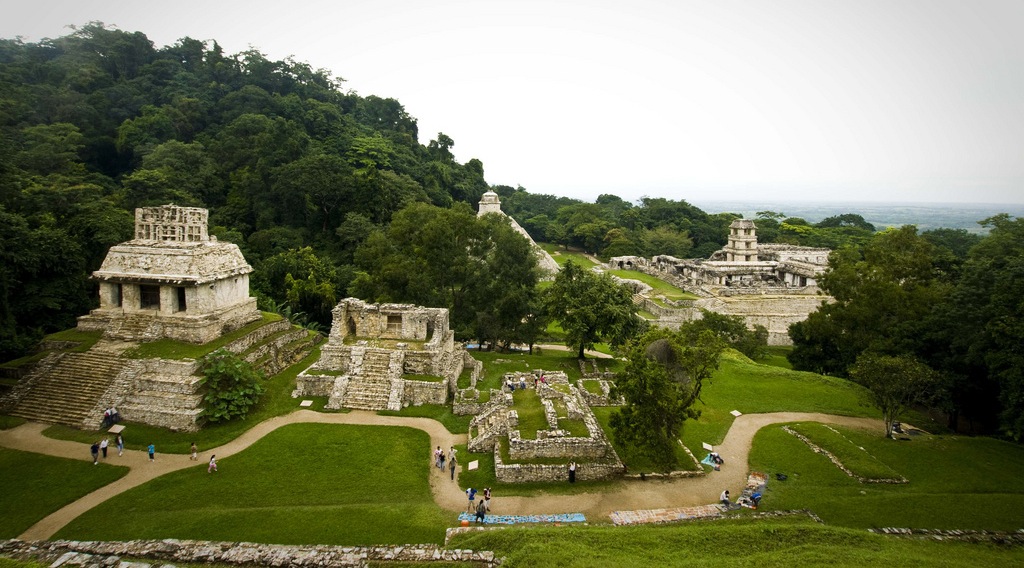
Palenque. Fotografía de Javier Hidalgo (licencia Creative Commons).
Por supuesto el gobierno lleva a cabo proyectos donde aparentemente se beneficia a los pueblos, se crean cooperativas, como Agua Azul, por ejemplo, o Las Guacamayas en la Selva Lacandona, donde se pueda dar el lujo de hacer beneficiarios a un grupo de indígenas. Ni siquiera se necesita una empresa externa, si no que como el interés es mayor que eso, se pueden permitir que un grupo se vuelvan privilegiados y beneficiarios del negocio directo.
El caso más evidente es Agua Azul. Tienen una cooperativa, un ejido ecoturístico, que es un fenómeno muy raro, no sé si haya otro. En Agua Azul hay una población muy beneficiada, son ricos, y les va bien. Pero son contrainsurgentes porque están rodeados del conflicto que hay en Chiapas, y ellos son los aliados del gobierno contra las demás comunidades. Lo vemos en el caso de San Sebastián Bachajón, Bolom Ajaw y las demás comunidades alrededor de las cascadas, que son todas zapatistas. Hay otras de las que no se habla: San Miguel Agua Azul, Nuevo Progreso, que son zapatistas y que también están en el río. Ahí la lucha ha sido por despojarlos de sus tierras a las comunidades zapatistas, y para eso usan a los grupos beneficiados por los proyectos turísticos, que reciben los programas del gobierno, y son los que reciben a los turistas, los que les cobran, los que reciben las divisas.
¿Cuáles son los modelos de desarrollo turístico que ha impulsado el gobierno de Chiapas?
Han establecido balnearios en distintas partes de la selva, como Las Nubes, pero son subsidiados, incluso Las Guacamayas, que pareciera ser el más exitoso, dependen del mismo uso que hace el gobierno. Las Guacamayas es un hotel bastante atractivo, en un paraje maravilloso en frente de Montes Azules, junto al río Lacantún. Es un hotel como con pasillos, todo de madera, como es el turismo de aventura en otros lugares del continente, pero es subsidiado por el gobierno. Siempre que vienen artistas de televisión los llevan a esos lugares. Y por supuesto Agua Azul, porque está en el paso entre Palenque y San Cristobal, y ya es una ruta turística y por eso han impedido cualquier reivindicación de los pueblos indígenas para la explotación de Agua Azul.
Ahora en la zona de Agua Azul, que es una gran cuenca hídrica, lo que quieren hacer son hidroeléctricas y represas. El río Agua Azul es solo uno, pero está el río Turijá, el río Bascal, todos esos son ríos de la cuenca del río Grijalva. Y aparte está la cuenca del río Usumacinta, que está en la selva. Allí también se habló de hacer hidroeléctricas pero no han avanzado, por eso creo que están más amenazadas las que están del lado de Agua Azul y Palenque, porque ahí han avanzado la autopista y las construcciones.
Coca Cola está muy interesada en tener el agua, y como el anterior gobierno, sobre todo el de Fox, que era el gobierno de la Coca Cola, de la que fue el gerente. Tienen mucho interés en la cuenca el río. En Huixtán hay mucha agua y Coca Cola la tiene concesionada. Otro caso es el Huitepec, que es un cerro del agua y Coca Cola está al pie del Huitepec. Entonces sucede que el agua es el atractivo turístico, pero ese es el gancho para los verdaderos planes.
Chiapas no es Cancún, Chiapas no es Huatulco. Aquí el turismo es colateral a los verdaderos proyectos de minería, de bioprospeccion, de represas y de energía. El turismo es, repito, la punta de lanza para entrar a lo que verdaderamente les interesa, que son los recursos naturales, y esa es la forma de desplazar a las comunidades o doblegarlas. Tú les ofreces un proyecto de turismo, les pones cabañitas, un espejismo de prosperidad, y lo que logran es que pierdan el control de su tierra.
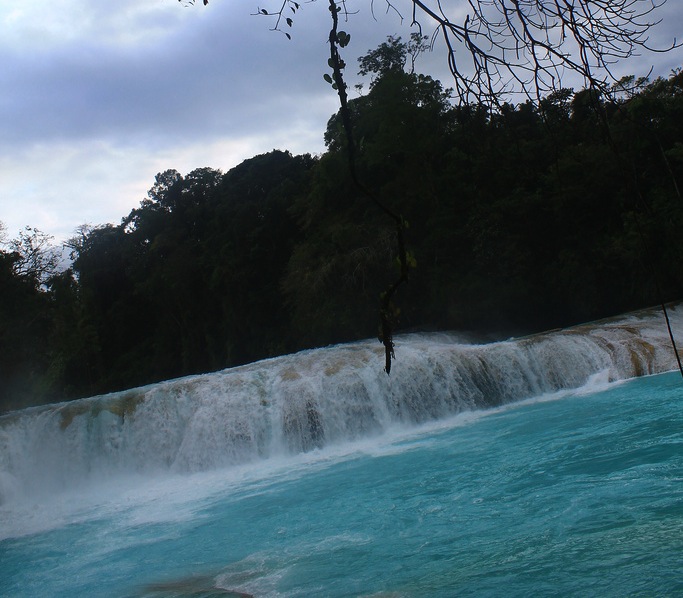
Cascada de Agua Azul. Fotografía de Karolina Caicedo Flórez.
¿Podrías mencionar algunos de los impactos del turismo en Chiapas?
El turismo en cualquier lugar tradicional tiene el impacto de que trae gentes muy diversas, sobre todo europeos y estadounidenses, a zonas tradicionales como cualquier lugar del mundo. Entonces hay un impacto en la cultura, en unos habitos de consumo, que tiene un impacto directo en una población indígena de Chiapas, que en la zona de Los altos y la Selva es predominante. Una tercera parte del Estado es indígena, y es la más atractiva turísticamente por sus recursos naturales y porque los indígenas venden.
San Cristobal de las Casas es una ciudad que tiene el problema de que la gente viene porque hay indios, y la gente en San Cristobal odia a los indios, pero el turista viene a ver a los indios, no a los coletos. ¿Y qué es lo que venden? Artesanías chamulas o de San Andrés, fotos de indios, y los visitantes van al mercado de Chamula para que tengan la experiencia de un pueblo indio. Si no hubieran indios nadie vendría a San Cristobal, bueno, sería un pueblo colonial, pero lo que le da vida es que es un lugar realmente indígena como los hay en Ecuador, en Perú.
Pero yo no estoy seguro de que el caso de Chiapas el impacto cultural del turismo sea muy negativo porque aquí hay un proceso social distinto del que hay en otras partes del país. El zapatismo se ha hecho en contacto con extranjeros, que en otro contexto serían turistas. Si vienen italianos, franceses, argentinos, vascos, pero es una cosa más de compromiso, más militante, entonces la gente está más acostumbrada a tratar con los extranjeros. Además San Cristobal siempre fue un lugar de antropólogos gringos, de turismo étnico, para tomar buenas fotos, entonces aquí están acostumbrados a los extranjeros, no es que los vayan a corromper.
El turismo que viene aquí no es un turismo de mucho poder económico, de hecho es la desgracia de los coletos, ellos quisieran que vinieran gringos ricos, y viene puro mochilero, entonces tampoco es el gran turismo. Cuando hace algunos pocos años empezaron a haber las posadas y hostels en San Cristobal los hoteleros estaban furiosos porque decían que era competencia desleal, porque pagan menos impuestos, cobran menos, y como el turismo aquí es así, dejan de ir a sus hoteles que no hacen falta.
San Cristobal también tiene mucho turismo mexicano, sobre todo en las temporadas de vacaciones, porque por un lado Chiapas se puso de moda, que si los zapatistas, que si las telenovelas, y por otro lado porque se está más tranquilo que en el resto del país. Ahora ir a Acapulco es arriesgar la vida, en cambio a San Cristobal puedes venir con tu familia, y es atractivo. ¿Y porqué pasa esto en Chiapas? Hay varias explicaciones, pero una fundamental: hay una resistencia de los indígenas zapatistas, que controlan un pedazo de territorio, y ese territorio es seguro: no pasan migrantes, no circulan drogas, no hay esa ilegalidad que ha invadido al país, y tampoco hay grupos armados. Hay paramilitares pero que lo que quieren es derrotar a los zapatistas, pero no hay lo que pasa en el resto del país.
Ahora el gobierno, sobre todo los últimos y el que viene también, han inventado el ecoturismo, que consiste en justificar la entrada en la selva, a las reservas, con la idea de que la van a proteger. Pero han puesto en peligro lugares como Miramar, en la orilla de la reserva de los Montes Azules, la única laguna grande accesible de las que están en la selva, las demás están adentro. En principio es una reserva, no hay caminos, ni nada, pero a Miramar se puede llegar por tierra o por aire. Entonces han querido hacer un proyecto turístico que podría dañarla realmente: carreteras, hoteles, restaurantes,…
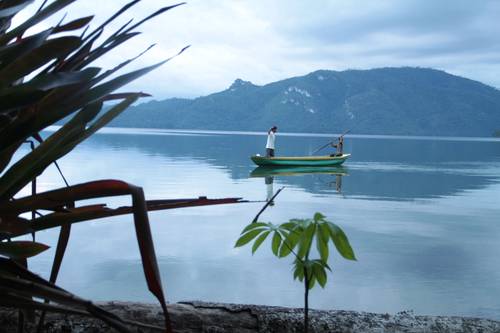
Laguna de Miramar. Fotografía de Karolina Caicedo Flórez.
Lo que tiene atractivo es que es un lugar realmente virgen, y la gente ya no conoce lugares virgenes, entonces pagan por conocerlos, ese es el negocio. Vienen de Noruega o de Londres para ver un lugar virgen, ese es el atractivo. Pero eso hace que esos lugares dejen de ser virgenes. Entonces la gran amenaza del turismo en Chiapas es por un lado la apropiación del territorio y por otro lado que después del turismo viene otra cosa.
Por ejemplo, en Chiapas hay más de cincuenta concesiones mineras, pero están detenidas. Buena parte del Estado ya está concesionado a mineras que quieren todo, no solo oro y plata, sino también coltán y otros minerales. Pero aquí sucedió que mataron a un lider, Mariano Abarca, y eso provocó un shock. Y el gobierno, deseoso de quedar bien, estableció una moratoria. Pero las concesiones están dadas, les dieron un lapso, y yo creo que las mineras no tenían prisa por alguna razón, podrían esperar. Pero yo creo que ahora viene una ofensiva de esas concesiones (canadienses, coreanas, estadounidenses, incluso mexicanas). Van a presionar, y van a encontrar resistencias porque Chiapas es un Estado donde hay muchas resistencias: contra las tarifas de la luz, contra el Plan Puebla Panamá,… aparte de la resistencia autónoma zapatista.
Entonces, volviendo a la idea del turismo, en muchos lugares esa es la forma de doblegar la resistencia. Si hacen proyectos turísticos la gente baja la guardia, y pueden avanzar. Si lo que quieren hacer es una represa tienen que quitar a la gente, o por lo menos quitarles el poder sobre el territorio. Entonces creo que ese es el gran peligro del turismo, sobre todo del ecoturismo, porque para desarrollar proyectos posteriores, primero tienen que sacar a la población, que no solo son los legítimos dueños sino son los guardianes del lugar.
¿Podrías darnos algunos ejemplos concretos que nos podría dar a entender por qué también el desarrollo del turismo en Chiapas es una estrategia de contrainsurgencia?
La contrainsurgencia tiene la finalidad de derrotar a los zapatistas pero también de minar su prestigio. Hace algunos años la gente se da cuenta que los zapatistas han logrado cosas, entonces lo que buscan es evitar el contagio, evitar que la gente descubra que pueden tener un buen sistema de educación o que puede haber una buena clínica sin dinero del gobierno. Por ejemplo, el sistema de salud zapatista es el más barato de México, es eficaz porque tiene esa idea de prevención, que es la idea lógica de la medicina, lo que pasa es que la medicina institucional y comercial está dominada por las farmacéuticas, que tienen es que vender su mercancía. Entonces la prevención no les funciona: es muy barata pero no venden sus medicamentos. Los pueblos zapatistas han desarrollado clínicas, pero consiguen que las mujeres hiervan el agua, se controlen cuando están embarazadas, vacunen a los niños,… lo que se llama medicina preventiva. Entonces, lo que busca la contrainsurgencia, es evitar que la gente se contagie, que descubran que se pueden hacer las cosas de otro modo, impedirlo, hacerlo costoso. Entonces, si no están en la lucha muy comprometidos son víctimas fáciles de cualquier otra cosa.
Entonces yo creo que el blanco es impedir que la gente sea dueña de su vida, de su gobierno, y el turismo es muy atractivo porque parece inocuo, les pone en una aparente situación de fiesta y lo que va generando el turismo es que va haciendo que la gente deje el campo, que esa es la otra meta, que dejen de ser campesinos para volverse meseros, porque el capitalismo lo que quiere es que dejen de haber campesinos, entonces todo va junto, no se pueden aislar las cosas.
¿Cuáles son los proyectos turísticos que amenazan a las comunidades zapatistas? ¿Cuál es el origen de estos capitales? ¿De qué tipo de proyectos se trata?
Agua Azul tiene cincuenta años de ser un balneario. El proyecto se ha ido volviendo cada vez más exitoso y el pueblo de Agua Azul es muy próspero, y ya no son campesinos porque viven del turismo: son meseros, cocineros, entretienen, transporte, lo que genera el turismo, que no es que en sí sea malo, todo trabajo es digno. Pero ha tenido irradiación en todo lo que lo rodea, que también tiene valor turístico, porque no es el único lugar que tiene cascadas, pero los demás lugares están en manos de campesinos que no les interesa dejarlo al turismo, y la mayoría son zapatistas o están en resistencia.
Agua Claraes otro caso, que es un balneario que está más adelante. Agua Clara era un balneario antes, lo abandonó el dueño y el gobierno estableció algunos proyectos turísticos con el desdén que lo caracteriza. No le daba mucha importancia y lo pone en manos de los priistas, o de los oficialistas, y lo abandonaron. Entonces los zapatistas, que también están allí, deciden recuperar el balneario porque está abandonado y es el primer balneario zapatista. No es que los zapatistas hayan invertido en turismo, lo que están haciendo es cuidar el lugar, están haciendo un turismo ecológico real, y sin inversión capitalista. Los zapatistas que están allí son un dique contra la privatización del lugar.
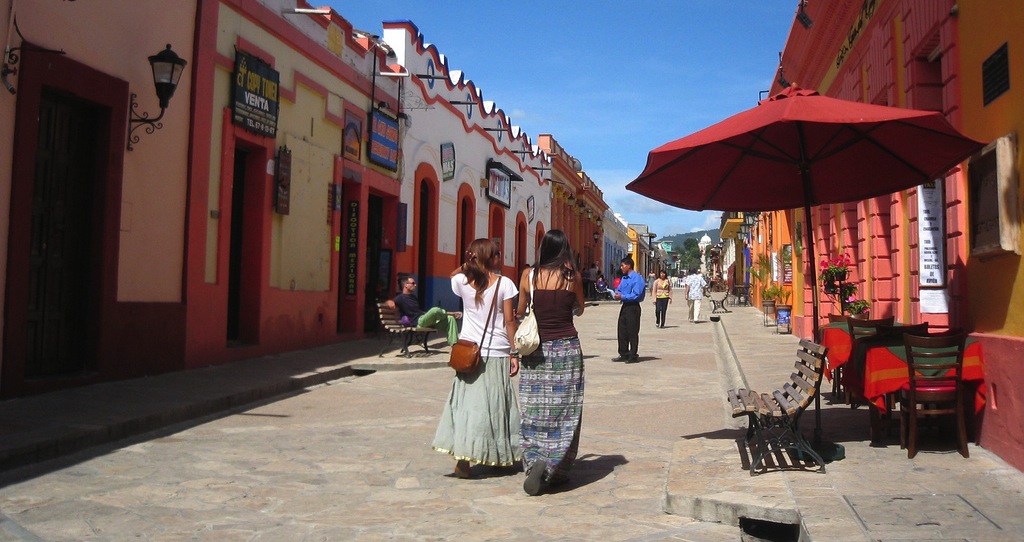
Turistas en San Cristóbal de las Casas. Fotogragía bajo licencia Creative Commons.
¿Cuál es la postura de los zapatistas frente a estos proyectos turísticos? ¿Es la misma posición frente a todo tipo de turismo o tienen diferentes posturas según sea el método de turismo?
No han hablado del tema expresamente, pero uno puede ver precisamente los ejemplos de los que estamos hablando. Agua Clara es un territorio que no sirve para otra cosa, es un recodo de río muy ancho, con planicies, entonces decidieron que esto servía para turistas. Entonces puedes decir que hay un mínimo trabajo turístico pero que el efecto es la protección del lugar, que es lo que quiere vender el ecoturismo, pero en este caso zapatista es real. Pero tampoco es que los zapatistas tengan una teoría o política del turismo. O sea, a unos kilómetros hay un lugar donde se oponen al turismo y hay otro lugar donde lo practican.
En otro lugar, Misol Há, una cascada, convergen distintos grupos, incluyendo zapatistas, y allí lo que ha habido es un curioso acuerdo: ahí se pusieron de acuerdo zapatistas y no zapatistas para tener una caseta de peaje. Pero son casos muy concretos. El turismo no es un tema zapatista, ni a favor ni en contra, a menos que amenace territorios, entonces es en contra, por ejemplo Montes Azules.
Entonces, la resistencia de los zapatistas no es contra el turismo, contra esto o contra lo otro, sino es en defensa del territorio, punto. Y el concepto del turismo no va mucho con el zapatismo porque implica una mentalidad capitalista. Habrá quien diga, bueno, los que van a los caracoles hacen turismo, sobre todo a Oventik, muchos llegan como turistas a Oventik, toman un taxi en San Cristobal, van a Oventik y dicen, quiero conocer el zapatismo como quiero conocer las pirámides y van y se cuentan pero es el único lugar. Ahí podríamos hablar de un cierto turismo con el zapatismo y está bien, porque los turistas pueden conocer una experiencia real, que si lo que quieren ver es una escuela autónoma, una junta del buen gobierno, pues ahí está, y ahí les invitan si quieren comprar una artesanía y dejan una divisa. Pero no quiere decir que es un atractivo turístico, sino que hay gente que quiere conocer eso y bueno si eso implica una mínima derrama de divisas pues no está mal, si quieren comprar artesanías, ambar…
Entonces teniendo en cuenta estas afirmaciones que has hecho, ¿te parece contradictoria una categoría que ahora suena mucho que es el “zapaturismo”?
Bueno, eso es un chiste, y no es nuevo además. Hace algunos años se creó el “zapatour”, que consistía en que la gente venía a hacer turismo revolucionario. Pero eso tampoco lo inventaron en México, turismo revolucionario siempre hay, gente que viene a conocer experiencias revolucionarias. Pero en el caso del zapatismo ahora es menor porque las comunidades se han cerrado mucho. Esta experiencia tenía un valor particular, pues mientras había movimiento de extranjeros el ejército no podía atacar. La presencia de gringuitos, aunque fueran pendejos, era un escudo, entonces no era que propiciaran el turismo, no es eso, pero los visitantes eran bien recibidos porque mientras hubiera grupos de extranjeros era difícil que el ejército atacara.
Ahora ya pareciera que eso no es posible, pero hace diez años todos los días eran de emergencia en las comunidades zapatistas, pasaban muchas cosas. Entonces tener ahí a una familia o un grupo de franceses, pues eran un escudo. De hecho mucha gente extranjera llegaba como escudo, y puede que estuvieran tomando el sol en la selva, pero estaban protegiendo, entonces tenía sentido, y los zapatistas nunca lo concibieron como turismo.
¿Tú crees que los proyectos turísticos ecológicos y modestos promovidos por las mismas comunidades, como el caso de la laguna de Miramar, pueden ser una alternativa a los megaproyectos turísticos que se vienen implementando en Chiapas?
No estoy seguro que lo de Miramar sea tan inocente, depende de gente de fuera. Pero me cuesta trabajo saber qué se puede hacer en Chiapas, porque hay una insurgencia, pero puedo hablar de otras comunidades, de otros lugares de América Latina, como por ejemplo Ecuador, donde comunidades que ya lograron la soberanía sobre su territorio, y que mantienen su modo de vida y su explotación agrícola y también silvícola, pueden tener su proyecto turístico que depende de ellos. Hasta las avionetas, que llevan a los turistas de una ciudad al punto de atracción turístico, son de ellos. E incluso hay lugares de turismo de mucho lujo, que no me gustan, pero que están en manos de las comunidades. Yo esto no lo he visto en México, pues los proyectos que hay están dirigidos a someterlos, no a liberarlos, entonces yo desconfío de entrada de los proyectos con intenciones turísticas.
Jan de Vos, el historiador de la Selva Lacandona, en uno de sus últimos ensayos habla muy favorablemente del turismo, cree que es una forma de detener la destrucción de la selva. Pero yo creo que peca, y es mi diferencia con él, de optimismo con el papel del Estado, porque cree que el Estado puede ser el agente para permitir eso, y yo creo que siempre detrás de eso hay un despojo. Hay una corriente de opinión favorable al turismo benéfico pero yo, en el contexto de Chiapas, no lo veo mucho, no más allá de lo que hay actualmente, no creo que las comunidades necesitan desarrollar proyectos turísticos, si la gente quiere ir a ver el río que vaya y lo vea, pero no necesitan poner un hotel y la ganancia económica del hotel no es comparable con lo que cuesta el mantenimiento y con lo que van a abandonar de su trabajo campesino, o sea no es negocio para ellos, es negocio para otros.
El gobierno está dispuesto a subsidiar los proyectos con tal de debilitar a la comunidad, y claro, le ds imágen, pero no negocio. Las Guacamayas no es un negocio, es un proyecto bonito, logrado, pero porque está subsidiado, y es barato, tampoco es tan caro subsidiar un hotel en la selva y pagarle a indígenas, pero logras que la gente deje de ser lo que era.
Ya para terminar, ¿consideras que las dinámicas e impactos del turismo en Chiapas se les ha dado suficiente importancia o crees que ha sido algo marginal?
No lo suficiente, porque hay mucho conformismo en relación a lo que la gente de afuera ve de Chiapas. No hay una visión crítica desde acá, bueno la hay desde los ámbitos de la resistencia, sea ambiental, sea política. Pero fuera de eso no ha sido suficiente y no es claro. Pero los zapatistas no se levantaron en armas contra el turismo, sino contra el sistema, contra el Estado, contra el capitalismo, entonces el turismo es un síntoma colateral del capitalismo y puede tener otras opciones no capitalistas. Pero el problema no es el turismo, el problema es la propiedad de la tierra, la soberanía y la autodeterminación.
El turismo si está dentro de la autodeterminación de los pueblos pues está bien, pero eso después de que ya obtuvieron su soberanía, pero no es el camino para obtener autosuficiencia ni nada, que es la falacia del gobierno, que dice “pon tu proyecto turístico y te va a ir mejor”; no, primero que se liberen y luego si les conviene que pongan proyectos de turismo o de lo que quieran, pero una vez que se liberen y estén decidiendo por sí mismos lo que se hace con la tierra donde viven. Pero de lo contrario el turismo impide eso, porque se cambia la vocación del espacio y de la gente, el río ya no será para pescar sino para que naden los güeros y el trabajo de los habitates de ese territorio ya no será sembrar el maíz sino servir cervezas, cuando eso sucede ya avanzó la contrainsurgencia. Aquí es contrainsurgencia porque hay insurgencia, repito.
Karolina Caicedo Flórez | Itinerant Radio / Alba South
Tourism in Chiapas has become part of the strategy of big business and the government to break the resistance of the Zapatista communities in rebellion, and facilitate their dispossession from their territories.
Hermann Bellinghausen was born in 1953 in Mexico City. He studied medicine, but currently works as a journalist and writer. He is a correspondent in Chiapas for the newspaper La Jornada, where he writes about the Zapatista struggle and the aggressions suffered by these communities, and about political prisoners and megaprojects in the State. He is also director of the monthly supplement Ojarasca, which covers literature, art and indigenous struggles. He has directed films like ‘Corazón del tiempo’, about the Zapatista struggle. One of his most outstanding pieces of journalism was his reporting on the Acteal massacre. From his deep knowledge of the Chiapas reality, we spoke about the increasing development of tourism in the State and its various implications.
Karolina Caicedo Flórez: What have been the most common strategies of the Mexican government for developing tourist projects in Chiapas?
Hermann Bellinghausen: The first problem for the state, when they want to develop tourist projects, or any type of abusive use of space, is the dispossession of the lands. All the major resorts of Mexico started with dispossession. This is how Huatulco was made. And here it is the same. Chiapas has become popular as a tourist attraction because it has the most striking natural areas in Mexico; it is a place where water is plentiful, full of incredible rivers, landscapes, waterfalls, and great natural wealth. It is on these places where government pressure focuses to develop tourist projects. Furthermore, in the case of Chiapas, the tourism hook is guaranteed because there is an attractive indigenous culture, there are handicrafts, countryside …. But in Chiapas [tourism] is the spearhead for something else, the real goal in Chiapas is not tourism, but the alienation of territory.
The problem is that these projects have met with the obstacle of the autonomous communities, in total resistance, or simply with organized communities. These have prevented the construction of the road to Palenque, an ambitious highway project which runs through all the traditional territory of the Tzeltal people.
Today the government of Chiapas has a deliberate policy of fostering tourism because it is a source of foreign currency earnings, but I think that this has a limit, there is a finite size for tourism. But if the result is that people lose control of their land, and this meansmaking way for mining, for hydroelectric schemes, for highways, now that is nothing to do with tourism.
Tourist projects are sold as being financially attractive for the inhabitants of these places, and they are told that they will have a job, they will receive income, but what we know is that they become employees or servants of tourism. They go from being the masters of their land to being bartenders, waiters, or slaves; once the owners of the area but now just employees in a place that once was theirs.
Figure 1 Palenque, photo by Javier Hidalgo
Of course the government carries out projects which apparently benefit people, cooperatives are created such as Agua Azul for example, or Las Guacamayas in the Lacandón Jungle, where it has been possible to have the luxury of making an indigenous group the beneficiaries. They do not even need an outside company, if the interest is greater than that, it can allow for a privileged group to become the beneficiaries of the business directly.
The most obvious case is that of Agua Azul. They have a cooperative, an ecotourist ejido, which is a very rare phenomenon, I don’t know of another. In Agua Azul the population has benefited greatly, they are wealthy, and doing well. But they are counterinsurgents, because they are surrounded by the conflict taking place in Chiapas, and they are the allies of the government against the other communities. We see it in the case of San Sebastián Bachajón, Bolom Ajaw, and other communities around the waterfalls, who are all Zapatistas. There are others which are not spoken of: San Miguel Agua Azul, and Nuevo Progreso, who are Zapatistas and who are also on the river. There the fight has been to strip the Zapatista communities of their land, and, in order to do this, to make use of the groups that are benefiting from tourism projects, who are receiving government programmes and are having visits from tourists, charging them, and receiving foreign currency.
What are the models of tourism development which have driven the Chiapas government?
They have established spa resorts in different parts of the jungle, such as Las Nubes, but they are subsidized; even Las Guacamayas, which seems to be the most successful, relies on the support of the government. Las Guacamayas is a very attractive hotel in a wonderful spot across from the Montes Azules, next to the River Lacantún. It is like a hotel with walkways, all made of wood, like those used for adventure tourism in other parts of the continent, but subsidized by the government. Whenever television personalities visit, they take them to these places. And of course Agua Azul, because it is on the road between Palenque and San Cristobal, which is already a tourist route, and so has guarded against any claim of the indigenous peoples to exploit Agua Azul.
Now, in the Agua Azul area, a large river basin, what they want to do is to build hydroelectric schemes and dams. The Agua Azul river is just one, but there is also the Turijá river, the Bascal river, all these rivers are in the basin of the Grijalva river. And there is also the Usumacinta river basin, which is in the jungle. They have also spoken of building hydro schemes there, but these have not yet happened, which is why I think the most threatened sites are the ones near Agua Azul and Palenque, because there they have progressed with the highway and construction projects.
Coca Cola is very keen to have the water, as they were under previous governments, especially the government of Fox which was the government of Coca Cola, of which he was the director. They have great interest in the river basin. There is a lot of water in Huixtán and Coca Cola has concessions on it. Another case is Huitepec, the hill of water; Coca Cola is at the foot of Huitepec. So it happens that water is the tourist attraction, but that is only the hook for the real plans.
Chiapas is not Cancun, Chiapas is not Huatulco. Here, tourism is collateral to the real projects: mining, bio-prospecting, dams and energy. Tourism is, I repeat, the spearhead used to get hold of what really interests them, which is the natural resources, and tourism is the way to displace communities or deceive them. You offer them a tourism project, build them little cabins, create a mirage of prosperity, and what happens is they lose control of their lands.
Figure 2 Agua Azul waterfall, Karolina Caicedo Florez
Could you mention some of the impacts of tourism in Chiapas?
The impact of tourism in any traditional location is that it brings very different people, especially Europeans and Americans, to traditional areas as if they were anywhere in the world. There are then effects on the culture, and on the traditions of consumption, which have a direct impact on the indigenous population of Chiapas, which predominates in the Highlands and Jungle area. A third of the state is indigenous, and it is most attractive to tourists because of its natural resources and because of the items sold by the indigenous.
San Cristóbal de las Casas is a city that has the problem that people come because there are Indians; people in San Cristóbal hate the Indians, but the tourists come to see the Indians, not the coletos. What do they sell? Crafts from Chamula or San Andrés, pictures of Indians, and visitors go to Chamula market to have the experience of an Indian village. If there were no Indians nobody would come to San Cristóbal, well, it would be a colonial town, but what gives it life is that it is truly indigenous, like Ecuador or Peru.
But I’m not sure if the cultural impact of tourism in Chiapas is so very negative, because there is a different social process here from that in other parts of the country. The Zapatista movement has been in contact with foreigners, who in another context would be tourists. Yes, Italians, French, Argentines, Basques come, but it is more about commitment, more militant, so people are more used to dealing with foreigners. San Cristóbal was also always a place for gringo anthropologists, for ethnic tourism, for taking good photos, so here they are accustomed to foreigners, and are less likely to be corrupted by them.
The tourism that comes here is not one of great economic power; in fact it is the misfortune of the coletos, who wanted rich gringos to come, that those who come are mainly backpackers, who are not grand tourism. A few years ago, when they started having inns and hostels in San Cristóbal, the hoteliers were furious because they said it was unfair competition, because they pay less tax, charge less, and because of the way tourism is here, they stopped going to the hotels which were not needed.
San Cristóbal also has much Mexican tourism, especially in the holiday seasons, because on the one hand Chiapas became fashionable, with the Zapatistas, and the soap operas, and secondly, because it is quieter than the rest of country. Nowadays it is risking your life to go to Acapulco, while in contrast you can come to San Cristóbal with your family, and it is attractive. And why is this happening in Chiapas? There are several explanations, but one is fundamental: there is the resistance of the indigenous Zapatistas, who control an area of territory, and that territory is safe: no migrants are passing through, drugs are not circulating, there is none of that illegality which has invaded the country, and there are no armed groups. There are paramilitaries, but what they want is to overthrow the Zapatistas; there is none of what is happening in the rest of the country.
Now the governments, especially all the recent and the current ones, have invented ecotourism, which is a means to justify entering the jungle and the reserves, with the idea that they will protect them. But they have endangered places like Lake Miramar, on the edge of the Montes Azules reserve, the only one of the large lakes in the jungle which is accessible, the others are inside. In principle it is a reserve, with no roads, no nothing, but Miramar can be reached by land or by air. Then they want to set up a tourist project that could do real damage, with roads, hotels, restaurants…..
Figure 3 Laguna Miramar, Karolina Caicedo Florez
What is attractive is that it is a truly virgin place, and people do not know virgin places, so they pay to go, and that is business. They come from Norway or London to see virgin territory, which is the appeal. But this makes those places no longer virgin. So, the great threat of tourism in Chiapas on the one hand is the appropriation of territory, and on the other hand is what follows after tourism.
For example, in Chiapas there are over fifty mining concessions, but they are halted. Much of the state already has concessions in the hands of mining companies who want everything, not just gold and silver, but also coltan (columbite–tantalite) and other minerals. But it so happened that they killed a leader, Mariano Abarca, and that caused a shock. And the government, wanting to look good, established a moratorium (delayed the mining projects). But when the concessions were given, they were given for a period, and I think that the miners were in no hurry for some reason, they could wait. But now I think that an offensive is underway for those concessions (from Canada, Korea, the US, including Mexico). They are going to apply pressure, and they will meet with resistance because Chiapas is a state where there is a lot of resistance: against the electricity tariffs, against Plan Puebla Panama ….. as well as the autonomous Zapatista resistance.
So returning to the idea of tourism, in many places this it is the way to break the resistance. If they develop tourism projects people will lower their guard, and they will be able to advance. If what they want is to build a dam they will have to displace people, or at least take away their power over their territory. I believe that this is the great danger of tourism, especially ecotourism, because to develop subsequent projects, first they have to get rid of the population, who are not only the rightful owners, but are also the guardians of the land.
Could you give some concrete examples so we can understand why the development of tourism in Chiapas is also a counterinsurgency strategy?
Counterinsurgency aims to defeat the Zapatistas, but also to undermine their prestige. Some years ago the people realized that the Zapatistas have achieved things, so that what they want is to avoid contagion, to prevent people from discovering that they can have a good education system, or that they can have a good clinic, without government money. For example, the Zapatista healthcare system is the cheapest in Mexico, it is effective because it has the idea of prevention, which is the logical idea of medicine, what happens is that institutional and commercial medicine is dominated by pharmaceutical companies, which have to sell their merchandise. So prevention is no use to them: it is very cheap but does not sell their drugs. The Zapatista communities have developed clinics, and the result is that the women are boiling the water, are being monitored when they are pregnant, are vaccinating the children….. what is called preventive medicine. So what counterinsurgency seeks is to prevent people from getting infected, discovering that they can do things differently, to prevent this, to make things costly. So, if they are not very committed to the struggle, they easily fall victim to anything else.
So I think the goal is to prevent people gaining control over their lives, and their government, and tourism is very attractive because it seems harmless, it puts them apparently in a party situation and what tourism is going to do is to encourage people to leave the countryside, that’s the other goal, to stop being campesinos and to become waiters, because capitalism wants there to be no more campesinos, so it all goes together; you cannot isolate things.
What are the tourist projects that threaten the Zapatista communities? Where does the money come from? What kind of projects are they?
Agua Azul has been a spa for fifty years. The project has been becoming increasingly successful and the community of Agua Azul is very prosperous; now they are no longer campesinos, because they are living from tourism: they are waiters, cooks, entertainers, drivers, tourism agents, which is not bad in itself, all work is worthwhile. But it has irradiated everything surrounding it, which also has tourist value, because it is not the only place which has waterfalls, but the other places are in the hands of campesinos who are not interested in handing them over to tourism, and most of them are Zapatistas or are in resistance.
Agua Clara is a different case, it is a more advanced spa. Agua Clara was a spa before, it was abandoned by the owner and the government established some tourism projects there, with their usual disdain. They did not attach much importance to the projects and put them in the hands of the PRI, the ruling party, and left them to it. Then the Zapatistas, who were also in that place, decided to recuperate the resort because it had been abandoned, and now it is the first Zapatista spa. Not that the Zapatistas have invested in tourism, what they are doing is taking care of the place, they are conducting true ecological tourism, without capitalist investment. The Zapatistas who are there are a bulwark against the privatization of the place.
Figure 4Tourists in San Cristobal de las Casas
What is the position of the Zapatistas as regards these tourist projects? Do they have the same position on all types of tourism or do they have different positions depending on the method of tourism?
They have not talked about it explicitly, but one can see the examples we have been speaking about. Agua Clara is an area of land which is no use for anything else, it is a very wide river bend, with flat areas, so they decided that it would be suitable for tourists. So you can say that there is a minimum of work for tourism, but that the result is the protection of the place; this is how ecotourism sells itself, but in this Zapatista case it is true. But neither do the Zapatistas have a theory or policy for tourism. That is, within a few kilometres there is a place where they oppose tourism and another place where they practice it.
Elsewhere, at the Misol Há waterfall, different groups converge, among them Zapatistas, and there has been an unusual agreement: the Zapatistas and non-Zapatistas have agreed to have a toll booth. But these are very specific cases. Tourism is not a Zapatista issue, either for or against, unless it threatens territories, when they are against it, as for example, in Montes Azules.
The Zapatistas resistance is not against tourism, neither for this nor against that, their resistance is in defence of territory. And the concept of tourism is not a Zapatista one, because it implies a capitalist mentality. Some might say, well, that those who go to the caracoles are tourists, especially Oventik, many arrive like tourists in Oventik, they take a taxi in San Cristobal, go to Oventik and say, I want to know about the Zapatistas, in the same way as they say I want to know about the pyramids, but it is the only place where this happens. There it is possible to talk about a degree of Zapatista tourism, and it is OK, because tourists can have a real experience, if they want to see an autonomous school, a good government junta, there it is, and here they are invited to buy crafts and leave currency. But that is not to say that it is a tourist attraction, but rather that there are people who want to know about it and if it means a minimal outlay of currency it is not wrong, if they want to buy crafts, amber …
So, considering these statements you’ve made, do you think that the now often-used category, “zapaturismo”, is contradictory?
Well, that is a joke, and it isn’t new. A few years ago they created the “Zapatour”, which consisted of people coming for revolutionary sightseeing. But that was not invented in Mexico either, there has always been revolutionary tourism, people coming to have revolutionary experiences. But in the case of the Zapatistas it is less now, because the communities have closed a lot. This experience had an especial value, because while there was movement of foreigners the army could not attack. The presence of gringos, even if they were idiots, was a shield, so it was not encouraging tourism, but visitors were welcome because while there were groups of foreigners present, it was difficult for the army to attack.
Now it does not seem possible, but ten years ago there was an emergency every day in the Zapatista communities, so much happened. So to have a family or a group of French people there, they were a shield. In fact many foreign people came as a shield, and maybe they were sunbathing in the jungle, but they were giving protection, so it made sense, and the Zapatistas never thought of it as tourism.
Do you think that modest ecological tourism projects promoted by the communities themselves, as in the case of Lake Miramar, can be an alternative to the mega resorts that are being implemented in Chiapas?
I am not sure that what is happening at Miramar is that innocent, it relies on outsiders. I find it hard to know what can be done in Chiapas, because there is an insurgency, but I can speak of other communities, in other parts of Latin America, such as Ecuador, where communities which have already achieved sovereignty over their territory, and are maintaining their way of life and their ways of farming and forestry, can have tourist projects under their own control. Even the little planes that take tourists from the city to the tourist attraction, are theirs. And there are even luxury tourist resorts, I do not like them, but they are in the hands of communities. I have not seen this in Mexico, but as there are projects which are aimed at making them submit, not freeing them, I distrust the arrival of tourist projects.
Jan de Vos, the historian of the Lacandón Jungle, in one of his last essays speaks very favourably of tourism, which he believed to be a way to stop the destruction of the rainforest. But I believe that he was wrong, and this is where I differ with him, in his optimism about the role of the state, because he believes that the state can be the agent to enable this to happen, and I think that there is always dispossession behind their actions. There is a current of opinion in favour of beneficial tourism but I, in the context of Chiapas, do not see much future in it, not beyond what there currently is, I do not believe that communities need to develop tourism projects, if people want to go to see the river they can go and see it, but it is not necessary to build a hotel, and the hotel’s economic profit is not comparable with the cost of maintenance, and as they have to leave their rural work, it means it is not a business for them, it is a business for others.
The government is willing to subsidize such projects in order to weaken the community, and of course, it promotes an image, but not a business. Las Guacamayas is not a business, it’s a nice project, successful, but only because it is subsidized and cheap, nor is it that expensive to subsidize a hotel in the jungle and pay the indigenous, but what it achieves is that people stop being what they were.
To finish, do you think that the dynamics and impact of tourism in Chiapas have been given sufficient importance, or do you think it has been something marginal?
Not enough, because there is much conformity in what outsiders see of Chiapas. Other than from the areas of resistance, there is no critical view from here, whether environmental, or political. Criticism has not been sufficient and it has not been clear. The Zapatistas did not rise up in arms against tourism, but against the system, against the state, against capitalism, and if tourism is a collateral symptom of capitalism, it is one which could have other non-capitalist options. But the problem is not tourism, the problem is land ownership, sovereignty and self-determination.
If tourism is operated within the self-determination of peoples, after they have already obtained their sovereignty, well and good, but it is not the path to self-sufficiency or anything else, which is the government fallacy that says “set up your tourist project and things will be better for you”; no, first let them free themselves, and then they can have have tourist projects or whatever they want, but once they are free and deciding for themselves what is done with the land where they live. On the contrary, tourism prevents this from happening, because it changes the vocation of the space and the people; the river now will no longer be for fishing but for white people to swim in, and the work of the people who live in the territory will not be to sow corn but to serve beer; when this happens the counterinsurgency advances. I say again, here there is counterinsurgency because there is insurgency.
ELLOS Y NOSOTROS VII.- L@s más pequeñ@s 7 y último. Dudas, sombras y un resumen en una palabra.THEM AND US VII. The Smallest of Them All, 7th and Final Part. On Doubts, Shadows, and A One-Word Summary
Traduzione italiana
Traduction française
English Tanslation
Deutsch Übersetzung
Euskal itzulpena
Tradução para o português
:::::::::::::::::::::::
ELLOS Y NOSOTROS.
VII.- L@s más pequeñ@s 7 y último.
7.- Dudas, sombras y un resumen en una palabra.
Marzo del 2013.
Las Dudas.
Si después de leer los fragmentos de la palabra de las compañeras y compañeros del EZLN, usted todavía sostiene que los indígenas zapatistas son manipulados por la mente perversa del supmarcos (y ahora también del subcomandante insurgente Moisés) y que nada ha cambiado en territorio zapatista desde 1994, entonces usted no tiene remedio.
No le recomendamos que apague la televisión, o que deje de repetir las ruedas de molino que la intelectualidad suele repartir entre sus feligreses, porque se le quedaría la mente en blanco. Siga usted creyendo que la reciente ley de telecomunicaciones va a democratizar la información, que elevará la calidad de la programación, y que mejorará el servicio de telefonía celular.
Pero si usted pensara así, ni siquiera habría llegado hasta esta parte de la saga “Ellos y Nosotros”, así que, es un supositorio, digamos que usted es una persona que se precia de un coeficiente intelectual promedio y una cultura progresista. Con esas características es muy probable que usted practique la duda metódica frente a todo, así que sería lógico suponer que dude de lo que aquí ha leído. Y dudar no es algo condenable, es uno de los ejercicios intelectuales más sanos (y más olvidados) en la humanidad. Y más cuando se trata de un movimiento como el zapatista o neo-zapatista, sobre el que se han dicho tantas cosas (la mayor parte sin siquiera haberse acercado a lo que somos).
Dejemos de lado un hecho, que fue constatable hasta por los grandes medios de comunicación: decenas de miles de indígenas zapatista tomando, en forma simultánea, 5 cabeceras municipales del suroriental estado mexicano de Chiapas.
Aunque, ya entrados en dudas, si nada ha cambiado en las comunidades indígenas zapatistas, ¿por qué siguen creciendo? ¿No habían dicho todos que era algo del pasado, que los errores del ezetaelene (ok, ok, ok, de marcos) le habían costado su existencia (“mediática”, pero eso no lo dijeron)? ¿No se había desbandado la dirección zapatista? ¿No había desaparecido el EZLN y de él sólo quedaba la empecinada memoria de quienes, fuera de Chiapas, sienten y saben que la lucha no es algo sujeto a los vaivenes de la moda?
Ok, obviemos ese hecho (el ezetaelene creció exponencialmente en estos tiempos en que no estaba de moda), y abandonemos el intento de plantear esas dudas (que sólo servirán para que sus comentarios en los artículos de la prensa nacional sean editados o lo banneen a usted “por siempre jamás”).
Retomemos la duda metódica:
¿Y si esas palabras, que aparecieron en estas páginas como de hombres y mujeres indígenas zapatistas, en realidad son autoría de Marcos?
Es decir, ¿y si Marcos simuló que eran otr@s l@s que hablaban y sentían esas palabras?
¿Y si esas escuelas autónomas en realidad no existen?
¿Y si los hospitales, y las clínicas, y la rendición de cuentas, y las mujeres indígenas con cargo, y la tierra trabajando, y la fuerza aérea zapatista, y …?
En serio: ¿y si nada de lo que ahí dicen esas indígenas, esos indígenas existe realmente?
En resumen, ¿y si todo no es nada más que una monumental mentira, levantada por marcos (y Moisés, ya que en ésas estamos) para consolar con quimeras a l@s izquierdistas (suci@s, fe@s, mal@s, irreverentes, no lo olvide) que nunca faltan y que siempre son unos cuantos, pocos, poquísimos, una minoría despreciable? ¿Y si el supmarcos inventó todo esto?
¿No sería bueno confrontar esas dudas y su sano escepticismo con la realidad?
¿Y si fuera posible que usted viera directamente esas escuelas, esas clínicas y hospitales, esos proyectos, esas mujeres y esos hombres?
¿Y si usted pudiera escuchar directamente a esos hombres y mujeres, mexican@s, indígenas, zapatistas, esforzándose por hablarle en español y explicándole, contándole su historia, no para convencerlo o para reclutarlo, sólo para que usted entienda que el mundo es grande y tiene muchos mundos en su interior?
¿Y si pudiera usted concentrarse sólo en mirar y escuchar, sin hablar, sin opinar?
¿Tomaría usted ese reto o seguiría usted en el refugio del escepticismo, ese sólido y magnífico castillo de las razones para nada hacer?
¿Solicitaría ser invitado y aceptaría la invitación?
¿Asistiría usted a una escuelita en la que las profesoras y los profesores son indígenas cuya lengua materna está tipificada como “dialecto”?
¿Se aguantaría las ganas de estudiarl@s como objeto de la antropología, la psicología, el derecho, el esoterismo, la historiografía, de hacer un reportaje, de hacerles una entrevista, de decirles su opinión, de darles consejos, órdenes?
¿L@s miraría, es decir, l@s escucharía?
-*-
Las sombras.
A un lado de esta luz que ahora brilla, no se advierte la forma irregular de las sombras que la han hecho posible. Porque otra de las paradojas del zapatismo es que no es la luz la que produce las sombras, sino son de éstas de las que la luz nace.
Mujeres y hombres de rincones lejanos y cercanos en todo el planeta hicieron posible no sólo lo que se va a mostrar, también enriquecieron con sus miradas el andar de estos hombres y mujeres, indígenas y zapatistas, que ahora levantan de nuevo la bandera de una vida digna.
Individuos, individuas, grupos, colectivos, organizaciones de todo tipo, y en diferente nivel, contribuyeron a que este pequeño paso de l@s más pequeñ@s se realizara.
De los 5 continentes llegaron las miradas que, desde abajo y a la izquierda, ofrecieron respeto y apoyo. Y con estas dos cosas no sólo se levantaron escuelas y hospitales, también se levantó el corazón indígena zapatista que, así, se asomó a todos los rincones del mundo a través de esas ventanas hermanas.
Si hay un lugar cosmopolita en tierras mexicanas, tal vez lo sea la tierra zapatista.
Frente ante tal apoyo, no correspondía menos que un esfuerzo de igual magnitud.
Creo, creemos, que toda esa gente de México y del mundo puede y debe compartir como propia esta pequeña alegría que hoy camina con rostro indígena en las montañas del sureste mexicano.
Sabemos, sé, que no lo esperan, ni lo exigen, ni lo demandan, pero como quiera les mandamos un gran abrazo, que así es como los zapatistas, las zapatistas, agradecemos entre compañer@s (y de manera especial abrazamos a quienes sí supieron ser nadie). Tal vez sin proponérselo, ustedes fueron y son, para todas nosotras, nosotros, la mejor escuela. Y sobra decir que no dejaremos de esforzarnos por conseguir que, sin importar su calendario y su geografía, respondan siempre afirmativamente a la pregunta de si vale la pena.
A todas (lo lamento desde lo profundo de mi esencia machista, pero las mujeres son mayoría cuantitativa y cualitativa), a todos: gracias.
(…)
Y, bueno, hay de sombras a sombras.
Y las más anónimas e imperceptibles son unas mujeres y hombres de baja estatura y de piel del color de la tierra. Dejaron todo lo que tenían, aunque fuera poco, y se convirtieron en guerreras, en guerreros. En silencio y en la oscuridad contribuyeron y contribuyen, como nadie más, a que todo esto sea posible.
Y ahora hablo de las insurgentas y los insurgentes, mis compañer@s.
Van y vienen, viven, luchan y mueren en silencio, sin hacer bulla, sin que nadie, a no ser nosotr@s mism@s, les lleve la cuenta. No tienen rostro ni vida propia. Sus nombres, sus historias, tal vez sólo vengan a la memoria de alguien cuando muchos calendarios se hayan deshojado. Entonces, tal vez en torno a algún fogón, mientras el café hierve en una vieja tetera de peltre y se enciende el fuego de la palabra, alguien o algo salude su memoria.
Y como quiera no importará mucho, porque de lo que se trataba, de lo que se trata, de lo que se ha tratado siempre, es contribuir en algo a construir esas palabras con que suelen comenzar los cuentos, las anécdotas y las historias, reales y ficticias, de las zapatistas, de los zapatistas. Tal y como comenzó lo que ahora es una realidad, es decir, con un:
”Habrá una vez…”
Vale. Salud y que no falten, nunca, ni el oído ni la mirada.
(ya no continuará)
A nombre de las mujeres, hombres, niños, ancianos, insurgentas e insurgentes del
Ejército Zapatista de Liberación Nacional.
Desde las montañas del Sureste Mexicano.
Subcomandante Insurgente Marcos.
México, Marzo del 2013.
P.D. QUE ADELANTA.- Seguirán saliendo escritos, no alegrarse de antemano. Principalmente serán del compañero Subcomandante Insurgente Moisés, referentes a la escuelita: fechas, lugares, invitaciones, inscripciones, propedéuticos, reglamentos, niveles, uniforme, útiles escolares, calificaciones, asesorías, dónde conseguir los exámenes ya resueltos, etc. Pero si preguntan cuántos niveles son y en cuánto tiempo se llega a la graduación, les decimos: nosotras, nosotros llevamos más de 500 años y todavía no terminamos de aprender.
P.D. QUE DA UN CONSEJO PARA ASISTIR A LA ESCUELITA- Eduardo Galeano, un sabio en el difícil arte de mirar y escuchar, escribió, en su libro “Los Hijos de los Días”, en el calendario de marzo, lo siguiente:
“Carlos y Gudrun Lenkersdorf habían nacido y vivido en Alemania. En el año de 1973, estos ilustres profesores llegaron a México. Y entraron al mundo maya, a una comunidad tojolabal, y se presentaron diciendo:
– Venimos a aprender.
Los indígenas callaron.
Al rato, alguno explicó el silencio:
– Es la primera vez que alguien nos dice eso.
Y aprendiendo se quedaron allí, Gudrun y Carlos, durante año y años.
De la lengua maya aprendieron que no hay jerarquía que separe al sujeto del objeto, porque yo bebo el agua que me bebe y soy mirado por todo lo que miro, y aprendieron a saludar así:
– Yo soy otro tú.
– Tú eres otro yo.”
Hágale caso a Don Galeano. Porque es sabiendo mirar y escuchar, como se aprende.
P.D. QUE EXPLICA ALGO DE CALENDARIOS Y GEOGRAFÍAS.- Dicen nuestros muertos que hay que saber mirar y escuchar todo, pero que en el sur siempre habrá una riqueza especial. Como se habrán dado cuenta quienes pudieron ver los videos (se quedaron no pocos en el bolsillo, a ver si en otra ocasión) que acompañaron los escritos de esta serie de “Ellos y Nosotros”, tratamos de hilar diversos calendarios y geografías, pero hubo un empecinamiento en nuestro respetado sur latinoamericano. No sólo por la Argentina y el Uruguay, tierras sabias en rebeldía, también porque, según nosotras, nosotros, en el pueblo Mapuche no sólo hay dolor y rabia, también entereza en la lucha y una profunda sabiduría para quien sabe mirar y escuchar. Si hay un rincón en el mundo a donde hay que tender puentes, es el territorio Mapuche. Por ese pueblo, y por tod@s las desaparecid@as y pres@s de este adolorido continente, sigue viva la memoria. Porque no sé si del otro lado de estas letras, pero sí de este lado: ¡ni perdón, ni olvido!
P.D. SINTÉTICA.- Sí, lo sabemos, este desafío no ha sido ni será fácil. Vienen grandes amenazas, golpes de todo tipo y de todos lados. Así ha sido y será nuestro caminar. Cosas terribles y maravillosas componen nuestra historia. Y así será. Pero si se nos pregunta cómo podemos resumir en una palabra todo: los dolores, los desvelos, las muertes que nos duelen, los sacrificios, el continuo navegar contra corriente, las soledades, las ausencias, las persecuciones y, sobre todo, este empecinado hacer memoria de quienes nos precedieron y ya no están, entonces es algo que une todos los colores de abajo y a la izquierda, sin importar el calendario o la geografía. Y, más que una palabra, es un grito:
Libertad… ¡Libertad!… ¡LIBERTAD!
Vale de nuez.
El sup guardando la compu y caminando, siempre caminando.
——————————————————————————-
Un poema de Mario Benedetti (que responde a la pregunta de por qué, a pesar de todo, cantamos), musicalizada por Alberto Favero. Aquí en la interpretación de Silvana Garre, Juan Carlos Baglietto, Nito Mestre. ¡Ni perdón ni olvido!
——————————————————————————
Camila Moreno interpreta “De la tierra”, dedicado al luchador Mapuche, Jaime Mendoza Collio, asesinado por la espalda por carabineros.
———————————————————————————-
Mercedes Sosa, la nuestra, la de tod@s, la de siempre, cantando, de Rafael Amor, “Corazón Libre”. El mensaje es terrible y maravilloso: jamás rendirse.
——————————————————————————
THEM AND US VII.
The Smallest of Them All, 7th and Final Part
7. On Doubts, Shadows, and A One-Word Summary
March 2013
Doubts
If after reading the excerpts from the compañeras and compañeros of the EZLN you still think that the indigenous members of the Zapatistas are manipulated by the perverted mind of Supmarcos (and now by Subcomandante Insurgente Moíses) and that nothing has changed in Zapatista territory since 1994, then there’s no hope for you.
I wouldn’t recommend that you turn the television off or that you stop regurgitating the circular arguments that tend to be circulated by the intellectuals and their followers, because if you did so your mind would be empty. Go ahead and keep thinking about how the recent telecommunications law will democratize information, that it will increase the quality of programming, and that it will make cell phone service better.
But if you thought this way, you would never have made it to this part of “Them and Us,” so let’s just take it as a hypothetical that you are a person with an average IQ and immersed in progressive culture. With these characteristics, it is very probable that you practice constant doubt in the face of just about everything, so it’s only logical to assume that you doubt what you have read here in the previous pages. To doubt is not something that should be condemned, it is one of the healthiest (and most forgotten) intellectual exercises available to humanity—especially if it is exercised with respect to a movement like the Zapatista or neo-Zapatista movements, about which so many things have been said (the majority of which do not even come close to what we are).
Let’s leave to one side the fact that it was undeniable even to the mainstream press that tens of thousands of indigenous Zapatistas simultaneously took 5 municipal seats in the Southeast states of Chiapas [a reference to the events of December 21, 2012].
Let’s leave that aside and deal head on with doubts: if nothing has changed in the Zapatista indigenous communities, why have they grown? Weren’t they saying that the EZLN was history? That the ezln’s errors (okay, okay, Marcos’ errors) had come at the cost of their existence (their “media” existence, but they never mentioned that part)? Wasn’t the Zapatista leadership disbanded? Hadn’t the EZLN disappeared and all that remained of them was the vague memories of those outside of Chiapas who feel and know that struggle isn’t something that can be subject to the comings and goings of fads?
Ok, let’s ignore this fact (that the EZLN grew exponentially during these times when they had fallen out of fashion) and abandon any attempt to raise these concerns (concerns that will only lead to the editing of your comments on articles in the national newspapers or your banning from these sites, “for ever more”).
Lets return to methodical doubt:
What if the words that appeared in the previous pages that were supposedly from indigenous Zapatistas (men and women) were actually written by Marcos?
That is, what if Marcos just simulated that others were the ones that wrote and felt those words?
What if the autonomous schools don’t actually exist?
What if….the hospitals and the clinics, and the accountability process, and the indigenous women in leadership positions, and the productive lands, and the Zapatista air force, and…..?
Seriously, what if none of the things that those indigenous people talk about exist, what if those indigenous people don’t exist?
In sum, what if everything is just a monumental lie created by Marcos (and Moíses since that’s the process we’ve now begun) in order to console those leftists (don’t ever forget that they’re dirty, ugly, bad, irreverent) who are always present and who are always just a few, very few, a tiny minority, with mere illusion? What if the Supmarcos made all that stuff up?
Wouldn’t it be good to place your doubts side by side with reality?
What if it was possible for you to see for yourself those schools, the clinics, the hospitals, those projects, those women and men?
What if you could listen directly to those Mexican, indigenous, Zapatista men and women, making an effort to speak in Spanish so that they could explain, so that they could tell you their history, not to try to convince or recruit you, but just so that you could understand that the world is very big and it has many worlds inside itself?
What if you could concentrate on observing and listening, without talking, without giving your opinion?
Would you take up that challenge? Or would you continue taking refuge in your cynicism, that solid and wonderful castle of reasons not to do anything?
Would you ask to be invited? Would you accept that invitation?
Would you come to a little school in which the professors (women and men) are indigenous and whose mother tongue is considered a mere “dialect”?
Would you be able to contain your desire to study them as if they were anthropological, psychological, legal, esoteric, or historiographic objects? Would you hold back your desire to interview them? To tell them your opinion? To give them your advice? To give them orders?
Would you look at them? That is, would you listen to them?
-*-
Shadows.
On one side of this light that now shines you can’t see the form of the strangely shaped shadows that have made it all possible. Because another of the paradoxes that characterize Zapatismo is that it is not light that creates the shadows, rather, it is from these shadows that light is born.
Women and men from corners near and far across the planet made possible what we will show you, but they also enriched, with their gaze, the path of these indigenous Zapatista men and women who today once again raise the banner of a dignified life.
Individuals (women and men), groups, collectives, all types of organizations, and at all different levels, contributed so that this small step of the very smallest could be taken.
From all five continents arrived gazes that, from below and to the left, offered their respect and support. And with this respect and support not only schools and hospitals were built, but we also the indigenous Zapatista heart that, through those gazes, through those windows, were able to look out to all of the corners of the world.
If there is a cosmopolitan place on Mexican lands it is certainly Zapatista territory.
In the face of all this support nothing but an effort of equal magnitude would have sufficed.
I think, we think, that all those people from Mexico and the world can and should share in this small joy that today walks through the mountains of Southeastern Mexico and has an indigenous face.
We know, I know, that you are not expecting, that you are not asking for, that you do not demand this great embrace that we send you. But this is the way that the Zapatistas (men and women) thank our companer@s (and we especially thank those who knew how to be nobody). Perhaps without intending to, you were and are for us (women and men) the best school. And it goes without saying that we will not spare any effort to assure that, regardless of your calendars and geographies, you will always respond affirmatively to the question of whether it was worth it.
To all (women) (I apologize from the depths of my sexist essence, but women are a majority both quantitatively and qualitatively) and to all (men): thank you.
(….)
And, well, there are shadows and then there are shadows.
The most anonymous and imperceptible [of these shadows] are some short-statured women and men whose skin is the color of the earth. They left behind everything that they had, even if it wasn’t much, and they became warriors (women and men). In silence, in darkness, they contributed and continue to contribute, like no one else, so that all of this could be possible.
And now I am referring to the insurgents (women and men), my compañer@s.
They come and go, they live, they struggle and die in silence, without making any fuss, and without anyone, besides ourselves, noticing them. They have no face and no life to themselves. Their names, their stories. may only come to mind after many calendars have come and gone. Maybe then around a fire, while the coffee is at a boil in an old pewter pot and the fire of the word has been ignited, someone or something will toast to their memory.
Regardless, it won’t matter much because what this has been about, what it is about, what it has always been about, is to contribute in some way to build those words with which the Zapatista stories, anecdotes, and histories, real and imaginary, begin. Just like how what is today a reality began, that is, with a:
“There Will Be a Time…”
Vale. Health, and let there always be listening and the gaze.
(this will not continue)
In name of the women, men, children, elderly, insurgents (men and women) of
The Zapatista Army for National Liberation.
From the Mountains of Southeastern Mexico.
Subcomandante Insurgent Marcos.
Mexico, March 2013.
An Anticipatory P.S.: There will be more writings, don’t get happy ahead of yourselves. They will be primarily from Subcomandante Insurgent Moíses regarding the little school: the dates, the places, the invitations, the sign-up, the propaedeutics, the rules, the grade levels, the uniforms, the school supplies, the grades, the extra help, where you can find the exams with all the answers etc… But if you ask us how many grade levels there are [in our little school] and how much time it will take until graduation, we will answer: we (women and men) have been here for more than 500 years and we are still learning.
P.S. That Gives Some Advice Regarding Attendance at the Little School: Eduardo Galeano, a sage in that difficult art of observing and listening, wrote the following in his book, “ The Children of the Days,” on the March calendar:
“Carlos and Gudrun Lenkersdorf were born and had lived in Germany. In 1973 these illustrious professors arrived in Mexico. They entered the Mayan world, a Tojolobal community, and they introduced themselves with the following words:
‘We came to learn.’
The indigenous people were silent. Later someone would explain the silence:
‘This is the first time that someone has said that to us.’
Learning, they stayed there for years and years.
From the indigenous languages they learned that there is no hierarchy that separates the object from the subject, because I drink the water that drinks me and I am observed by everything I observe, and they learned how to greet people in the following way:
‘I am another you.’
‘You are another me.’ “
Take heed of Don Galeano, because it is only by knowing how to observe and listen that one learns.
P.S. That Explains Something About Calendars and Geographies: Our dead say that we have to know how to observe and listen to everything, but that in the south there will always be a special richness. As you may have noticed from watching the videos (there are many videos still left over, perhaps for another time) that accompanied the communiqués in this “Them and Us” series, we tried to thread together many calendars and geographies, but we dug into our much respected southern region of Latin America. This was not only because of Argentina and Uruguay, lands wise to rebellion, but also due to the fact that according to us (women and men), there exists in the Mapuche people not only pain and rage, but also an impeccable integrity in the struggle and a profound sagacity for those who know how to observe and listen. If there is a corner of the world toward which bridges must be built, it is Mapuche territory. It is thanks to those people and to all the disappeared and all the imprisoned of this pained continent that our memory still lives. I’m not sure about the other side of these words, but I know that from this side of these words, “Neither forgive nor forget!”
A Synthetic P.S.: Yes, we know that this challenge has not been and will not be easy. Great threats and blows of all types will come from all directions. That is how our path has been and will be. Terrible and marvelous things make up our history. It will continue to be this way. But if you were to ask us how we would summarize all of this in one word: the pain, the sleepless nights, the deaths that hurt us, the sacrifices, the continual effort to swim against the tide, the loneliness, the absences, the persecution, and, above all, the stubborn memory of those who came before us and are no longer here, it would be something that unites all the colors that exist below and to the left no matter what their calendar or geography. More than a word, it is a cry:
Liberty…………Liberty!……………LIBERTY!
Vale de Nuez.
The Sup putting away his computer and walking, always walking.
——————————————————————————
A poem by Mario Benedetti (which responds to the question of why, despite everything, we sing), put to music by Alberto Favero. Here performed by Silvana Garre, Juan Carlos Baglietto, Nito Mestre. ¡Ni perdón ni olvido!
——————————————————————————
Camila Moreno performs “De la tierra,” dedicated to the Mapuche warrior of struggle, Jaime Mendoza Collio, shot in the back by police.
——————————————————————————
Mercedes Sosa, ours, everyone’s, of all times, singing Rafael Amor’s “Corazón Libre.” The message is terrible and wonderful: never give up.