-
 [:es]Pronunciamiento del CNI Noroeste y Red Regional de Resistencias y Rebeldías NOROESTE por el asesinato del compañero Oscar Eyraud Adams[:]
-
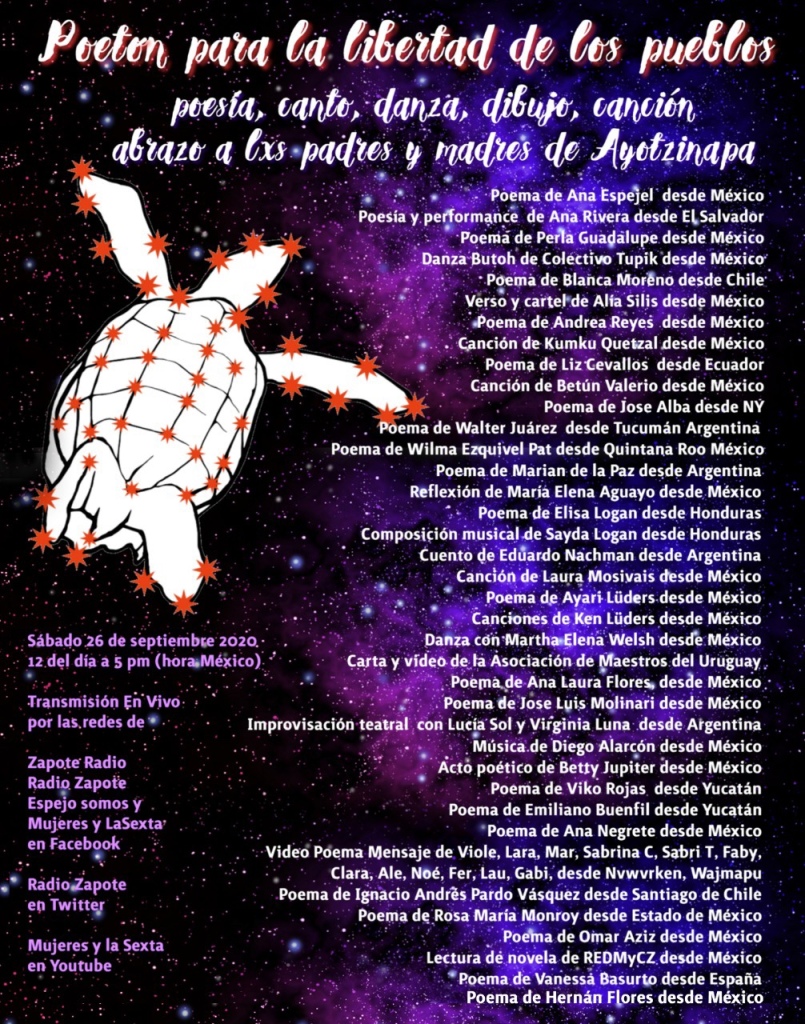
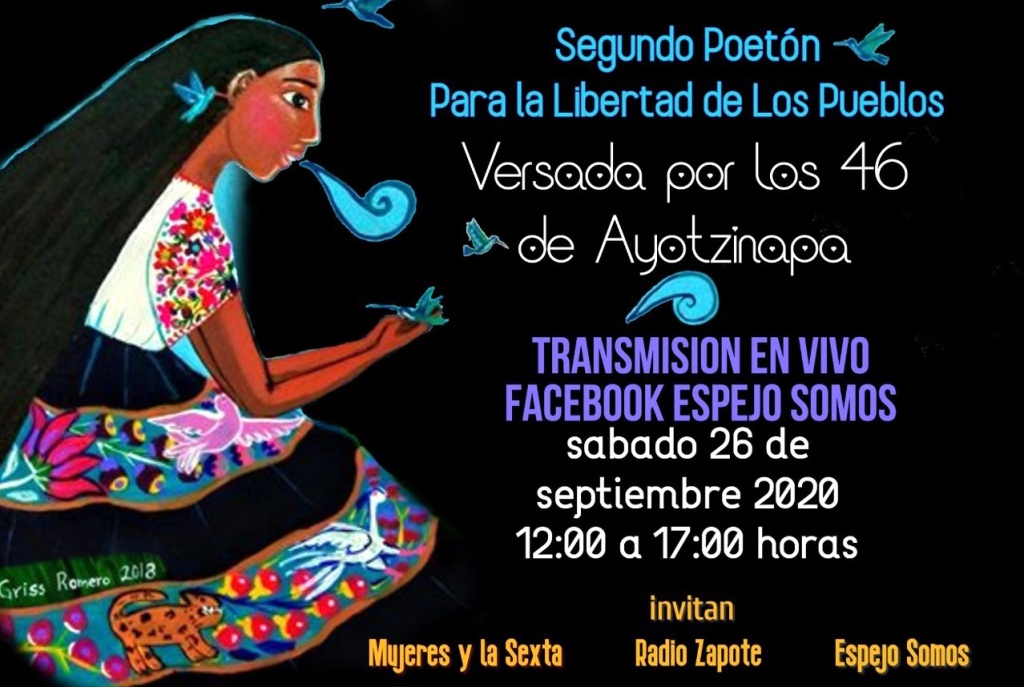
 [:es]Poetón para la Libertad. Ciber versada por los 46 de Ayotzinapa. Programa. Sábado 26 de septiembre 2020, inicia 12 horas[:]
-
 [:es]Comunicado de respuesta sobre la presión del gobierno a dialogar las tierras ejidales en Tila, Chiapas[:en]Ejido tila chiapas a 22 de septiembre de 2020 Comunicado Al congreso nacional indígena Al Concejo Indígena de Gobierno A los medios de comunicación nacional e internacional no gubernamental A los defensores de derechos humanos nacional e internacional no gubernamentall A los luchadores sociales en defensa de la tierra y territorio A los pueblos originarios de México y el mundo Compañeros y compañeras de las distintas organizaciones no gubernamentales una vez mas les enviamos un cordial saludo de resistencia en la defensa de la madre tierra y el territorio para comunicarles que hemos recibido varias invitaciones para una mesa de dialogo para platicar el asunto sobre la población. Les comunicamos que somos sabedores de muchos diálogos y negociaciones que paso por la vía política para controlarnos nombrando regidores y varios consejos municipales uno de gobierno uno de pobladores y uno de ejidatarios cuando hay destitución de alcaldes mientras avanzaban con más adjudicaciones de las tierras Ejidales seguían avanzando la compra venta de tierras que compraban en un termino económico y se revendía mas caro el propio ayuntamiento compraba terrenos sin permiso de la asamblea general de ejidatarios. La asamblea general extraordinaria el 19 de diciembre de 2015 determino que no se va dialogar menos a la negociar, para sus amplios conocimientos nuestros primeros representantes iniciaron caminando en las montañas para entregar la solicitud de 3 de febrero de 1932 hasta el año de 1961 que tardo 41 años para poder legalizar el ejido tila fue un desgaste físico y económico, los ejidatarios capacitados nos platicaron que vendieron sus productos que se cosecha del campo, aves de corral, cerdos y su pequeño colectivo de ganado para lograr toda la documentación y los principales se mantuvieron en oración para pedirle al creador que saliera adelante la legalización y el peligro que corrían las comisiones porque no existía carretera todo fue caminando a pie así se logro la resolución presidencial de 30 de julio de 1934 diario oficial de 16 de octubre de 1934, el acta de posecion de 28 de diciembre de 1936 y el acta de deslinde definitivo del 5 de abril de 1959 y la aprovacion del plano definitivo del 2 de junio de 1961. El ejido esta bien documentado pero hasta hoy en día se lleva 77 años de constante despojo que inicio el registro publico y de comercio de la ciudad de Yajalon con fecha de 24 de julio de 1943 y el plano regulador por el departamento agrario y colonización hoy secretaria de la reforma agraria le ordeno al H. cuerpo consultivo agrario para insertar la nota y el punto de acuerdo en sesión de 30 de septiembre de 1966 que el caserío del poblado no forma parte del ejido considerándose como fundo legal y el ayuntamiento municipal no se sentía seguro de su administración en terrenos Ejidales solicito la demarcación ante a secretaria de la reforma agraria y comisionaron un experto agrario con fecha 9 de marzo de 1966 el ayuntamiento municipal al ver que no había municipio libre se presento ante la cuarta legislatura del estado con el plano regulador y la demarcación de las 130 hectáreas para solicitar la legalización del fundo legal el congreso del estado emite un decreto núm. 72 el 29 de julio de 1980 y el gobierno del estado de Juan Sabines Gutiérrez lo publica en el diario oficial del gobierno el 17 de diciembre de 1980 para asegurar el decreto y el diario oficial nos reprimieron con un conflicto armado el 10 de mayo de 1981, pasando 3 días estábamos reunidos platicando sobre el problema del ejido pasaron en camioneta nos volvieron a balear con armas de fuego hiriendo un ejidatario que es uno de los 836 capacitados hiriendo en el hombro que fue atendido en la clínica IMSS COPLAMAR de nombre Domingo Martínez, en este segundo enfrentamiento inicio disparando un avecindado de nombre Eliasin Barcenas matando a un hijo de ejidatario de nombre Pedro Alejandro Jimenes Perez y dejando a otro herido de nombre Angel Darinel Vázquez Ramírez que aun esta en proceso de recuperación, con la participación del ex presidente Arturo Sanchez Sanchez y el profesor Elmar Martínez Lopez que hoy descansa en paz por el segundo ataque que nos dieron en nuestra propia tierra el viernes 11 de septiembre de este año 2020, por la pandemia de la corrupción se presento el amparo 259/1982 para impugnar el decreto num. 72 y el diario oficial de 17 de diciembre de 1980 y se presento el incidente de inejecución 1302/2010 que ya fue discutido en la suprema corte de justicia de la nación que las tierras Ejidales es propiedad legitima de los 836 capacitados a raíz de esto el gobierno del estado Rutilio Escandon Cadena decreto con el art. 132 para que quede insubsistente el decreto núm.72 y el diario oficial del 17 de diciembre de 1980,que hasta la actualidad se lleva 38 años del desgaste físico y económico por tal razón tomamos el art. 2 A) fracción II para declarar nuestra libre determinación y nuestra autonomía y resolver nuestro propio conflicto interno y recuperamos nuestro pueblo chol indígena, como dice la parte contraria nuestro ejido estuvo secuestrado mas de 70 años, de acuerdo con el art. 39 de la constitución política de los estados unidos mexicanos, porque intentaron desparecer nuestro pueblo originario chol nuestros usos y costumbres ligado a la madre tierra y despojar las 130 hectáreas para utilidad pública. Para que conozcan cual es nuestra defensa sobre nuestra tierra y territorio que las supuesta 130 hectáreas solo esta ocupado 52 hectáreas, 78 hectáreas esta cultivado en cafetales ,platanares y algunas parcelas para la siembra de la alimentación de la vida cotidiana el maíz y el frijol y les hacemos saber que ya no son 836 somos miles de personas que nos alimentamos de la madre tierra y la gran mayoría somos de escasos recursos económicos, vivimos de la madre tierra porque el Ejido Tila esta compuesto en anexo y barrios y tenemos 13 kilómetros de afectación por la carretera tanto de mariscal y carrizal y que rebasa mas de lo mencionado ya que están establecidas las diferentes escuelas donde dan clases los maestros que tuvieron bloqueando carretera y tumbaron el portón con los lideres de paramilitares y operadores político con pandilleros y drogadictos. Los que deben dialogar con los pobladores y avecindados es el gobierno para que asuman la responsabilidad los 4 responsables que afectaron nuestro ejido,para indemnizarles los que construyeron en terreno ajeno que es patrimonio propio de los 836 capacitados y que tiene personalidad juridica. para nosotros pedimos que se les aplique el peso de la ley a los agitadores y los involucrados que llevo a la muerte a dos pobladores en el enfrentamiento y un hijo de ejidatario porque contrataron gentes de otros ejidos, así como pandilleros, drogadictos y asesinos para enfrentar a los ejidatarios, este es nuestra postura para no dialogar y negociar un amparo en vía de ejecución y el respeto de la resolución presidencial de 30 de julio de 1934 que es el sacrificio de nuestros abuelos. Atentamente Ejido tila Tierra y libertad Nunca más un México sin nosotros[:]
-
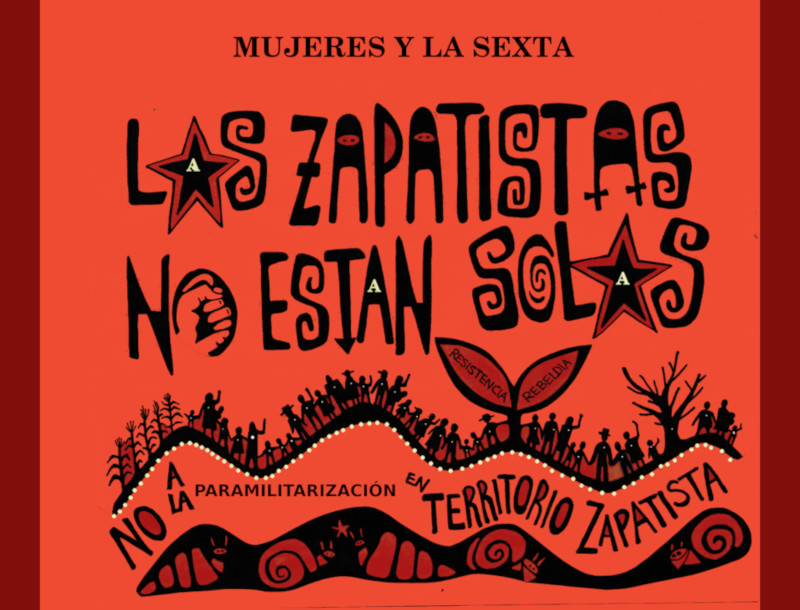 [:es]La Otra Europa denuncia responsabiliza a AMLO por la guerra abierta contra el EZLN y las comunidades zapatistas[:]
-
 [:es]Comunicado de la organización de presos en lucha Vineketik en Resistencia en solidaridad con lxs compañerxs zapatistas tras los ataques que se han hecho en su contra[:]
-
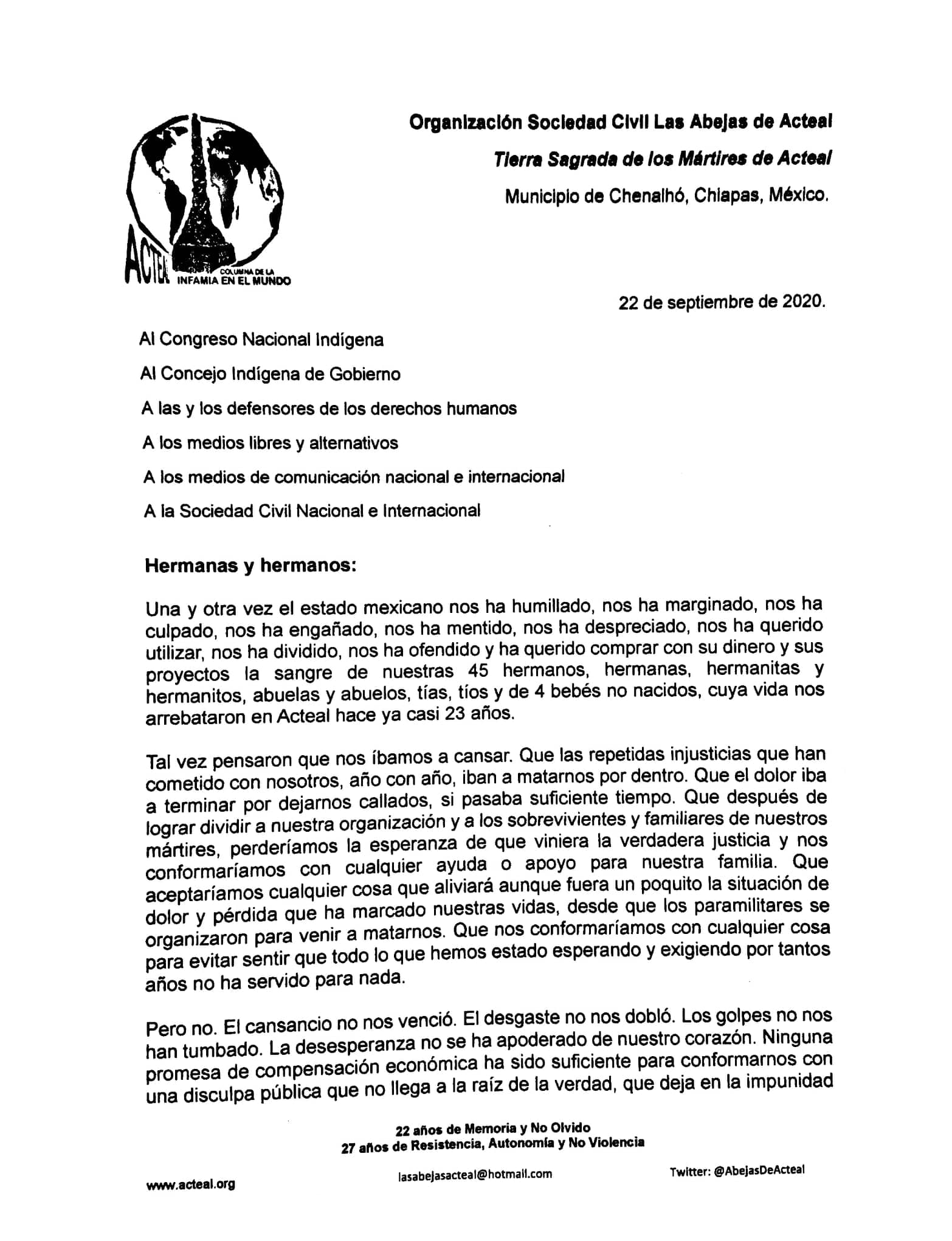
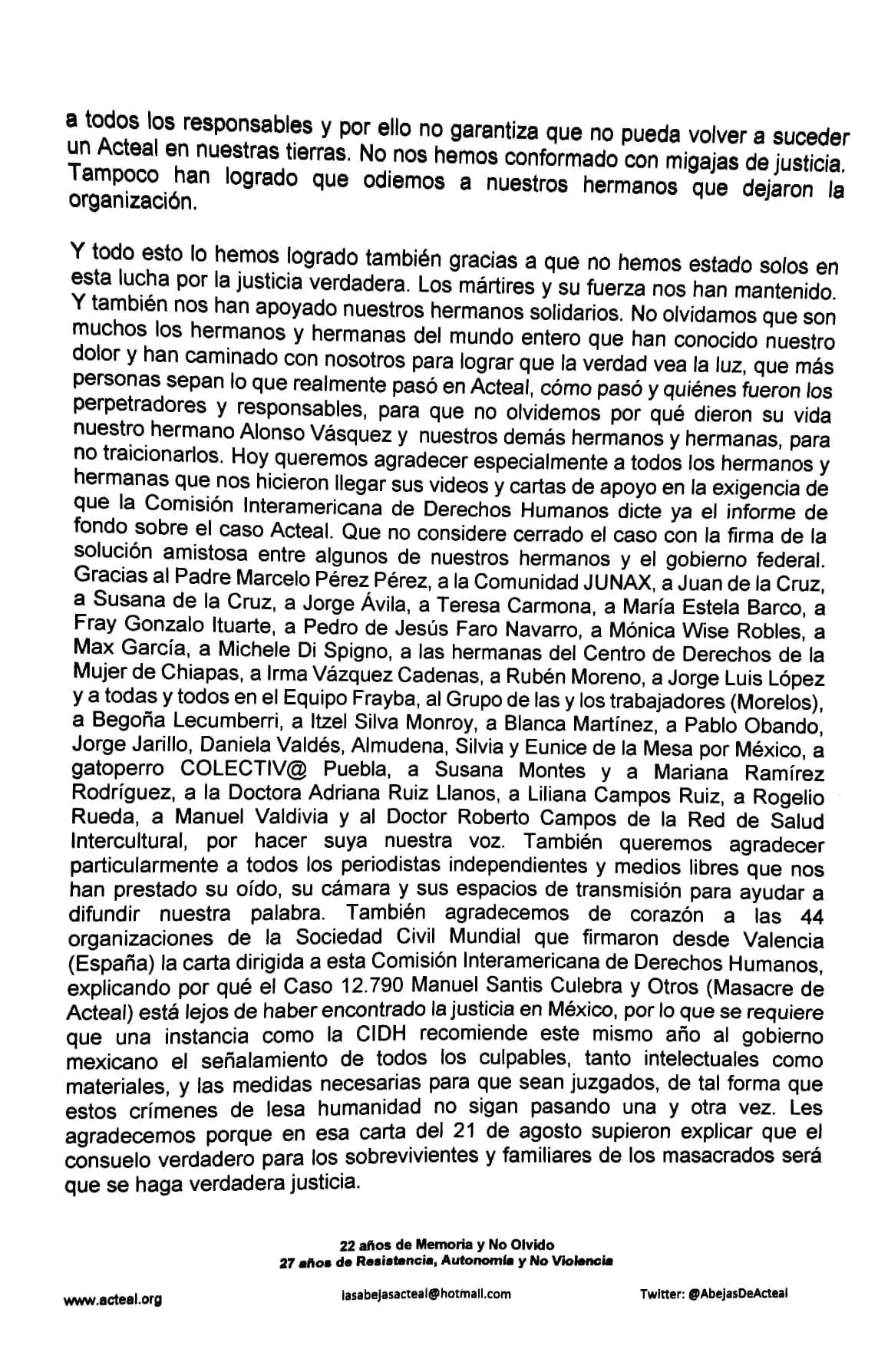
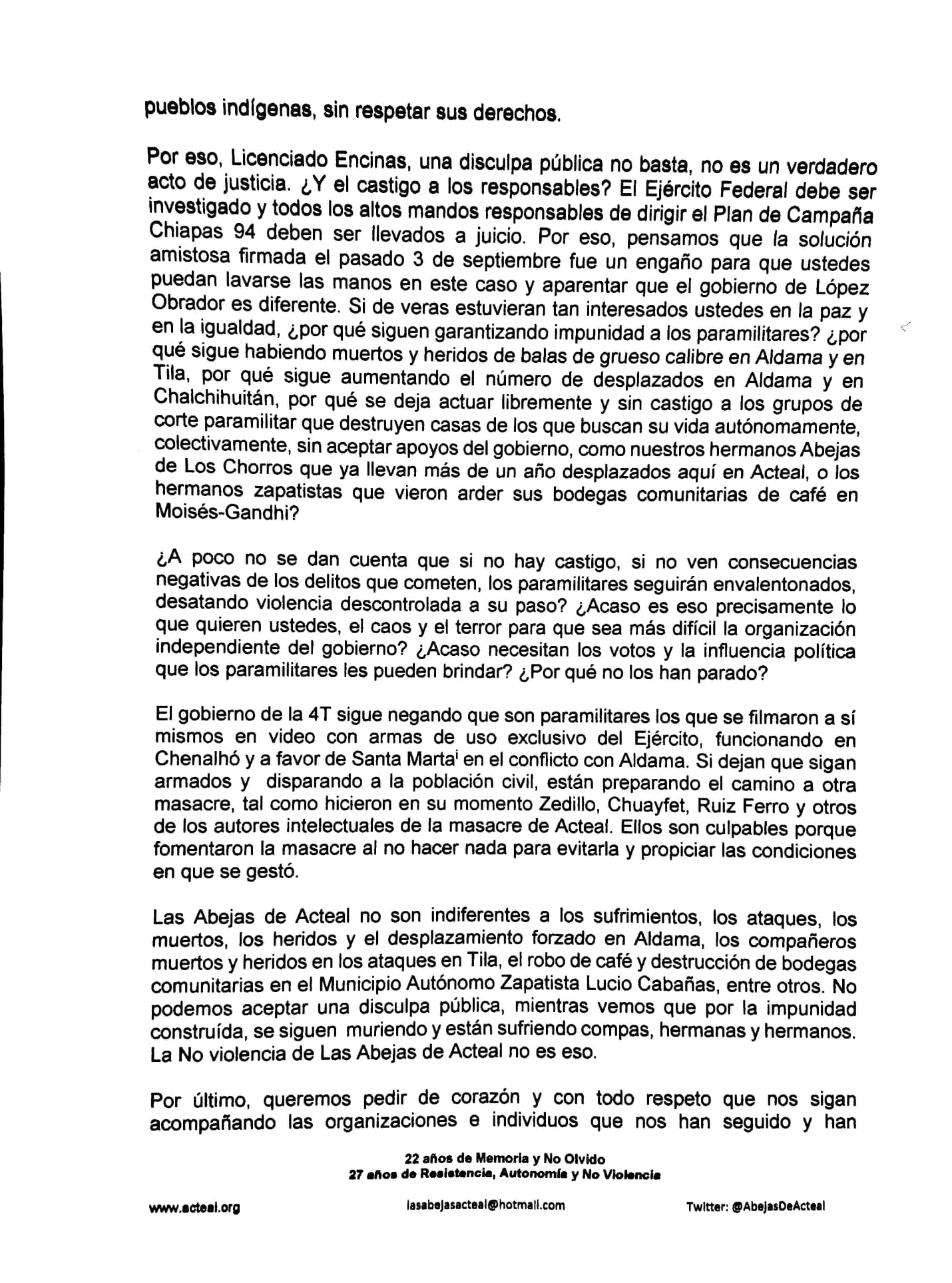
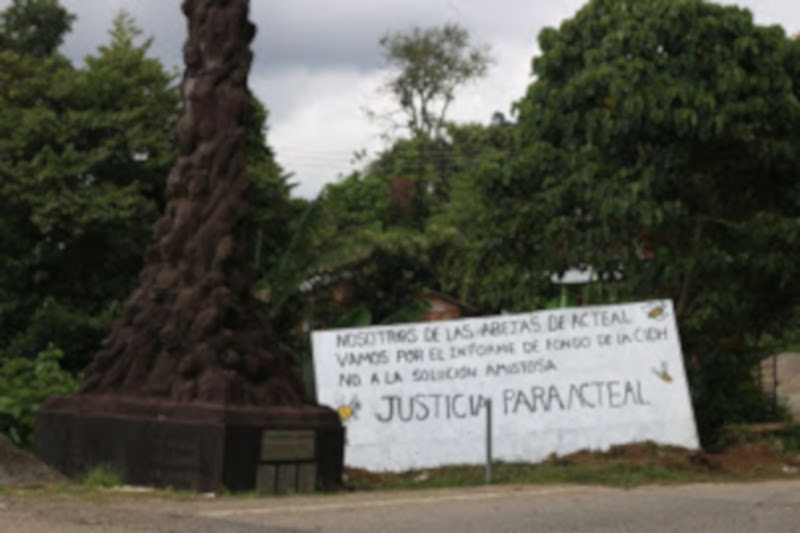 [:es]Licenciado Encinas, una disculpa pública no basta, no es un verdadero acto de justicia [:]
-
 [:es]Comunicado de Kongra Star en solidaridad con comunidades indígenas de México[:]
-
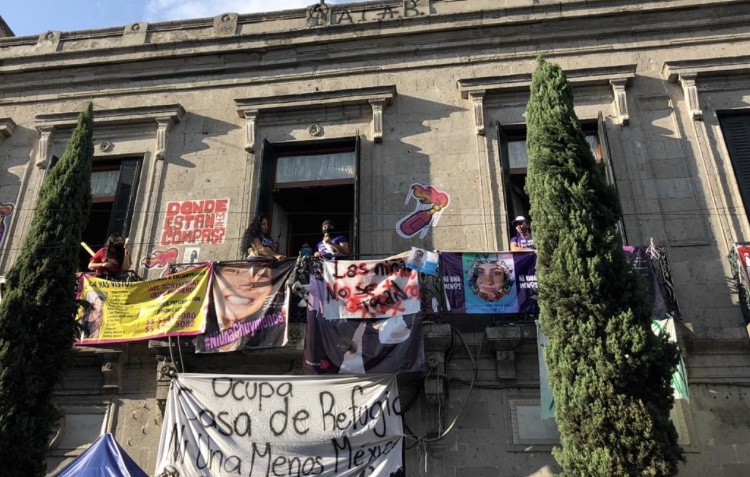 [:es]Pronunciamiento: Que les quede muy claro que frente a los feminicidios, las desapariciones y las violencias, nos vamos a defender todas[:]
-
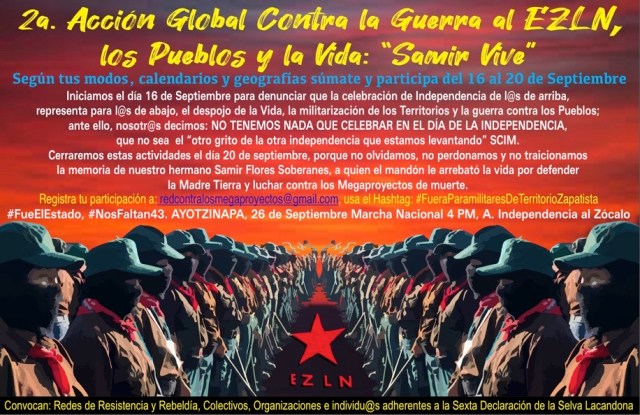 [:es]Convocatoria a la 2ª Acción Global contra la Guerra al EZLN, los Pueblos y la Vida: “Samir Vive”[:]
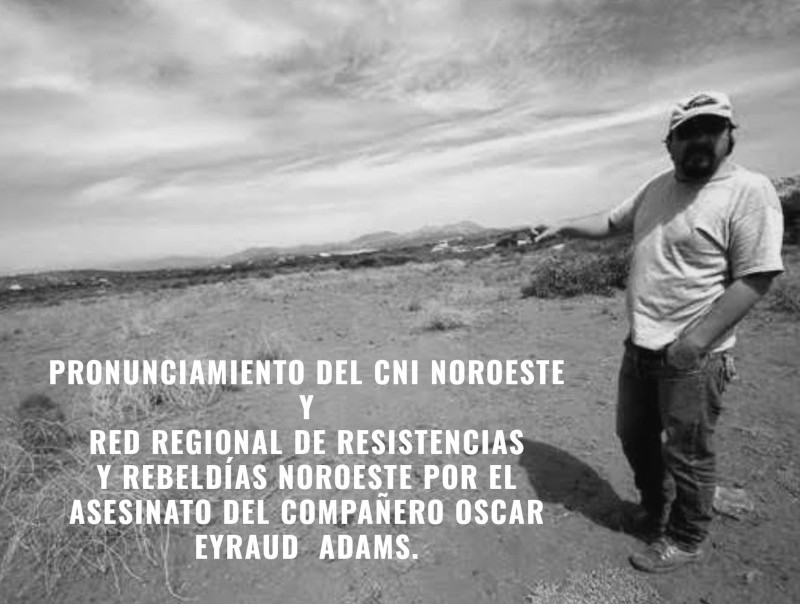
[:es]Pronunciamiento del CNI Noroeste y Red Regional de Resistencias y Rebeldías NOROESTE por el asesinato del compañero Oscar Eyraud Adams[:]
[:es]AL CONCEJO INDÍGENA DE GOBIERNO
Y AL CONGRESO NACIONAL INDÍGENA
El 24 de septiembre, un comando de más de doce sicarios asesinó al defensor del agua, la tierra y la vida Óscar Eyraud Adams, kumiai de Tecate, Baja California. Los asesinos se movieron libremente en el territorio, entraron a su casa, lo acribillaron y huyeron sin que nadie les molestara.
Nuestro compañero Óscar Eyraud Adams (originario de la comunidad kumiai) fue luchador social por los derechos de los pueblos originarios y solidario en luchas nacionales. Mantenía actualmente sus acciones enfocadas en defensa del agua y territorio. Buscaba la autodeterminación de la comunidad kumiai, y el uso de concesiones de agua que le había negado la Conagua. Óscar estaba dispuesto a luchar hasta lograrlo.
Fue asesinado por el Narco Estado en Tecate Baja California. Nada de eso podría haber ocurrido sin el contubernio de autoridades; la impunidad de la que gozan los criminales sólo puede ocurrir por la abierta complicidad de la sociedad con el gobierno y los dueños del dinero.
La tribu kumiai, pobladores originarios de estos suelos, ha sobrevivido a una guerra de exterminio de más de 500 años. Han conservado las tradiciones, la lengua y los conocimientos enraizados a estas tierras. Ahora, siguen siendo perseguidos por el Estado, que va arrancando a los jóvenes que luchan por la libre determinación de su pueblo, por la vida y por el territorio, ya que para el narcoestado el dinero parece ser lo único que importa. Para las grandes empresas sí hay agua, y todas las facilidades para que sigan engordando su billetera a costa de nuestra tierra, mientras que para los kumiai hay balas y calumnias. No es la primera vez que esto pasa. Recordemos el caso de Aurora Meza, quien fue injustamente enviada presa hace algunos años, situación que empeoró considerablemente su salud, lo que le costó la vida.
Exigimos el cese al exterminio de la tribu kumiai, de los defensores y defensoras del territorio y de la vida. Dado que el exterminio y la muerte se ejerce de muchas formas: a veces con balas cobardes como en el caso de Oscar, otras creando calumnias, otras llevando activistas injustamente a la cárcel. La negación del derecho al agua, a la vida y al territorio, son solo diferentes formas de un mismo plan de exterminio.
Atentamente,
Congreso Nacional Indígena Noroeste y
Red Regional de Resistencias y Rebeldías Noroeste[:]

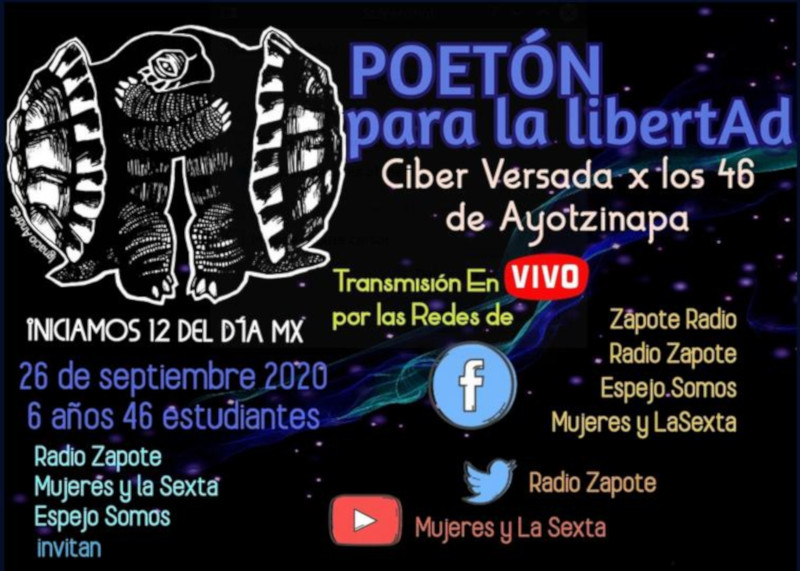
[:es]Poetón para la Libertad. Ciber versada por los 46 de Ayotzinapa. Programa. Sábado 26 de septiembre 2020, inicia 12 horas[:]
[:es]Programa del Segundo Poetón para la Libertad de Los Pueblos Versada por los 46 de Ayotzinapa ༄

¡¡¡No te pierdas el original programa del poetón!!!
Iniciamos 12 del día hora México


Todos los videos que han enviado serán transmitidos en vivo el sábado 26 de septiembre por Espejo Somos, Mujeres y la Sexta y Radio Zapote, en facebook, youtube y twitter, también habrá sorpresas, compartición en vivo, regalos, reportes, poesía y lucha para acompañar a las madres, padres y estudiantes Normalistas que, a 60 meses, siguen buscando verdad y justicia.
¿ ¿ ¿ Dónde va a ser el POETÓN ? ? ?
☟☟☟ Aqui ☟☟☟ En Estas Redes ☟☟☟Radio Zapote, Espejo Somos, Mujeres y la Sexta, FB, TW y Youtube
P R O G R A M A
Iniciamos 12 del día hora México
- 46 versos por Ayotzinapa
- Bienvenida al Poetón
con la compañera María de Jesús Patricio Martínez, vocera del Concejo Indígena de Gobierno
-46 estudiantes 46 nombres
-Reporte de la Acción Global a 6 años
-Poetón para la libertad de los pueblos
Proyección de los videos recibidos *1ERA parte
-Poesía indígena, editoriales autodidactas y realidad desde Chiapas con Xun Betán , Tino Sántiz y Denise Caracol
-Poetón para la libertad de los pueblos
Proyección de los videos recibidos *2DA parte
-Versada Fuera del Canon
con la poeta Carolina Torres desde Honduras
-Reporte de la Acción Global a 6 años CDMX
-Música de Xochicanela
¡Ayotzinapa Vive, la Lucha Sigue!
#Ayotzinapa6años #Ayotzinapa #Ayotzi
#VivosLosLlevaronVivosLosQueremos
#VerdaYJusticia
#MujeresQueLuchan #RadioZapote
MediosLibres #espejosomos
[:]