
Nos reconocemos en Patishtán y Sántiz López; sufren por nosotros: John HollowayWe Recognize Ourselves in Patishtán and Sántiz López; They Suffer for Us: John Holloway
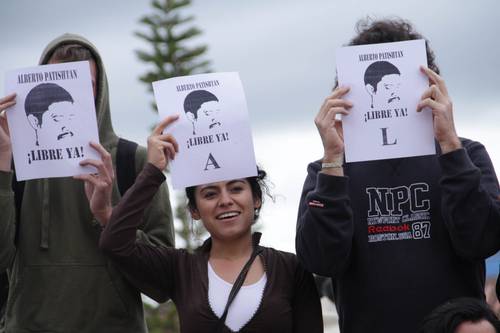
* Se realiza la segunda semana mundial por la liberación de los presos indígenas de Chiapas
* El capitalismo, sin lugar para la humanidad, afirman europeos en una carta de solidaridad
Sábado 16 de junio de 2012, p. 20
Ola tras ola de protesta por la liberación de Alberto Patishtán y Francisco Sántiz López, carta tras carta llegando de cada parte del mundo, nos reconocemos en ellos, reconocemos que están sufriendo por nosotros
, expresó el pensador y catedrático universitario de origen irlandés John Holloway al sumarse a las demandas de la segunda semana mundial por la liberación de los dos presos indígenas de Chiapas, el primero adherente de la Otra Campaña, y el segundo base de apoyo del Ejército Zapatista de Liberación Nacional (EZLN).
Por su parte, también Gustavo Esteva, articulista de La Jornada, sostuvo: Pathistán lleva más de 10 años en una cárcel injusta. No podemos cerrar los ojos y alzarnos de hombros, agregándolo a la larga lista de los presos políticos, ni tranquilizarnos al pensar que Francisco Sántiz sólo ha estado seis meses en prisión. La cárcel de estos dos compañeros tiene que pesar sobre nosotros como si fuera nuestra propia cárcel. Porque lo es
.
La lucha de los indígenas por su libertad es impresionante
, escribe Holloway en una carta para los presos; es la de todos los que soñamos todavía que puede haber un futuro, una vida digna
. Su encarcelamiento es simplemente otra manifestación de que el capitalismo no tiene lugar para la humanidad
.
El sistema actual “es una agresión constante, una máquina de destrucción que busca destruir todo lo que no se subordina a su lógica de dinero, que se opone a la lógica de la ganancia, pero no lo logra porque hay gente como Alberto y Francisco que dicen ‘No’, que no lo van a aceptar”. Millones más no lo vamos a aceptar
, pues estamos con ellos en la cárcel
y para que respiren y vivan, para que nosotras y nosotros respiremos; vivamos, tenemos que tumbar las paredes de los calabozos de Chiapas, los calabozos del mundo, el sistema-calabozo
, concluye Holloway.
A su vez, Esteva anunció desde su rincón oaxaqueño
que suma el corazón, la esperanza y la energía
a estas exigencias de libertad: Tenemos que romper las rejas en la cabeza que llevan a pensar que cambiando allá arriba algunas cositas o personas todo va a arreglarse. Y luego tenemos que romper las cadenas que aún atan nuestras manos y pies y nos impiden ponernos en marcha a la conquista de nuestra autonomía en cada pedazo del mundo que nos toca vivir. Sólo esas autonomías, afianzadas en cada lugar y enlazadas solidariamente en todas partes nos permitirán salir del calabozo
.
En mayo, durante la primera semana de lucha mundial, grupos e individuos de todas partes del Reino Unido
hicieron llegar cartas a la embajada mexicana en Londres por correo, fax, correo electrónico, y hasta de mano. Para iniciar la segunda semana de lucha, los grupos solidarios demandaron una respuesta, la cual, muy característicamente, fue que no había nadie en la embajada que pudiera contestar las preguntas
. Personal de la legación sugirió llamar el próximo lunes
.
Los grupos británicos también divulgaron un mensaje solidario de organizaciones de Turquía: Vemos a todos los que luchan por la libertad en el mundo, como nuestros compañeros. Hacemos un llamado a todos los rebeldes que tienen el fuego de liberación en sus corazones y que son de Atenas, Amed, Chiapas, Gaza, Toronto o Seattle. Ustedes no están solos, hay personas en otras tierras luchando también
.
“Wave after wave of protest for the liberation of Alberto Patishtán and Francisco Sántiz López, letter after letter arriving from every part of the world, we recognize ourselves in them, we recognize that they are suffering for us,” expressed the thinker and university professor of Irish origin John Holloway upon adding his name to the demand of the second worldwide week for the liberation of the two Chiapas indigenous prisoners, the first an adherent to the Other Campaign, and the second a Zapatista National Liberation Army (EZLN) support base.
For his part, Gustavo Esteva, a columnist for La Jornada, also maintained: “Patishtán has spent more than 10 years in a prison unjustly. We cannot close our eyes and stand shoulder to shoulder, adding him to the long list of political prisoners, nor calm ourselves by thinking that Francisco Sántiz has only been in prison for six months. The prison of these two compañeros must weigh on us as if it were our own prison. Because it is.”
The struggle of the indigenous for their freedom is “impressive,” writes Holloway in a letter to the prisoners; it is a struggle of “everyone who dreams that he or she can still have a future, a dignified life.” Their incarceration is “simply another demonstration that capitalism has no place for Humanity.”
The current system “is a constant attack, a machine of destruction that wants to destroy all who are not subordinate to its logic of money, who are opposed to the logic of profit, but doesn’t achieve it because there are people like Alberto and Francisco that say ‘No,’ that they are not going to accept it.” Millions more “are not going to accept it,” because “we are with them in prison” and “so that they breathe and live, so that we may breathe; we may live, we must bring down the walls of the prisons of Chiapas, the prisons of the world, the prison system,” Holloway concludes.
At his turn, Esteva announced from his “Oaxacan corner” that he adds “heart, hope and energy” to these demands for freedom: “We must break the bars on the head romper that leads to thinking that by changing some little things or individuals up above everything is going to be fixed. And later we must break the chains that still bind our hands and feet and impede us from getting the conquest of our autonomy started in every part of the world in which we live. Only those autonomies, guaranteed in each place and linked in solidarity everywhere permit us to get out of prison.”
In May, during the first week of worldwide struggle, groups and individuals “from all parts of the United Kingdom” sent letters to the Mexican Embassy in London by mail, fax, electronic mail, and even by hand. To begin the second week of struggle, the solidarity groups demanded an answer, which, very characteristically, was “that there was no one at the Embassy that was able to answer the questions.” Personnel from the delegation suggested calling “next Monday.”
The British groups also published a solidarity message from organizations in Turkey: “We see all those who struggle for freedom in the world, as our compañeros. We make a call to all the rebels that have the fire of freedom in our hearts and that are from Athens, Amed, Chiapas, Gaza, Toronto or Seattle. You are not alone, there are people in other lands also struggling.”
English translation by the Chiapas Support Committee for the:

