Noticias:News:

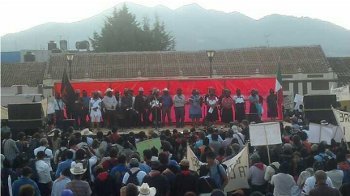
marcha zapatista

image/svg+xml image/svg+xml
radio
Koman Ilel

Chiapas se moviliza en contra de la impunidad y en solidaridad con normalistas de AyotzinapaChiapas Mobilizes against Impunity and in Solidarity with Students from Ayotzinapa

Por Koman Ilel

En silencio o a todo pulmón la consigna fue la misma:
“Su dolor es nuestro dolor, Su rabia es también nuestra”.

Tambien es nuestra

El pasado 28 de septiembre estudiantes de la Escuela Normal Rural Raúl Isidro Burgos, mejor conocida como Escuela Normal Rural de Ayotzinapa, Guerrero, fueron perseguidos y atacados por elementos de la policía municipal y sicarios del cártel Guerreros Unidos, en la ciudad de Iguala, dejando el escalofriante saldo de 3 muertos, 13 heridos y 43 desaparecidos. Esta escuela normal es de gran tradición de lucha, siendo en la que se formaron los guerrilleros de los años 70, Lucio Cabañas Barrientos y Genaro Vázquez Rojas, y donde ha existido un fuerte movimiento estudiantil, que desde hace tiempo ha sido objeto de persecución y represión.

(Continuar leyendo…)

radio
Radio Pozol

Marcha silenciosa del EZLN en señal de dolor y coraje por AyotzinapaEZLN marches silently as a sign of pain and rage for Ayotzinapa

radio
Radio Zapatista

21 de Diciembre de 2012: Más imágenes de la movilización del EZLN en San Cristóbal de las Casas

radio
Radio Zapatista

EZLN se moviliza en Chiapas: imagenes desde San Cristòbal

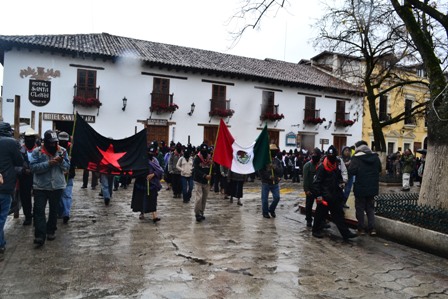
Entrada de los  Zapatistas a la plaza central de San Cristobal de las Casas

Ejercito Zapatista marchando por las calles de San Cristobal de las Casas

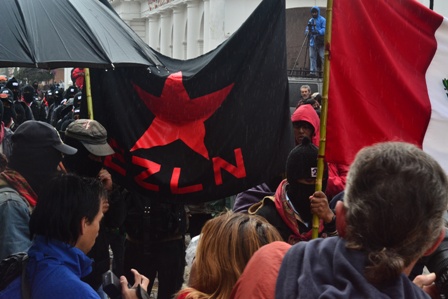
EZLN al costado de la catedral

EZLN llegando a la plaza central de San Cristobal de las Casas

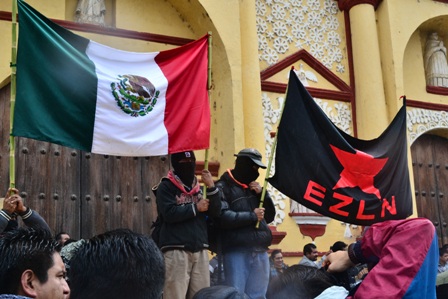
EZLN en las puertas de la catedral de San Cristobal de las Casas

radio
TeleSur

Marcha por la paz en Chiapas: Cobertura en TeleSurMarch for Peace in Chiapas: Coverage in TeleSur

Marcha por Justicia y contra la Impunidad, sábado 7 de mayo de 2011, San Cristóbal de Las Casas, Chiapas.

http://multimedia.telesurtv.net/8/5/2011/34217/zapatistas-participan-de-marcha-por-la-paz-en-mexico/

March for Justice and against Impunity, Saturday 7 May 2011, San Cristóbal de Las Casas, Chiapas.

http://multimedia.telesurtv.net/8/5/2011/34217/zapatistas-participan-de-marcha-por-la-paz-en-mexico/

radio
The Frayba Report

The Frayba Report: National March for Justice and Against ImpunityThe Frayba Report: National March for Justice and Against Impunity

Monthly report by the Fray Bartolomé de Las Casas Human Rights Center in Chiapas, Mexico.[podcast]https://radiozapatista.org/Audios/frayba/Frayba_2011_05_eng.mp3[/podcast]
(Continuar leyendo…)

radio
Reporte Frayba

Reporte Frayba: Marcha Nacional por la Justicia y contra la Impunidad Reporte Frayba: Marcha Nacional por la Justicia y contra la Impunidad

Reporte mensual del Centro de Derechos Humanos Fray Bartolomé de Las Casas, Chiapas. [podcast]https://radiozapatista.org/Audios/frayba/Frayba_2011_05.mp3[/podcast]
(Continuar leyendo…)

radio
Radio Zapatista

Parte del discurso zapatista en la Marcha por Justicia y contra la Impunidad (INGLÉS)Excerpt from the speech by the EZLN during the March for Justice and against Impunity (ENGLISH)

Parte del discurso zapatista en voz del Comandante David: [podcast]https://radiozapatista.org/Audios/2011_05_07_marchaporlapaz/discurso__ezln_eng.mp3[/podcast]

Sonidos de la marcha y palabras del párroco del Chenalhó y del Comandante David: [podcast]https://radiozapatista.org/Audios/2011_05_07_marchaporlapaz/sounds_of_the_march.mp3[/podcast]

Excerpt from the speech by the EZLN in the voice of Comandante David: [podcast]https://radiozapatista.org/Audios/2011_05_07_marchaporlapaz/discurso__ezln_eng.mp3[/podcast]

Sounds of the march and words by the priest from Chenalhó and by Comandante David: [podcast]https://radiozapatista.org/Audios/2011_05_07_marchaporlapaz/sounds_of_the_march.mp3[/podcast]

radio
Enlace Zapatista

Movilizaciones de la Zezta Internacional 7 y 8 de mayo en el mundo. Marcha por la Justicia y contra la ImpunidadMobilizations of the Zezta Internacional on May 7 and 8 around the world. March for Justice and against Impunity

París, Francia. Aquí.
Euskal Herria. Aquí
Oslo. Aquí
Madrid Aquí
Viena, Austria Aquí

(Continuar leyendo…)

radio
Narco News

Zapatistas inundan San Cristóbal por miles, se unen al llamado a detener la guerraZapatistas Flood San Cristóbal by the Thousands, Join Call to Stop the War

Fuente: Narco News

La marcha silenciosa del martes en Chiapas fue el preludio de la convergencia en la Ciudad de México del domingo

Por Natalie Long
Especial para The Narco News Bulletin

8 de mayo 2011

El sábado, los zapatistas, la Otra Campaña, y miembros de la sociedad civil en San Cristóbal de las Casas, Chiapas, tomaron las calles, conduciendo una marcha silenciosa que procedió de la parte noroeste de la ciudad al centro del pueblo.

Con miles de participantes, esta marcha estaba en solidaridad con una marcha nacional más grande celebrada el domingo. La marcha nacional empezó en Cuernavaca, Morelos el pasado jueves 5 de mayo, y llegó el domingo a la Ciudad de México.


DR 2011 Gerardo Ozuna

La marcha nacional se debe en parte a los esfuerzos del reconocido poeta mexicano Javier Sicilia. El pasado 28 de marzo, el hijo de Sicilia fue hallado muerto cerca de Cuernavaca, Morelos, con su cuerpo mostrando señales de tortura antes de su muerte. Aproximadamente una semana después de la muerte de su hijo, el 3 de abril Sicilia publicó una carta en la revista mexicana Proceso, denunciando el sistema de violencia en México. En esta carta, Sicilia afirmó que los mexicanos estaban “hasta la madre” con la violencia y corrupción presente en su país, y convocó a una movilización de la sociedad civil para recuperar México a sus ciudadanos. Su más reciente llamado a la movilización es la de la actual marcha, también conocida como Caravana por la Paz con Justicia y Dignidad.

Tras la convocatoria de Sicilia, el Ejército Zapatista de Liberación Nacional (EZLN) publicó un comunicado el jueves 28 de abril, anunciando su intención de celebrar una marcha silenciosa el sábado 7 de mayo en San Cristóbal de las Casas, Chiapas. En una carta del Subcomandante Marco publicada el mismo día del comunicado, señaló que las restricciones económicas no le permitirían al EZLN viajar a Cuernavaca o la Ciudad de México para participar en la marcha nacional. Por tanto, de acuerdo a los modestos medios disponibles el Subcomandante Marcos anunció la intención del EZLN de marchar en silencio en San Cristóbal. El comunicado indicó además que esta marcha silenciosa sería para apoyar y solidarizarse con la voz nacional que busca reclamar justicia para el pueblo.

Por lo tanto, el sábado se vio el encuentro del EZLN y sus partidarios en San Cristóbal de las Casas. A las 10 de la mañana, un gran contingente de zapatistas se alineaban afuera de CIDECI, el Centro Indigena De Capacitación Integral, también conocido como Universidad de la Tierra, uno ten que caminar para cubrir la caminata dediez minutos al final de la calle de la universidad, dado que la calle estaba llena de zapatistas con pasamontañas, prohibiendo el paso de vehículos.

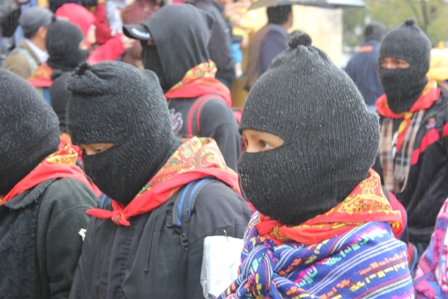
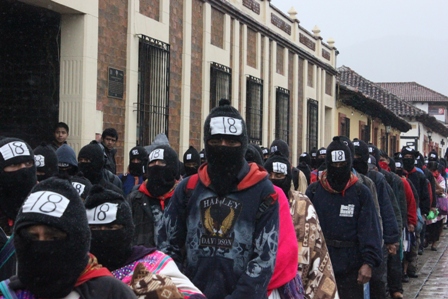
Los zapatistas vinieron de todas partes del estado de Chiapas. Varias regiones estaban representadas, no sólo por la vestimenta tradicional de las mujeres, sino por los símbolos cosidos en los pasamontañas de los miembros del EZLN. Al frente de la mayoría de los pasamontañas, un parche identificaba el caracol de cada persona por un número y la región de la persona por un color. Los diferentes colores de los parches incluían el rojo, amarillo, naranja, morado, azul, blanco, gris, y verde, entre otros.


DR 2011 Gerardo Ozuna

A las 12:15 pm, los zapatistas comenzaron a alinearse afuera de CIDECI preparándose. Entre los zapatistas se incluía un gran espectro de diversas edades, desde niños llevados por sus madres, hasta ancianos con canas asomándose por debajo de sus máscaras. Las mujeres parecían más numerosas que los hombres en una relación dos a uno. Los zapatistas también mostraron representación tanto urbana como rural. Las mujeres rurales zapatistas eran fácilmente identificadas por sus trajes tradicionales, o por vestidos que muchas llevaban. Algunas de las mujeres estuvieron presentes en la marcha a pesar de la ausencia de zapatos en sus pies. Muchos de los hombres rurales zapatistas llevan el traje campesino tradicional, incluyendo botas para la lluvia, camisas de algodón de manga larga y pantalones de algodón. Algunos de los hombres llevaban trajes tradicionales también, aunque no tanto como las mujeres. El contingente urbano zapatista proporcionaba un contraste curioso, quizás mejor identificado por una joven mujere llevando grandes audífonos sobre su pasamontañas. Otros zapatistas urbanos llevaban playeras más justas y pantalones de mezclilla, artículos más familiares para aquellos viviendo en un ambiente urbano con tiendas al por menor.

Aproximadamente a la 1:10 pm, una mujer a la cabeza de la marcha llevando un pasamontañas recibió una orden en su radio, y ordenó a aquellos al inicio de la marcha a preparase. Parecía que la marcha estaba lista, los miembros del EZLN caminaban en silencio en las filas llevando pancartas con frases como “Estamos hasta la madre por la Guerra de Calderón!”, “Alto a la Guerra de Calderón” y “No más Sangre.”

Sin embargo, para la 1:25pm, la marcha se detuvo. El silencio fue roto por el murmullo de radios mientras aquellos al principio de la marcha trataban de de orientarse al interior de la colonia desde donde la marcha debía salir. Mientras los que portaban radios se comunicaban entre sí, la gente en las casas, tiendas, y talleres cercanos salieron a ver la procesión de los zapatistas enmascarados. Después de unos diez minutos de conversación, la marcha avanzó una vez más, continuando por una calle con dirección a la carretera a San Juan Chamula.

Sin embargo, la columna se enfrentó a un nuevo desafío antes de salir a la carretera. Alrededor de la 1:35 pm, la cabeza de la marcha se encontró con otro grupo de zapatistas – parecía que el inicio de la marcha se había encontrado con la retaguardia. Por un lado, fue un acontecimiento impresionante, mostrando que los zapatistas habían convocado a tantas personas que las calles no eran navegables. Por otro lado, esto causó gran confusión, con los caminos cerrados. La cabeza de la marcha no continuó con sus compañeros impidiendo el paso, y por tanto tuvieron que esperar pacientemente a que el resto se incorporara. Cerca de las 2 pm, el caracol se deshizo una vez más y la cabeza de la marcha procedió más adelante. Este progreso fue detenido una vez más mientras la cabeza de la marcha se encontraba con más zapatistas en su dirección.

Con este nuevo obstáculo, más o menos cinco o seis autoridades se reunieron para consultar. Con radios en las manos, se pararon en el medio de un círculo hecho por hombres tomados de las manos, creando un espacio de protección para que las autoridades hablaran y tomaran decisiones. Mientras las autoridades hablaban suavemente entre sí y con las radios, las filas zapatistas miraban y esperaban pacientemente por las órdenes.

A lo largo de todo el proceso, varias acciones sirvieron para recordar al espectador que el EZLN es un ejército, y debe ser considerado como tal. Entre la rápida respuesta a las órdenes dadas por las autoridades, las filas organizadas con las que procedían los zapatistas, y la clara cadena de mano presente, el espectador se vio obligado a recordar que la procesión que estaba pasando era una organización militar, capaz de ser convocada si es necesario por las cabezas del EZLN.

Para las 2:35pm. los zapatistas habían alcanzado un consenso sobre cómo proceder, y la marcha comenzó a orientarse a sí misma. Primero las autoridades del EZLN continuaron por la carretera, con otros zapatistas uniendo sus manos para formar un círculo protector alrededor de las autoridades. Inmediatamente detrás de las autoridades estaba la cabeza de la marcha, llevando una pancarta que condenaba la guerra de Calderón. La procesión serpenteaba su camino en la selva de autos y camiones estacionados a un lado del camino, los mismos vehículos que trajeron a los miembros del EZLN a esa parte de la ciudad más temprano. Algunos zapatistas continuaron a un lado del camino, esperando el momento de unirse a la marcha. Muchos de los que esperaban armaron un campamento, y comían sus almuerzos mientras sus compañeros marchaban.

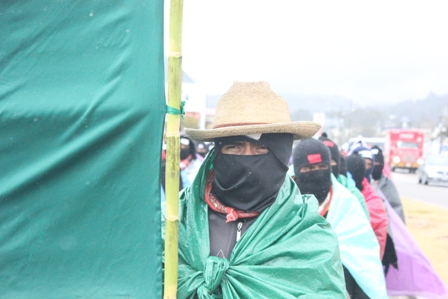
Para las 2:55pm, la marcha llegó a la carretera que lleva al centro del pueblo en una dirección, mientras se dirigía al municipio de San Juan Chamula en otra dirección. A medida que el EZLN se topó con los autos que llegaban, los zapatistas se dirigieron a detener el tráfico. Algunos autos simplemente se detuvieron, mientras otros dieron la vuelta. A medida que la marcha procedía entre las calles, los sonidos que predominantemente se escuchaban era una mezcla de bocinas de autos, el sonido de los huaraches y botas en el pavimento, y el misterioso sonido de un caracol. Ocasionalmente los manifestantes compartían comentarios, pero en general los zapatistas se mantuvieron en silencio mientras continuaban por el camino al centro del pueblo. La suerte quiso que al llegar al semáforo este estuviera en verde, permitiendo que el EZLN continuara sin interrumpir la marcha.

La marcha con toda su fuerza en la calle hacia el centro, fue recibida por una gran variedad de curiosos, incluyendo camareros saliendo de restaurantes, turistas tomando fotos, y gente local mirando mientras la marcha llegaba al centro. Los clientes en las cafeterías dejaban las tazas para ver a los zapatistas marchando, algunos comentando lo impresionante de la vista. Para las 3:50 pm, el EZLN comenzó a llenar la plaza frente a la catedral de la ciudad, dirigiéndose a un escenario que tenía muchos micrófonos. Sin embargo, el discurso, aún no estaba listo.

Durante la espera, muchos zapatistas se sentaron a tomar un breve descanso, quitándose los paliacates para tomar un trago de agua o refresco, algunos corriendo a tiendas cercanas, con sus palacetes, para tomar un refrigerio. Las conversaciones comenzaron a circular en voz baja entre la gente que estaba sentada, algunas en español, otras en distintas lenguas indígenas.

A pesar de que los movimientos iniciales de la marcha fueron tal vez un poco rudos, a la llegada a la plaza de la cátedra, el EZLN mostró una impresionante organización, coordinando en que lugar se iban a colocar las distintas delegaciones para el discurso. Aproximadamente a las 4:45pm, la marcha continuó su arribo a la plaza. Un representante del EZLN se acercó al micrófono, pidiendo que los zapatistas que ya estaban en la plaza avanzaran, debido a que habían compañeros atrás que aún no habían llegado.

Para las 5:05 pm, los miembros de la Otra Campaña finalmente llegaron a la plaza. Las delegaciones arribaron de todas las comunidades, tal vez las más visibles fueron Cruztón, Mitzitón, Ejido Tila, Huixtan y Bachajón. También estaban representados otros miembros de la sociedad civil, incluyendo miembros del Centro de Derechos Humanos Fray Bartolomé de las Casas, el Centro de Derechos de las Mujeres, y la Brigada Feminista por la Autonomía. A pesar de la importante señal de solidaridad, la presencia zapatista dominaba por mucho todo el evento.

Para las mujeres de los colectivos de las comunidades de Aguacatenango, La Grandeza, Napite, Corostik, Coquiteel, Sulupwitz, Frontera Comalapa, Santa Rosa de Cobán, Yaluma, Chihuahua, y Bella Vista del Norte, proporcionaron su palabra y la razón por la que estaban marchando. Reconociendo el pesar que sientes y las lágrimas que derramaron que escuchan noticias de violencia, las mujeres también señalaron el coraje que sienten al defendieres de violaciones y asesinatos cometidos por aquellos a quienes el gobierno les permite irse con libertad. Las mujeres hablaron en contra de la violencia, no solo en la forma de las armas, pero en la inherente violencia presente al sentenciar a la población a la pobreza, diciendo que el gobierno “no sólo nos mata con armas, con sus armas, también asesina con pobreza, con el hambre en nuestro pueblo que utilizan para engañarnos…” Entonces las mujeres pidieron justicia, y el fin de la violencia, por el respeto, y la libertad de la Madre Tierra, entre otras demandas a la sociedad y el gobierno.

El FrayBa también proporcionó su palabra al público concerniente a la marcha. Protestando las políticas de guerra del Presidente Felipe Calderón que han cobrado las vidas de cerca de 40,000 víctimas, el FrayBa señaló que la impunidad fue la clave para continuar con su clima de violencia. El Frayba señaló a la marcha como un signo de la esperanza por la vida y por a demanda de justicia mientras la sociedad civil se esfuerza por lograr una vida digna para todos.

Entre los simpatizantes zapatistas participando en la marcha, uno en particular comentó que la marcha nacional era un acontecimiento necesario que el país estaba esperando. La marcha del EZLN fue una promesa dada por los zapatistas que habían cumplido, cumpliendo su palabra a aquellos participando en el movimiento más grande.

Luego de una hora de que la marcha arribara a la plaza, a las 5:10 pm, las autoridades del EZLN tomaron el escenario. Llamando a que la asamblea saludara, la multitud primero cantó el himno nacional mexicano, seguido del himno del EZLN. No es de extrañar que el himno del EZLN resonara con más fuerza que el himno nacional. Al término de ambos, un representante tomó el micrófono para proporcionar a los ahí reunidos la palabra del EZLN.

El representante que habló, condenó la actual violencia en México, afirmando que la historia de México había resultado en el derramamiento de sangre inocente, y que la paz y justicia no se encontraban en el país. El orador lamentó el hecho de que “la única culpa que las víctimas tuvieron es el haber nacido o vivido en un país que es mal gobernado por grupos legales e ilegales con sed de guerra, muerte y destrucción.” Denunció la conversión de escuelas y universidades en zonas de guerra, y el estado general de miedo hacia la vida de uno que está presente en la simple acción de viajar al trabajo. Además, el orador criticó al gobierno, al que señaló de proporcionar declaraciones y promesas falsas a las madres y padres que demandaron justicia de parte de sus hijos asesinados. Ayer, dijo el orador, era cuando el pueblo de México escuchaba las dignas voces de las víctimas y sus familias. Hoy es el día de su digno silencio, un silencio que afirma, igual de fuerte que sus palabras, que quieren paz, justicia y una vida digna. La lucha de esas víctimas y sus familias no nació de un interés personal, sino que “nació del dolor de perder a alguien a quien amas tanto como a la vida misma.” Al llegar al fin del discurso, el orador declaró que la gente convocada al movimiento nacional están pidiendo a las asistentes luchar por la vida, y que la gente reunida en la ciudad estaban para responder a ese llamado.

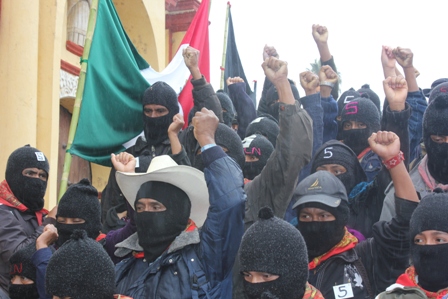
Concluyendo su discurso, el representante y la multitud alzaron sus manos y gritaron siete veces, enviando un mensaje de solidaridad a las víctimas y sus familias, diciendo “No están solos.”

A las 5:45 pm, la presentación en español concluyó y fue seguida de ovaciones, aplausos y silbidos aprobatorios. El mismo discurso fue luego presentado en varias lenguas indígenas, incluyendo Tzotzil y Tzeltal. Alrededor de las 7 pm, cerca de tres horas después de que la marcha llegara al centro de la ciudad, las autoridades del EZLN descendieron del escenario, cerrando la asamblea. Con el fin de la ceremonia, el silencio fue oficialmente roto, y los murmullos comenzaron a escucharse entre los zapatistas mientras salían de acuerdo a sus grupos. A pera de haberse tomado la mayor parte del día para reunir a los miembros del EZLN y sus partidarios en la plaza, en sólo treinta minutos no había pasamontañas que ver en el centro de la ciudad. Los equipos de limpieza empezaron a trabajar, y los miembros de las comunidades se fueron a casa, llevando consigo la palabra de sus experiencias.Source: Narco News

Saturday’s Silent March in Chiapas Was Prelude to Sunday’s Convergence on Mexico City

By Natalie Long
Special to the Narco News Bulletin

May 8, 2011

On Saturday the Zapatistas, The Other Campaign, and members of the civil society of San Cristóbal de las Casas, Chiapas took to the streets, conducting a silent march that proceeded from the northwestern part of the city to the town center.

With participants numbering in the thousands, this march was held in solidarity with a larger, nationwide march that is currently taking place. The nationwide march started in Cuernavaca, Morelos this past Thursday, March 5, and will arrive Sunday in Mexico City.

DR 2011 Gerardo Ozuna

The larger nation-wide march is largely due to the efforts of renowned Mexican poet Javier Sicilia. This past March 28, Sicilia’s son was found dead near Cuernavaca, Morelos, with the body showing signs of torture prior to his death. Roughly a week after his son’s death, Sicilia published a letter in the Mexican magazine Proceso on April 3, denouncing the system of violence in Mexico. In this letter, Sicilia stated that Mexicans were “hasta la madre” (“had it up to here”) with the violence and corruption present in their country, and he called for the mobilization of civil society to reclaim Mexico for its citizens. His most recent call for mobilization is that of the ongoing march, also known as the Caravan for Peace with Justice and Dignity.

Following Sicilia’s convoking of this march, the Zapatista Army of National Liberation (EZLN) released a communiqué on Thursday, April 28, announcing its intent to hold a silent march on Saturday, May 7, in San Cristóbal de las Casas, Chiapas. In a letter from Subcomandante Marcos released on the same day as the communiqué, he noted that financial constraints meant it would not be possible for the EZLN to travel to Cuernavaca or to Mexico City to participate in the larger nationwide march. Thus, in accordance with the modest means available to the EZLN, Subcomandante Marcos announced the EZLN’s intention to march in silence in San Cristóbal. The EZLN communiqué further indicated that this silent march would be to support and stand in solidarity with the national voice that seeks to reclaim justice for the people.

Thus, Saturday saw the gathering of the EZLN and its supporters in San Cristóbal de las Casas. By 10:00am, a large contingent of Zapatistas was lined up outside of CIDECI, the Indigenous Center for Integral Training, also known as the University of the Land. When arriving on the street that leads to CIDECI, one had to travel by foot to cover the 10-minute walk from the end of the street to the university, given that the street was filled with masked Zapatistas, prohibiting the passage of vehicles.

The Zapatistas came from all parts of the state of Chiapas. Various regions were represented, not only by the traditional outfits of the women, but by the symbols sewn onto the pasa montañas worn by members of the EZLN. On the front of the majority of the pasa montañas, a patch identified a person’s caracol by number and a person’s region by color. The different colors of the patches included red, yellow, orange, purple, blue, white, grey, and green, amongst others.

DR 2011 Gerardo Ozuna

By 12:15pm, the Zapatistas began lining up outside of CIDECI, preparing to file out. The Zapatistas included the entire age spectrum, from children being carried by their mothers to senior citizens with gray hair poking out from beneath their masks. The women seemed to outnumber the men two to one. The Zapatistas also showed representation from both urban and rural areas. Rural female Zapatistas were easily identified by their traditional trajes, or, dresses that many wore. Some of the women were present at the march despite the absence of shoes on their feet. Many of the rural male Zapatistas bore the usual dress of the campesino, including rainboots, long-sleeve cotton shirts and cotton pants. Some of the men had traditional outfits as well, though not as many as the women. The urban Zapatista contingent provided a curious contrast, perhaps best exemplified by one young woman wearing large headphones over her pasa montaña. Other urban Zapatistas sported tighter shirts and jeans, items that are more familiar to those living in an urban setting with access to retail stores.

At approximately 1:10pm, a woman at the head of the march wearing a pasa montaña received an order through her radio, and ordered those at the beginning of the march to file out. It seemed that the march was underway, the masked EZLN members walking silently in their ranks bearing their signs with phrases such as “Estamos Hasta la Madre por la Guerra de Calderon!” (“We Have Had it Up to Here with Calderon’s War!”), “Alto a la Guerra de Calderon” (“Stop Calderon’s War”), and “No Mas Sangre” (“No More Blood”).

By 1:25pm, however, the march had stopped. The silence was broken by the chatter of radios as those at the head of the march worked to orient themselves inside of the colony from which the march was supposed to exit. As those with the radios consulted one another, people from nearby houses, stores, and workshops came out to look at the halted procession of masked Zapatistas. After roughly ten minutes of conversation, the march got underway once more, proceeding down a street in the direction of the highway to San Juan Chamula.

The column was met by yet another challenge, however, before it was to exit onto the highway. Around roughly 1:35pm, the head of the march met up with another group of Zapatistas – it seemed that the head of the march had met with the tail of the march. On the one hand, that was an impressive occurrence, showing that the Zapatistas had convoked so many people that the streets were not navigable. On the other hand, this caused general confusion, with the roads being blocked up. The head of the march could not proceed with their fellow members impeding their path, and thus had to patiently wait for the rest of their compañeros to file by. By 2:00pm, the conch shell was blown once more and the head of the march proceeded a ways further. This progress was stopped short once more as the head of the march ran into more Zapatistas coming in their direction.

With this new obstacle, roughly five or six authorities gathered around to confer. Radios in hand, they stood in the middle of a circle created by men joining hands, creating a protective space for the authorities to speak and make decisions. As the authorities spoke softly amongst themselves and into their radios, the ranks of Zapatistas watched and waited patiently for their orders.

Throughout the whole process, various actions served to remind the onlooker that indeed, the EZLN is an army, and should be regarded as such. Between the quick response to marching orders given by the authorities, the organized lines in which the Zapatistas proceeded, and the clear chain of command that was present, the bystander was obligated to remember that the procession passing by was that of a military organization, able to be summoned if necessary by the heads of the EZLN.

By 2:35pm, the Zapatistas had reached a consensus about how to proceed, and the march began orienting itself. First the EZLN authorities proceeded down the road, with other Zapatistas joining hands to form a protective circle around the authorities. Immediately behind the authorities came the head of the march, bearing their banner decrying Calderon’s War. The procession snaked its way through the jungle of cars and trucks parked on the sides of the road, the very vehicles that had delivered members of the EZLN to that part of town earlier on. Some Zapatistas remained on the side of the road, waiting for their moment to join the march. Many of those waiting had set up camp, pulling out their lunches as their compañeros marched by.

By 2:55pm, the march met the highway that leads to the center of town in one direction, while leading to the municipality of San Juan Chamula in the other direction. As the EZLN met the oncoming cars, the Zapatistas spilled out onto the street stopping traffic. Some cars simply came to a stop, while others began turning around. As the march proceeded through the streets, the sounds predominantly heard were a mixture of protesting car horns, the slapping of sandals and boots on the asphalt pavement, and the eerie sounding of a conch shell. The occasional comment was shared between marchers, but overall the Zapatistas remained silent as they proceeded down the highway to the center of town. As luck would have it, upon arriving at a streetlight, the EZLN had a green light and proceeded through the intersection unimpeded.

With the march in full force proceeding through the street toward the center of town, it was led first by a group of several men with radios, followed by the Mexican flag and the EZLN flag. One man and one woman bore the Mexican flag, as did a male-female team bearing the EZLN flag.

At 3:45pm, the head of the march arrived at the town center, greeted by a variety of onlookers, including waiters peering out from restaurants, tourists snapping photos, and locals standing by watching the march pass through the center. Patrons at nearby coffee shops put down their mugs to come watch the Zapatistas march by, some commenting quietly that the sight was impressive. By 3:50pm, the EZLN began filing into the plaza in front of the main cathedral in the city, heading for a stage on which several microphones were set up. The speech, however, was not yet ready to begin.

During the wait, many Zapatistas sat down to take a short break, pulling back masks to grab a quick drink of water or soda, some running to the nearby convenience store, masks still on, to pick up a snack. Conversations began quietly to circulate amongst those sitting together, some conversations in Spanish, others in various indigenous languages.

Although the initial movements of the march were perhaps a bit rough, upon arrival in the cathedral plaza, the EZLN showed impressive organization, coordinating which delegations were to be placed in certain locations in preparation for the speech. Around 4:45pm, the march continued to arrive in the plaza. A representative of the EZLN came to the microphone, asking the Zapatistas already in the plaza to move forward, since there were compañeros backed up for nearly 20 minutes who had not yet arrived.

By 5:05pm, the members of The Other Campaign finally arrived at the plaza. Delegations arrived from a whole host of communities, perhaps the most visible being Cruztón, Mitzitón, the Ejido Tila, Huixtan, and Bachajón. Other members of civil society were represented as well, including members of the Centro de Derechos Humanos Fray Bartolemé de Las Casas (Center of Human Rights FrayBa), the Centro de Derechos de las Mujeres (Center of Rights for Women), and the Brigada Feminista por la Autonomia (Feminist Brigade for Autonomy). Although an important sign of solidarity, the Zapatista presence by far dominated the entire event.

For the women of the collectives from the communities of Aguacatengango, La Grandeza, Napite, Corostik, Coquiteel, Sulupwitz, Frontera Comalapa, Santa Rosa de Coban, Yaluma, Chihuahua, and Bella Vista del Norte, they provided their word and their reason for marching. Recognizing the sorrow they feel and the tears they shed when they hear news of violence, the women also noted the courage they feel in defending themselves against the rapes and murders perpetrated by those whom the government allows to go free. The women spoke out against violence, not only in the form of weapons, but in the inherent violence present in sentencing a population to poverty, saying the government “not only murders us with weapons, with its guns, it also murders us with poverty, with the hunger in our village that they use to cheat us with. . . .” The women then called for justice, an end to violence, for respect, and liberty for the Mother Earth, amongst other demands to society and to the government.

The FrayBa also provided its word to the public regarding the march. Protesting President Felipe Calderon’s politics of war that has claimed the lives of nearly 40,000 victims, the FrayBa noted that impunity was the key to continuing this climate of violence. The FrayBa signaled the march as sign of the hope for life and for the demand of justice as civil society strives to achieve a dignified life for all.

Amongst those Zapatista sympathizers participating in the march, one in particular commented that the nation-wide march was a necessary event that the country had been awaiting. The EZLN march was a promise given by the Zapatistas that they had fulfilled, making good on their word to those participating in the larger movement.

After over an hour since the head of the march arrived in the plaza, at 5:10pm the EZLN authorities took to the stage. Calling the assembly to a salute, the crowd first sang the Mexican national anthem, followed by the EZLN anthem. Hardly surprising, the EZLN anthem resounded a bit more forcefully than the national anthem. Upon completing both anthems, a representative stepped up to the microphone to provide those gathered with the word of the EZLN.

The representative who spoke condemned the violence present in Mexico, stating that the history of Mexico has resulted in the spilling of innocent blood, and that peace and justice are nowhere to be found in the country. The speaker decried the fact that “the only guilt of these victims is to have been born or to live in a country that is misgoverned by legal and illegal groups thirsty for war, death, and destruction.” He denounced the converting of schools and universities into zones of war, and the overall state of fear for one’s life that is present in the simple act of traveling to work. Further, the speaker criticized the government, whom he stated as having provided false declarations and promises to the mothers and fathers who demanded justice on behalf of their murdered children. Yesterday, declared the speaker, was when the people of Mexico heard the dignified words of the victims and their families. Today is the day of their dignified silence, a silence that states, just as loudly as their words, that they want peace, justice, and a dignified life. The struggle of these victims and their families was not born of personal interest, but was rather “born of the pain of losing someone whom you love as much as you love life.” Reaching the end of the speech, the orator declared that today, the people who convoked the nation-wide movement are calling for those gathered to fight for life, and that the people gathered in the city today were there to respond to that call.

Wrapping up the speech, the representative and the crowd raised their fists and shouted seven times, sending a message of solidarity to the victims and their families, saying, “No estan solos!” (” You are not alone!”).

At 5:45pm, the Spanish presentation concluded and was followed by cheers, applause, and approving whistles. The same speech was then presented in various indigenous languages, including Tzotzil and Tzeltal. Around 7:00pm, nearly three hours after the head of the march arrived in the center of town, the EZLN authorities descended from the stage, bringing the assembly to a close. With the close of the ceremony, the silence was officially broken, as chatter arose amongst the Zapatistas as they filed out according to their groups. Despite having taken the better part of the day to assemble the members of the EZLN and its supporters in the plaza, within thirty minutes there was not a mask to be seen in the center of town. The cleanup crews went to work, and the members of the communities set out for home, taking word of their experiences back with them.