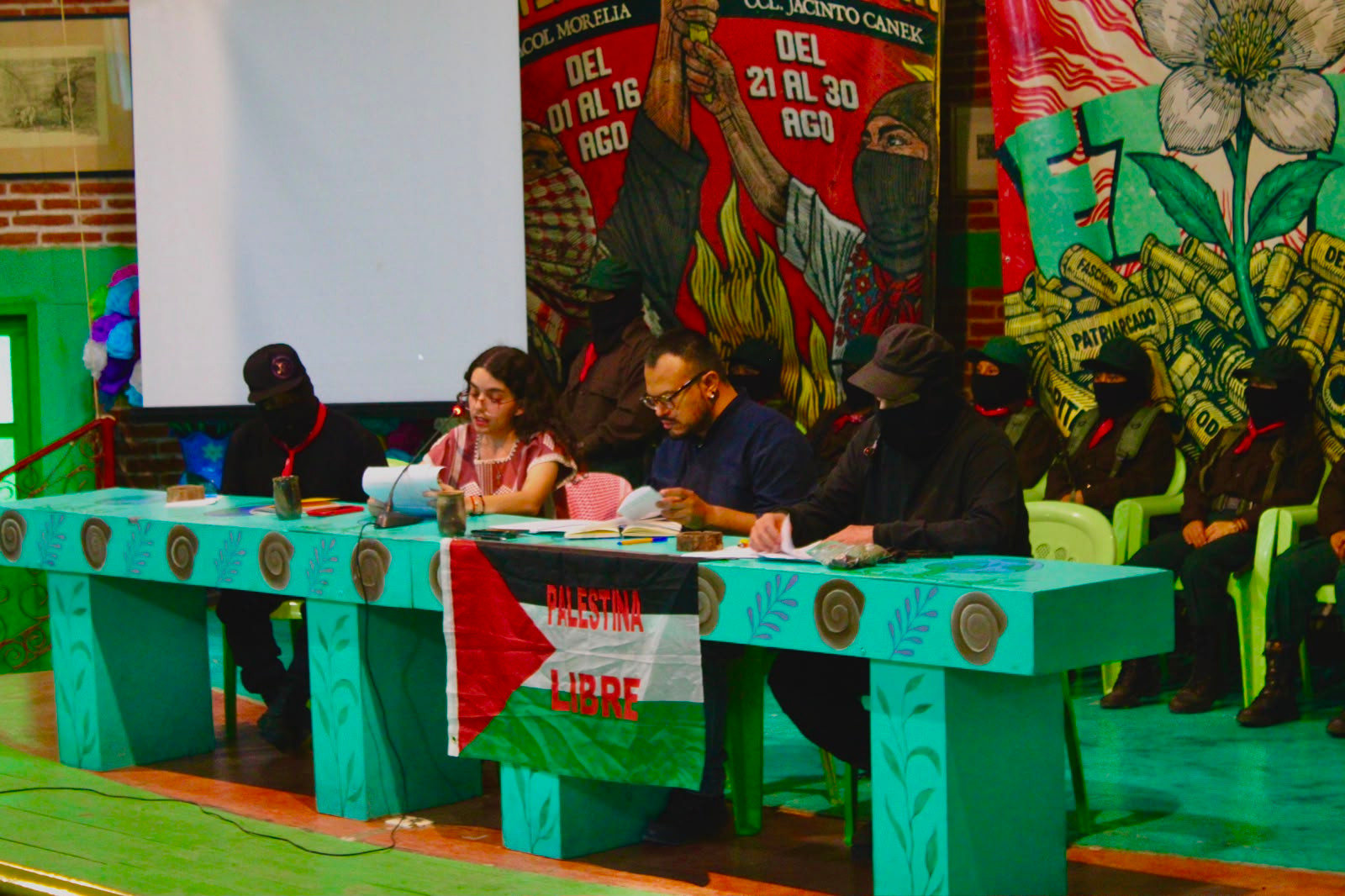
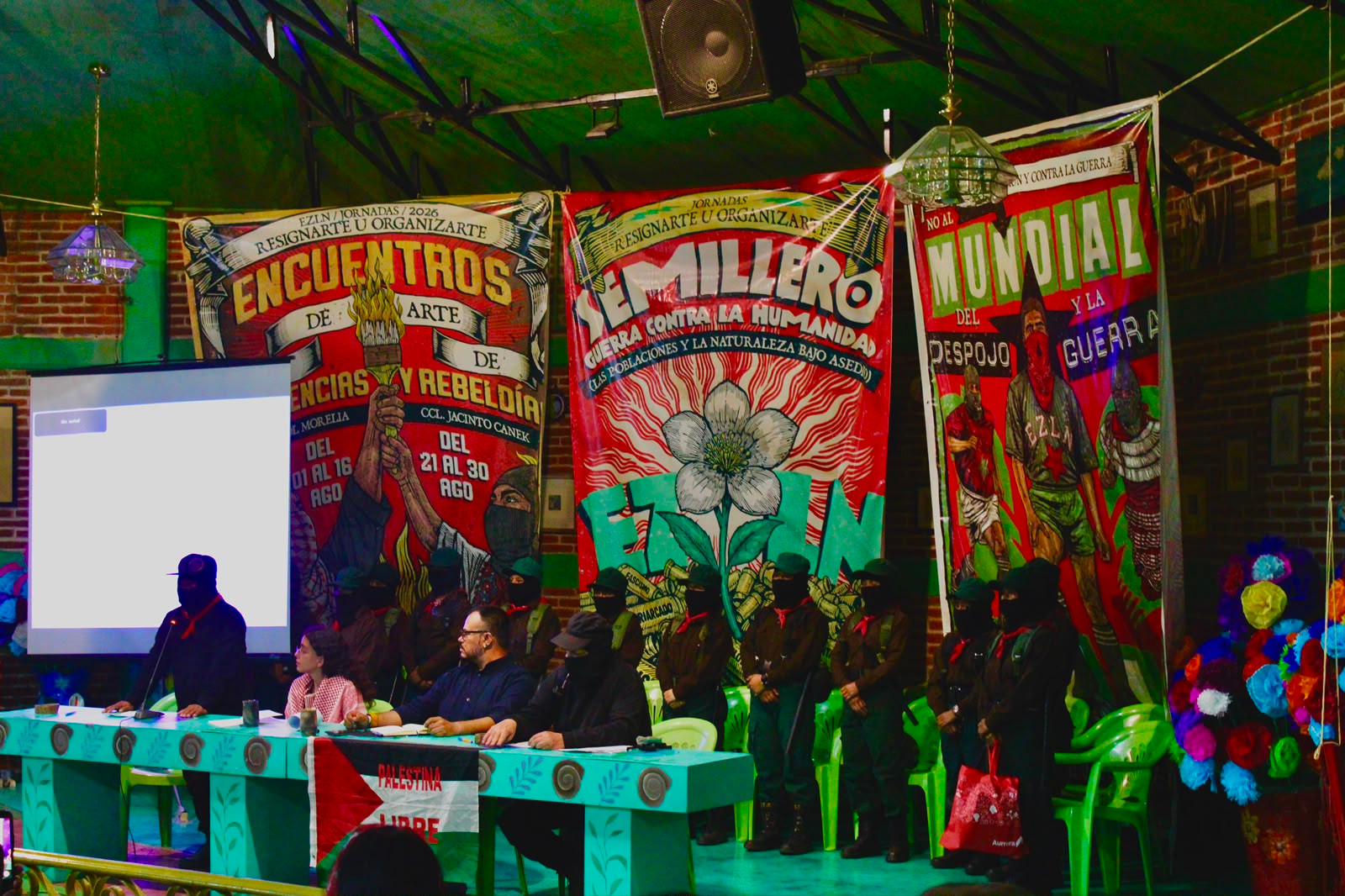
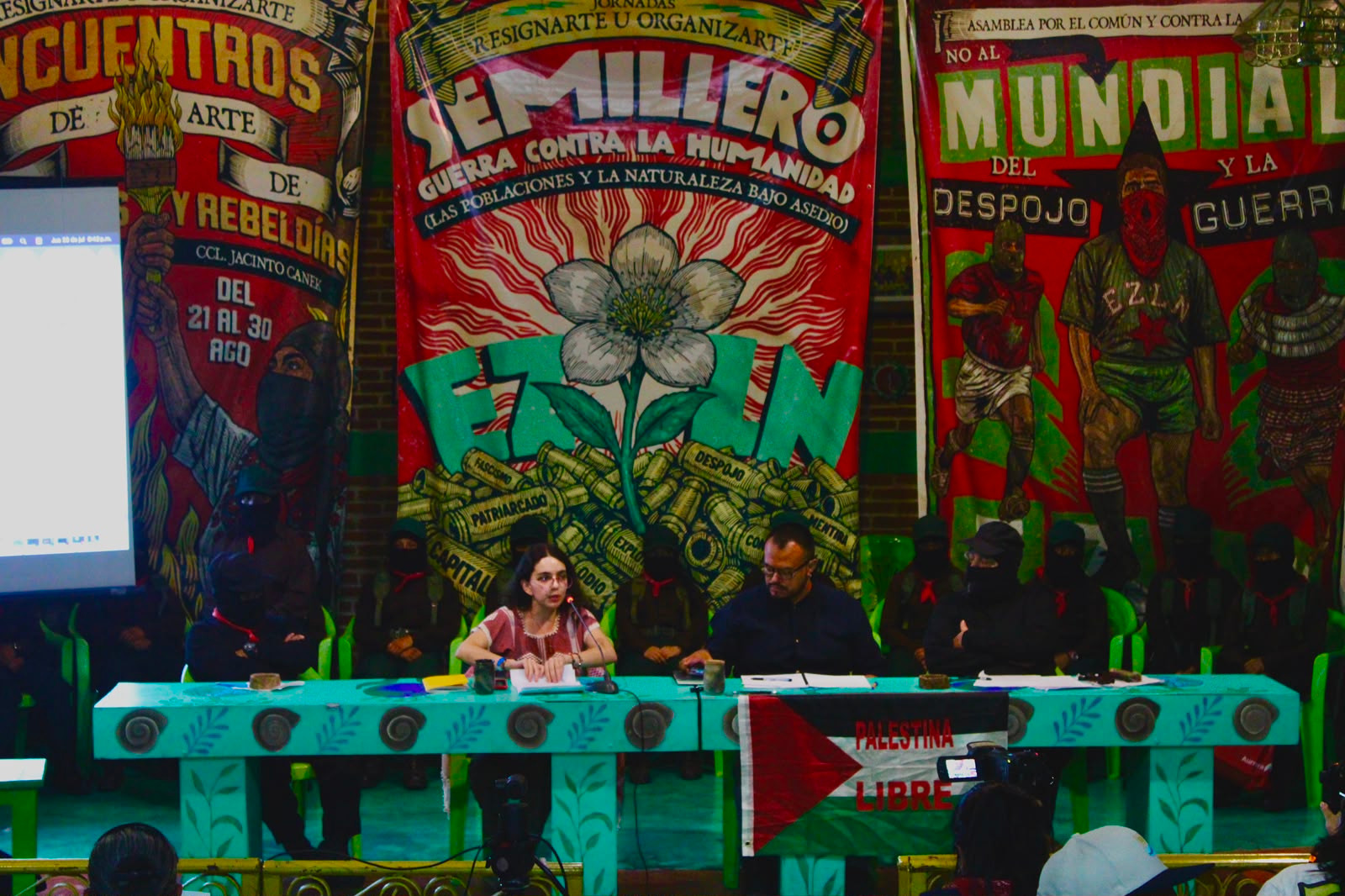
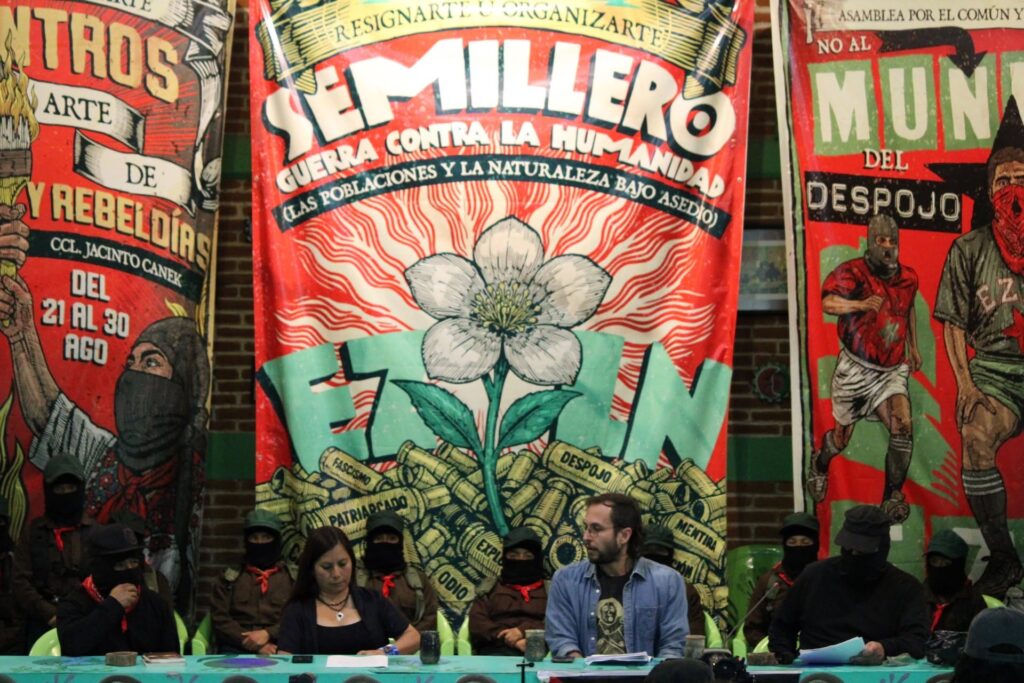
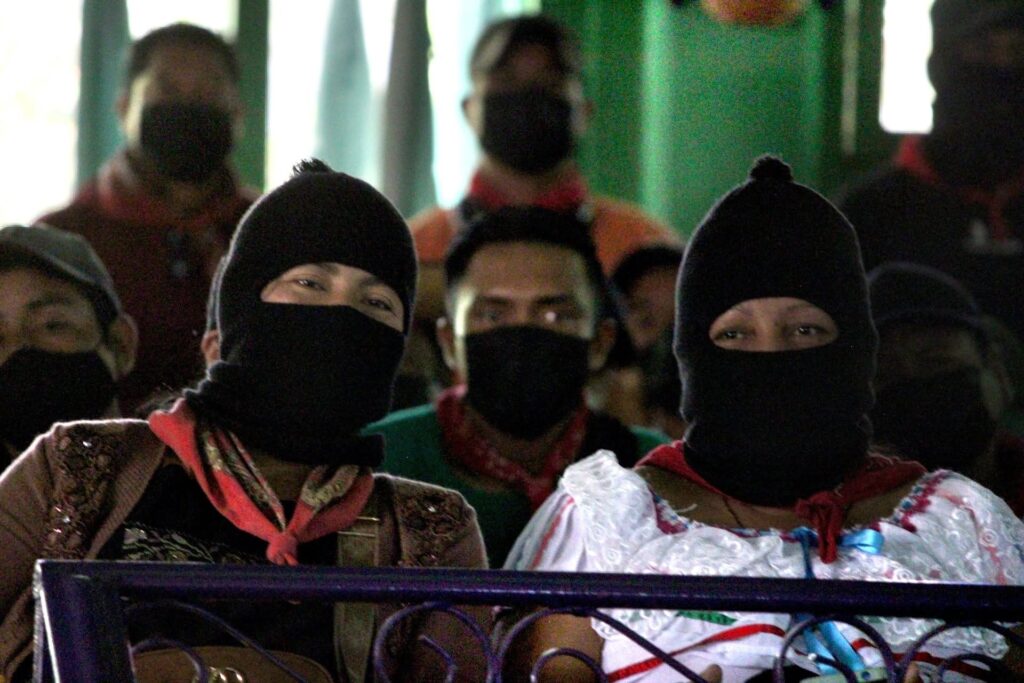
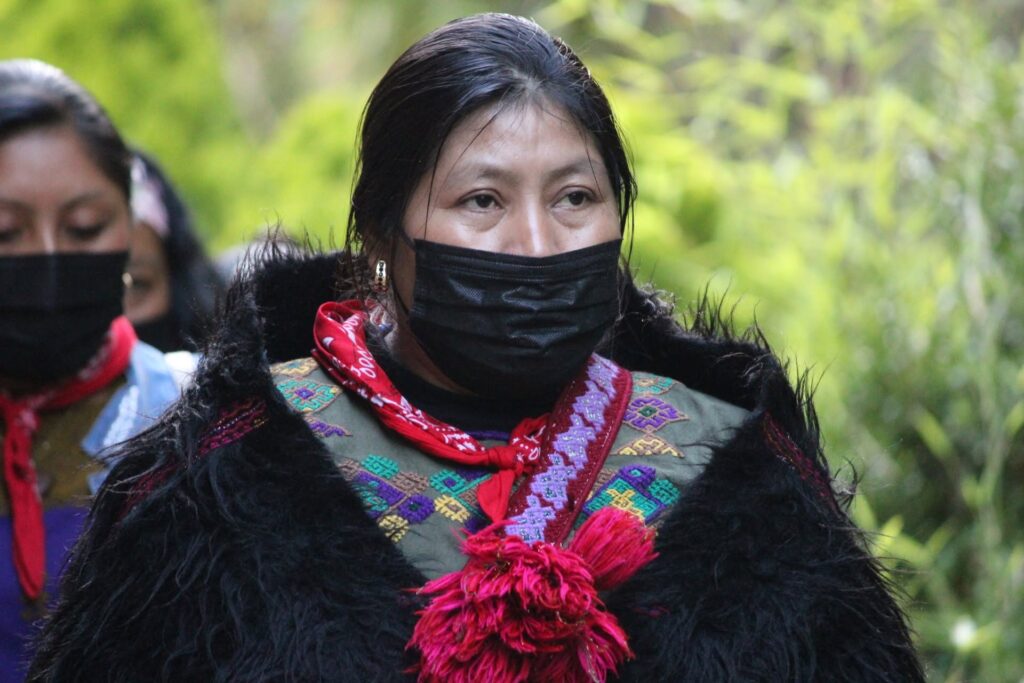
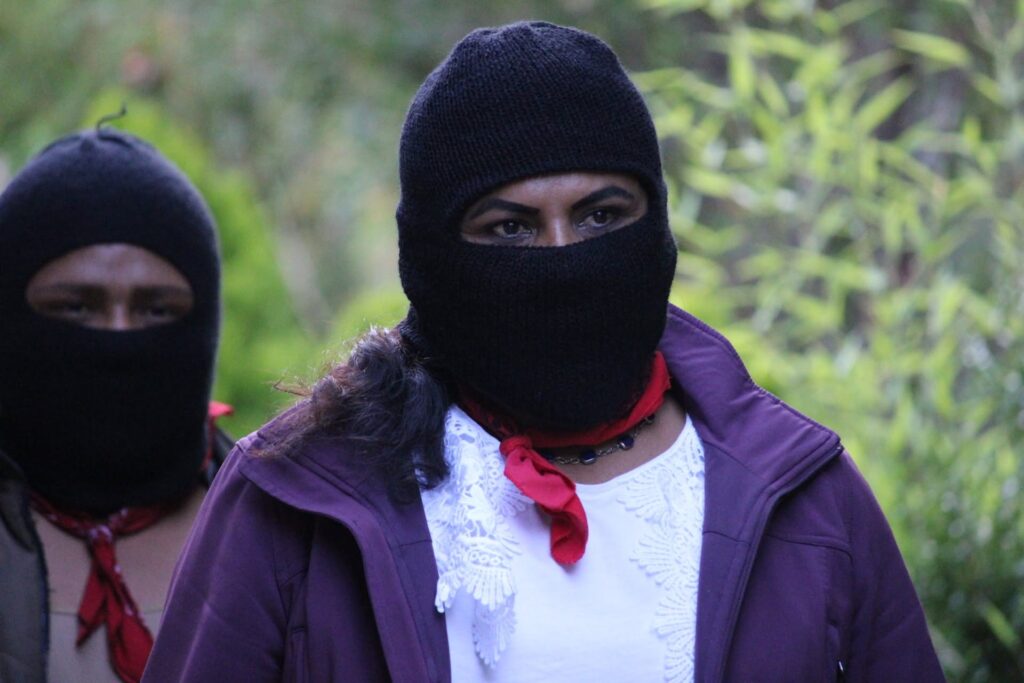
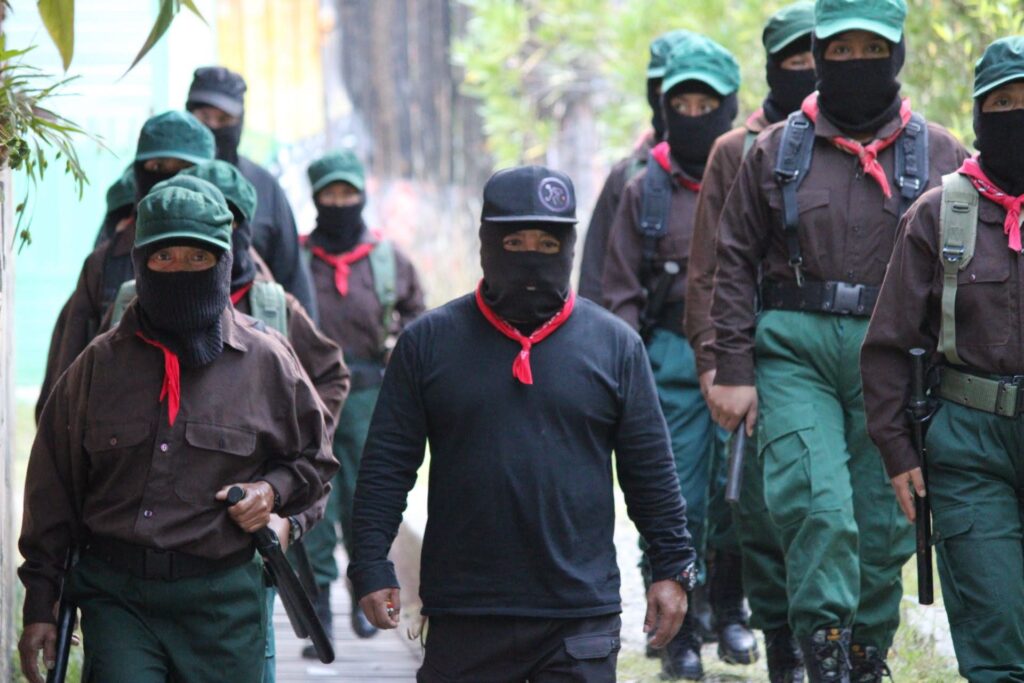
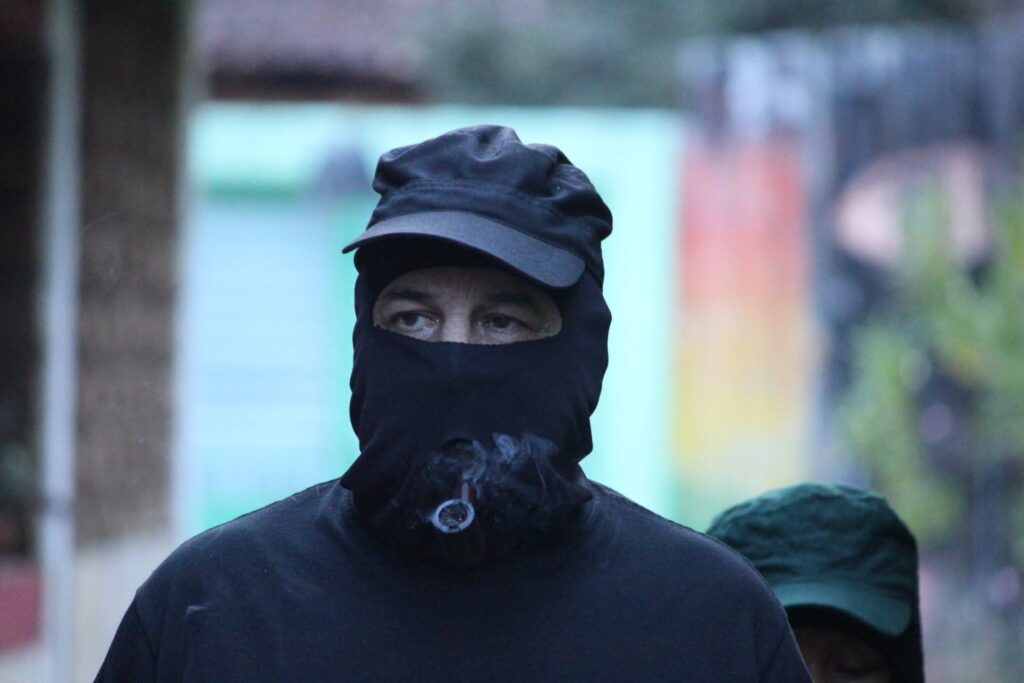
Reseñamos las Jornadas realizadas en San Cristóbal de Las Casas, Chiapas, el foro “La disputa por la memoria con el Estado” en Ciudad de México, y el anuncio del abrazo zapatista para las madres buscadoras.
Audios: Jornadas en San Cristóbal, Cobertura de la KeHuelgaRadio en CDMX, Transmisión de L@s Terci@s Compas. Música de fondo: “Mujer”, María Inés Ochoa Collage de imágenes: KeHuelgaRadio, CDH Frayba, GranOm
San Cristóbal de Las Casas, Chiapas 30 de agosto de 2026
Pronunciamiento Buscarles es una forma de amarles y de mantener viva su memoria. Día Internacional de las Víctimas de Desaparición Forzada.
El día de hoy, en las plazas del país, en calles, avenidas y en los espacios públicos, las familias, colectivas y organizaciones acompañantes gritarán: ¿Por qué los buscamos? ¡porque los amamos!
Cada 30 de agosto, desde 1981, conmemoramos el Día Internacional de las Víctimas de Desaparición Forzada. En este día, recordamos a nuestros seres queridos que están ausentes, a las familias que luchan cada día para encontrarles y a quienes han fallecido en la lucha por la verdad y la justicia.
En este día, miles de personas no están con sus familias; la desaparición en nuestro país no es un tema solo del pasado, sino que es una acción sistemática contínua, ya que cada día desaparecen entre 25 y 40 personas en México.
En México el Estado sigue permitiendo la desaparición de personas; sigue obstaculizando el acceso a la justicia, y continúa participando activamente en este delito de lesa humanidad. Esto se ve reflejado en las crecientes cifras de desaparición que incrementan año con año, pero también en la profunda violencia que se ejerce hacia las colectivas de familias buscadoras, a las organizaciones y personas que les acompañan.
Gobierno tras gobierno, hemos denunciado con datos el aumento del número de personas desaparecidas en Chiapas. En los últimos años, esta crisis se explica por la disputa y el control territorial ejercido por grupos delictivos con la tolerancia y falta de respuesta de las autoridades. A ello se suma una falsa narrativa de seguridad, planeada y orquestada desde el propio gobierno de Chiapas, que pretente negar la gravedad de esta crisis, invisibilizando a las víctimas y favoreciendo la impunidad.
Según el Registro Nacional de Personas Desaparecidas y No Localizadas, hasta agosto de 2026 se han registrado 133,680 personas desaparecidas en México; informes señalan que, Chiapas, pasó de 1,526 casos de personas desaparecidas en 2025 a más de 2,000 casos activos a mediados de 2026 (Red Lupa, 2026).
La Fiscalía del Estado de Guerrero urdió el entramado legaloide para confinar en el penal de Almoloya de Juárez al defensor comunitario Jesús Plácido Galindo. Fue un operativo aparatoso en el que participó la Secretaría de Gobernación que se encargó de brindar todas las facilidades para que Jesús fuera recluido en un penal federal, en Almoloya de Juárez, donde purgan sus penas los delincuentes de alta peligrosidad. El Ejército brindó la protección para que más de 40 policías ministeriales encapuchados detuvieran a Jesús Plácido. La Fuerza Aérea Mexicana proporcionó un helicóptero para el traslado de Jesús al penal de máxima seguridad. La dirección de comunicación del estado se encargó de difundir la versión de que Jesús Plácido estaba acusado sin pruebas de delincuencia organizada, homicidio calificado y secuestro. Se trató de difamarlo y presentarlo ante la opinión pública como un delincuente peligroso, violando el principio de presunción de inocencia.
El 23 de julio el juez de control Celso Ubaldo de la Sancha lo vinculó a proceso a pesar de que los dos testimonios que presentó la Fiscalía eran endebles. Lo acusó de ser el autor intelectual del asesinato de José Pablo Xanteco Bartolo, indígena nahua de la comunidad de Xicotlán.
La defensa solicitó al juez la nulidad de las entrevistas rendidas por las víctimas y un testigo que falleció en el 2022. Las tres personas no contaron con perito intérprete a pesar de que manifestaron ser de una comunidad indígena. En la entrevista con la hija del finado ésta no estuvo acompañada por la asesora jurídica de la CEAV. Los documentos lo confirman porque no aparecen los datos generales de la licenciada tampoco su firma al margen y al calce. La supuesta entrevista que que realizó el Ministerio Público al testigo Marcos Campos pierde todo su valor porque el señor ya había fallecido. La defensa demostró que la CURP que se encuentra en su credencial de elector (que se encuentra agregada a su entrevista) ya estaba dada de baja por defunción. Con su acta que se descargó en el portal del Registro Civil se demostró que el señor Marcos fue asesinado el 7 de mayo de 2022. La misma Fiscalía abrió una carpeta de investigación por este homicidio. Lo más grave de esta prueba falaz es que le falsificaron la firma al señor Marcos, como se puede cotejar con la firma de su credencial de elector. La misma entrevista que supuestamente le realizó el Ministerio Público al testigo no se encuentra dentro del sistema electrónico de control de averiguaciones previa (Secav). Las entrevistas no tienen el sello de la Fiscalía, no cuentan con el código de seguridad, tampoco con la fecha y la hora en que se realizaron. Todas estas inconsistencias demuestran que los datos de prueba recabados por la Fiscalía del estado se obtuvieron de manera ilícita. Por lo mismo deben excluirse y anularse, sin embargo, el juez desatendió este requerimiento.
Es importante recordar que el Mecanismo Federal de Protección a Defensores dependiente de la Secretaría de Gobernación le otorgó medidas cautelares a Jesús Plácido Galindo el 4 de enero de 2021. Desde esa fecha Jesús solicitaba el acompañamiento policial y de la Guardia Nacional cuando viajaba a la región de Chilapa. Sus familiares cuentan con fotografía de algunas visitas que Jesús realizó en ese año. Además el mecanismo cuenta con las bitácoras que dan cuenta de los servicios otorgados a Jesús en cuanto al acompañamiento de los cuerpos de seguridad. El mismo mecanismo de protección a través de la Dirección de Evaluación de Riesgos solicitó el 9 de julio de 2025 al fiscal general Zipacná Jesús Torres que le informara si en la Fiscalía General del Estado existía alguna carpeta de investigación o averiguación previa relacionada con Jesús Plácido Galindo. El 7 de agosto de ese mismo año la Fiscalía envió un oficio donde informa que después de una revisión minuciosa de sus archivos, en sus bases de datos y en las fiscalías regionales que no habían encontrado expedientes donde Jesús es víctima de algún delito, más bien informó que habían encontrado carpetas de investigación donde aparece como imputado.
Se trata de cuatro carpetas con las siguientes fechas: 15 de febrero de 2024, 16 de julio de 2024, 7 de mayo de 2024 y 16 de julio del mismo año. Lo que quiere decir que por lo menos hasta el 7 de agosto de 2025 solo esas carpetas existían en los archivos de la Fiscalía. Es otra prueba más, con documentos de la misma Fiscalía, que la denuncia interpuesta por homicidio calificado contra el señor José Pablo Xanteco Bartolo, no existía. Por lo tanto, es un expediente que recientemente se armó, como se corrobora con el testimonio de Josefina, la hija del difunto, que lo presentó en el mes de junio del presente año.
Sin embargo, uno de los compañeros de Jesús Plácido ha declarado que José Pablo Xanteco cayó en la cárcel por el delito de violación contra una mujer de la comunidad de Atzacoaloya. “En ese entonces yo también estaba en la cárcel del Amate Amarillo, y nos contaba que temía salir porque ya lo estaban esperando Los Ardillos porque la señora que violó es de Atzacoaloya, territorio de Los Ardillos. El expediente está ahí, el gobierno sabe que cometió ese delito porque estuvo más de ocho años en la cárcel, pero han distorsionado todo y ahora están culpando al compañero Jesús Plácido, y la hija de José Pablo Xanteco, está obligada por Los Ardillos a denunciarlo”, ha declarado uno de los integrantes del CIPOGEZ.
Quedan evidenciadas las autoridades del estado y federales que se confabularon para arremeter contra Jesús Plácido, un defensor comunitario del pueblo ñu savi que se atrevió a denunciar la colusión que existe entre autoridades municipales con el crimen organizado que controla la Montaña baja de Guerrero. Su denuncia sin tapujos le costó muy caro porque lo dejaron incomunicado de su familia, no le permitieron que tuviera una defensa adecuada y mandaron un mensaje a los luchadores sociales que se atreven a increpar a los gobernantes por sus malas actuaciones, que aplicarán de manera facciosa la ley para acallarlos y doblegarlos.
Los compañeros del CIPOG-EZ se han manifestado para exigir su liberación inmediata. La comunidad de Buenavista de donde es su familia también se ha organizado para respaldar a Jesús a quien vieron crecer junto a su padre Cirino y su tío Bruno, quien fue asesinado en las instalaciones de la Secretaria de Salud en Chilpancingo, cuando acompañaba a las autoridades de su pueblo.
Jesús creció en las asambleas donde aprendió a escuchar y hablar en favor de las comunidades indígenas. “Los indígenas también podemos hablar con las autoridades y gritar para que se respeten nuestros derechos”, solía decirle a su esposa. La discriminación, la pobreza y el olvido de los gobiernos lo padeció en carne propia. Cuando su papá se iba a organizar a los pueblos, Jesús sembraba maíz, frijol, calabaza y trabajaba en la elaboración de la panela. En muchas ocasiones también lo acompañaba y así fue como aprendió a luchar y no permitir ninguna injusticia.
Por eso se fue a realizar asambleas desde 2014 en las comunidades nahuas de la Montaña baja para contener la avalancha de la violencia de los grupos delincuenciales. Las autoridades estatales nunca elaboraron acciones para disminuir la violencia a pesar de los asesinos y desapariciones de mujeres, hombres y niños. Jesús Plácido siempre denunció el asedio delincuencial y las tropelías de los gobiernos municipales y estatales.
Entre las denuncias más sentidas que hizo llegar con fuerza a las autoridades fue la seguridad en las comunidades indígenas. Habló del grave fenómeno que se ha acentuado en el país, como la desaparición de personas que ahora se ha extendido en las regiones indígenas donde la ley no se aplica y se permite con los grupos de la delincuencia tomen el control de las poblaciones.
La osadía de Jesús Plácido al denunciar los ataques de la delincuencia incomodó a las autoridades, por eso el gobierno inició una campaña de linchamiento haciendo aparecer a Jesús como parte de un grupo de la delincuencia. Empezó a ser perseguido al punto de querer vender el discurso de que el defensor ñu savi recibía dinero ilícito, logrando que la Unidad de Inteligencia Financiera congelara su cuenta.
Los pobladores de Buenavista afirman que Jesús Plácido buscaba beneficios para la comunidad. Mientras que habitantes de Tula han dicho que gracias a la CRAC-PF y al Cipog-EZ los delincuentes pudieron ser retenidos durante los ataques. “No confiamos en el gobierno. Ahora por defender y pedir apoyo encerraron a Jesús Plácido, el gobierno encarcela a los que estamos luchando por el pueblo”.
Las inconformidades son más grandes que las soluciones. Después de la violencia contra las comunidades nahuas de la Montaña Baja se esperaba que se desplegaran elementos castrenses y policiacos suficientes y la Fiscalía detuviera a los agresores. Sin embargo, las quejas de los pobladores subrayan que no tienen confianza para volver a sus pueblos, a pesar de que hay algunas patrullas de la Guardia Nacional. Las más de 800 personas desplazadas continúan con la esperanza de regresar a sus hogares con la certeza de que no habrá más ataques, pero se desvanecen las ilusiones con el actuar reprobable de las instituciones que, lejos de castigar a los generadores de violencia, tuercen la justicia, siendo Jesús Plácido víctima de un delito fabricado.
Centro de Derechos Humanos de la Montaña, Tlachinollan
Al CIPOG-EZ Al CNI Al EZLN A la Sexta Internacional A todes que firmaracon la Declaración por la Vida A los medios independientes
Como colectivo de la red Europa Zapatista
rechazamos enérgicamente la detención arbitraria del Compañero Jesús Plácido Galindo, vocero del Concejo Indígena y Popular de Guerrero-Emiliano Zapata (CIPOG-EZ) y miembro de la coordinación del Congreso Nacional Indígena, CNI, ocurrida el 17 de Julio de 2026
– ¡Exigimos la inmediata aparición con vida de Jesús Placido Galindo!
– ¡Exigimos el desarme y desmantelamiento del grupo delincuencial Los Ardillos!
– ¡Exigimos respeto a la integridad de los Defensores de Derechos Humanos!
– ¡Exigimos un alto a las agresiones a las comunidades indígenas y a su policía comunitaria!
¡Viva el CIPOG-EZ! ¡Viva el CNI! ¡Viva el EZLN! ¡Vivan las dignas rebeldias del mundo! ¡Viva la solidaridad internacional desde abajo y a la izquierda»
Desde la Europa Insumisa, Slumil K’ajxemk’op, rechazamos enérgicamente la detención arbitraria del Compañero Jesús Plácido Galindo, vocero del Concejo Indígena y Popular de Guerrero-Emiliano Zapata (CIPOG-EZ) y miembro de la coordinación y seguimiento del Congreso Nacional Indígena, CNI, ocurrida el 17 de Julio de 2026 aproximadamente a las 14:30 hora local de México.
Su detención se realizó en el punto de control militar de Monte Alto, Municipio de San Marco en el Estado de Guerrero, bajo condiciones que violentan los Derechos Humanos: una fuerte presencia de las tres fuerzas de seguridad nacional: Militar, Guardia Nacional y Policía estatal y local.
Al momento de su detención no se presentó ninguna orden de aprensión, tampoco se mencionó el motivo de este acto violento. El Compañero Plácido Galindo fue subido a una camioneta de la Fiscalía General de la República, la cual viajó en dirección a Acapulco. Desde entonces se desconoce el paradero de Plácido Galindo, lo que conlleva a una Desaparición Forzada.
Al momento de su detención arbitraria Plácido Galindo se dirigía a una reunión con Francisco Rodríguez Cisneros, el subsecretario de Desarrollo Político y Social del estado de Guerrero, quien lo citó con insistencia. Se conoce que Rodríguez Cisneros esta coludido con el grupo criminal Los Ardillos.
Preocupante y nuevamente agravante es la suspensión a Plácido Galindo de las medidas de seguridad contempladas dentro del Mecanismo de Protección para Personas Defensoras de Derechos Humanos y periodistas, esto ocurrió poco antes de su detención arbitraría. Por si esto no fuera poco, se le congeló su cuenta bancaria.
Estos hechos en contra de la integridad de Jesús Plácido Galindo se llevan a cabo bajo la complicidad comprobada y con la protección al grupo delincuencial Los Ardillos, por parte de Gobierno local de Mercedes Carballo Chino y del Gobierno Regional de Guerrero, Evelyn Salgado Pineda.
¡A la Europa Insumisa nos llega la palabra de los pueblos, y no nos creemos las mentiras que distribuye el gobierno de “izquierda” de la 4Transformación!
Nosotres creemos en la solidaridad internacional, en el respeto a los Derechos Humanos y en la autodeterminación de los pueblos.
Los abajo firmantes,
¡Exigimos la inmediata aparición con vida de Jesús Placido Galindo!
¡Exigimos el desarme y desmantelamiento del grupo delincuencial Los Ardillos!
¡Exigimos respeto a la integridad de los Defensores de Derechos Humanos!
¡Exigimos un alto a las agresiones a las comunidades indígenas y a su policía comunitaria!
Desde la Europa Insumisa
Julio 2026
Firmas:
20ZLN. Italia
Asamblea Libertaria Autoorganizada Paliacate Zapatista. Grecia
Assemblea de Solidaritat amb Mèxic-ASMEX. País Valencià, Estado Español
Associació Solidaria Cafè Rebeldía-Infoespai. Barcelona, Catalunya
Associazione Ya Basta! Êdî bese. Italia
Batec Zapatista. Barcelona, Cataluña
Café Libertad Kollektiv. Hamburgo, Alemania
Cafez. Lieja, Bélgica
Cal Cases. Cataluña
Caracoleras de Olba. Olba, Teruel, Estado Español
CAREA e.V. Alemania
Centro de Documentación sobre Zapatismo. Cedoz. Estado Español
Colectivo Armadillo Suomi. Finlandia
Colectivo Calendario Zapatista. Grecia
Colectivo Ramona. Chipre
Collettivo Zapatista Lugano. Suiza
Comitato Chiapas Maribel. Bérgamo, Italia
Comité de solidaridad con Latinoamérica (LAG) – Chiapasgruppa LAG. Oslo, Noruega
Confederación General del Trabajo – CGT. Estado Español
Cooperazione Rebelde Napoli. Italia
CSPCL, París, Francia.
Espoir Chiapas. Francia
Frankfurt International. Alemania
Gira Zapatista Holanda. Holanda
Grupo México del Foro Internacional. Dinamarca
Gruppe B.A.S.T.A. Munster, Alemania
Kaffeekollektiv Aroma Zapatista, Hamburgo
Lumaltik Herriak. País Vasco
Mujeres y Disidencias de la Sexta en la Otra Europa y Abya Yala.
Mut Vitz 13. Marsella, Francia
Mut Vitz 31. Toulouse, Francia
Mut Vitz 34. Francia
Nodo Solidale Roma. Italia
Pallasos en Rebeldía. Estado Español
Quinoa. Bélgica
Red de Rebelión. Alemania
Red Ya-Basta-Netz. Alemania
Silbo Zapatista. Estado Español
Solidaridad Directa Chiapas. Suiza
Tatawelo. Italia
Terra Insumisa Alcamo / Sicilia Sud Globale. Sicilia, Italia
La CNDH se apartó de los principios de proteger y estar de lado de las víctimas, para estar de lado de los responsables de un caso tan doloroso coma la desaparición de nuestros hijos.
La actuación de la CNDH representa un retroceso grave.
En resumen, mientras la CNDH defiende su informe basándose en una supuesta estricta sujeción a las pruebas materiales y desmiente cualquier complicidad, los familiares y colectivos perciben su actuación como un aval institucional que minimiza la tragedia, restaura versiones exculpatorias del Estado y abandona el mandato histórico de estar incondicionalmente del lado de los agraviados.
organismo argumentan que este ha perdido eficacia como contrapeso del Estado, limitándose a gestiones burocráticas y generando una percepción de abandono institucional. A esto se suman polémicas recurrentes en medios e investigaciones públicas sobre las percepciones salariales de mandos superiores y denuncias internas de presbadiscos y malos manejos administrativos.
¡ El papel de la CNDH en nuestro país es obsoleto e incongruente!
¡ Hasta encontrar a todos!
Aquí el posicionamientos de los padres y madres de los 43 estudiantes de Ayotzinapa:
Ayotzinapa, Guerrero, 26 de julio del 2026, A las organizaciones sociales, civiles, colectivos, sindicatos y a las personas que nos han acompañado durante más de 11 años en este largo caminar por la exigencia de la presentación con vida de nuestros hijos, reciban un fraterno y combativo saludo de los padres y madres de los 43.
A dos meses de cumplir 12 años desde que nos arrebataron a nuestros hijos, seguimos luchando como desde el primer día en este camino tormentoso, salimos a las calles a gritar los nombres de nuestros hijos para que el gobierno sepa que los seguiremos buscando hasta encontrarlos.
En cambio, las autoridades siguen apostándole al desgaste y cansancio de cada uno de las madres y padres para dejar de luchar por nuestros hijos. El pasado 7 de julio de este año, la Suprema Corte de Justicia de la Nación decidió atraer un recurso de revisión, supuestamente extraordinario, pero que en las leyes no existe, de una sentencia que fue emitida desde el año 2018 por un Tribunal de Tamaulipas, alargando así el proceso de justicia y el dolor de las madres y padres que solo buscamos el paradero de nuestros seres queridos.
En esa misma semana, el 9 de julio del 2026, la Comisión Nacional de los Derechos Humanos, emitió una recomendación sobre la desaparición de nuestros hijos, por lo que desde este espacio nos pronunciamos de manera clara y contundente para decirles que rechazamos totalmente esa recomendación, porque está fuera de lugar y por no contener la verdad.
Los padres y madres de los 43 sólo nos reunimos con esa institución en dos ocasiones, la primera en marzo del 2021 y la segunda el día 25 de marzo del 2022. En esta última reunión, la CNDH firmó un documento en el que se establecieron cinco acuerdos concretos. El primer acuerdo fue que iniciaría una investigación a la SEDENA y a la obstaculización a los trabajos del GIEI. Segundo, que iniciaría una investigación a la FGR respecto del asesinato de “El Caderas”. Tercero, que iniciaría una investigación a diversas autoridades de FRG y otras, respecto del proceso de extradición de Tomás Zerón de Lucio. Cuarto, que iniciaría la solicitud a la Suprema Corte de Justicia de la Nación respecto a la petición de jurisdicción homologada hecha por los padres, y quinto, seguimiento del informe del GIEI para impulsar sus recomendaciones.
De los acuerdos comprometidos con la CNDH, ninguno los cumplió. Por el contario, solo se dedicó a resaltar la protección al ejército y decir que ellos no tuvieron nada que ver en la desaparición de nuestros hijos. También pretenden descalificar todo el trabajo realizado por el GIEI, los organismos internacionales y a las organizaciones que nos han acompañado durante más de once años en nuestra lucha. Pero le decimos a la CNDH, que no se puede echar abajo todo el trabajo realizado por los expertos que nos han acompañado para buscar la verdad y justicia.
La CNDH también pretende regresar a la versión del gobierno del PRI del 2014, al minimizar el caso Ayotzinapa como un hecho local con la participación de solo policías municipales con la delincuencia organizada, quitando totalmente la responsabilidad del ejército mexicano y de la Marina, por todo ello, es que rechazamos totalmente la recomendación, porque lejos de ayudarnos a que avancen las investigaciones y nos acerque al paradero de nuestros hijos, nos aleja más y nos regresa a la verdad histórica.
La CNDH se apartó de los principios de proteger y estar de lado de las víctimas, para estar de lado de los responsables de un caso tan doloroso como la desaparición de nuestros hijos.
Atentamente Padres y madres de los 43
¡Porque vivos se los llevaron, Vivos los queremos!
Tengo que pararme porque nuestra palabra como zapatistas, mujeres, hombres, niños, ancianos, hablo a nombre de ellos, dirigida a nuestras compañeras, compañeros, buscadores, buscadoras. Hablo por ellas y por ellos.
Compañera, madre buscadora, compañero, padre buscador:
Para nosotros, nosotras, zapatistas, eres como un zapatista, una zapatista. Es un gran lucha y es un gran ejemplo. Nos haces recordar, buscando a tus seres queridos, donde te toca estar.
Nos haces sentir como cuando nosotros, nosotras, pueblos originarios, nunca nos conoció el sistema capitalista. Estuvimos olvidados, no existíamos para ellos. Hoy, compañera, compañero, buscadores, buscadoras, nos das un ejemplo.
Nosotros, zapatistas, aquí estamos, estamos luchando, estamos contra el sistema capitalista, pero a tu hija, a tu hijo, son mis hermanos, son nuestros hermanos, son nuestras hermanas. Somos familia, porque mira cómo nos hace el sistema capitalista, pero nos das el ejemplo. Los sentimos como si fuéramos, que ustedes como mamás, como si fuera de que entonces somos sus hijos, sus hijas, que los estás buscando.
Primero me gustaría empezar agradeciéndoles la invitación a los compañeros, a las compañeras, a loas compañeroas zapatistas, y decirles que es un honor compartir este espacio, ya que para mí, como muchas de las personas que estamos acá, y ya lo han dicho otras personas que han compartido acá la palabra, son un referente de resistencia y también un recordatorio vivo de que frente a la tormenta viene el día después. Que el mundo de hoy no tiene que ser el mundo de mañana, y que es posible construir nuevos días y nuevos mundos.
Además, y yo también por ahí no veo el payaso, no veo, pero igual me pasa lo mismo, me gustaría doblemente agradecer la invitación porque me obligó a sentarme a escribir reflexiones que no siempre logro aterrizar a palabras en papel, porque la verdad sí me da el mal de la computadora, el mal de la hoja en blanco.
Y además voy a pedir una disculpa porque esta reflexión va a ser no solo mía. Se pidió que no citemos otras personas, pero me es imposible no hacerlo, porque en algunos momentos sí va a ser una reflexión un poquito colectiva, más mucho que poquito, porque inconscientemente, conscientemente, y necesariamente, retoma lo que he aprendido y escuchado en este caminar, como coloquialmente, o a veces le decimos, a la búsqueda de las personas desaparecidas, con familias y personas que me han permitido acompañarlas de una u otra forma, y que en parte es gracias a ellas que he aprendido a mirar nuevamente el mundo. A todas ellas, a las familias, les doy mi profundo agradecimiento, como siempre, por abrirme su corazón, por permitirme conocer su pensar, su quehacer y su sentir. Y aprovecho además para mandar un saludo fraterno a quienes hoy están aquí, a ustedes, y quienes estén en el Zoom o en el YouTube, no sé dónde se esté transmitiendo. Un saludo respetuoso al corazón de las comunidades zapatistas y un saludo a quienes también han compartido otras reflexiones.
Mientras escribía estas palabras, me preguntaba cómo hablar de la desaparición en el marco de un semillero titulado Guerra contra la Humanidad. Cómo empezar a hablar de una de las formas de violencia más profundamente crueles y mantener en el centro de todo lo que voy a decir, o intentarlo por lo menos, la esperanza, que es al final, por lo que yo he aprendido de este caminar, lo que sostiene la búsqueda de cientos y miles de familias en México: la esperanza del reencuentro y la esperanza de la vida también.
En este día se compartieron reflexiones profundas y contundentes sobre la migración, las diversas formas de la guerra, la búsqueda de los familiares de desaparecidos y desaparecidas y las corporaciones criminales, todo esto enmarcado en la lucha por la vida y la construcción de alternativas.
Presentamos abajo un resumen de las ponencias, así como los audios y ligas a los textos completos.
Bruno Miranda – “Miradas críticas de las migraciones y las fronteras”
Las fronteras no frenan la migración, fabrican la ilegalidad.
Este cuarto día del Semillero “Guerra contra la Humanidad”, el investigador Bruno Miranda invita a mirar el fenómeno de la migración desde otro ángulo: no fueron las migraciones las que dieron origen a las fronteras, sino que son las fronteras y los Estados quienes producen la figura del migrante. Desde esta perspectiva, migrar deja de entenderse como un hecho natural para convertirse en una condición política construida por el Estado y el capitalismo.
Durante su ponencia “Miradas críticas de las migraciones y las fronteras”, Miranda propuso desnaturalizar tanto la migración como las fronteras. Explicó que la movilidad humana ha existido desde siempre, pero que la categoría de “migrante” surge cuando aparecen los Estados nacionales, capaces de decidir quién pertenece a un territorio y quién queda fuera de él. Así, las fronteras no solo delimitan países: clasifican personas, autorizan unas movilidades y criminalizan otras.
Bruno Miranda sostuvo que las migraciones han sido fundamentales para la construcción del capitalismo moderno. Las ciudades, los sistemas ferroviarios, la agricultura y la industrialización en América fueron levantados por millones de trabajadores migrantes. Sin embargo, esa misma fuerza de trabajo que resulta indispensable para la economía también es sometida a procesos de ilegalización, mediante políticas que convierten en “ilegales” a personas que antes eran aceptadas cuando el mercado necesitaba su trabajo. En ese contexto, explicó que la llamada crisis migratoria funciona muchas veces como un discurso político que justifica el endurecimiento de las políticas de control. Bajo esa lógica se fortalece la securitización de las fronteras: muros, vigilancia militar, drones, sistemas biométricos y una creciente colaboración entre instituciones policiales y migratorias que presentan la movilidad humana como una amenaza para la seguridad nacional.
Miranda señaló que estas políticas no buscan impedir completamente la migración, sino administrarla mediante estrategias de disuasión, obligando a las personas a recorrer rutas cada vez más peligrosas o a permanecer durante meses e incluso años esperando una resolución migratoria. Ese modelo también alimenta una creciente industria migratoria, donde centros privados de detención obtienen ganancias millonarias a partir del encierro de personas migrantes.
Para quienes logran cruzar la frontera, la violencia no termina. Miranda explicó que opera una inclusión diferencial: las personas migrantes son incorporadas al mercado laboral porque su trabajo resulta indispensable, pero permanecen excluidas del acceso pleno a derechos y ciudadanía. La frontera deja entonces de ser únicamente una línea geográfica para convertirse en un mecanismo cotidiano de vigilancia, miedo e incertidumbre. Es lo que definió como la internalización de las fronteras.
A ello se suman prácticas como el perfilamiento racial, que identifica como sospechosas a determinadas personas por su apariencia, y las deportaciones externalizadas, mediante las cuales los gobiernos trasladan migrantes a terceros países, ampliando el control migratorio mucho más allá de sus propias fronteras.
Lejos de presentar a las personas migrantes únicamente como víctimas, Bruno Miranda destacó que también construyen formas colectivas de resistencia. Las caravanas migrantes, afirmó, representan estrategias de cuidado mutuo, organización y defensa frente a un orden fronterizo que busca administrar individuos, pero que encuentra en la acción colectiva una permanente disputa por el derecho a buscar una vida digna.
Miranda nos invita así a mirar la migración desde una perspectiva crítica: entender que detrás de cada frontera existen decisiones políticas, intereses económicos y relaciones de poder que siguen moldeando quién puede moverse libremente y quién debe arriesgar la vida para hacerlo. Pero entender también que en la migración se manifiesta también la resiliencia de quienes insisten en buscar un lugar digno en un mundo de despojo y exclusión.
David Barrios – “El fin de las guerras y las luchas por el futuro”
Las guerras de hoy buscan controlar la vida y los territorios.
Por su parte, David Barrios afirmó que la militarización ya no responde únicamente a enfrentamientos entre Estados, sino a una estrategia para reorganizar territorios, apropiarse de bienes naturales y disciplinar a las poblaciones. Frente a ese escenario, llamó a fortalecer la organización comunitaria y la defensa de la Madre Tierra.
Durante décadas, las guerras fueron entendidas como conflictos entre países que buscaban derrotar a un enemigo. Sin embargo, esa lógica está cambiando. Para el investigador David Barrios, los conflictos actuales responden a una forma distinta de hacer la guerra: una ofensiva permanente que tiene como objetivo controlar territorios, garantizar el acceso a bienes naturales y reorganizar la vida de los pueblos en beneficio del capital.
Con su participación “El fin de las guerras y las luchas por el futuro”, Barrios explicó que la militarización contemporánea rebasa el ámbito estrictamente militar. Hoy se expresa mediante la expansión de bases, operaciones de seguridad, políticas de control territorial, criminalización de poblaciones y el fortalecimiento de mecanismos de vigilancia que, afirmó, acompañan los procesos de despojo en distintas regiones del mundo.
Barrios, señaló que las disputas geopolíticas entre grandes potencias no pueden entenderse únicamente como conflictos por el poder internacional. Detrás de ellas, sostuvo, existe una creciente competencia por minerales estratégicos —agua, energía y otros bienes naturales— indispensables tanto para el desarrollo tecnológico como para la industria militar. En ese contexto, dijo, los territorios habitados por los pueblos se convierten en espacios de disputa permanente.
Barrios también advirtió que la llamada “guerra contra el narcotráfico” ha servido, en distintos países de América Latina, como argumento para profundizar procesos de militarización y control social. A su juicio, estas estrategias no han resuelto la violencia, sino que han favorecido la fragmentación de los territorios y la expansión de grupos armados que hoy disputan recursos, rutas comerciales y actividades económicas más allá del tráfico de drogas.
Asimismo, alertó sobre el crecimiento sostenido del gasto militar a escala global, el desarrollo de nuevas tecnologías aplicadas a la guerra —como la inteligencia artificial y los drones— y la ampliación de la presencia militar estadounidense en distintas regiones del continente. Desde su perspectiva, estos procesos anuncian un escenario de conflictos cada vez más prolongados y complejos.
Pese a este panorama, el investigador rechazó que el futuro esté definido únicamente por la guerra. Puesto que las resistencias construidas por los pueblos, las comunidades y los movimientos sociales continúan demostrando que existen alternativas frente al despojo y la militarización.
“La lucha por la Madre Tierra es también la lucha por el futuro”, afirmó Barrios, haciendo un llamado a fortalecer las formas de organización colectiva, la autonomía y la defensa de la vida como respuesta a una época marcada por la violencia y la disputa por los territorios.
Andrea Horcasitas Martínez – “Frente al horror, la búsqueda y la promesa del reencuentro”
La académica y activista Andrea Horcasitas Martínez reflexionó sobre la desaparición de personas en México como una de las expresiones más crueles de la guerra contra la humanidad, agradeciendo al movimiento zapatista por abrir un espacio de diálogo y reconociendo que su análisis surge del aprendizaje compartido con familias buscadoras. Su exposición se organizó en tres ejes: el diagnóstico de la crisis, la disputa por las cifras y la esperanza que nace de la búsqueda colectiva.
La desaparición forzada no es un fenómeno nuevo ni exclusivo de México, afirmó, pero desde el inicio de la llamada guerra contra las drogas, el país ha alcanzado niveles de violencia sin precedentes en América Latina. Más de 135 mil personas desaparecidas, miles de fosas clandestinas y decenas de miles de cuerpos sin identificar reflejan una crisis que va mucho más allá de los números. La desaparición se presenta como una tecnología de guerra vinculada al despojo territorial, el desplazamiento, el reclutamiento forzado y la acumulación de riqueza mediante la violencia. Las fosas clandestinas han transformado la relación de las comunidades con su territorio, pues ya no se encuentran únicamente en lugares remotos, sino también en ciudades, escuelas, parques y espacios cotidianos, convirtiendo amplias regiones en verdaderas “zonas de sacrificio”.
En una segunda parte, la autora denunció lo que denomina una “guerra contra la cifra”, es decir, el esfuerzo del Estado por minimizar la magnitud de la tragedia mediante la manipulación estadística y discursos que deshumanizan a las víctimas. Criticó que los gobiernos reduzcan el problema a porcentajes o categorías administrativas mientras persisten la impunidad, la criminalización de las personas desaparecidas y la falta de investigaciones efectivas. Esta estrategia, afirma, busca ocultar la realidad y normalizar una violencia cotidiana que continúa cobrando decenas de víctimas cada día.
Finalmente, contrapuso a esa maquinaria de olvido la resistencia de las familias buscadoras. Son madres, padres, hermanas e hijos quienes, ante la ausencia de respuestas oficiales, organizan búsquedas, excavan la tierra y construyen redes de solidaridad para encontrar a sus seres queridos y a quienes aún permanecen desaparecidos. La búsqueda deja de ser un acto individual para convertirse en una causa colectiva basada en la memoria, la dignidad y la defensa de la vida. Para la autora, la esperanza no consiste en negar el horror, sino en la capacidad de las familias para transformar el dolor en organización, solidaridad y resistencia. En ese compromiso por devolver a todas las personas desaparecidas a sus hogares encuentra una alternativa ética frente a la violencia, una defensa del bien común y la posibilidad de imaginar un futuro distinto.
Raúl Romero – “Corporaciones criminales y las luchas por la Vida”
En su ponencia “Corporaciones criminales y las luchas por la vida”, Raúl Romero sostiene que la violencia que vive México no puede entenderse únicamente como un problema de narcotráfico o de inseguridad, sino como la expresión de un capitalismo criminal que utiliza la guerra, el despojo y la violencia para favorecer procesos de acumulación de riqueza. A partir de su experiencia acompañando a organizaciones sociales, familias buscadoras y víctimas de la violencia, afirma que la guerra iniciada en 2006 fortaleció a las organizaciones criminales en lugar de debilitarlas, dejando como saldo más de 135 mil personas desaparecidas, cientos de miles de asesinatos y desplazamientos forzados.
El autor argumenta que el crimen organizado forma parte de una estructura transnacional integrada por actores legales e ilegales, como banqueros, empresarios, políticos, fuerzas de seguridad, fabricantes de armas y grupos criminales. Estas redes, a las que denomina corporaciones criminales, funcionan como empresas globales que diversifican sus actividades hacia el tráfico de personas, armas, recursos naturales, lavado de dinero, delitos financieros y cibernéticos, entre otros. Su fortaleza radica en su organización en red, capaz de sobrevivir a la captura de líderes individuales, pues el problema es sistémico y está ligado al funcionamiento del propio capitalismo.
Romero plantea además el concepto de estatalidad criminal, mediante el cual explica que el Estado mexicano no ha fracasado, sino que se ha reconfigurado para responder a las necesidades del capitalismo criminal y del capitalismo extractivista. La frontera entre lo legal y lo ilegal se vuelve difusa cuando funcionarios, instituciones y gobiernos colaboran con estas redes, garantizando impunidad y facilitando el despojo territorial asociado a megaproyectos. En este contexto, la militarización no representa una solución; al contrario, ha coexistido y alimentado la expansión del crimen organizado y la intensificación de la violencia.
Frente a este panorama, el autor destaca las luchas por la vida como la principal respuesta social. Una lucha impulsada por los pueblos indígenas y campesinos que defienden sus territorios, las familias buscadoras de personas desaparecidas, las organizaciones de derechos humanos, las caravanas migrantes, colectivos juveniles y múltiples iniciativas comunitarias que colocan la vida, la solidaridad y el bien común en el centro de su acción política. Estas resistencias buscan reconstruir el tejido social frente a una estrategia de guerra que pretende fragmentar comunidades y convertir los territorios en espacios de explotación.
Finalmente, Romero sostiene que estas luchas representan una alternativa ética y política frente al capitalismo criminal. Más que responder con violencia, apuestan por la organización colectiva, la memoria, el arte, la cultura y la defensa de los territorios como formas de construir un mundo donde la vida prevalezca sobre la lógica del despojo, la acumulación y la muerte.
Subcomandante Insurgente Moisés – Mensaje para las familias buscadoras
Hablando en nombre del Comité Clandestino Revolucionario Indígena del EZLN, el Subcomandante Insurgente Moisés mandó un mensaje para las familias buscadoras en el país, expresando la solidaridad del EZLN con ellas y reconociendo su lucha como un ejemplo de dignidad, resistencia y esperanza. El subcomandante dijo que los zapatistas se identifican con su experiencia, pues como pueblos originarios también fueron históricamente invisibilizados y excluidos por el sistema capitalista. Por ello, consideran a las personas desaparecidas como parte de su propia familia y comparten el dolor de quienes las buscan.
Es por eso que los zapatistas decidieron acercarse a las familias buscadoras, reunirse con ellas en la Ciudad de México y, sobre todo, escucharlas, reconociendo el valor de su experiencia y de su lucha.
Mientras persistan las desapariciones, la violencia y la injusticia, dijo el Sup, el México que vivimos dista mucho de ser el país que queremos. Solo mediante la organización colectiva, la lucha y el trabajo conjunto, insistió, será posible construir un país verdaderamente justo y digno.
Finalmente, hizo un llamado a los pueblos del campo y de la ciudad a unirse y organizarse, recordando que nadie resolverá estos problemas por ellos. La responsabilidad de transformar el presente recae en la sociedad civil organizada; solo así será posible dejar un mejor futuro a las próximas generaciones.
Al finalizar este cuarto día del Semillero, el Capitán Marcos agradeció a las y los participantes por sus aportaciones y reflexionó sobre el impacto de sus intervenciones en el público zapatista. Lejos de confirmar conocimientos previos, dijo, las ponencias evidenciaron aspectos de la realidad que él mismo desconocía y que enriquecen el análisis zapatista sobre la crisis actual. Destacó la importancia de combinar distintos tipos de conocimiento: la experiencia de las comunidades, el trabajo científico, la investigación y la práctica política, entendiendo que todos pueden conducir a conclusiones comunes desde caminos diferentes.
El Capitán agradeció el esfuerzo de quienes participaron como ponentes, quienes financiaron su propio viaje y compartieron generosamente sus conocimientos con un público que, además de los escuchas zapatistas, incluye militantes, integrantes de organizaciones civiles, activistas, personas solidarias y más.
Las intervenciones hasta ahora, dijo, constituyen un verdadero semillero de ideas y aprendizajes para el zapatismo. Concluyó agradeciendo a quienes ya participaron y a quienes aún intervendrán, con la esperanza de que el encuentro fortalezca la reflexión colectiva y que las enseñanzas adquiridas sean compartidas en los lugares de origen de cada participante, contribuyendo así a la construcción de nuevas formas de organización y resistencia.
📢 Chiapas, la paz pendiente 📖 Informe 2025 del Grupo de Trabajo Región Frontera
👉🏽 El presente informe documenta la situación de derechos humanos en la Región Sierra-Frontera de Chiapas durante el periodo comprendido entre diciembre de 2024 y diciembre de 2025, coincidiendo con el primer año de la administración estatal encabezada por Eduardo Ramírez Aguilar y la implementación de una nueva estrategia de seguridad presentada públicamente como un proceso de pacificación.
👉🏽 La investigación, realizada por el Grupo de Trabajo Región Frontera (GTRF), da continuidad al informe Asedio a la vida cotidiana, terror para el control del territorio y graves violaciones a los derechos humanos, publicado en enero de 2024. A partir de testimonios de habitantes de la región, entrevistas con personas expertas, información oficial y documentación de organizaciones de derechos humanos, este informe analiza tres fenómenos estrechamente vinculados: la desaparición forzada de personas, el desplazamiento forzado interno y los impactos de la estrategia de seguridad implementada por el Estado.