Acá una conclusión anticipada: en el otoño de 2026, desde las protestas por la vivienda en España hasta los bloqueos de institutos en Francia, pasando por las concentraciones prodemocráticas de estudiantes en Brasil, tres movimientos juveniles aparentemente aislados dibujan juntos un panorama claro: cuando el neofascismo se expande globalmente bajo una forma compuesta de elecciones, capital y gobernanza autoritaria, la línea de defensa de la democracia se está desplazando desde las urnas hacia las calles.
Que el desalojo forzoso de Maricarmen se haya convertido en un acontecimiento simbólico se debe precisamente a que expone la fragilidad del “sistema democrático” ante la lógica del capital: una mujer de 87 años con discapacidad fue expulsada de la casa en la que vivió durante setenta años, no porque violara la ley, sino porque la ley misma fue redactada para favorecer a los “fondos buitre”.
Al mismo tiempo, estudiantes de secundaria en Lyon, Francia levantan carteles que dicen “Juventud enfadada, no facha” (Jeunesse fâchée, pas facho), y universitarios en Recife, Brasil gritan en defensa de la democracia y la educación pública tras las elecciones. Lo que estos actos tienen en común es que rechazan reducir la “democracia” a un ritual periódico de votación, y la redefinen como una práctica política viva que debe defenderse cada día en las calles, los campus y las comunidades.
España, cuando el “derecho a la vivienda” se convierte en piedra de toque de la democracia
A principios de octubre de 2026, más de 50 ciudades españolas fueron escenario de las protestas por el derecho a la vivienda más masivas en décadas. El detonante fue el rechazo del Congreso a dos decretos de vivienda, pero la ira más profunda procedía de un mercado sistemáticamente distorsionado por los “fondos buitre” y los especuladores inmobiliarios. Entre los manifestantes aparecieron numerosos jóvenes con títulos universitarios y empleo que descubrieron que su “patrimonio neto” era de “cero habitaciones”, según rezaba textualmente un cartel en la manifestación de Cádiz.
El caso de Maricarmen materializa esa violencia estructural. Esta mujer de 87 años vivió más de setenta años en un piso del distrito madrileño de Retiro. La vivienda cambió de manos varias veces hasta acabar en poder de la SOCIMI (Sociedad Cotizada Anónima de Inversión en el Mercado Inmobiliario) Urbagestión. La empresa le exigió un alquiler mensual de 1.650 euros, cuando su única fuente de ingresos era una pensión de 1.450 euros. Un juez ordenó el desalojo y el 23 de septiembre de 2026, fue sacada de su casa en camilla y trasladada a un hospital.
La carga simbólica de este episodio desborda con creces la tragedia individual. La modificación de 1994 de la Ley de Arrendamientos Urbanos (LAU) española eliminó ciertas protecciones de subrogación para inquilinos de larga duración, y Maricarmen fue precisamente una víctima de ese cambio legal. Su abogado señaló que Urbagestión “nunca quiso negociar”, ni siquiera cuando ella se ofreció a pagar la renta exigida. El Defensor del Pueblo español calificó públicamente el caso como “el símbolo de algo que nunca debería haber ocurrido” y señaló que expone “deficiencias en el plano legal”.
La organización israelí de derechos humanos B’tselem acaba de publicar un importante informe en el que acusa al Estado de Israel de destruir sistemáticamente las condiciones que permiten la vida de los palestinos en Cisjordania. Según el informe:
Desde la formación del Gobierno a finales de 2022, y aún más desde octubre de 2023, Israel ha intensificado drásticamente el daño que inflige a todos los aspectos de la vida palestina en Cisjordania. La posibilidad de ir a trabajar, llevar a los niños a la escuela, asistir a la universidad, acceder a atención médica, visitar a familiares y amigos, cultivar la tierra y realizar los cientos de actividades cotidianas que conforman la vida diaria está bajo un ataque israelí implacable y, en ocasiones, se ve negada por completo. Mientras tanto, la amenaza a la vida y la integridad física es constante. En cualquier momento, una persona palestina puede verse expuesta a la violencia de soldados o milicias armadas de colonos, verse arrestada y encarcelada, sometida a abusos y humillaciones, y, en ocasiones, asesinada. Este ataque combinado, dirigido contra los palestinos tanto a nivel individual como colectivo, ha convertido la vida de unos 3,5 millones de personas en una lucha constante contra la opresión y el despojo impuestos por el régimen israelí.
Si bien la documentación sobre derechos humanos y el debate público en torno a esta cuestión suelen centrarse en hechos concretos y violaciones específicas, este informe examina esas distintas violaciones de manera conjunta y entendiéndolas como partes de un mecanismo complejo que responde a una lógica común y es aplicado mediante diversas prácticas por distintos actores israelíes. Esta perspectiva subraya que las acciones de Israel en Cisjordania no constituyen simplemente una serie de violaciones aisladas de derechos individuales y colectivos, sino que forman parte de un mecanismo general de eliminación.
En este contexto, el término “eliminación” se refiere al daño sostenido a las condiciones materiales, sociales y políticas que permiten a los palestinos y a las palestinas existir como un colectivo – tierras, instituciones, idioma, cultura, vínculos sociales, liderazgo, memoria e historia compartida–, así como el daño a la posibilidad de imaginar y sostener un futuro común. El proyecto de eliminación que Israel lleva a cabo en Cisjordania busca reorganizar el espacio y las condiciones de vida en este territorio de manera que el control y la presencia israelíes se vuelvan contiguos, institucionalizados y permanentes. Al mismo tiempo, la existencia palestina se vuelve cada vez más fragmentada, vulnerable y dependiente.
Este informe muestra cómo el mecanismo israelí de eliminación se desarrolla a través de cinco ámbitos centrales de actuación: violencia e intimidación; restricciones a la circulación; asfixia económica; destrucción social y política; y limpieza étnica y apropiación territorial.
El informe “Proyecto de Eliminación” se basa en más de 2 mil testimonios de palestinos recopilados por B’Tselem desde octubre de 2023, y en más de tres décadas de documentación de las violaciones de derechos humanos perpetradas por el régimen israelí en Cisjordania. El informe analiza la realidad actual no como una colección de incidentes aislados o de daños específicos, sino como parte de un mecanismo integral de eliminación que opera para desmantelar las condiciones necesarias para la continuidad de la existencia palestina en Cisjordania, al tiempo que profundiza de manera irreversible el control y la supremacía judíos.
Un examen de la realidad actual en Cisjordania revela que el proyecto de eliminación se está implementando ahora de manera más abierta, directa y violenta que antes, y que depende cada vez más de la cooperación entre las autoridades oficiales del Estado y las milicias de colonos que operan en Cisjordania con el respaldo y apoyo del Estado.
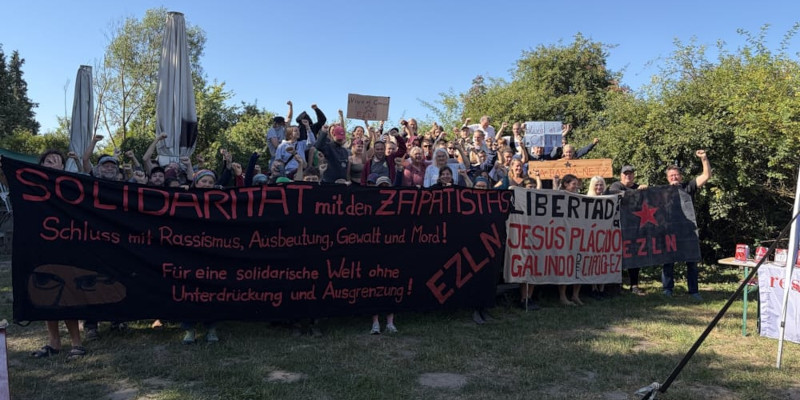
Saludos solidarios desde el ENCUENTRO REBELDE en Meuchefitz, Wendland, Alemania
Al Ejército Zapatista de Liberación Nacional EZLN A los Gobiernos Autónomos Locales, GAL A los Colectivos de Gobiernos Autónomos Zapatistas, CGAZ A las Asambleas de Colectivos de Gobiernos Autónomos Zapatistas, ACGAZ Al Congreso Nacional Indígena, CNI Al Consejo Indígena y popular de Guerrero – Emiliano Zapata, CIPOG-EZ A los colectivos, grupos, organizaciones y personas que firmaron la Declaración por la Vida A los medios independientes honestos
¡Buenos dias muy estimadas compañeras, compañeroas y compañeros del movimiento zapatista, del CNI y otros movimientos sociales desde abajo y a la izquierda!
Les mandamos muchos saludos solidarios y rebeldes y un pequeño reporte desde nuestro encuentro rebelde:
“ENCUENTRO REBELDE: EL COMÚN SOLIDARIO FRENTE A LA TORMENTA”
La Tormenta ya está aquí, hay ataques a estructuras democráticas por todo el mundo, hay mucha criminalización de antifascistas y otres activistas desde abajo y a la izquierda, las consecuencias catastróficas del cambio climático aumentan cada día… Solo podemos enfrentarlo en común, tenemos que trabajar en solidaridad para ver que vamos a hacer el día después de la Tormenta. Solo juntes podemos sembrar un mejor día después.
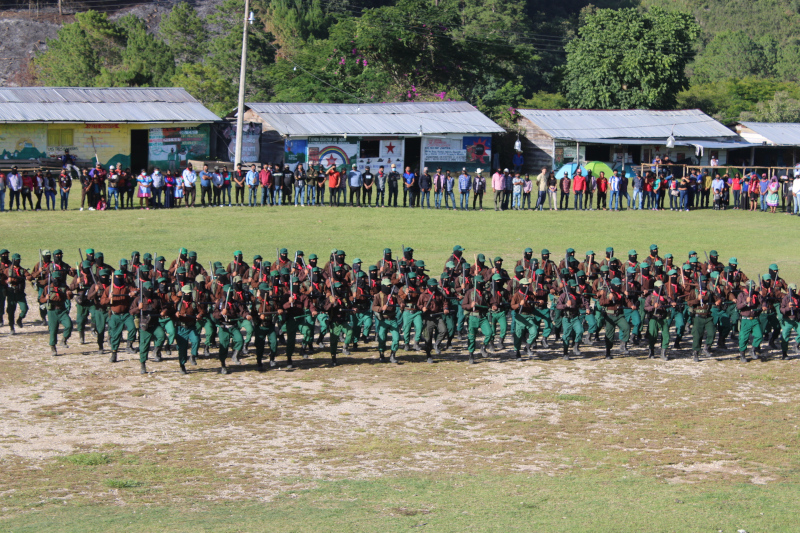
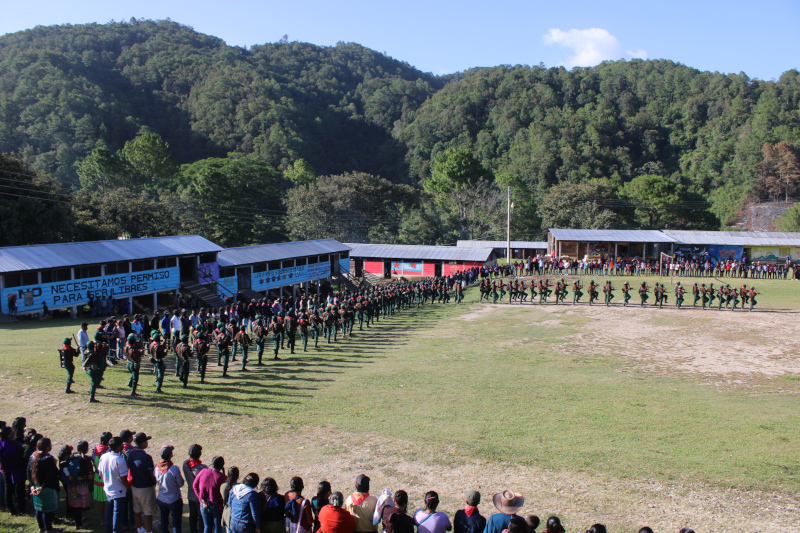
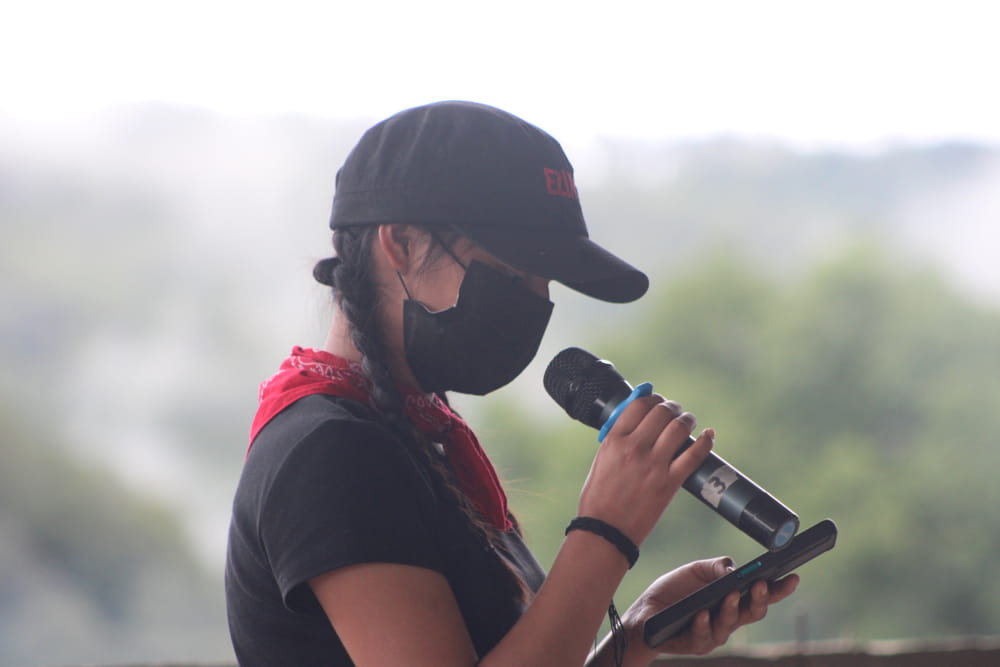
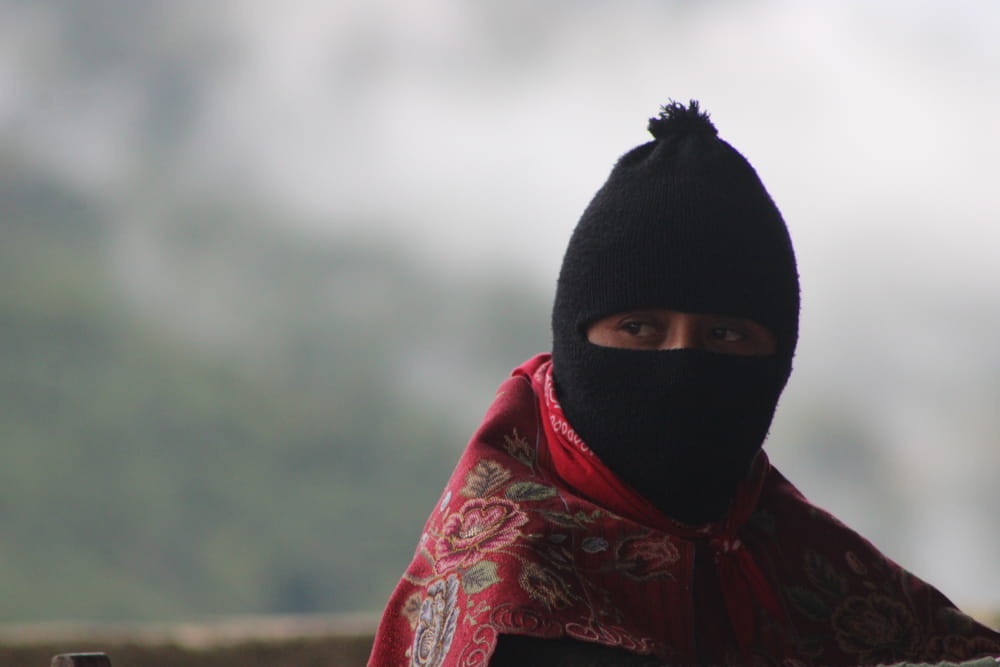
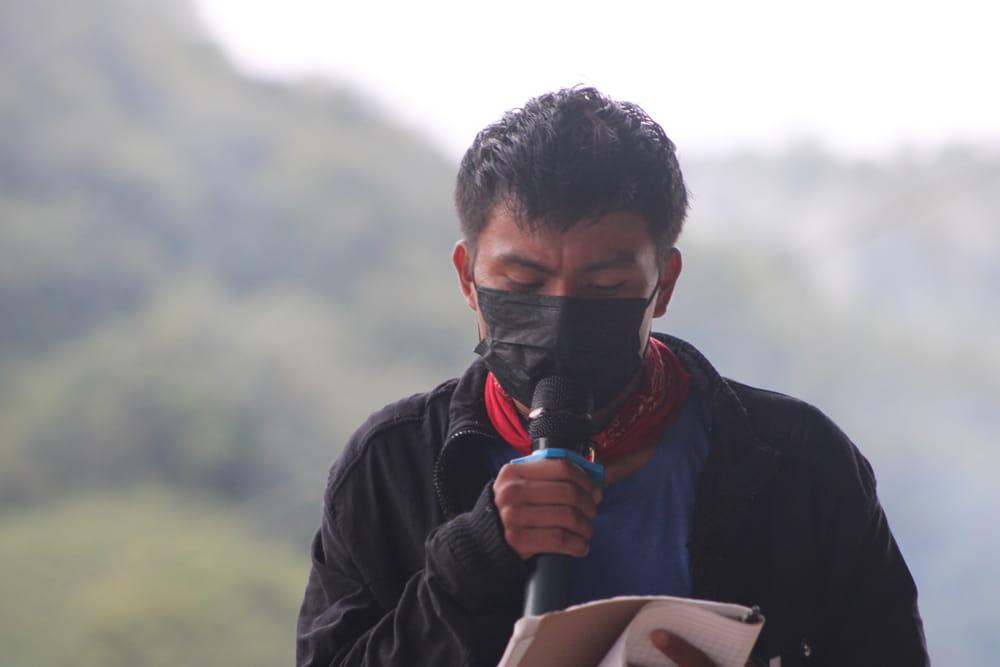
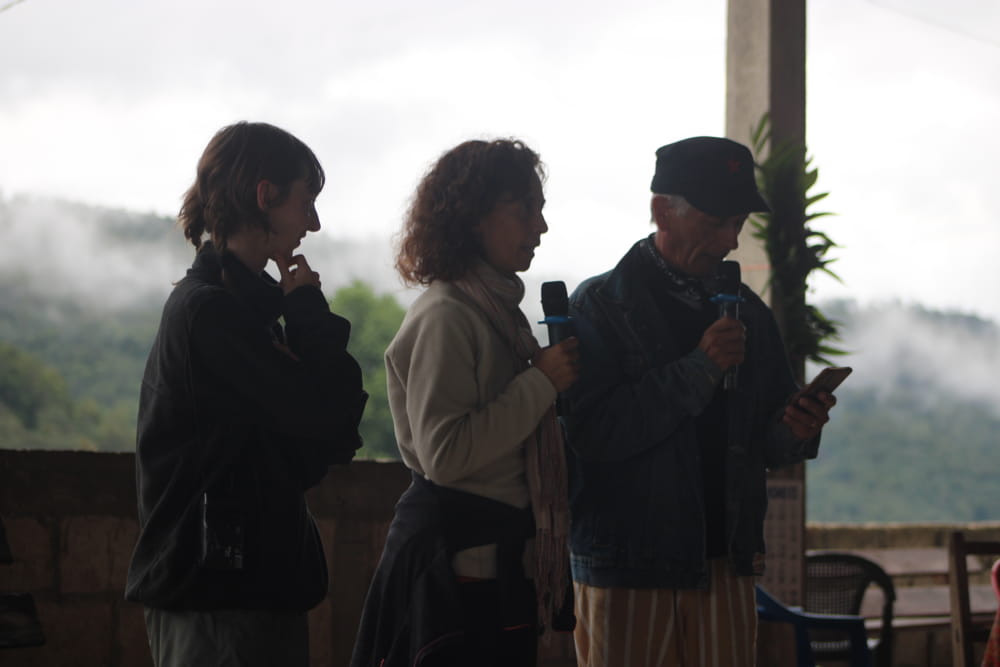
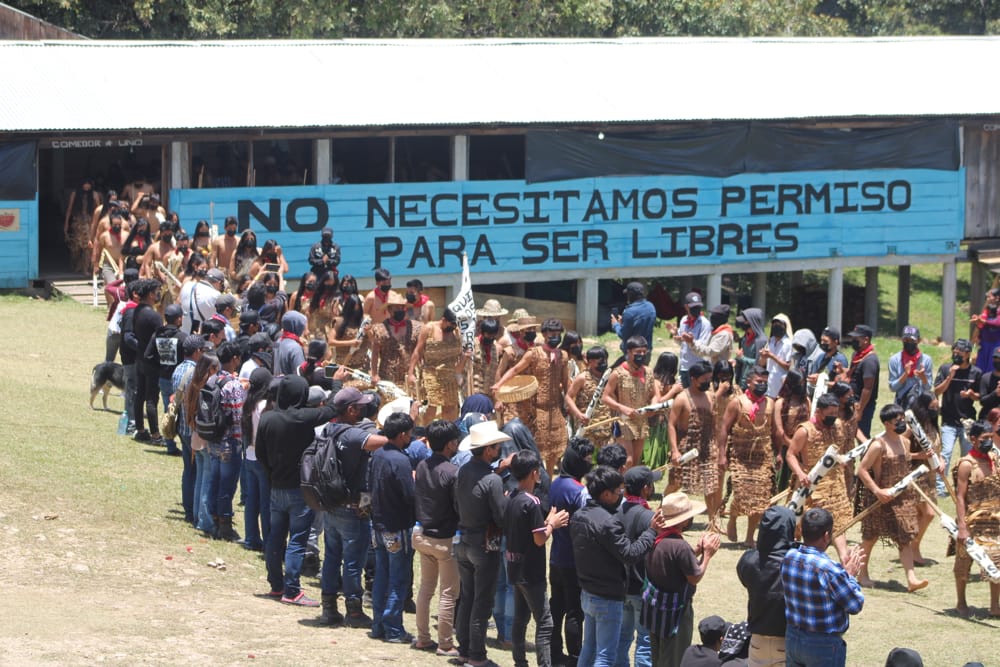
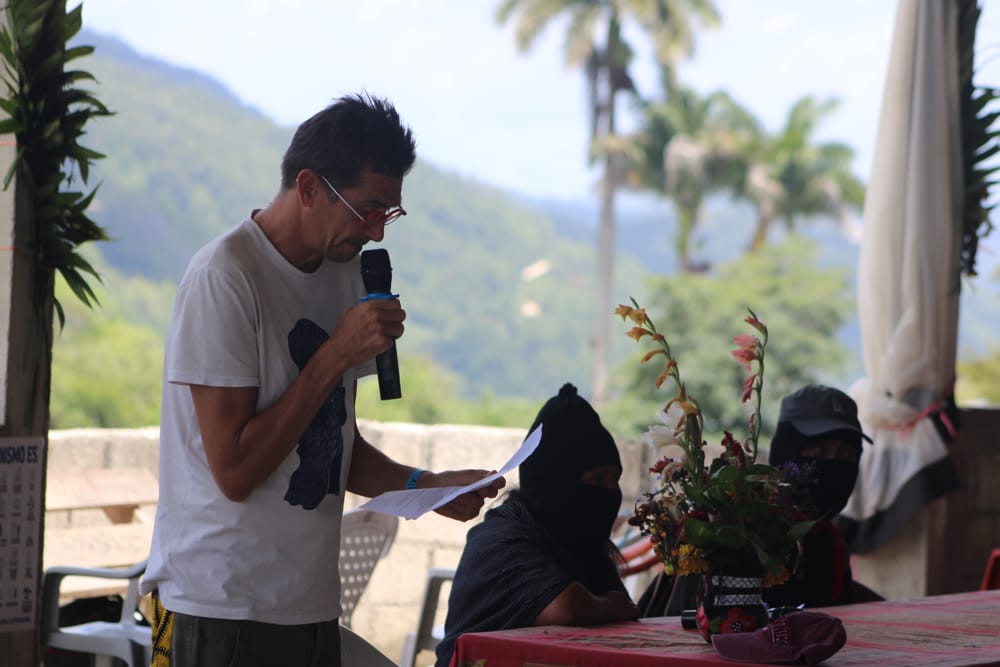
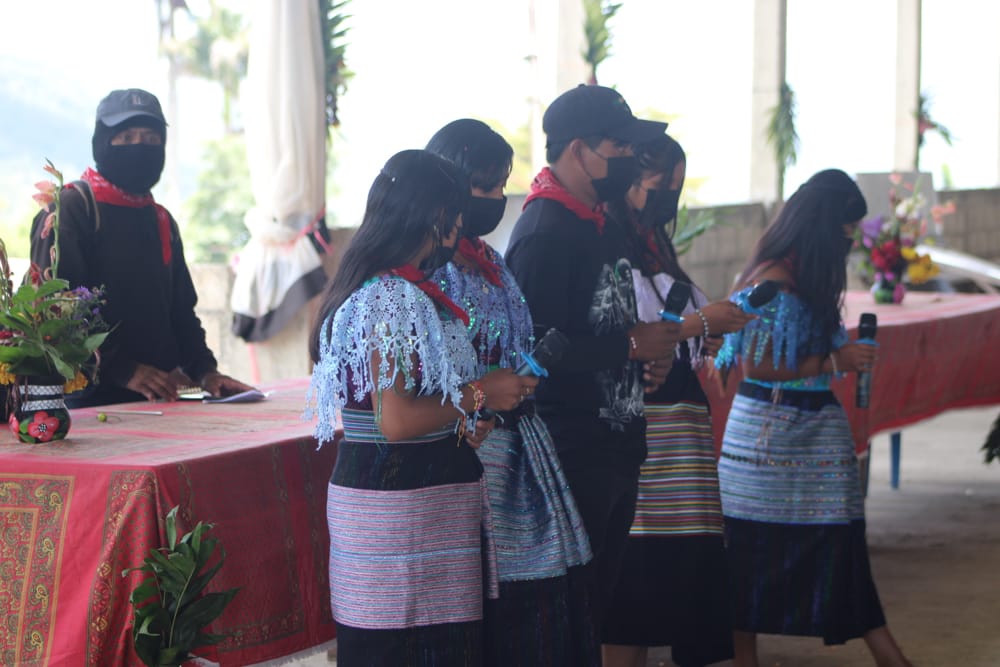
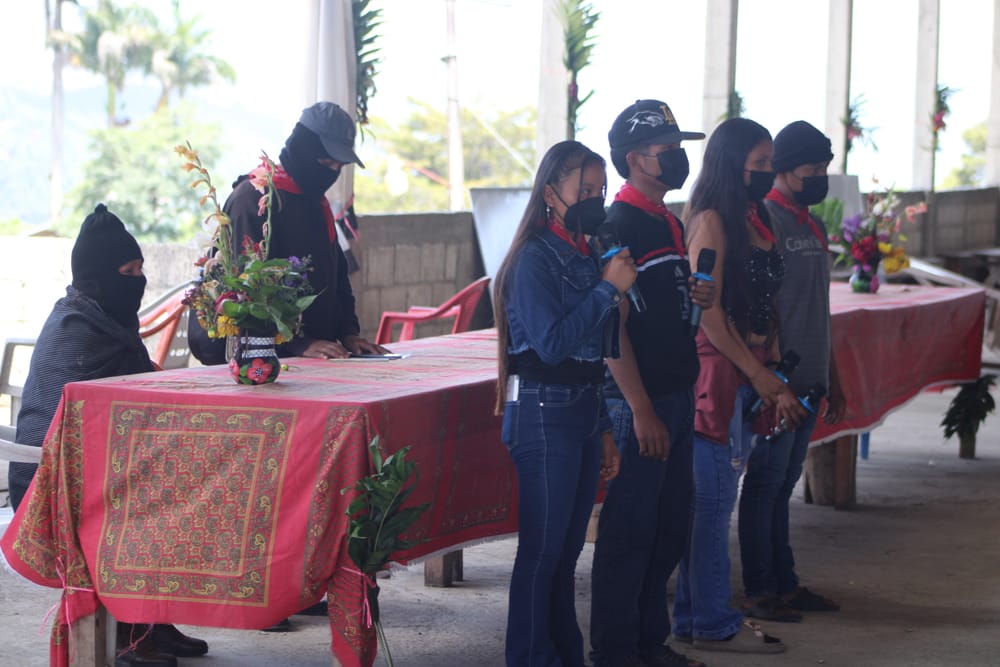
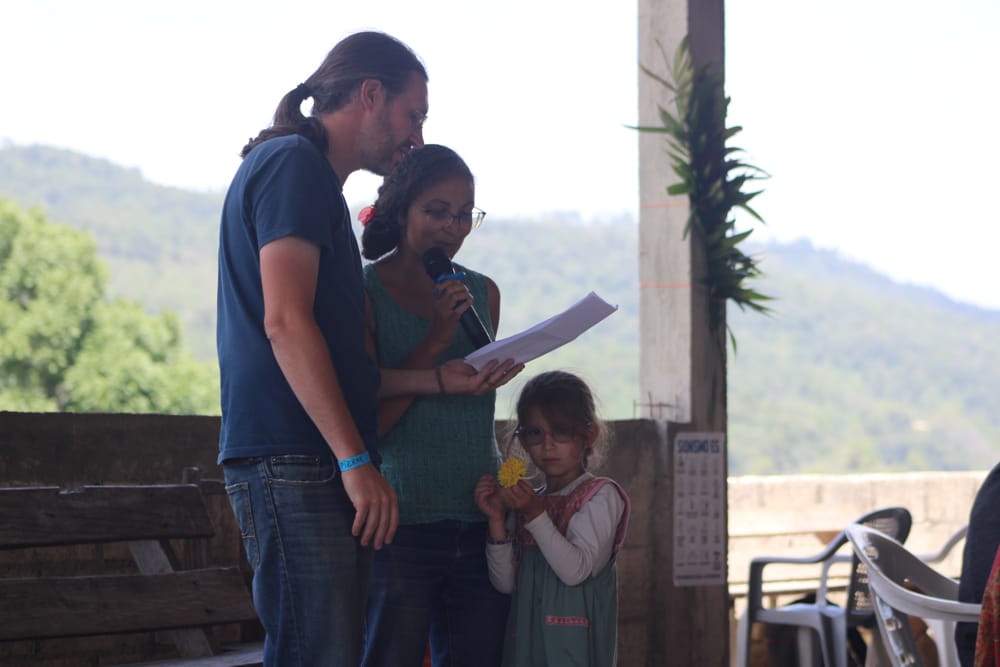
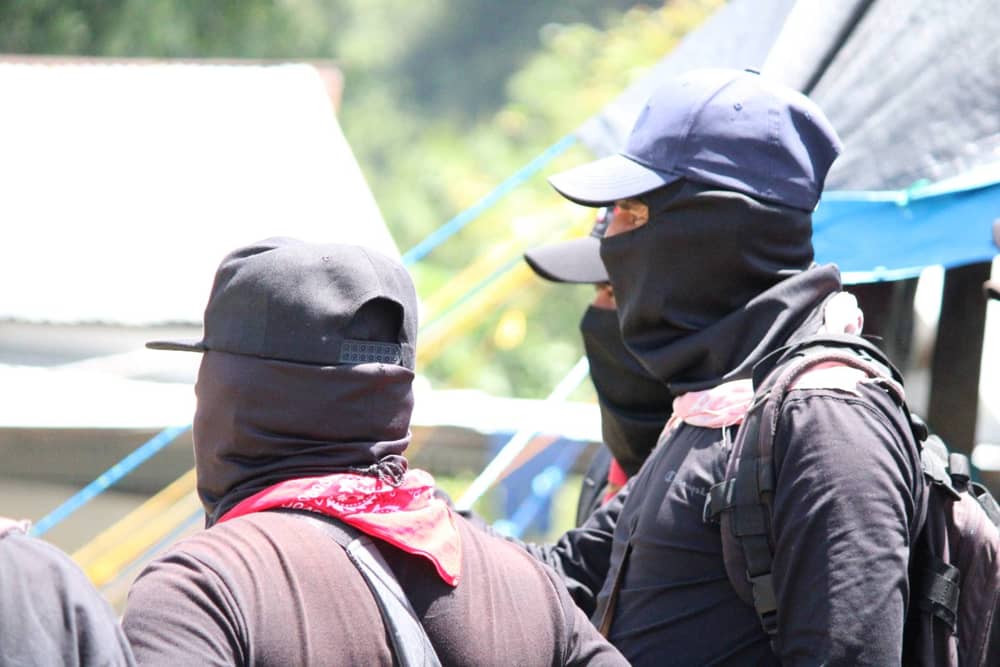
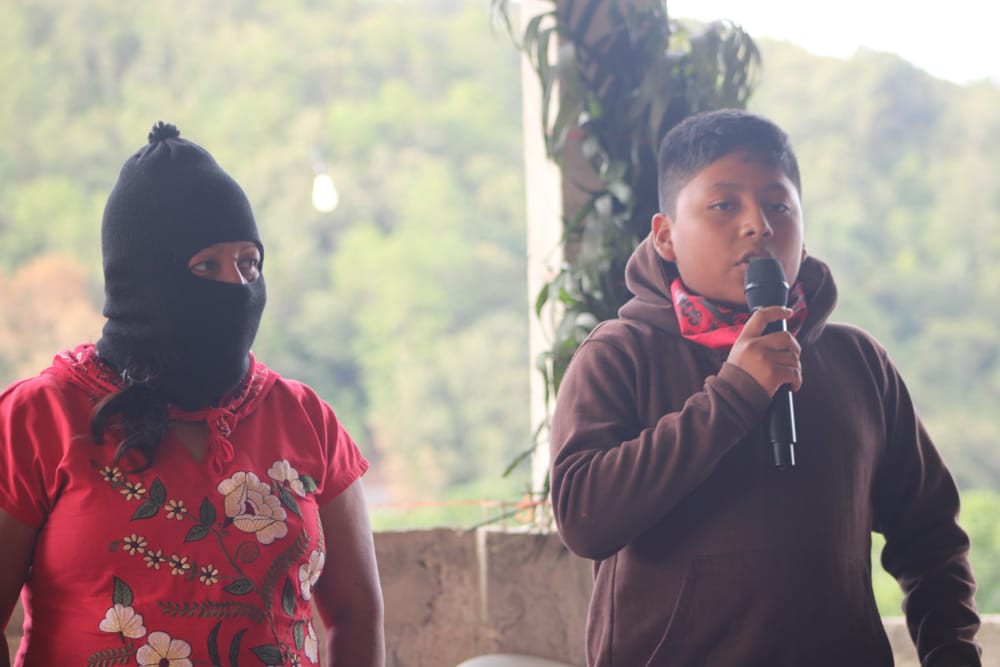
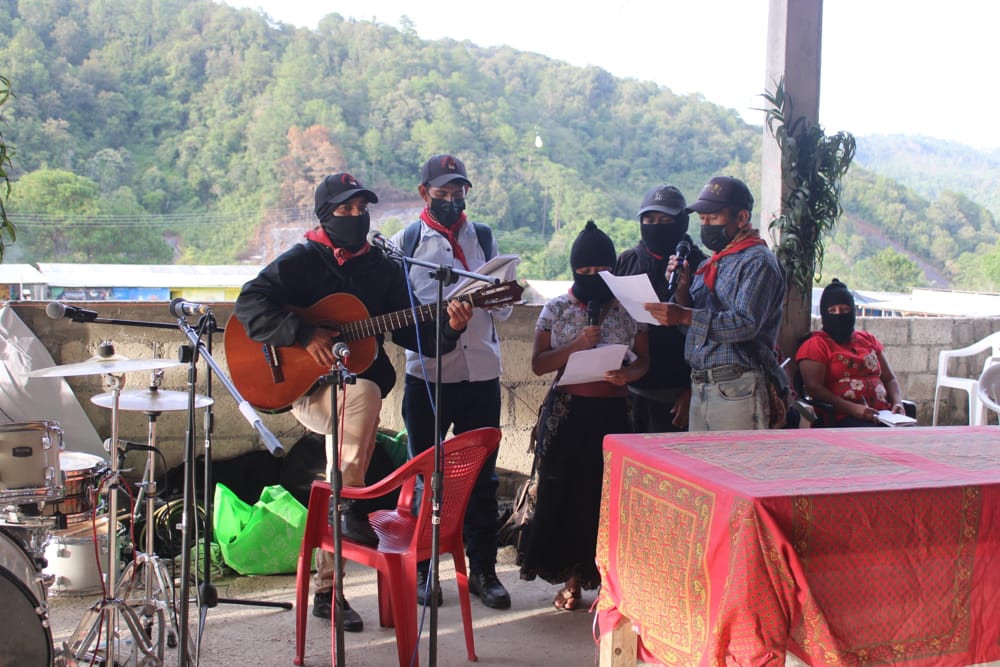
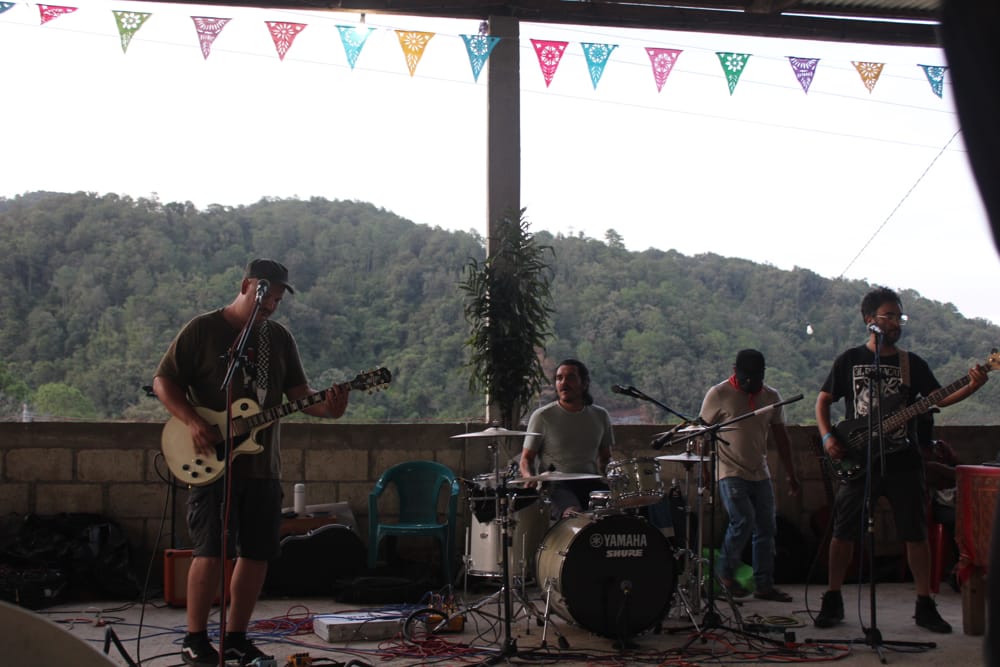
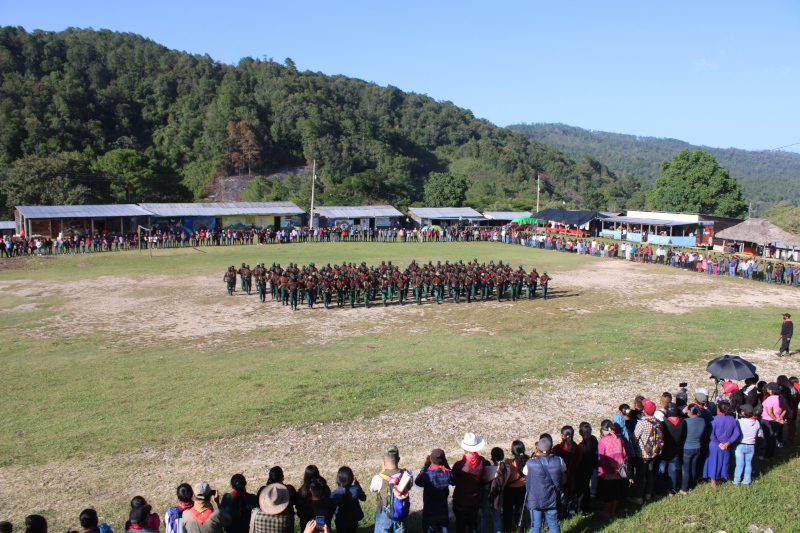
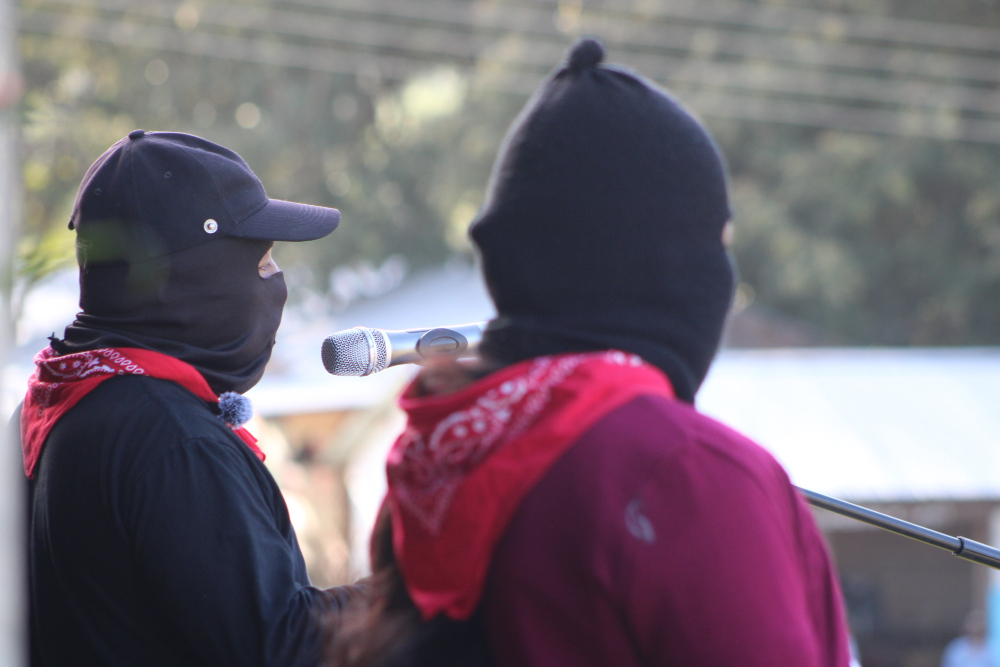
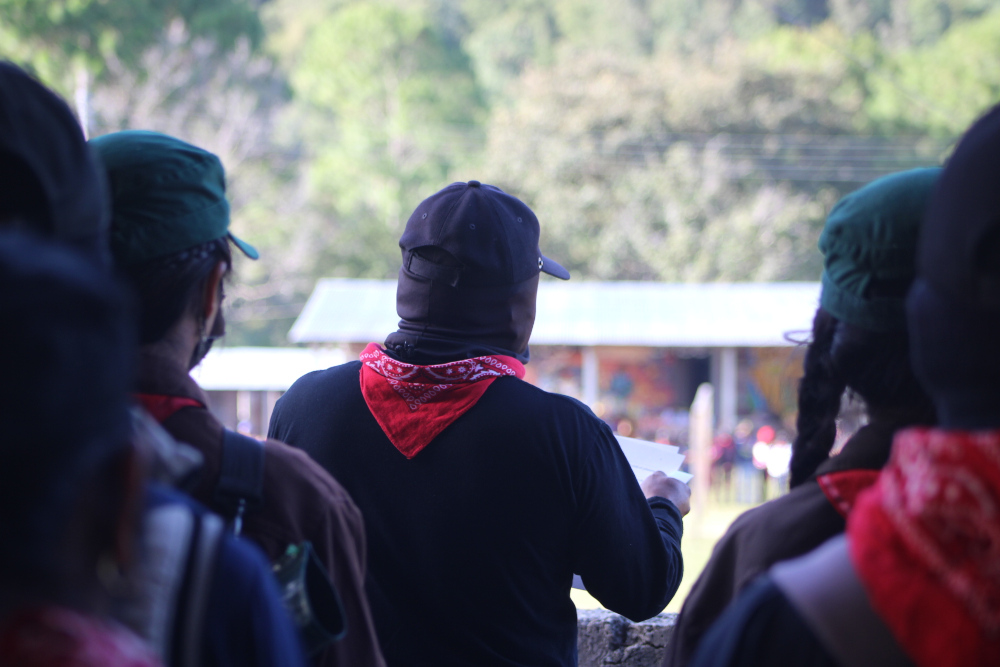
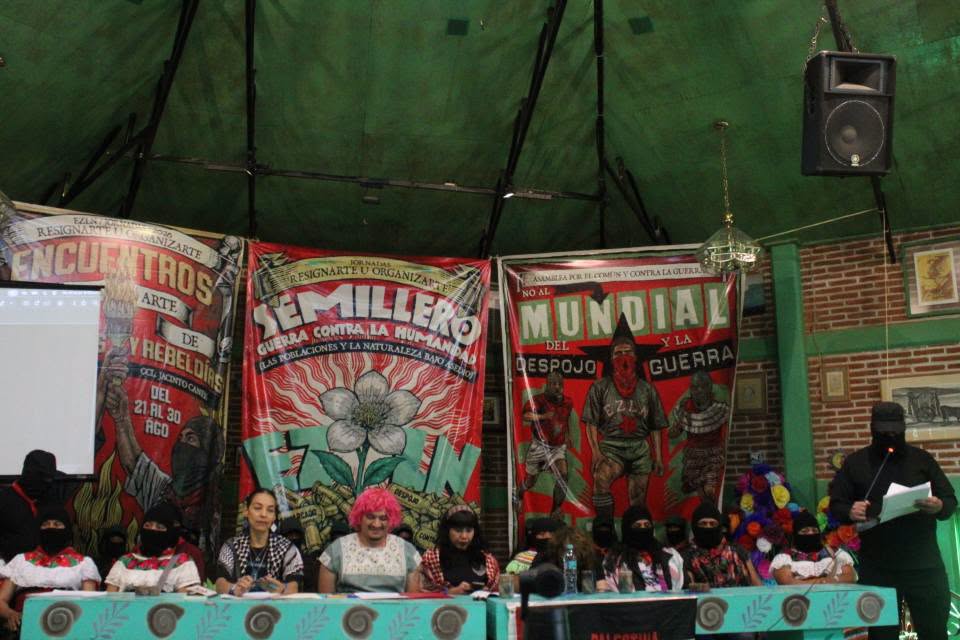
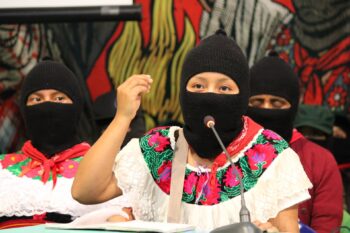
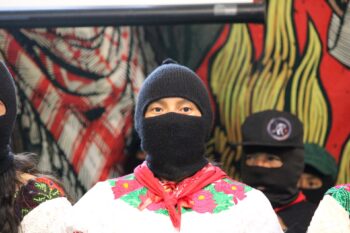
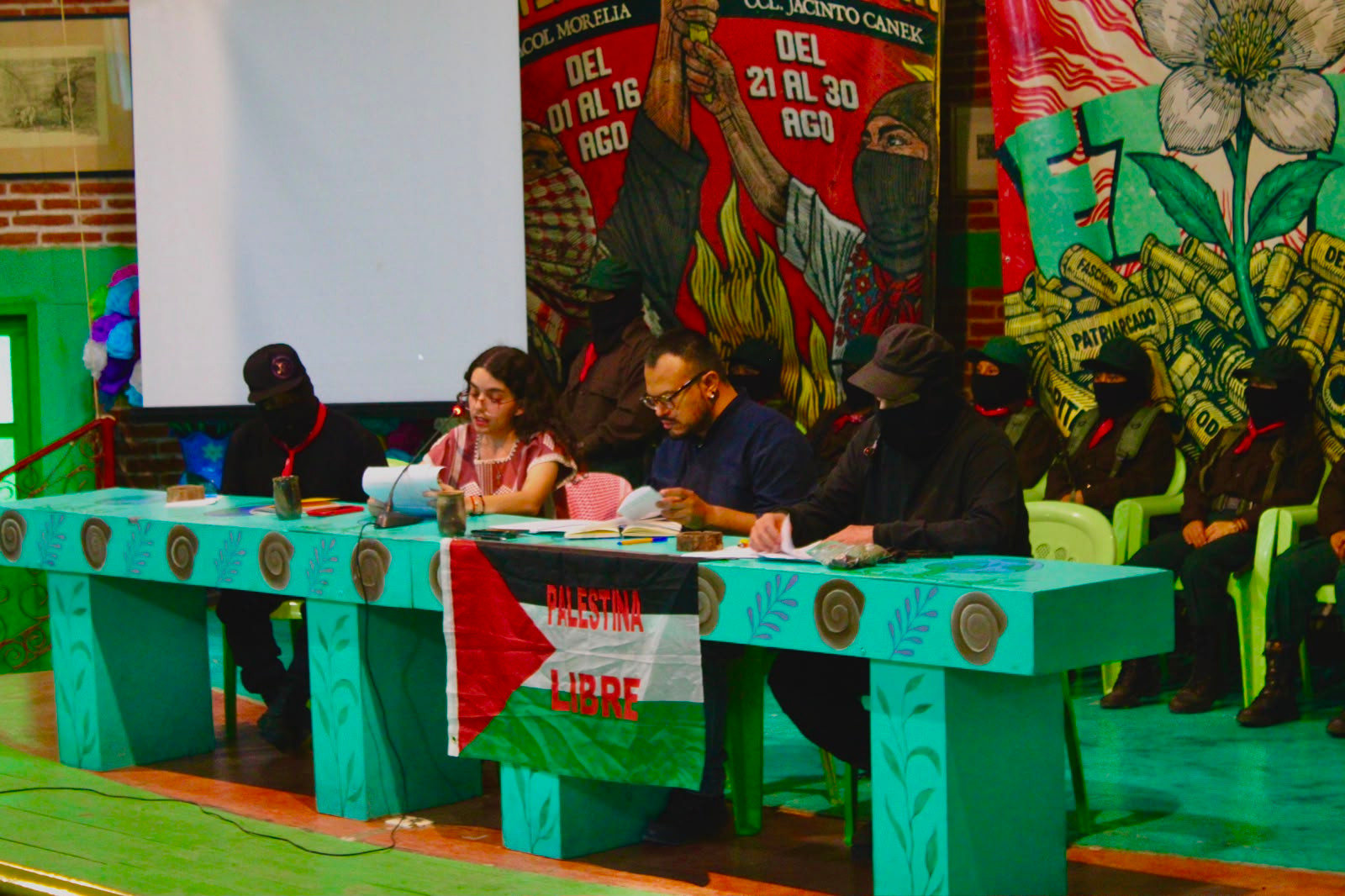
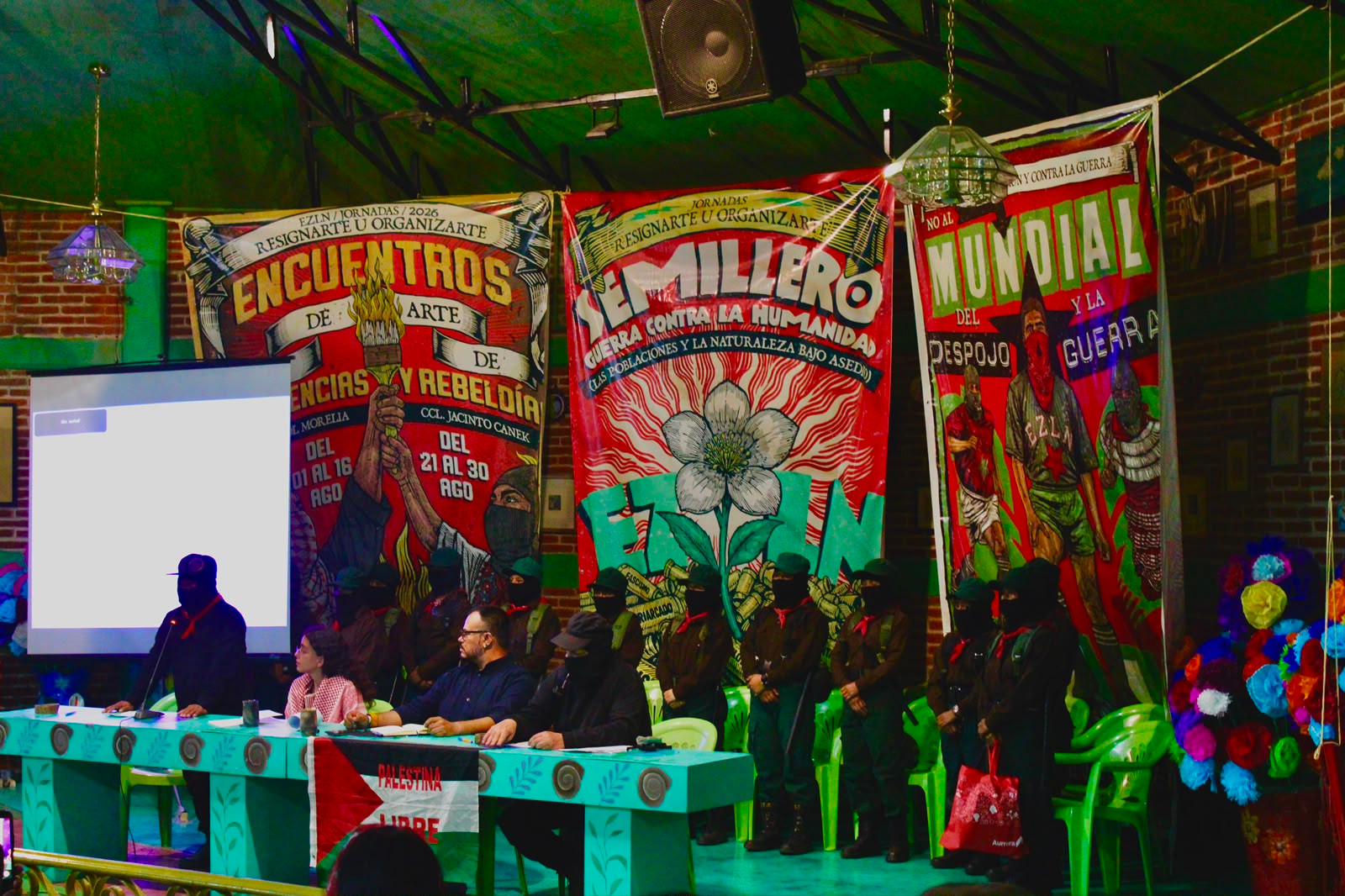
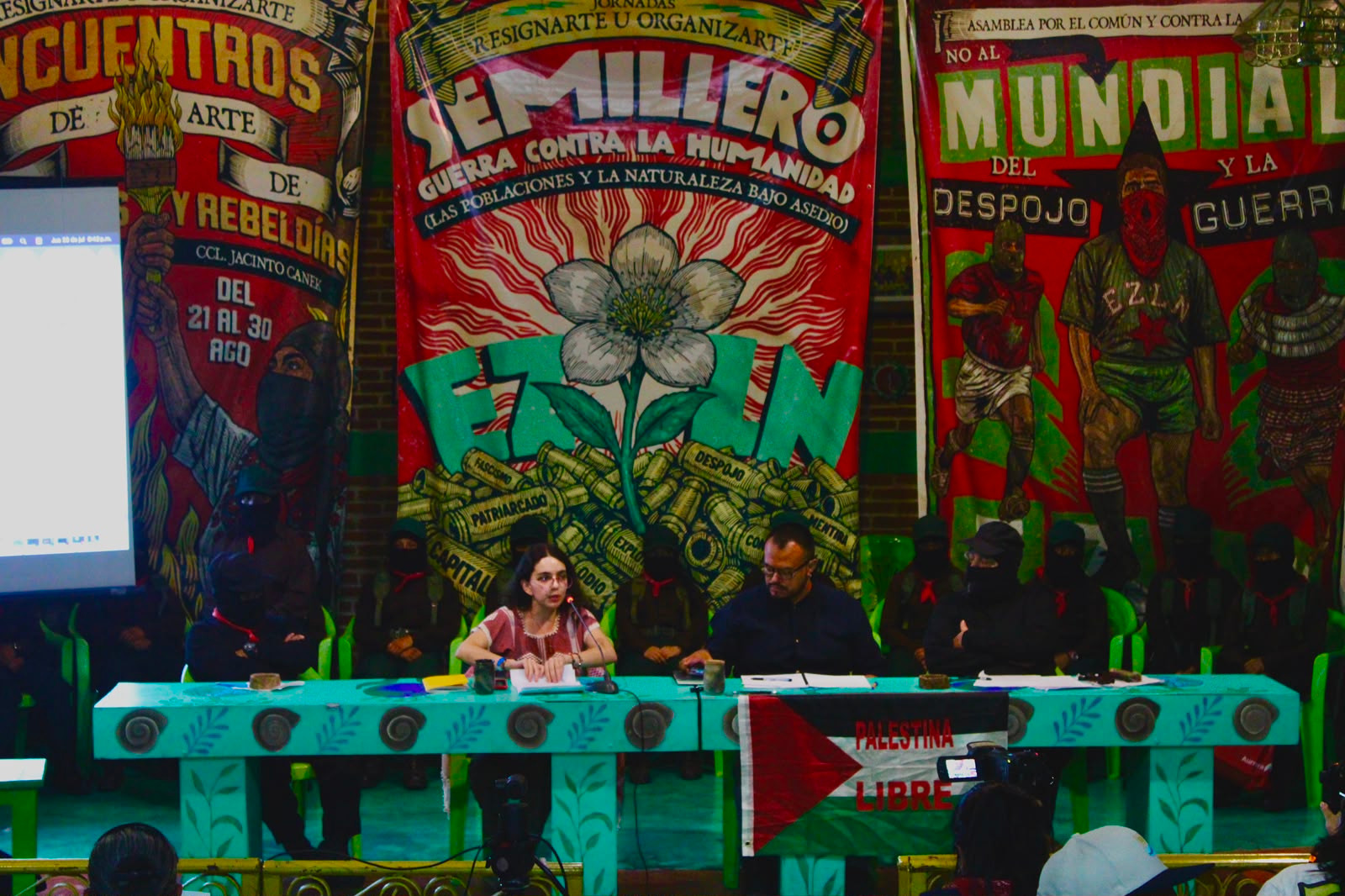
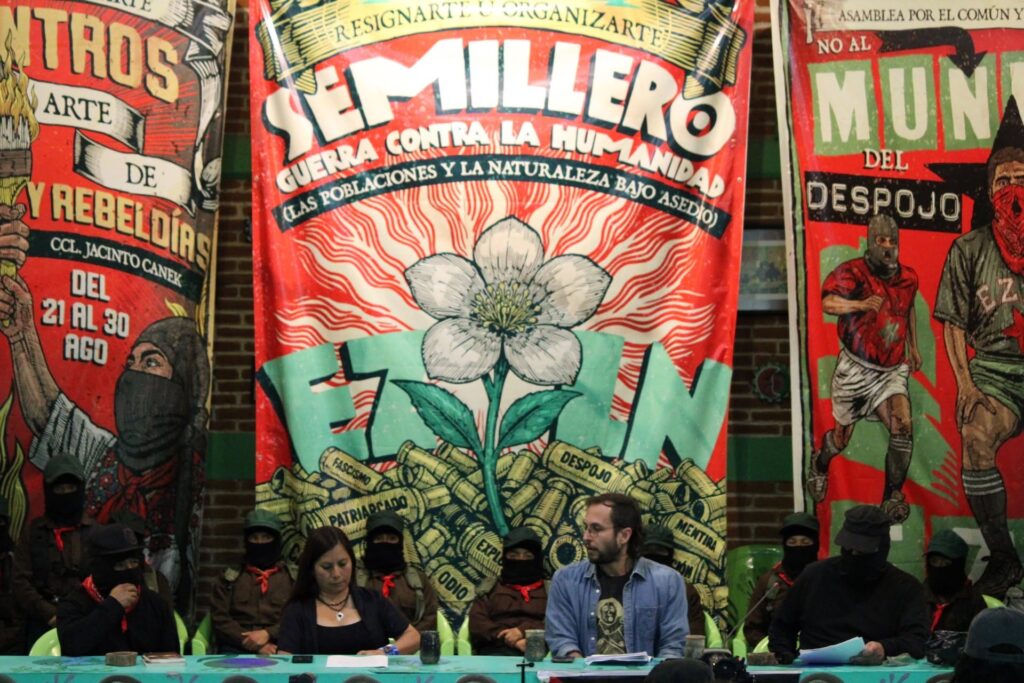
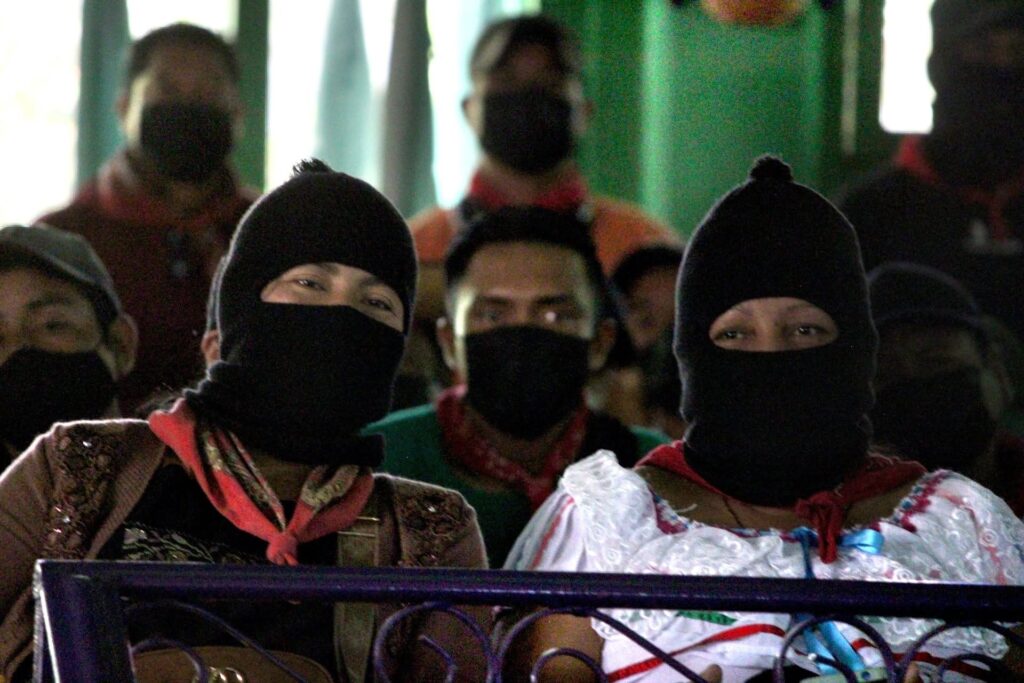
Como parte de un importante esfuerzo por fortalecer y multiplicar las resistencias por parte del Ejército Zapatista de Liberación Nacional, el Encuentro de Artes y el Encuentro de Resistencias y Rebeldías aunados dieron inicio el 1 de agosto en el Semillero Comandanta Ramona del Caracol de Morelia.
Disculpe usted, querido lector, dejarle en el imaginario la experiencia de observar de cerca y formar parte de un encuentro tan conmovedor.
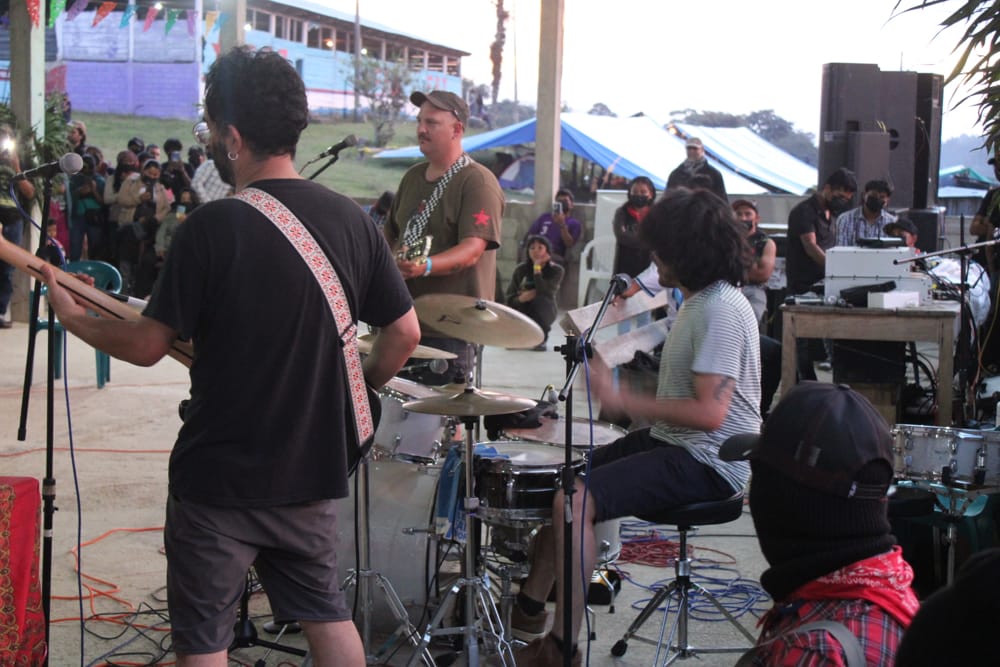
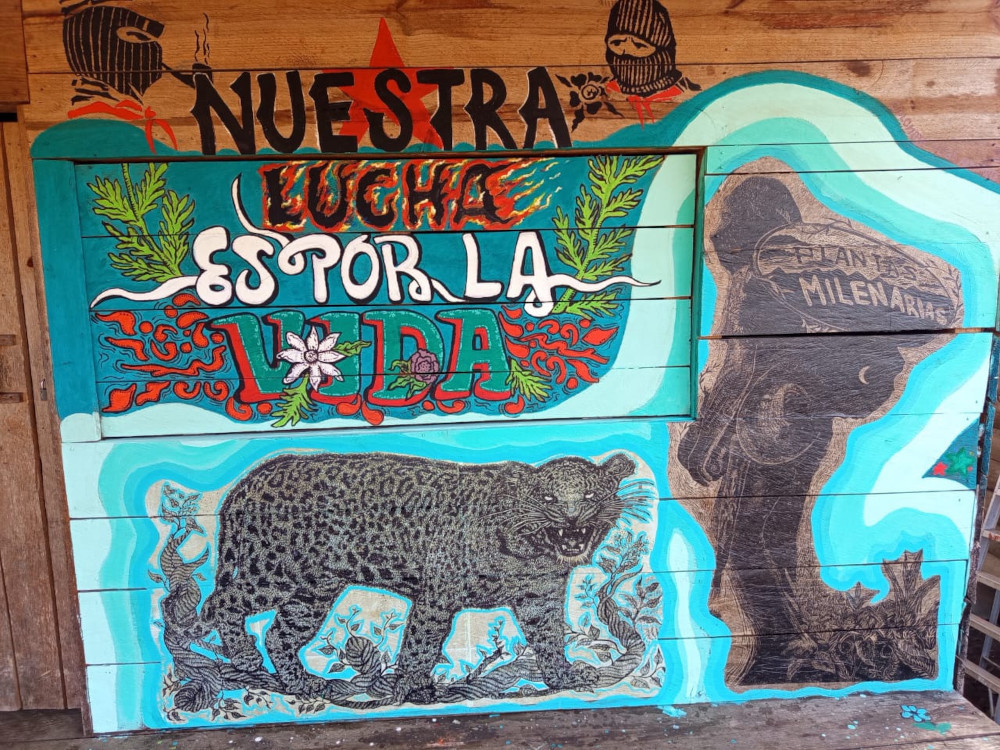
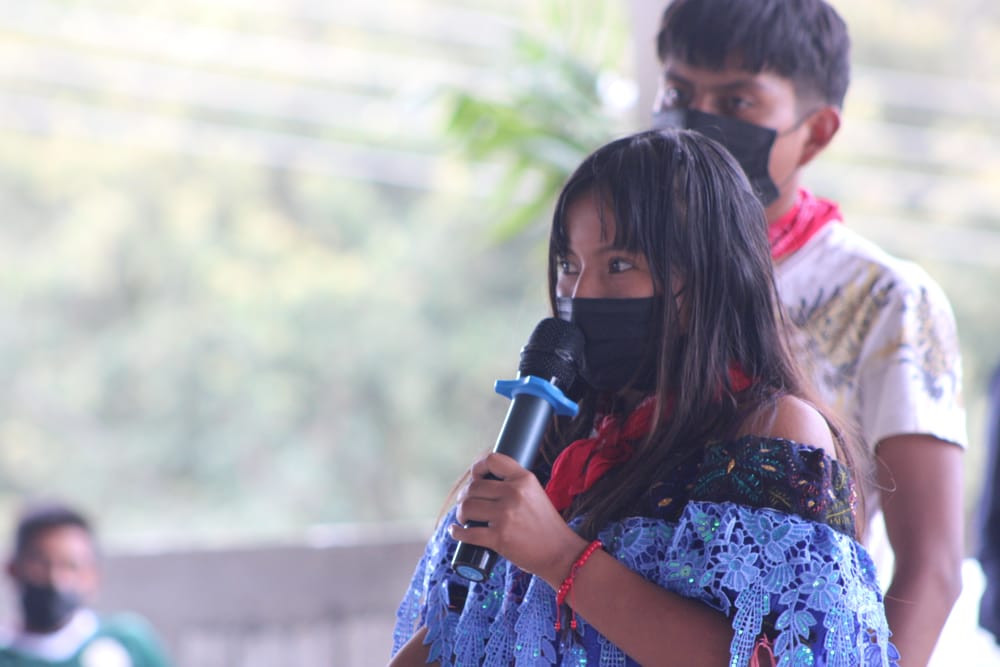
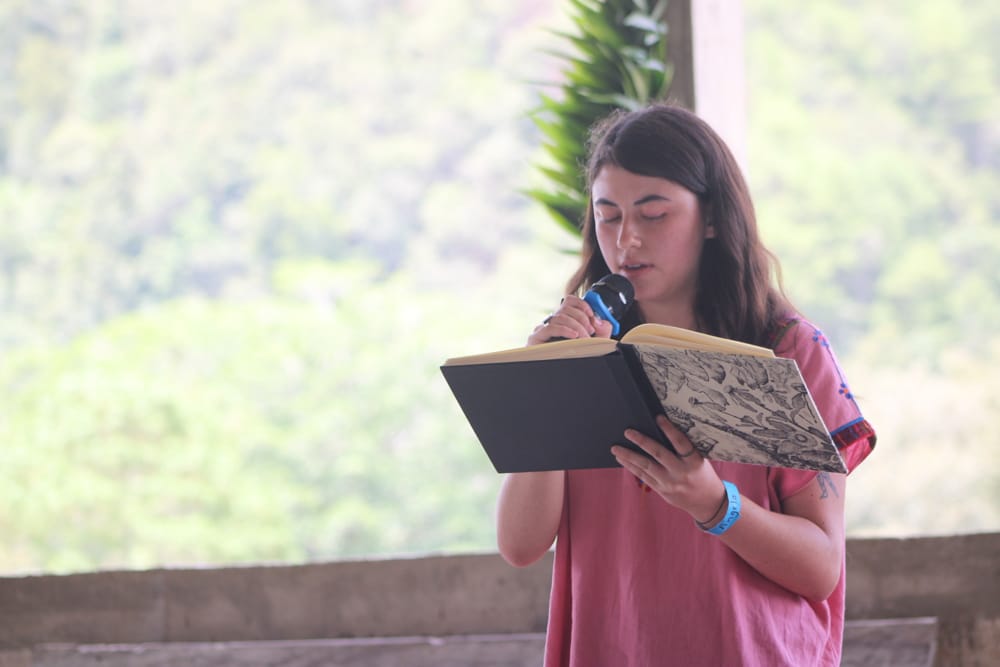
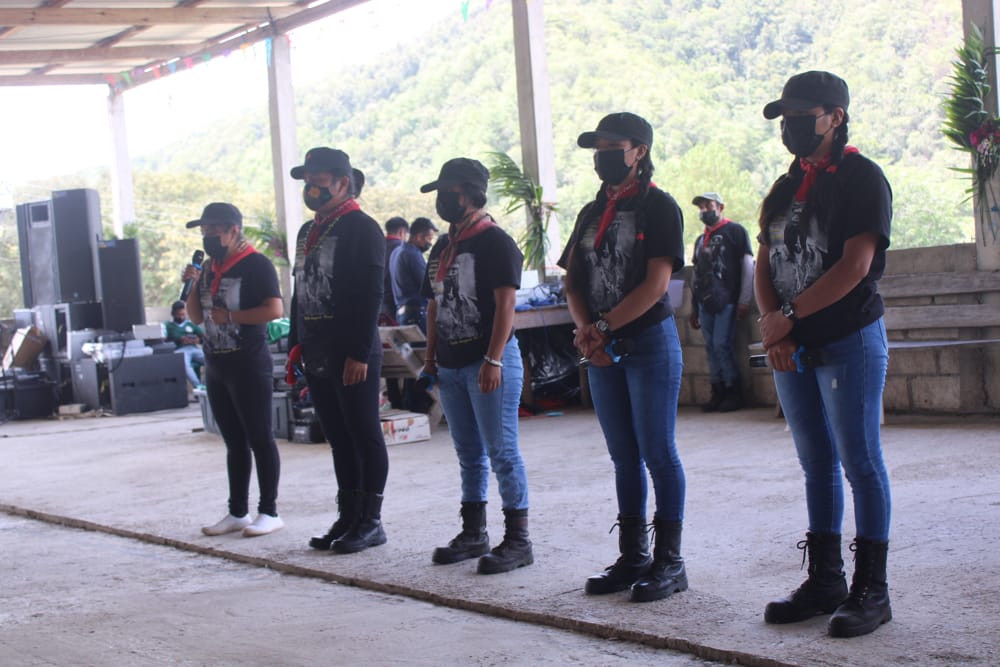
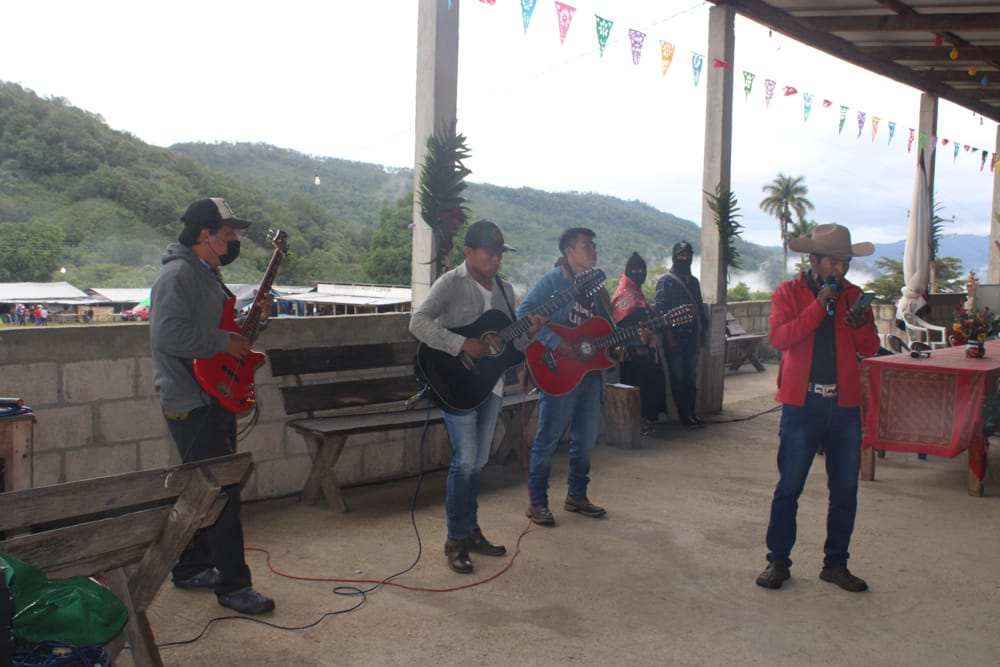
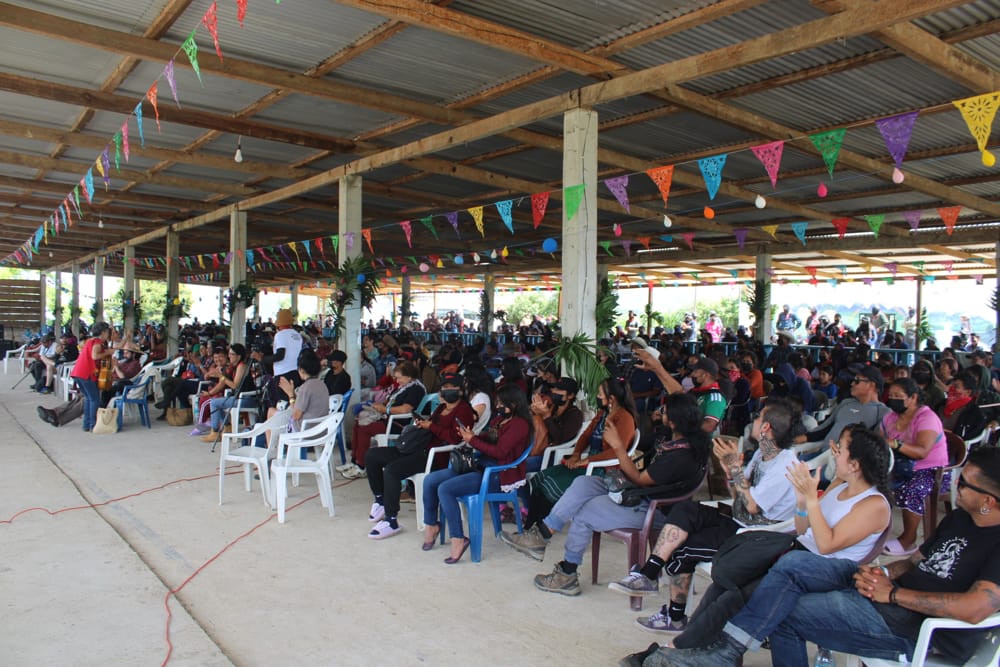
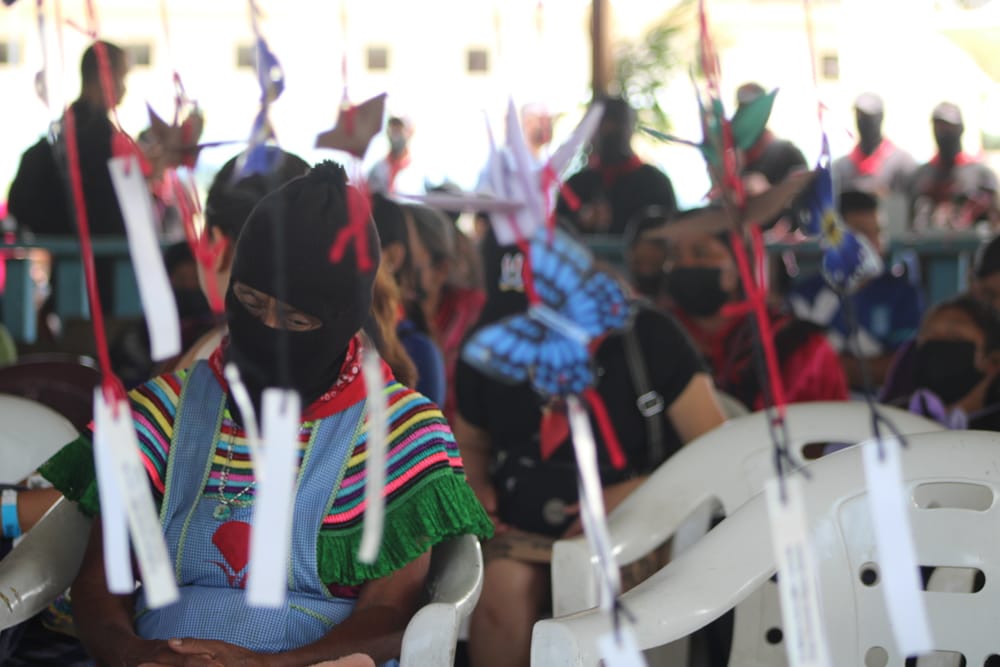
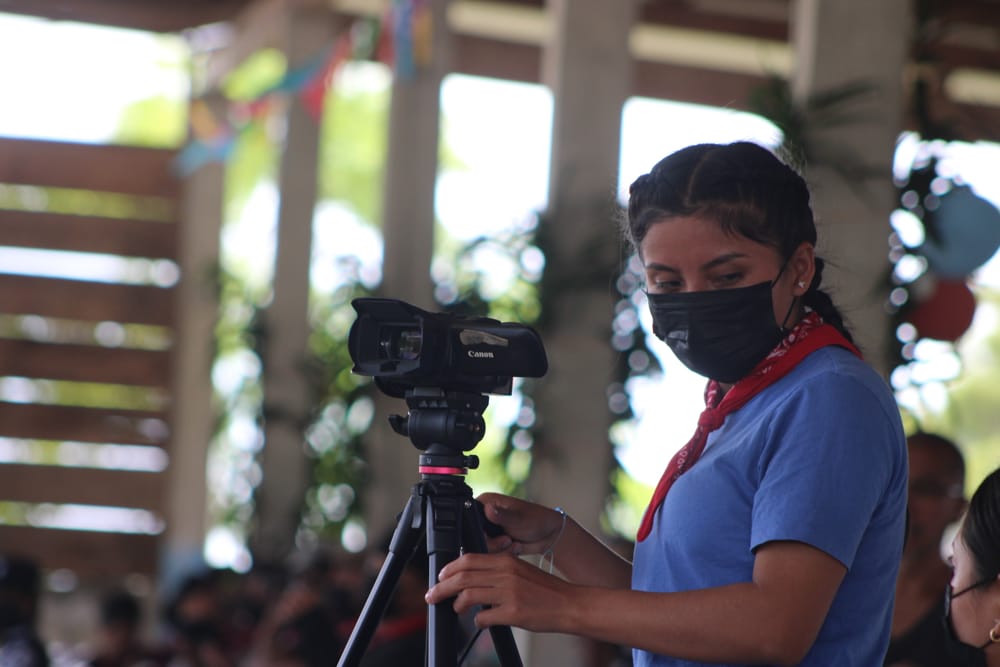
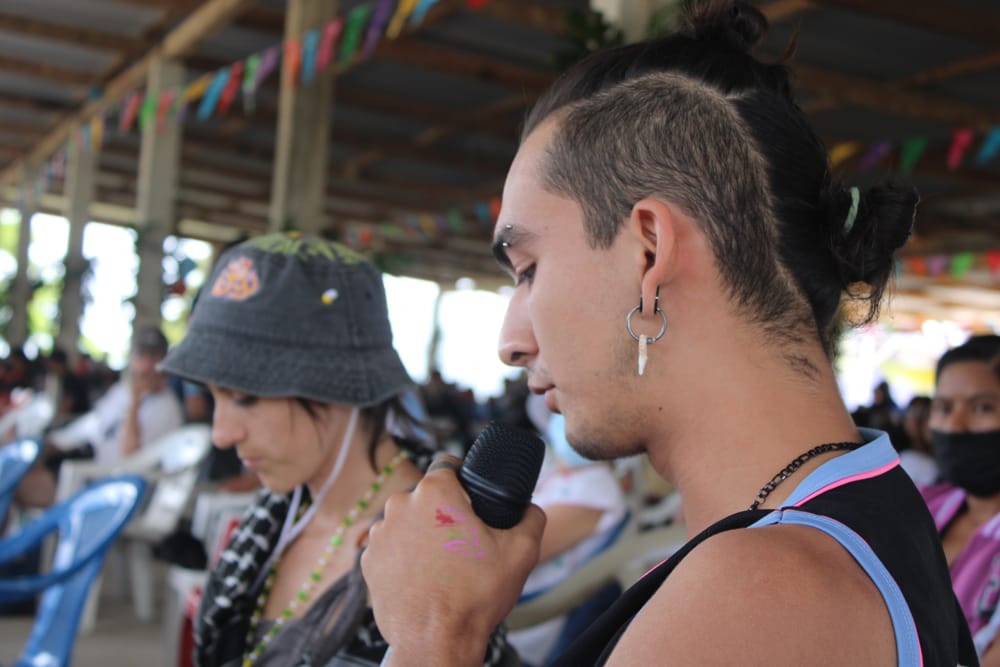
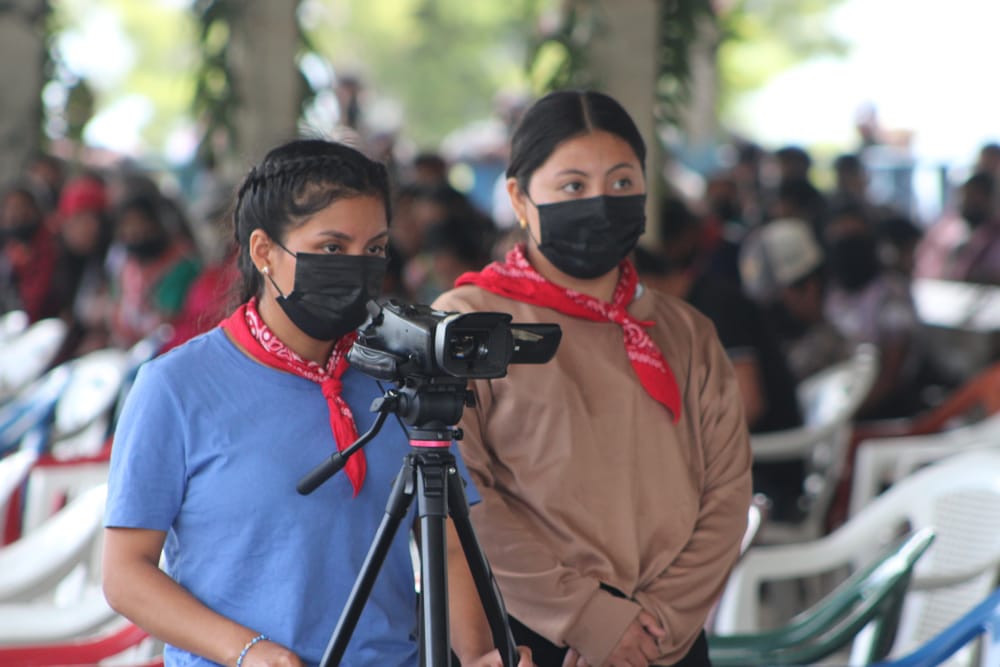
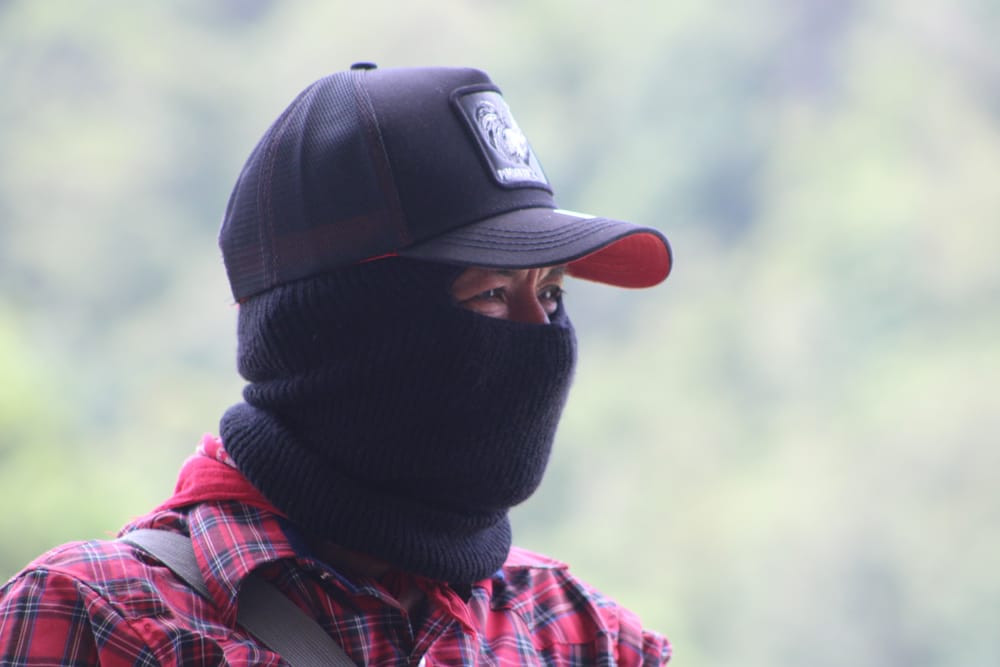
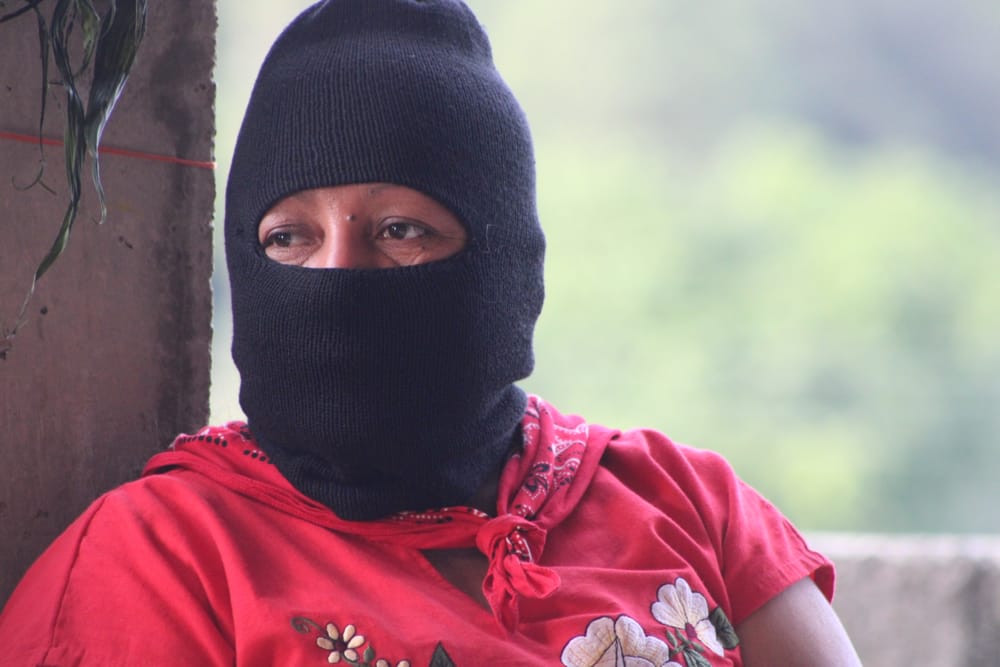
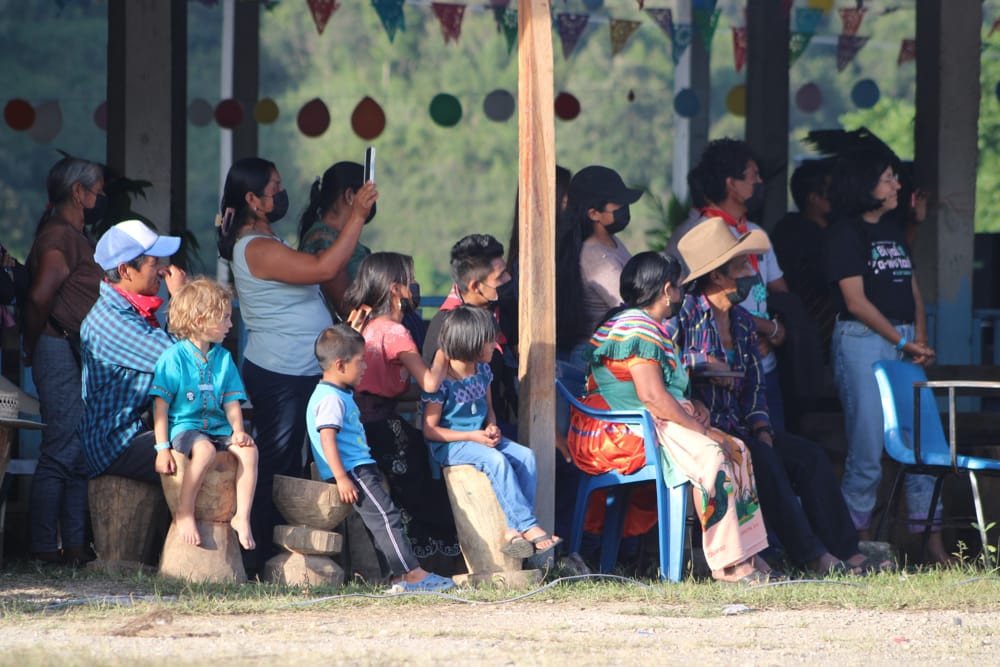
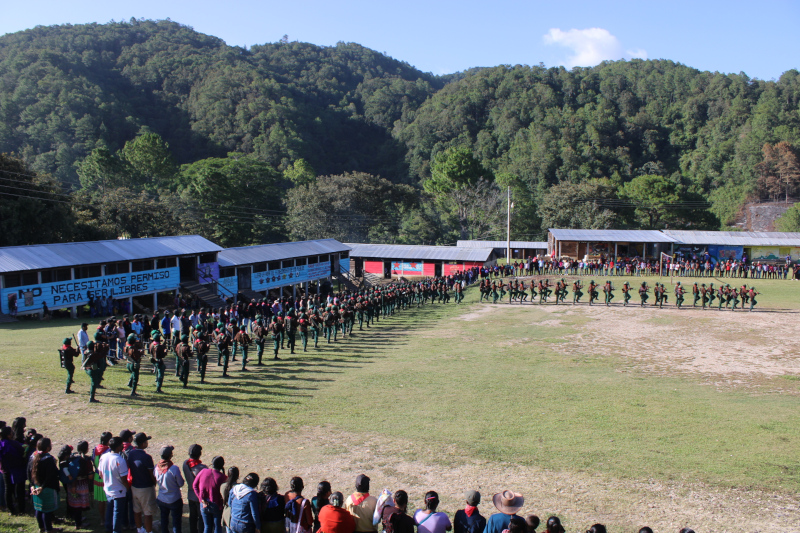
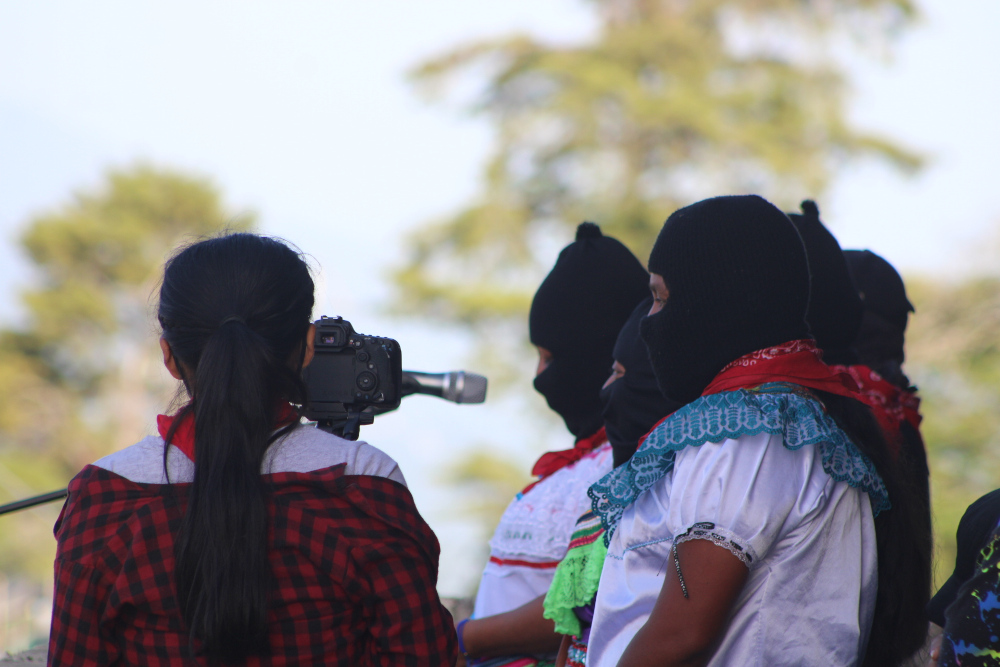
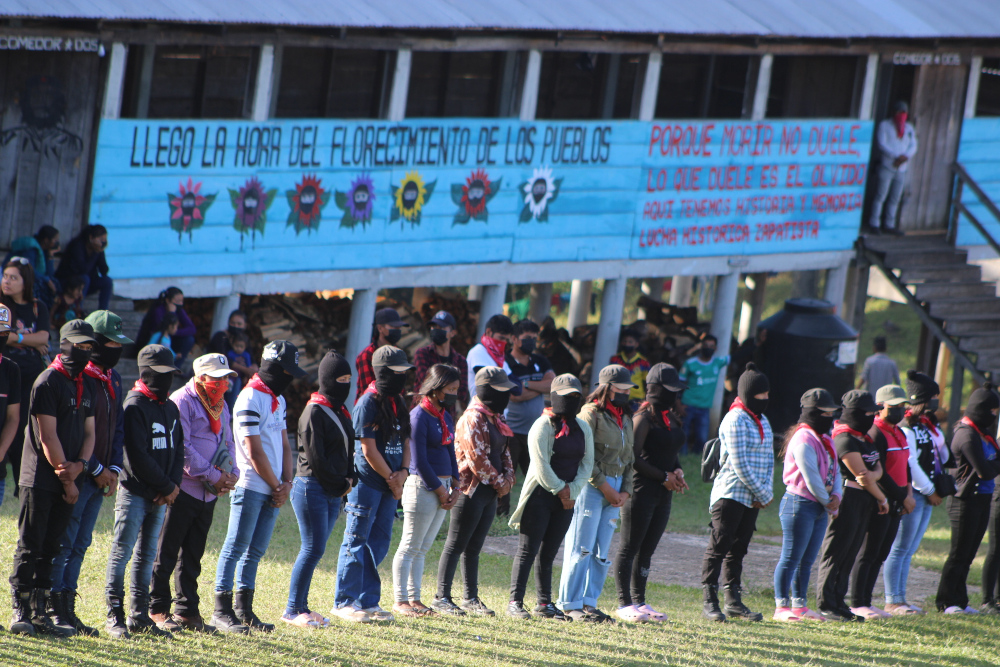
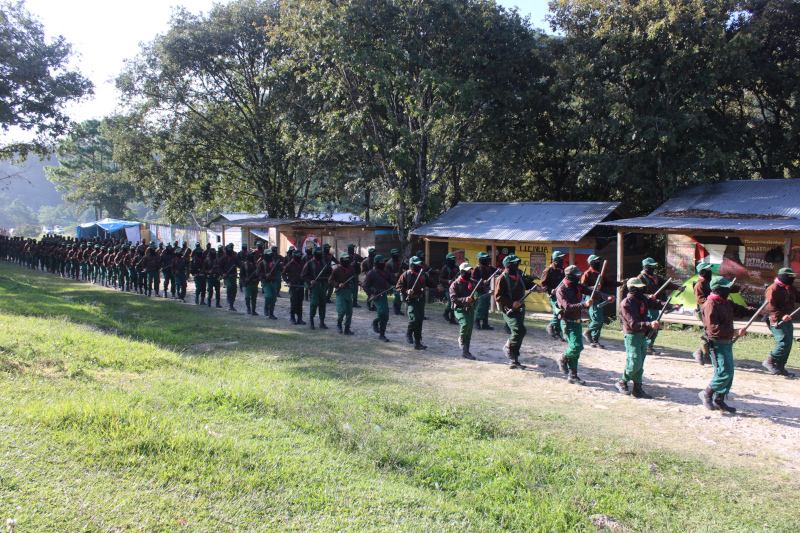
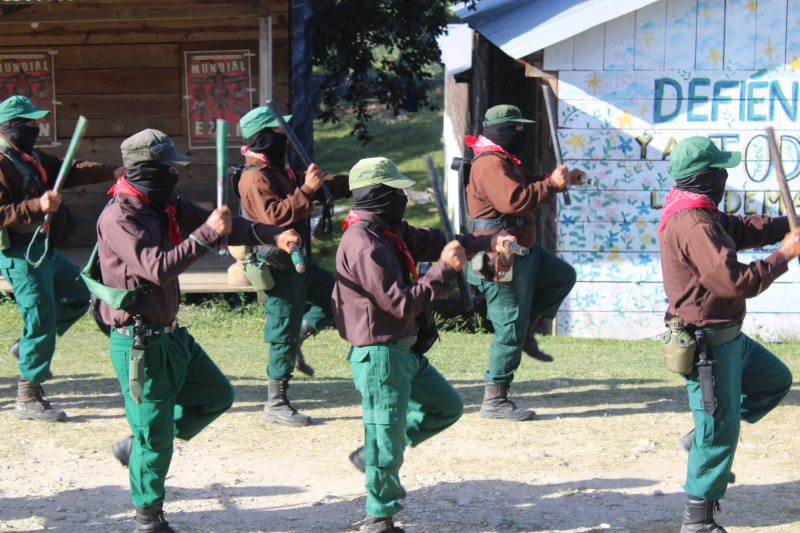
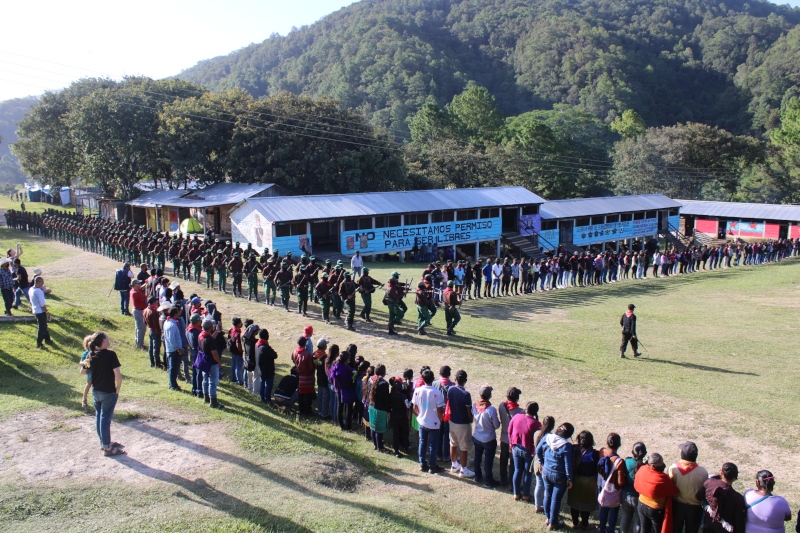
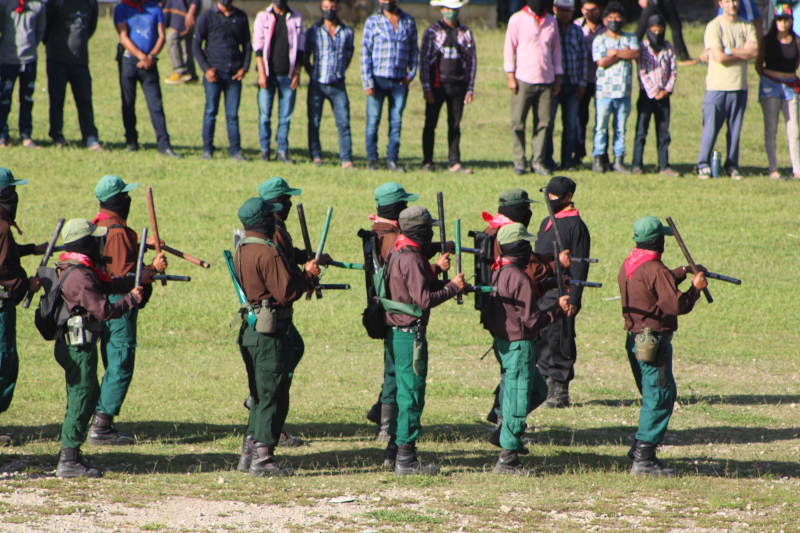
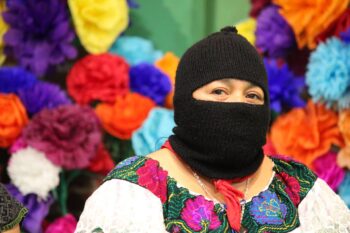
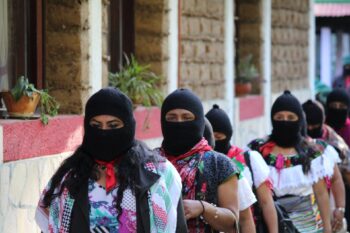
A lo largo de dos semanas, artistas de distintas geografías compartieron sus diversas formas de expresión artística en el escenario, con uno de los paisajes más lindos que los asistentes pueden observar: la gran explanada del semillero rodeada de sencillas construcciones decoradas con coloridos murales, y al fondo, las frondosas montañas bajo un cielo azul.
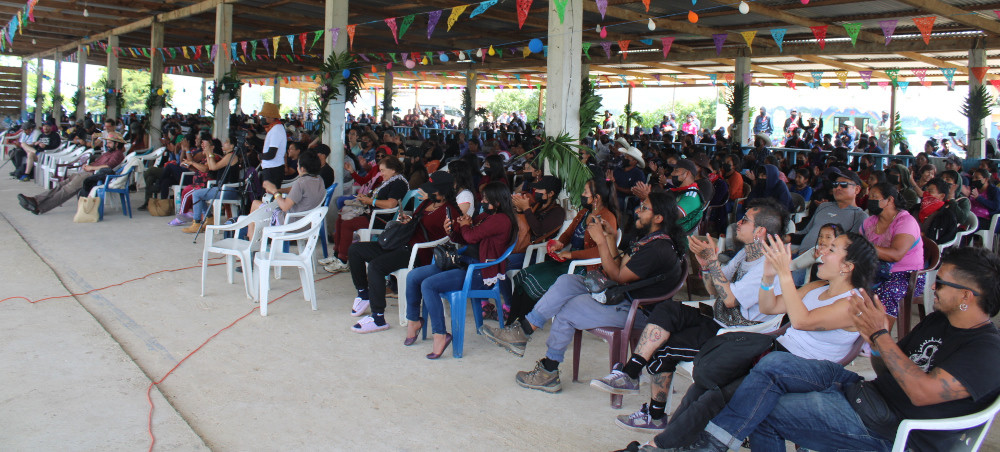
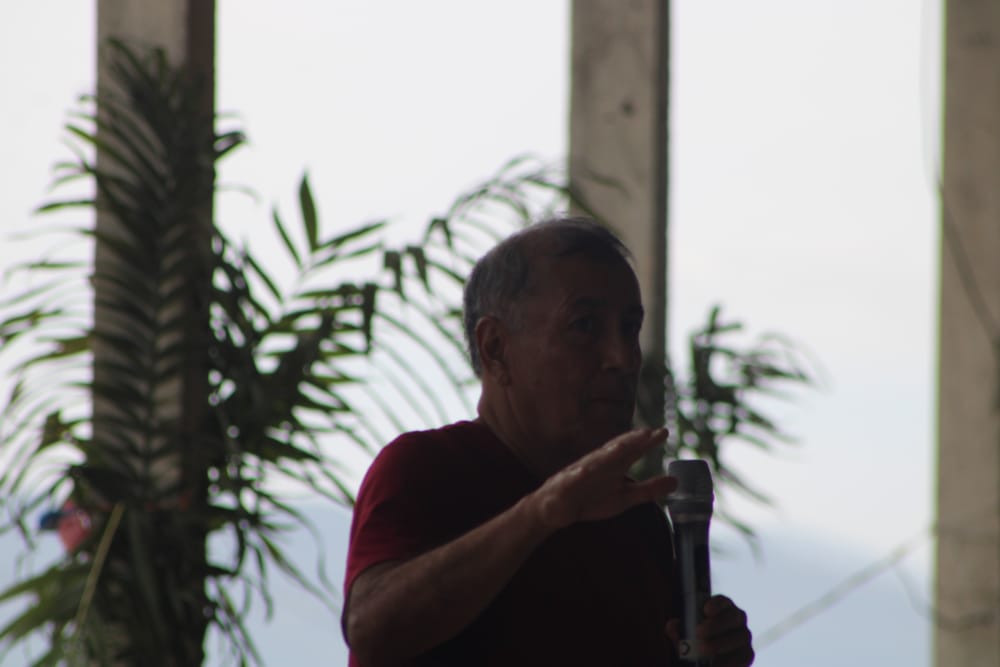
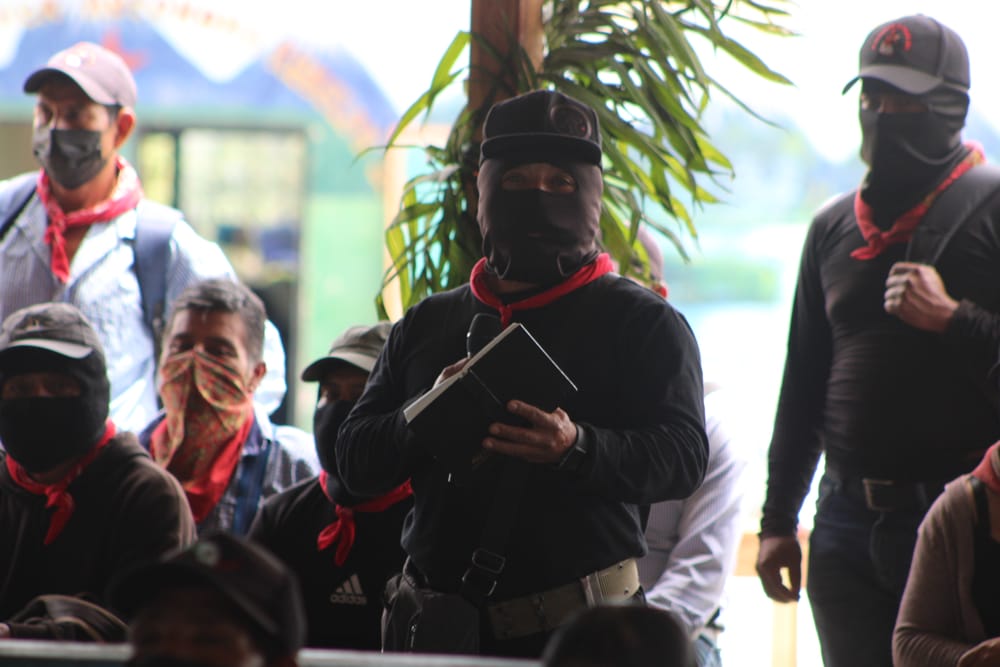
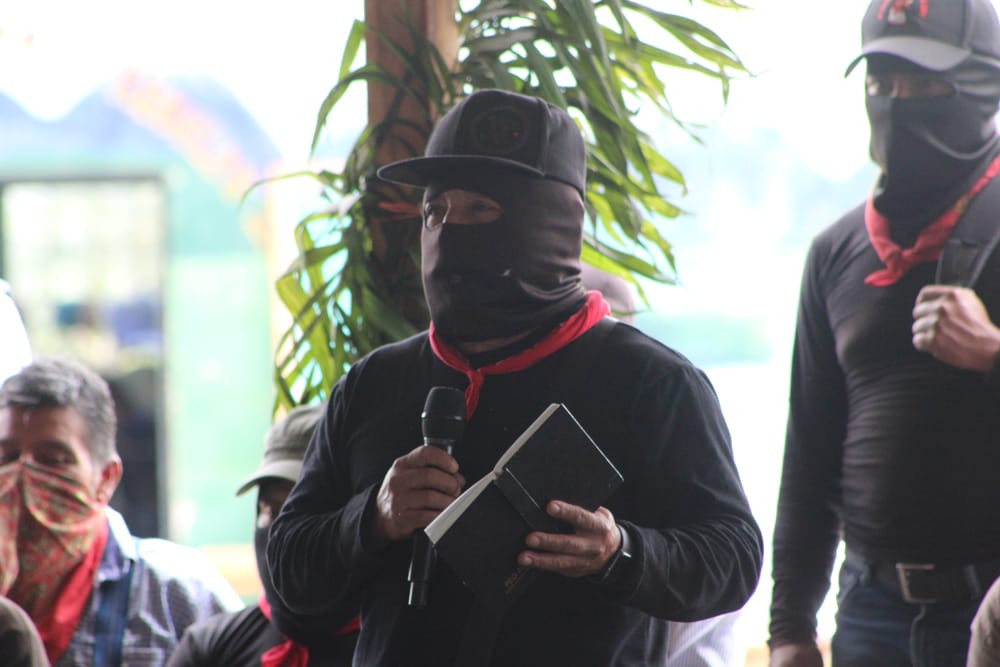
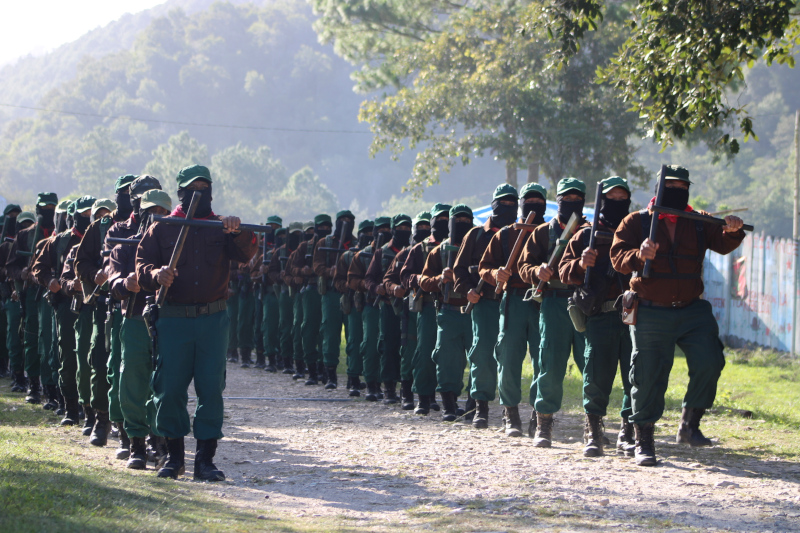
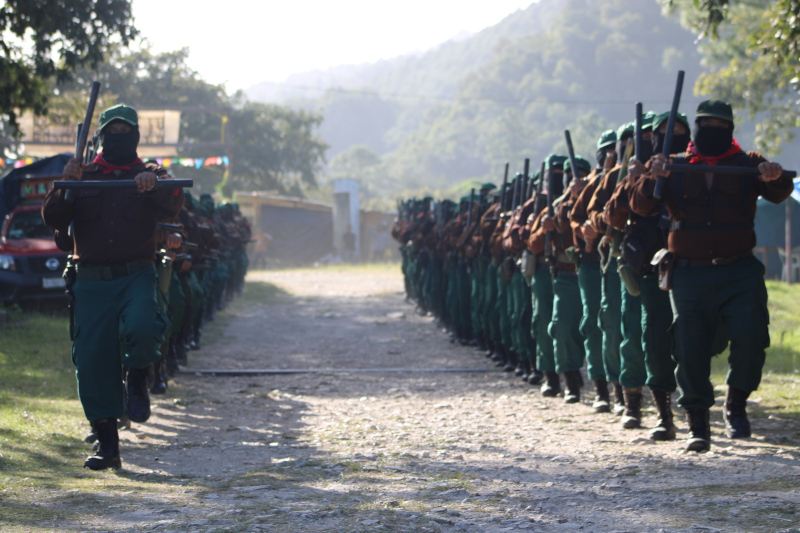
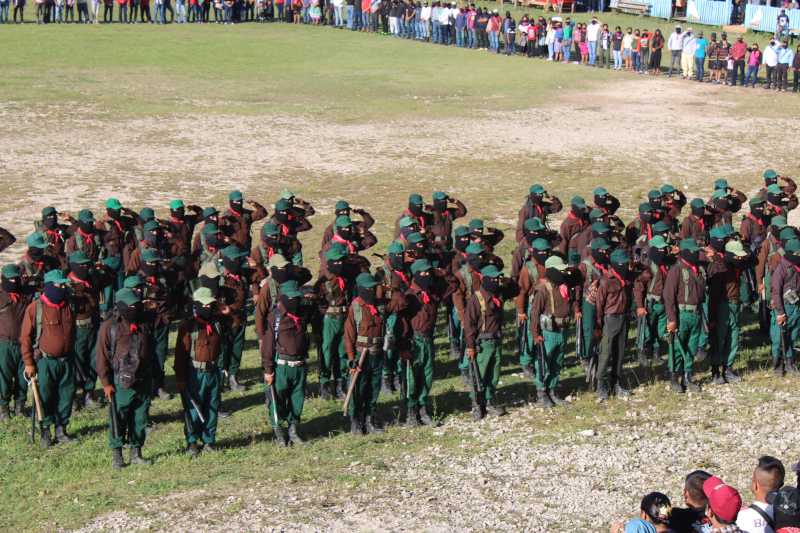
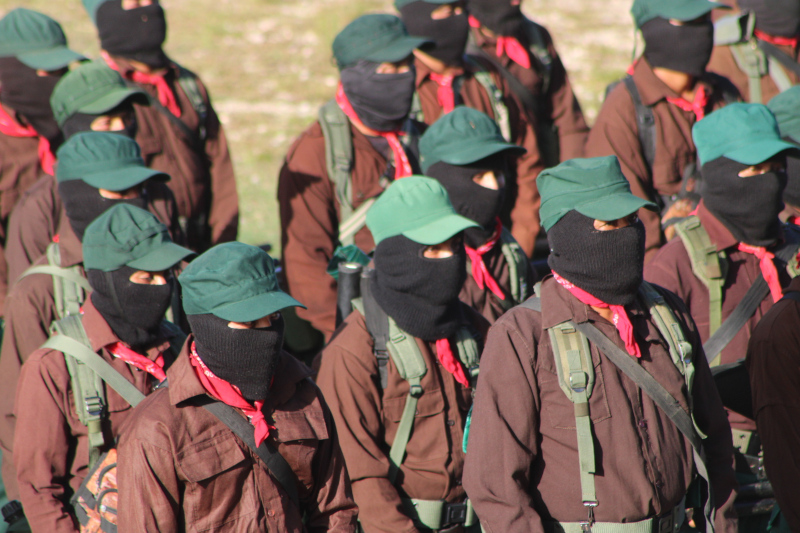
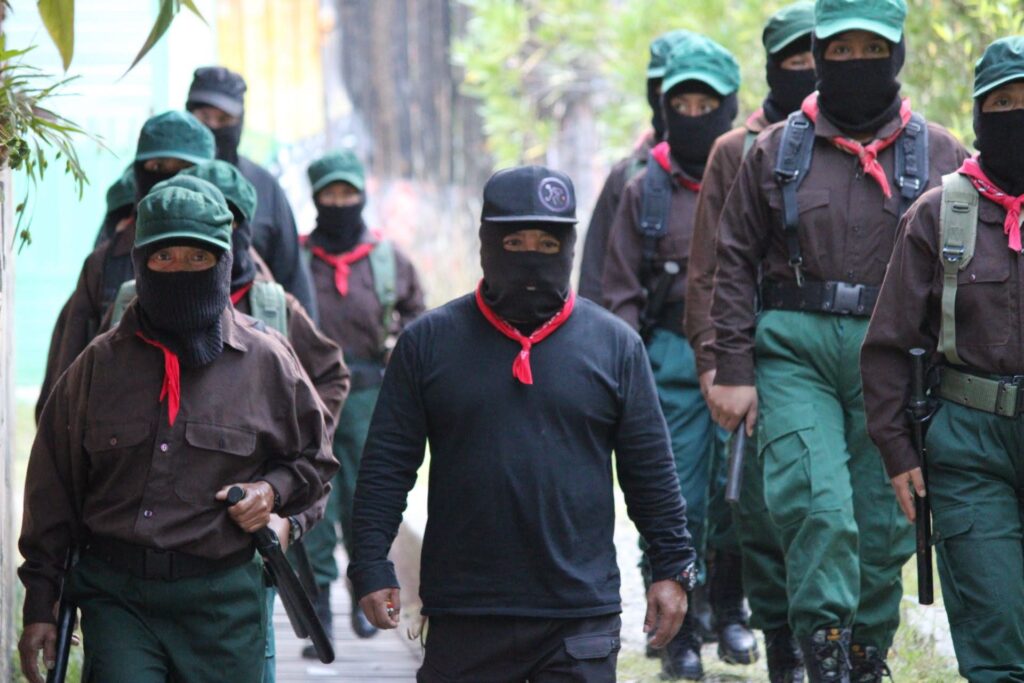
Ahí, frente a cientos de asistentes y bases de apoyo, milicianos y comandantes zapatistas, el profe Javier Urrea nos resumió los temas que escuchamos de las y los investigadores, académicos y activistas en el Cideci a mediados de julio: la guerra contra la humanidad. Las distintas guerras que enfrentamos actualmente y cómo se reorganiza la hidra capitalista para seguir atacando desde sus distintas cabezas. Entre los temas abordados están el fracking, el “tren maya”, la militarización y el muy disputado megaproyecto de la Bahía de Ohuira en Topolobambo, Sinaloa.
Pero, ¿es éste el eje principal de los encuentros? No, sino seguir sembrando semillas: sembrarlas, cosecharlas y reproducirlas. Los encuentros son para todos, todas, todoas lxs que sentimos que otra forma de vida es posible. En los encuentros, como en los semilleros, se hacen los intercambios de semillas de reflexión, resistencia y rebeldía. Cientos de miles de personas de distintas partes del mundo compartiendo cómo, desde sus propias luchas, van driblando, resistiendo y construyendo una vida más justa, más amorosa, más sana.
Una de las manifestaciones más potentes de resistencia son las artes. Porque no hay forma más bella de representar la tierra, el sol, la luna, el mar. Porque no hay testimonio más sublime de la existencia de una vida otra, donde no haya más muerte, violencia, injusticia, opresión.
El arte genera conciencia e inspira a construir otros mundos, como lo compartió Nayeli, que nos presentó un performance sobre los peligros de las redes sociales y el arma de la desinformación, así como un taller en el que los asistentes aprendieron a expresar, manifestar y vincularse con el cuerpo, el alma y la conciencia. El performance es eso: un puente, un medio para transmitir la verdad.
Lo mismo hace la poesía. “La raíz tiene un por qué de ser oscura, y la poesía una razón de ser hermosa,” como nos dijo Malba Marina. O como los versos de Nezahualcóyotl que cantaron y declamaron en náhuatl Xally Islas y Juan Trujillo:
¿Qué dejaré cuando me vaya? ¿Qué dejaré en esta tierra? ¿Qué hará mi corazón? No venimos en vano a vivir en este mundo. Al menos dejemos flores. Ti nezkayototiuh xochimeh. Al menos dejemos cantos. Ti nezkayototiuh kuikameh.
¿Qué dejaremos los seres humanos cuando nos vayamos? “Si no estás preparado y la tormenta viene, ¿dónde vas a refugiarte?”, nos cuestionó el Subcomandante Moisés.
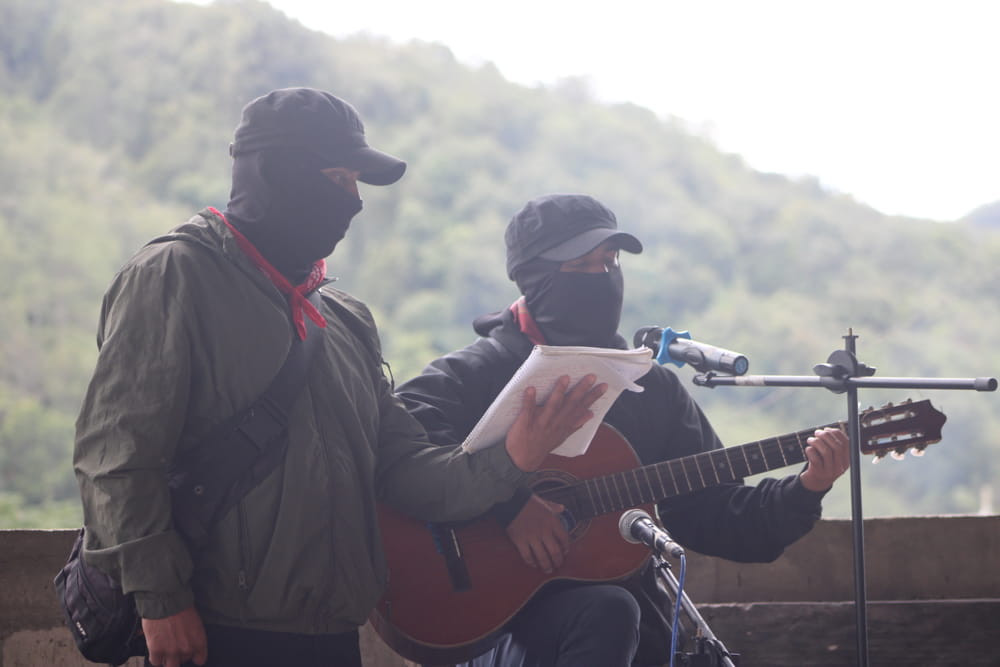
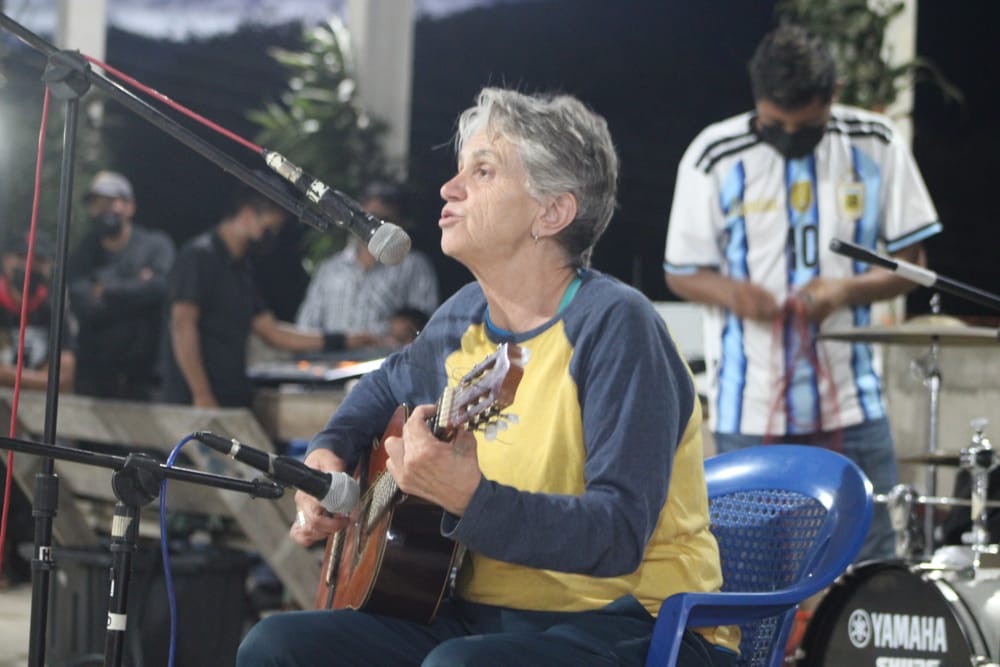
Este Encuentro de Artes y Encuentro de Resistencias y Rebeldías suena, resuena y hace eco. Como la guitarra, el violín y los cantos tradicionales de los compañeros bases de apoyo tojolabales, donde se manifestaron los rezos de las y los abuelos. O como la música tradicional de los pueblos aborígenes de Australia, con sus siglos de resistencia, o la gaita gallega con su resiliente alegría, o la dulce voz de Fungito, que lucha y lucha a pesar de la tristeza.
La música, la poesía, el performance, el cine, todas las artes son fuego que enciende el alma e inspira a construir una humanidad diferente, al igual que la escritura, que permite compartir creación y belleza, denunciar y visibilizar, pero sobre todo sanar nuestros corazones, como nos lo compartió Alejandro.
Ayleen París, proveniente de Argentina, nos compartió desde el arte de la palabra cómo resiste la lucha en su país. Una lucha que compartimos frente al mismo enemigo: el sistema capitalista. “Somos un pueblo,” dice, “lleno de personas buenas, pero desafortunadamente los malos son los que se dan mucha publicidad y son los que sobresalen.” Y nos hace recordar que, efectivamente, el sistema capitalista actúa así: primero divide. “Argentina está llena de mujeres fuertes que sostienen las ollas populares.” Y sí, Ayleen es la viva representación de ello. Así como Alejandra, que desde la compartición de la lucha que vive su pueblo en Hidalgo, nos habla de los logros de la comunidad gracias a la organización comunitaria. O Jesús y su comunidad de Alto Fucha en la periferia de Bogotá, que resiste el despojo creando reflexión, belleza y resistencia con el colectivo Arto Arte.
De la misma forma, Daniela Rodríguez nos inspiró con su compartición sobre los hogares comunitarios creados en Argentina, con el fin de garantizar las tres T: techo, tierra, trabajo. Un lugar que no funciona como centros de rehabilitación aislados ni como consultorios médicos, sino como hogares comunitarios e inclusivos insertados en el corazón de los barrios vulnerables, y cuya organización se inspiró en las semillas plantadas por el EZLN.
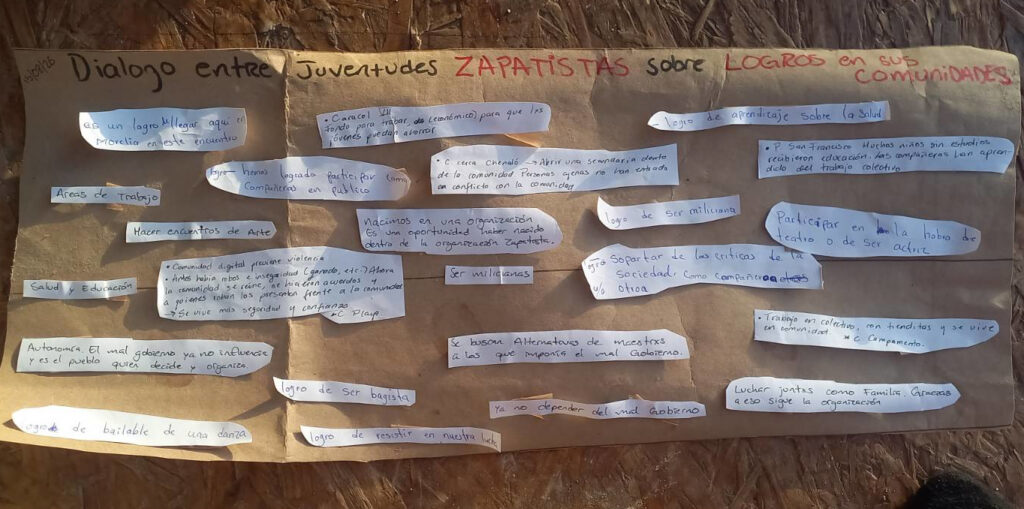
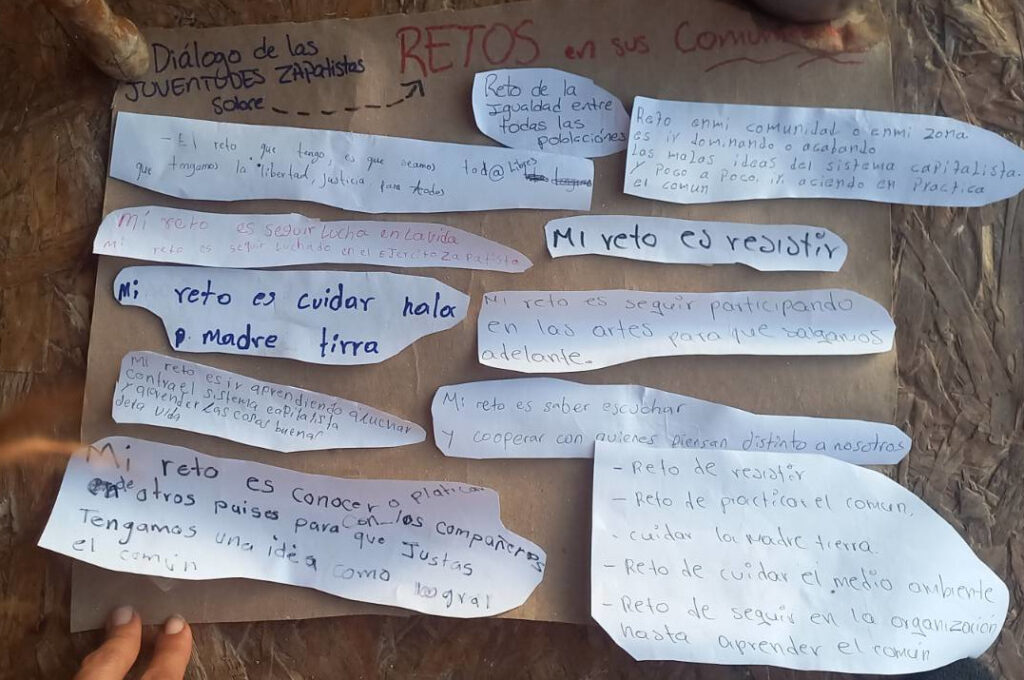
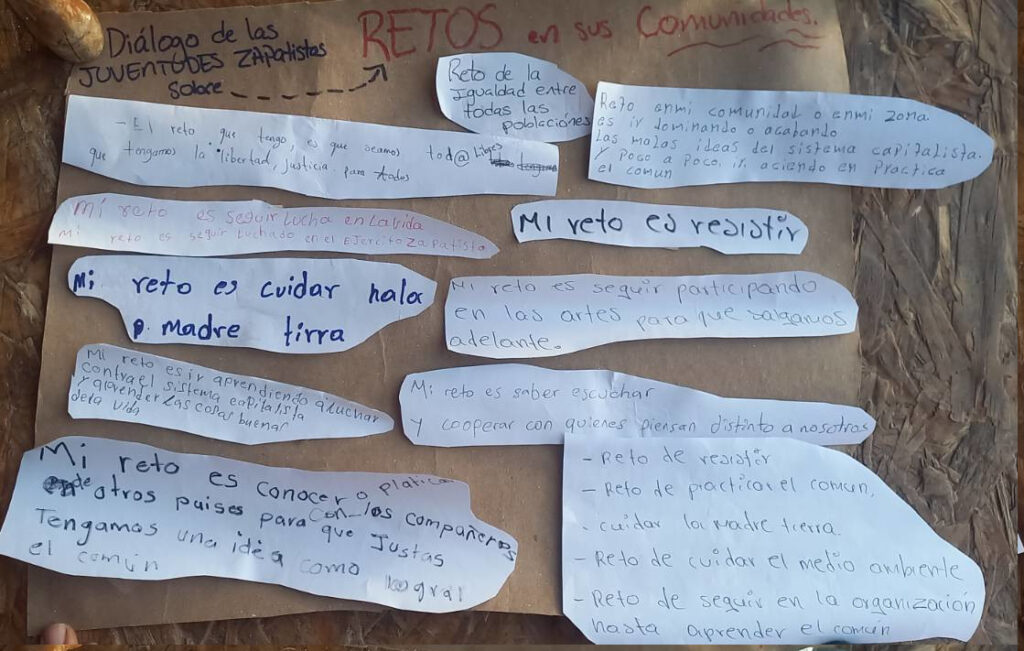
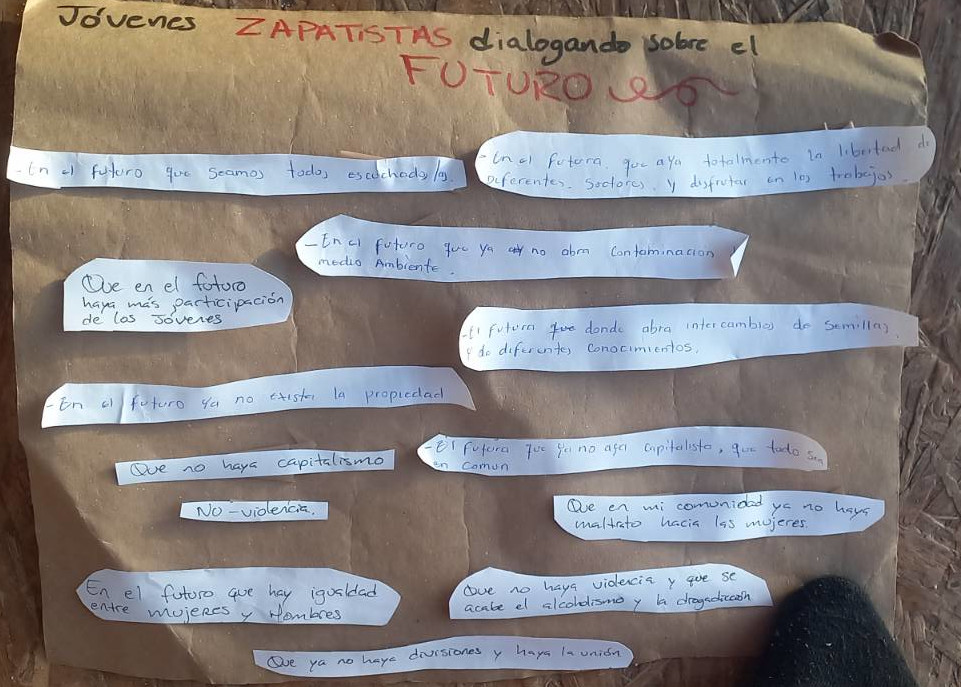
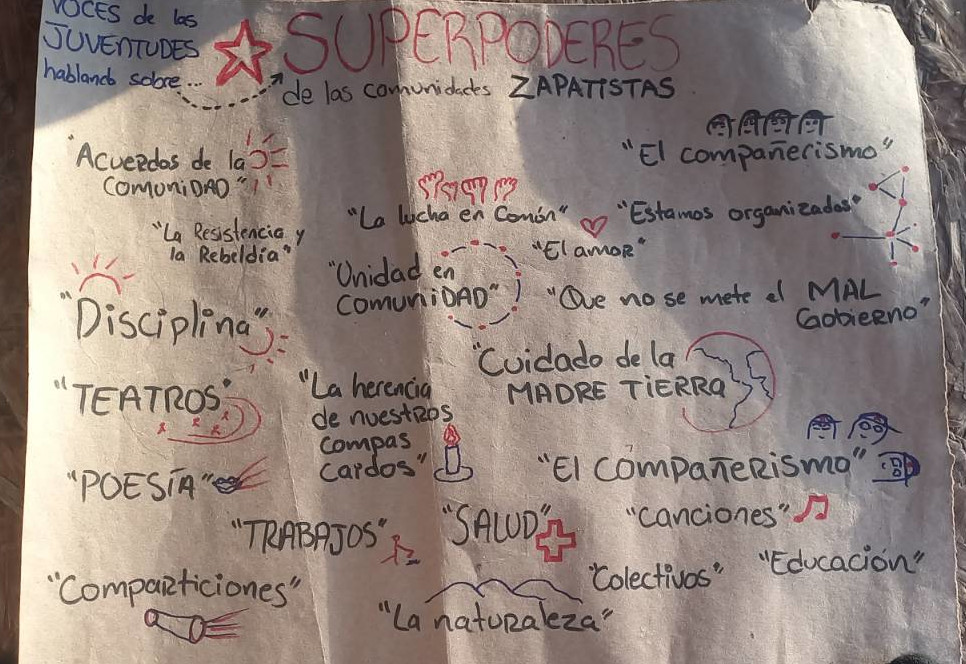
Fernanda organizó una a actividad con jóvenas y jóvenes zapatistas, durante la cual reflexionaron sobre sus logros individuales y colectivos, su visión del futuro, sus “superpoderes” y los retos que enfrentan en sus comunidades.
Willy, desde Francia, nos compartió un texto en el que se despliega la discriminación y exclusión que sufren las mujeres en todo el mundo, pero también su dignidad, a pesar de las muchas violencias de un sistema patriarcal que permanece en este siglo XXI.
Y la cantante Maruca nos arrancó lágrimas de alegría con su bella voz en tsotsil y en castilla, recordándonos, con el corazón, la tanta belleza que irradia nuestro mundo a pesar de todo.
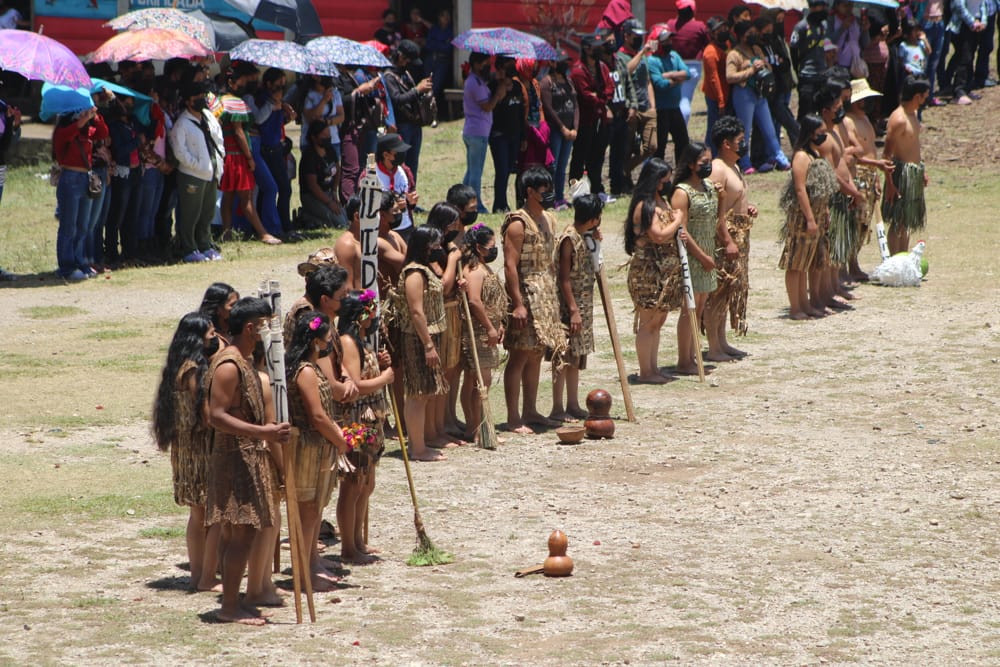
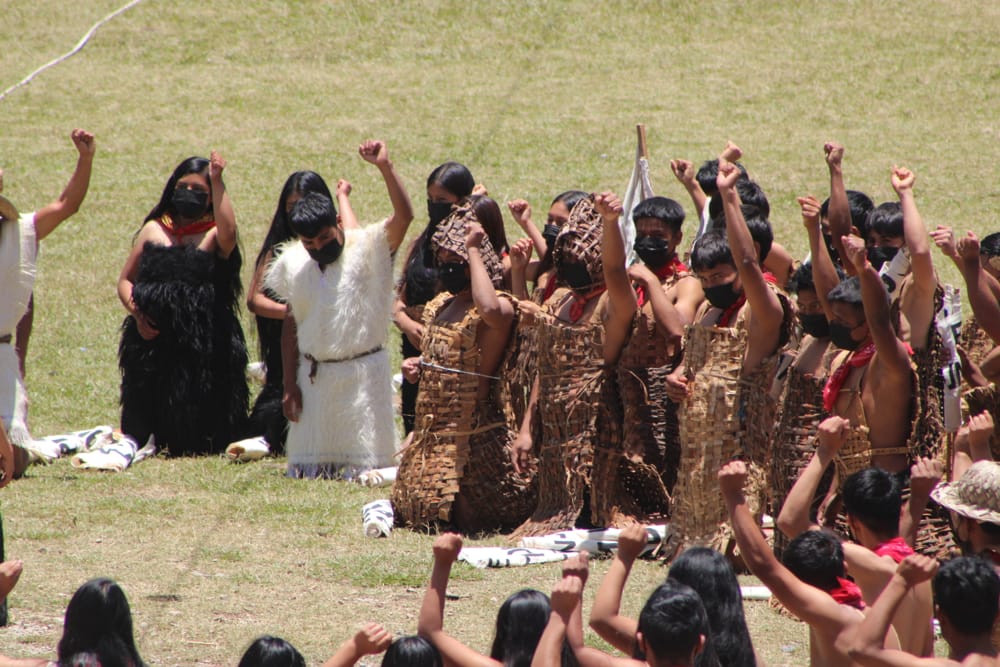
Durante el fin de semana el 8 y 9 de agosto, los zapatistas nos compartieron su historia desde la clandestinidad hasta el presente, los muchos cambios que los llevaron a adoptar el común como la luz que alumbra todo su quehacer revolucionario para enfrentar no sólo la violencia y descomposición social que se vive en Chiapas, sino también la tormenta que nos acomete a todas y todos en este momento de la historia de la humanidad. Ese domingo, jóvenas y jóvenes zapatistas presentraron la obra “El común y el día después”, con la que nos compartieron su sueño de una vida otra tras el colapso del capitalismo y de nuestro sistema mundo. (Ve nuestra cobertura de la compartición zapatista aquí.)
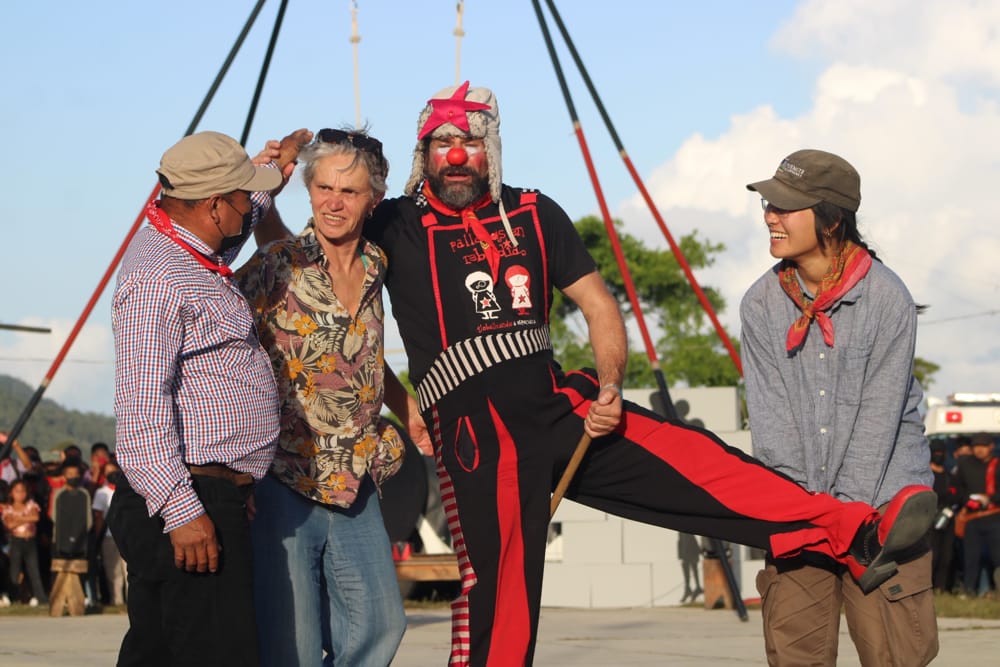
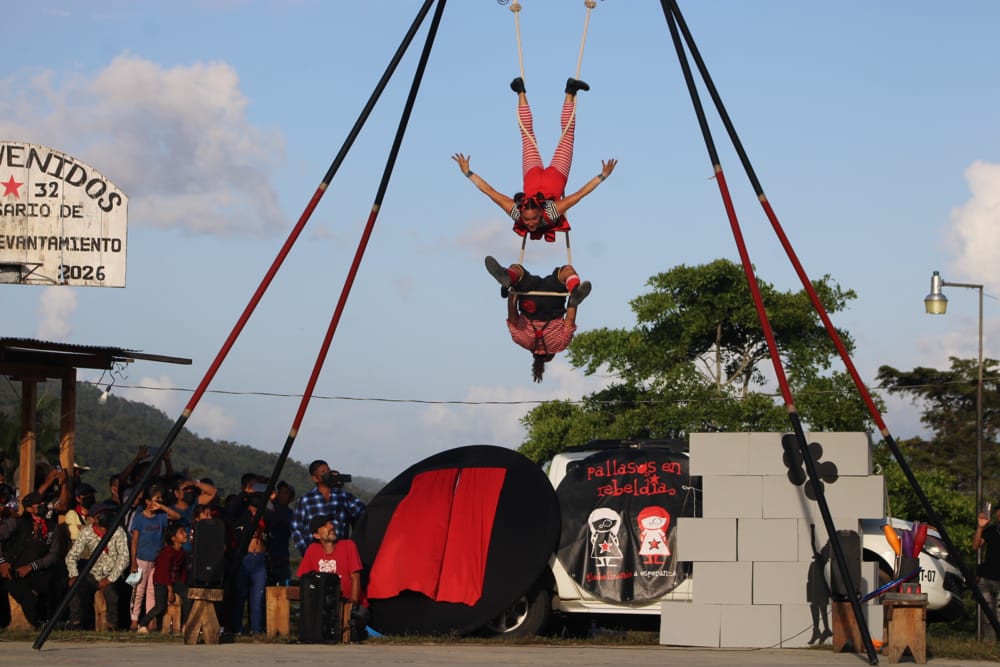
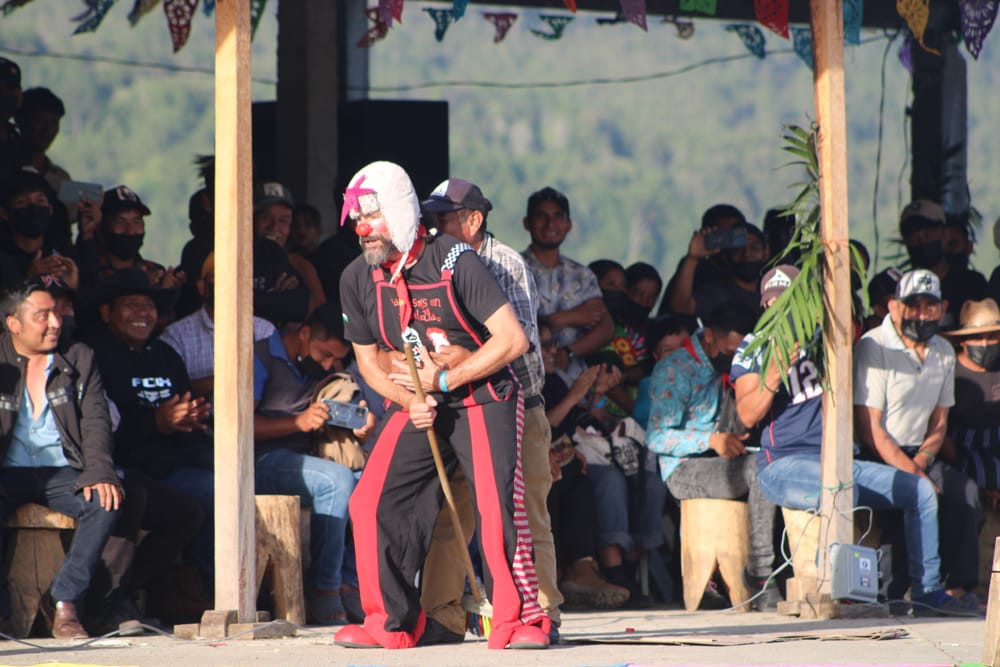
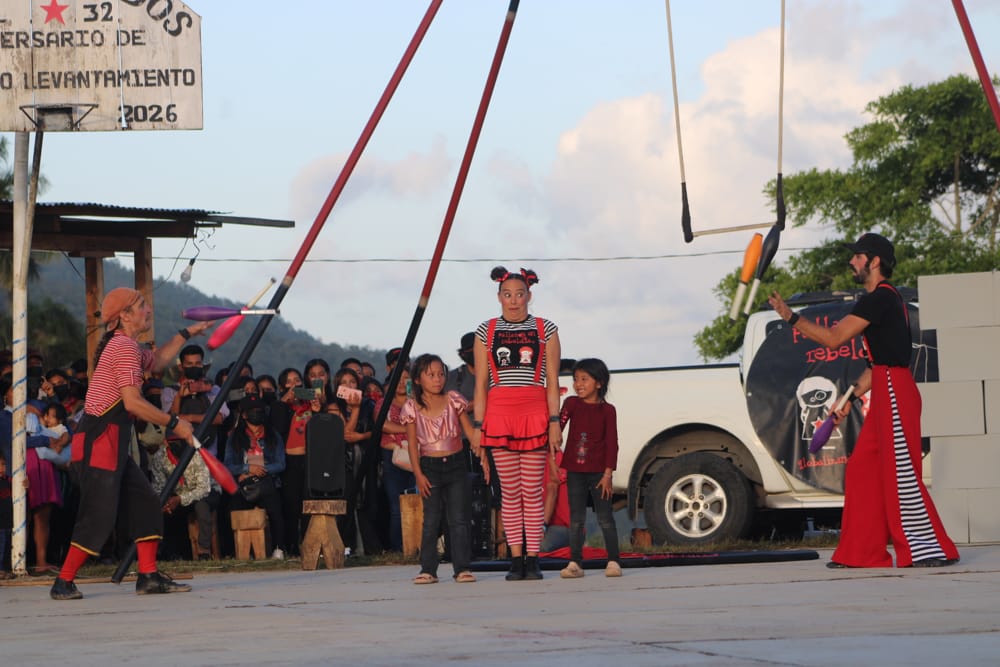
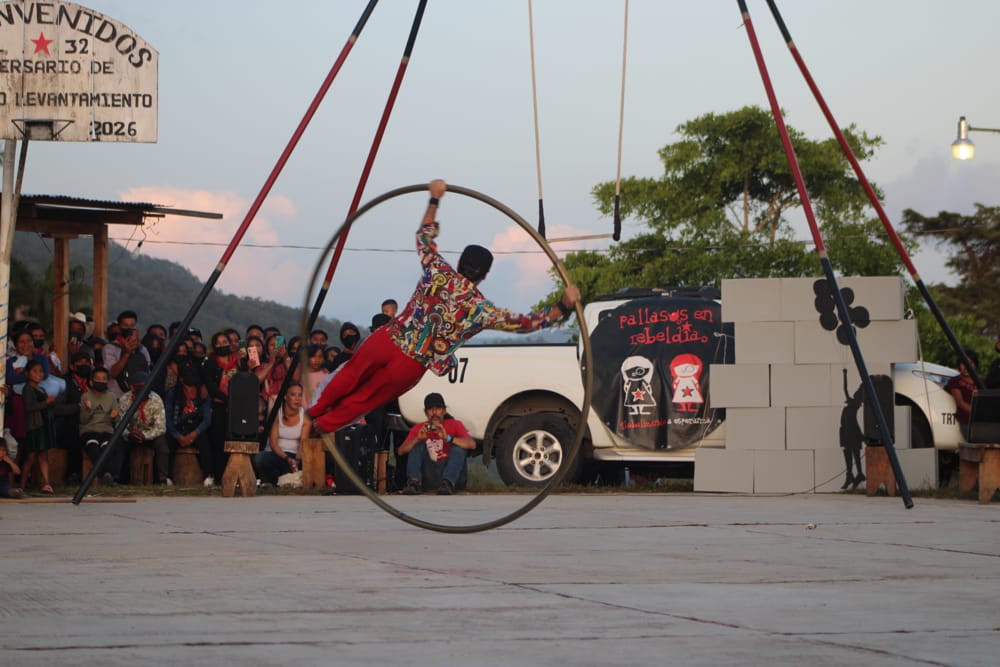
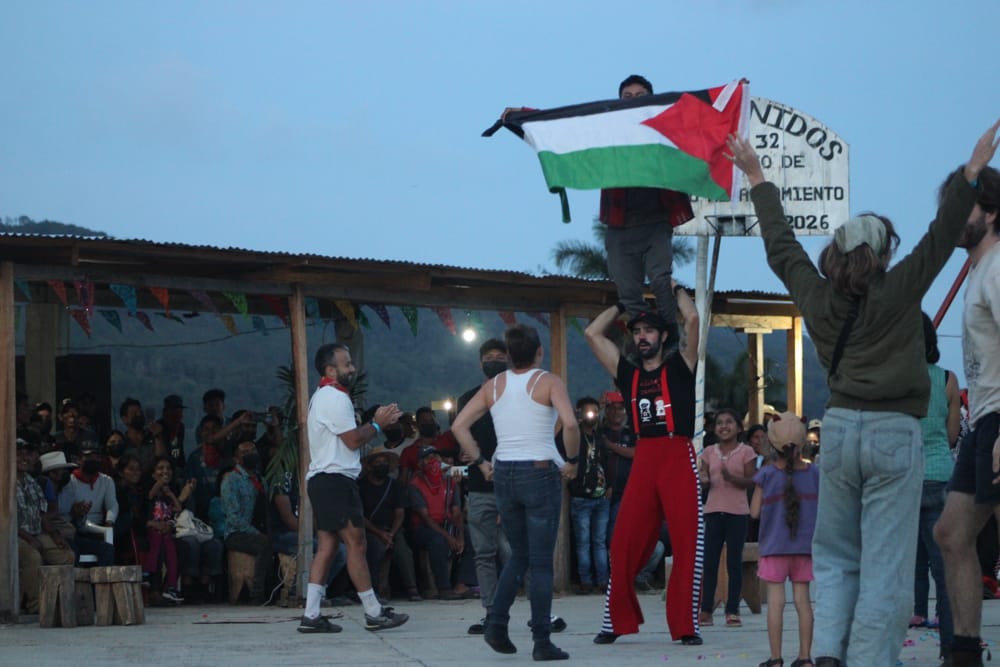
Muchas más fueron las comparticiones de arte y reflexión que nos conmovieron a lo largo de estas dos semanas. Como la presentación de Pallasos en Rebeldía, que alegró corazones y nos recordó que la felicidad y la risa son no sólo posibles, sino necesarias, en medio de la tormenta.
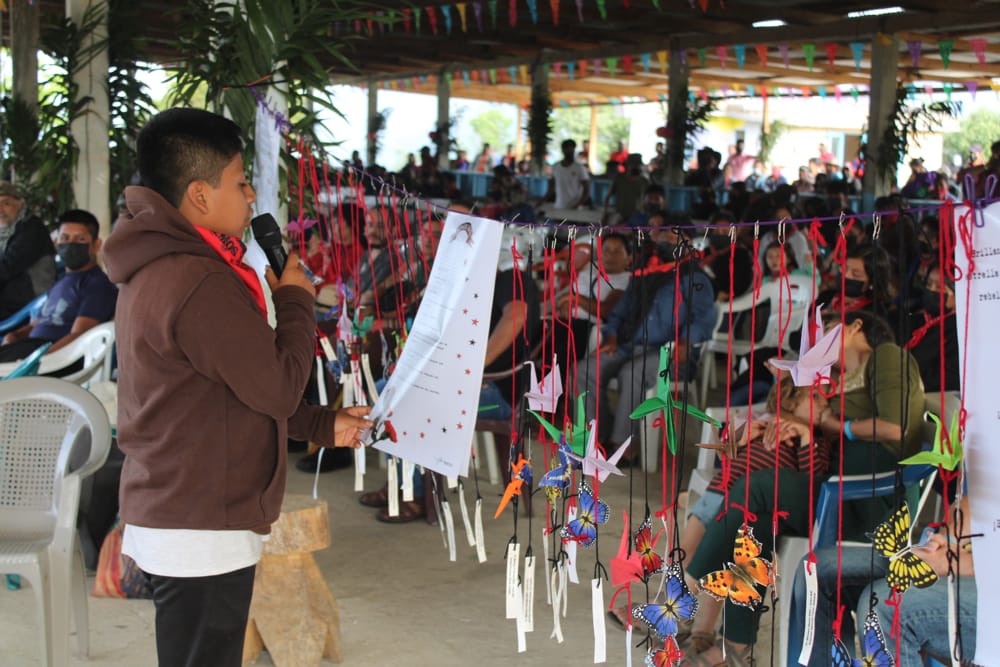
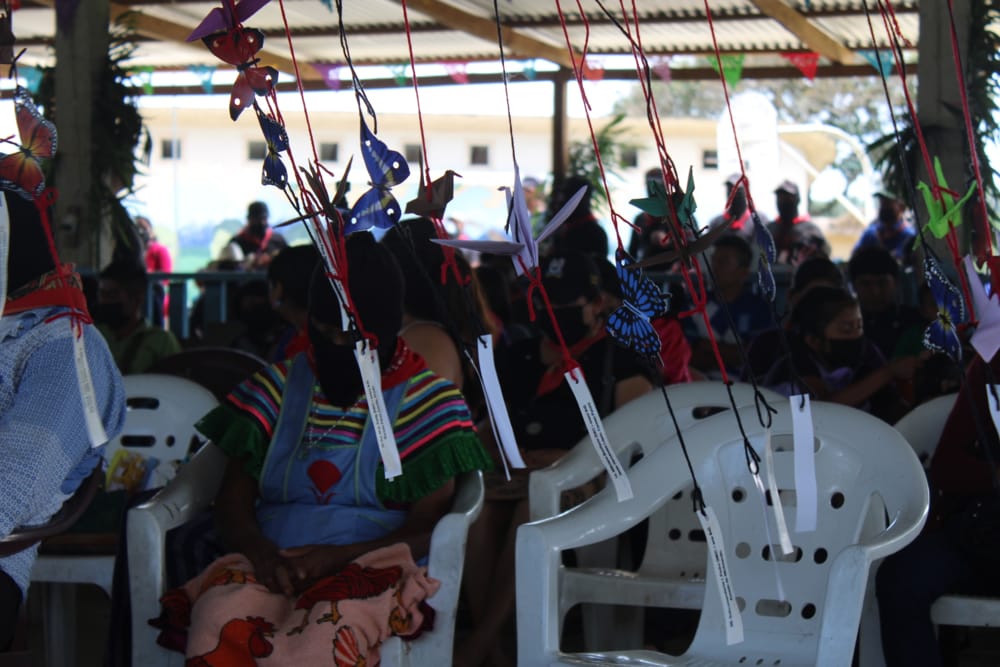
O el niño del colectivo Pájara Ti, que con amor hizo mariposas y colibrís para recordar a cada uno de los caídos en el levantamiento de 1994 —que con su sacrificio contribuyeron a hacer posible lo que hoy se vive en territorio zapatista y la esperanza de un mundo nuevo en común—, y recitó bellos poemas sobre el Subcomandante Pedro y el Subcomandante Marcos.
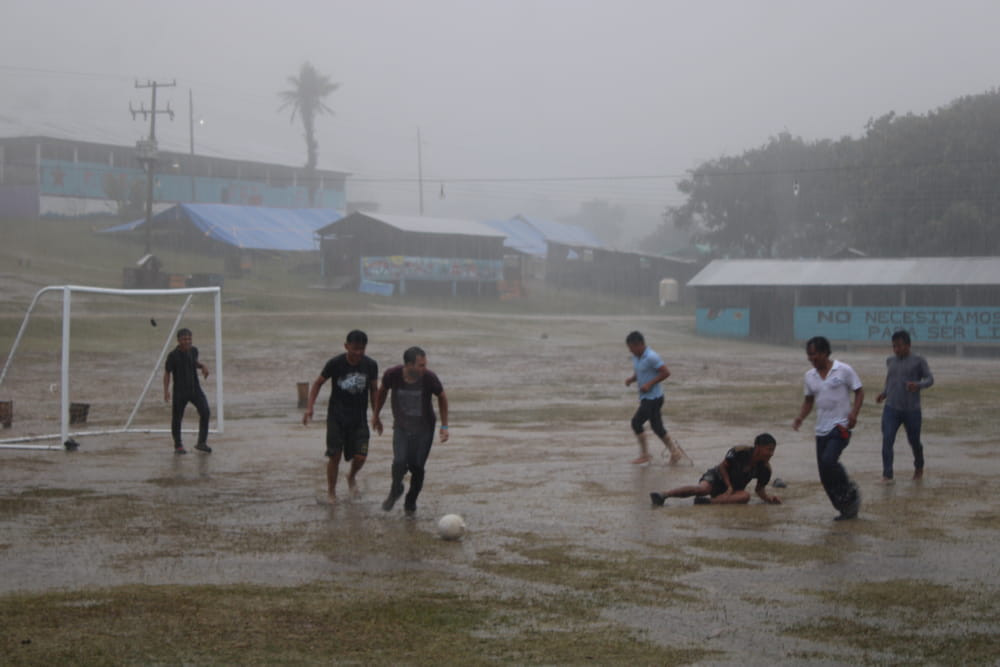
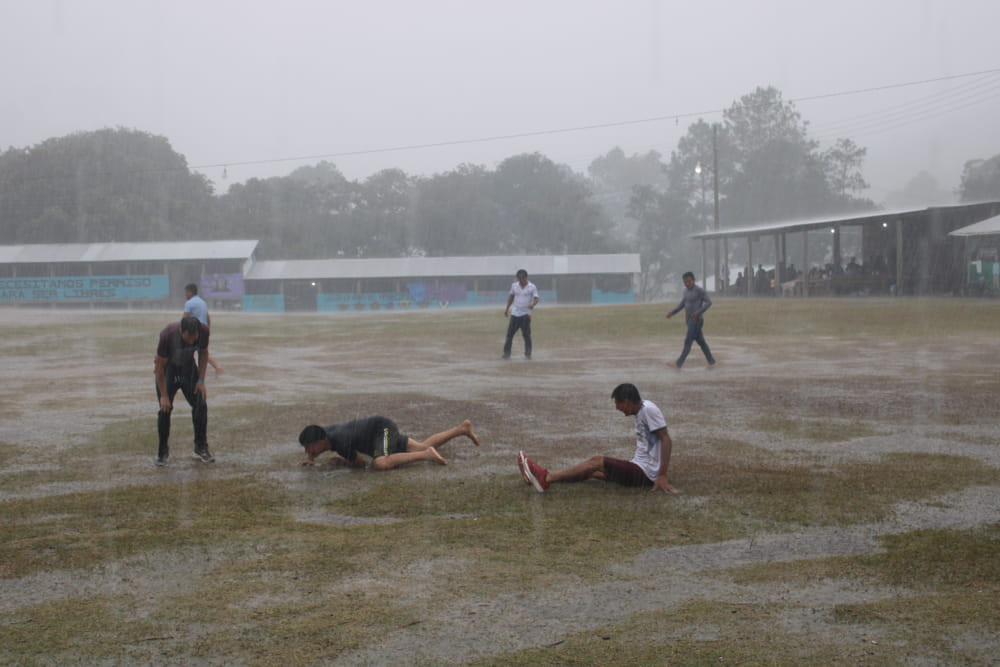
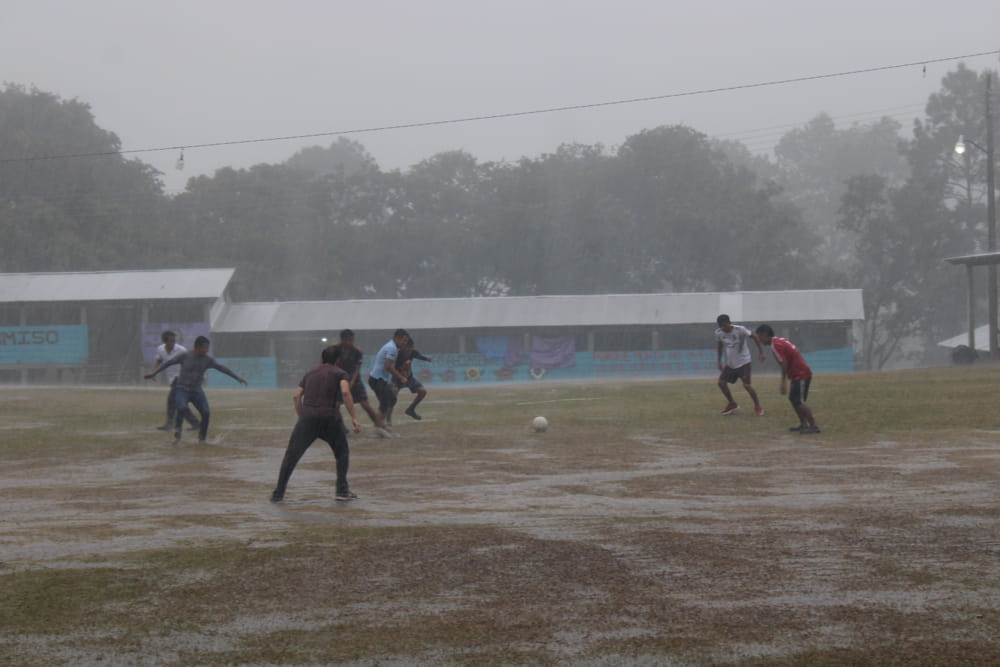
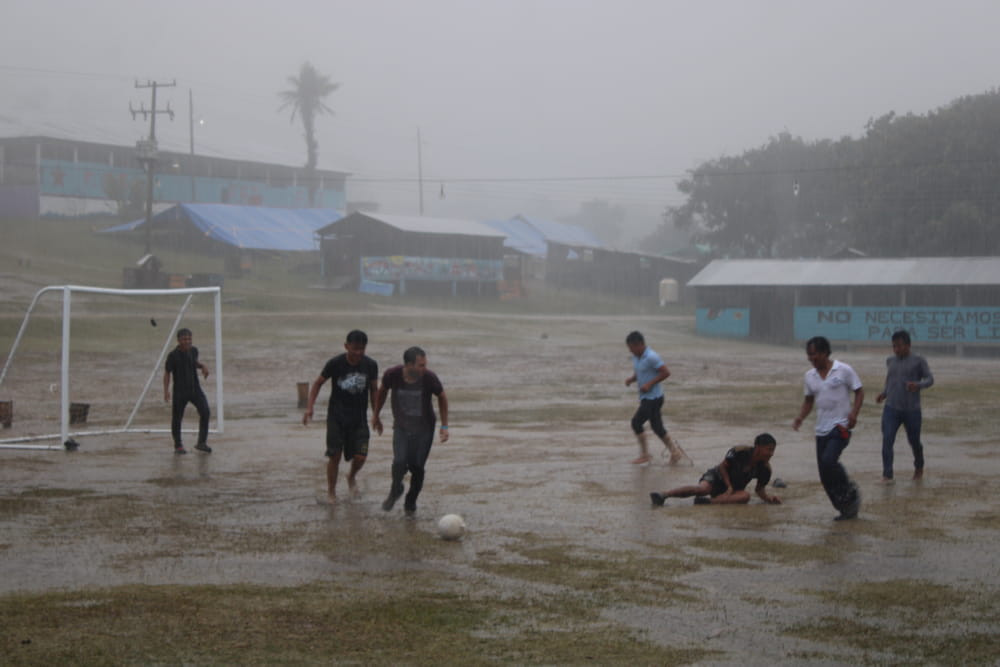
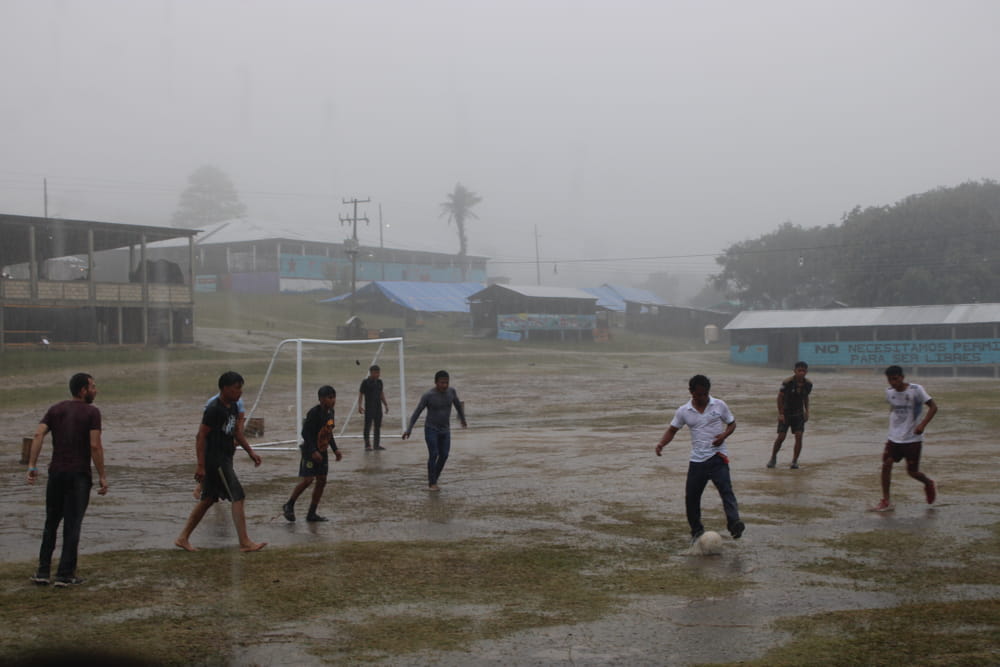
Pero para nosotras, nosotros, el mayor aprendizaje quizás provenga de la experiencia de una vida otra, de una humanidad diferente en medio de tanta violencia, tanta injusticia y tanta muerte. Las compañeras en sus cocinas que con generosidad nos compartían pozol, caldo de res, tostada y frijol. El alegre “Comedor del Común”, en el que participaban compañeras y compañeros de las distintas zonas zapatistas y donde la querida Marijose nos alegraba con su canto, su baile y su algarabía. Los partidos de futbol, incluso bajo la tormenta, donde zapatistas y foráneos contagiaban alegría. Las noches de baile, en las que jóvenas y jóvenes se regocijaban con el entusiasmo de la vida que florece. La sensación de seguridad, de compañerismo, de solidaridad, de un propósito común. En fin, una geografía y un calendario donde se vive el común.
Seguramente, en cada uno de los asistentes el marcapaso se plasmó en lo más profundo del corazón, como a nosotras nos sucedió. Porque no asistimos a este encuentro para pasar el tiempo, sino movidas y movidos por el mismo fuego que nos ilumina y por el arte que arde en nosotras: la defensa de la vida. Y para recordarnos que ninguna lucha está sola, como lo dijo alguna vez el Subcomandante Marcos: podemos elegir convertir el sueño en una pesadilla, o convertirlo en un sueño. Y aquí estamos, con la convicción de que en común otro mundo es posible. Éste es nuestro sueño, y no estamos dispuestas a resignarnos.
La guerra del planeta y la guerra de la naturaleza
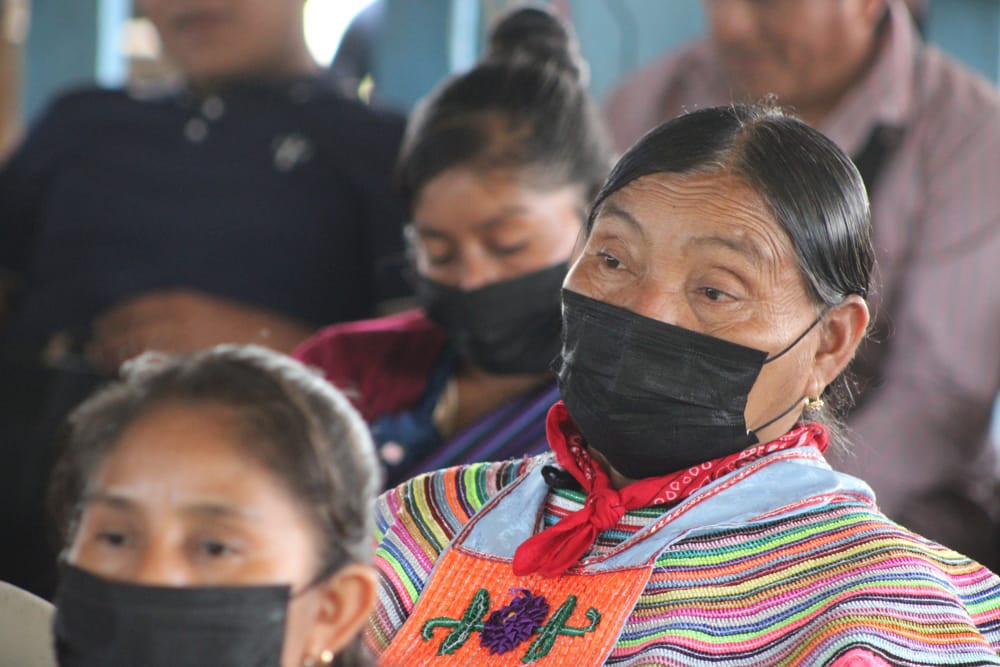
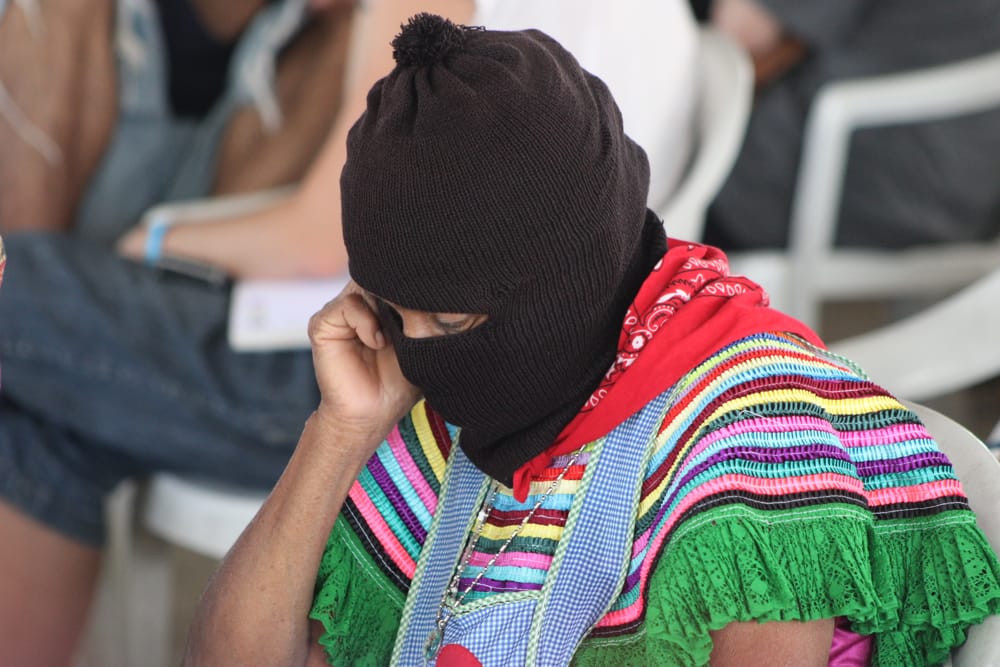
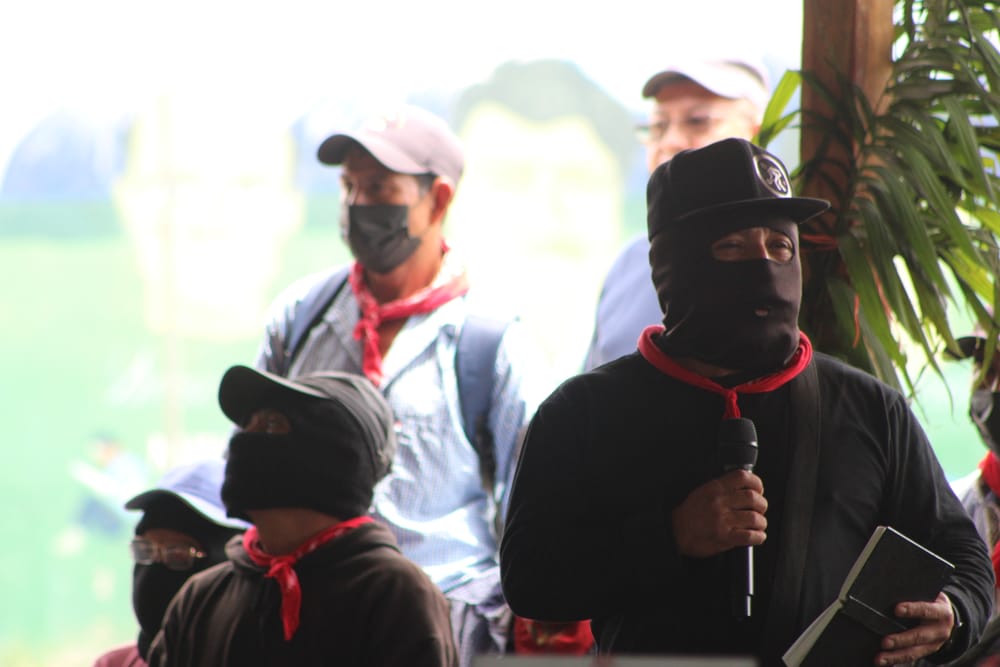
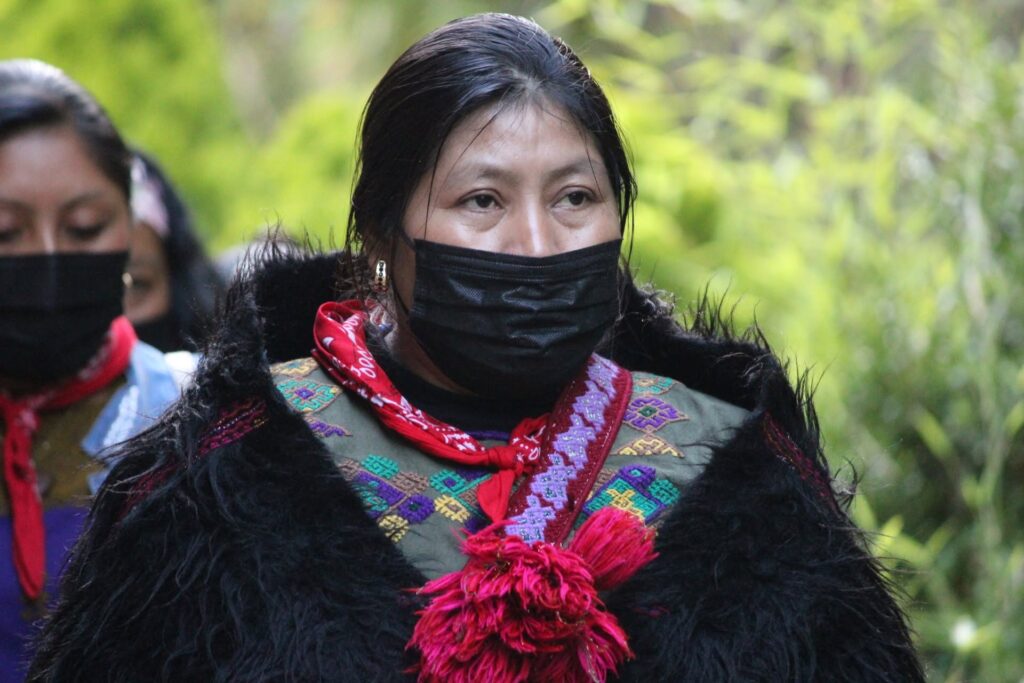
Por fin, desde esta geografía en el sureste mexicano, en el caracol de Morelia, entre verdes montañas, un cielo azul y el coctel del calor de bienvenida, están siendo recibidos cientos de asistentes al Encuentro de Resistencias y Rebeldías y al Encuentro de Artes. Simpatizantes, activistas, colectivos, organizaciones, medios libres y muchos artistas se dan cita a un evento que miles y miles de personas de todo el mundo han estado esperando.
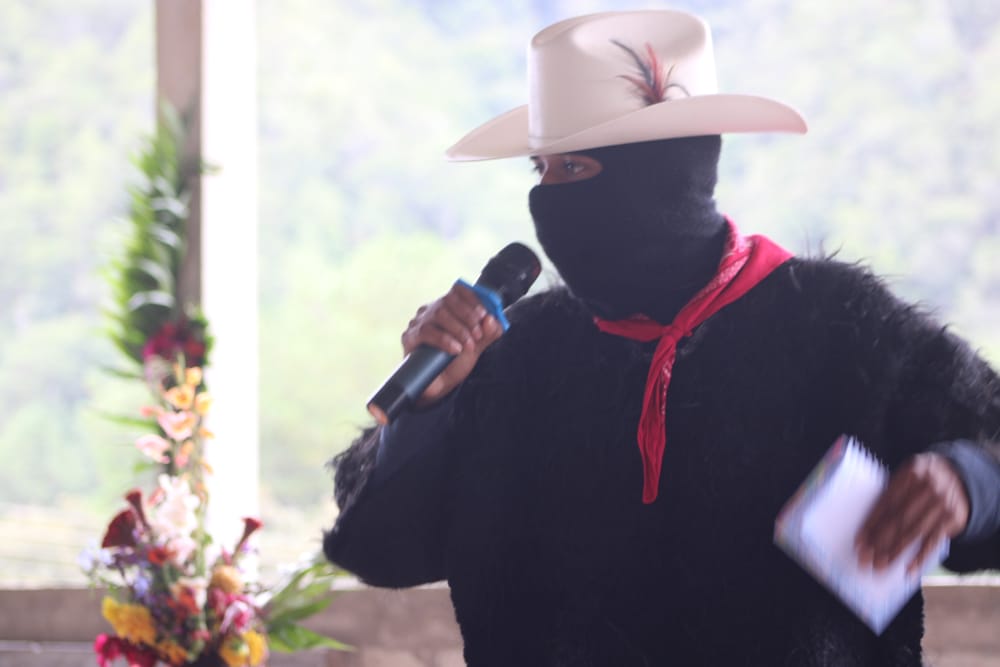
Dos eventos simultáneos en los que artistas de muchas partes del mundo compartirán su creatividad para desmenuzar algunas de las muchas formas de vida —luminosas y oscuras—, revelando así otras realidades que a su vez nos permitan vislumbrar otros mundos posibles. Este fue el mensaje del Subcomandante Insurgente Moisés.
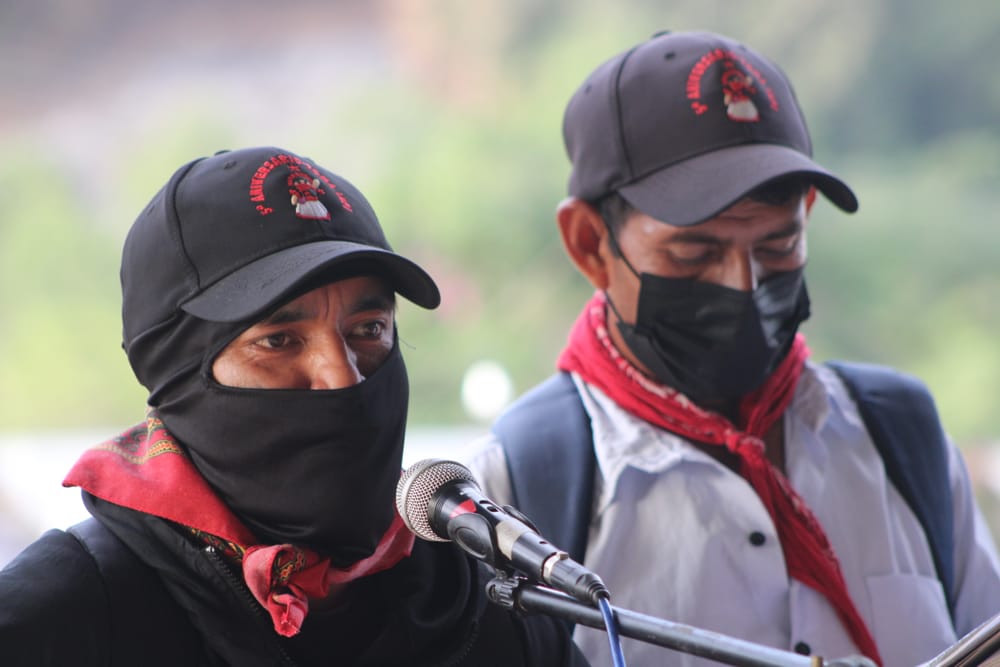
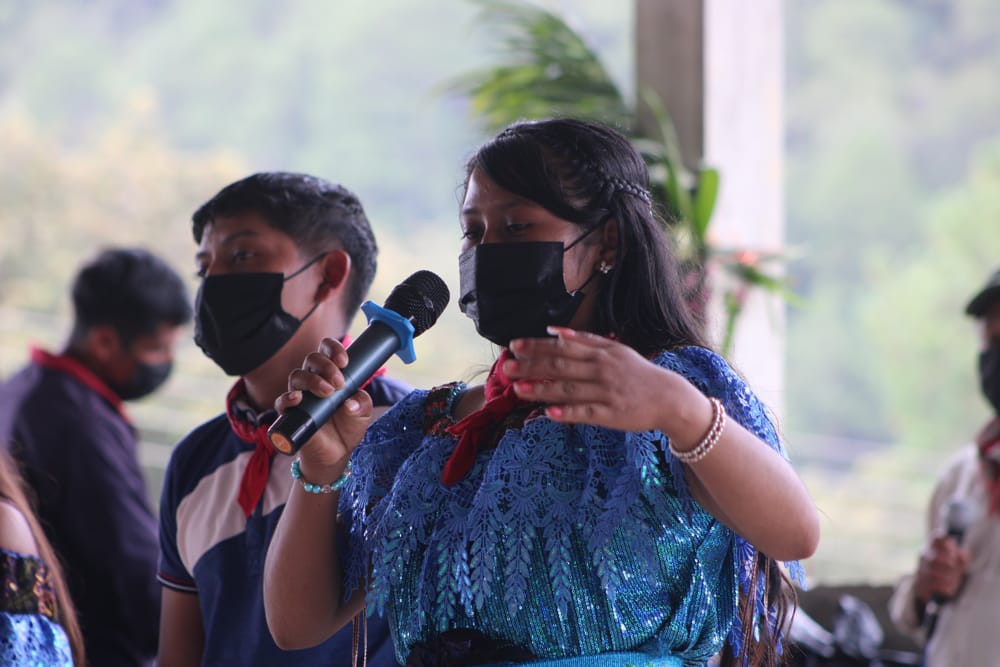
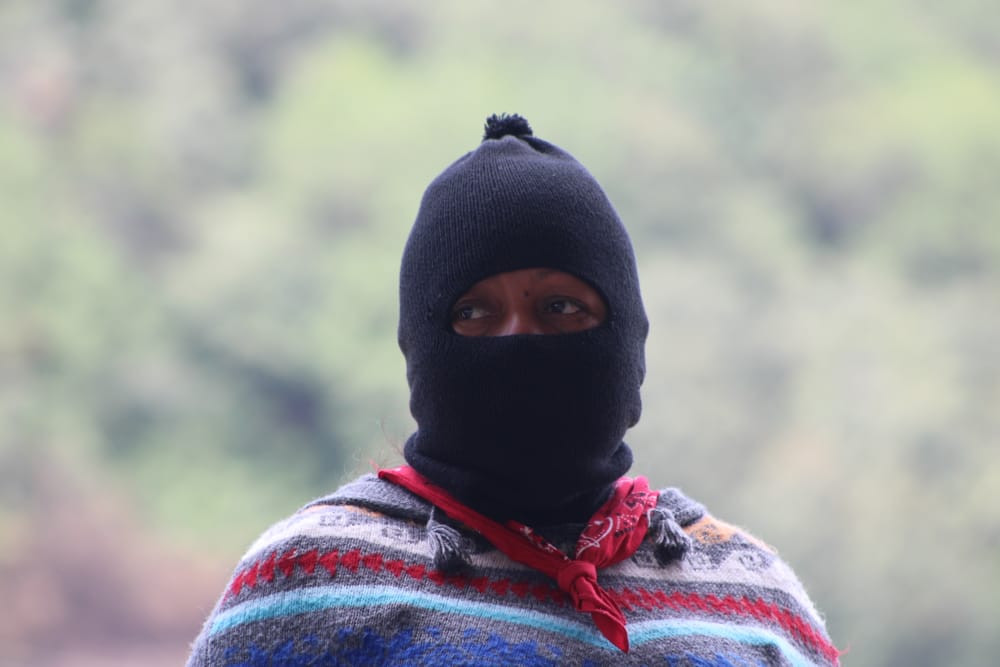
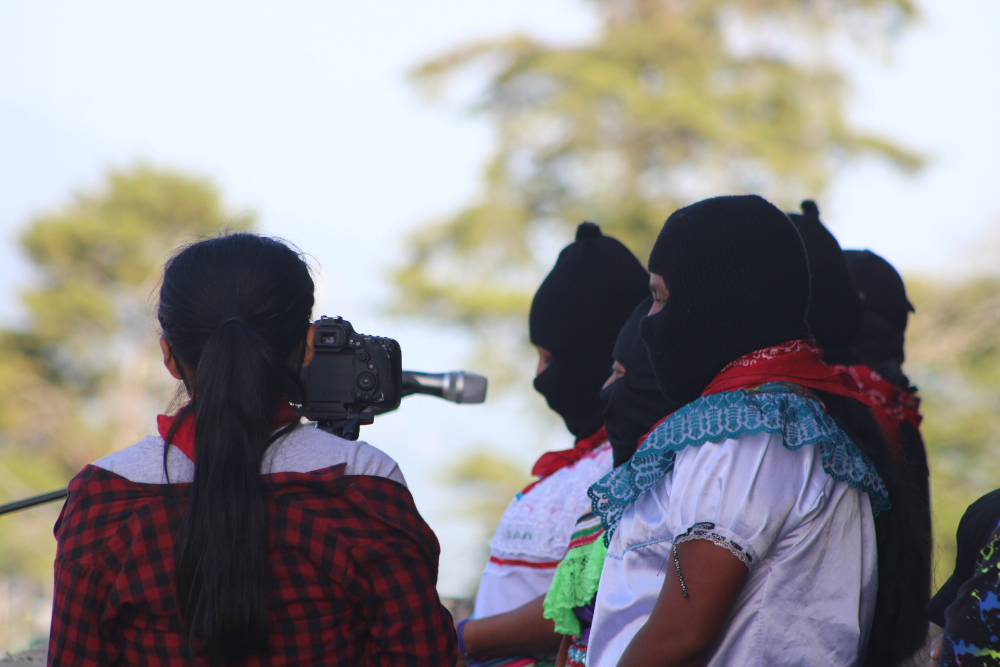
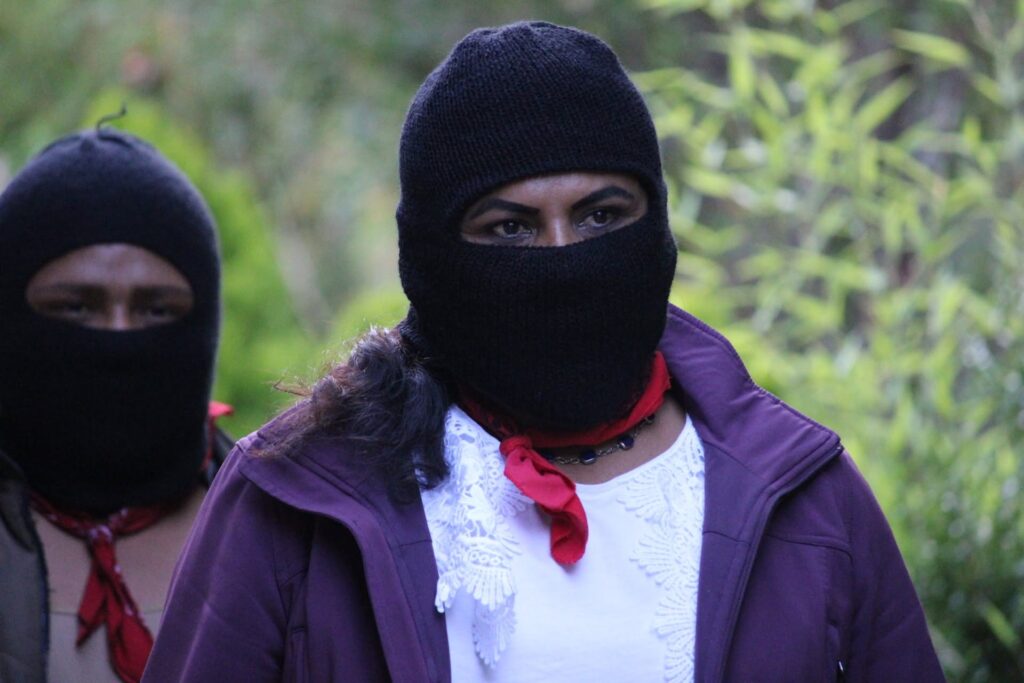
Comandantas del CCRI-CG del EZLN, con su potente pero dulce voz, abrieron el evento con palabras de bienvenida en cuatro idiomas distintos: tseltal, ch’ol, tsotsil y tojolabal.
El Subcomandante Insurgente Moisés cierra con un emotivo mensaje informando que este evento consiste en dos encuentros simultáneos. Las palabras de bienvenida del Sup Moi nos recuerdan lo que ya sabemos: el responsable de estas dos guerras es el sistema capitalista, que no conforme con aniquilar al ser humano, destruye la naturaleza, la Madre Tierra. En este contexto, los individuos por sí solos tienen dos alternativas: rendirse o resignarse.
Por su puesto que los asistentes no viajaron kilómetros, horas, incluso días, nomás para hacerse guajes. Saben perfectamente que la razón por la que están acá no es para resignarse, ni mucho menos rendirse. No se preocupen, nadie se sintió regañado ni ofendido. Las ofensas aquí no caben, y por algo siguen arribando las camionetas con más participantes.
Sin embargo, prosiguió el Sup, la organización con otros, otras, otroas es una de las formas en que el ser humano se rebela y resiste. Una de estas formas de rebelarse y resistir son las artes.
Este encuentro, explica, es para conocerse y aprender unos de otros las formas de resistencia y rebeldía y compartir diferentes visiones de la realidad.
“No basta con imaginar nuevos mundos; hay que luchar por ellos, no para cambiar algo y que todo siga igual, sino para cambiarlo todo realmente. Para eso, se necesita la práctica y la teoría juntas. Pensar y trabajar, pero no cada persona sola en lo individual.”
El Subcomandante Moisés enfatizó que el sistema nos hace creer que sólo el individuo importa. Sin embargo, trabajando en común se obtienen dos cosas fundamentales: la fuerza para rebelarnos y la inteligencia para resistir, y vivir sin explotación, represión y despojo.
El mensaje fue tan claro que, aunque cansados por el viaje, las y los asistentes, con su espíritu de rebeldía y resistencia, no se quedaron sentados ni perdieron el tiempo. Luego luego agarraron sus parejas para ir creando los vínculos. Los tecladistas hicieron retumbar las bocinas con esas músicas que encienden el cuerpo. No había juncia en el suelo como para amortiguar, y ya ahora por la mañana salió una camioneta muy temprano, dicen que dicen, para reponer los caites, los zapatos y las botas de las y los milicianos, que ya andaban destaconados de tanto baile.
“Que las ideas que surjan de este encuentro sirvan para el arte supremo, la lucha más grande, que es para la vida, porque el sistema es para la muerte.”
Assim se encerrou este extraordinário espaço de reflexão e pensamento crítico, com a força, a potência, a contundência e a feroz ternura de mulheres e outroas que, por meio de seus múltiplos olhares, nos convidaram a enxergar, com corações indignados, a violência de um sistema-mundo que se impõe como único, mas também, com amor e esperança, a multiplicidade das realidades humanas que compõem um mundo de inúmeras e deslumbrantes cores.
Que melhor forma de concluir este semillero, que nos ofereceu uma oportunidade única de compreender não apenas a tragédia que hoje acomete a humanidade e o planeta, neste momento de tanta escuridão, mas também as muitas luzes de esperança que nascem do empenho em criar e proteger a vida a partir de tantos e tão diversos lugares e corações: outros mundos que já existem e que nos permitem continuar, caminhando esperançando em meio à tempestade.
Titze Malambé – “Radiografía do corpo em resistência”
A pele como território e trincheira: guerra, dissidências e corpos descartáveis
Os corpos dissidentes no México não são sujeitos de proteção do Estado, mas territórios de guerra. É o que expõe Titze Malambé ao analisar como a violência contra as dissidências sexo-gênero, as trabalhadoras sexuais e as pessoas trans não constitui um fenômeno isolado da criminalidade comum, mas faz parte de uma estratégia sistemática de militarização, controle e extermínio que caracteriza a atual fase do capitalismo no México.
Com clareza, Malambé afirma: o Estado não protege esses corpos, ele os persegue. A polícia, que deveria garantir segurança, transforma-se em algoz. O sistema de justiça, que deveria investigar os transfeminicídios, os naturaliza e os esquece. O capitalismo, que empurra mulheres pobres, pessoas trans e dissidências para a prostituição, depois as criminaliza por venderem o próprio corpo como último recurso de sobrevivência.
Essa lógica não é nova, mas se aprofundou. Durante o chamado governo da Quarta Transformação, enquanto o governo proclama estar “ao lado dos pobres”, a militarização se intensifica, o crime organizado continua operando sem limites e os corpos dissidentes seguem tombando. Travestis assassinadas em Ecatepec, trabalhadoras sexuais desaparecidas em Iztapalapa e pessoas trans espancadas pela polícia não são exceções. São parte de uma política de Estado.
Malambé conectou os pontos que as autoridades insistem em manter separados: a repressão policial contra as trabalhadoras sexuais, o proxenetismo que atua impunemente, o paramilitarismo que faz desaparecer corpos considerados incômodos e os transfeminicídios executados sob o manto da impunidade. Tudo isso funciona como um único mecanismo de aniquilação territorial.
A pele, afirmou, é território. E esse território está sob ocupação.
Diante dessa realidade, a resposta não pode ser pedir mais proteção a um Estado que mata. Não se pode confiar nas instituições que perpetuam a violência. A saída, sustenta Titze Malambé, é aquela que já vem sendo construída pelas próprias trabalhadoras sexuais, pelas ativistas trans e pelas dissidências: a organização a partir da base, a autonomia, a autodefesa e a construção de redes de cuidado coletivo que o Estado jamais oferecerá.
O chamado final foi direto: dirigido a jornalistas, ativistas, pesquisadores, artistas e a todos aqueles que se dizem comprometidos com o pensamento crítico. Acompanhar essas lutas não é um ato de caridade. É reconhecer que a defesa dos corpos dissidentes é, antes de tudo, a defesa da própria vida contra uma máquina de morte que continua em operação.
Vica Rule – “Potência travesti contra o realismo capitalista: propaganda por uma militância em defesa da vida”
A guerra contra a humanidade também persegue as pessoas trans
A violência contra as pessoas trans no México não é um fato isolado nem uma discussão recente. Ela faz parte de uma guerra permanente contra a vida, sustentada pela impunidade, pelo ódio e pela expropriação.
A partir de sua própria trajetória como sobrevivente de tortura, sequestro e agressões motivadas por sua identidade, Vica Rule afirmou que o sistema capitalista tem buscado despolitizar as lutas da diversidade sexual, enquanto os crimes de ódio continuam a crescer. Lembrou que os transfeminicídios e travesticídios ocorrem há décadas no México e denunciou que muitas dessas violências permanecem invisibilizadas ou são encobertas pelas autoridades.
A memória é uma forma de resistência, insistiu a ativista. Ela recordou a história das primeiras marchas do orgulho como espaços de protesto — e não de celebração comercial — e convocou à desconstrução dos discursos da extrema direita, que transformaram as pessoas trans em alvo de uma nova ofensiva política.
Sua mensagem foi concluída com um chamado para romper com a resignação, exigir justiça para as vítimas da transfobia e manter viva a rebeldia ao lado das demais lutas do povo. “Não podemos renunciar à resistência”, afirmou, porque a defesa da diversidade também faz parte da defesa da humanidade.
Brenda Nava Galindo – “Habitar a fuga, criar outros mundos: o quilombismo como memória, território e resistência antirracista diante do colonialismo”.
O racismo não é apenas discriminação ou preconceito; é uma estrutura histórica de dominação.
Esse foi o ponto de partida da análise de Brenda Nava Galindo. O racismo é uma criação histórica europeia que possibilitou tanto a expansão do colonialismo quanto a acumulação primitiva do capitalismo, por meio de uma classificação hierárquica da humanidade.
“O racismo é uma tecnologia de poder que organiza e hierarquiza quem merece viver com dignidade, quem pode ter acesso a direitos e quem é reduzido a uma condição de inferioridade.”
A raça, que biologicamente não existe, foi criada como categoria pelos colonizadores europeus para justificar a apropriação de territórios e riquezas, bem como a escravização e o extermínio dos povos originários, africanos e afrodescendentes. Essa classificação colocou o europeu — concebido como “branco” — no topo da humanidade, identificada com a “civilização”, enquanto indígenas e africanos foram reduzidos à condição de selvagens, primitivos, irracionais e, evidentemente, inferiores. Na prática, a hierarquia imposta pelo racismo define quem é considerado plenamente humano e quem é privado desse reconhecimento.
Essa concepção hierárquica da humanidade chegou às Américas com a conquista e a colonização europeias, mas não desapareceu com as independências. Ela permaneceu enraizada no imaginário coletivo e continua sendo imposta pela distribuição desigual não apenas do poder, da riqueza e do trabalho, mas também do conhecimento — isto é, pela definição de quais saberes e formas de compreender o mundo são considerados legítimos e quais são desqualificados; de quem é reconhecido como produtor de conhecimento e quem é reduzido à condição de mero “objeto de estudo”. Brenda Nava comparou esse extrativismo epistêmico — a apropriação dos conhecimentos dos povos considerados “inferiores” pelas elites culturais hegemônicas — ao extrativismo de minérios e hidrocarbonetos. Diante disso, a proposta não é rejeitar a ciência nem os conhecimentos de matriz europeia, mas desarticular o monopólio da verdade: promover “um profundo processo de questionamento radical das hierarquias do saber, do poder e do ser herdadas da modernidade colonial e, a partir daí, construir horizontes alter-nativos”.
A ativista também apresentou uma crítica contundente ao que denominou “feminismo branco hegemônico”. Esclareceu que não se refere a todo feminismo surgido na Europa nem a toda feminista branca, mas àquele feminismo que toma a experiência da mulher branca como padrão universal e ignora as profundas diferenças que marcam a vida das mulheres racializadas. Ao fazê-lo, esse feminismo invisibiliza as violências de gênero atravessadas pelo despojo territorial, pela militarização, pelo extrativismo, pelo empobrecimento e pelo racismo.
Por fim, Brenda Nava apresentou o trabalho anticolonial e antirracista do coletivo AFROntera Cimarrona, do qual faz parte. Explicou que o nome do coletivo inspira-se no quilombismo (cimarronaje): a fuga de pessoas escravizadas e a fundação de comunidades autônomas nas quais, em contraposição ao apagamento promovido pela colonialidade, florescia a memória de suas origens, de suas línguas, de suas práticas religiosas e de suas próprias formas de organização social. O quilombismo constituiu, assim, um exemplo vivo da possibilidade de construir outras sociedades, fundamentadas nos saberes e nas formas de compreender o mundo dos povos historicamente inferiorizados pela colonialidade. Em muitos aspectos, concluiu, essa experiência guarda importantes afinidades com o zapatismo.
Argelia Guerrero – “‘Dança para mulheres’… que lutam”
No 8 de março de 2018, em meio à escuridão, mais de duas mil velas foram acesas nas mãos de mulheres zapatistas, que simbolicamente as entregaram às milhares de mulheres de todo o mundo reunidas no primeiro Encontro Internacional de Mulheres que Lutam. “Essa luz é para você”, disseram. “Quando sentir que a luta — ou seja, a vida — está muito dura, acenda-a novamente em seu coração.” “E não fique com ela”, acrescentaram: leve-a às assassinadas, às desaparecidas, às presas, às estupradas, às violentadas de tantas formas, para que essa pequena luz ilumine o futuro.
Neste último dia do Semillero, a dançarina, pesquisadora e ativista Argelia Guerrero nos trouxe essa pequena luz na forma de um ramalhete de mulheres que lutam, ao ritmo dos sete movimentos e do aleluia que compõem o Stabat Mater, de Pergolesi, a música da peça que ela definiu como “uma das mais belas danças criadas pela bailarina e coreógrafa mexicana Gloria Contreras”: Dança para mulheres — à qual acrescentou: que lutam. Uma obra, explicou, dedicada às mães.
Às mães buscadoras, em sua luta incansável por encontrar seus filhos e filhas desaparecidos, carregando a dor indizível da ausência e da incerteza, enquanto enfrentam não apenas a inação e a incompetência do Estado, mas também a criminalização, a perseguição e a desqualificação dirigidas contra elas próprias — expressão evidente da cumplicidade do Estado mexicano com o crime organizado.
Às mulheres trabalhadoras, cuja luta nasce da exploração laboral e de classe, enfrentando as condições precárias impostas pelo capitalismo e defendendo os direitos do trabalho.
Às mães de vítimas de feminicídio e às mulheres sobreviventes da violência machista, que enfrentam a impunidade, a revitimização e o esquecimento — sendo, muitas vezes, elas próprias também assassinadas —, preservando a memória de suas filhas e exigindo justiça.
Às mulheres indígenas, que defendem seus povos, culturas, línguas e territórios, e cuja resistência inspira espaços como a Rotatória das Mulheres que Lutam, onde mulheres mazatecas, otomís, triquis, mazahuas e de outros povos têm se reunido para compartilhar suas histórias e transformar a dor coletiva em verdadeiros “jardins da memória”.
Às defensoras dos territórios, compreendendo o território não apenas como terra, mas também como corpo, memória, identidade, comunidade e espaço de vida.
Às mulheres jovens, que transformam sua rebeldia em organização política e social diante do capitalismo, do patriarcado e de outras formas de opressão.
Às mulheres artistas, que utilizam a música, a dança, o cinema, a fotografia, o bordado e tantas outras formas de expressão para dar visibilidade às lutas, construir memória e fortalecer a resistência coletiva.
O aleluia que encerra a obra, afirmou Argelia Guerrero, simboliza justamente aquela pequena luz que as zapatistas nos entregaram há oito anos. Uma luz guardada coletivamente, que tremula junto às desaparecidas, às assassinadas, às presas, às estupradas, às espancadas e às mulheres assediadas.
“A luta nunca mais foi a mesma desde aquela noite em que as companheiras nos iluminaram com sua luz. Ainda há um longo caminho a percorrer, mas, naquela noite, nos sentimos menos sozinhas.”
“Como mulheres que somos”
Mulheres e outroas zapatistas encerraram o Semillero “Guerra contra a Humanidade” e convocaram a semear o comum diante de um sistema que busca fazer desaparecer a vida.
Não foi um discurso de despedida. Foi uma conversa de mulher para mulher, de outroa para outroa, de povo para povo, da dor para a esperança.
As mulheres e outroas — bases de apoio, uma miliciana, uma coordenadora de artes e duas integrantes da Comissão Permanente do Governo Autônomo — transformaram a palavra em um abraço coletivo e em um chamado urgente à organização para defender a vida. Representando a voz de milhares de mulheres zapatistas e outroas, Marijose, Mia, Yuli, Remedios, Fernanda, Mareli e Erica compartilharam sua palavra. (Textos completos e áudios abaixo.)
Marijose, recordou a história de exploração suportada por suas avós, bisavós e tataravós. Essa história de exploração e violência, afirmou, continua atingindo sobretudo as mulheres indígenas, pobres e trabalhadoras. “O sistema capitalista busca nos dividir por gênero, raça, religião ou identidade, quando a resposta só pode ser construída em comum.”
A partir de sua experiência como mulher trans zapatista, Mía compartilhou que foi no comum que encontrou autonomia, respeito, liberdade e uma família. “A dor de vocês é a nossa dor; a raiva de vocês é a nossa raiva”, afirmou, dirigindo-se a todas as dissidências que sofreram e seguem sofrendo as diversas violências do sistema. O inimigo não são as diferenças entre os povos, mas um sistema que alimenta a discriminação e a expropriação.
As vozes de Yuli, Remedios, Fernanda, Mareli y Erica foram tecendo uma mesma mensagem. Manifestaram sua solidariedade às mães buscadoras: “Sentimos sua dor e sua raiva, e reconhecemos a luta de mães, pais, irmãos e irmãs, homens e mulheres.” Falaram sobre a juventude recrutada pelo crime organizado, sobre a violência contra mulheres e meninas, sobre o saqueio dos territórios e da Mãe Terra. Mas, acima de tudo, falaram da organização como o único caminho possível:
O capitalismo é cruel, desumano e criminoso. Nasceu para o mal e pelo mal morrerá.
Esclareceram que não convocam à guerra, mas à construção da justiça, da liberdade e da democracia desde baixo, sem esperar que a mudança venha daqueles que governam em benefício de seus próprios interesses.
A mensagem foi clara e expressa com a convicção de quem a semeou na terra que defende: “Há apenas um caminho, e esse caminho é o comum.”
Com essa certeza, as mulheres zapatistas encerraram o Semillero voltando seu olhar para o futuro.
Nós, mulheres zapatistas, por sermos mulheres, acreditamos nessa transformação. Em Chiapas, em algum lugar do mundo, o comum já nasceu.
Cerró así este extraordinario espacio de reflexión y pensamiento crítico con la fuerza, la potencia, la contundencia y la fiera ternura de mujeres y otroas, que con sus múltiples miradas nos invitaron a mirar con corazones indignados la violencia de un sistema mundo que se impone como único, pero también con amor y esperanza la multiplicidad de las realidades humanas que componen un mundo de muchos y deslumbrantes colores.
Qué mejor manera de cerrar este semillero que nos ofreció una oportunidad única de entender no sólo la tragedia que nos acomete como humanidad y como planeta en este momento de tanta oscuridad, sino también las muchas luces de esperanza nacidas del empeño por crear y proteger la vida desde tantos y tan diversos lugares y corazones: mundos otros que ya existen y que nos permiten esperanzar caminando en medio de la tormenta.
Titze Malambé – “Radiografía del cuerpo en resistencia”
La piel como territorio y trinchera: guerra, disidencias y cuerpos descartables
Los cuerpos disidentes en México no son sujetos de protección estatal, sino territorios de guerra. Así lo expone Titze Malambe al analizar cómo la violencia contra las disidencias sexogenéricas, las trabajadoras sexuales y las personas trans no es un fenómeno aislado de la criminalidad común, sino parte de una estrategia sistemática de militarización, control y exterminio que caracteriza la fase actual del capitalismo en México.
Con claridad Malambé afirma: el Estado no protege estos cuerpos, los persigue. La policía que debería garantizar seguridad se convierte en verdugo. El sistema de justicia que debería investigar transfeminicidios los normaliza y olvida. El capitalismo que expulsa a las mujeres pobres, a las trans, a las disidencias, hacia la prostitución, luego las criminaliza por vender su cuerpo como último recurso de supervivencia.
Esta lógica no es nueva, pero se ha profundizado. Durante la llamada Cuarta Transformación, mientras el gobierno proclama que “está del lado de los pobres”, la militarización se intensifica, el crimen organizado sigue operando sin límites y los cuerpos disidentes siguen cayendo. Travestis asesinadas en Ecatepec, trabajadoras sexuales desaparecidas en Iztapalapa, personas trans golpeadas por la policía no son excepciones. Son política de Estado.
Malambé conectó los puntos que las autoridades mantienen separados: la represión policial contra trabajadoras sexuales, el proxenetismo que actúa sin castigo, el paramilitarismo que desaparece cuerpos incómodos, los transfeminicidios ejecutados impunemente. Todo funciona como un único mecanismo de aniquilación territorial.
La piel, dijo, es territorio. Y ese territorio está bajo ocupación.
Frente a esta realidad, la respuesta no puede ser pedir más protección a un Estado que mata. No se puede confiar en las instituciones que perpetúan la violencia. La salida, plantea Titze Malambé, es la que ya construyen las propias trabajadoras sexuales, las activistas trans, las disidencias: la organización desde abajo, la autonomía, la autodefensa, la construcción de redes de cuidado colectivo que el Estado nunca ofrecerá.
El llamado final fue directo: a periodistas, activistas, académicos, artistas, todos los que dicen pensar críticamente. Acompañar estas luchas no es un acto de caridad. Es reconocer que la defensa de los cuerpos disidentes es la defensa de la vida misma contra una máquina de muerte que sigue operando.
Vica Rule – “Potencia travesti contra realismo capitalista. Propaganda para una militancia a favor de la vida”
La guerra contra la humanidad también persigue a las personas trans
La violencia contra las personas trans en México no es un hecho aislado ni una discusión reciente. Es parte de una guerra permanente contra la vida que se sostiene en la impunidad, el odio y el despojo.
Desde su propia historia como sobreviviente de tortura, secuestro y agresiones por su identidad, Vica Rule sostuvo que el sistema capitalista ha intentado despolitizar las luchas de la diversidad sexual mientras los crímenes de odio continúan creciendo. Recordó que los transfeminicidios y travesticidios llevan décadas ocurriendo en México y denunció que muchas de estas violencias permanecen invisibilizadas o son maquilladas por las autoridades.
La memoria es una forma de resistencia, insistió la activista. Recordó la historia de las primeras marchas del orgullo como espacios de protesta y no de celebración comercial, y llamó a desmontar los discursos de la ultraderecha que han colocado a las personas trans como blanco de una nueva ofensiva política.
Su mensaje concluyó con un llamado a romper la resignación, exigir justicia para las víctimas de la transfobia y mantener la rebeldía junto a las demás luchas del pueblo. “No podemos renunciar a la resistencia”, afirmó, porque la defensa de la diversidad también forma parte de la defensa de la humanidad.
Brenda Nava Galindo – “Habitar la fuga, crear otros mundos: el cimarronaje como memoria, territorio y resistencia antirracista frente al colonialismo”.
El racismo no es sólo discriminación o prejuicio; es una estructura histórica de dominación.
Ese fue el punto de partida del análisis de Brenda Nava Galindo. El racismo es una creación histórica europea que permitió tanto la expansión del colonialismo como la acumulación originaria del capitalismo, por medio de una clasificación jerárquica de la humanidad.
“El racismo es una tecnología del poder que organiza y jerarquiza quién merece vivir con dignidad, quién puede acceder a derechos y quién es reducido a una condición de inferioridad.”
La raza, que biológicamente no existe, fue creada como categoría por los colonizadores europeos para justificar la apropiación de los territorios y riquezas y la esclavitud y exterminio de las poblaciones originarias, africanas y afrodescendientes. Esta clasificación colocó a lo europeo —concebido como “blanco”— en la cúspide de la humanidad —la “civilización”—, mientras lo indígena y lo africano se redujeron a la categoría de salvaje, primitivo, irracional y, desde luego, inferior. En efecto, la jerarquía impuesta por el racismo define en la práctica quiénes son considerados humanos en el pleno sentido de la palabra, y quiénes no.
Esta concepción jerárquica de la humanidad llegó a América con la conquista y colonización europeas, pero no desapareció con las independencias. Quedó enraizada en el imaginario colectivo y ha sido impuesta con violencia por la distribución desigual no sólo del poder, de la riqueza y del trabajo, sino también del conocimiento; o sea, qué conocimientos y formas de entender el mundo son válidos y cuáles no. Quiénes son capaces de producir conocimiento y quienes son apenas “objetos de estudio”. Compara así el “extractivismo epistémico” (la apropiación de conocimientos de los pueblos considerados “inferiores” por parte de las élites culturales hegemónicas) al extractivismo de minerales o hidrocarburos. Ante eso, la propuesta no es rechazar la ciencia ni el conocimiento de matriz europea, sino “desarticular el monopolio de la verdad”: “un proceso profundo de cuestionamiento radical de las jerarquías del saber, poder y ser que heredamos de la modernidad colonial y, después, la construcción de horizontes alter-nativos”.
La activista también hizo una crítica contundente a lo que llamó el “feminismo blanco hegemónico”. Aclaró que no se refiere con esto a todo feminismo que surge en Europa ni a toda feminista “blanca”, sino a aquel feminismo que concibe a la mujer “blanca” como patrón universal e ignora las profundas diferencias entre sus experiencias y las de las mujeres racializadas. Esto porque, al hacerlo, ese “feminismo blanco” invisibiliza las violencias de género atravesadas también por el despojo territorial, la militarización, el extractivismo, el empobrecimiento y la discriminación racial.
Finalmente, describió el trabajo anticolonial y antirracista de la colectiva AFROntera Cimarrona, del cual es parte. El nombre de la colectiva, explicó, se inspira en el cimarronaje: la fuga de esclavizados y la fundación de comunidades autónomas en las que, a contrapelo del borramiento ejercido por la colonialidad, florecía “la memoria de sus orígenes, de sus lenguas, de sus prácticas religiosas y de sus propias estructuras sociales”. El cimarronaje fue, así, ejemplo vivo de las alter-nativas posibles de sociedades otras fundamentadas en los saberes y formas de entender el mundo de los pueblos inferiorizados por la colonialidad. Algo que, en muchos sentidos, dijo, tiene semejanzas con el zapatismo.
Argelia Guerrero – “‘Danza para mujeres’… que luchan”
El 8 de marzo de 2018, en medio de la oscuridad, más de dos mil velas se prendieron en las manos de mujeres zapatistas, quienes simbólicamente se las entregaron a los varios miles de mujeres de todo el mundo reunidas en ese primer Encuentro de Mujeres que Luchan. “Esa luz es para ti”, dijeron. “Cuando sientas que es muy dura la lucha, o sea, la vida, préndela de nuevo en tu corazón”. “Y no la quedes”, añadieron: llévala a las asesinadas, las desaparecidas, las presas, las violadas, las violentadas de tantas formas, para que esa lucecita ilumine el futuro.
Este último día del Semillero, la bailarina, investigadora y activista Argelia Guerrero nos trajo esa lucecita en la forma de un ramillete de mujeres que luchan, al ritmo de los siete movimientos y la aleluya que componen el Stabat Mater de Pergolesi, la música de “una de las danzas más bellas creadas por la bailarina y coreógrafa mexicana Gloria Contreras”: Danza para mujeres, a lo que Guerrero añadió: que luchan. Una obra, explicó, dedicada a las madres.
Madres buscadoras, en su incansable lucha en busca de sus hijos e hijas desaparecidas, cargando el dolor indecible de la ausencia y la incertidumbre y enfrentando no sólo la inacción e ineptitud del Estado, sino la criminalización, persecución y denigración de las propias madres, reflejo clarísimo de la complicidad del gobierno mexicano con el crimen organizado.
Mujeres trabajadoras, cuya lucha nace de la explotación laboral y de clase, enfrentando condiciones precarias impuestas por el capitalismo y defendiendo derechos laborales.
Madres de víctimas de feminicidio y mujeres víctimas de la violencia machista, quienes combaten la impunidad, la revictimización y el olvido —siendo no pocas veces, ellas mismas, también asesinadas—, reivindicando la memoria de sus hijas y exigiendo justicia.
Mujeres indígenas, que defienden sus pueblos, culturas, lenguas y territorios, y cuya resistencia inspira espacios como la Glorieta de las Mujeres que Luchan, en donde se han reunido mujeres mazatecas, otomíes, triquis, mazahuas y otras para compartir sus historias, y donde se transforma el dolor colectivo en “jardines de memoria”.
Defensoras del territorio, entendiendo el territorio no solo como tierra, sino también como cuerpo, memoria, identidad, comunidad y espacios de vida.
Mujeres jóvenes, que transforman su rebeldía en organización política y social frente al capitalismo, el patriarcado y otras formas de opresión.
Mujeres artistas, que utilizan la música, la danza, el cine, la fotografía, el bordado y otras expresiones para visibilizar las luchas, construir memoria y fortalecer la resistencia colectiva.
El aleluya con que concluye la pieza, dijo Guerrero, simboliza esa lucecita que las zapatistas nos entregaron hace ocho años. Una luz que se custodia en colectivo, que titila con las desaparecidas, las asesinadas, las presas, las violadas, las golpeadas, las acosadas.
“La lucha no volvió a ser igual desde aquella noche que nos iluminaron con su luz, compañeras. Falta mucho por caminar, pero aquella noche nos sentimos menos solas.”
“Como mujeres que somos”
Mujeres y otroas zapatistas hicieron uso de la palabra para clausurar el semillero “Guerra contra la humanidad” y llamaron a sembrar el común frente a un sistema que quiere desaparecer la vida.
Este no fue un discurso de despedida. Fue una conversación de mujer a mujer, de otroa a otroa, de pueblo a pueblo, de dolor a esperanza.
Las mujeres y otroas —bases de apoyo, una miliciana, una coordinadora de artes, dos miembras de la Comisión Permanente del Gobierno Autónomo— hicieron de la palabra un abrazo colectivo y un llamado urgente a organizarse para defender la vida. Representando la voz de miles de mujeres zapatistas y otroas, Marijose, Mia, Yuli, Remedios, Fernanda, Mareli, Erica, hicieron uso de su palabra. (Textos completos y audios abajo)
Marijose, recordó la historia de explotación que han cargado las abuelas, bisabuelas y tatarabuelas. Esta historia de explotación y violencia, dijo, continúa golpeando sobre todo a las mujeres indígenas, pobres y trabajadoras. “El sistema capitalista busca dividirnos por género, raza, religión o identidad, cuando la respuesta sólo puede construirse en común.”
Desde su experiencia como mujer trans zapatista, Mía compartió que en el común encontró autonomía, respeto, libertad y una familia. “Su dolor es nuestro dolor, su rabia nuestra rabia”, expresó, dirigiéndose a todas las disidencias que han sufrido y sufren las distintas violencias del sistema. El enemigo no son las diferencias entre los pueblos, sino un sistema que alimenta la discriminación y el despojo.
Las voces de Yuli, Remedios, Fernanda, Mareli y Erica fueron tejiendo un mismo mensaje. Mostraron su solidaridad a las madres buscadoras —”sentimos su dolor y su rabia, y reconocemos cómo luchan madres, padres, hermanos y hermanas, hombres y mujeres”—. Hablaron sobre las juventudes reclutadas por el crimen organizado, la violencia contra mujeres y niñas, el saqueo de los territorios y de la Madre Tierra. Pero, sobre todo, hablaron de la organización como el único camino posible:
El capitalismo es cruel, inhumano y criminal. Nació para el mal y por el mal morirá.
Aclararon que no convocan a la guerra, sino a construir justicia, libertad y democracia desde abajo, sin esperar que el cambio llegue de quienes gobiernan para sus propios intereses.
El mensaje es claro y fue proyectado con una certeza sembrada en la tierra que defienden: “Sólo hay un camino y ese camino es el común”.
Con esa convicción, las mujeres zapatistas concluyeron el Semillero mirando hacia el futuro.
Nosotras, las mujeres zapatistas, como mujeres que somos, creemos en este cambio. En Chiapas, en algún lugar del mundo, ya nació el común.
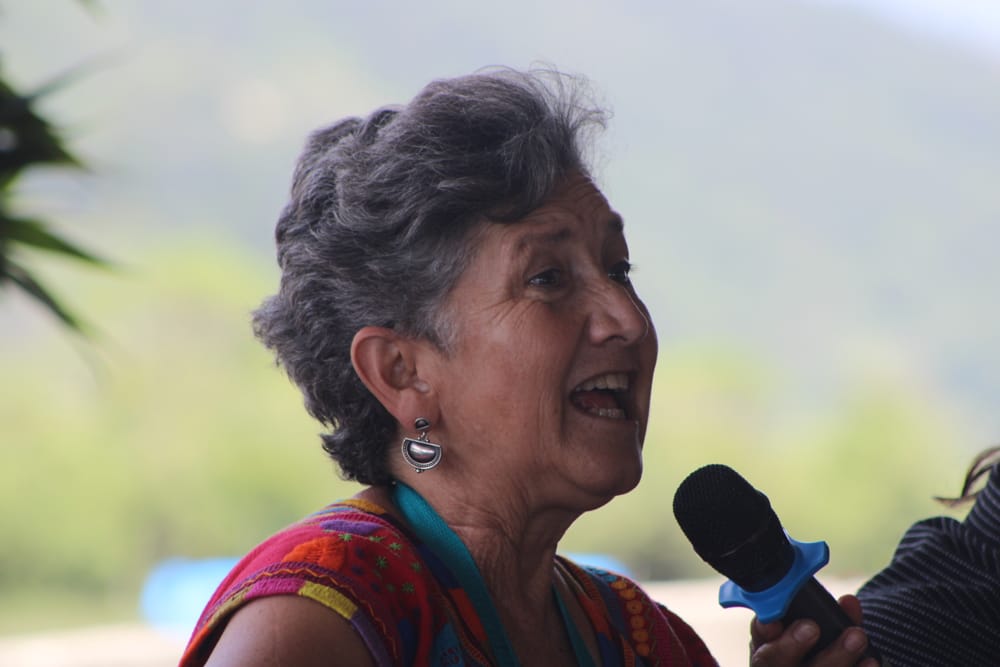
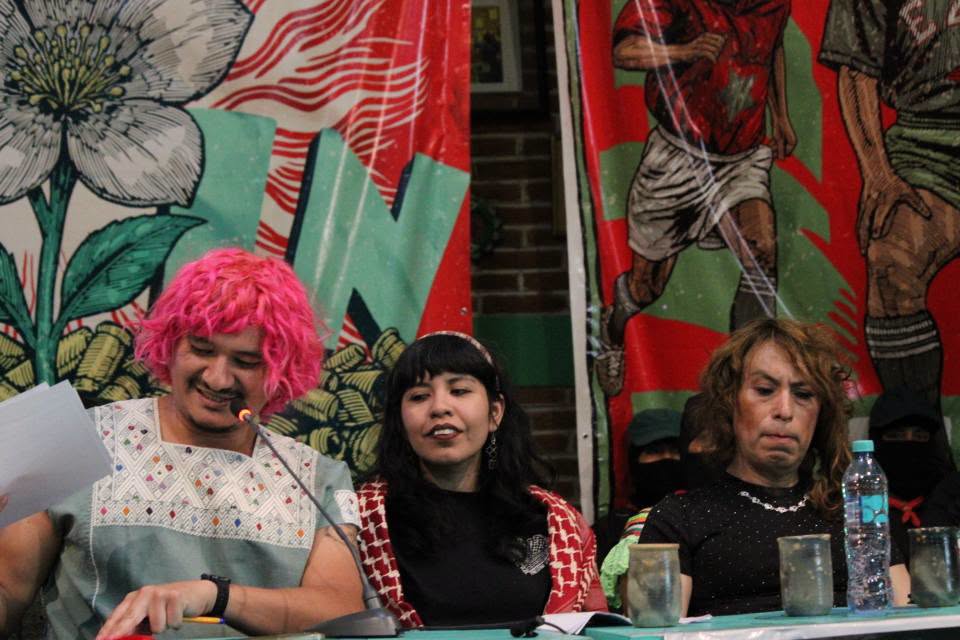
Bueno, para expresarles mi agradecimiento y la emoción y al mismo tiempo el nerviosismo que tengo de estar aquí delante de todas ustedes, quiero dar una brevísima, ahora dicen las compañeras feministas, autoetnografía situada.
Yo vine aquí como en el 2015 para el festejo del 31 de diciembre para el 2016, en ese amanecer, porque he caminado con el pueblo wixárika en la defensa Wirikuta. Desde el 2011 hice como mi primer evento como activista, digámoslo así, después empecé a caminar con ellos. Entonces, en ese año me dieron una misión imposible, que fue traer a un compañero wixárika, porque la caravana que había venido de todos los puntos de la república, llegó a México, estuvo tres días y vinieron para la Candelaria y luego bajaron acá.
Entonces, el compañero autoridad recién nombrado, Miguel Vázquez, que en paz descanse, que fue asesinado, perdió el avión y tuve que traerlo en mi automóvil, manejando yo solita, y llegamos aquí con toda la energía y toda la fuerza que eso supuso. Estuve, digamos, tras bambalinas, detrás de cámaras, por decirlo así, y es la primera vez que voy a colocarme por delante de ustedes, y lo hago con toda la humildad, con el esfuerzo también de pretender explicarles y desde la experiencia vivida, y tal vez que mi experiencia sea la experiencia de otras mujeres que también han experimentado algunas de las cosas que voy a tratar aquí.
23 de julho de 2026 Cideci / Universidad de la Tierra, Chiapas
Neste quarto dia do Semillero “Guerra contra a Humanidade” (As populações e a natureza sob cerco), o Capitão Marcos informou que, até o dia anterior, havia 686 participantes de 28 geografias, além de mais de 200 zapatistas.
Ao longo da jornada, foram compartilhadas reflexões profundas e contundentes sobre migração, as diversas formas da guerra, a busca por pessoas desaparecidas e as corporações criminosas, tudo isso inserido na luta pela vida e na construção de alternativas.
A seguir, apresentamos um resumo das exposições, bem como os áudios e os links para os textos completos.
Bruno Miranda – “Olhares críticos sobre as migrações e as fronteiras”
As fronteiras não impedem a migração; elas produzem a ilegalidade.
Neste quarto dia do Semillero “Guerra contra a Humanidade”, o pesquisador Bruno Miranda propôs compreender o fenômeno migratório por outro ângulo: não foram as migrações que deram origem às fronteiras, mas sim as fronteiras e os Estados que produziram a figura do migrante. Nessa perspectiva, migrar deixa de ser um fato natural e passa a ser uma condição política construída pelo Estado e pelo capitalismo.
Durante sua apresentação “Olhares críticos sobre as migrações e as fronteiras”, Miranda propôs desnaturalizar tanto a migração quanto as fronteiras. Explicou que a mobilidade humana sempre existiu, mas a categoria de “migrante” surge com os Estados nacionais, capazes de definir quem pertence a um território e quem dele é excluído. Assim, as fronteiras não apenas delimitam países: elas classificam pessoas, autorizam determinadas mobilidades e criminalizam outras.
Segundo o pesquisador, as migrações foram fundamentais para a construção do capitalismo moderno. Cidades, ferrovias, agricultura e industrialização nas Américas foram erguidas pelo trabalho de milhões de migrantes. Entretanto, essa mesma força de trabalho indispensável à economia é posteriormente ilegalizada por políticas que transformam em “ilegais” pessoas antes aceitas quando o mercado precisava delas.
Nesse contexto, explicou que a chamada crise migratória funciona muitas vezes como um discurso político que justifica o endurecimento das políticas de controle. Sob essa lógica, fortalece-se a securitização das fronteiras: muros, vigilância militar, drones, sistemas biométricos e uma crescente cooperação entre instituições policiais e migratórias que tratam a mobilidade humana como ameaça à segurança nacional.
Miranda afirmou que essas políticas não buscam impedir totalmente a migração, mas administrá-la por meio de estratégias de dissuasão, obrigando as pessoas a percorrer rotas cada vez mais perigosas ou permanecer meses — e até anos — aguardando uma decisão migratória. Esse modelo também alimenta uma crescente indústria migratória, na qual centros privados de detenção obtêm lucros milionários com o encarceramento de migrantes.
Para quem consegue atravessar a fronteira, a violência não termina. Segundo Miranda, opera-se uma inclusão diferencial: os migrantes são incorporados ao mercado de trabalho porque sua mão de obra é necessária, mas continuam excluídos do pleno acesso a direitos e à cidadania. A fronteira deixa, assim, de ser apenas uma linha geográfica para tornar-se um mecanismo cotidiano de vigilância, medo e incerteza — o que ele definiu como internalização das fronteiras.
A isso somam-se práticas como o perfilamento racial, que considera suspeitas determinadas pessoas por sua aparência, e as deportações externalizadas, por meio das quais governos transferem migrantes para terceiros países, ampliando o controle migratório muito além de suas próprias fronteiras.
Longe de apresentar os migrantes apenas como vítimas, Bruno Miranda destacou que eles também constroem formas coletivas de resistência. As caravanas migrantes, afirmou, representam estratégias de cuidado mútuo, organização e defesa diante de uma ordem fronteiriça que busca administrar indivíduos, mas encontra na ação coletiva uma disputa permanente pelo direito de buscar uma vida digna.
Miranda nos convida, assim, a compreender a migração a partir de uma perspectiva crítica: reconhecer que, por trás de cada fronteira, existem decisões políticas, interesses econômicos e relações de poder que continuam determinando quem pode circular livremente e quem precisa arriscar a própria vida para fazê-lo. Mas também entender que a migração revela a resistência daqueles que insistem em buscar um lugar digno em um mundo marcado pelo despojo e pela exclusão.
David Barrios – “O fim das guerras e as lutas pelo futuro”
As guerras de hoje buscam controlar a vida e os territórios.
David Barrios afirmou que a militarização já não responde apenas a conflitos entre Estados, mas constitui uma estratégia para reorganizar territórios, apropriar-se dos bens naturais e disciplinar as populações. Diante desse cenário, defendeu o fortalecimento da organização comunitária e da defesa da Mãe Terra.
Em sua apresentação “O fim das guerras e as lutas pelo futuro”, explicou que as guerras contemporâneas deixaram de ser apenas confrontos militares para tornar-se uma ofensiva permanente destinada a controlar territórios, garantir o acesso aos bens naturais e reorganizar a vida dos povos em benefício do capital.
Barrios destacou que a militarização atual ultrapassa o âmbito estritamente militar, manifestando-se por meio da expansão de bases, operações de segurança, políticas de controle territorial, criminalização de populações e fortalecimento dos mecanismos de vigilância, que acompanham os processos de despojo em diferentes regiões do mundo.
Segundo ele, as disputas geopolíticas entre grandes potências também refletem uma crescente competição por minerais estratégicos, água, energia e outros recursos essenciais tanto para o desenvolvimento tecnológico quanto para a indústria militar. Nesse contexto, os territórios habitados pelos povos tornam-se espaços permanentes de disputa.
O pesquisador advertiu ainda que a chamada “guerra às drogas” serviu, em diversos países da América Latina, como justificativa para aprofundar processos de militarização e controle social. Em sua avaliação, essas estratégias não reduziram a violência, mas favoreceram a fragmentação dos territórios e a expansão de grupos armados que disputam recursos, rotas comerciais e atividades econômicas muito além do tráfico de drogas.
Também chamou atenção para o crescimento contínuo dos gastos militares em escala global, o desenvolvimento de novas tecnologias de guerra — como inteligência artificial e drones — e a ampliação da presença militar dos Estados Unidos em diversas regiões do continente, fatores que apontam para conflitos cada vez mais prolongados e complexos.
Apesar desse panorama, Barrios rejeitou a ideia de que o futuro esteja condenado à guerra. Destacou que as resistências construídas por povos, comunidades e movimentos sociais continuam demonstrando que existem alternativas ao despojo e à militarização.
“A luta pela Mãe Terra é também a luta pelo futuro”, afirmou, defendendo o fortalecimento da organização coletiva, da autonomia e da defesa da vida como resposta a uma época marcada pela violência e pela disputa pelos territórios.
Andrea Horcasitas Martínez – “Diante do horror: a busca e a promessa do reencontro”
A pesquisadora e ativista Andrea Horcasitas Martínez refletiu sobre o desaparecimento de pessoas no México como uma das expressões mais cruéis da guerra contra a humanidade. Agradeceu ao movimento zapatista por abrir um espaço de diálogo e destacou que sua análise nasce do aprendizado compartilhado com as famílias buscadoras. Sua exposição organizou-se em três eixos: o diagnóstico da crise, a disputa em torno dos números e a esperança construída pela busca coletiva.
Afirmou que o desaparecimento forçado não é um fenômeno novo nem exclusivo do México, mas que, desde o início da chamada guerra às drogas, o país atingiu níveis de violência sem precedentes na América Latina. Mais de 135 mil pessoas desaparecidas, milhares de valas clandestinas e dezenas de milhares de corpos sem identificação revelam uma crise que vai muito além das estatísticas.
Segundo a autora, o desaparecimento tornou-se uma tecnologia de guerra vinculada ao despojo territorial, ao deslocamento forçado, ao recrutamento compulsório e à acumulação de riqueza por meio da violência. As valas clandestinas transformaram a relação das comunidades com seus territórios, pois deixaram de existir apenas em locais remotos e passaram a aparecer também em cidades, escolas, parques e espaços cotidianos.
Na segunda parte de sua fala, denunciou o que chama de “guerra contra os números”: o esforço do Estado para minimizar a dimensão da tragédia por meio da manipulação estatística e de discursos que desumanizam as vítimas. Criticou a redução do problema a percentuais e categorias administrativas enquanto persistem a impunidade, a criminalização das pessoas desaparecidas e a ausência de investigações eficazes.
Por fim, contrapôs a essa política de esquecimento a resistência das famílias buscadoras. São mães, pais, irmãs, irmãos e filhos que, diante da ausência de respostas oficiais, organizam buscas, escavam a terra e constroem redes de solidariedade para encontrar seus entes queridos e todas as pessoas desaparecidas. A busca deixa de ser um ato individual e transforma-se em uma causa coletiva baseada na memória, na dignidade e na defesa da vida. Para Andrea Horcasitas, a esperança não consiste em negar o horror, mas na capacidade das famílias de transformar a dor em organização, solidariedade e resistência.
Raúl Romero – “Corporações criminosas e as lutas pela Vida”
Em sua apresentação “Corporações criminosas e as lutas pela vida”, Raúl Romero argumentou que a violência vivida no México não pode ser compreendida apenas como um problema de narcotráfico ou de insegurança, mas como expressão de um capitalismo criminoso que utiliza a guerra, o despojo e a violência para favorecer processos de acumulação de riqueza.
A partir de sua experiência junto a organizações sociais, famílias buscadoras e vítimas da violência, afirmou que a guerra iniciada em 2006 fortaleceu as organizações criminosas em vez de enfraquecê-las, deixando como saldo mais de 135 mil pessoas desaparecidas, centenas de milhares de assassinatos e deslocamentos forçados.
Romero sustenta que o crime organizado integra uma estrutura transnacional formada por atores legais e ilegais — banqueiros, empresários, políticos, forças de segurança, fabricantes de armas e grupos criminosos. Essas redes, que denomina corporações criminosas, funcionam como empresas globais diversificadas, atuando no tráfico de pessoas, armas e recursos naturais, lavagem de dinheiro, crimes financeiros e cibernéticos, entre outras atividades.
O autor apresenta ainda o conceito de estatalidade criminosa, segundo o qual o Estado mexicano não fracassou, mas foi reconfigurado para responder às necessidades do capitalismo criminoso e do capitalismo extrativista. Nesse contexto, a fronteira entre o legal e o ilegal torna-se difusa quando instituições e governos colaboram com essas redes, garantindo impunidade e facilitando o despojo territorial associado aos megaprojetos. Para Romero, a militarização não representa uma solução; ao contrário, conviveu e alimentou a expansão do crime organizado.
Como contraponto, destacou as lutas pela vida, protagonizadas por povos indígenas e camponeses que defendem seus territórios, famílias buscadoras, organizações de direitos humanos, caravanas migrantes, coletivos juvenis e diversas iniciativas comunitárias que colocam a vida, a solidariedade e o bem comum no centro de sua ação política.
Segundo Romero, essas resistências representam uma alternativa ética e política ao capitalismo criminoso, apostando na organização coletiva, na memória, na arte, na cultura e na defesa dos territórios como caminhos para construir um mundo em que a vida prevaleça sobre a lógica do despojo, da acumulação e da morte.
Subcomandante Insurgente Moisés – Mensagem às famílias buscadoras
Falando em nome do Comitê Clandestino Revolucionário Indígena do EZLN, o Subcomandante Insurgente Moisés dirigiu uma mensagem às famílias buscadoras, expressando a solidariedade zapatista e reconhecendo sua luta como exemplo de dignidade, resistência e esperança.
Afirmou que os zapatistas se identificam com sua experiência porque, como povos originários, também foram historicamente invisibilizados e excluídos pelo sistema capitalista. Por isso, consideram as pessoas desaparecidas parte de sua própria família e compartilham a dor de quem as procura.
Anunciou que o EZLN decidiu aproximar-se das famílias buscadoras, reunir-se com elas na Cidade do México e, sobretudo, escutá-las, reconhecendo o valor de sua experiência e de sua luta.
Enquanto persistirem os desaparecimentos, a violência e a injustiça, afirmou, o México continuará distante do país que desejam construir. Somente por meio da organização coletiva, da luta e do trabalho conjunto será possível construir um país verdadeiramente justo e digno.
Por fim, fez um chamado aos povos do campo e da cidade para que se unam e se organizem, lembrando que ninguém resolverá esses problemas em seu lugar. A responsabilidade de transformar o presente cabe à sociedade civil organizada; somente assim será possível deixar um futuro melhor para as próximas gerações.
Ao encerrar o quarto dia do Semillero, o Capitão Marcos agradeceu às pessoas participantes por suas contribuições e refletiu sobre o impacto das exposições no público zapatista. Longe de apenas confirmar conhecimentos prévios, afirmou que as apresentações revelaram aspectos da realidade que ele próprio desconhecia e que enriquecem a análise zapatista sobre a crise atual.
Destacou a importância de articular diferentes formas de conhecimento — a experiência das comunidades, o trabalho científico, a pesquisa e a prática política — compreendendo que todas podem conduzir a conclusões comuns por caminhos distintos.
Também agradeceu o esforço das e dos palestrantes, que custearam suas próprias viagens e compartilharam generosamente seus conhecimentos com um público formado por ouvintes zapatistas, militantes, integrantes de organizações da sociedade civil, ativistas, pessoas solidárias e muitos outros.
Segundo o Capitão, as intervenções realizadas até o momento constituem um verdadeiro semillero de ideias e aprendizagens para o zapatismo. Concluiu agradecendo tanto aos que já participaram quanto aos que ainda participariam, expressando o desejo de que o encontro fortaleça a reflexão coletiva e que os aprendizados adquiridos sejam levados aos lugares de origem de cada participante, contribuindo para a construção de novas formas de organização e resistência.
Como ya se van a ir varios de los ponentes que han participado en los días anteriores, quería hablarles un poco del auditorio que han tenido en estos días y que tendrán todavía todo el día de mañana.
Yo estoy maravillado de la primera sección porque a nadie vi tomar apuntes. Yo les muestro los míos. Yo admiro mucho lo que no sé, en este caso las matemáticas. También la choferología, no es lo mismo ser saber conducir que ser choferólogo, ahí hay que meterle mano al motor. A mí no me sorprendería que viera a Marcelino o al Monarca con su gorro de Merlín a la hora que le está metiendo mano al motor porque no sé ni cómo es que hace, yo sé que échale gasolina, enciéndele y vámonos.
Haciendo una especie de corte de caja de lo que aquí se ha expuesto, y si hago lo poco que sé de matemáticas, de teoría de conjuntos, si asigno a cada participación una esfera y veo dónde se intersectan —que son todos estos apuntes que tengo—, el común, el denominador común con todas esas esferas es mi ignorancia. Porque señalaron cosas que yo no sabía, que no había tomado en cuenta o no con la relevancia que era necesario y que sigue siendo necesario.
En otros semilleros anteriores de hace años invitábamos a la generación tradicional, digamos, cuando yo le dije a Raúl —él es el culpable de este calendario subversivo—, yo le dije, y a ellos les decíamos: ya no nos den citas, ya sabemos qué dijo Marx, Engels, Lenin, Mao, Trotsky, etcétera. Entonces decíamos no traigan citas, queremos saber qué piensan ustedes. Y en este caso Raúl, que fue el que nos apoyó en eso, trasladó esa instrucción a ustedes, a los jóvenes; a los jóvenes no tan jóvenes y a los jóvenes jóvenes. Y les dijo que no estadísticas y no citas.