Medios Libres, Alternativos, Autónomos
Las Abejas de Acteal: ¿Hasta cuándo vamos a esperar la emisión del Informe de Fondo? Porque mientras se sigan tardando, más se enraíza la impunidad
Organización Sociedad Civil Las Abejas de Acteal
Tierra Sagrada de los Mártires de Acteal
Acteal, Chenalhó, Chiapas, México.
12 de agosto de 2026.
A la Comisión Interamericana de Derechos Humanos
Al Congreso Nacional Indígena-Concejo Indígena de Gobierno
A las y los Defensores de los Derechos Humanos
A los Medios Libres y Alternativos
A los Medios de Comunicación Nacional e Internacional
A la Sociedad Civil Nacional e Internacional
Hermanas y hermanos:
Hoy 12 de agosto, día en que la mal llamada “Suprema Corte de Justicia de la Nación”, liberó masivamente a los paramilitares en el año de 2009, concluirá nuestra campaña, Me oy Chapanel, oy jun O´ntonal” (Si Hay Justicia, Hay Paz). Y en el lapso de los tres meses desde el 14 de mayo y hasta este 12 de agosto de 2026, seguimos en espera de que la Comisión Interamericana de Derechos Humanos (CIDH) emita el Informe de Fondo del Caso 12.790 Manuel Sántiz Culebra y Otros (Masacre de Acteal) y le recordamos que la impunidad y las estrategias de desgaste del Estado mexicano en los sobrevivientes, aunado a las represiones, agresiones, desapariciones forzadas, divisiones en las comunidades, así como el despojo de las tierras y territorios de los pueblos originarios, han aumentado y agravado.

No nos cansamos, no nos echamos para atrás, sino que hoy volvemos a RECORDAR y SOLICITARLE a la CIDH para que emita ya el Informe de Fondo del caso 12.790 Manuel Santiz Culebra y otra Masacre de Acteal. Dicho Caso la interpusimos junto con el Centro de Derechos Humanos Fray Bartolomé de Las Casas (Frayba) desde el año 2005, en el cuál expusimos y entregamos suficientes pruebas de los hechos ocurridos más crueles en el campamento Civil Por la Paz “Los Naranjos”, evidenciando que la Masacre de Acteal, es el mismo Estado mexicano la planeó, financió y que es consecuencia de la estrategia de guerra de contrainsurgencia diseñado durante el gobierno de Ernesto Zedillo Ponce de León.
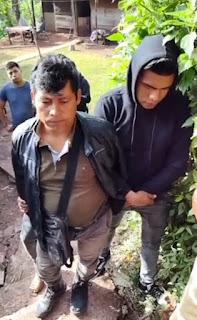
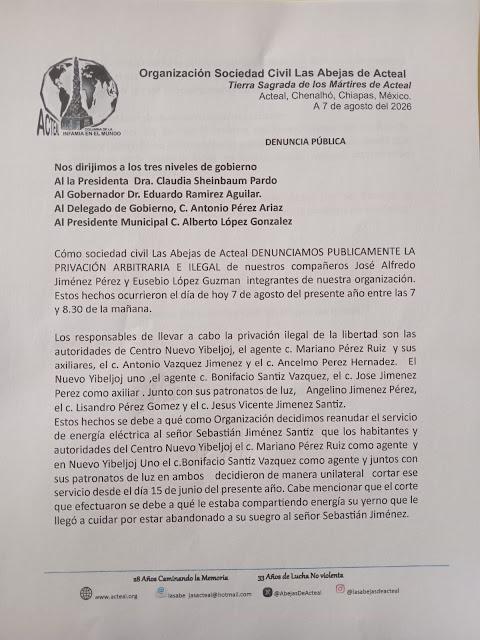
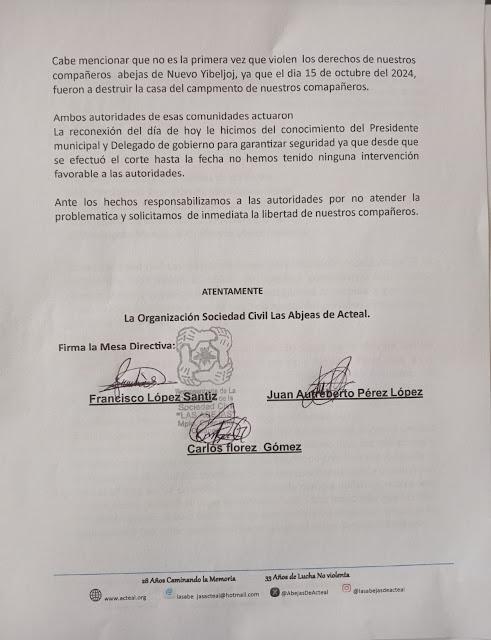
El Estado mexicano a través de sus agentes encargados de generar conflictos en las comunidades para desgastar nuestra lucha por la justicia, la resistencia y la construcción de nuestra autonomía. Así como recientemente el 7 de agosto del presente, fueron privados de manera arbitraria e ilegal dos miembros de Las Abejas en la comunidad Nuevo Yibeljoj: Eusebio López Guzmán y José A. Jiménez Pérez, acusados y multados sin ningún fundamento jurídico. Ante esta larga oscuridad de impunidad, de injusticias, de violencias y de asesinatos; nuestra esperanza crece y nos va abriendo caminos de luz para seguir adelante en la construcción de la justicia de la Masacre de Acteal.
Está claro que los 3 niveles de gobierno en vez de tener voluntad política para aplicar la justicia verdadera, sólo profundiza las injusticias y genera caos y crisis de derechos humanos a nivel nacional. Uno de los ejemplos indignantes es la insensibilidad y desatención de parte del gobierno federal hacia las madres buscadoras de México.
Ante la coyuntura política actual, traemos a la memoria para recordar más claramente que este 12 de agosto se cumplen 17 años la liberación masiva de los paramilitares autores materiales de la Masacre de Acteal, por decisión de la Suprema Corte de Ricos y Criminales o la mal llamada “Suprema Corte de Justicia de la Nación” (SCJN). Esa fecha en que la dizque “Casa Máxima de Justicia”, liberó a los asesinos de nuestros padres, madres, hermanas y hermanos; hermanitas y hermanitos. Este hecho de corrupción judicial nunca la olvidaremos, porque en vez de escuchar nuestra palabra y testimonios de lo que pasó realmente el día 22 de diciembre de 1997, optó por abrirle la puerta a la impunidad, sellar con la ignominia un Crimen de Lesa Humanidad, optó por escuchar y liberar a los autores materiales la mayoría confesos y sentenciados de entre 30 y 35 años de condena. Es por eso que este día 12 de agosto es importante y ha quedado ya escrito en libros y plasmado en imágenes, en cantos y poesías y es el motivo que en esta fecha decidimos cerrar nuestra campaña: Me oy Chapanel, oy jun O´ntonal” (Si Hay Justicia, Hay Paz).
Aunque hasta la fecha la CIDH no haya emitido el Informe de Fondo, no vamos a quedar callados, no vamos a conformarnos con nada, porque es nuestro derecho seguir solicitándolo y así lo haremos. Mucha gente en varias partes del mundo, sus ojos y su corazón están puestos en Acteal, en exigencia de la justicia y también están en la espera del anhelado Informe de Fondo.
Le preguntamos a la CIDH ¿hasta cuándo vamos a esperar la emisión del Informe de Fondo? Porque mientras se sigan tardando, más se enraíza la impunidad, se agrava el desgaste en los sobrevivientes de la Masacre de Acteal, varias personas peticionarias del Caso 12.790 Manuel Sántiz Culebra y Otros (Masacre de Acteal) se han muerto y se fueron con la esperanza de encontrar la justicia.
A pesar de la larga oscuridad e impunidad de la Masacre de Acteal, nuestros retoños, nuestras esperanzas y horizonte de alegría y de luz, son las nietas y nietos de las víctimas y familiares de los sobrevivientes de la Masacre de Acteal, que ya van creciendo, que ya van tomando conciencia y abriendo caminos para denunciar y exigir la justicia verdadera que tanto deseamos y que no siga siendo una utopía, sino que se haga realidad muy pronto.

Por ahora es toda nuestra palabra, pero antes de cerrar queremos agradecer a todas las mujeres y hombres quienes estuvieron atentas, difundieron y compartieron en sus espacios y para que nuestra campaña: Me oy Chapanel, oy jun O´ntonal” (Si Hay Justicia, Hay Paz), tuviera eco y conocimiento. Así mismo a las y los periodistas, comunicadores, fotógrafos, a todas las personas de buen corazón, que han caminado junto a nosotras y nosotros en este arduo caminar por la Verdad y la Justicia, gracias por su colaboración y difusión de nuestra campaña. Y decirles que aunque la campaña se cierra este día, no quiere decir que aquí se acaba nuestra solititud a la CIDH en la emisión del Informe de Fondo, iremos haciéndolo mes con més, hasta que se logre el Lekil Chapanel, el cual Las Abejas de Acteal va por su parte construyendo desde abajo en lo que hemos nombrado La Otra Justicia.

Desde Acteal, Casa de la Memoria y la Esperanza, la construcción de la justicia verdadera y de la paz, sigue adelante.
¡Vivan los Mártires de Acteal!
¡Viva la Paz!
¡Viva la lucha activa No-violenta!
Atentamente.
La Voz de la Organización Sociedad Civil Las Abejas de Acteal.
Por la Mesa Directiva:
___________________________ _____________________
Francisco López Sántiz Juan Pérez López
Presidente Secretario
_____________________
Carlos Flores Gómez
Tesorero
Por los representantes de l@s sobrevivientes de Acteal:
___________________________ ___________________________
Diego Pérez Jiménez Marco Antonio Gómez Vázquez
Por la Comisión del Caso Acteal:
___________________________ _____________________
Sebastián Pérez Vázquez José Pérez Vázquez
________________________ _____________________
Mariana Díaz Pérez Verónica Arias Pérez


Declaratoria de la Séptima Asamblea Nacional por el Agua, la vida y el Territorio realizada en la comunidad de Zitacua, Tepic, Nayarit
Al Congreso Nacional Indígena
Al Ejercito Zapatista de Liberación Nacional
A la Sexta nacional e internacional
A la Europa insumisa
A Quienes vemos la digna lucha zapatista como la vía por donde caminar juntos
A los pueblos originarios de Jalisco, Nayarit, de México y el mundo que resisten en contra del sistema capitalista de muerte
Aquí donde se gesta el espíritu vivo de nuestra gran Madre Tierra, aquí donde la espiritualidad sostiene los pilares del universo de vida, tatewari (abuelo fuego), tsi nönö Xihmjai (nuestra madrecita tierra), Nanda (Agua la mejor madre), ndöhi (aire).
Nos encontramos los días 8 y 9 de agosto de 2026 en la comunidad de Zitacua, Tepic, Nayarit, para escucharnos con respeto, mirarnos, acompañarnos y sabernos en resistencia para identificar a los enemigos que tenemos en común y unirnos como las gotas que forman un río y defender nuestra madre tierra, porque hay quienes la respetamos como nuestra madre.
Nosotros, nosotras, asistimos 427 personas adultas y 60 niños que participaron en la Asamblea de niñeces, provenientes de 18 estados de la república, de 7 países y de 18 pueblos originarios.
Quienes defendemos la vida, sabemos que la Madre Tierra es sabia, que le dio su lugar a cada elemento, que hizo nacer al agua libre, que le dio su lugar, sus caminos, sus cauces, para que alrededor de ella florecieran todas las formas de vida y el agua que guardó dentro de ella, la dejó ahí para que nazcan nuevos mañanas, para que generación tras generación tengan con qué saciar su sed.
Formó cerros y montañas para que filtren la lluvia que emana de los cielos, guardó minerales y piedras para dar soporte a todo lo que nombramos territorio, que es el espacio donde habitan nuestros dioses, donde nacen nuestros manantiales, donde descansan nuestros ancestros, donde florece nuestra lengua, donde se trasmiten nuestros conocimientos para reproducir la vida comunitaria.
En esta Séptima Asamblea Nacional por el Agua, la Vida y el Territorio atendimos al llamado de los ríos: San Pedro Mezquital, Santiago, Lerma, Mololoa, Tulija, Salsipuedes, Xanga Ndá Ge, las Cañas, Chuviscar, Sacramento, Amealco,Conchos, Acaponeta, Xanadú, Petlapa, San Buenaventura, Arareco, Mayo,Prieto, Metlapanapa, Xopana, Xotiac ,Bolaños, Tulija, Álamo, Tenbembé, Coyuca, Río Bravo, Amealco; Arroyos los Guayabos, Chicles, Arenal y Sarco; las cuencas: Lerma Santiago, Libre Oriental de San José Chiapa; los acuíferos: Matatipac, de Cuernavaca, Alto Atoyac, Ojo de agua Tenbembé; los manantiales: de San Cristóbal de las Casas, de Huitepec, Tulica, Agua Clara, Jataté, Xochimilco y San Isidro; los lagos: Chapala, Calaque; las lagunas: San Pedro Lagunillas, Santiago Mexquititlán Tinamate, Guadalupe, Arareco y Lagunas de Zempoala; los humedales: Santa Cruz de las flores; las playas: Tlajomulco de Zuñiga; las Bahías de Topolobambo y Ouira; y los cerros San Juan, la Reina, Toltepec, Tequixquiac.
Ahí, donde la Madre tierra colocó el todo, ahí debe preservarse. Los trasvases a los ríos, la extracción del agua subterránea, de minerales y de gas, son crímenes contra ella, nosotras y nosotros, los pueblos, comunidades, barrios, que somos sus hijos- tenemos la permanente tarea de defenderla.
En México vivimos un sistema basado en la explotación de nuestra Madre Tierra, en la imposición de megaproyectos, en la minería, la tala ilegal, el acaparamiento del agua, los cambios de uso de suelo, en el control del crimen organizado y la violencia criminal contra quienes defendemos nuestros territorios, representando una guerra permanente que amenaza nuestra existencia como pueblos y como humanidad.
Podemos encontrar al mismo criminal actuando en diferentes territorios con diferentes formas de despojo, que lo perciben como un gran territorio para lucrar. No nos miran como pueblos separados sino como los que estorbamos dentro de sus proyectos de muerte. Para ellos, la tierra es un negocio, su ambición por minerales, petróleo, agua, gas, madera, lleva a destruir todo.
En México, el despojo del agua, la vida y el territorio no es un accidente, sino una maquinaria sistemática, violenta y corrupta que entrelaza los intereses del Estado, las grandes corporaciones y el crimen organizado. Nos enfrentamos a una embestida estructural que opera desde la legalidad simulada hasta la violencia directa. Por un lado, las instituciones facilitan el saqueo mediante concesiones ilegales, el maquillaje sistemático de datos oficiales y la imposición de planes de reordenamientos regionales y ecológicos locales que sirven como mera fachada para autorizar el cambio de uso de suelo que ya han pactado con los grupos de poder industriales, mineros e inmobiliarios. A esto se suma un marco legal a modo, como la reciente ley de pueblos indígenas y afromexicanos, que pretende reglamentar, limitar y establecer los procedimientos administrativos para que los pueblos puedan constituirse como sujeto de derecho público y ejercer la autonomía, omite el reconocimiento de los derechos territoriales, pero además establece mecanismos para que lo saberes, conocimientos y ”patrimonio cultural “pueda entrar al mercado y ser apropiado “legalmente” por las grandes empresas. Además, esta ley socava el derecho a la libre determinación.
La aprobación de la Ley Nacional de Aguas sin derogar la Ley de Aguas Nacionales -una ley salinista con la que el Estado mexicano sigue mercantilizando el agua y gestionándola para el capital y en contra de nuestras comunidades-. Estas modificaciones legislativas son fortalecidas por la reforma a la Ley de Amparo y en general la reforma judicial con la que limitan el acceso a la justicia para nuestros pueblos bajo el discurso del progreso y del desarrollo -como ocurre en Puebla, donde fábricas, fraccionamientos y basureros se imponen bajo la promesa de una capital tecnológica- se justifica la construcción de megaproyectos destructivos: el tren México-Querétaro, centros de datos que devoran energía y agua, termoeléctricas y el acaparamiento hídrico para el “fracking”.
La actual presidenta del país Claudia Sheinbaum, asegura que el fracking es necesario para alcanzar la soberanía energética, argumentando que podían utilizar agua salada, argumento que representa una burla, pues sabemos de lo mortal que es esta forma de extracción de hidrocarburos que emplea billones de litros de agua y la contamina. La 4T se ha arropado de científicos que ignoran y traicionan a nuestras comunidades, quienes ahora se dedican a acatar los mandatos del poder en contra de toda ética.
Al mismo tiempo, el Estado abandona de forma deliberada la inversión en acueductos, alcantarillado y plantas de tratamiento, precarizando el servicio para luego justificar su privatización, un modelo donde se gastan millones en supuesta potabilización sin resolver jamás la distribución y el acceso real para los pueblos.
Cuando se destruye un río, se destruye una parte de nuestra historia, una parte de nuestra propia existencia, cuando contaminan un manantial, se enferma nuestro pueblo, cuando se invade un territorio indígena, se agrede la identidad colectiva.
Atrapar el agua a través de presas para generar energía es altamente lucrativo para las instituciones criminales como ocurre en el caso de San Pedro Mezquital en Nayarit el último río libre en la Sierra Madre occidental, amenazado por Conagua intenta imponer la presa el Nayar antes las cruces, pese a que los pueblos originarios han logrado frenarla, cambian el nombre al proyecto como si eso borrara el ecocidio que representa, con la construcción de esta presa no solo se afectaría el flujo natural del río San pedro y todas las formas de vida que sostiene, también afectaría a la pesca, la agricultura que las comunidades aledañas se desarrolla, así como la destrucción de centros ceremoniales del pueblo Naayeri, O’dam, wixarika, meshikan como ocurre con la Muxatena, en total desconocimiento y violencia, el gobierno propone reubicar a poblaciones y centros de ceremonia en total evitando el acceso por la inundación desconocimiento y violencia a los pueblos que con su espiritualidad y sus formas de vida sostienen el equilibrio de la madre tierra.
El río Mololoa está contaminado con coliformes fecales provenientes de la ciudad, provocando graves afectaciones de salubridad. Además, hay afectaciones en el cerro de San Juan, que ocasionan la falta de agua en las colonias y provocan inundaciones. Los humedales también se han visto afectados por la construcción de casas y el intento de imponer una minera.
En la comunidad de Jazmín del Coquito sus habitantes han luchado en contra concesiones mineras, ganaron un amparo que tiró una de ellas, sin embargo, actualmente está concesionado prácticamente toda la comunidad. En Wirikuta, continúa la amenaza minera con 7 concesiones. Al mismo tiempo, el canal centenario es un proyecto que forma parte del plan hídrico del noroeste (diseñado para los estados de Nayarit, Sinaloa, Sonora y Baja California), de imponerse, dicho canal ocasionará una amplia destrucción en las poblaciones aledañas y ecosistemas completos; pretende ser usado para desviar agua de los ríos Acaponeta, San Pedro y Santiago al norte del Estado de Nayarit, a los desiertos de Sonora y parte de Estados Unidos. El desvío de agua afectaría directamente a las Marismas Nacionales, ya que se disminuiría el flujo de agua que llega a las mismas, ocasionando alteraciones en la salinidad del agua y como consecuencia, la afectación a los ecosistemas de los manglares de la zona.
En la cuenca Chapala-Santiago, la Asamblea de Pueblos en Resistencia denunció los múltiples proyectos, actividades y procesos de despojo que confluyen en el río Santiago y en el río Ameca. En Tala, las comunidades señalan que el gobierno de Jalisco los quiere situar como el gran basurero de Jalisco con el Centro Integral de Economía Circular, el Relleno Sanitario intermunicipal de la zona agavera, el basurero clandestino en la comunidad de Huaxtla y otros proyectos de residuos industriales.
Desde la comunidad de Santa Cruz de las Flores en el municipio de Tlajomulco de Zúñiga, están luchando contra el crecimiento industrial acelerado, donde la farmacéutica PISA, ha saqueado el agua del subsuelo para la producción de Electrolit durante años. La comunidad coca de Mezcala después de haber recuperado las tierras invadidas por el empresario Guillermo Moreno Ibarra, denuncian la grave contaminación del lago de Chapala que tiene repercusiones en la salud de la población, siendo uno de los epicentros de la enfermedad renal crónica en el país.
En Tonalá, las compañeras continúan en la defensa del cerro de la Reina, y en contra de la contaminación del río Osorio, afluente del río Santiago. Desde Juanacatlán, la lucha contra la urbanización, la industrialización y la deforestación, continúa junto con las exigencias de atención a la salud y la cancelación definitiva de la termoeléctrica La Charrería de la empresa Fisterra Energy.
Desde El Salto, como uno de los lugares más contaminados de todo el país, continúan denunciando los proyectos inmobiliarios, industriales y energéticos como la termoeléctrica El Salto 1 de la empresa Ad Astra Energía y las invasiones a los humedales afluentes del río Santiago, como son el Cajón-Las Rusias, las Pintas y El Ahogado.
..
En San Lorenzo Azqueltán los cuerpos de agua son contaminados por las empresas agroindustriales, ganaderas y madereras provenientes de Zacatecas, y Jalisco. Esto demuestra que el problema no es local, sino regional, pues como pueblos compartimos el mismo territorio. El despojo se ejecuta mediante la invasión de tierras comunales, los proyectos agroindustriales y la tala ilegal que altera los ciclos hídricos.
Los impactos del capitalismo se reflejan en los daños a la salud, alimentación, trabajo, cultura y la espiritualidad. El estado responde con indiferencia, abandono y criminalización.
El pueblo se organiza a través de la asamblea general de comuneros que ha defendido jurídicamente y en la práctica su tierra. El horizonte de Azqueltán es el fortalecimiento de la autonomía comunal, donde la asamblea sea la máxima autoridad.
Ante este panorama de guerra generalizada contra la humanidad, como Asamblea llamamos a seguir caminando juntas y juntos, responder con solidaridad y organización para asegurar el mañana.
Hemos aprendido a tener esperanza y la construimos cada día, o morimos o dejamos que nos maten o nos sobreponemos.
Construimos autonomía en sus diferentes formas según lo demande nuestra cultura, territorio, historia y conciencia.
Como Asamblea Nacional por el Agua, la Vida y el Territorio, nos posicionamos y exigimos:
No estamos de acuerdo con la consulta de la ley colonialista mal llamada Ley de pueblos indígenas y afrodescendientes impuesta por el INPI con la finalidad de facilitar el despojo del territorio de los pueblos originarios.
– Como asamblea ratificamos que el Río San Pedro Mezquital es y será libre.
– Exigimos que el río San Pedro Mezquital se decrete río libre como sujeto de derecho.
Exigimos el respeto a los cuerpos de agua donde se ubican centros ceremoniales y lugares sagrados de los pueblos Naayeri, O’dam, Wixarika y Meshican.
-Cancelación total el proyecto hidroeléctrico El Nayar.
-Cancelación total del Canal centenario.
Justicia para Marcos Aguilar Rojas de San Lorenzo Azqueltán, Jalisco: Reconocemos y expresamos nuestra solidaridad por la defensa de su territorio ancestral, exigimos al estado mexicano garantizar el respeto de su propiedad comunal, la protección del pueblo originarias de Azqueltán, el cese del saqueo de sus recursos naturales, justicia para marcos y el cumplimiento de la resolución judicial agraria para la restitución completa de sus tierras, el respeto de su libre determinación de la comunidad. Llamado a seguir exigiendo castigo a los responsables del asesinato del compañero Marcos.
– Libertad para Francisco Moreno Hernández de Jotolá Chiapas, cancelación de la super carretera palenque, Chiapas, justicia para las ejecuciones, desapariciones y tortura de jóvenes ligadas al crimen organizados que ha sido invisibilizado por en la zona zoque Chiapas.
Exigimos la restitución del pozo de Barrio Cuarto de Santiago Mexquititlán Amealco, Querétaro.
Para Eloxochitlán de Flores Magón, Oaxaca, exigimos el fin de la persecución mediante la declaración de sentencias firmes en todas las instancias judiciales y la cancelación de las órdenes de aprehensión de 14 defensores exiliados perseguidos desde hace 12 años por defender la autonomía y el territorio; asimismo, exigimos justicia para el río Xangá Ndá Ge.
Exigimos el cese de la hipocresía que negocia sobre nuestro rio Santiago ya enfermo por las descargas de más de 3500 industrias que el estado utiliza como pretexto para justificar cada año millones de pesos para tratamientos de agua que no se realizan.
No al plan hídrico de San Gregorio Atlapulco CDMX, que inunda nuestro territorio de aguas negras, acabando con la identidad chinampera. Responsabilizamos a Clara Brugada y Mario Esparza director de SEGIAGUA de toda la violencia criminal que impone planes de despojo.
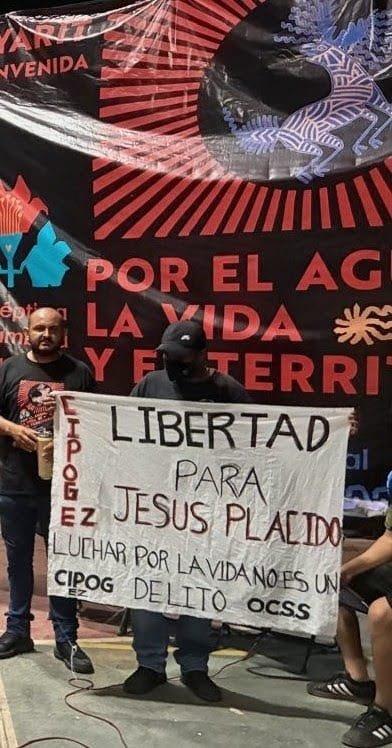
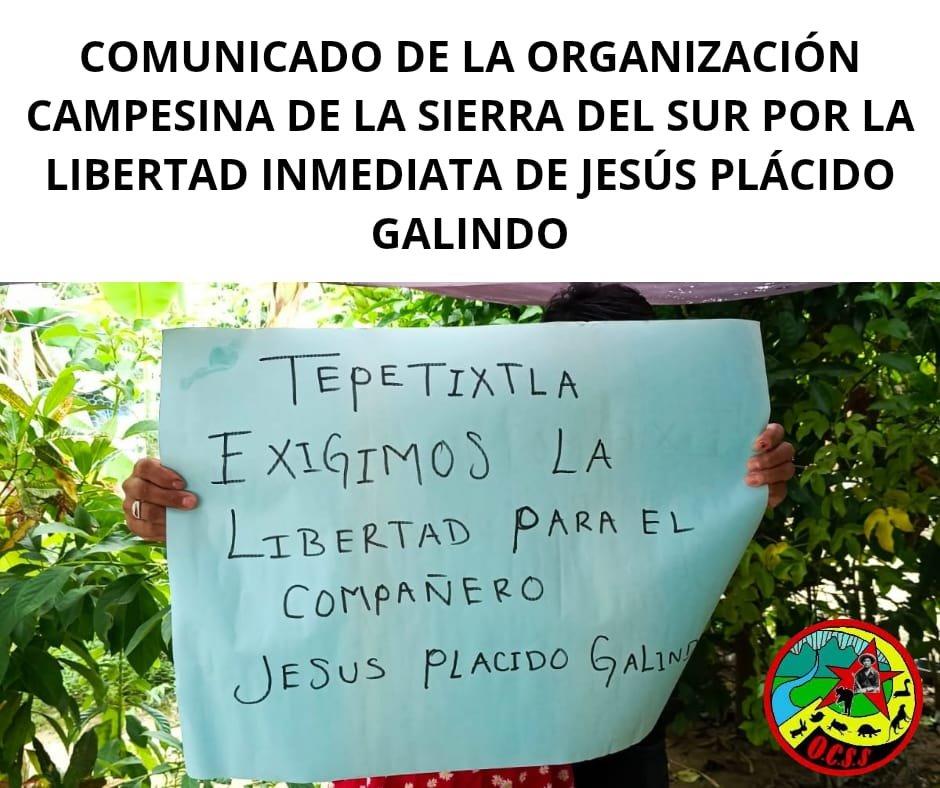
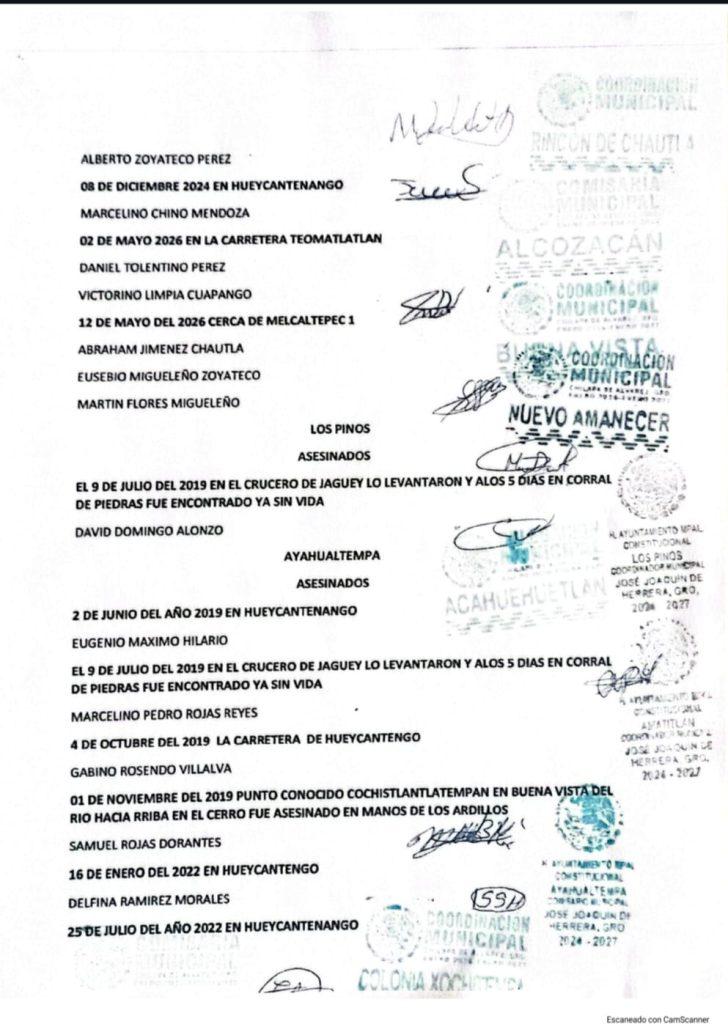
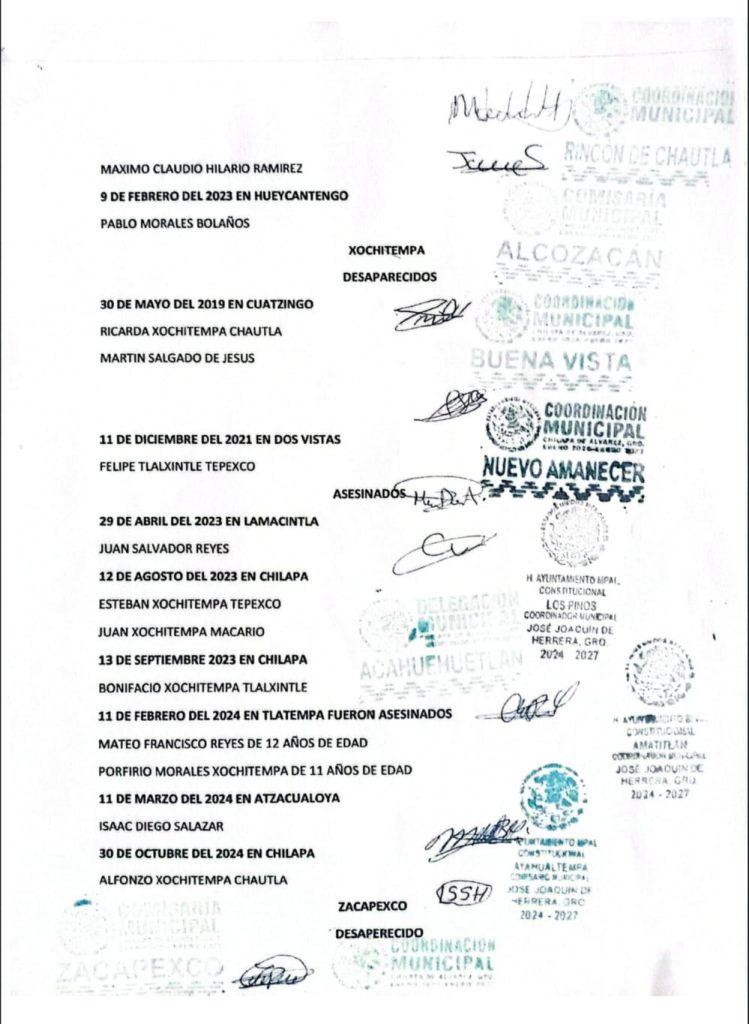
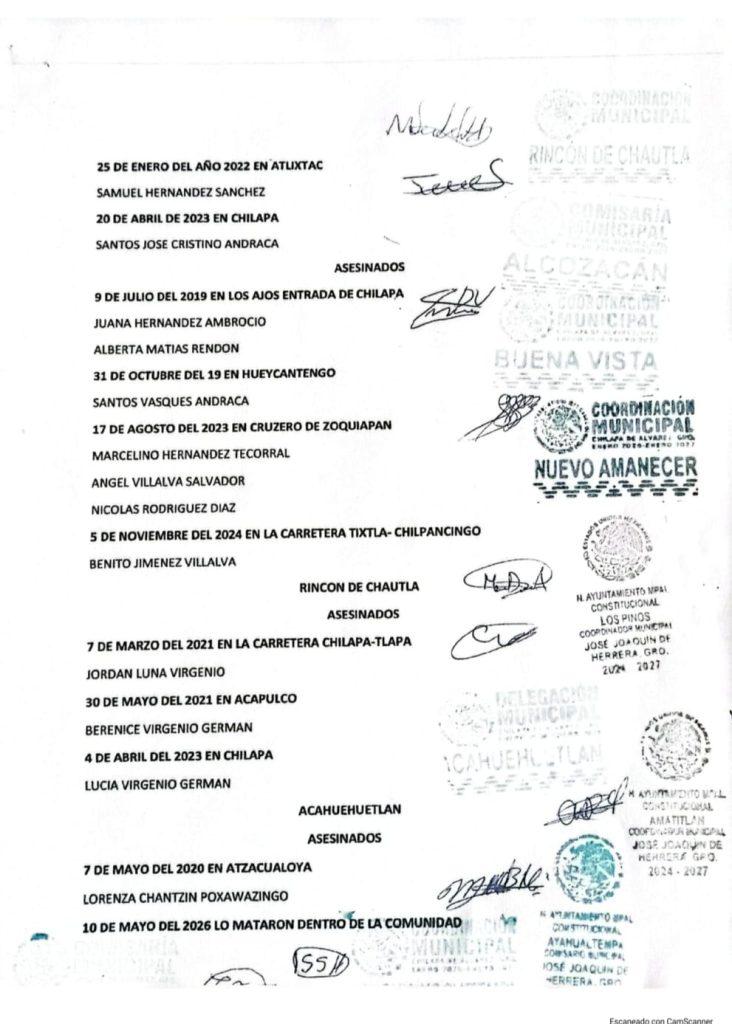
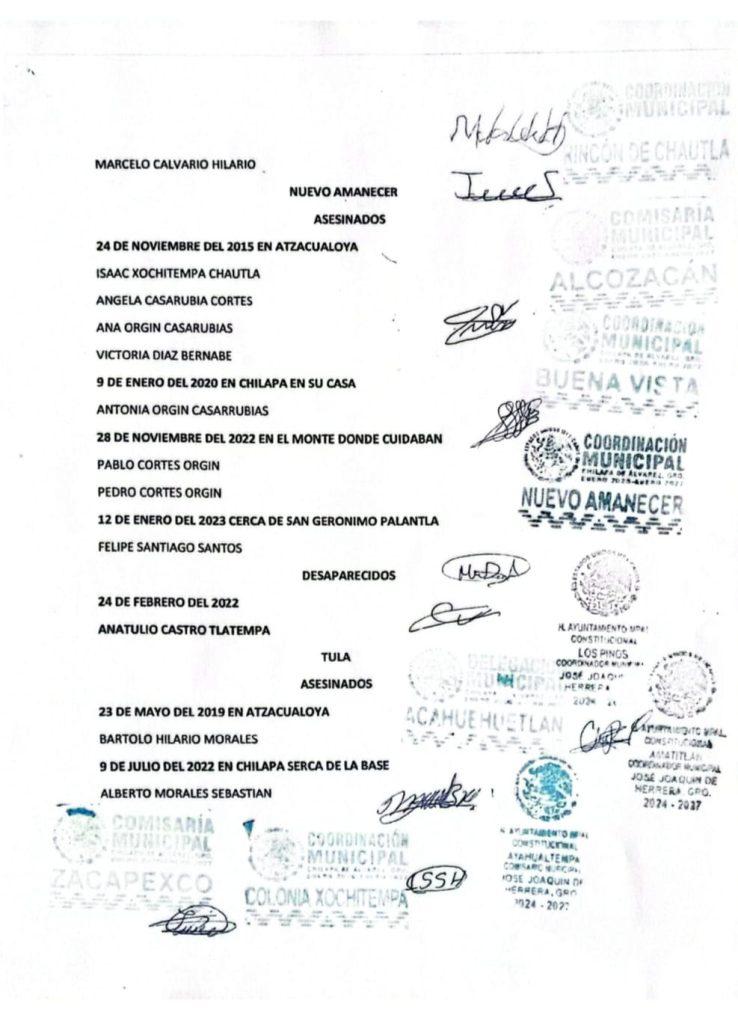
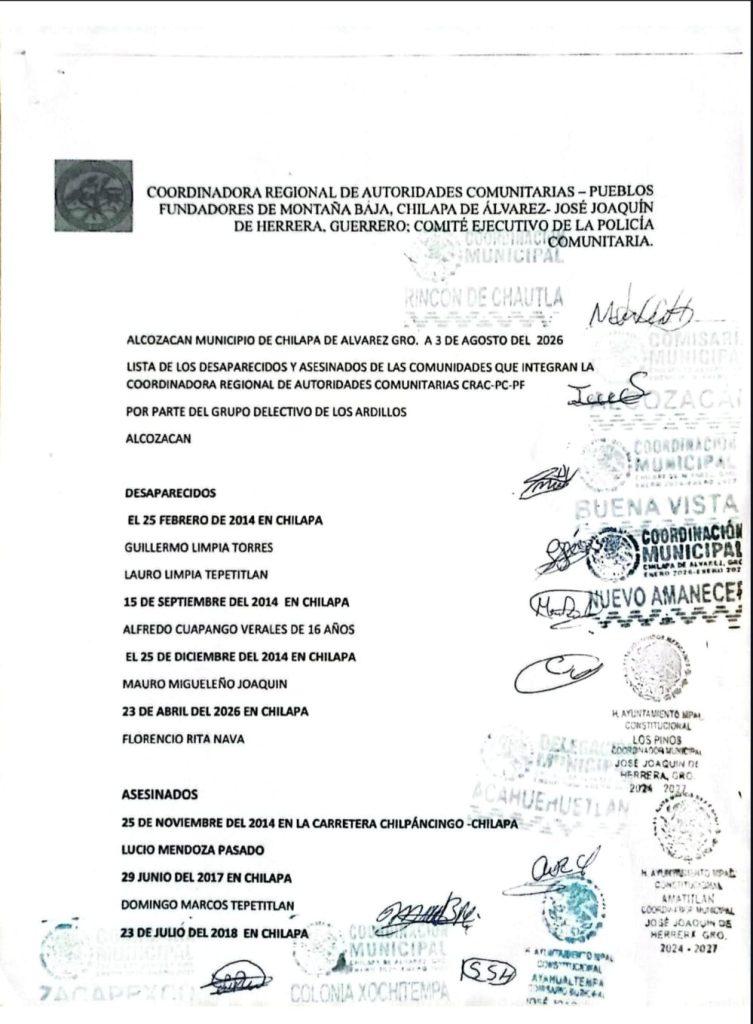
Exigimos libertad inmediata para Jesús Placido Galindo acusados por delitos graves fabricados, justicia para los 84 ejecutados y presentación con vida de los 25 desaparecidos de la montaña baja de Guerrero pertenecientes a CIPOG-EZ.69
Resulta urgente fortalecer la unidad entre los pueblos, comunidades, autoridades tradicionales, y organizaciones para construir una agenda común por la defensa del agua, la vida y el territorio.
Defender el agua es defender la vida, defender el territorio es defender nuestra historia, defender la autonomía es defender el futuro de nuestros hijos.
Los pueblos originarios no luchamos solo por nuestras comunidades, luchamos por el equilibrio de la naturaleza, la biodiversidad, los bosques, ríos, y el derecho de la futuras generaciones de vivir en un planeta donde aún exista vida, hoy más que nunca debemos caminar unidos, que nuestra palabra se convierta en acuerdo, que nuestros acuerdos se conviertan en organización, que nuestra organización se convierta en esperanza y acción, porque el agua no tiene dueño, porque la tierra no se vende, porque la vida no se negocia, nunca más un México sin los pueblos originarios.
Ponemos a consideración de esta Asamblea, las siguientes propuestas emanadas de las mesas de trabajo:.
-Hacer Rutas críticas, cartografías de las empresas contaminantes, cómo actúan, para saber a dónde dirigir las fuerzas y hacia dónde hacerlo con más urgencia.
-Hacer un registro histórico de lo que va pasando y por lo que los demás tienen que seguir luchando.
-Documentar todas las agresiones que sufren los cauces de agua y denunciar, por ejemplo, a la -Comisión de Derechos Humanos.
-Difusión de todos los logros del CNI en estos 30 años, porque han sido muchos los éxitos.
-Estudiar el lenguaje del estado y explicarlo desde nuestro lenguaje materno en nuestros pueblos e implementar traductores de información especializada, porque la gente a veces no combate las agresiones porque no entienden lo que está pasando.
-Respaldar y fortalecer los procesos autónomos en cada una de las regiones que participan en la ANAVI.
-Sumarnos a las acciones por la libertad de Jesús Plácido del CIPOC-EZ.
-Espacios de reflexión y formación autónoma o ferias de identidad como la del maíz en Querétaro.
-Hacer revisión de todos los acuerdos de las Asambleas anteriores
-Posicionarse respecto a la reforma del artículo 2° constitucional
-Crear espacios intermedios entre cada ANAVIT para discusiones más concretas.
-Discutir la estructura y formas de organización dentro de la ANAVIT para mejorar el seguimiento de los acuerdos.
Horizonte de aprendizaje
-Construcción de identidad de region
-Crear conocimiento comunitario
-Aprender de otros ejemplos como los observatorios de agua.
-Tener una pedagogía del cuidado y resguardo del agua.
-Reconstrucción del tejido social
-Recuperación de espacios públicos
-Incorporar la frase “el pinche capitalismo” a la narrativa del común en nuestros discursos
-Aprender a tener esperanza y reconstruir
-Construir el Común desde el internacionalismo.
-No hay que exponer la sabiduría indígena.
-Los grupos de autodefensa también como propuesta para defendernos del narco.
-Desconectarnos de la narrativa oficial, para construir nuestra narrativa de derechos.
-Reinterpretar el conocimiento desde nuestros saberes y nuestros contextos.
-Rescatar nuestra propia alimentación
-Tener control de nuestra agua
-Saber dónde está asentada tu vida, donde corre un río, manantial, laguna humedal, qué función tiene para la coexistencia de la vida. Adquirir conciencia territorial: Cmmo conocer el territorio, oliéndolo, sintiéndolo,
-Dejar de consumir lo que producen las empresas y que nos venden como alimentos.
-Reforzar nuestras luchas construyendo el Común reconociendo otras identidades y plantearnos la tarea de fortalecer los vínculos desde la colectividad.
-Difundir a la sociedad en general más allá o incluso de las redes, estrategias de comunicación a la sociedad en general para combater la apatía.
-Fortalecer las estrategias legales volviendo a la tierra como sujeto de derecho.
-Dar mayor prioridad al trabajo de las infancias y jóvenes.
-Creación y uso de monedas alternativa
Llamados a acciones
– 30 de agosto acompañamiento y apoyo a familias buscadoras en el día internacional de la desaparición forzada.
– Invitación al evento del 10 al 12de octubre en la casa de los pueblos Samir Flores por los 30 años de la fundación del CNI.
-Invitación al sexto aniversario de la toma del INPI por el pueblo otomí residente en la Ciudad de México, el día 12 de octubre.
-23 de agosto reforestación del río Metlapanapa Nextetelco, en la región cholulteca.
-Emitir una declaración o denuncia para el 9 de Agosto, día internacional del pueblo originario.
-22 y 23 de agosto invitación al foro en el centro comunitario Teocentil en Tehuacán Puebla.
PANPARIUS
(MUCHAS GRACIAS)
AT TSI DEHE BUY, AR TSI DEHE BUY, A TSI DEHE BUY
(el Agua vive, el agua vive, el agua vive)
ATENTAMENTE
TIERRA, AGUA Y LIBERTAD
HASTA QUE LA DIGNIDAD SE HAGA COSTUMBRE
EL AGUA ES EL COMÚN DE LOS PUEBLOS
ASAMBLEA NACIONAL POR EL AGUA, LA VIDA Y EL TERRITORIO