

[:es]
DENUNCIA PÚBLICA
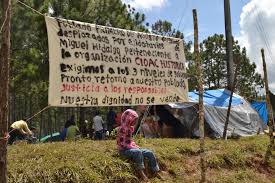
Compañeros, compañeras, hermanos y hermanas. Desde el 01 de agosto del año 2013 hemos sufrido amenazas de muerte, intento de asesinato, de secuestro, robo, despojo y destrucción de parte de los ejidatarios del ejido Miguel Hidalgo integrantes de la CIOAC-HISTÓRICA dirigidos por Luis Hernández Cruz y Antonio Vázquez Hernández dirigentes de la Central Independiente Obreros Agrícolas y Campesinas(cioac-histórica).
Por la omisión de las autoridades oficiales, las violaciones a nuestros derechos, amenazas de muerte, amenazas de secuestro, amenazas de nuevo desalojo violento y hostigamientos siguen dándose, es el caso del día 29 de septiembre donde autoridades y ejidatarios del ejido miguel Hidalgo pasaron a amenazarnos a 30 metros de distancia donde estamos desplazados diciéndonos que tienen planes juntamente con sus dirigentes y comités regional de la cioac-histórica con el respaldo de los tres niveles de gobierno de secuestrar a seis de nuestros compañeros y hacer un nuevo desalojo armado.
El día 30 de septiembre del año 2015 a las 3 de la tarde el c. Armando Méndez López disparó al aire libre con arma de fuego diciéndonos que cualquiera de estos días nos desalojarán y secuestraran a nuestros compañeros.

Chiapas, México, 28 de septiembre. “Sigue y seguirá la lucha por los desaparecidos de Ayotzinapa. Padres y familiares de los desaparecidos, su dolor y rabia es nuestra”, se leyó el pasado 26 de septiembre en los diferentes territorios zapatistas de la geografía chiapaneca. “Vivos se los llevaron, vivos los queremos”, exigieron las Bases de Apoyo del Ejército Zapatista de Liberación Nacional (BAEZLN), en el sureste de México, a un año de la desaparición forzada de los estudiantes de la normal de Ayotzinapa, en Iguala Guerrero.
En el caso del Caracol zapatista de Oventik, de los Altos de Chiapas, se observaban diferentes mantas de apoyo, de cada municipio autónomo que se dio cita: “la lucha por los desaparecidos de Ayotzinapa seguirá”, afirmaban. También se podían apreciar veladoras para para cada uno de los normalistas agredidos. “Con resistencia y rebeldía exigimos justicia”, externaban en diferentes pancartas las y los rebeldes chiapanecos bajo una llovizna incesante.


[:es]
“Sabe nuestro colectivo corazón, de antes y de ahora, que nuestro dolor no es lamento estéril”

“Sabe que nuestra rabia no es desahogo inútil.”

“Sabemos quienes somos lo que somos, que nuestros dolores y rabias nacen y se alimentan de mentiras e injusticias.”
[:es]
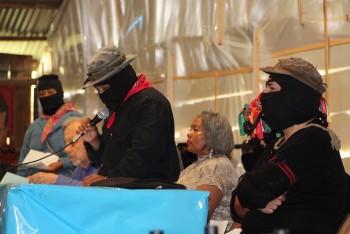
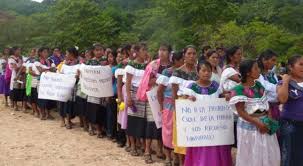
Oventic, Chiapas, 26 de septiembre de 2015. Miles de Bases de Apoyo del Ejército Zapatista de Liberación Nacional (BAEZLN), se manifestaron desde temprana hora en sus diferentes territorios en la geografía chiapaneca, en solidaridad con familiares y compañeros de los 43 normalistas desaparecidos de la normal rural de Ayotzinapa en Iguala, Guerrero.
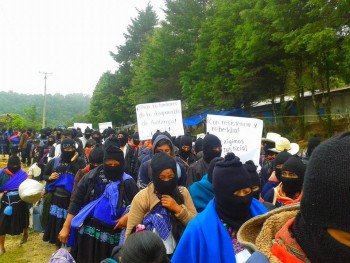
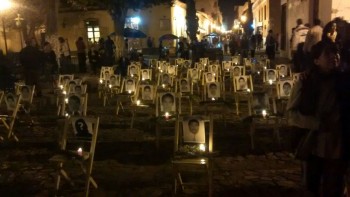
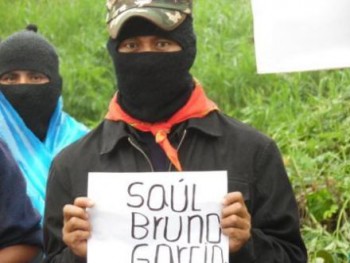
Como lo habían anunciado desde el pasado 24 de septiembre, niños, mujeres, hombres y ancianos de la zona Altos se manifestaron a lo largo de la carretera frente al caracol de Oventic “Corazón céntrico de los zapatistas delante del mundo”, con mantas, carteles, veladoras, portando los nombres de cada uno de los 43 ausentes de la normal de Ayotzinapa.

Alrededor del medio día las BAEZLN ingresaron al caracol para realizar un acto en memoria de “Ayotzinapa y todos los Ayotzinapas que hieren los calendarios y geografías de abajo”.
Bajo una llovizna constante la manifestación se realizó en el contexto de las movilizaciones a nivel nacional e internacional para exigir como desde hace un año la presentación con vida de los normalistas rurales.
Radio Pozol y Regeneración Radio.[:en]
Oventic, Chiapas, 26 de septiembre de 2015. Miles de Bases de Apoyo del Ejército Zapatista de Liberación Nacional (BAEZLN), se manifestaron desde temprana hora en sus diferentes territorios en la geografía chiapaneca, en solidaridad con familiares y compañeros de los 43 normalistas desaparecidos de la normal rural de Ayotzinapa en Iguala, Guerrero.
Como lo habían anunciado desde el pasado 24 de septiembre, niños, mujeres, hombres y ancianos de la zona Altos se manifestaron a lo largo de la carretera frente al caracol de Oventic “Corazón céntrico de los zapatistas delante del mundo”, con mantas, carteles, veladoras, portando los nombres de cada uno de los 43 ausentes de la normal de Ayotzinapa.
Alrededor del medio día las BAEZLN ingresaron al caracol para realizar un acto en memoria de “Ayotzinapa y todos los Ayotzinapas que hieren los calendarios y geografías de abajo”.
Bajo una llovizna constante la manifestación se realizó en el contexto de las movilizaciones a nivel nacional e internacional para exigir como desde hace un año la presentación con vida de los normalistas rurales.
Radio Pozol y Regeneración Radio.[:]
[:es]Traduzione italiano
Traduction en Français
Deutsch Übersetzung
English translation
Tradução em portugês
POR EL DOLOR, POR LA RABIA,
POR LA VERDAD, POR LA JUSTICIA.
Septiembre del 2015.
Compañeras, compañeroas y compañeros de la Sexta de México y el Mundo:
Hermanas y hermanos de los pueblos de la Tierra:
Sabe nuestro colectivo corazón, de antes y de ahora, que nuestro dolor no es lamento estéril.
Sabe que nuestra rabia no es desahogo inútil.
Sabemos quienes somos lo que somos, que nuestros dolores y rabias nacen y se alimentan de mentiras e injusticias.
Porque quien está arriba a costa de quienes abajo somos lo que somos, miente como forma de hacer política y adorna la muerte, la desaparición forzada, el encarcelamiento, la persecución y el asesinato con el escándalo de su corrupción.
Es criminal con fuero y sin vergüenza quien arriba es, sin importar el color de su política. Sin importar si pretende esconderse detrás de un cambio de nombre y de bandera.
Siempre el mismo rostro, la misma soberbia, la misma ambición y la misma estupidez.
Como si al desaparecer y asesinar también quisieran desaparecer y asesinar la memoria.
De arriba y de quienes ahí anidan sus perversiones y bajezas, sólo recibiremos la mentira como salario y la injusticia como pago.
Por JäG, Colectivo Radio Zapatista
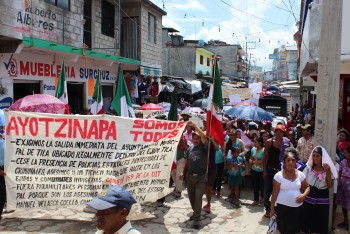
Tila, Chiapas. El pasado miércoles 16 de septiembre, nuevamente miles de ch’oles del Ejido Tila salieron a las calles para manifestarse, en esta ocasión con motivo de su grito ejidal por la independencia, por el respeto de su territorio y autonomía ejidal ch’ol. Como han venido haciéndolo desde hace algunos años, mostraron la fuerza de su pueblo, su palabra frente al gobierno que les quiere despojar del poblado de Tila.
Hombres y mujeres, familias ch’oles que a su llegada al parque central tomaron de manera simbólica las instalaciones del Ayuntamiento Municipal, por acuerdo de su Asamblea general, para realizar su grito de independencia: ¡Fuera el Ayuntamiento Municipal del territorio indígena ejidal de Tila!, fue el grito central de las y los campesinos.
Como acuerdo de su Asamblea tienen determinado que la presencia de las instalaciones del Ayuntamiento no es ni benéfica ni grata para el pueblo, ya que es fuente de conflicto, despojo, represión, desprecio; es una raíz de maldad que hay que arrancar, como cuentan quienes como oficio principal tienen el de ser campesinos, con la milpa en el centro de su cosmogonía: las y los ch’oles milperos. Su Asamblea ejidal, máxima autoridad en el territorio, acordó el retiro del Ayuntamiento del poblado y territorio ejidal. Para ello les faculta su régimen asambleario tradicional ch’ol, además de la legislación agraria y su derecho autonómico como pueblo indígena.
[:es]EN EJIDO SAN SEBASTIAN BACHAJON ADERENTES A LA SEXTA DECLARACION DE LA SELVA LACANDONA. CHIAPAS, MEXICO. A 11 DE SEPTIEMBRE DE 2015
A la comandancia general comité clandestino revolucionario indígena del ejército zapatista de liberación nacional
A las juntas de buen gobierno
Al congreso nacional indígena
A l@s compañer@s adherentes a la sexta declaración de la selva lacandona
A los medios de comunicación masivos e alternativos
A la red contra la represión y por la solidaridad
Al movimiento de justicia por el barrio de nueva york
A los defensores de derechos humanos nacional e internacional
Al pueblo de México y el mundo
EL DÍA DE HOY VIERNES NOS ENCONTRAMOS REUNIDOS EN UN BLOQUEO EN ESTAS ALTURAS DE NUESTRO TERRITORIO DEL EJIDO SAN SEBASTIÁN BACHAJÓN Y ESTAMOS EN 15 DÍAS DE CUMPLIR UN AÑO DE LA CRUELDAD COMETIDA POR EL ESTADO MEXICANO AL ASESINAR A 3 PERSONAS Y DEJAR A 3 EN ESTADO DE COMA POR LA REPRESIÓN SUFRIDA Y POR TENER A OTROS 43 JÓVENES NORMALISTAS DESAPARECIDOS DE AYOTZINAPA.

[:es]
San Cristóbal de Las Casas, Chiapas, México
a 9 de septiembre de 2015
Boletín de prensa No. 22
Amenazas de muerte y agresiones físicas en contra de BAEZLN de la comunidad Tzakukum
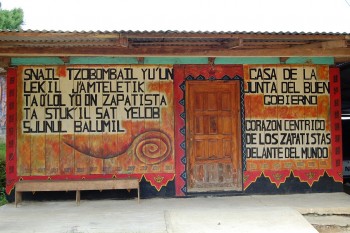
Este Centro de Derechos Humanos Fray Bartolomé de Las Casas, A.C (Frayba) documentó los hechos sobre las amenazas de muerte, agresiones físicas y hostigamiento en contra de Bases de Apoyo del Ejército Zapatista de Liberación Nacional (BAEZLN) en la comunidad Tzakukum, municipio oficial de Chalchihuitán; información proporcionada por la Junta de Buen Gobierno de Oventik, Corazón Céntrico de los Zapatistas delante del Mundo, (JBG Oventik), perteneciente al Caracol II, Resistencia y Rebeldía por la Humanidad.
Según testimonios, refieren que el día 10 de agosto del 2015, el BAEZLN, Aurelio Gómez Girón recibió amenazas de ser asesinado a machetazos, por parte de una mujer de nombre Catarina Girón Díaz Segundo, integrante del Partido Revolucionario Institucional (PRI). El mismo día el señor Ramón López García del partido PRI cortó la manguera de agua a Mariano García Núñez, BAEZLN, quien fue amenazado de muerte con un machete.
El día 14 de agosto, aproximadamente a las 20:30 horas, Librado Pérez Núñez, BAEZLN fue insultado y agredido en el camino por Hermelindo García Núñez dirigente del partido PRI quien le dijo: –ustedes son asesinos, mero zapatista, qué haces aquí..
El día 15 de agosto, el priísta Juan Antonio Pérez Girón amenazó de muerte con un machete a las BAEZLN María Gómez López y Catarina Girón Díaz Primero, en el trayecto a una reunión.
El día 26 de julio, un grupo de partidistas retuvo a cuatro personas BAEZLN en la comunidad Tzakukum a quienes amenazaron con quemarlos con gasolina: Martín García Núñez, Sebastián Gómez Pérez, Jorge López Núnez, Mario Núñez García. Además 8 personas más fueron golpeadas y presentan heridas sin haber recibido atención médica: María Girón López, Mariana Girón López, María López García, Martín Díaz Pérez, María Gómez Pérez, Aurelio Gómez Girón, Rafael García Gómez, María López Núñez.

 & CommentsComentarios .