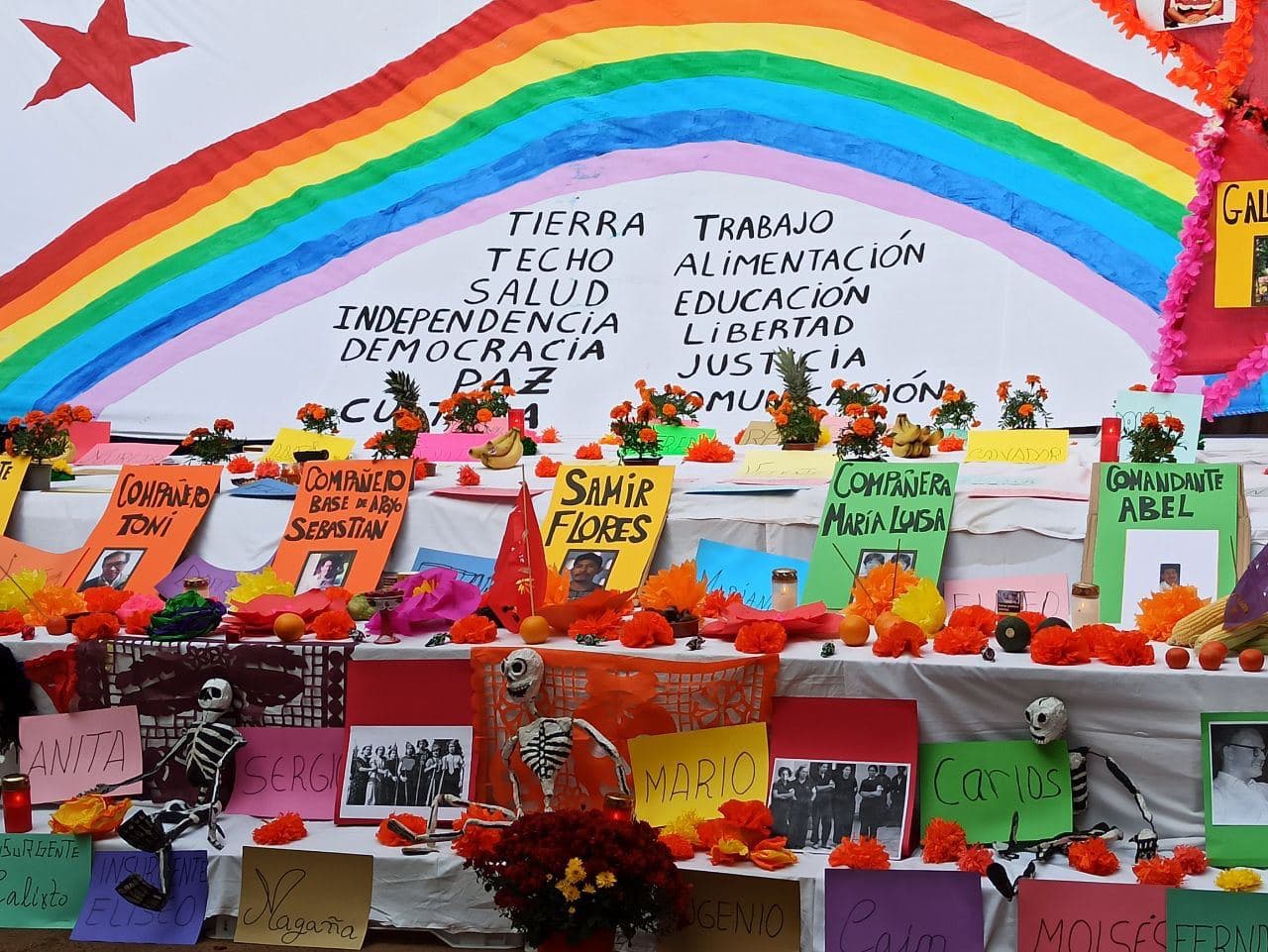
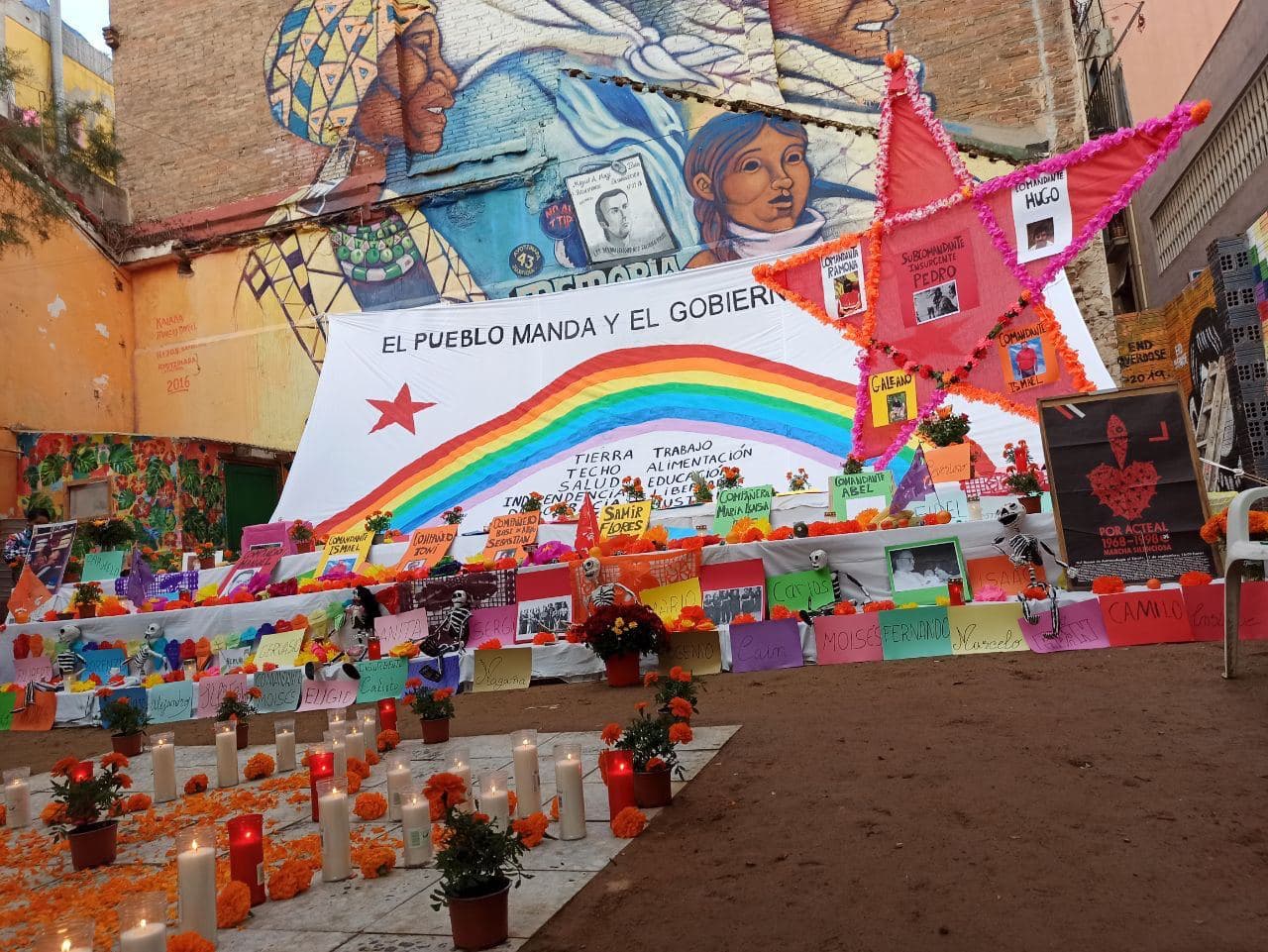
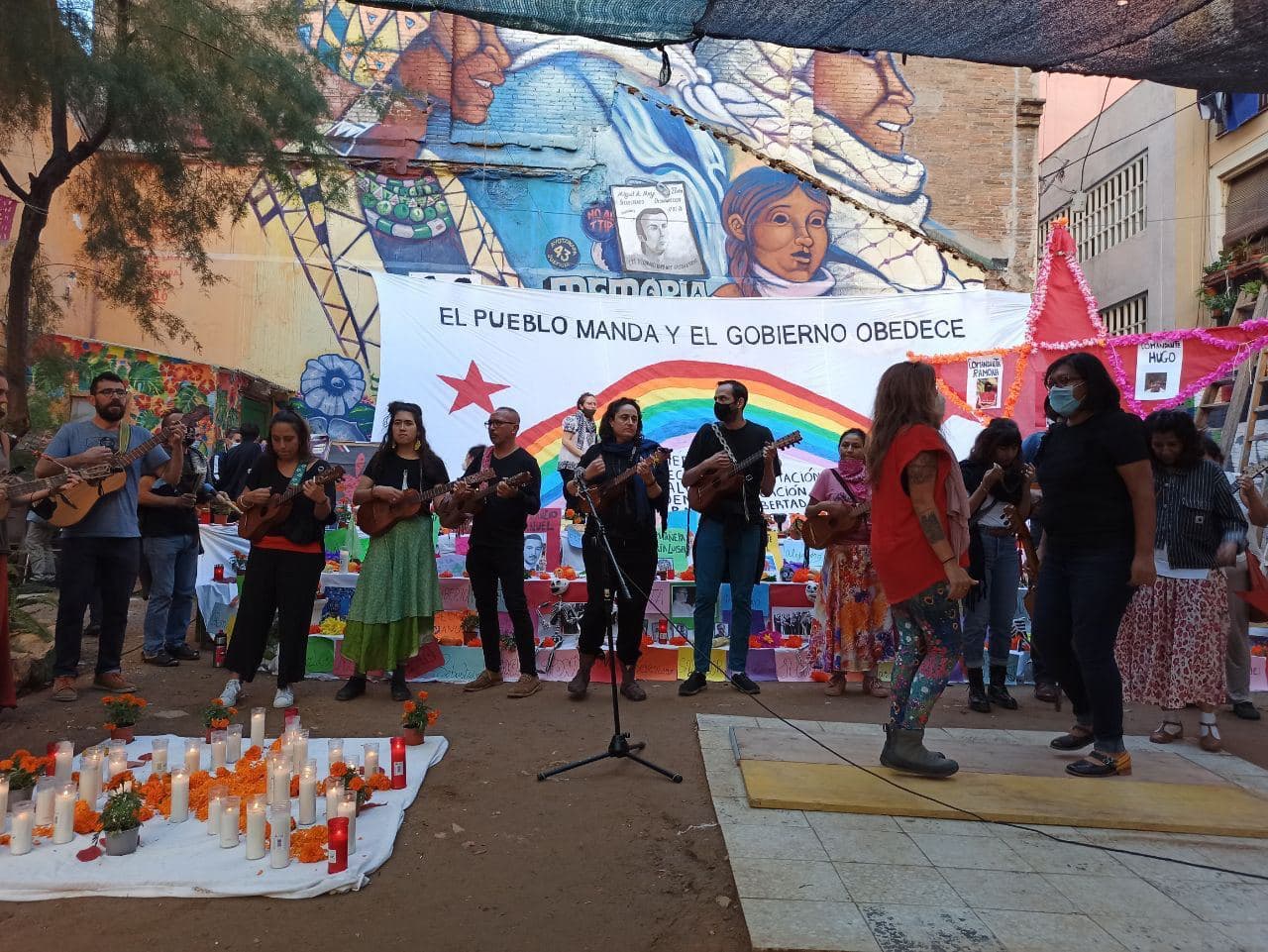
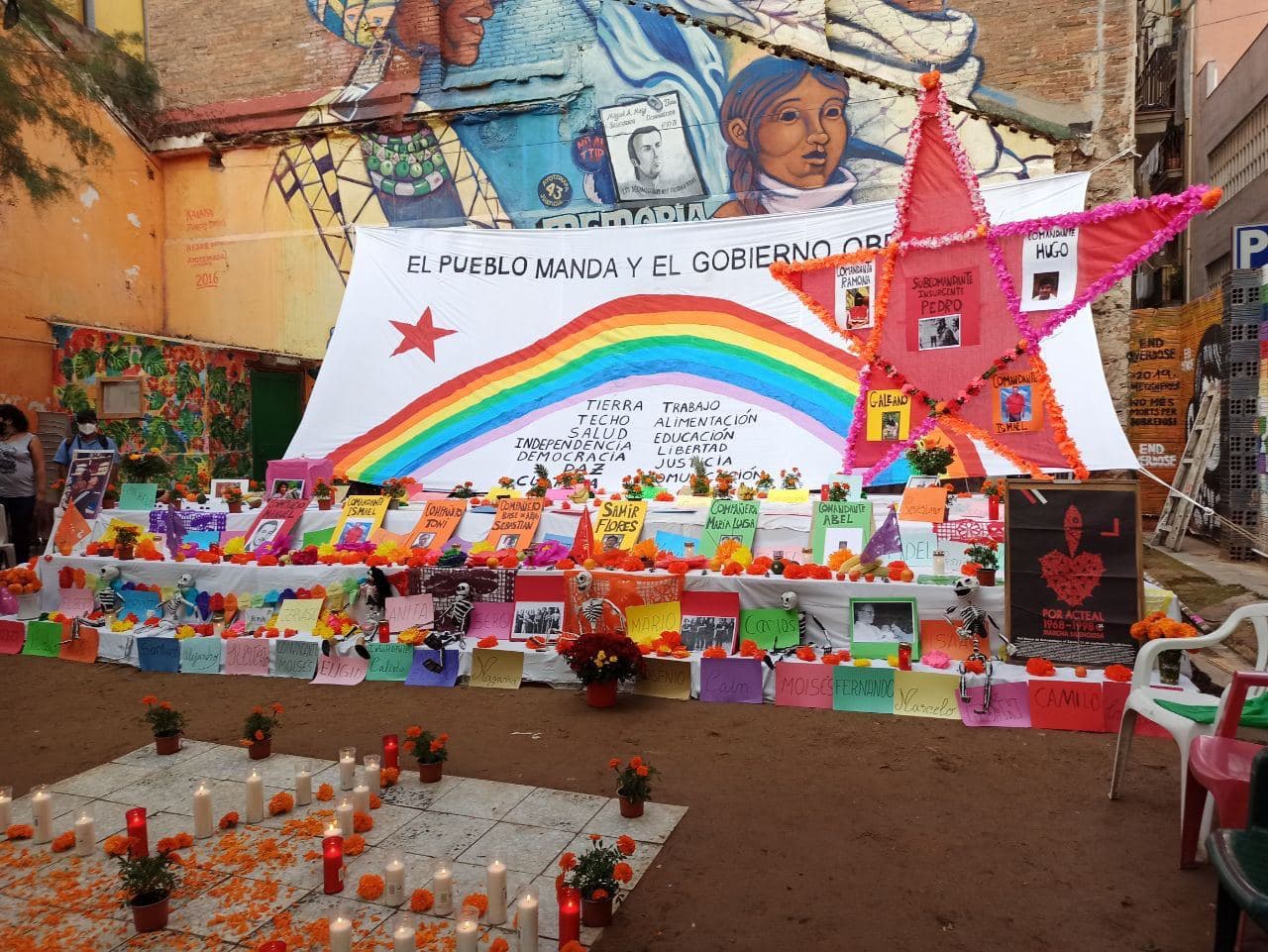
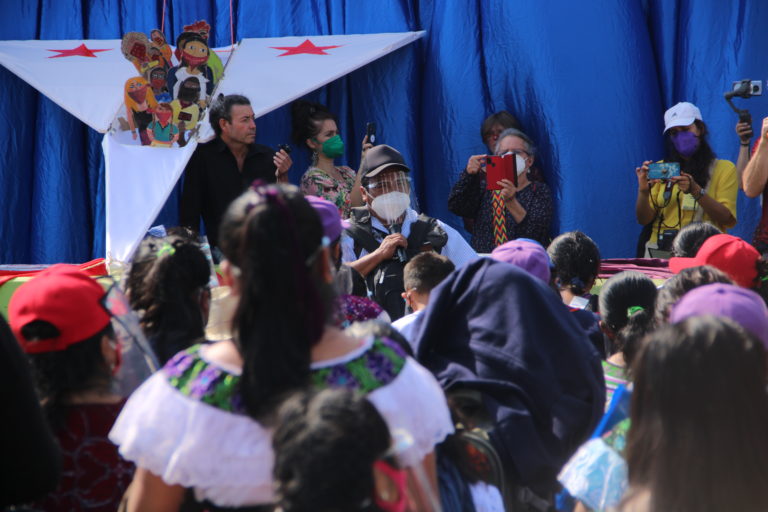
Video 4: Violencia hacia la economia autónoma y la destrucción de la Madre Tierra.
Posted by Ajmaq on Monday, 11 January 2021
Video 4: Violencia hacia la economia autónoma y la destrucción de la Madre Tierra.
«El desembarco» by León Gieco performed by León Gieco (Vocals and Harmonica), Jairo (Vocals and Djembe), Silvina Moreno (Vocals), Sandra Corizzo (Vocals), Diego Boris (Harmonica), Antonio Druetta (Mandolin), Pablo Elizondo (Guitar), Luciana Elizondo (Viola da gamba). 2021.
The Landing
From the Other Europe.
Individuals, Groups, Collectives, Organizations and European movements – in collaboration with the 421st Squadron.
June 2021.
P.S. – There is a song by León Gieco[i] called «El Desembarco» [The Landing]. I had it archived in a “pending” folder for years, wondering when and in which video to use it. In the end, I thought that when the time came, I would know.
I thought, as I watched Marijose set foot on Galician soil, not about the song, but about the invisible web that brought music together with a buccaneer boot, worn on a native Mayan foot, stepping onto Iberian soil.
I did a little research and it turns out that the song was released in 2011 on an album of the same name. That was 10 years ago … or more. When was this song born in the heart of León Gieco, our unwitting brother – or sworn brother like Juan Villoro[ii] – who we hold within the great embrace that is Latin America? Months or years before?
Did León dream what the lyrics say?
Is it the same dream had by Marijose when, in April’s fiery embrace, it was decided that Marijose [elloa] would be the first to disembark? Is it the same dream that the late SupMarcos had when he wrote «Sailor on the Mountain» years before the uprising? The same one that kept Don Durito[iii] of the Lacandón Jungle awake when he imagined (or made—we’ll never know) his journey through European lands? Did Comandanta Ramona, the first to leave Zapatista territory and from whose path the National Indigenous Congress was born, dream that dream? Is it the same one dreamed by then Lieutenant Colonel Insurgente Moisés when – in 2010, on the outskirts of a hut in the mountains of the Mexican southeast – he received the rank of Subcomandante? The one that Señor Ik, SubPedro, and 45 other Zapatistas had moments before falling in combat in January 1994? The one that, collectively, the indigenous Sami people – in the northernmost north of Europe – put forward in their Declaration for Life? Was it the dream of Gonzalo Guerrero[iv] over 500 years ago when he made the path and destiny of the Mayan people his own? Is it that dream that unsettled Jacinto Canek[v]?
Did this dream alleviate to some extent the passing of Comandante Ismael, Dr. Paulina Fernández C., Oscar Chávez, Jaime Montejo, Jean Robert, Paul Leduc, Vicente Rojo, Mario Molina, Ernesto Cardenal and so many family members – all brothers and sisters without knowing it – that we have lost in recent months?
Is it the dream that inspired Europe from below to organize such a terrible and marvelous reception in Vigo?
The one that now travels through the streets, neighborhoods, countryside, and coasts of Europe repeating «Will July rain on Paris»?
Is it the dream that inspired the voices that found echo in the emblematic reflections on the beaches of Vigo and crossed the Atlantic to now take nest in the Zapatista communities?
Because the 421st Squadron descends not from a ship, but from La Montaña, «without weapons, and for life.»
Is this what humanity is? That which weaves the long and hidden thread that unites different and distant geographies and links calendars near and far?
I do not know. But I would recommend to those whose curse is art: Give expression to that dream. Whichever it is, let it be yours.
Because you never know when and where another gaze, another ear, other hands, another step, another heart in another calendar and another geography, will need to take it down from the great shelf of hopes and dreams, open its entrails and plant it, like a seed, in painful reality.
I bear witness,
SupGaleano.
June 2021.
—
[i] Argentine folk rock performer, composer and interpreter.
[ii] Juan Villoro is a Mexican writer and journalist and the son of philosopher Luis Villoro.
[iii] Don Durito’s adventures across Europe in 1999: https://enlacezapatista.ezln.org.mx/1999/10/13/la-hora-de-los-pequenos-durito-carta-4a/
[iv] Gonzalo Guerrero was a sailor from Palos, Andalucia, Spain who was shipwrecked along the Yucatán Peninsula and taken prisoner by the local Maya. Over time he took on Mayan culture as his own, became a Mayan chief, and died fighting alongside the Maya against Spanish conquistadors in defense of Mayan territory.
[v] Jacinto Canek – 18th-century Maya revolutionary who fought against the Spanish in the Yucatán Peninsula of New Spain.
A nombre de todas las mujeres, niños, hombres, ancianos y, claro, otroas zapatistas, declaro que el nombre de esta tierra, a la que sus naturales llaman ahora Europa, de aquí en adelante se llamará “Slumil K’ajxemk’op”, que quiere decir “Tierra insumisa”, tierra que no se resigna, que no desmaya. Y así será conocida por propios y extraños mientras haya alguien aquí que no se rinda, que no se venda y que no claudique.
Con esas palabras Marijose, otroa zapatista del Escuadrón 421, rebautizó el “viejo continente” este martes 22 de junio de 2021 en la ciudad de Vigo, Galicia.
Quinientos veintiocho años después de que la carabela La Pinta arribara a estas costas tras el primer y fatídico “encuentro” entre el continente europeo y el que poco después sería nombrado América, llegó a Galiza el navío La Montaña, tras 50 días de navegación desde Isla Mujeres en el Caribe mexicano.
A bordo trajo a siete zapatistas, el Escuadrón 421 –cuatro mujeres, dos hombres, unoa otroa–. A bordo trajo cinco siglos de resistencia y 38 años de lucha zapatista. A bordo trajo oídos y miradas atentas y corazones abiertos, para encontrarse con quienes resisten y luchan contra el sistema enloquecido que atenta contra la humanidad. A bordo trajo la utopía de un verdadero Encuentro que no sea de muerte sino de vida, de lucha, de resistencia y rebeldía.
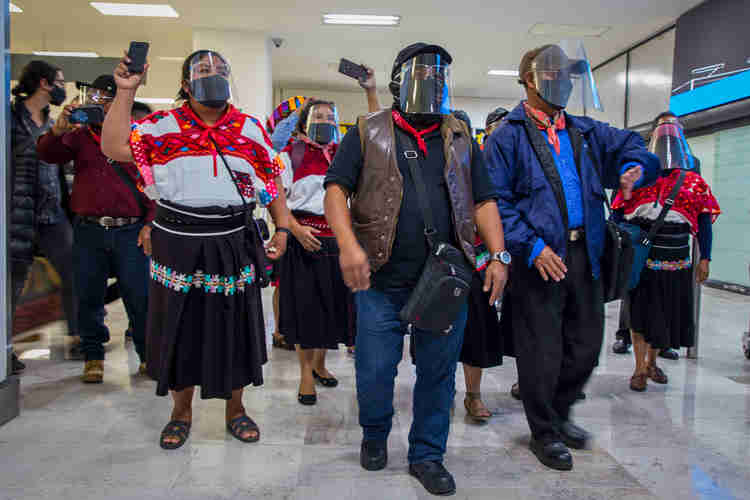
Desde hace días, empezaron a llegar a Galiza delegaciones de muchos rincones de Slumil K’ajxemk’op y de otros países, para darle la bienvenida al Escuadrón 421, la avanzada de una “invasión zapatista” a la que se sumarán muchos y muchas más que llegarán por vía aérea, incluyendo a niñas y niños. No muy lejos del local del desembarque, el Centro Social das Pedriñas, renombrado “Caracol Base de la Europa Zapatista”, se acondicionó para recibir a lxs delegadxs que llegaron de las muchas geografías.
Escucha o descarga el audio de la entrevista:
(Descarga aquí)
Xalapa, Ver. 20 de mayo 2021. Una delegación de campesinos morelenses, junto a colectivos y organizaciones sociales, instalaron un plantón el día de ayer frente a la Comisión Nacional del Agua (Conagua) al sur de la ciudad de Xalapa, para denunciar el robo de agua con la finalidad de alimentar canales privados por medio del Acueducto Cuautla. En la tarde de hoy, los ejidatarios invitaron a los medios libres en una entrevista previa a su rueda de prensa programada para el jueves 21 de mayo a las 9:00 hrs. frente al edificio de la Conagua.
Acompañados por colectivos de defensores del territorio de Veracruz, Puebla, Guerrero y de la capital, los ejidatarios de la región oriente de Morelos tomaron las instalaciones y pusieron una gran carpa y numerosas tiendas de campaña frente a las rejas metálicas de un edificio gubernamental vacío, “por el motivo que se han violentado nuestros derechos: la CFE nos ha arrebatado nuestra agua”, sin tener ningún permiso para conectar un acueducto ni para alimentar la termoeléctrica que está a punto de empezar a funcionar.
Uno de los representantes de los ejidos movilizados de Cuautla, Ayala y Tenextepango declaró que “el agua del río Cuautla ha sido históricamente parte fundamental para nuestra actividad que es agrícola, tenemos una zona con características muy especiales para la producción de alimentos: producimos elote, pepino, verdolagas, arroz, caña, es decir, esa parte de Morelos fue precisamente la cuna de la Revolución porque ahí de donde venimos nació el General Zapata, en el pueblo de Anenecuilco, y ahora resulta que nos imponen una termoeléctrica a diez kilómetros de Cuautla y Ayala; y conectan un acueducto sin consultarnos, sin explicarnos de lo que se trata, y ya de la noche a la mañana resulta que empiezan a bombear el agua a la termoeléctrica”.

Niños, jóvenes, trabajadores y ancianos de los ejidos del oriente de Morelos protestan frente a las instalaciones de Conagua en Veracruz
Dolphins!
May 2021.
It was a dramatic moment. Cornered between loose ropes and the railing, the insect menaced the crew with his sword, while out of the corner of his eye he tracked the raging sea in which a Kraken, of the “kraken escarabujos” species (specialists in beetle-eating), was lurking. Then, the intrepid stowaway gathered his bravery, raised his multiple arms to the sky and roared, drowning out the sound of the waves crashing against the hull of La Montaña:
Ich bin der Stahlkäfer, der Größte, der Beste! Beachtung! Hör auf meine Worte! (I am the stainless-steel beetle, the biggest, the best! Attention! Listen to my words!)
The crew stopped short: not because a schizophrenic insect was threatening them with a toothpick and a plastic jar cap, nor because he spoke in German. It was because upon hearing their mother language after so many years of hearing only tropical, coastal Spanish, they were transported back to their homeland as if by a spell.
Gabriela would say later that the insect’s German was closer to that of an Iranian immigrant than that of Goethe’s Faust, but the captain defended the stowaway, insisting that his German was perfectly intelligible. And, since where the captain is in charge Gabriela is not, Ete and Karl approved, and Edwin, even though he only understood the word “cumbia,” agreed. What follows is the insect’s story translated from the German:
-*-
“The indecisiveness of my attackers gave me time to rethink my defensive strategy, repair my armor (because it’s one thing to die in an unequal fight, and another to do so in rags), and launch my counteroffensive: a story…
It was several moons ago, in the mountains of the Mexican Southeast. Those who live and struggle there had set a new challenge for themselves, but at that time they were living under a cloud of worry and discouragement because they lacked a vehicle for their journey. That was how I, the great, the ineffable, the etcetera, Don Durito of the Lacandón Jungle, A.C. de C.V. de (i)R. (i)L. arrived at their mountains (the abbreviations, as you should all know, stand for “Knight Errant of Versatile Cavalry and Unlimited Responsibility”)[i]. As soon as word of my arrival got out, a throng of women of all ages, from teenagers to the elderly, came running to greet me. But I remained firm and did not succumb to vanity. I proceeded towards the quarters of the individual in charge of the as-yet unsuccessful mission. For a moment I was baffled: the impertinent nose of he who checked and re-checked the calculations of the cost of the punitive expedition against Europe reminded me of the captain who later became known as SupMarcos, whom I spent years teaching and training with my wisdom. But no: although his appearance is similar, he who calls himself SupGaleano still has much to learn from me, the greatest of the knights errant. (Continuar leyendo…)
From the Notebook of the Cat-Dog
We boarded La Montaña [The Mountain] on April 30, 2021, at the scheduled time. The boat was docked about 50 breaststrokes away the harbor, “far from the hustle and bustle / of fake society.”[i] Fluttering around the boat were laughing gulls, cormorants, frigate birds, corococo birds, and even a little lost hummingbird making a nest in the pulpit. In the ship’s hull beneath the water, bottlenose dolphins drummed the beat of a cumbia, a whale shark kept the rhythm with its fins, and a manta ray moved its black wings like flying hips.
The buccaneer group, headed up by Subcomandante Insurgente Moisés who, along with a troop made up of an insurgenta[ii] who is part of the Tercios Compas [Zapatista media team], an insurgente who is a driver and a mechanic, a driver who is a Zapatista base of support, 5 more Terci@s Compas, a comandanta and two comandantes[iii] came to send off the maritime delegation—the 421st Squadron—and make sure that the group had everything that they needed for the nautical epic. A support team from the Sixth Commission also attended in order to write the obituaries of those who might die during the mission.
The ship’s crew didn’t put up any resistance. In fact, the captain had previously ordered that a large banner be raised on the mast of the boat with an image depicting the Zapatista maritime delegation, thereby including La Montaña and the whole crew in the struggle for life. With the masts and spars exposed, the symbol of Zapatista delirium rippled even more brightly in the wind.
We could say that it was a consensual boarding. There wasn’t any aggression on the part of the Zapatista troops nor by the vessel’s crew. You could say that there was a sort of mutual understanding between us and the crew of La Montaña even though in the initial meeting they were as surprised as we were.
We would have stood there looking at each other if it weren’t for an insect looking extraordinarily like a beetle who came out of the stern and screamed, “Boarding! If there’s a lot of them, we’ll run! If there’s only few, we’ll hide! And if there’s nobody, onward! We were born to die!” That was what settled everything. Bewildered, the crew looked first at the bug and then at us. We didn’t know if we should apologize for the interruption or join the pirate attack.
Subcomandante Insurgente Moisés thought it the right moment for introductions, so he said: “Good afternoon. My name is Moisés, Subcomandante Insurgente Moisés, and these are…” Turning around to present the troops, SubMoy realized that no one was there.
Coproducciones realizadas por el Gobierno Comunitario de Chilón,
Pluriversidad Yutsilal Balumilal, CLACPI, PVIFS, CEDIAC
Año 2021
Spot 1. “Cuidémonos, porque el Covid-19 sí existe”

Hacer #JusticiaFeministaParaBerta significa abonar, cuidar y continuar sembrando las semillas de cambio que su camino y su palabra nos heredaron. Por ello, al cumplirse 3 años de su siembra las invitamos a escuchar de nuevo su voz y a llenarse de la fuerza, la dignidad y la sabiduría que emanan de sus palabras.
La Lucha feminista de Berta Cáceres (2)
¿De dónde proviene la fuerza, la conciencia y la rebeldía feminista de Berta Cáceres? Berta nos lo cuenta…
La Lucha feminista de Berta Cáceres (3)
A lo largo de su vida, Berta enfrentó múltiples ataques por el hecho de ser una mujer defensora de los derechos humanos del pueblo y las mujeres lenca. Muchos de estos ataques presentaban componente de género y se dirigían directamente contra su ser mujer.
Posted by Ajmaq on Monday, 11 January 2021
Video 4: Violencia hacia la economia autónoma y la destrucción de la Madre Tierra.
Posted by Ajmaq on Monday, 28 December 2020
Video 3: Difamación y calumnia hacia las comunidades zapatistas (Realizado durante la Misión Civil de Observación)
Posted by Ajmaq on Friday, 11 December 2020
Video 2: Invasión, cercamiento de la madre tierra y ambiente de balazos.
Posted by Ajmaq on Wednesday, 25 November 2020
Video 1: Mecanismos de la violencia hacia los cuerpos – territorios de las mujeres
Posted by Ajmaq on Wednesday, 11 November 2020
Consulta el Informe de la Caravana de Solidaridad y Documentación con las comunidades autónomas zapatistas de Nuevo San Gregorio y Región Moises Gandhi. aqui: https://redajmaq.espora.org/informecaravana2020
Fuente: Teia dos Povos

Foto: Juliana Brandão – Montagem: Teia dos Povos
Por: Talita Tamikuã Pataxó, Tierra Indígena Comexatibá- Prado, Extremo sur de Bahía
Nací en una cultura y tradición que tiene como misión honrar a la naturaleza, vivir de ella y para ella. Soy nieta de pajé[i], una mujer pajé, lo que hizo mi conexión con la naturaleza más fuerte aún. Mi pueblo es un pueblo que honra mucho la abundancia y cuenta que antiguamente era mucha la abundancia que la naturaleza ofrecía. Una abundancia que iba desde el mar hasta la tierra. Soy de una generación que encontró solo un poco, muy poco, de esa abundancia.
Yo recuerdo ver a mi bisabuela llorando a la orilla del jirau[ii], yo era muy pequeña, no entendía. Ella lloraba porque sentía pesar de sus nietecitos, porque vendrían tiempos difíciles. Hoy entiendo cada una de sus lágrimas. Ella lloraba nuestros alimentos que, a cada día, disminuye. Hoy, lucho por la soberanía alimentaria para mi territorio, con un pueblo sabio y fuerte que sabe la hora correcta para plantar y cosechar, que pide permiso para entrar en la naturaleza.
Sin Territorio, no hay vida
Me encuentro a la orilla de un lugar conocido como “Costa del Descubrimiento”, donde fue el primer contacto con los malditos portugueses. Cuentan nuestros ancianos que, cuando los portugueses llegaron –inmundos y enfermos-, los pueblos originarios los cuidaron y trataron sus males. Fue la medicina indígena que curo a muchos de ellos. En contrapartida, recibimos odio, ira, explotación y genocidio. En nombre de una supuesta civilización, los pueblos originarios tuvieron sus lenguas y modos de vida perseguidos. Algunos, inclusive, fueron declarados extintos, lo que es una gran mentira. Esa palabra, “civilización”, es demasiado pesada para mí. Es lo mismo que la colonización. No es por acaso que, nosotros, los indígenas desconfiamos de los colonizadores, que ya traían ese odio en su interior. El colonialismo persiste actualmente y continúa intentando exterminarnos. Por eso, yo no creo que exista diálogo y asociación con el latifundio, con el capital, con el Estado – todo eso representa la continuidad del sistema colonial.
In this video, created by the organization Teia dos Povos for Radio Zapatista, Erahsto Felicio speaks about the current situation in Brasil with Jair Bolsonaro’s government: the destruction of the Amazon, the dispossession of lands and territories, and the war against indigenous peoples.