Genocidio
Entrevista a Alberte Pagán, a un día de partir en la Flotilla Global Sumud rumbo a Gaza
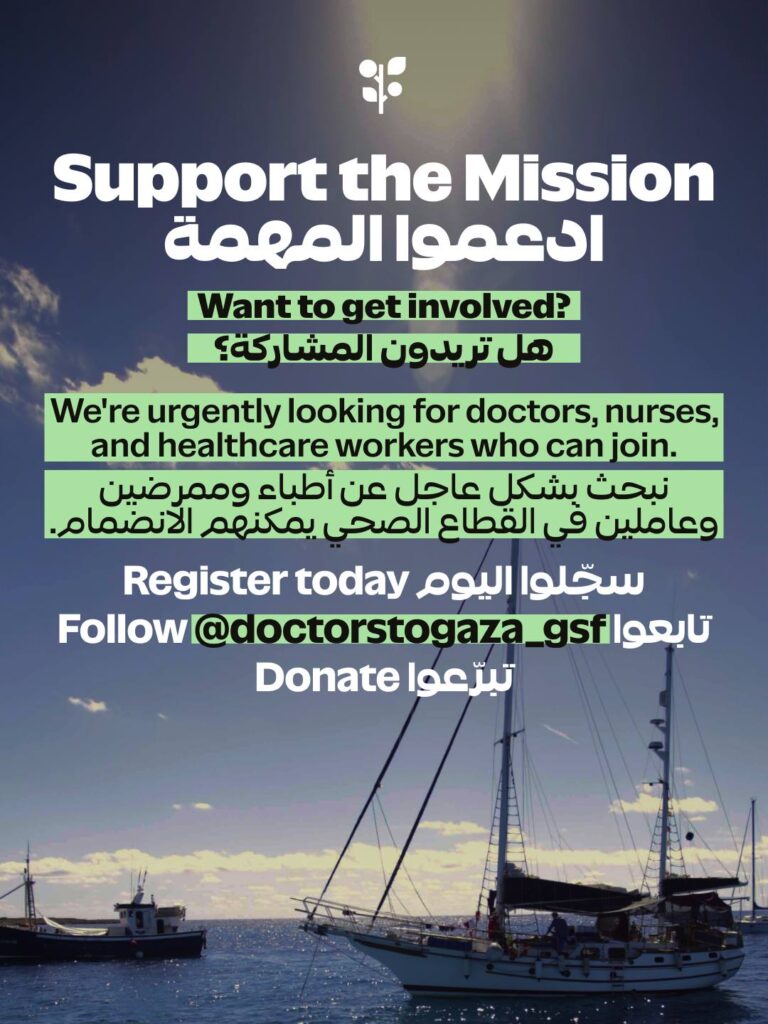
Mañana, 12 de abril de 2024, partirá de Barcelona la mayor misión humanitaria marítima de la historia rumbo a Gaza. A los 40 barcos que zarparán del puerto de Barcelona se les unirán otros 40 en diversos puntos del Mediterráneo, llevando un total de más de mil personas de casi 100 países, con el objetivo de romper el bloqueo israelí a Gaza, llevar ayuda material y técnica necesitada desesperadamente por la población gazatí, y llamar la atención al genocidio que, a pesar del falso acuerdo de paz, continúa vigente.
En la víspera de la partida de la Flotilla Global Sumud, entrevistamos a Alberte Pagán, escritor y cineasta gallego que participa en la flotilla como parte de la delegación gallega.
Descarga aquí (haz clic con el botón derecho)
Gracias, Alberte, por compartir tu palabra. Cuéntanos sobre esta flotilla. ¿En qué difiere de las anteriores?
Lo que tiene de especial esta flotilla es que es la misión humanitaria por mar más grande que nunca ha existido. Recoge un poco el espíritu de Sumud, que es el nombre que tiene la flotilla, que significa resiliencia, resistencia. Tomamos como ejemplo la resistencia del pueblo palestino y después de la última flotilla, que como bien sabes fue interceptada y todas las activistas estuvieron en prisión.
Ahora, unos pocos meses después, volvemos con el doble de ganas y con el doble de barcos y con más del doble de activistas. Salimos de Barcelona unos 40 barcos, pero a lo largo de la travesía se unirán, en otros puntos del Mediterráneo, otros tantos más, con lo cual superaremos los 80 barcos y más de mil personas en ellos. Pero todo esto es sólo una pequeña muestra de toda la gente que está en tierra participando en la organización de la flotilla y por la liberación de Palestina. A esto hay que añadir el convoy terrestre que parte desde el Magreb, por el norte de África, intentando llegar a la frontera con Gaza, con lo cual nosotros somos un gran hito más en esta movilización mundial.
Cada vez hay más y más personas —somos ya millones y millones en todo el mundo— que están diciendo basta con la ocupación de Palestina y con el genocidio y la limpieza étnica.
¿Cuál es el propósito de esta flotilla en particular, además en el contexto de la guerra y de toda la distracción mediática que implica sobre la situación en Gaza? ¿Qué se propone específicamente esta flotilla junto con la caravana terrestre?
Primero de todo, la flotilla es una consecuencia de las movilizaciones que hay en todo el mundo para intentar romper el bloqueo a Palestina, en concreto a Gaza. Un objetivo pues es llamar la atención internacional sobre la ocupación de Palestina porque, como bien sabemos, las noticias políticas en los medios convencionales son casi casi, por tristeza, una cuestión de moda.
Se hablaba mucho de Gaza cuando había bombardeos diarios. Pero cuando firman un falso acuerdo de paz —porque ni siquiera se le puede llamar así—, pues los medios convencionales ya dejan de informar. La flotilla, es consecuencia de las movilizaciones en todo el mundo y al mismo tiempo quiere ser un catalizador para seguir fomentando esas movilizaciones.
Objetivo principal: romper el bloqueo a Gaza. Un bloqueo que ya lleva desde el genocidio televisado de los últimos dos años o tres. ¿Qué tiene de novedad esta flotilla, aparte de ser más numerosa? Pues de que tiene un objetivo claro de llegar a Gaza y desembarcar en Gaza con equipos médicos, equipos de educadoras, equipos de ecoconstructoras para ayudar a la gente palestina de Gaza a reconstruir sus casas, sus viviendas, su salud y sus vidas. Llevamos ya no sólo una ayuda simbólica como la flotilla anterior, sino que realmente llevamos un poderoso cargamento de herramientas médicas, de construcción ecológica y demás, con ese objetivo preciso de desembarcar en Gaza y ayudar al pueblo palestino, a estar codo con ellos en la reconstrucción.
La flotilla se organizó antes de la guerra, con lo cual muchas voces nos critican por ser temerarios, por ir ahora, que es muy peligroso. Pero si esperamos a que llegue un momento concreto donde no haya peligro, pues entonces nos quedamos de brazos cruzados y nunca haremos nada, porque mientras Palestina no sea libre siempre habrá conflicto en Asia Occidental y en general en todo el mundo. Y un poco esa es la novedad de esta flotilla.
¿Cómo se está percibiendo la situación en el contexto de la guerra en términos de seguridad para la flotilla, del riesgo de ataques por parte de Israel? ¿Cómo lo están percibiendo ustedes?
Para organizar una flotilla de estas características hace falta un equipo, muchos equipos muy bien organizados, y realmente está funcionando muy bien. Ya tenemos un equipo especializado en esos temas a nivel político, a nivel militar, y a medida que vayamos avanzando por el Mediterráneo iremos valorando la situación. Pero sabemos que hay riesgos y los riesgos están ahí, como también estaban en la flotilla anterior, porque la reacción de Israel nunca sabes cuál va a ser y siempre te esperas lo peor, con lo cual la guerra de Irán añade un poco de, digamos, de inquietud, pero no es lo que más nos preocupa.
Al contrario, parece que esta guerra no tiene nada que ver con Palestina, que cuando el régimen sionista bombardea a Irán, el contexto político de Palestina no tiene nada que ver. Y en realidad, mientras exista un Estado de Israel sionista que esté ocupando Palestina, todo esto va a tener consecuencias en la región, bélicas, políticas, y a mayores en todo el mundo.
¿Cómo está la situación en Gaza ahora?
Como decía, este supuesto acuerdo de paz, en cuya mesa no había ni siquiera representantes palestinos, no cambió absolutamente nada.
Cambió el aspecto, digamos, del espectáculo bélico diario que teníamos, de los bombardeos diarios, pero sigue habiendo bombardeos no diarios, no con tanta intensidad. No hay tal cantidad de muertos, pero desde el acuerdo de paz ya fueron asesinados más de 700 personas palestinas, entre ellas muchos niños y muchas niñas. Un acuerdo de paz que ni siquiera cumple sus propios puntos, porque uno de los puntos era abrir las fronteras a la ayuda humanitaria y no están abiertas. Oficialmente te dicen que sí, que están abiertas, pero en vez de dejar entrar 3 mil camiones diarios, que sería lo mínimo necesario, pues dejan pasar a cinco o siete. Y en la frontera del Sinaí, en Egipto, hay unas colas kilométricas de camiones desde hace meses y meses, en los que se está pudriendo la comida destinada al pueblo palestino en Gaza. Por lo tanto, la situación sigue espantosa a nivel humanitario.
A nivel global, ¿qué significa enfrentar lo que está haciendo el régimen sionista en el contexto de los cambios en el mundo y cómo eso nos impacta a todos? O sea, más allá de una solidaridad con el pueblo palestino, ¿cómo es que eso se refleja en el mundo, en términos de la reconfiguración geopolítica y la desesperación imperial de Estados Unidos junto con Israel por mantener la hegemonía mundial?
Precisamente, yo personalmente creo que éste es el momento adecuado para navegar hacia Gaza. Precisamente por eso, para que cada gobierno se retrate en su relación con Israel, incluido el gobierno español.
Que no nos olvidemos de Palestina, por mucho que haya guerra en Irán. Y es una manera de hacer que los gobiernos y las instituciones se mojen y tomen el mando. Porque si esta flotilla sale, es precisamente por la inactividad de gobiernos e instituciones, incluida la ONU.
Ante la inactividad de gobiernos e instituciones, que la gente —la ciudadanía mundial— se quede inactiva, no es una opción. Solidaridad sí, pero hay que tomar partido y hay que hacer acciones, no sólo que levanten las conciencias, sino que ayuden a este fin de la ocupación de Palestina.
Desde un nivel personal, ¿cómo te sientes ahora, a un día de partir en la flotilla?
Pues muy ilusionado, muy ilusionado con partir y muy ilusionado con la esperanza de ver que la flotilla pueda reactivar las movilizaciones en todo el mundo, no de apoyo a la flotilla, que también, sino de apoyo a Palestina.
Yo me apunté a la flotilla para luchar por cosas muy básicas, como es la democracia, como son los derechos humanos, como es la libertad, o sea, para luchar contra el fascismo. Y el fascismo ahora está en Palestina, por parte del Estado sionista de Israel. Y estoy muy ilusionado porque los miembros de la flotilla, que es gente muy variada, de casi 100 países del mundo, gente joven, gente mayor, hombres, mujeres, gente de todo tipo y de toda procedencia.
Y es muy bonito ver que se está construyendo una organización internacional que va más allá de la lucha por Palestina. Digamos que la lucha por Palestina es el detonante, pero que se está convirtiendo en un movimiento antiimperialista y anticolonial en todo el mundo. Y entonces aquí ninguna lucha nos va a ser ajena, como la flotilla que estuvo en Cuba hace unas semanas y cualquier otra acción que ayude a luchar contra el imperialismo. Y esto es lo bonito del movimiento, porque va más allá de la flotilla; es un movimiento global anticapitalista, antiimperialista y anticolonialista.
Todos aquellos que no tenemos la oportunidad de participar directamente en la flotilla, ¿cómo podemos participar de otras maneras en este movimiento global?
No es cierto que no estéis participando. Haciendo esta entrevista ahora quiere decir que estás participando en la flotilla. Y en la flotilla no viajamos mil personas o más de mil personas, sino que viajamos millones, porque esto no sería posible sin los millones de personas que en tierra hacen posible que esta flotilla zarpe. Con lo cual todos vosotros y todas vosotras navegáis con nosotros.
Sexual and Reproductive Violence in Palestine: Women as a Strategic Target of Genocide
By Carolina Bracco* – LatFem
Far from being “collateral damage,” sexual and reproductive violence against Palestinian women is part of a long-standing colonial strategy. The genocide in Gaza is part of a demographic logic that seeks to prevent the reproduction of Palestinian life and annihilate not only the present, but also the possibility of a future.
The genocide in Gaza must be understood as the most recent phase of a colonial settlement project that, from its inception, aimed to eliminate the indigenous Palestinian population in order to guarantee Jewish supremacy over the territory. Far from being an exceptional episode, the current violence is part of a continuous Nakba, which began in 1948 and has never been interrupted.
That year, under the auspices of the British Mandate, Zionist militias carried out a systematic ethnic cleansing that forced more than 750,000 people to abandon their homes. More than 80% of the native population was expelled from the territory that would soon be declared the State of Israel. This foundational violence—accompanied by more than 13,000 murders—produced in a few months a radical transformation of the demographic composition: the Jewish population went from representing approximately 30% to 81% of the total. The objective was to replace the existing population, laying the foundations for a colonial order whose eliminationist logic continues to operate to this day.
But unlike other settlement processes, the colonial project did not end: it became normalized. Israel was recognized by the international community without any demands for justice, reparations, or the return of the displaced population.
Despite the mass expulsions of 1948 and 1967—which affected 250,000 people—the immigration of more than one million Jews from the former Soviet Union between 1990 and 2000, and the multiple massacres, the proportion of Palestinian population in the territory between the Jordan River and the Mediterranean Sea never stopped increasing.
In 2000, Jewish settlers and their descendants made up 52% of the total population. By 2010, they represented only 49%. Ten years later, they accounted for just 47%. These figures come from Palestinian academic Joseph Masad , who sees the current genocide as a clear political strategy; the only one that would allow the settlers to maintain their supremacy over the historic Palestinian territory.
Concern about the demographic imbalance has always been present in Israeli rhetoric and policy. As early as the 1970s, then-Prime Minister Golda Meir—the same one who said that Palestinians “did not exist”—stated that she went to sleep worrying about how many Arab children would be born during the night. Four decades later, Justice Minister Ayelen Shaked openly declared that pregnant Palestinian women should be shot because “they give birth to little snakes.”
As reproducers of life and national continuity, Palestinian women have historically been constructed by the colonial regime as demographic threats. Within this framework, sexual, obstetric, physical, and symbolic violence perpetrated against them has been a persistent and structural practice. Its aim is to disrupt the reproduction of Palestinian life and break its continuity over time.
Genocide must be understood precisely in these terms: as the systematic destruction of a people, which is not limited to direct physical elimination, but also operates through blockade, prolonged siege, induced famine, the production of collective trauma, and the annihilation of present and future prospects. In this process, women’s bodies become a central battleground, where reproductive violence functions as a technology aimed at preventing the very survival of the Palestinian people.
“Reprocidio”: to annihilate the present and the future
At the heart of genocide is the elimination of life. And that is why resistance to this attempt at erasure depends not only on immediate survival, but also on the capacity to reproduce life: to conceive, to give birth, to raise children. Today, in Gaza, that is practically impossible. Reproductive violence manifests itself at every level: there are no homes, no privacy, no specialist doctors, no fertility treatments. Rape leaves traumatic scars on bodies that directly affect the ability to conceive. Between 2022 and 2025, miscarriages increased by 300% and the birth rate fell by 41%. And even if a woman manages to conceive, under what conditions will she give birth? Without hospitals, without neonatal care, without anesthesia for cesarean sections. And if she gives birth and the baby survives, cold and famine await: malnourished mothers, without access to breast milk, without formula, without clean water, without basic immunity.
This set of practices is defined by the Gazan academic Hala Shoman as reprocidio : a specific form of colonial violence that aims to dismantle the reproductive structures of a population in order to eliminate it not only in the present, but also in its future potential.
The paradigmatic case was the bombing of the Al Basma fertility center , the largest in Gaza, in December 2023. A missile destroyed more than 4,000 embryos and over 1,000 samples of unfertilized sperm and eggs. Dr. Bahaeldeen Ghalayini, the center’s founder, described the magnitude of the attack with a heartbreaking phrase: “5,000 lives in a single projectile.” This deliberate attack is part of a systematic and sustained policy of reproductive annihilation, which ranges from the destruction of maternal and child health hospitals to the obstruction of safe childbirth, the use of sexual violence in prisons, environmental poisoning, the destruction of homes, and the structural impossibility of raising or breastfeeding children in conditions of minimal dignity.
This is compounded by the total collapse of the healthcare system, the lack of electricity in incubators, the surge in births without anesthesia or supplies, and the exponential increase in emergency cesarean sections and hysterectomies performed to prevent fatal hemorrhaging. In some cases, doctors have had to perform post-mortem cesarean sections to save babies from the wombs of their murdered mothers.
The conditions of childbirth and raising children in makeshift shelters—many surrounded by Israeli tanks or lacking access to water, food, or privacy—have created an environment of structural trauma and hopelessness. Many women express a desire to carry their children back inside their bodies as the only way to protect them.
Meanwhile, attacks against reproduction are not limited to Gaza. In Israeli prisons, accounts of sexual violence and torture with direct impacts on reproductive health are multiplying. These assaults not only seek to harm individual bodies: they aim to humiliate, break, instill terror, and dismantle the intimate fabric of Palestinian life, erasing the possibilities of motherhood, fatherhood, or shared intimacy.
Sexual violence as a colonial technology
Sexual violence is not a recent or marginal phenomenon; it has been central to colonial practices from the very beginning. It has been a systematic policy of both labor and right-wing governments. In the Deir Yassin massacre on April 9, 1948, mass rapes of Palestinian women and girls were reported. According to historian Ilan Pappé, Zionist leaders proudly announced the high number of victims to sow panic. Under those circumstances, fleeing was the only rational option. Since then, thousands of girls and women, as well as men and boys, have been victims of rape, genital torture, forced feminization, and castration as part of a systematic colonial technology of domination.
The Sde Teiman detention center , where more than 4,000 Gazans have been held since October 7, has become a torture center even more brutal than Guantanamo or Abu Ghraib. Allegations of rape and sexual abuse are numerous. Instead of prosecuting the perpetrators, sectors of Israeli society have been seen demonstrating in defense of the accused soldiers .
Gender and sexuality dynamics are fundamental to understanding the structure of Israeli colonialism. Domination operates through the feminization of the enemy: raping a Palestinian woman is to humiliate her community; feminizing the colonized man is to symbolically castrate him; dismembering a body is to turn it into waste.
White, colonial, and Zionist masculinity is imposed not only by force, but also by discourse. In mainstream media and liberal circles in the West, Palestinians are portrayed as barbarians, violent, misogynistic, fanatical, or simply as faceless numbers.
This discursive operation constitutes what Orlando Patterson defined as “social death”: the symbolic dispossession of agency, history, and belonging to the human race. Within this framework, the rape of Palestinian bodies is a tool. And its impunity, a symptom of structural dehumanization.
In practice, this translates into a comprehensive genocidal policy where the deliberate destruction of schools, hospitals, universities, libraries, churches, mosques, and water and energy networks is a systematic strategy to prevent Palestinian social reproduction. What is sought to be destroyed is not only the present, but also the possibility of a collective future. It is a violence that affects bodies, but also knowledge, affections, memory, and ways of life.
Sustaining life under conditions of death
In this context of absolute violence, affirming life becomes an act of insurrection. However, not all families can or wish to reproduce. Many women have publicly expressed their decision to avoid pregnancy during the genocide, given the collapse of the healthcare system and the extreme risk of maternal or infant death. As Hala Shoman wrote on social media in August 2024: “Think carefully before bringing children into the world. Miscarriage rates have tripled. Mothers are bleeding to death. There is no milk, no food, no medicine. This is a plea wrapped in love and fear.” These words encapsulate the ethical and political dilemma faced by those who wish to continue an emotional and family life amidst a regime of extermination.
At the same time, this temporary refusal to reproduce does not contradict the affirmative impulse toward life, but rather forms part of an ethic of care and a politics of protection against extermination. As Shoman points out, resistance does not simply mean having children; it means making the conditions for life possible. And that, in Gaza today, is a radical form of struggle.
Sustaining life under conditions of death means challenging the legal framework that defines genocide solely in terms of death tolls. Destroying the capacity to reproduce, imposing perpetual mourning, closing off possibilities, preventing children from being raised, criminalizing childhood, and isolating desire are forms of annihilation that international law still fails to fully recognize.
The history of Palestinian women is the history of Palestine. It is a story of resilience and resistance, of occupation and exile, but also of continuity and the struggle for the very possibility of existing, of continuing, of living with dignity. It is a struggle not only for liberation, but also against elimination.
Palestinian women, in this context, are not only victims. They are active agents of resistance. Their bodies bear the marks of the extermination project, but also the stubborn will to live. And as long as there is life to be defended, to be reproduced, to be told, there will be a future for Palestine.
*Carolina Bracco, political scientist, PhD in Arab and Hebrew cultures, writer and researcher.
Read also: https://www.elsaltodiario.com/palestina/israel-empleo-municion-carbonizo-3-000-gazaties-dejar-rastro