News:

artes

image/svg+xml image/svg+xml
radio
Capitán Insurgente Marcos

Art is a Curse | Capitán Marcos

ART IS A CURSE

February 24, 2026

Ladies, gentlemen, and those who are neither one nor the other:

First of all, we want to thank Gabriel Pascal, David Olguín, Philippe Amand, and the whole crew who make this event possible. And Steph, for her unconditional complicity.

We also thank Lenin and Marina, who have kindly read our contributions.

I want to clarify that we were not invited to this tribute to the master Luis de Tavira. I say this not as a reproach, but as a disclaimer for those who, at the right time, organized this gathering. May this text serve to deal with complaints, insults (mint-flavored and otherwise), legal proceedings, and whatever else may arise from the matter.

So it can be said that we are here as “gatecrashers.” I imagine your displeasure, but keep in mind that it would be worse if we had forced our way in—that healthy civic custom of showing up without an invitation and without paying for the tickets.

We thus celebrate not only that those close to the master greet him, but also—and above all—the opportunity for those of us who are distant yet think of him to embrace him.

And this celebration, in which the master is somewhat like the pretext, raises several questions. Namely: what is it that enables communities so different and distant to converge in the same geography and calendar? For that is what those present here are: some of the best among the artistic community. And, well, our words are also meant to make present those who are far away: some of the Indigenous communities, of Mayan origin—the Zapatistas.

An artistic community and Indigenous communities coinciding. Differences meeting without ceasing to be what they are. And a theater master, Luis de Tavira, as the unwitting convener.

The former are brought together by dramatic art. “The supreme artistic challenge,” the late SupMarcos used to say—may God keep him in his holy glory and the Blessed Virgin shower him with blessings—to distinguish it from the other arts. And I suppose, though I cannot confirm it, that the deceased meant that reality stalks Theater (as it does dance and, in some cases, music) in a vertiginous present. Unlike cinema, graphic arts, sculpture, literature, and architecture, for example—where the artistic act is created in a space different from the one in which it confronts the listening-seeing (and non-seeing) audience—theater relates to the other in a special space-time context. This means that geography and calendar themselves become a part of the artistic creation. Thus, when one says “theater,” one refers both to the work performed and the space where it sometimes meets the audience.

So here we are—the Zapatista peoples—under the protest of those who organized this tribute, in a theatrical space called “El Milagro,” perhaps because the practice of dramatic art, at least in Mexico, is a miracle achieved despite all the difficulties it encounters.

But in these dark times of an Artificial Intelligence that stalks the arts, theater seems to be safe. At least for now, it seems impossible for a cybernetic organism to emulate the marvelous confrontation that occurs between theater-makers and the audience.

It seems difficult (at least for now) for Artificial Intelligence to even approach the different characterizations of the character Adela in The House of Bernarda Alba, who, with the fire of forbidden love, defies authoritarianism:

“Here the voices of prison end!” (Adela snatches a cane from her mother and breaks it in two.) “This is what I do with the rod of the tyrant. Do not take another step. In me no one commands except Marcos!”

(Okay, okay, okay—the original text says “Pepe,” but let’s say it’s a poetic license.)

Yes, you’re right, it is not by chance that I chose a play by Federico García Lorca—someone different, persecuted and murdered for being who he was and for the cause he embraced. Nor is it accidental that I chose the speech of a rebellious woman. Nor is it coincidental that an artist, Marina, is reading this text.

But what in fact motivates me to mention it is the subversive love that flows through that work. And, of course, the scenic challenge that those brief lines pose to anyone involved in theater—man, woman, or other: Adela breaking the whitewashed tomb in which Bernarda Alba had locked her away together with the rest of her daughters.

And all this is relevant because at the December 2025 seedbed gathering, Don Luis de Tavira, the master, was the only one who understood our intention in introducing the topics of love and heartbreak. When I wrote inviting him, I told him that it was most likely that none of the speakers would touch on those points—except for us, of course. He therefore did not need to worry about it. He immediately understood that those were precisely the most important aspects of that reflection and of all others past and present. The master accepted the challenge (actually, theater itself is a challenge). And his participation—from afar, like these words—focused on the mystery to be revealed: love and heartbreak.

Brilliant, as always, the master revealed—and rebelled—the leitmotif of human history: its successes and failures, its rises and falls, wars hidden behind heartbreak and loves hidden behind wars, resistances and rebellions.

In his remarks, the master says that I said what in fact it was he who said: that art is a declaration of love to humanity. And if he said that I said what he said that I said he said, then it is not confusion but a happy coincidence. A coincidence between two distances, like those that meet today here, by miracle, in El Milagro.

You must remain strong: in this terrible and marvelous love—in art—you walk toward heartbreak. Because humanity will not requite your love. It is unruly, stubborn, ungrateful, perfidious, and hopelessly romantic—as the Mexican philosopher Salvador Flores Rivera well argued. And yet you must persevere. That is how you will understand that the arts are a curse. A beautiful curse, yes—but a curse nonetheless.

Now I imagine the gestures of Steph, who is coauthor of this intrusion. I must say, in her defense, that she has been an accomplice not only in this crime, and that there are others on the horizon awaiting her dedication and commitment. Because theater, friends and enemies, is also that: complicity, dedication, and commitment.

I also imagine Marina’s restrained laughter—I told her that this would be a serious text and that she would have to read it on the spot without knowing it beforehand. And not just that. I also told her that the script required her to comb her hair, something you will confirm or not depending on whether her artistic discipline prevailed. I suppose she will make gestures of displeasure and reproach. A pout of discomfort—or a prelude to a feigned whimper—would not be out of place when reaching these lines. Thank you, Marina, but I think you need to practice your pouting more in front of the mirror.

Because that is also theater: a mirror that reflects the best and worst of humanity, that challenges the spectators’ imagination and turns them into accomplices—hidden behind applause, or boos, or the naïve complaint: “Give me back the money I paid for the ticket—and add the cost of the rideshare taxi, my valuable time, and VAT!” All because the tax authority—the Tax Administration Service—has become like immigration enforcement, chasing artists as if art were a business and not what it really is: a miracle.

– * –

But don’t get distracted. The master has been assigned the role of a pretext—a role he has assumed, I imagine, under protest. But the central theme of this gathering is theater. Or, more generally, the arts.

Earlier, a year ago, I made a comparison between theater directors and military commanders. It doesn’t matter how much they rehearse or practice; when the moment comes to face reality—the confrontation with the audience in the case of theater (and also dance and, sometimes, music), and with the enemy in the case of the combatant—you have no chance to repeat the scene. Perhaps that explains the spontaneous sympathy I noticed at the arts gathering a year ago between the two of them, when Subcomandante Insurgente Moisés and Master Luis de Tavira shared the table and the word. Steph and I stood as guardian flanks, with contributions from Iván Prado, Los Zurdos, and, from another distance, Antonio Ramírez.

That’s why I said above that dramatic art, like dance, represents a greater challenge.

And more: in theater—in the fleeting instant of performance—converge a myriad of factors.

The parts that the whole requires to constitute itself as art: lighting, costume, scenery, sound, and even the announcements, the ticketing, and the seating of the audience. Now I imagine Gabriel, Philippe, and David wondering if we are the only gatecrashers, because there are attendees who are suspected of having come only to see if there was a cocktail reception and hors d’oeuvres. Already they are complaining in whispers that there is only a sugary drink with an indecipherable flavor, and a sad sandwich that has known better days. Of course, everyone smiles and says out loud, “Ah, theater!” while quietly inching toward the exit.

– * –

I warned you—don’t get distracted. Focus.

Much has been said about theater as entertainment, as denunciation, as reflection, and as a pedagogical tool. In that sense, a theater teacher is really an educator of educators. Here we call them formadores (“trainers”). There are trainers in education—who train education promoters; trainers in health—who prepare health promoters, first aid workers, preventive medicine practitioners, midwives, herbalists, laboratory technicians, and someday they will train butchers—or “knife-inserters,” as we call those who know how to perform surgeries.

In short, we have theater as entertainment, as denunciation, as an image of its time and culture, as reflection, and as pedagogy.

Surely there are more spines on the hedgehog of dramatic art, but I will mention one that you may ignore: theater as love and heartbreak.

And for this, I bring you a story I told at a meeting where there were young coordinators of art and culture, as well as quite a few Zapatista theater-makers, men and women.

The story is called…

(to be continued)

From the mountains of the Mexican Southeast.

El Capitán
Mexico, March 2026.

radio
Subcomandante Insurgente Moisés

Call to the Encounters on critical thought, art, resistance, and rebellion «ResignARTE u OrganizARTE» 2026

Zapatista Army of National Liberation
Sixth Commission

March 1, 2026

To the individuals, groups, collectives, movements, and organizations signatories of the Sixth Declaration and the Declaration for Life:

The Zapatista Sixth Commission has the honor of inviting you to the days of critical thinking, art, resistance, and rebellion for this year, 2026:

ResignARTE u OrganizARTE [Resign or Organize Yourself through ART]

These activities will explore artistic, organizational, and activist experiences in the face of the storm the world is enduring. The idea is to highlight that, faced with the brutality of the storm, two options or paths emerge: one is to resign oneself, to surrender, and let fate or one’s own gods decide; the other is to organize and fight for resistance and rebellion.

On the following dates:

April 2, 3, and 4, 2026. Seedbed of the Sixth Commission: The Storm Within and Without, According to the Zapatista Communities and Peoples. Venue: CIDECI, San Cristóbal de las Casas, Chiapas, Mexico.

August 2026.

Encounter of All the Arts. Themes: “ResignARTE u OrganizARTE” [Resign or Organize Yourself through ART] Venue to be determined.

World Meesting of Resistances and Rebellions I: “ResignARTE u OrganizARTE” [Resign or Organize Yourself through ART]. Venue to be determined.

December – January 2026-2027.

World Meeting of Resistances and Rebellions II: “ResignARTE u OrganizARTE” [Resign or Organize Yourself through ART]. Venue to be determined.

Register at the following email address: resignarteuorganizarte2026@gmail.com

Please specify the date you expect to arrive and your form of participation.

We will share more details soon.

From the mountains of the Mexican Southeast.

Subcomandante Insurgente Moisés.
Mexico, March 2026.

radio
Noticias de Abajo ML

Noticias de Abajo – 13 feb 2026

Descarga aquí.

Rompiendo Fronteras

PALESTINA: Israel lanzó bombas termobáricas en Gaza que “evaporaron” a 2.800 palestinos, revela informe de AlJazeera. La maquinaria de guerra se puso a prueba con cuerpos Palestinos.

KURDISTAN SYRIO, KOBANE: 20 días bajo asedio. El asedio de la ciudad de Kobanê por grupos afiliados al Gobierno Transitorio de Damasco ha entrado en su vigésimo día. Aproximadamente 600.000 personas luchan por sobrevivir en duras condiciones humanitarias.
Fuente: https://espanol.anf-news.com/rojava-norte-de-siria/kobane-20-dias-bajo-asedio-57838

COLOMBIA: Cobertura especial del Encuentro de la Red de Mujeres Tejiendo el Futuro en Bogotá Colombia. Testimonios de una madre Kurda que perdió a su hija. Por la corresponsal Alexis.-
Fuente: Noticias de Abajo ML

MENSAJES INTERNACIONALISTAS. Desde Estados Unios y las multiples luchas contra el fascismo de Trump y contra el imperialismo en Venezuela y Cuba desde Caracas.

ITALIA: Indignación y movilización, miles salen a protestar contra el equipo de Israel en las olimpiadas de inverno en Milan.

Desde el ombligo del mounstro

COBERTURA ESPECIAL: Un rumor se levanta. En la Plaza Palestina Libre, diferentes colectividades hicieron una Okupa Cultural en el Centro Histórico de la CDMX durante 12 horas continuas con presentaciones políticas, poesía y música.
Fuente: Noticias de Abajo 

CHIAPAS: El Frayba ha documentado agresiones físicas y amenazas de muerte en contra de la Defensora de Derechos Humanos Poulette Celene Hernández, en el municipio de Tonalá, región Istmo-Costa del estado de Chiapas, México. Su vida en riesgo por sistemático acoso.
Fuente: https://frayba.org.mx/090226-agresion-poulette-cdhdigna

GUERRERO: Comunicado de la Misión Civil de Observación Sexta sobre la remoción del mecanismo de protección al promotor Jesús Plácido del CIPOG-EZ. Situación que pone en riesgo su vida.
Fuente: Congreso Nacional Indígena

radio
Radio Zapatista

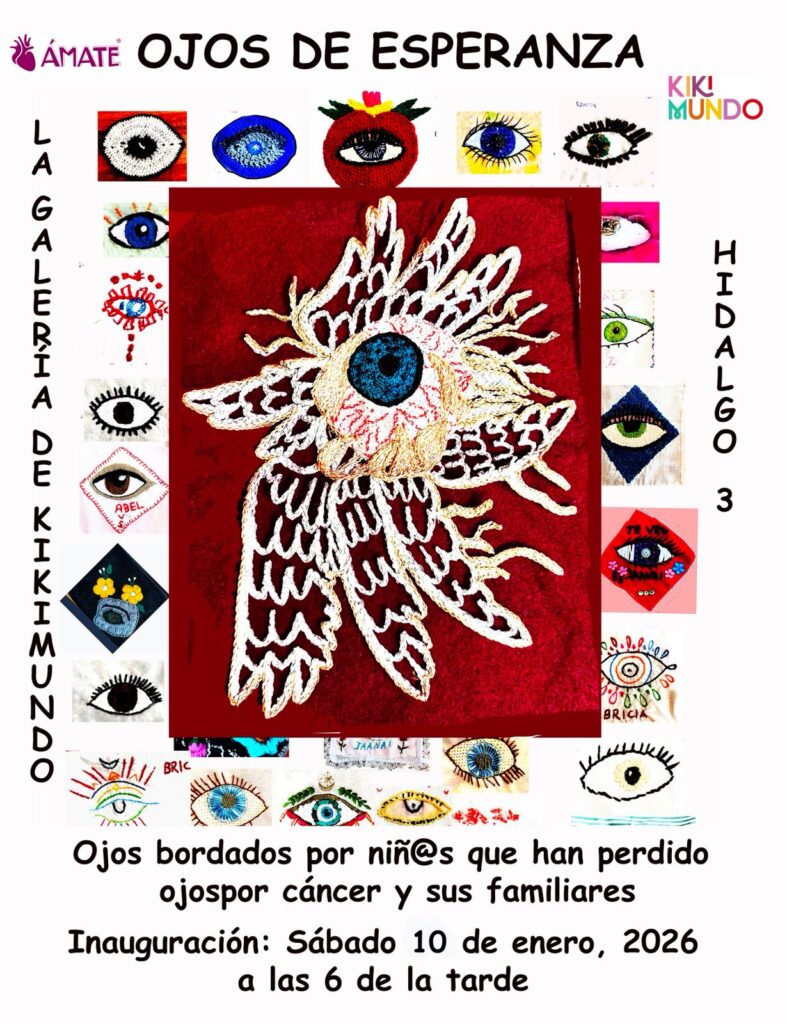
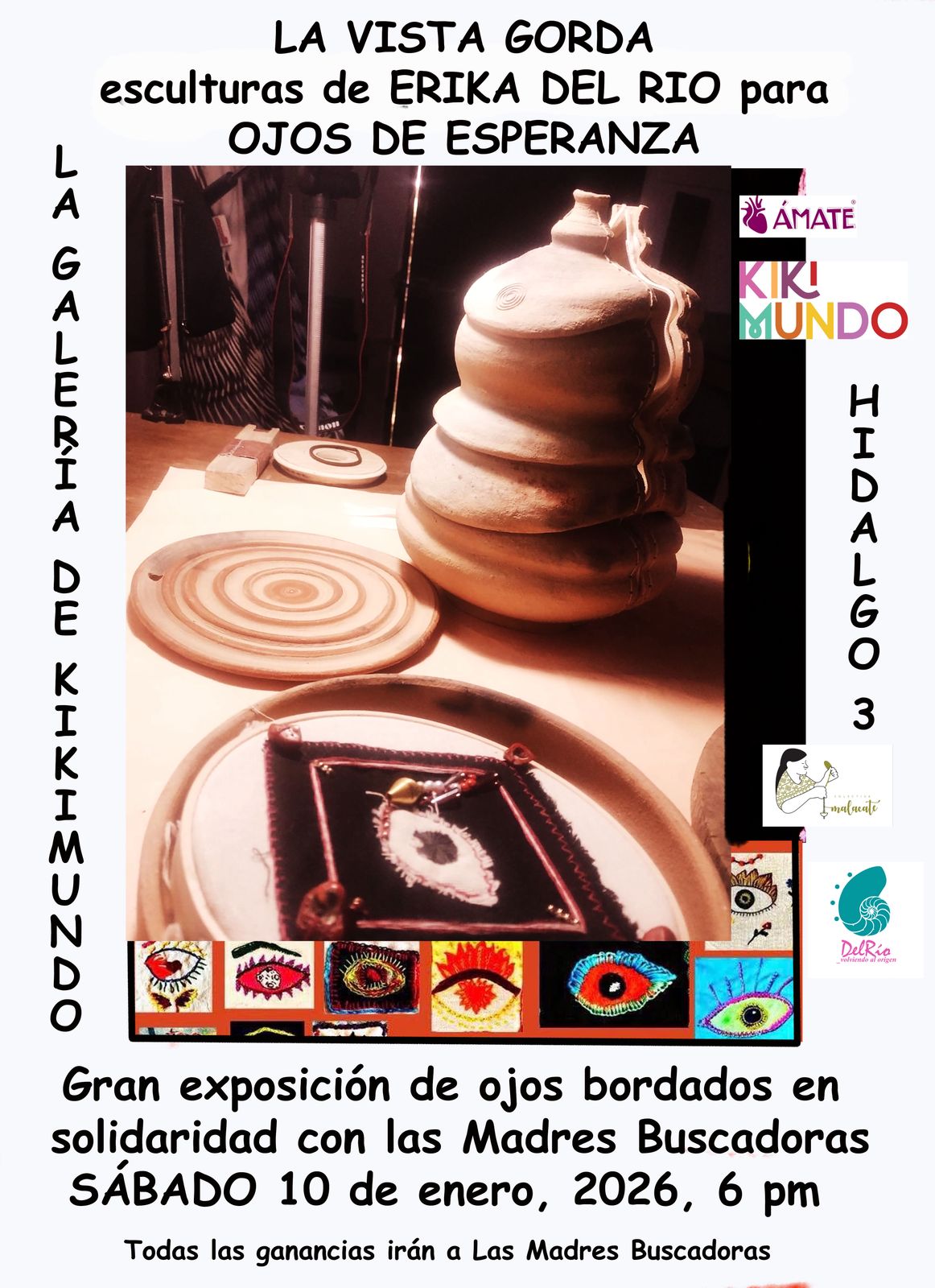
“Ojos de esperanza”: Exposición en solidaridad con las Madres Buscadoras

En México hay más de 100 mil personas desaparecidas y 115 mil no localizadas. El gobierno y sus dependencias han fallado gravemente en la búsqueda y en el rescate de personas desaparecidas. Por ello, hoy existen entre 100 y 120 colectivos de familiares que buscan a sus seres queridos por cuenta propia. Son decenas de miles de padres, hermanas, hermanos y, en su mayoría, madres: LAS MADRES BUSCADORAS, mujeres que arriesgan sus vidas para encontrar rastros de sus hijas e hijos desaparecidos. La crisis en México es profunda y dolorosa. Frente a la apatía y la inacción oficial, LAS MADRES BUSCADORAS HAN ENTRADO EN ACCIÓN. No cuentan con protección institucional; han sido hostigadas, agredidas y algunas han sufrido ataques mortales.

Este sábado 10 de enero, en San Cristóbal de Las Casas, se presenta la exposición Ojos de esperanza, con ojos bordados por niños que han perdido ojos por cáncer y sus familiares.

Galería de Kikimundo
Calle Hidalgo 3
San Cristóbal de Las Casas, Chiapas
Sábado, 10 de enero de 2026 – 6 pm

Con nuestros ojos bordados queremos decirles: Las vemos. Los vemos. No están solas. Somos solidari@s. Todo lo recaudado de estos ojos –bordados por personas de muchos lados de la republica y del extranjero– beneficiarán directamente a Madres Buscadoras.

En la exposición se espera también la participación de la ceramista Erika del Río, con la muestra La vista gorda, creada especialmente para Ojos de esperanza:

LA VISTA GORDA. Nunca he perdido a alguien de esta manera, he logrado ver su cuerpo antes de despedirme y aceptar que no volveré a sentir su calidez. Una urna funeraria que lastimosamente no contiene nada ni puede. Perforada, silenciada en el cierre de carpetas ocultas y olvidadas. Ante la indiferencia e incompetencia de las autoridades, la impunidad y los intereses políticos que pisan la dignidad humana ante la materia inexistente, intangible del cuerpo. La gorda… la vista gorda ante tantos hechos, ante el peso gigantesco que se siente, con las miradas que buscan sin cansancio contra las que esquivan responsabilidad. Ciudadanos que ven la verdad y se arriesgan para hacer justicia. La gorda situación que parece no ser vista y pasar inadvertida. Ignorada. Declaro: Yo te veo –como mujer, como ser humano que ha vivido con la muerte de la mano, como hija, como hermana–. Siento, el coraje de la injusticia de la mentira, el dolor de una memoria, de una herida que no logra sanar, la herida que sigue abierta. En la búsqueda sin norte ni sur, en la ubicación desconocida, en el sonido del silencio y en el estruendo de las balas que se ven por gravedad en las cenizas. Enciende una luz en el camino de la desesperación, el desconsuelo, la angustia y la tristeza de no saber dónde, cuándo, cómo, por qué. Una luz para resignificarse ante la duda, para la fuerza y la valentía. Un abrazo en soledad y al interior de cada familiar y ser amado que se ha quedado incompleto sin autorización, sin permiso, sin justificación.
Erika del Rio

radio
Resonancias del Caracol

[CDMX – 29 nov] Resonancias del Caracol III. Organicemos la rabia de Chiapas a Palestina

Este año, artistas de distintas generaciones y disciplinas se unen para, desde sus artes, mandar un abrazo solidario al pueblo palestino y a los pueblos zapatistas que resisten.

Sábado 29 de noviembre de 2025, 12:00hrs

Habrá actividades para infancias, danza, música, bailongo, tatuajes, talleres, alimentos, café, etc.

Participan:

Escuelita Autónoma Otomí

La Mosca con Smoking

León Chávez Teixeiro y Les prófugues del manikomio

Botellita Retornable

Otra Danza es Posible

Fóramen Danza

Musas Sonideras

Toque Bulanga

Taller del Sur

Preventa: $130 // Día del evento $180.

Lo recaudado será enviado a familias palestinas.

Auditorio del SME – Francisco Breña Alvirez, Calle Maestro Antonio Caso 50, Tabacalera, Cuauhtémoc, CMDX)

A una cuadra del Monumento a la Revolución

Puntos de llegada: Metro Revolución y Metrobús Reforma.

Preventas en:

FB: Red Universitaria Anticapitalista IG: @mxlacomuna

Vendaval – Cooperativa panadera y algo más (Guillermo Prieto, #46. Colonia San Rafael , Cuauhtémoc, CDMX)

Cafetería Carabina 30 – 30 (Escuinapa 11, Pedregal de Santo Domingo, Coyoacán, CDMX)

radio
Ocote

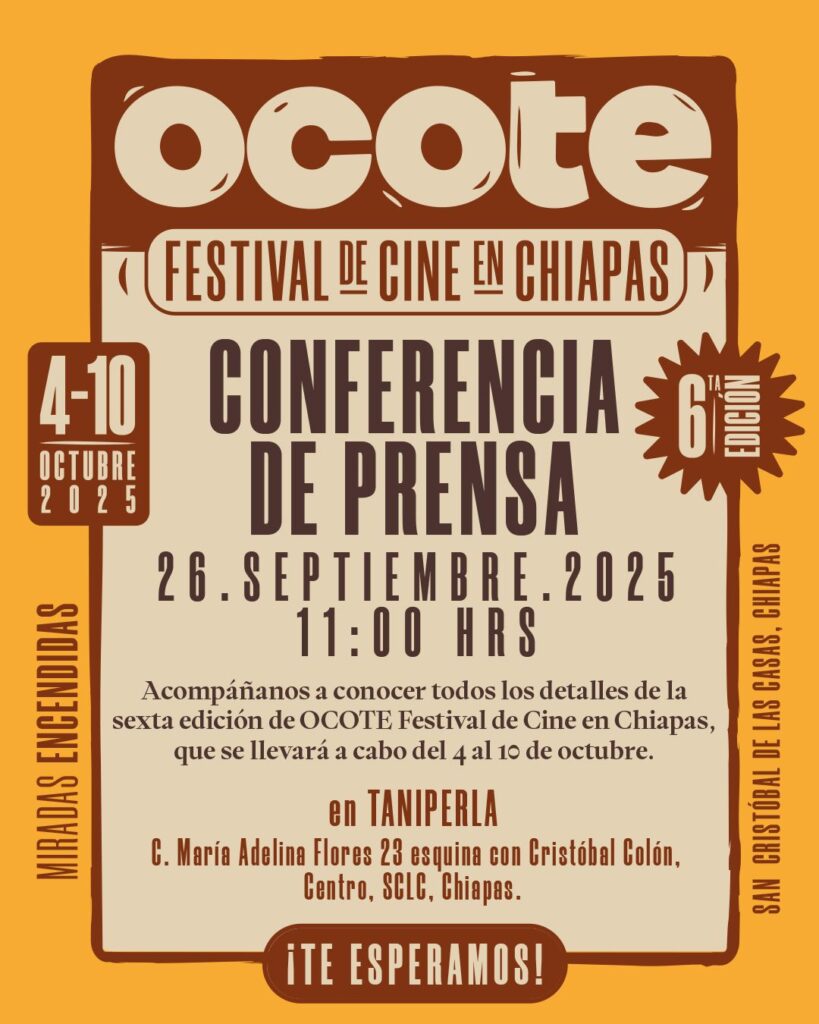
[26 sep – SCLC] Festival de Cine en Chiapas – Rueda de prensa

El próximo 26 de septiembre a las 11:00 am, en el restaurante Tanpierla, presentaremos en conferencia de prensa la sexta edición de Ocote: Miradas Encendidas, Festival de Cine en Chiapas.

Compartiremos los detalles de la programación y las actividades que darán vida a este encuentro cinematográfico del 4 al 11 de octubre.

Agradecemos su presencia y acompañamiento en esta celebración cultural que busca encender miradas y voces desde Chiapas hacia el mundo.

radio
¡Compas Arriba!

Se presenta en Francia el documental “La punta de lanza” sobre la Travesía por la Vida

Primavera de 2021. En plena pandemia mundial, una delegación marítima de origen maya emprende un viaje a contracorriente, 500 años después de la llegada de los españoles al territorio maya, gritando: «¡No nos conquistaron!». A bordo de su velero transportan obras de arte creadas en el corazón de las montañas del sureste mexicano, como un puente de resistencia y de encuentro entre los pueblos. La Travesía por la Vida acoge y entreteje las luchas de los pueblos del mundo que cruzan fronteras, como los colectivos de migrantes en Europa. Más de 30 años después de la insurrección en Chiapas, los jóvenes zapatistas nos invitan a librar una guerra pacífica, usando el arte como un arma para salvar la vida.

Hoy, 3 de septiembre de 2025, se presenta en La Réole, y el próximo martes 9 de septiembre en París.

radio
Periodismo de lo posible

Querétaro: San Francisquito, el barrio indígena urbano que no se vende

Éste es un episodio del podcast Periodismo de lo posible, Historias desde los territorios, que cuenta historias sobre los logros y los caminos posibles para la protección de la vida y la naturaleza, para visibilizar las acciones y estrategias que se tejen todos los días desde las comunidades, asambleas, organizaciones y colectivos en México en respuesta a los proyectos extractivistas, el cambio climático y la violencia. Escucha los otros episodios aquí: https://periodismodeloposible.com/

La historia de San Francisquito, un barrio indígena urbano en Querétaro, es una lucha constante por la preservación de sus tradiciones, su territorio y su identidad frente a la amenaza de la gentrificación. Este barrio, con raíces chichimecas, es famoso por su danza conchera y sus muros adornados con arte urbano que narran historias de resistencia y herencia indígena. En 2015, San Francisquito comenzó a enfrentar el peligro de un megaproyecto turístico impulsado por los gobiernos estatal y municipal, que amenazaba con transformar el barrio en un destino comercial, desplazando a los habitantes originales y destruyendo su cultura y espacios sagrados. A través de asambleas comunitarias, marchas y la creación de una Confederación, las y los vecinos comenzaron a organizarse y solicitaron el reconocimiento oficial de San Francisquito como un barrio indígena urbano como una forma de defender sus derechos y protegerse ante nuevos desarrollos inmobiliarios.

Contexto e historia

Los procesos gentrificadores producto del capitalismo se siguen extendiendo a lo largo del mundo, imponiendo formas de vida que no contemplan la cultura originaria ni las necesidades reales de la población de los territorios que son invadidos por los grandes capitales. 

(Continuar leyendo…)
radio
Komün Cinema

Asamblea de muert@s + viv@s en la montaña

En la asamblea de una comunidad zapatista, están discutiendo cómo se van a organizar por los problemas que hay en los municipios autónomos rebeldes zapatistas y las juntas de buen gobierno. Entonces llegan unos enviados de la asamblea de nuestros muertos y muertas, quienes murieron luchando por libertad y justicia. Esos enviados citan a la asamblea de vivos a que rindan cuentas frente a los caídos en tantos años de lucha. Los vivos quieren mandar una comisión, pero les dicen que no, tienen que asistir todos y todas. En la asamblea de los caídos les explican a los vivos cómo ha sido la lucha por siglos, que luchan y mueren y siempre queda alguien arriba, en la punta de la pirámide. Entonces los muertos les demandan a los vivos que no repitan lo mismo, que no copien o calquen lo que da el sistema de la pirámide. Les dicen que ellos, los vivos, tienen que ver que valió la pena la lucha y no terminar en lo mismo de antes.

radio
Colectivo PVIFS

Vida y esperanza desde el Sna mutetik (Nido de pájaros)

Por el Colectivo PVIFS

Te preguntamos, queridx lectxr, ¿cuántos mensajes entran, por minuto, a tu WhatsApp, Facebook, X o Instagram para difundir noticias de horror, muerte, despojo, violencia y guerra? ¿Decenas, centenas? ¿Qué hay más allá de todo eso? Mucho, muestra de ello fue lo que se nos compartió el sábado pasado (12 de julio de este 2025) en el Centro Cultural Independiente ArtTex ubicado en San Juan Chamula.

El pintor Tex López, fundador de dicho centro, nos dio la bienvenida y nos recordó que “solos no podemos” mientras pasaba la palabra al músico tsotsil José Julián Hernández Gómez “Zanate” quien, desde los 14 años, o sea, desde hace 22 años, ya incursiona en la música. Zanate, como se le conoce en el medio artístico, es fundador de la banda llamada Lumaltok. Banda que ha hecho historia por fusionar hard rock, blues, psicodelia y rock progresivo con lo propio de los sonidos mágicos y la lengua de las tierras mayas alteñas.

Zanate, acompañado de su compañera de vida e hijo, ha dado un paso grande, ha fundado su propia productora y desde ahí produjo su primer demo musical intitulado Sna mutetik (Nido de pájaros). El álbum contiene melodías qué recogen el canto de seis aves propias de las tierras alteñas originarias.

Oigan de su propia voz de Zanate cómo nos cuenta por qué, cómo y para qué realizó este trabajo de rescate cultural-ecológico y lingüístico:

Con su música Lumaltok y Zanate siguen fortaleciendo la cultura y la lengua propia (el tsotsil) y, ahora en este álbum, mezclada con la lengua-canto de la Madre Naturaleza a través de las aves que incluye en su demo.

En este lanzamiento-compartición acompañaron a Zanate familiares, amigos locales, nacionales y extranjeros, así como fans y, en particular, su compañera de vida la cineasta tsotsil Liliana K’an. De las palabras de ella retomamos un fragmento que nos hace recordar que la complementariedad hombre-mujer existe, así como las almas gemelas. Oigamos cómo lo dice Lily:

En esta compartición también fue invitado a dar su palabra el cineasta tsotsil Xun Sero, quien nos convidó a pensar que ya no se trata solo de “rock en tsotsil” sino de “rock tsotsil” que dignifica y hace a la juventud sentirse orgullosa de ser lo que es. Oigamos a Xun:

Otro de los invitados a decir su pienso fue el escritor tseltal Delmar Penka quien llevó un texto escrito. Agradecemos a Delmar por permitirnos reproducirlo íntegro en este espacio. Se trata de un texto poético que emana de su corazón que senti-piensa y que les invitamos a leer aquí completo:

Presentación del álbum Sna mutetik – Nido de pájaros

Cerramos apuntando que el álbum de Sna mutetik (Nido de pájaros), nos remite inevitablemente a los 500 años de resistencia convertidos hoy, a principios del siglo XXI, en resistencia artística-política-cultural-lingüística y ecológica. Pero creemos que también se liga a través de venas subterráneas con ese río que abrieron en 1994 los y las zapatistas quienes dijeron ¡Ya basta! obligando a Chiapas, México y el planeta Tierra a voltear a ver a los pueblos originarios. Muchos de los y las jóvenes(as) que encarnan las resistencias de las que les hemos hablado, nacieron después del levantamiento de 1994, otros y otras eran en ese momento pequeños o jóvenes(as). Zanate, en particular, tenía solo 5 años cuando se dio ese despertar de la autonomía zapatista, que hoy, en gran medida, es autonomía llena de juventudes que encarnan también las dimensiones artística-política-cultural-lingüística en sus luchas por la vida.

Cada lucha, en su modo, tiempo y geografía, nos aporta esperanza y nos invitan-reta a florecer como personas en común, en colectivo y en red. Florecer, en este álbum, al ritmo de blues tsotsil y de la mano de las aves y de la Madre Naturaleza.

Las y los zapatistas ahora lanzarían un: ¡Sí a la Vida, No a la Guerra! Y sobre vida y guerra retomemos la forma en que cerró la lectura de su texto el escritor Delmar Penka, diciendo: ¡Viva Palestina Libre! ¡Vivan los pueblos originarios!

Para más información ir a Productora, YouTube y FB: Zanate Blues